







Dr Mahwash Mengal
 Define memory and classify it into various types.
 Describe the role of synaptic inhibition and
synaptic facilitation in memory.
 Describe the mechanism of short term
,intermediate , and long term memory.
 Definition:
Memory is defined as the ability to recall past
experience and retention of the learned material.
The processes of memory are:
 Putting information into memory (encoding).
 Maintaining the coded information (storage),
 Getting the stored information back into
consciousness (retrieval).
 Of concern also is forgetting (losing stored
information or having difficulty or failure in
retrieving it), which may occur because of
problems in any of the three memory processes.
 We know that some memories last for only a few
seconds, whereas others last for hours, days,
months, or years.
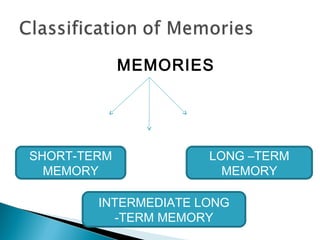
MEMORIES
SHORT-TERM
MEMORY
INTERMEDIATE LONG
-TERM MEMORY
LONG –TERM
MEMORY
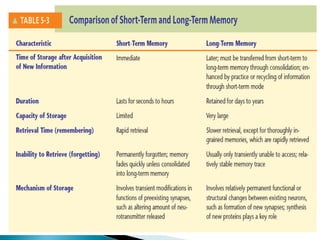
 Short-term memory:
Includes memories that last for seconds or at
most minutes unless they are converted into
longer-term memories.
 Intermediate long-term:
Includes memories, which last for days to weeks
but then fade away.
 Long-term memory: which, once stored, can be
recalled up to years or even a lifetime later.
Memories are frequently classified according to
the type of information that is stored. One of these
classifications divides memory into declarative
memory and skill memory.
 It basically means memory of the various
details of an integrated thought, such as memory
of an important experience.
 It includes memory of :
(1) The surroundings,
(2) Time relationships,
(3) Causes of the experience,
(4) The meaning of the experience,
(5) One’s deductions that were left in the
person′s mind.
 It is frequently associated with motor activities of
the person’s body, such as all the skills
developed for hitting a tennis ball.
 Including automatic memories to:
(1) sight of the ball,
(2)calculate the relationship and speed of the
ball to the racquet.
(3) deduce rapidly the motions of the body
the arms and the racquet required to hit
the ball as desired.
 All of these activated instantly based on previous
learning of the game of tennis ,then moving on to
the next stroke of the game while forgetting the
details of the previous stroke.
 Although we often think of memories as being
positive recollections of previous thoughts or
experiences, probably the greater share of our
memories are negative memories, not positive.
That is our brain is inundated with sensory
information , from all our senses.
 Fortunately, the brain has the capability to learn to
ignore information that is of no consequence. This
results from inhibition of the pathways for this
type of information; the resulting effect is called
habituation.
 This is a type of negative memory.
 Conversely, for incoming information that causes
important consequences such as pain or pleasure,
the brain has a different automatic capability of
enhancing and storing the memory traces. This is
positive memory.
 It results from facilitation of the synaptic
pathways, and the process is called memory
sensitization.
 It is typified by one’s memory of 7 to 10 numerals
in a telephone number (or 7 to 10 other discrete
facts) for a few seconds to a few minutes at a time
but lasting only as long as the person continues to
think about the numbers or facts.
 This short term memory is caused by continual
neural activity resulting from
nerve signals that travel around and around a
temporary memory trace in a circuit of
reverberating neurons.
• Another possible explanation of short term
memory is presynaptic facilitation or inhibition.
• This occurs at synapses that lie on terminal nerve
fibrils immediately before these fibrils synapse
with a subsequent neuron.
These may last for many minutes or even weeks.
They will eventually be lost unless the memory
traces are activated enough to become more
permanent; then they are classified as long-term
memories.
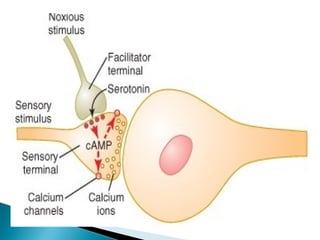
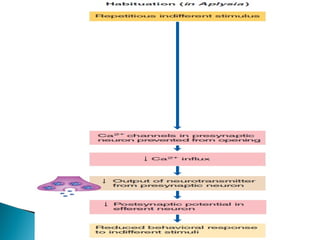
At the molecular level the habituation effect in
the sensory terminal results from progressive
closure of calcium channels through the terminal
membrane, so much smaller than normal amounts
of calcium ions can diffuse into the habituated
terminal, and much less sensory terminal
transmitter is released because calcium entry is
the principal stimulus for transmitter release.
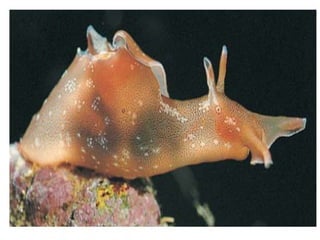
 Experiments in primitive animals have
demonstrated that memories of the intermediate
long-term type can result from temporary chemical
or physical changes, or both, in either the synapse
presynaptic terminals or the synapse postsynaptic
membrane, changes that can persist for a few
minutes up to several weeks.
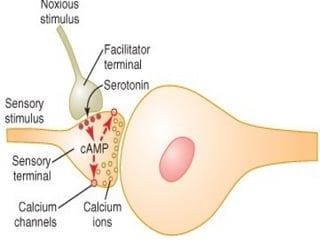
 One terminal is from a sensory input neuron and
terminates directly on the surface of the neuron
that is to be stimulated; this is called the sensory
terminal.
 The other terminal is a presynaptic ending that lies
on the surface of the sensory terminal, and it is
called the facilitator terminal.
 . When the sensory terminal is stimulated
repeatedly but without stimulation of the facilitator
terminal, signal transmission at first is great, but it
becomes less and less intense with repeated
stimulation until transmission almost ceases. This
phenomenon is habituation.
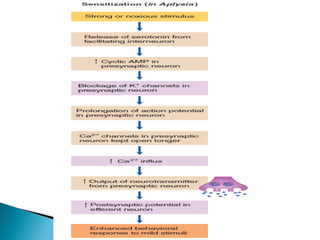
 Conversely, if a stimulus excites the facilitator
terminal at the same time that the sensory
terminal is stimulated, then instead of the
transmitted signal into the postsynaptic neuron
becoming progressively weaker, the ease of
transmission becomes stronger and stronger.
 It will remain strong for minutes, hours, days, or,
with more intense training, upto about 3 weeks
even without further stimulation of the facilitator
terminal.
 It is especially interesting that even after
habituation has occurred, this pathway can be
converted back to a facilitated pathway with only a
few noxious stimuli.
 Long term memory results from structural changes
at the synapse that enhance or suppress signal
conduction.
 These changes include increase in :
1. the number of synaptic vesicle release sites.
2. number of available synaptic vesicles.
3. number of synaptic terminals
And
4. Changes in shape or number of post synaptic
terminals.
 With long-term potentiation (LTP), changes take
place as a result of increased use at a given
preexisting synapse that enhance the future ability
of the presynaptic neuron to excite the
postsynaptic neuron. That is, this connection gets
stronger the more often it
is used.
 Such strengthening of synaptic activity results in
the formation of more EPSPs in the postsynaptic
neuron in response to chemical signals from this
particular excitatory presynaptic input. The
increased excitatory responsiveness is ultimately
translated into more action potentials being sent
along this postsynaptic cell to other neurons.
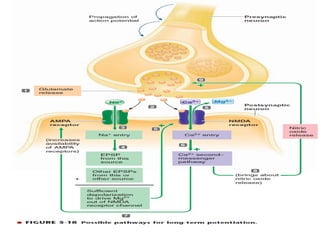
 Glutamate is released from activated presynaptic
neuron.
 Glutamate binds with both AMPA and NMDA
receptors.
 Binding opens AMPA receptor-channel.
 Na+ entry through open AMPA channel depolarizes
postsynaptic neuron, producing EPSP.
 Binding opens gate of NMDA receptor-channel but
Mg2+ still blocks channel. Sufficient depolarization
from this AMPA opening plus other EPSPs drives
Mg2+ out.
 Ca2+ entry through open NMDA channel activates
Ca2+ second-messenger pathway.
 Second-messenger pathway promotes insertion of
additional AMPA receptors in postsynaptic
membrane, increasing its sensitivity to glutamate.
 Second-messenger pathway also triggers release of
retrograde paracrine (likely nitric oxide).
 Nitric oxide stimulates long-lasting increase in
glutamate release by presynaptic neuron.
 Learning is the acquisition of knowledge or skills
as a consequence of experience instruction, or
both. It is widely believed that rewards and
punishments are integral parts of many types of
learning.
 Learning is a change in behavior that occurs as a
result of experiences. It highly depends on the
organism’s interaction with its environment. The
only limits the effects that environmental
influences can have on learning are the biological
constraints imposed by species-specific and
individual genetic endowments.
 Hall John E. ,Guyton C.Arthur.” Guyton and Hall
Textbook of Medical Physiology”.12th
Edition;Elseveir.
 Sherwood Lauralee.”Principles of Human
Physiology”.6th
edition;Cengage .
48

Physio

  • 2.
  • 3.
     Define memoryand classify it into various types.  Describe the role of synaptic inhibition and synaptic facilitation in memory.  Describe the mechanism of short term ,intermediate , and long term memory.
  • 4.
     Definition: Memory isdefined as the ability to recall past experience and retention of the learned material.
  • 5.
    The processes ofmemory are:  Putting information into memory (encoding).  Maintaining the coded information (storage),  Getting the stored information back into consciousness (retrieval).
  • 6.
     Of concernalso is forgetting (losing stored information or having difficulty or failure in retrieving it), which may occur because of problems in any of the three memory processes.
  • 7.
     We knowthat some memories last for only a few seconds, whereas others last for hours, days, months, or years.
  • 8.
  • 9.
     Short-term memory: Includesmemories that last for seconds or at most minutes unless they are converted into longer-term memories.  Intermediate long-term: Includes memories, which last for days to weeks but then fade away.
  • 10.
     Long-term memory:which, once stored, can be recalled up to years or even a lifetime later. Memories are frequently classified according to the type of information that is stored. One of these classifications divides memory into declarative memory and skill memory.
  • 11.
     It basicallymeans memory of the various details of an integrated thought, such as memory of an important experience.
  • 12.
     It includesmemory of : (1) The surroundings, (2) Time relationships, (3) Causes of the experience, (4) The meaning of the experience, (5) One’s deductions that were left in the person′s mind.
  • 13.
     It isfrequently associated with motor activities of the person’s body, such as all the skills developed for hitting a tennis ball.
  • 14.
     Including automaticmemories to: (1) sight of the ball, (2)calculate the relationship and speed of the ball to the racquet. (3) deduce rapidly the motions of the body the arms and the racquet required to hit the ball as desired.
  • 15.
     All ofthese activated instantly based on previous learning of the game of tennis ,then moving on to the next stroke of the game while forgetting the details of the previous stroke.
  • 16.
     Although weoften think of memories as being positive recollections of previous thoughts or experiences, probably the greater share of our memories are negative memories, not positive. That is our brain is inundated with sensory information , from all our senses.
  • 17.
     Fortunately, thebrain has the capability to learn to ignore information that is of no consequence. This results from inhibition of the pathways for this type of information; the resulting effect is called habituation.  This is a type of negative memory.
  • 18.
     Conversely, forincoming information that causes important consequences such as pain or pleasure, the brain has a different automatic capability of enhancing and storing the memory traces. This is positive memory.
  • 19.
     It resultsfrom facilitation of the synaptic pathways, and the process is called memory sensitization.
  • 20.
     It istypified by one’s memory of 7 to 10 numerals in a telephone number (or 7 to 10 other discrete facts) for a few seconds to a few minutes at a time but lasting only as long as the person continues to think about the numbers or facts.
  • 21.
     This shortterm memory is caused by continual neural activity resulting from nerve signals that travel around and around a temporary memory trace in a circuit of reverberating neurons.
  • 22.
    • Another possibleexplanation of short term memory is presynaptic facilitation or inhibition. • This occurs at synapses that lie on terminal nerve fibrils immediately before these fibrils synapse with a subsequent neuron.
  • 23.
    These may lastfor many minutes or even weeks. They will eventually be lost unless the memory traces are activated enough to become more permanent; then they are classified as long-term memories.
  • 24.
    At the molecularlevel the habituation effect in the sensory terminal results from progressive closure of calcium channels through the terminal membrane, so much smaller than normal amounts of calcium ions can diffuse into the habituated terminal, and much less sensory terminal transmitter is released because calcium entry is the principal stimulus for transmitter release.
  • 25.
     Experiments inprimitive animals have demonstrated that memories of the intermediate long-term type can result from temporary chemical or physical changes, or both, in either the synapse presynaptic terminals or the synapse postsynaptic membrane, changes that can persist for a few minutes up to several weeks.
  • 27.
     One terminalis from a sensory input neuron and terminates directly on the surface of the neuron that is to be stimulated; this is called the sensory terminal.
  • 29.
     The otherterminal is a presynaptic ending that lies on the surface of the sensory terminal, and it is called the facilitator terminal.
  • 30.
     . Whenthe sensory terminal is stimulated repeatedly but without stimulation of the facilitator terminal, signal transmission at first is great, but it becomes less and less intense with repeated stimulation until transmission almost ceases. This phenomenon is habituation.
  • 32.
     Conversely, ifa stimulus excites the facilitator terminal at the same time that the sensory terminal is stimulated, then instead of the transmitted signal into the postsynaptic neuron becoming progressively weaker, the ease of transmission becomes stronger and stronger.
  • 33.
     It willremain strong for minutes, hours, days, or, with more intense training, upto about 3 weeks even without further stimulation of the facilitator terminal.
  • 34.
     It isespecially interesting that even after habituation has occurred, this pathway can be converted back to a facilitated pathway with only a few noxious stimuli.
  • 37.
     Long termmemory results from structural changes at the synapse that enhance or suppress signal conduction.
  • 38.
     These changesinclude increase in : 1. the number of synaptic vesicle release sites. 2. number of available synaptic vesicles. 3. number of synaptic terminals And 4. Changes in shape or number of post synaptic terminals.
  • 39.
     With long-termpotentiation (LTP), changes take place as a result of increased use at a given preexisting synapse that enhance the future ability of the presynaptic neuron to excite the postsynaptic neuron. That is, this connection gets stronger the more often it is used.
  • 40.
     Such strengtheningof synaptic activity results in the formation of more EPSPs in the postsynaptic neuron in response to chemical signals from this particular excitatory presynaptic input. The increased excitatory responsiveness is ultimately translated into more action potentials being sent along this postsynaptic cell to other neurons.
  • 42.
     Glutamate isreleased from activated presynaptic neuron.  Glutamate binds with both AMPA and NMDA receptors.  Binding opens AMPA receptor-channel.  Na+ entry through open AMPA channel depolarizes postsynaptic neuron, producing EPSP.  Binding opens gate of NMDA receptor-channel but Mg2+ still blocks channel. Sufficient depolarization from this AMPA opening plus other EPSPs drives Mg2+ out.
  • 43.
     Ca2+ entrythrough open NMDA channel activates Ca2+ second-messenger pathway.  Second-messenger pathway promotes insertion of additional AMPA receptors in postsynaptic membrane, increasing its sensitivity to glutamate.  Second-messenger pathway also triggers release of retrograde paracrine (likely nitric oxide).  Nitric oxide stimulates long-lasting increase in glutamate release by presynaptic neuron.
  • 45.
     Learning isthe acquisition of knowledge or skills as a consequence of experience instruction, or both. It is widely believed that rewards and punishments are integral parts of many types of learning.
  • 46.
     Learning isa change in behavior that occurs as a result of experiences. It highly depends on the organism’s interaction with its environment. The only limits the effects that environmental influences can have on learning are the biological constraints imposed by species-specific and individual genetic endowments.
  • 47.
     Hall JohnE. ,Guyton C.Arthur.” Guyton and Hall Textbook of Medical Physiology”.12th Edition;Elseveir.  Sherwood Lauralee.”Principles of Human Physiology”.6th edition;Cengage .
  • 48.