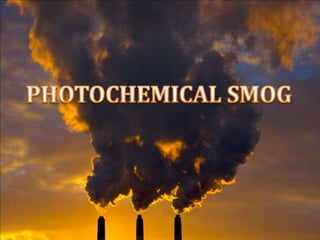
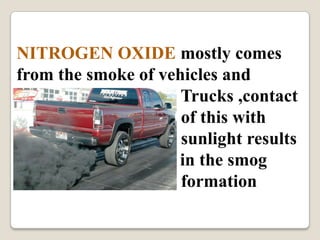
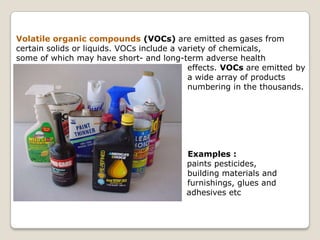
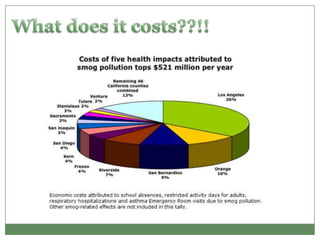
Photochemical smog is a type of air pollution formed when sunlight interacts with nitrogen oxides and volatile organic compounds in the atmosphere. Nitrogen oxides come primarily from vehicle and truck exhaust while volatile organic compounds are emitted from products like paints, pesticides, and glues. This chemical reaction forms secondary pollutants like peroxyacetyl nitrate which can cause respiratory issues. Mexico City has high levels of photochemical smog due to vehicle emissions and geographic factors trapping pollution. Reducing vehicle use, industrial emissions, and VOC-emitting products can help lower smog levels and protect public health. The Great Smog of 1952 in London showed the deadly potential of severe smog, causing thousands of premature deaths.