Volatile Organic Compounds
By: Samin Ahmed
What are VOCs?
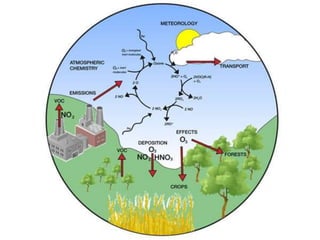
• A VOC is any compound that contains carbon
and participates in atmospheric
photochemical reactions.
What are VOCs?
• VOCS are organic chemicals that evaporate at room
temperature.
• VOCs have high vapor pressure and low boiling point.
• VOCs are both human-made and natural occurring
chemical compounds.
• VOCs may have long term adverse effects to both
humans and the environment.
How are VOCs Emitted?
• In general VOCs are emitted in many different
ways, but the most common way they are
emitted is from heat.
Volatility
• Volatility is the ability of a substance to
vaporize.
• Volatility is directly related to a substances
vapor pressure.
• A substance with higher vapor pressure will
volatize more than a substance with lower
vapor pressure.
Common Sources?
• Burning of Fuel, Oil, Gas, Wood, and Kerosene
• Carpets, Floors, and Upholstery
• Composite Wood Products
• Paints, Solvent, & Coatings
• Air Cleaners
• Oil & Gasoline
• Vehicle Exhaust
• Fossil Fuels
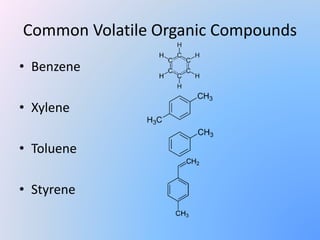
Common Volatile Organic Compounds
• Benzene
• Xylene
• Toluene
• Styrene
Benzene
• Benzene is a colorless liquid that is both made from human and
natural sources.
• Natural sources come from volcanoes and forest fires.
• Benzene is widely used in the production of crude oil and gasoline.
• Benzene usage is prevalent in Industry.
• Benzene is slowly broken down in water and soil.
• Benzene does not accumulate on plants and animals.
Benzene
• Route of Exposures: Inhalation and Ingestion
• Adverse Health Effects:
– Shot Term: Skin irritation, drowsiness, dizziness,
headache, nausea,
– Long Term: Effect on tissues on blood cells and bone
marrow leading to anemia, low white blood cell
count, and low platelet count. Also harming immune
system leading to possible cancers and leukemia
Xylene
• Xylene is mostly a human-made chemical
• Xylene naturally occurs in petroleum production of coal tar
and in forest fires.
• Xylene is prevalent in the petroleum, solvent, printing,
rubber and leather industry
• Xylene is primarily released from automobile exhaust
• Xylene evaporates quickly into the air from soil and water
Xylene
• Route of Exposures: Inhalation and Ingestion
• Adverse Health Effects:
– Shot Term: Skin, eye, nose and throat irritation, lack of
muscle, confusion, lack of balance, reduction of lung
capabilities, slow reaction time, memory difficulties,
liver, kidney and stomach discomfort
– Long Term: Animal and human testing have shown
that xylene causes cancer, but not enough information
and data have suggest that xylene is a carcinogen.
Toluene
• Toluene is a clear and colorless liquid
• Toluene is used in the process of the
production of gasoline and other fuels
• Toluene is also used in making paint, paint
thinners, fingernail polish, adhesives and
rubbers
• At high levels Toluene does not concentrate in
animals or humans
Toluene
• Route of Exposures: Inhalation and Ingestion
• Adverse Health Effects:
– Shot Term: Dizziness, sleepiness,
unconsciousness, light-headiness
– Long Term: Effects on the CNS which can lead to
depression, muscle fatigue, memory loss, and
personality change. Animal and Human studies
show no sign that Toluene is an carcinogen.
Styrene
• Styrene is a colorless oily liquid
• Styrene is a primarily man made chemical
• Styrene is naturally occurring in foods such as
fruits, vegetables, beverages, nuts and meats
• Styrene is also present in combustible
products such as automobile exhaust and
cigarette smoke
• Styrene usually evaporates in shallow soil and
surface water
Styrene
• Route of Exposures: Inhalation and Ingestion
• Adverse Health Effects:
– Shot Term: Eye, nose, throat irritation, dizziness,
nausea, headaches
– Long Term: Effects on the CNS which can lead to
depression, concentration problems, muscle
weakness, anxiety and personality change. Animal
studies show that Styrene may cause cancer to
humans.
Adverse Health Effects
Short-Term (Acute)
• Eye, Nose, and Throat
Irritation
• Headaches
• Nausea
• Dizziness
• Worsening of Asthma
Long-Term (Chronic)
• Cancer
• Leukemia
• Liver Damage
• Kidney Damage
• CNS Damage
Strategy Controls
• Source Control: Remove or reduce the
number of products in your home that emits
VOCs. Purchase products that contain low to
no content of VOCs. Make sure proper areas
of control are properly sealed and inspected
for and leaks.
Strategy Controls
• Ventilation: Increase the amount of
ventilation in homes by opening doors,
windows, using fans, and maximizing outdoor
air flow within inside the home. Keep
temperature and humidity to in between low
to room temperature in order to keep the
conditions of chemicals in balance.
Strategy Controls
• Pollution Control Device: Equipments, tools
and instruments that are designed to clean
emissions produced from a source by
removing the pollutants that are released into
the atmosphere.

Volatile organic compounds

  • 1.
  • 2.
    What are VOCs? •A VOC is any compound that contains carbon and participates in atmospheric photochemical reactions.
  • 3.
    What are VOCs? •VOCS are organic chemicals that evaporate at room temperature. • VOCs have high vapor pressure and low boiling point. • VOCs are both human-made and natural occurring chemical compounds. • VOCs may have long term adverse effects to both humans and the environment.
  • 4.
    How are VOCsEmitted? • In general VOCs are emitted in many different ways, but the most common way they are emitted is from heat.
  • 5.
    Volatility • Volatility isthe ability of a substance to vaporize. • Volatility is directly related to a substances vapor pressure. • A substance with higher vapor pressure will volatize more than a substance with lower vapor pressure.
  • 6.
    Common Sources? • Burningof Fuel, Oil, Gas, Wood, and Kerosene • Carpets, Floors, and Upholstery • Composite Wood Products • Paints, Solvent, & Coatings • Air Cleaners • Oil & Gasoline • Vehicle Exhaust • Fossil Fuels
  • 8.
    Common Volatile OrganicCompounds • Benzene • Xylene • Toluene • Styrene
  • 9.
    Benzene • Benzene isa colorless liquid that is both made from human and natural sources. • Natural sources come from volcanoes and forest fires. • Benzene is widely used in the production of crude oil and gasoline. • Benzene usage is prevalent in Industry. • Benzene is slowly broken down in water and soil. • Benzene does not accumulate on plants and animals.
  • 10.
    Benzene • Route ofExposures: Inhalation and Ingestion • Adverse Health Effects: – Shot Term: Skin irritation, drowsiness, dizziness, headache, nausea, – Long Term: Effect on tissues on blood cells and bone marrow leading to anemia, low white blood cell count, and low platelet count. Also harming immune system leading to possible cancers and leukemia
  • 11.
    Xylene • Xylene ismostly a human-made chemical • Xylene naturally occurs in petroleum production of coal tar and in forest fires. • Xylene is prevalent in the petroleum, solvent, printing, rubber and leather industry • Xylene is primarily released from automobile exhaust • Xylene evaporates quickly into the air from soil and water
  • 12.
    Xylene • Route ofExposures: Inhalation and Ingestion • Adverse Health Effects: – Shot Term: Skin, eye, nose and throat irritation, lack of muscle, confusion, lack of balance, reduction of lung capabilities, slow reaction time, memory difficulties, liver, kidney and stomach discomfort – Long Term: Animal and human testing have shown that xylene causes cancer, but not enough information and data have suggest that xylene is a carcinogen.
  • 13.
    Toluene • Toluene isa clear and colorless liquid • Toluene is used in the process of the production of gasoline and other fuels • Toluene is also used in making paint, paint thinners, fingernail polish, adhesives and rubbers • At high levels Toluene does not concentrate in animals or humans
  • 14.
    Toluene • Route ofExposures: Inhalation and Ingestion • Adverse Health Effects: – Shot Term: Dizziness, sleepiness, unconsciousness, light-headiness – Long Term: Effects on the CNS which can lead to depression, muscle fatigue, memory loss, and personality change. Animal and Human studies show no sign that Toluene is an carcinogen.
  • 15.
    Styrene • Styrene isa colorless oily liquid • Styrene is a primarily man made chemical • Styrene is naturally occurring in foods such as fruits, vegetables, beverages, nuts and meats • Styrene is also present in combustible products such as automobile exhaust and cigarette smoke • Styrene usually evaporates in shallow soil and surface water
  • 16.
    Styrene • Route ofExposures: Inhalation and Ingestion • Adverse Health Effects: – Shot Term: Eye, nose, throat irritation, dizziness, nausea, headaches – Long Term: Effects on the CNS which can lead to depression, concentration problems, muscle weakness, anxiety and personality change. Animal studies show that Styrene may cause cancer to humans.
  • 17.
    Adverse Health Effects Short-Term(Acute) • Eye, Nose, and Throat Irritation • Headaches • Nausea • Dizziness • Worsening of Asthma Long-Term (Chronic) • Cancer • Leukemia • Liver Damage • Kidney Damage • CNS Damage
  • 18.
    Strategy Controls • SourceControl: Remove or reduce the number of products in your home that emits VOCs. Purchase products that contain low to no content of VOCs. Make sure proper areas of control are properly sealed and inspected for and leaks.
  • 19.
    Strategy Controls • Ventilation:Increase the amount of ventilation in homes by opening doors, windows, using fans, and maximizing outdoor air flow within inside the home. Keep temperature and humidity to in between low to room temperature in order to keep the conditions of chemicals in balance.
  • 20.
    Strategy Controls • PollutionControl Device: Equipments, tools and instruments that are designed to clean emissions produced from a source by removing the pollutants that are released into the atmosphere.