P R E S E N T E R : M O A Z M A K H A L I D
R O L L N O . 1 9 0 1 1 5 0 6- 0 1 5
Photochemical smog
Table of content
 Introduction
 Sources Of Photochemical Smog
 Formation Of Photochemical Smog
 Effects Of Photochemical Smog
 Control Of Photochemical Smog
Introduction
 Photochemical smog is a type of smog produced
when ultraviolet light from the sun reacts with nitrogen oxides
in the atmosphere.
 Photochemical smog is a mixture of pollutants that are
formed when nitrogen oxides and volatile organic compounds
(VOCs) react to sunlight, creating a brown haze above cities.
 It is visible as a brown haze, and is most prominent during
the morning and afternoon, especially in densely populated,
warm cities.
 It tends to occur more often in summer, because that is when
we have the most sunlight.
 Cities that experience this smog daily include Los Angeles,
Sydney, Mexico City, Beijing, and many more.
Sources of photochemical smog
 While nitrogen oxides and VOCs are produced
biogenically (in nature), there are also major
anthropogenic (man-made) emissions of both.
 Natural emissions tend to be spread over large areas,
reducing their effects, but man-made emissions tend
to be concentrated close to their source, such as a
city.
Cont.
Biogenic sources:
 In nature, bushfires, lightning and the microbial processes
that occur in soil generate nitrogen oxides.
 VOCs are produced from the evaporation of naturally-
occurring compounds, such as terpenes, which are the
hydrocarbons in oils that make them burn.
 Eucalypts have also been found to release significant
amounts of these compounds.
Cont.
Anthropogenic sources:
 Nitrogen oxides are produced mainly from the combustion
of fossil fuels, particularly in power stations and motor
vehicles.
 VOCs are formed from the incomplete combustion of fossil
fuels, from the evaporation of solvents and fuels, and from
burning plant matter such as backyard burning and wood-
burning stoves.
Formation of photochemical smog
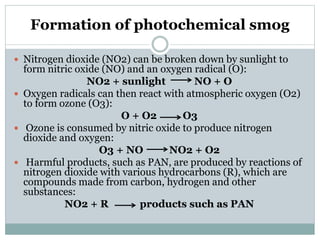
 Nitrogen dioxide (NO2) can be broken down by sunlight to
form nitric oxide (NO) and an oxygen radical (O):
NO2 + sunlight NO + O
 Oxygen radicals can then react with atmospheric oxygen (O2)
to form ozone (O3):
O + O2 O3
 Ozone is consumed by nitric oxide to produce nitrogen
dioxide and oxygen:
O3 + NO NO2 + O2
 Harmful products, such as PAN, are produced by reactions of
nitrogen dioxide with various hydrocarbons (R), which are
compounds made from carbon, hydrogen and other
substances:
NO2 + R products such as PAN
Cont..
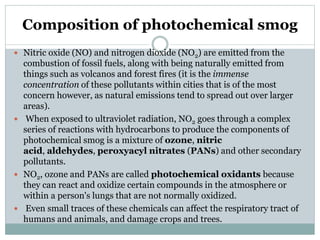
 The main source of these hydrocarbons is the VOCs.
 Similarly, oxygenated organic and inorganic
compounds (ROx) react with nitric oxide to produce
more nitrogen oxides:
NO + ROx NO2 + other products
 The significance of the presence of the VOCs in these
last two reactions is paramount. Ozone is normally
consumed by nitric oxide, as in reaction 3.
 However, when VOCs are present, nitric oxide and
nitrogen dioxide are consumed as in reactions 4 and
5, allowing the build up of ground level ozone.
Composition of photochemical smog
 Nitric oxide (NO) and nitrogen dioxide (NO2) are emitted from the
combustion of fossil fuels, along with being naturally emitted from
things such as volcanos and forest fires (it is the immense
concentration of these pollutants within cities that is of the most
concern however, as natural emissions tend to spread out over larger
areas).
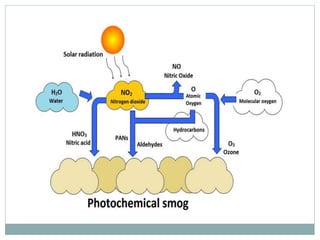
 When exposed to ultraviolet radiation, NO2 goes through a complex
series of reactions with hydrocarbons to produce the components of
photochemical smog is a mixture of ozone, nitric
acid, aldehydes, peroxyacyl nitrates (PANs) and other secondary
pollutants.
 NO2, ozone and PANs are called photochemical oxidants because
they can react and oxidize certain compounds in the atmosphere or
within a person's lungs that are not normally oxidized.
 Even small traces of these chemicals can affect the respiratory tract of
humans and animals, and damage crops and trees.
Effects of photochemical smog
Plants:
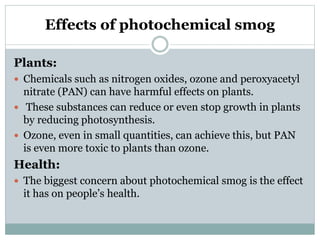
 Chemicals such as nitrogen oxides, ozone and peroxyacetyl
nitrate (PAN) can have harmful effects on plants.
 These substances can reduce or even stop growth in plants
by reducing photosynthesis.
 Ozone, even in small quantities, can achieve this, but PAN
is even more toxic to plants than ozone.
Health:
 The biggest concern about photochemical smog is the effect
it has on people’s health.
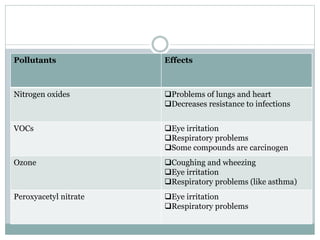
Pollutants Effects
Nitrogen oxides Problems of lungs and heart
Decreases resistance to infections
VOCs Eye irritation
Respiratory problems
Some compounds are carcinogen
Ozone Coughing and wheezing
Eye irritation
Respiratory problems (like asthma)
Peroxyacetyl nitrate Eye irritation
Respiratory problems
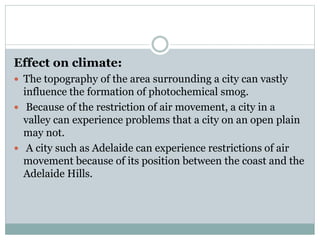
Effect on climate:
 The topography of the area surrounding a city can vastly
influence the formation of photochemical smog.
 Because of the restriction of air movement, a city in a
valley can experience problems that a city on an open plain
may not.
 A city such as Adelaide can experience restrictions of air
movement because of its position between the coast and the
Adelaide Hills.
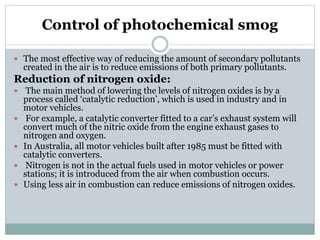
Control of photochemical smog
 The most effective way of reducing the amount of secondary pollutants
created in the air is to reduce emissions of both primary pollutants.
Reduction of nitrogen oxide:
 The main method of lowering the levels of nitrogen oxides is by a
process called ‘catalytic reduction’, which is used in industry and in
motor vehicles.
 For example, a catalytic converter fitted to a car’s exhaust system will
convert much of the nitric oxide from the engine exhaust gases to
nitrogen and oxygen.
 In Australia, all motor vehicles built after 1985 must be fitted with
catalytic converters.
 Nitrogen is not in the actual fuels used in motor vehicles or power
stations; it is introduced from the air when combustion occurs.
 Using less air in combustion can reduce emissions of nitrogen oxides.
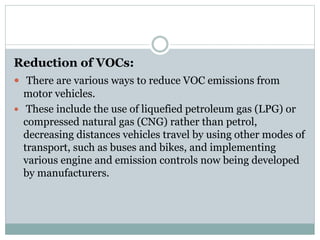
Reduction of VOCs:
 There are various ways to reduce VOC emissions from
motor vehicles.
 These include the use of liquefied petroleum gas (LPG) or
compressed natural gas (CNG) rather than petrol,
decreasing distances vehicles travel by using other modes of
transport, such as buses and bikes, and implementing
various engine and emission controls now being developed
by manufacturers.
Photochemical Smog.pptx

Photochemical Smog.pptx

  • 1.
    P R ES E N T E R : M O A Z M A K H A L I D R O L L N O . 1 9 0 1 1 5 0 6- 0 1 5 Photochemical smog
  • 2.
    Table of content Introduction  Sources Of Photochemical Smog  Formation Of Photochemical Smog  Effects Of Photochemical Smog  Control Of Photochemical Smog
  • 3.
    Introduction  Photochemical smogis a type of smog produced when ultraviolet light from the sun reacts with nitrogen oxides in the atmosphere.  Photochemical smog is a mixture of pollutants that are formed when nitrogen oxides and volatile organic compounds (VOCs) react to sunlight, creating a brown haze above cities.  It is visible as a brown haze, and is most prominent during the morning and afternoon, especially in densely populated, warm cities.  It tends to occur more often in summer, because that is when we have the most sunlight.  Cities that experience this smog daily include Los Angeles, Sydney, Mexico City, Beijing, and many more.
  • 4.
    Sources of photochemicalsmog  While nitrogen oxides and VOCs are produced biogenically (in nature), there are also major anthropogenic (man-made) emissions of both.  Natural emissions tend to be spread over large areas, reducing their effects, but man-made emissions tend to be concentrated close to their source, such as a city.
  • 5.
    Cont. Biogenic sources:  Innature, bushfires, lightning and the microbial processes that occur in soil generate nitrogen oxides.  VOCs are produced from the evaporation of naturally- occurring compounds, such as terpenes, which are the hydrocarbons in oils that make them burn.  Eucalypts have also been found to release significant amounts of these compounds.
  • 6.
    Cont. Anthropogenic sources:  Nitrogenoxides are produced mainly from the combustion of fossil fuels, particularly in power stations and motor vehicles.  VOCs are formed from the incomplete combustion of fossil fuels, from the evaporation of solvents and fuels, and from burning plant matter such as backyard burning and wood- burning stoves.
  • 7.
    Formation of photochemicalsmog  Nitrogen dioxide (NO2) can be broken down by sunlight to form nitric oxide (NO) and an oxygen radical (O): NO2 + sunlight NO + O  Oxygen radicals can then react with atmospheric oxygen (O2) to form ozone (O3): O + O2 O3  Ozone is consumed by nitric oxide to produce nitrogen dioxide and oxygen: O3 + NO NO2 + O2  Harmful products, such as PAN, are produced by reactions of nitrogen dioxide with various hydrocarbons (R), which are compounds made from carbon, hydrogen and other substances: NO2 + R products such as PAN
  • 8.
    Cont..  The mainsource of these hydrocarbons is the VOCs.  Similarly, oxygenated organic and inorganic compounds (ROx) react with nitric oxide to produce more nitrogen oxides: NO + ROx NO2 + other products  The significance of the presence of the VOCs in these last two reactions is paramount. Ozone is normally consumed by nitric oxide, as in reaction 3.  However, when VOCs are present, nitric oxide and nitrogen dioxide are consumed as in reactions 4 and 5, allowing the build up of ground level ozone.
  • 9.
    Composition of photochemicalsmog  Nitric oxide (NO) and nitrogen dioxide (NO2) are emitted from the combustion of fossil fuels, along with being naturally emitted from things such as volcanos and forest fires (it is the immense concentration of these pollutants within cities that is of the most concern however, as natural emissions tend to spread out over larger areas).  When exposed to ultraviolet radiation, NO2 goes through a complex series of reactions with hydrocarbons to produce the components of photochemical smog is a mixture of ozone, nitric acid, aldehydes, peroxyacyl nitrates (PANs) and other secondary pollutants.  NO2, ozone and PANs are called photochemical oxidants because they can react and oxidize certain compounds in the atmosphere or within a person's lungs that are not normally oxidized.  Even small traces of these chemicals can affect the respiratory tract of humans and animals, and damage crops and trees.
  • 11.
    Effects of photochemicalsmog Plants:  Chemicals such as nitrogen oxides, ozone and peroxyacetyl nitrate (PAN) can have harmful effects on plants.  These substances can reduce or even stop growth in plants by reducing photosynthesis.  Ozone, even in small quantities, can achieve this, but PAN is even more toxic to plants than ozone. Health:  The biggest concern about photochemical smog is the effect it has on people’s health.
  • 12.
    Pollutants Effects Nitrogen oxidesProblems of lungs and heart Decreases resistance to infections VOCs Eye irritation Respiratory problems Some compounds are carcinogen Ozone Coughing and wheezing Eye irritation Respiratory problems (like asthma) Peroxyacetyl nitrate Eye irritation Respiratory problems
  • 13.
    Effect on climate: The topography of the area surrounding a city can vastly influence the formation of photochemical smog.  Because of the restriction of air movement, a city in a valley can experience problems that a city on an open plain may not.  A city such as Adelaide can experience restrictions of air movement because of its position between the coast and the Adelaide Hills.
  • 14.
    Control of photochemicalsmog  The most effective way of reducing the amount of secondary pollutants created in the air is to reduce emissions of both primary pollutants. Reduction of nitrogen oxide:  The main method of lowering the levels of nitrogen oxides is by a process called ‘catalytic reduction’, which is used in industry and in motor vehicles.  For example, a catalytic converter fitted to a car’s exhaust system will convert much of the nitric oxide from the engine exhaust gases to nitrogen and oxygen.  In Australia, all motor vehicles built after 1985 must be fitted with catalytic converters.  Nitrogen is not in the actual fuels used in motor vehicles or power stations; it is introduced from the air when combustion occurs.  Using less air in combustion can reduce emissions of nitrogen oxides.
  • 15.
    Reduction of VOCs: There are various ways to reduce VOC emissions from motor vehicles.  These include the use of liquefied petroleum gas (LPG) or compressed natural gas (CNG) rather than petrol, decreasing distances vehicles travel by using other modes of transport, such as buses and bikes, and implementing various engine and emission controls now being developed by manufacturers.