SMOG
"The Burning issue of the
World that needs
attention"
• Introduction
• Types of Smog
• Why it's Important to us?
• Impacts of Smog
• Plan of Action
• References
Introduction
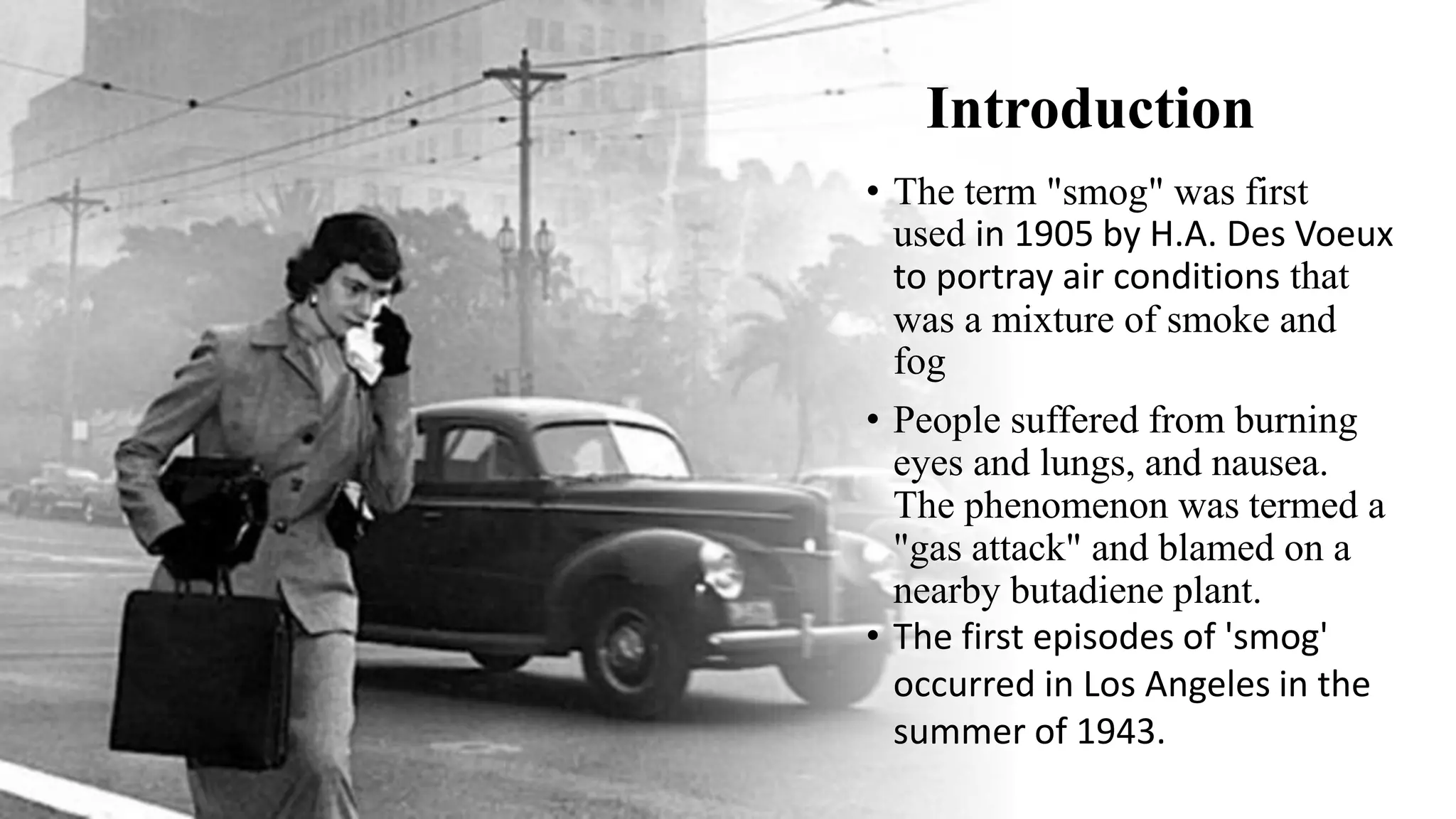
• The term "smog" was first
used in 1905 by H.A. Des Voeux
to portray air conditions that
was a mixture of smoke and
fog
• People suffered from burning
eyes and lungs, and nausea.
The phenomenon was termed a
"gas attack" and blamed on a
nearby butadiene plant.
• The first episodes of 'smog'
occurred in Los Angeles in the
summer of 1943.
INTRODUCTION
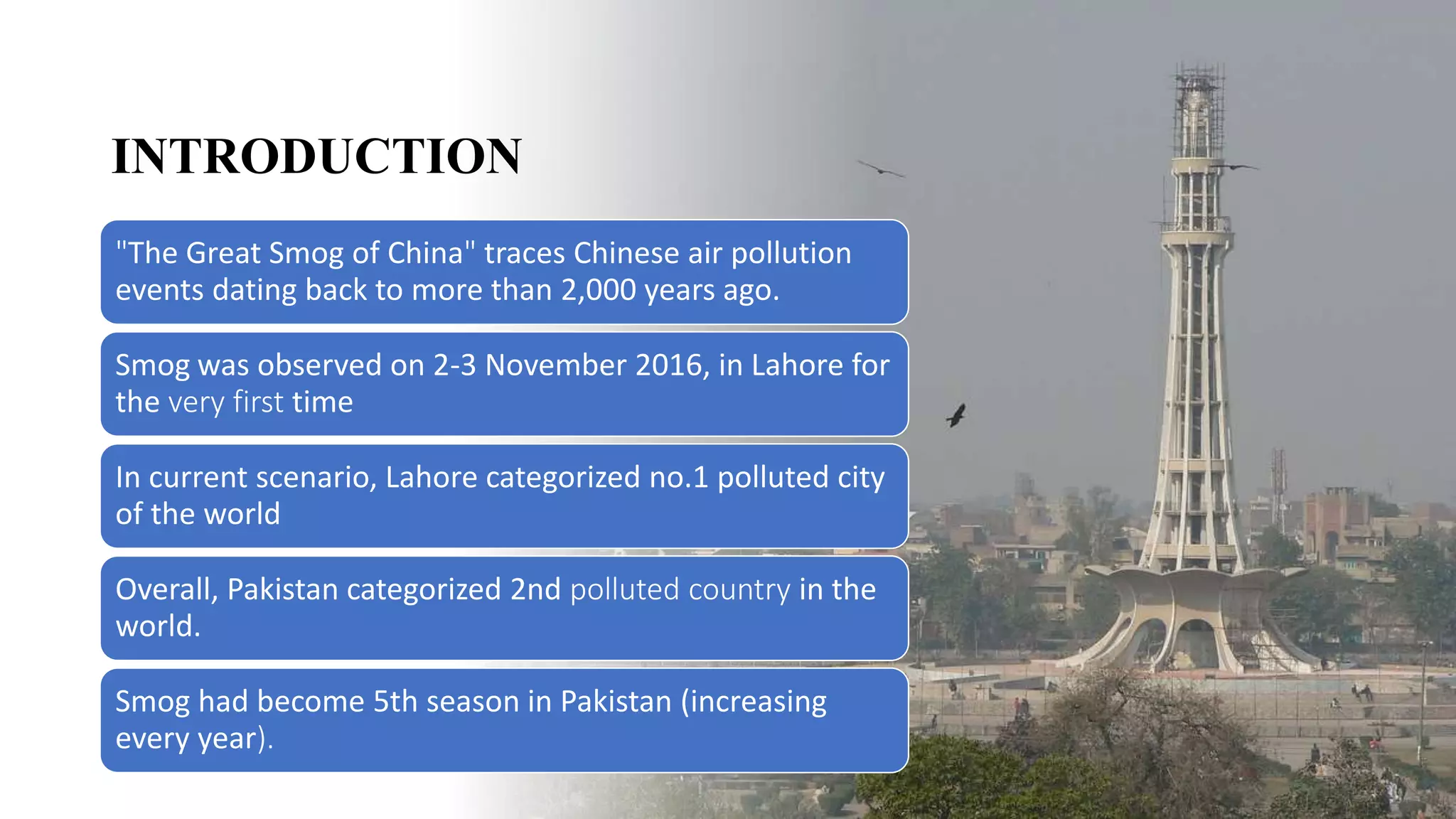
"The Great Smog of China" traces Chinese air pollution
events dating back to more than 2,000 years ago.
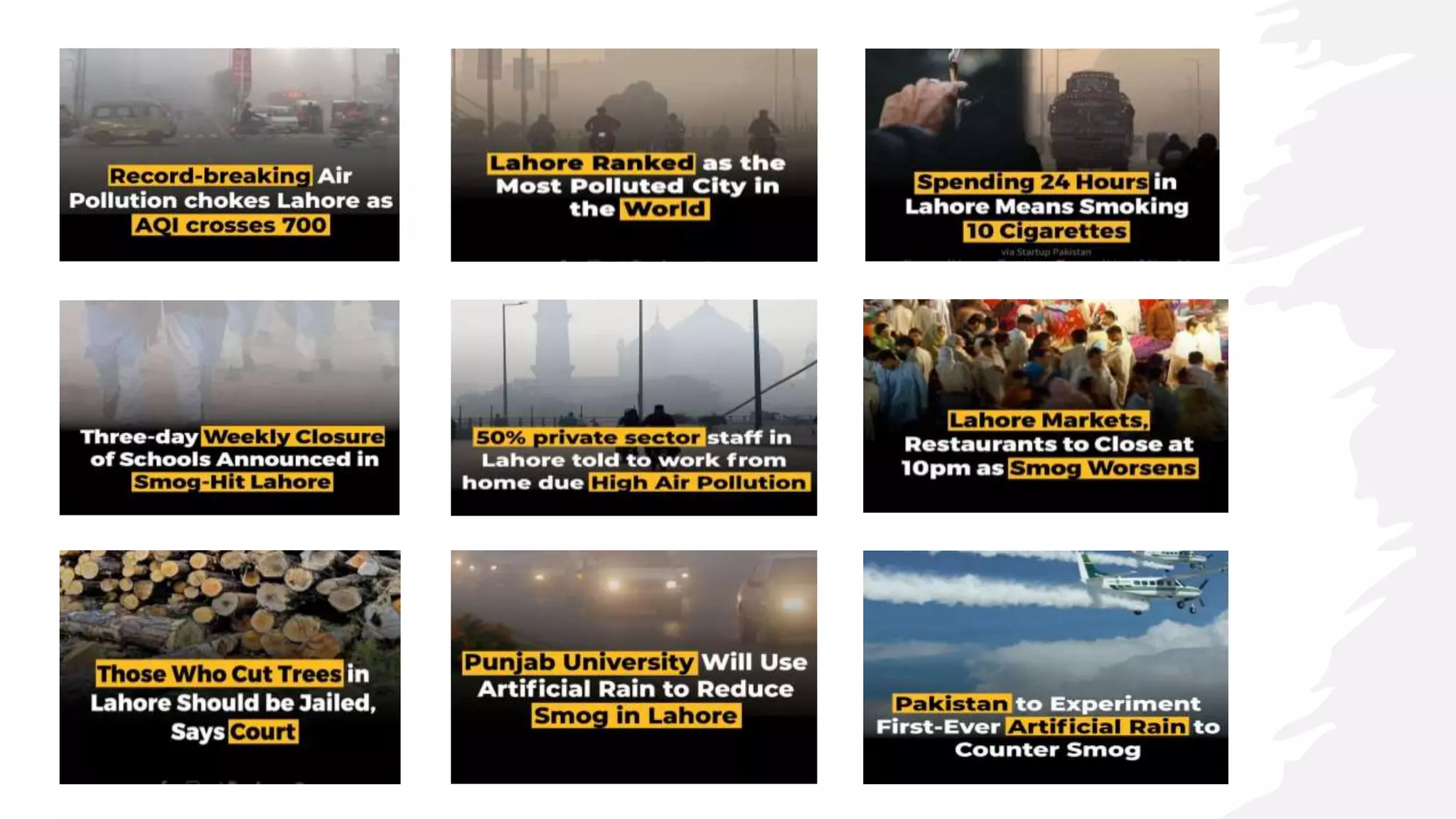
Smog was observed on 2-3 November 2016, in Lahore for
the very first time
In current scenario, Lahore categorized no.1 polluted city
of the world
Overall, Pakistan categorized 2nd polluted country in the
world.
Smog had become 5th season in Pakistan (increasing
every year).
Types of Smog
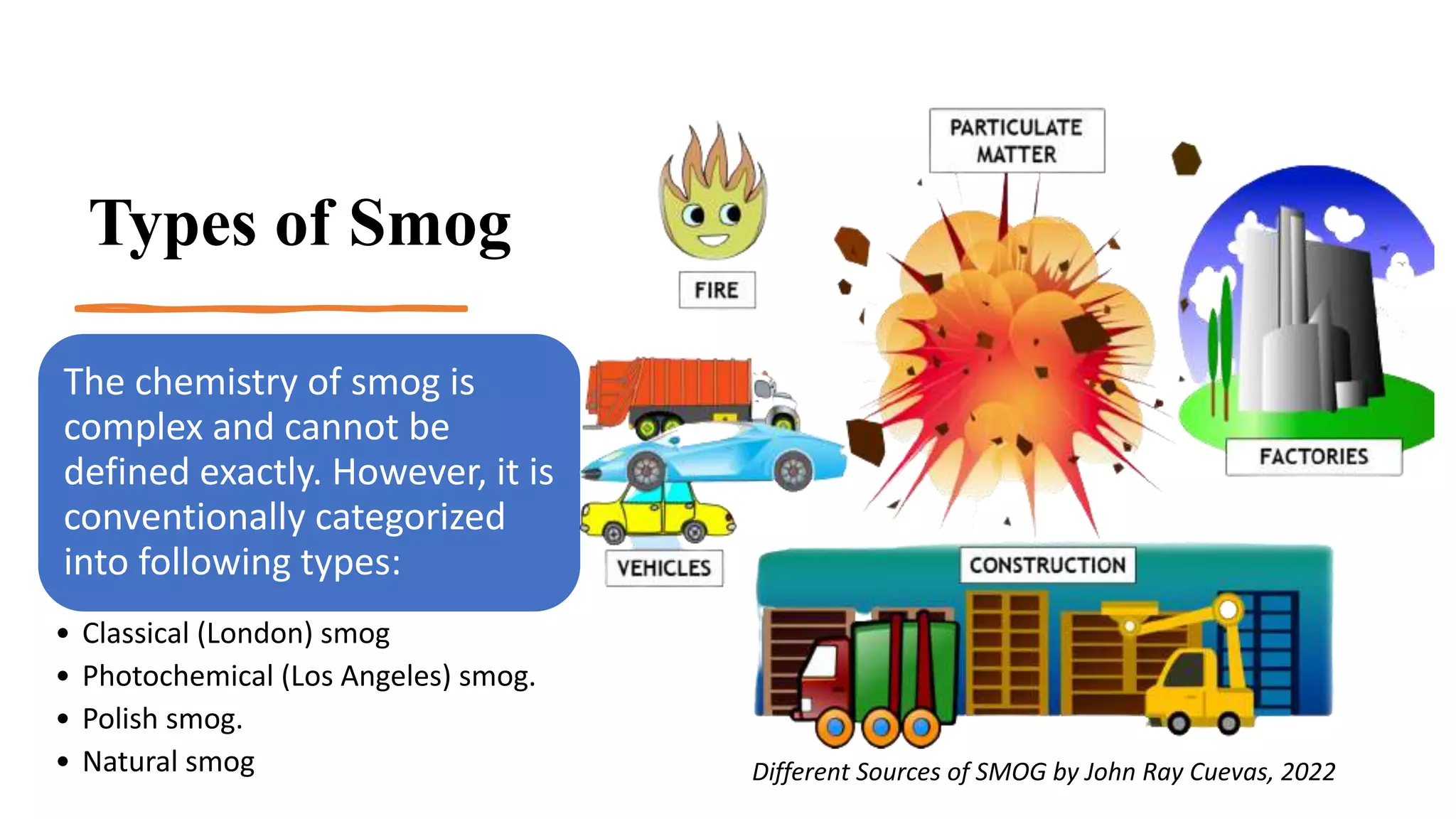
The chemistry of smog is
complex and cannot be
defined exactly. However, it is
conventionally categorized
into following types:
• Classical (London) smog
• Photochemical (Los Angeles) smog.
• Polish smog.
• Natural smog Different Sources of SMOG by John Ray Cuevas, 2022
Classical (London) smog
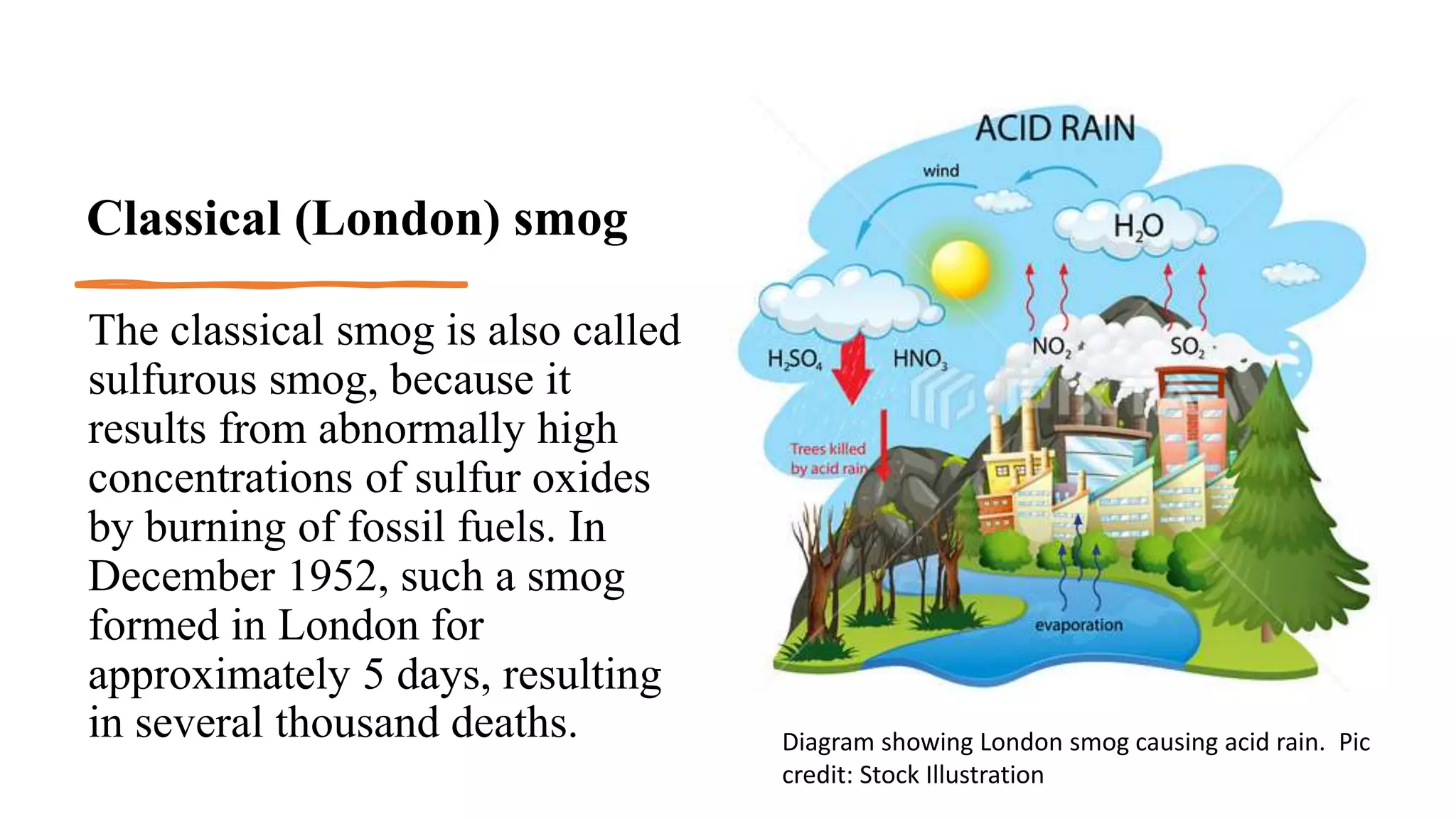
The classical smog is also called
sulfurous smog, because it
results from abnormally high
concentrations of sulfur oxides
by burning of fossil fuels. In
December 1952, such a smog
formed in London for
approximately 5 days, resulting
in several thousand deaths. Diagram showing London smog causing acid rain. Pic
credit: Stock Illustration
Photochemical (Los Angeles) smog.
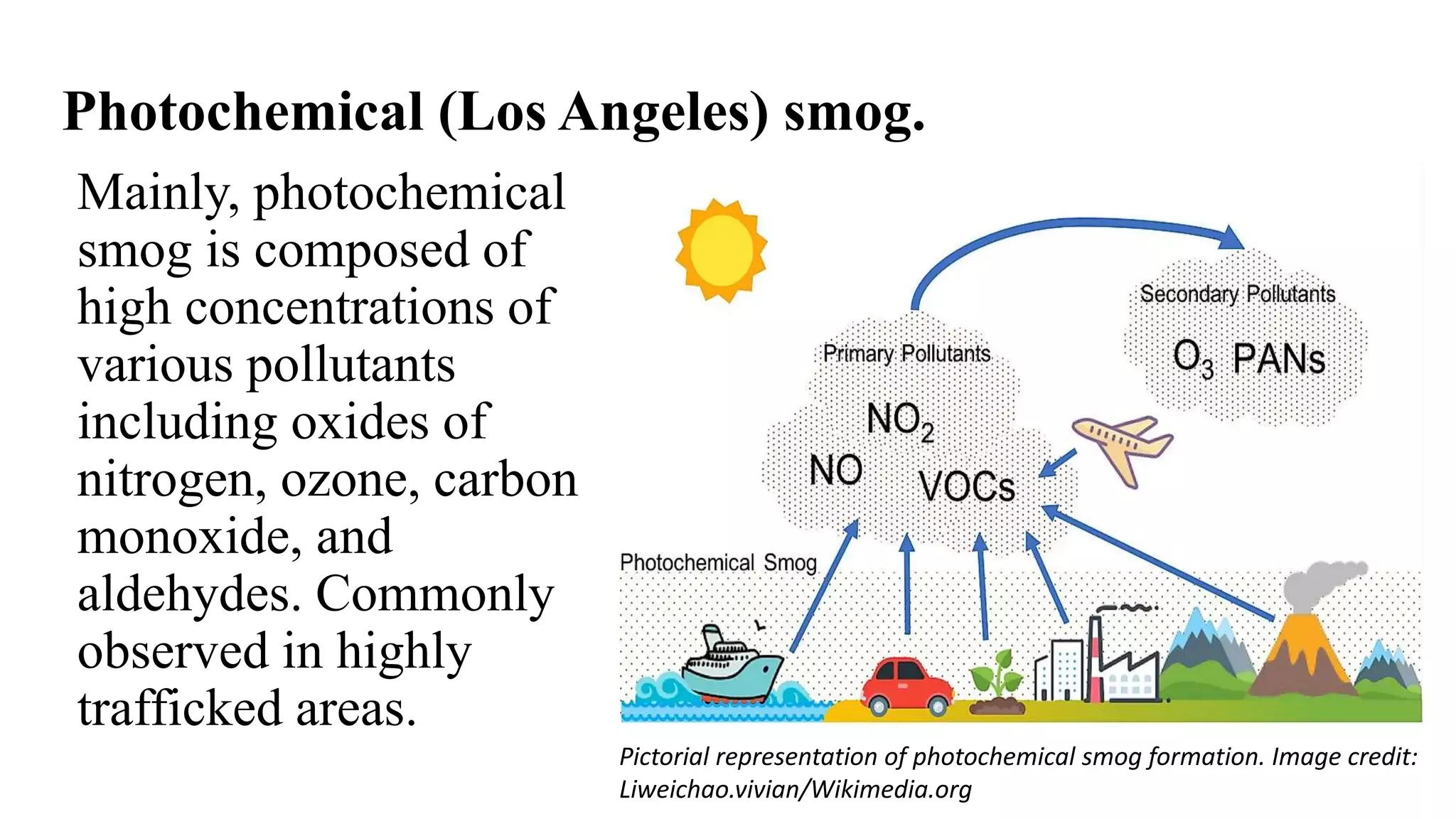
Mainly, photochemical
smog is composed of
high concentrations of
various pollutants
including oxides of
nitrogen, ozone, carbon
monoxide, and
aldehydes. Commonly
observed in highly
trafficked areas.
Pictorial representation of photochemical smog formation. Image credit:
Liweichao.vivian/Wikimedia.org
Polish Smog
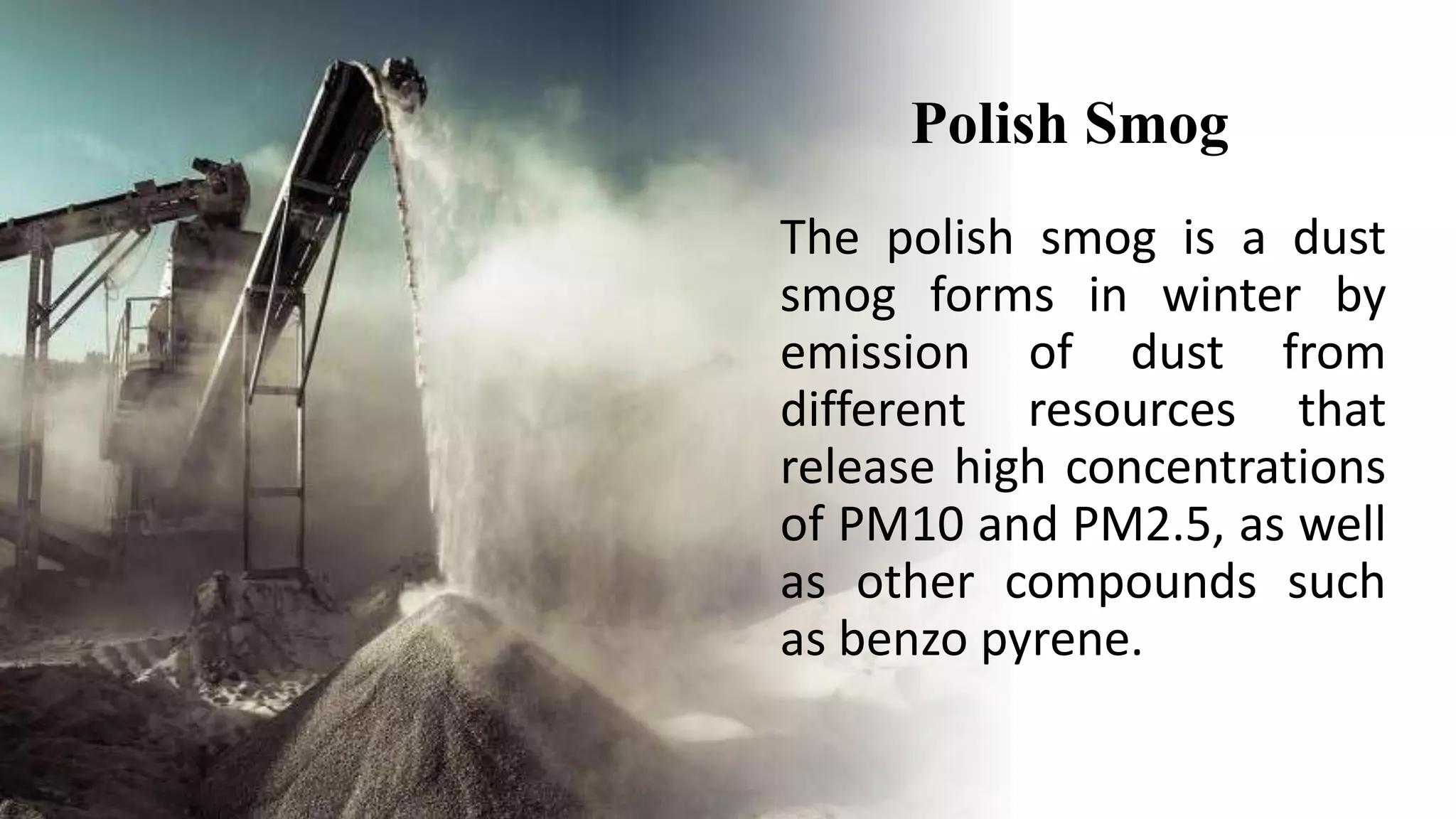
The polish smog is a dust
smog forms in winter by
emission of dust from
different resources that
release high concentrations
of PM10 and PM2.5, as well
as other compounds such
as benzo pyrene.
Natural Smog
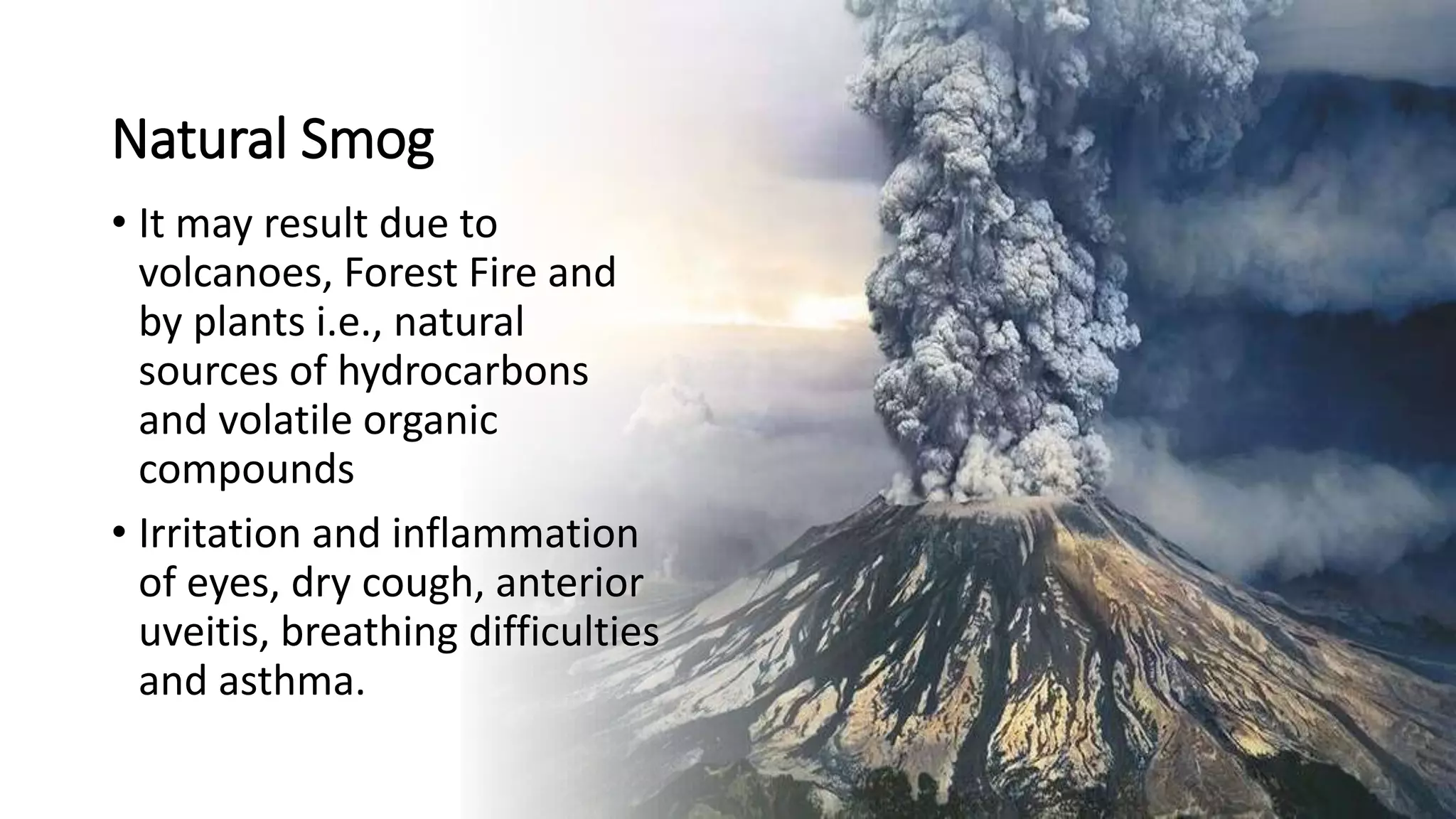
• It may result due to
volcanoes, Forest Fire and
by plants i.e., natural
sources of hydrocarbons
and volatile organic
compounds
• Irritation and inflammation
of eyes, dry cough, anterior
uveitis, breathing difficulties
and asthma.
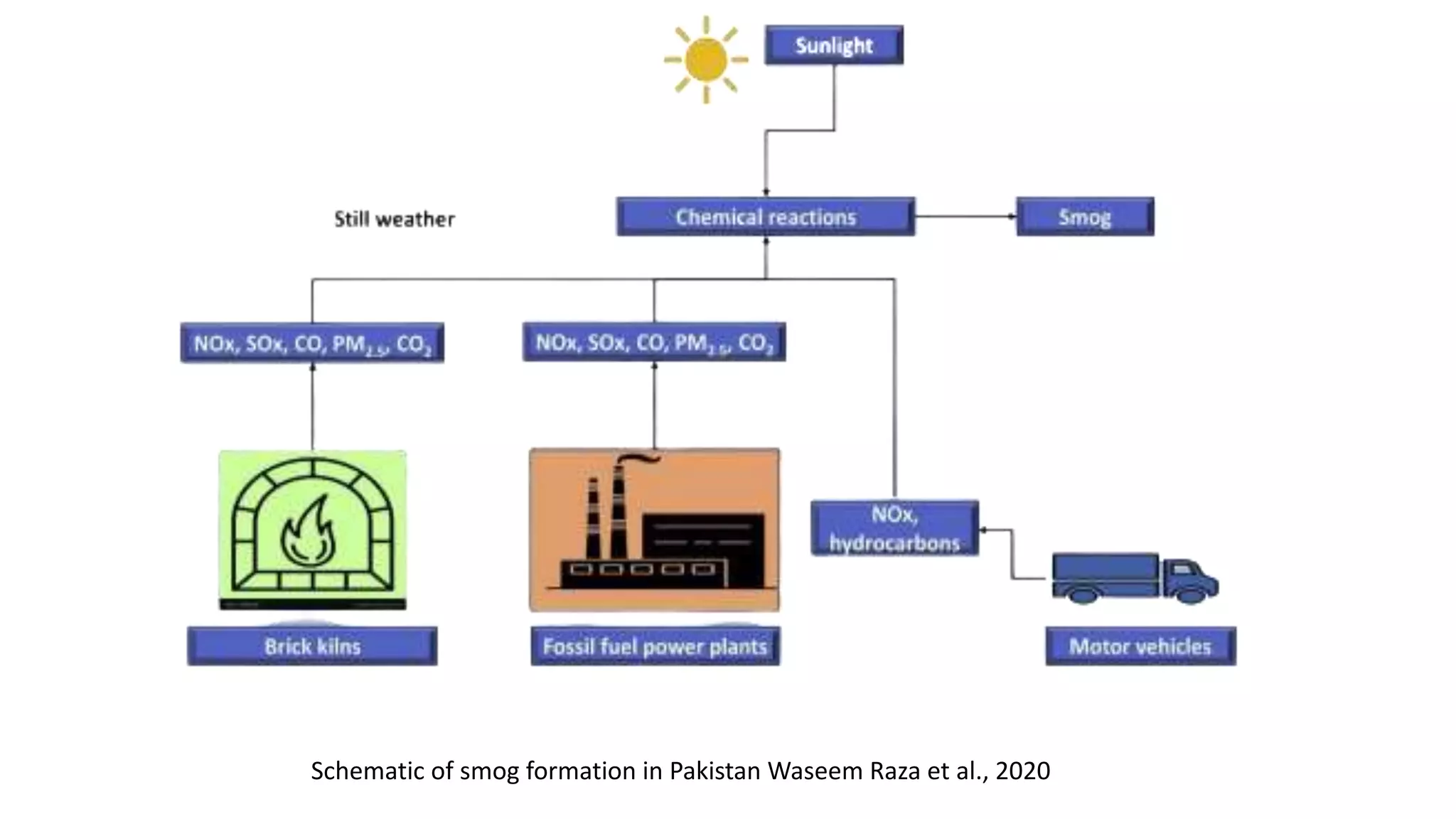
Schematic of smog formation in Pakistan Waseem Raza et al., 2020
Why it's important to us ?
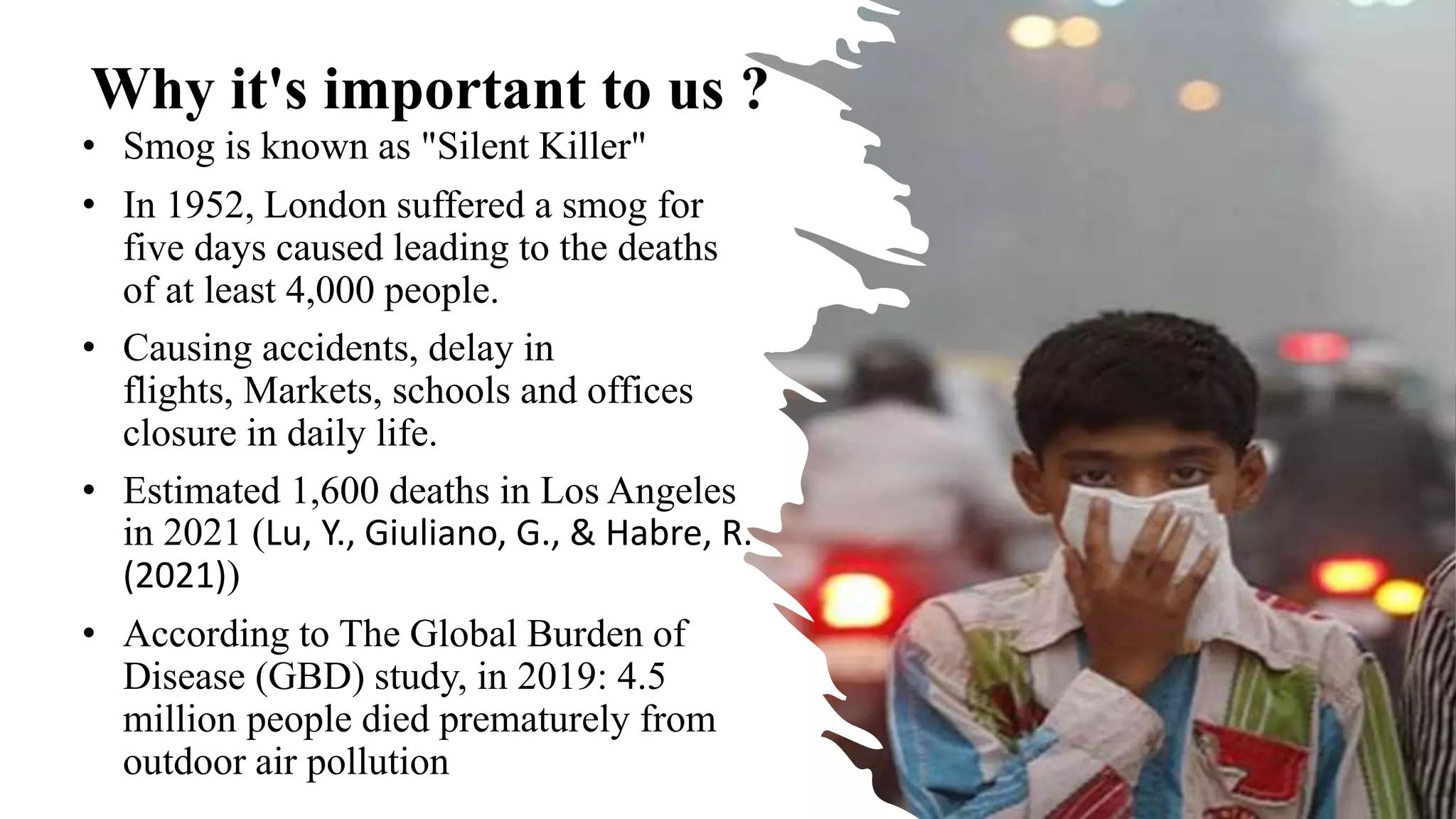
• Smog is known as "Silent Killer"
• In 1952, London suffered a smog for
five days caused leading to the deaths
of at least 4,000 people.
• Causing accidents, delay in
flights, Markets, schools and offices
closure in daily life.
• Estimated 1,600 deaths in Los Angeles
in 2021 (Lu, Y., Giuliano, G., & Habre, R.
(2021))
• According to The Global Burden of
Disease (GBD) study, in 2019: 4.5
million people died prematurely from
outdoor air pollution
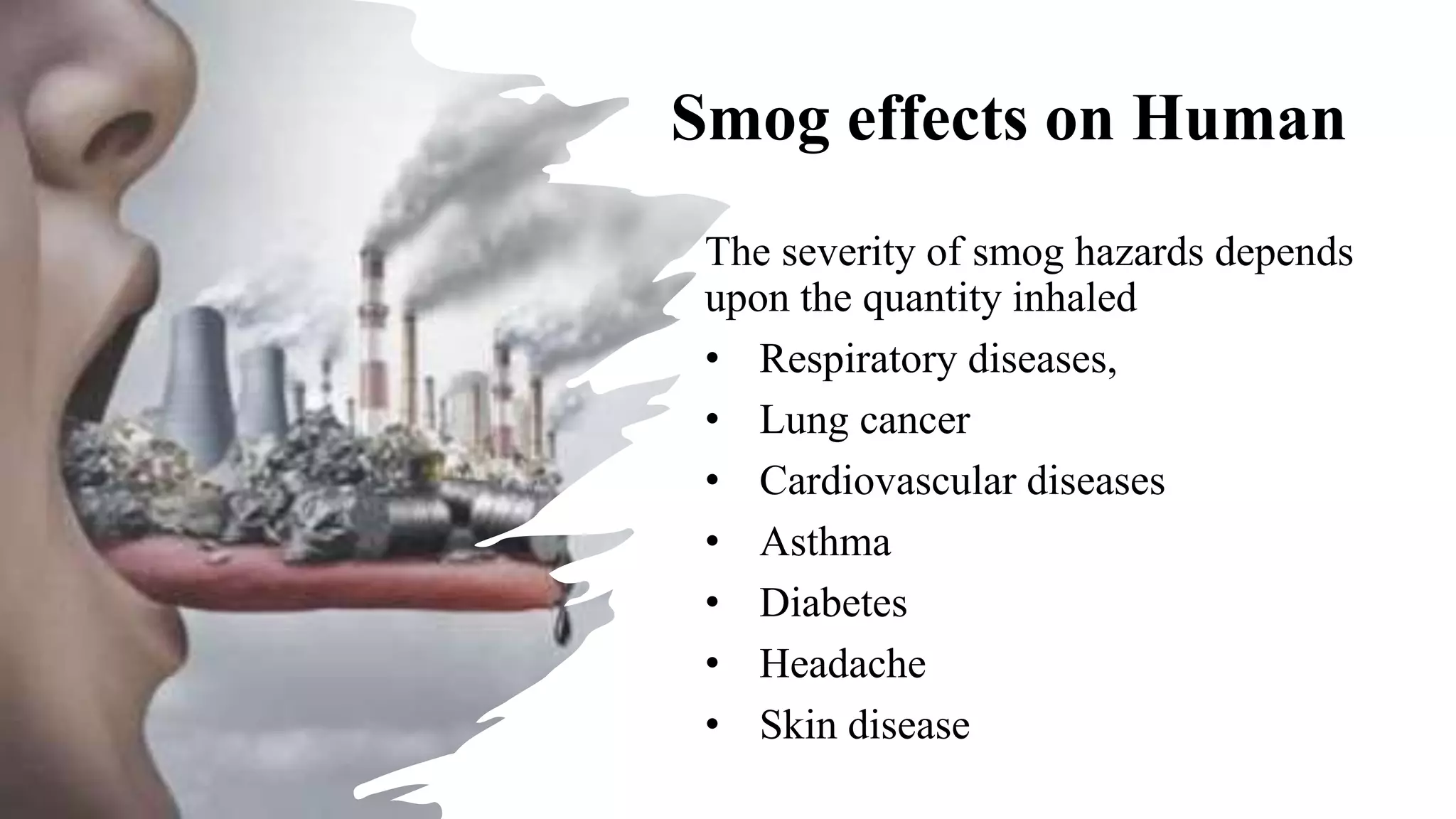
Smog effects on Human
The severity of smog hazards depends
upon the quantity inhaled
• Respiratory diseases,
• Lung cancer
• Cardiovascular diseases
• Asthma
• Diabetes
• Headache
• Skin disease
Smog Impacts on Crops
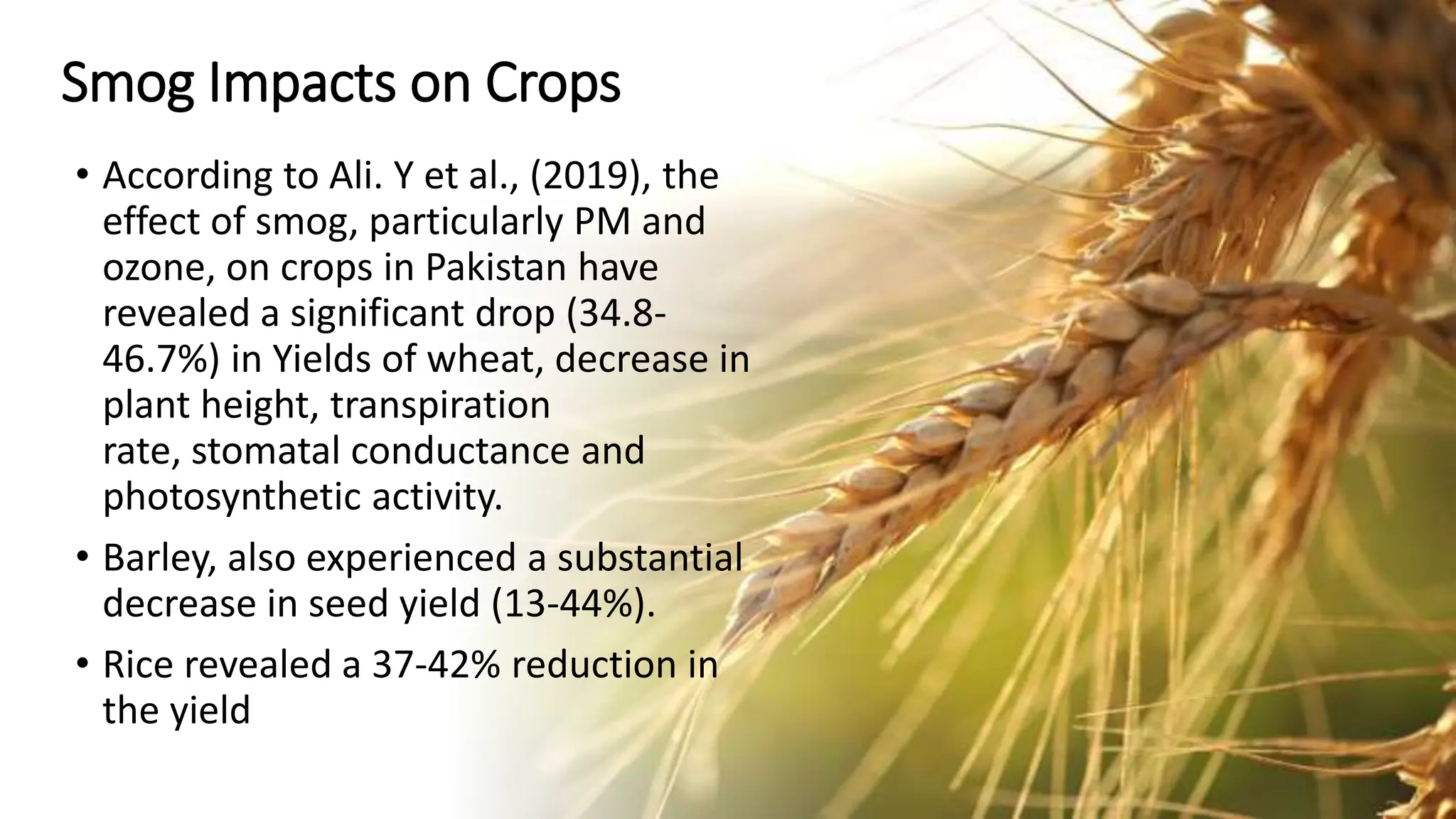
• According to Ali. Y et al., (2019), the
effect of smog, particularly PM and
ozone, on crops in Pakistan have
revealed a significant drop (34.8-
46.7%) in Yields of wheat, decrease in
plant height, transpiration
rate, stomatal conductance and
photosynthetic activity.
• Barley, also experienced a substantial
decrease in seed yield (13-44%).
• Rice revealed a 37-42% reduction in
the yield
Continue..
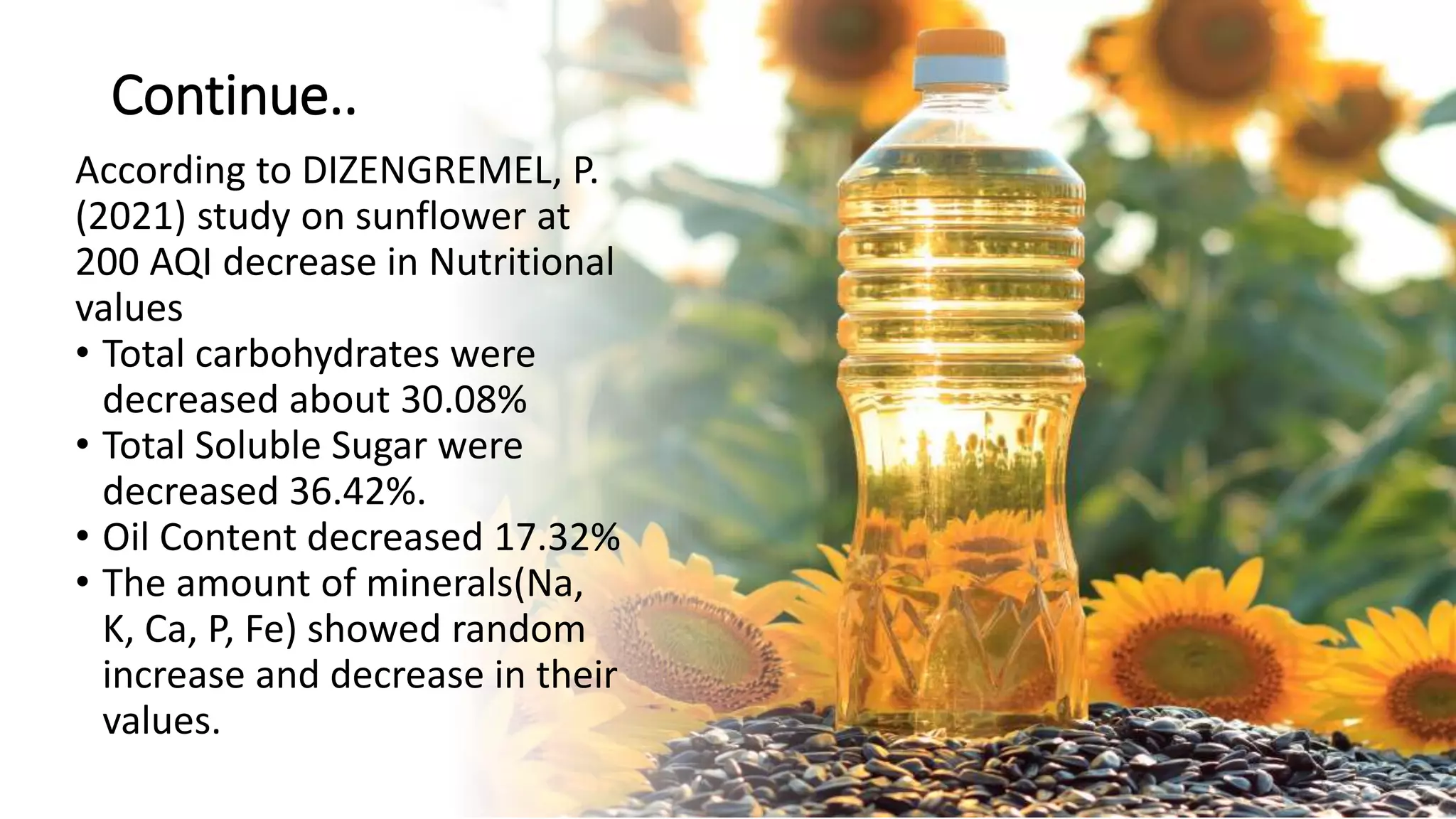
According to DIZENGREMEL, P.
(2021) study on sunflower at
200 AQI decrease in Nutritional
values
• Total carbohydrates were
decreased about 30.08%
• Total Soluble Sugar were
decreased 36.42%.
• Oil Content decreased 17.32%
• The amount of minerals(Na,
K, Ca, P, Fe) showed random
increase and decrease in their
values.
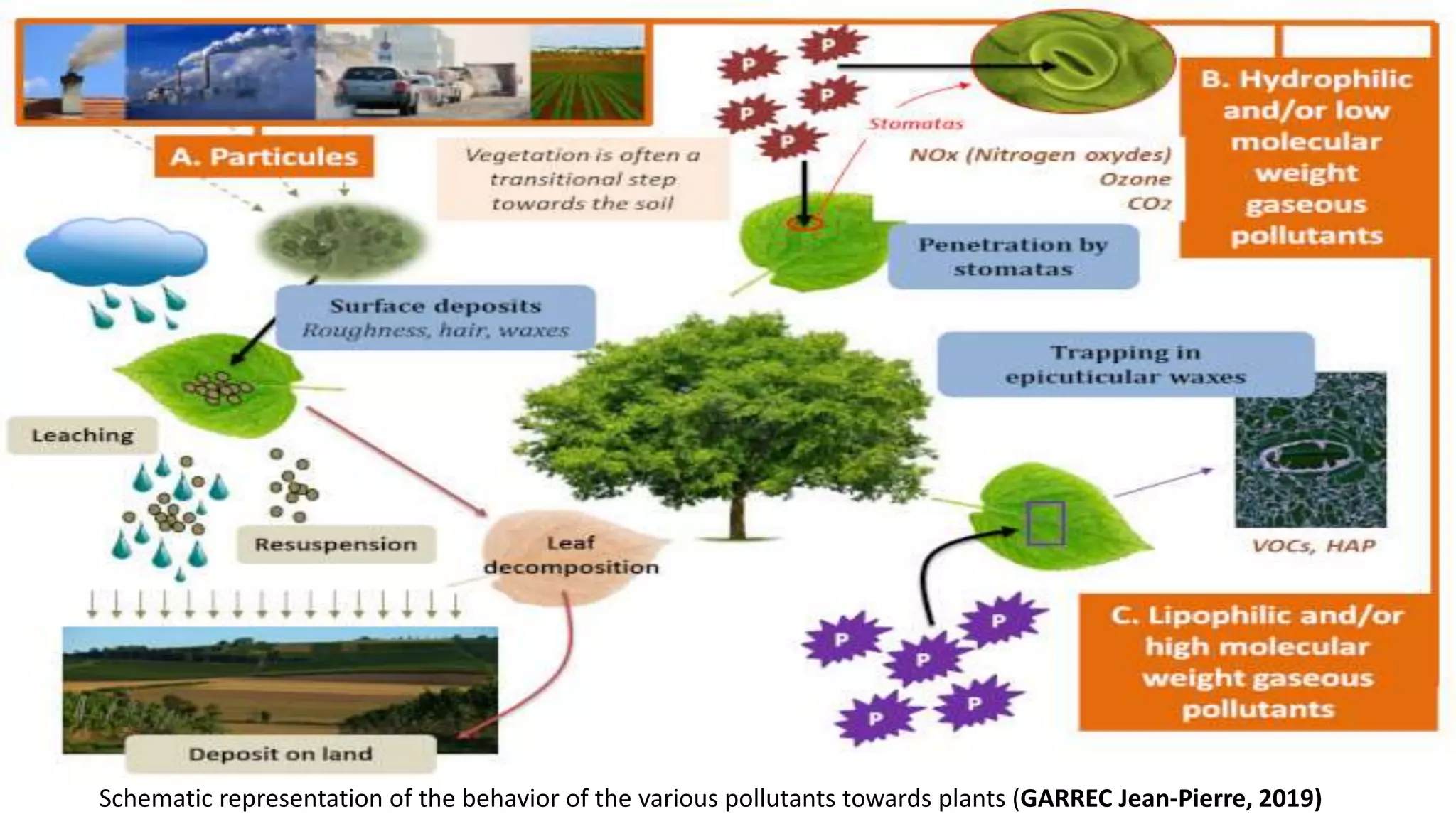
Schematic representation of the behavior of the various pollutants towards plants (GARREC Jean-Pierre, 2019)
Economic Losses
• As per the World Bank, the global cost
for air pollution has accounted for $5.1
trillion, which is 7.2% of the annual GDP.
• If these trends continue, it may increase
to $25 trillion as per the Organization for
Economic Cooperation and
Development (OECD).
• A 2011 study suggests that ozone will
decrease the productivity of crops to
26% by 2030 (Avnery et al,. 2011)
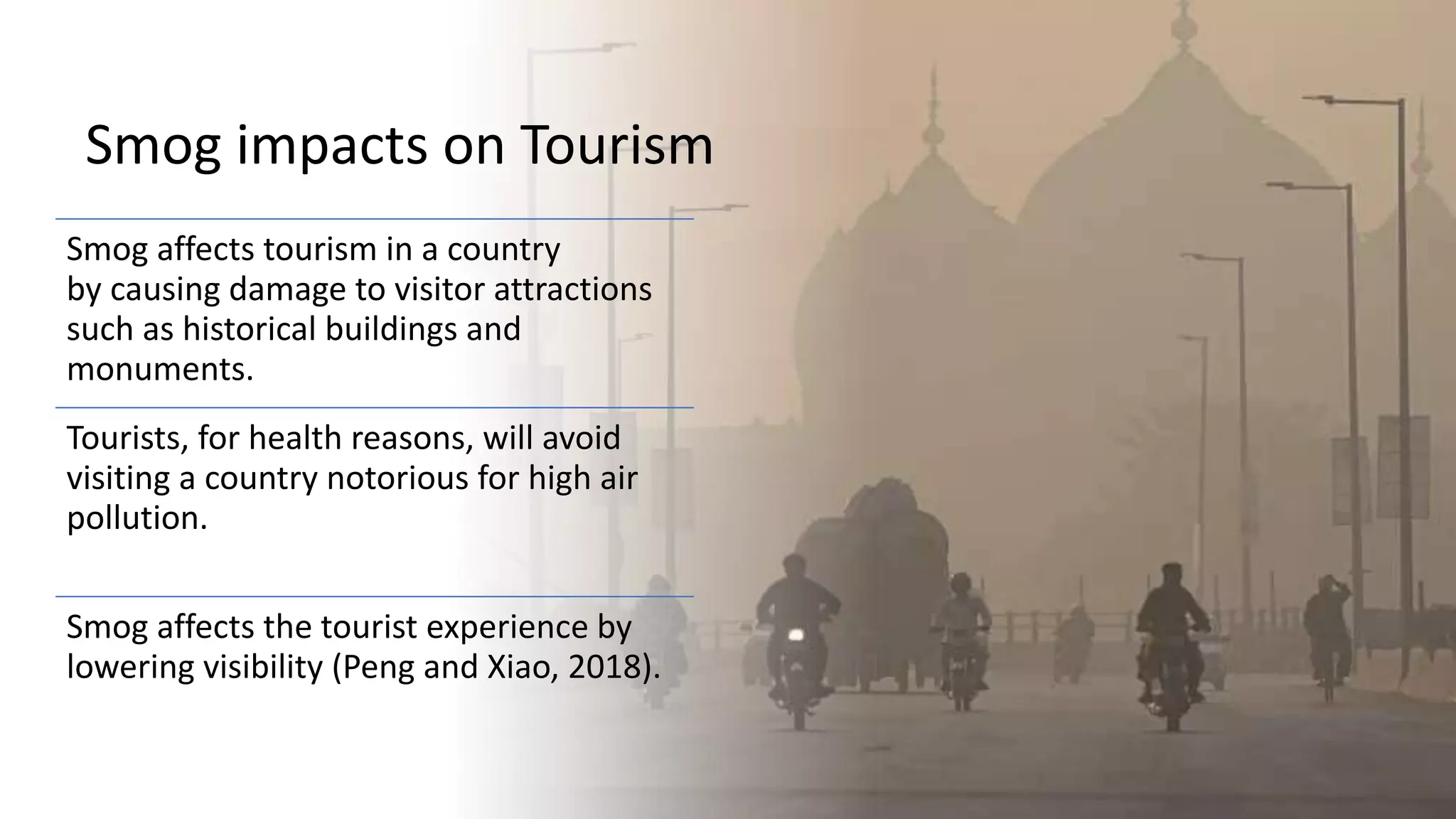
Smog impacts on Tourism
Smog affects tourism in a country
by causing damage to visitor attractions
such as historical buildings and
monuments.
Tourists, for health reasons, will avoid
visiting a country notorious for high air
pollution.
Smog affects the tourist experience by
lowering visibility (Peng and Xiao, 2018).
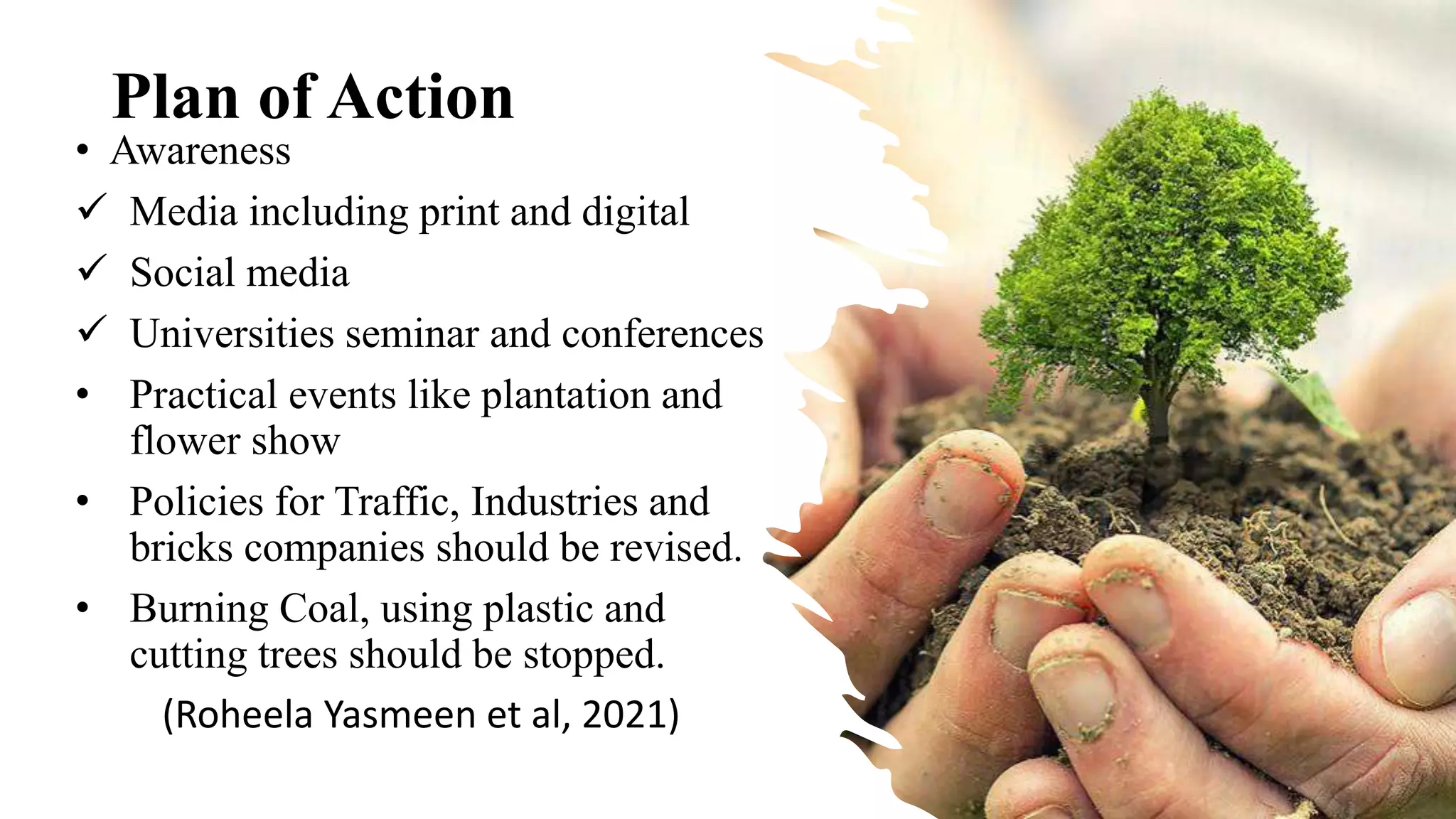
Plan of Action
• Awareness
 Media including print and digital
 Social media
 Universities seminar and conferences
• Practical events like plantation and
flower show
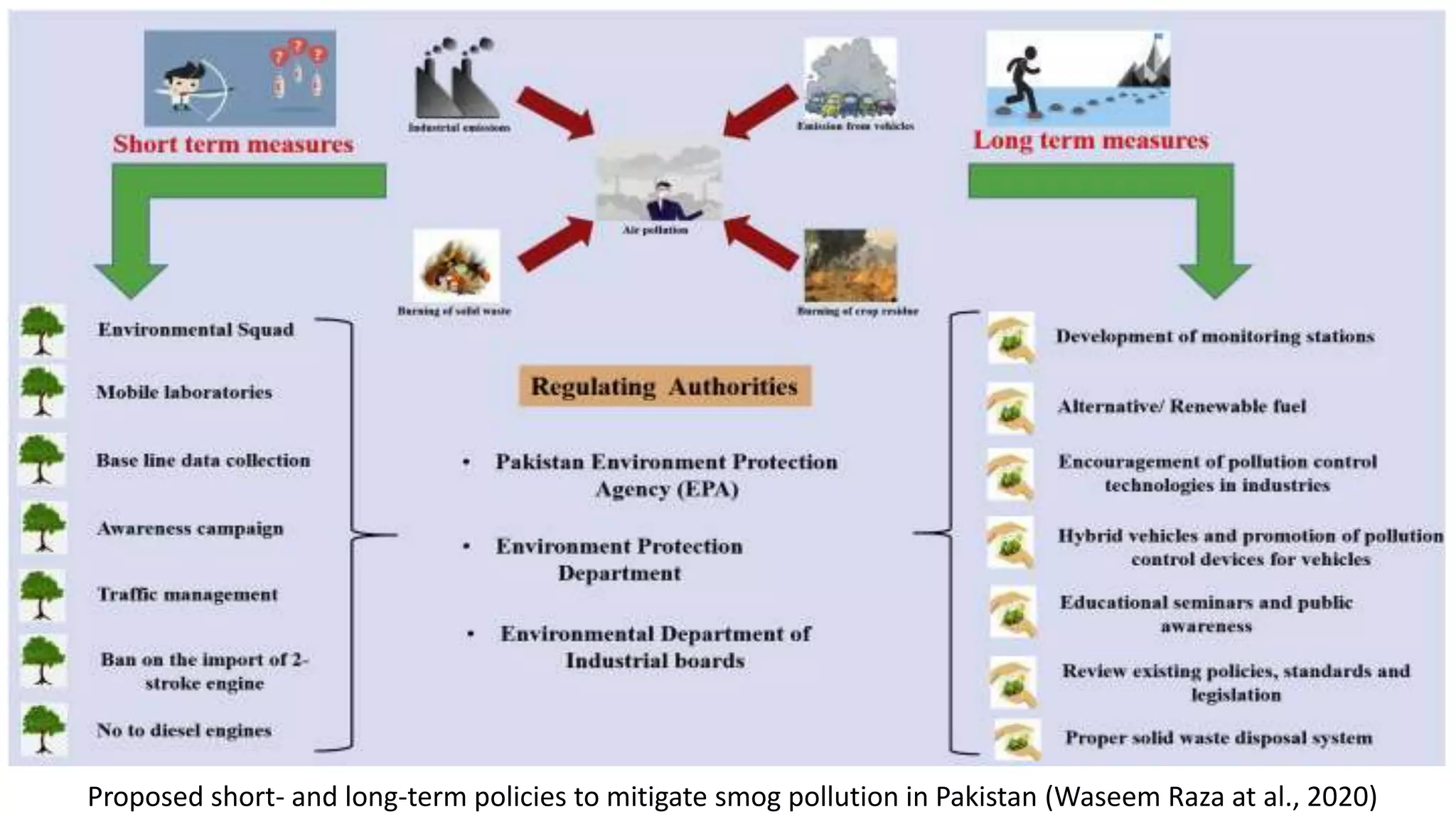
• Policies for Traffic, Industries and
bricks companies should be revised.
• Burning Coal, using plastic and
cutting trees should be stopped.
(Roheela Yasmeen et al, 2021)
Proposed short- and long-term policies to mitigate smog pollution in Pakistan (Waseem Raza at al., 2020)
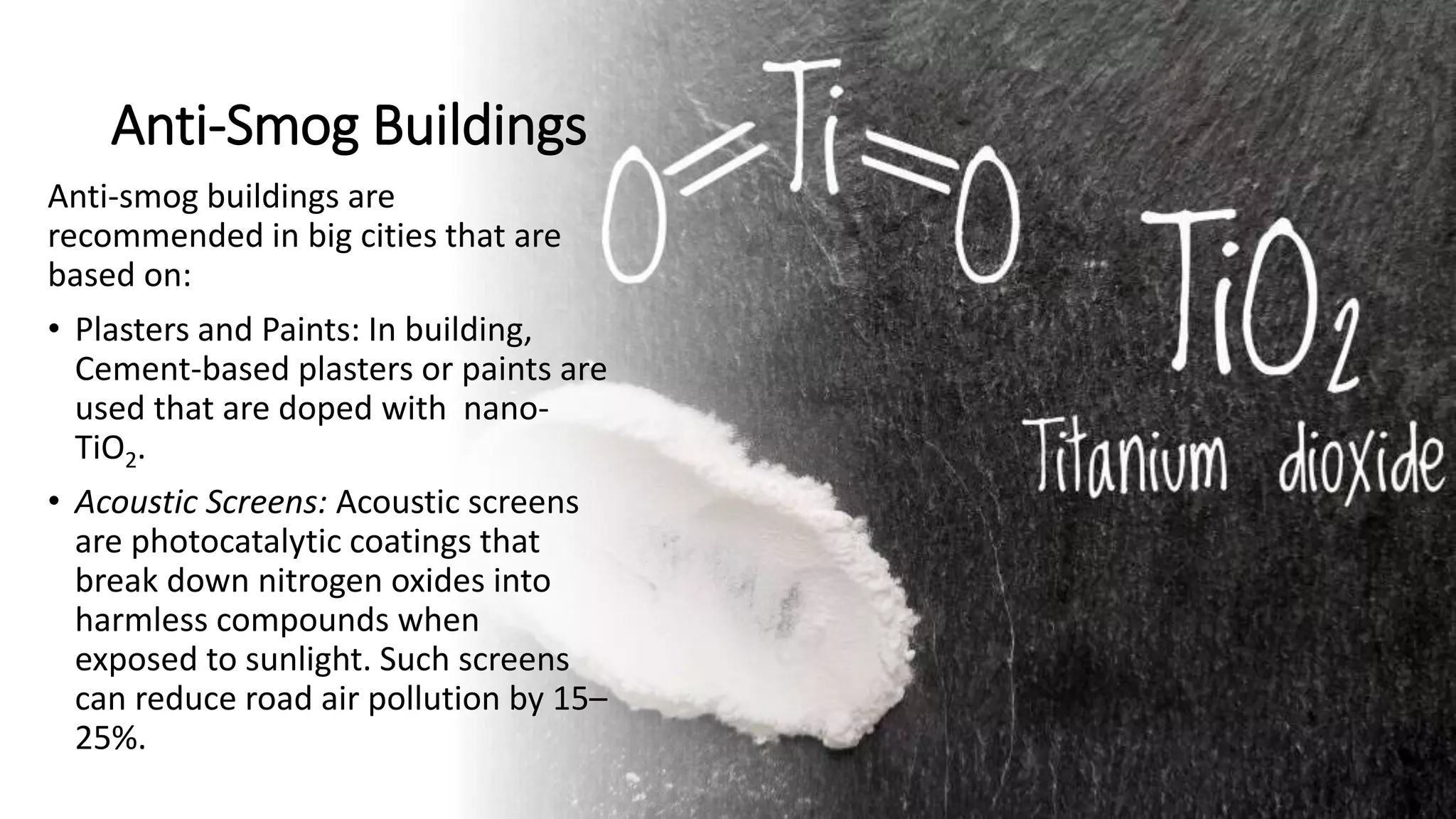
Anti-Smog Buildings
Anti-smog buildings are
recommended in big cities that are
based on:
• Plasters and Paints: In building,
Cement-based plasters or paints are
used that are doped with nano-
TiO2.
• Acoustic Screens: Acoustic screens
are photocatalytic coatings that
break down nitrogen oxides into
harmless compounds when
exposed to sunlight. Such screens
can reduce road air pollution by 15–
25%.
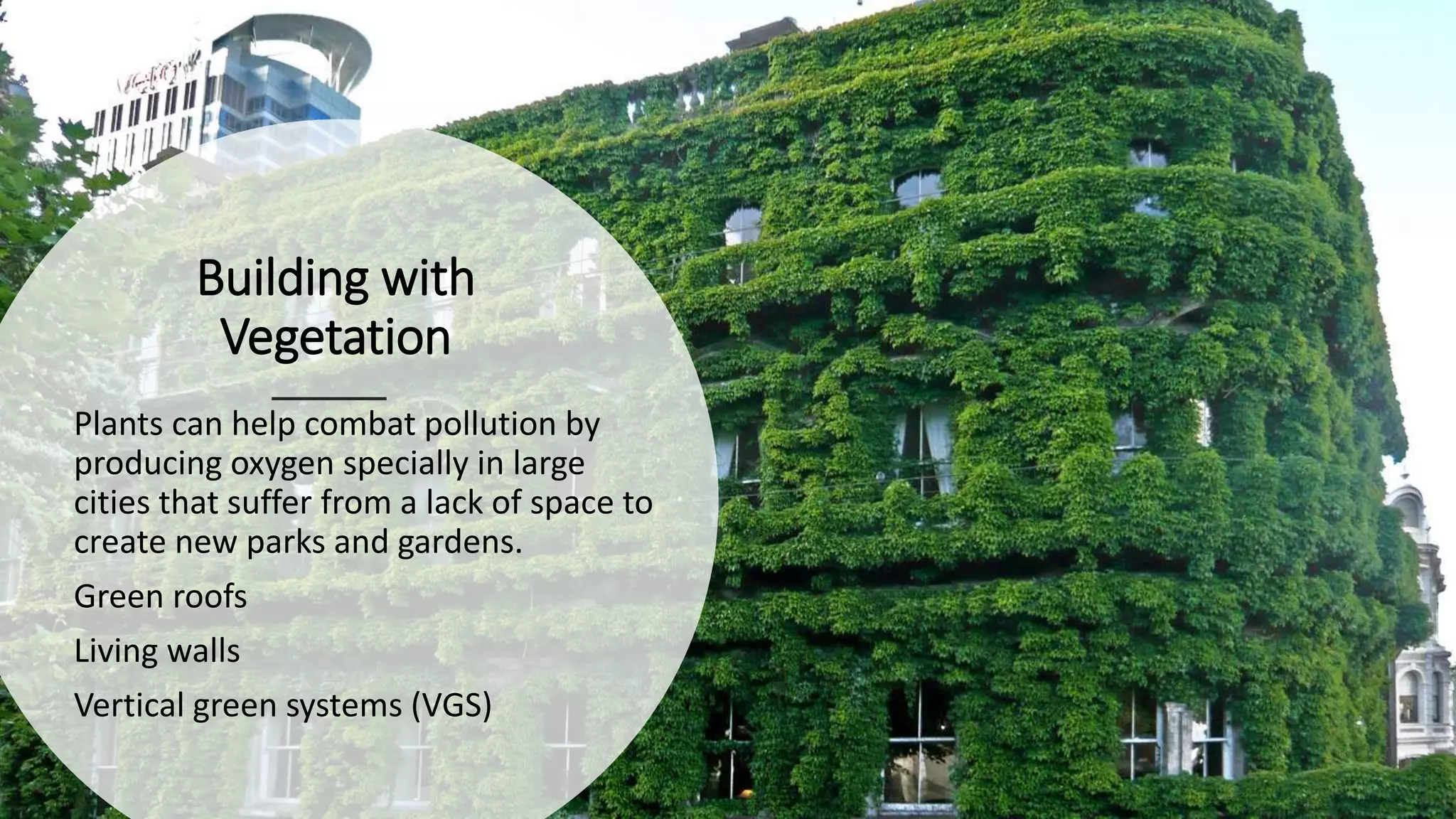
Building with
Vegetation
Plants can help combat pollution by
producing oxygen specially in large
cities that suffer from a lack of space to
create new parks and gardens.
Green roofs
Living walls
Vertical green systems (VGS)
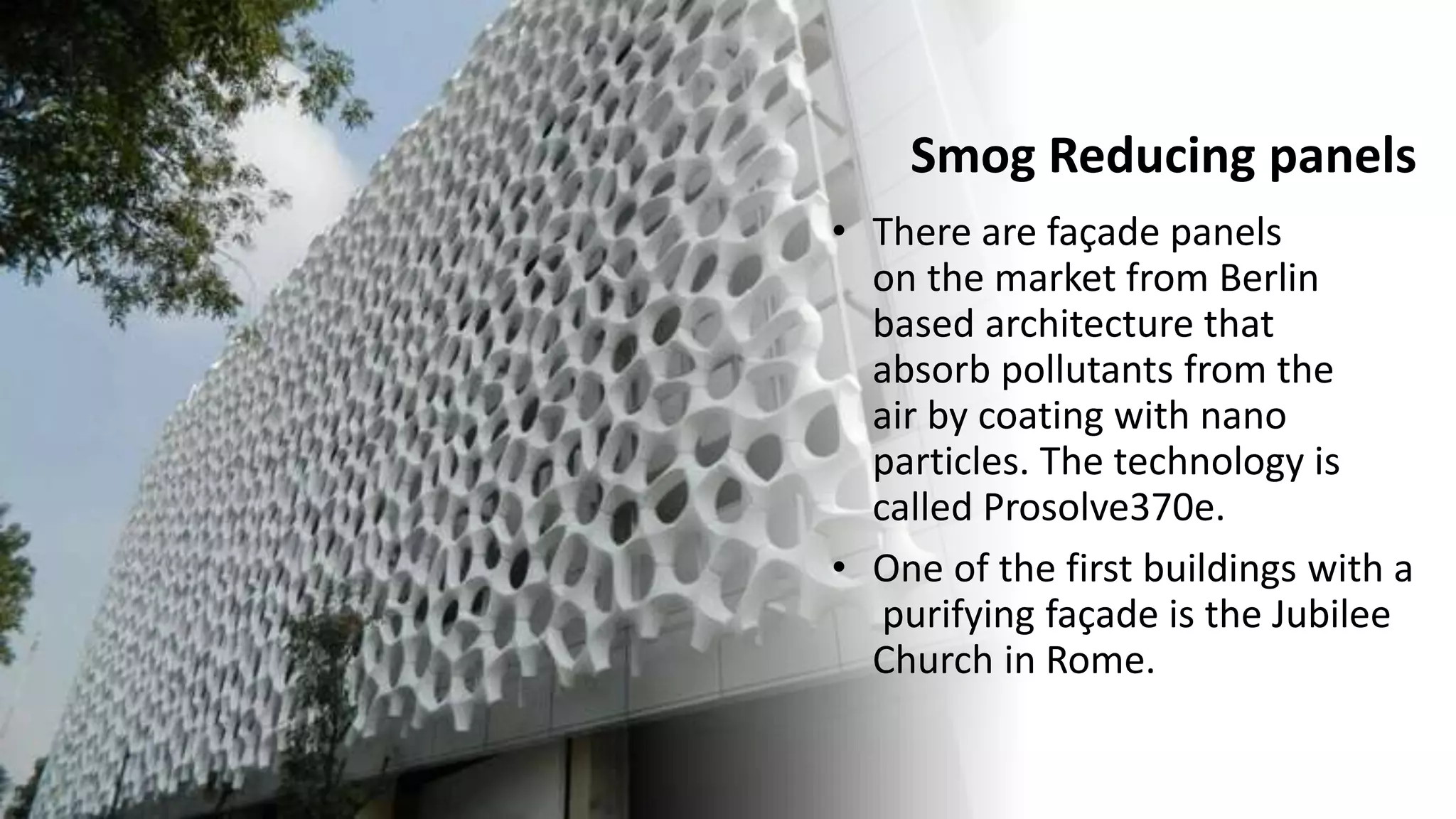
Smog Reducing panels
• There are façade panels
on the market from Berlin
based architecture that
absorb pollutants from the
air by coating with nano
particles. The technology is
called Prosolve370e.
• One of the first buildings with a
purifying façade is the Jubilee
Church in Rome.
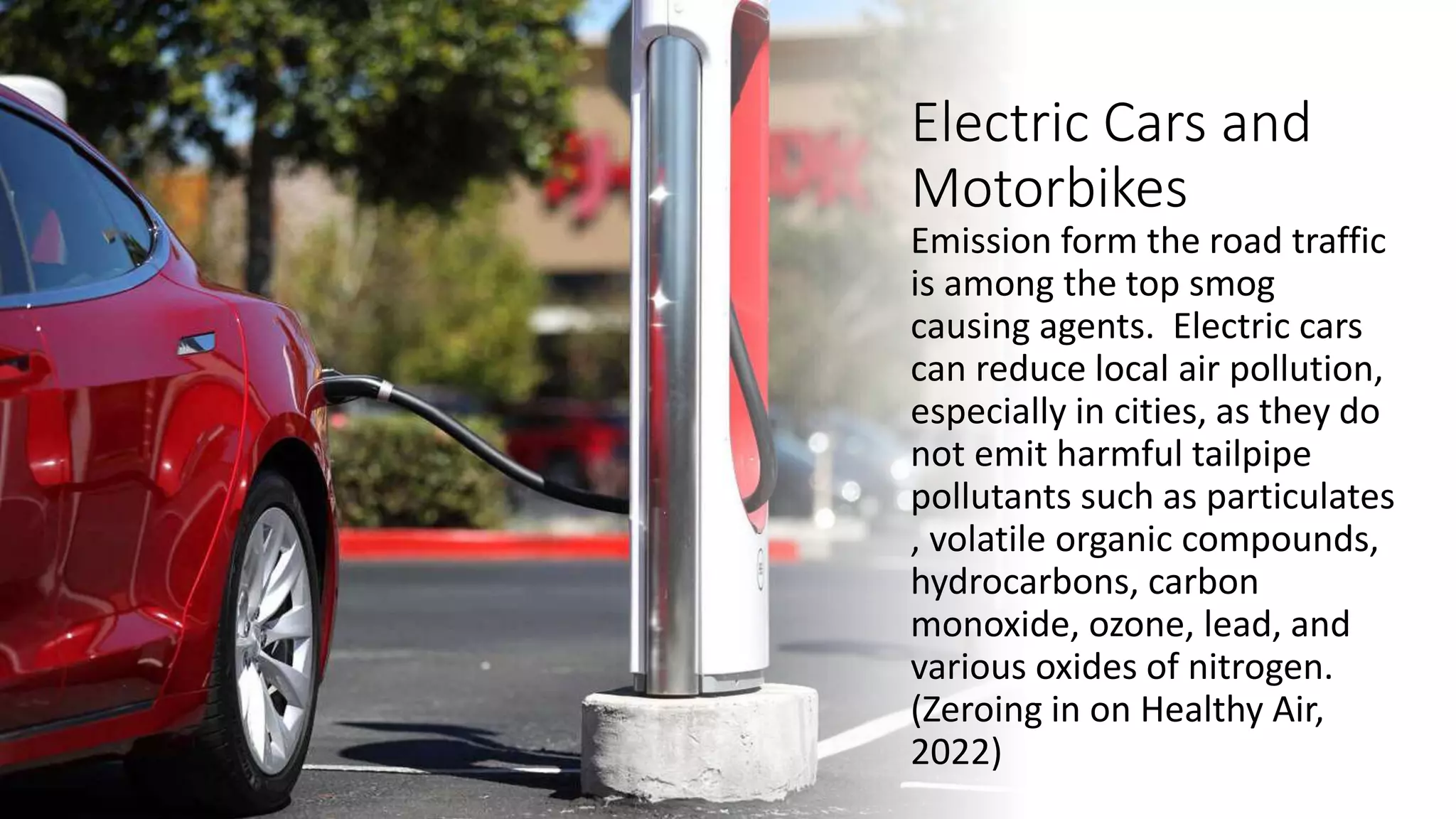
Electric Cars and
Motorbikes
Emission form the road traffic
is among the top smog
causing agents. Electric cars
can reduce local air pollution,
especially in cities, as they do
not emit harmful tailpipe
pollutants such as particulates
, volatile organic compounds,
hydrocarbons, carbon
monoxide, ozone, lead, and
various oxides of nitrogen.
(Zeroing in on Healthy Air,
2022)
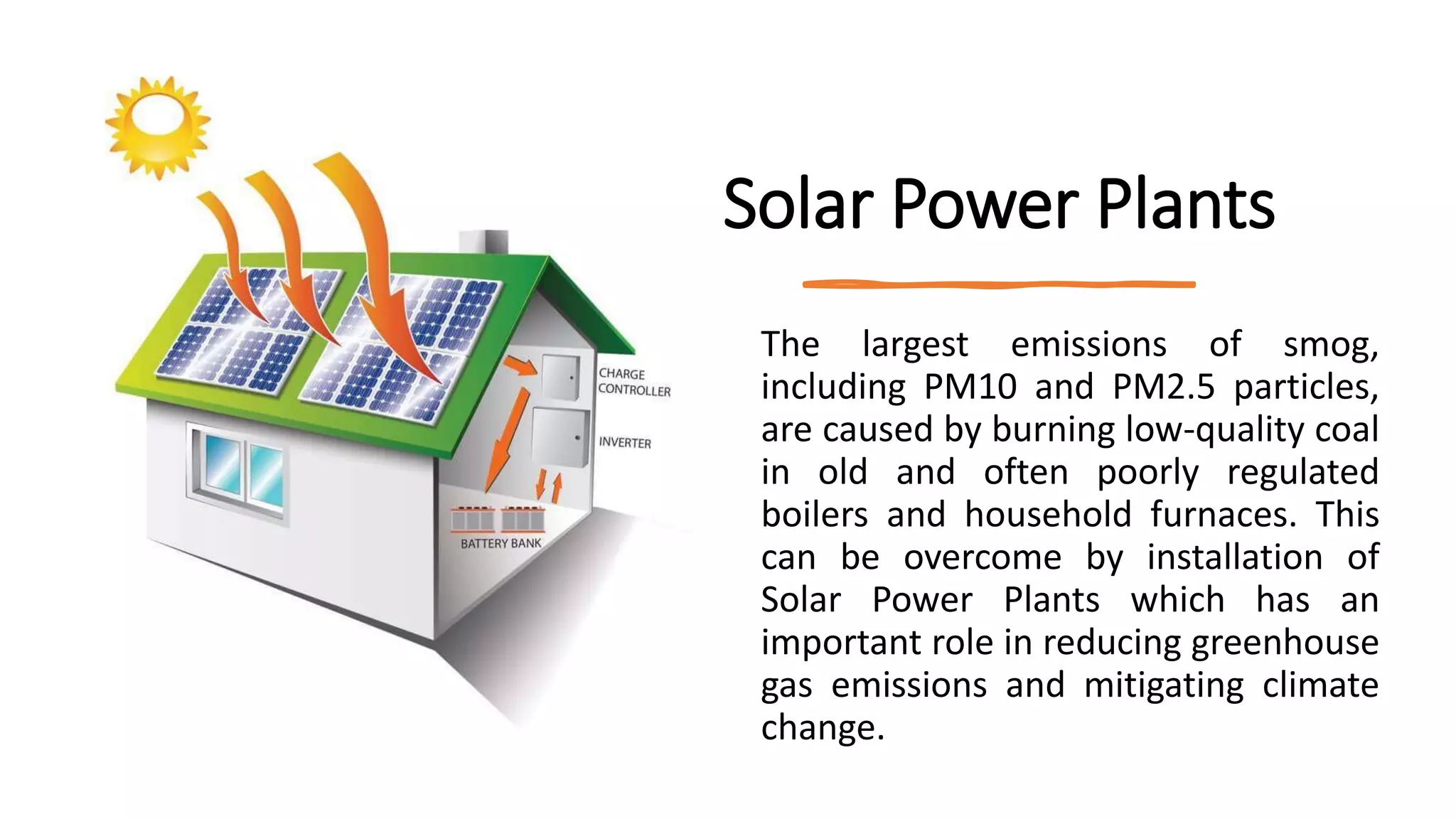
Solar Power Plants
The largest emissions of smog,
including PM10 and PM2.5 particles,
are caused by burning low-quality coal
in old and often poorly regulated
boilers and household furnaces. This
can be overcome by installation of
Solar Power Plants which has an
important role in reducing greenhouse
gas emissions and mitigating climate
change.
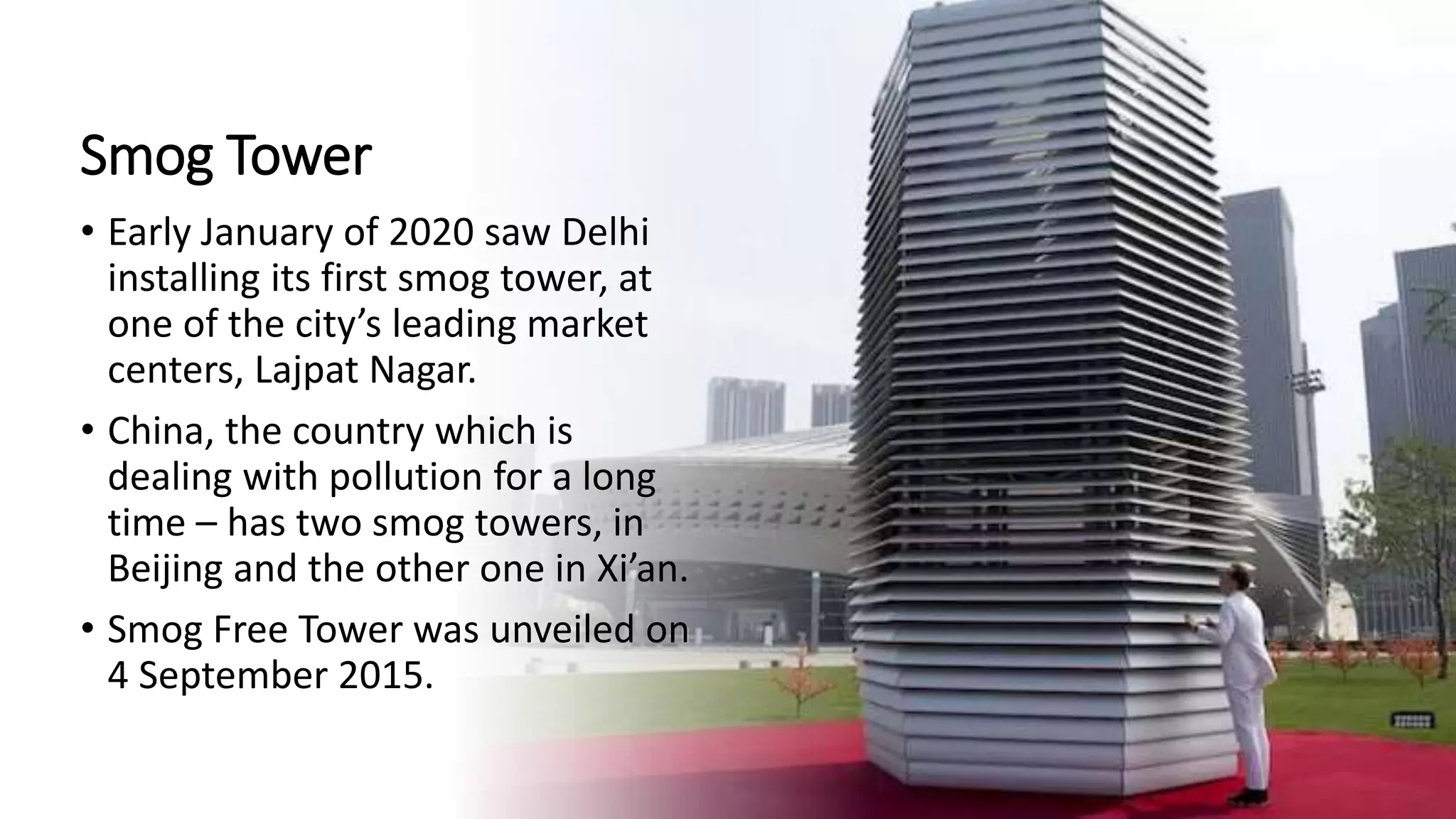
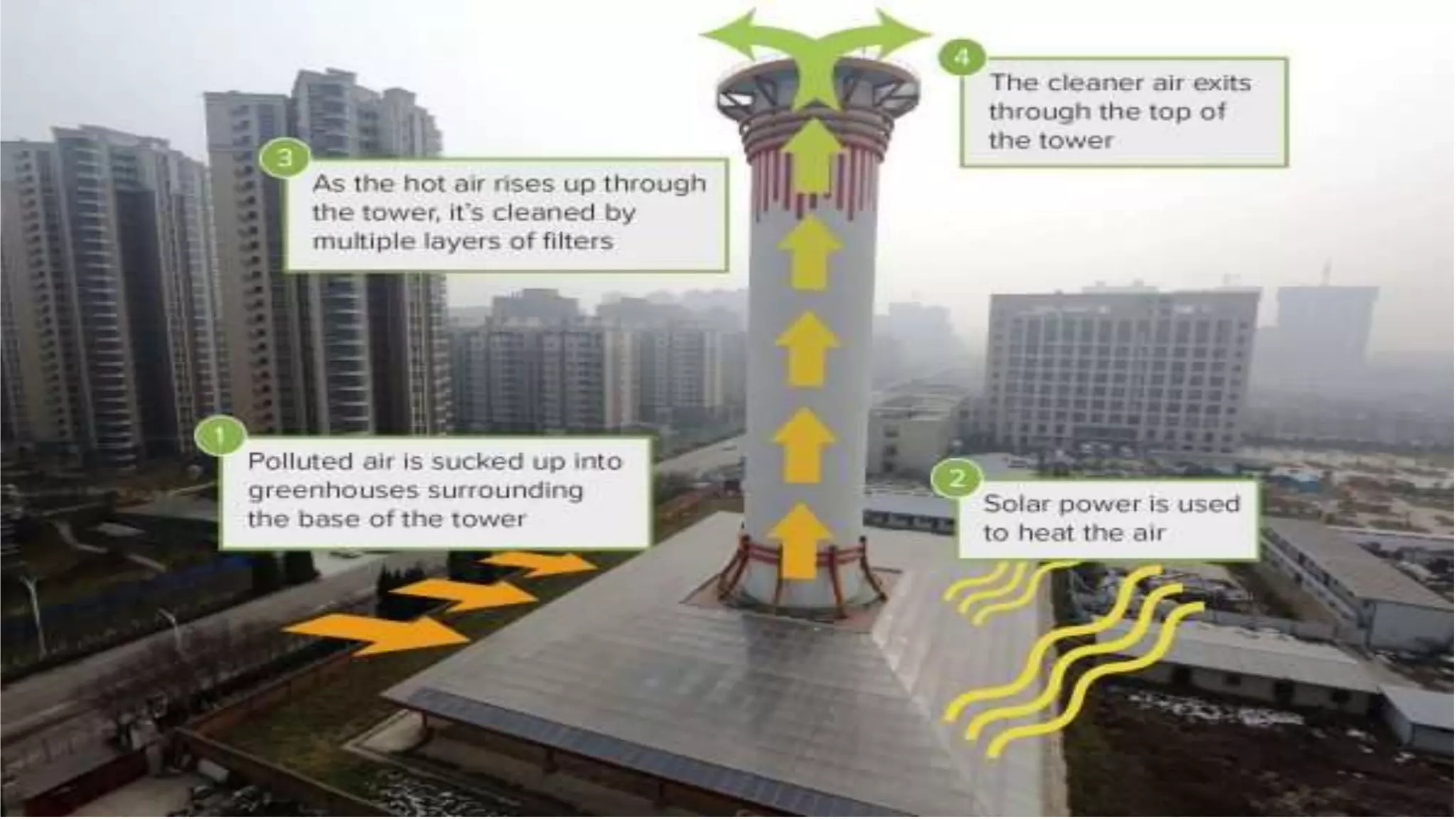
Smog Tower
• Early January of 2020 saw Delhi
installing its first smog tower, at
one of the city’s leading market
centers, Lajpat Nagar.
• China, the country which is
dealing with pollution for a long
time – has two smog towers, in
Beijing and the other one in Xi’an.
• Smog Free Tower was unveiled on
4 September 2015.
Continue
Organizations that could play an important role.
World Health Organization-International
EPA: USA
World Economic Forum-International
Coalition for Clean Air - California.
Simon Birkett - Clean Air in London.
Union of Concerned Scientists - USA.
Earthjustice - USA.
Global Action Plan - International.
References
Bajaj, K. L., & Kaur, G. (1981). Spectrophotometric determination of L-ascorbic acid in vegetables and
fruits. Analyst, 106(1258), 117-120.
Giri, S., Shrivastava, D., Deshmukh, K., & Dubey, P. J. C. A. R. J. (2013). Effect of air pollution on chlorophyll content of leaves.
1(2), 93-98.
Gupta, A. (2016). Effect of air pollutants on plant gaseous exchange process: effect on stomata and respiration. In Plant
Responses to Air Pollution (pp. 85-92). Springer, Singapore.
Luo, Y., Chen, G. F., Ding, L., Chen, X., Ding, L. X., & Wang, H. (2019). Efficient electrocatalytic N2 fixation with MXene under
ambient conditions. Joule, 3(1), 279-289.
Rangana, S. C. (1976). In medicinal of analysis of fruits and vegetable products.
Paez, V., Barrett, W. B., Deng, X., Diaz-Amigo, C., Fiedler, K., Fuerer, C & Coates, S. G. (2016). AOAC SMPR® 2016.002. Journal
of AOAC International, 99(4), 1122-1124
Paudel, B. R., Dyer, A. G., Garcia, J. E., & Shrestha, M. (2019). The effect of elevational gradient on alpine gingers (Roscoea
alpina and R. purpurea) in the Himalayas. PeerJ, 7, e7503.
Qin, G., Niu, Z., Yu, J., Li, Z., Ma, J., & Xiang, P. (2021). Soil heavy metal pollution and food safety in China: Effects, sources and
removing technology. Chemosphere, 267, 129205.
Weber, J., D. Tingey, AND C. Andersen. (2021). Plant Responses to Air Pollution. U.S. Environmental Protection Agency,
Washington, DC, EPA/600/A-93/050
SMOG and Its Effects in Pakistan: A Comprehensive Overview

SMOG and Its Effects in Pakistan: A Comprehensive Overview

  • 1.
    SMOG "The Burning issueof the World that needs attention"
  • 3.
    • Introduction • Typesof Smog • Why it's Important to us? • Impacts of Smog • Plan of Action • References
  • 4.
    Introduction • The term"smog" was first used in 1905 by H.A. Des Voeux to portray air conditions that was a mixture of smoke and fog • People suffered from burning eyes and lungs, and nausea. The phenomenon was termed a "gas attack" and blamed on a nearby butadiene plant. • The first episodes of 'smog' occurred in Los Angeles in the summer of 1943.
  • 5.
    INTRODUCTION "The Great Smogof China" traces Chinese air pollution events dating back to more than 2,000 years ago. Smog was observed on 2-3 November 2016, in Lahore for the very first time In current scenario, Lahore categorized no.1 polluted city of the world Overall, Pakistan categorized 2nd polluted country in the world. Smog had become 5th season in Pakistan (increasing every year).
  • 7.
    Types of Smog Thechemistry of smog is complex and cannot be defined exactly. However, it is conventionally categorized into following types: • Classical (London) smog • Photochemical (Los Angeles) smog. • Polish smog. • Natural smog Different Sources of SMOG by John Ray Cuevas, 2022
  • 8.
    Classical (London) smog Theclassical smog is also called sulfurous smog, because it results from abnormally high concentrations of sulfur oxides by burning of fossil fuels. In December 1952, such a smog formed in London for approximately 5 days, resulting in several thousand deaths. Diagram showing London smog causing acid rain. Pic credit: Stock Illustration
  • 9.
    Photochemical (Los Angeles)smog. Mainly, photochemical smog is composed of high concentrations of various pollutants including oxides of nitrogen, ozone, carbon monoxide, and aldehydes. Commonly observed in highly trafficked areas. Pictorial representation of photochemical smog formation. Image credit: Liweichao.vivian/Wikimedia.org
  • 10.
    Polish Smog The polishsmog is a dust smog forms in winter by emission of dust from different resources that release high concentrations of PM10 and PM2.5, as well as other compounds such as benzo pyrene.
  • 11.
    Natural Smog • Itmay result due to volcanoes, Forest Fire and by plants i.e., natural sources of hydrocarbons and volatile organic compounds • Irritation and inflammation of eyes, dry cough, anterior uveitis, breathing difficulties and asthma.
  • 12.
    Schematic of smogformation in Pakistan Waseem Raza et al., 2020
  • 13.
    Why it's importantto us ? • Smog is known as "Silent Killer" • In 1952, London suffered a smog for five days caused leading to the deaths of at least 4,000 people. • Causing accidents, delay in flights, Markets, schools and offices closure in daily life. • Estimated 1,600 deaths in Los Angeles in 2021 (Lu, Y., Giuliano, G., & Habre, R. (2021)) • According to The Global Burden of Disease (GBD) study, in 2019: 4.5 million people died prematurely from outdoor air pollution
  • 14.
    Smog effects onHuman The severity of smog hazards depends upon the quantity inhaled • Respiratory diseases, • Lung cancer • Cardiovascular diseases • Asthma • Diabetes • Headache • Skin disease
  • 15.
    Smog Impacts onCrops • According to Ali. Y et al., (2019), the effect of smog, particularly PM and ozone, on crops in Pakistan have revealed a significant drop (34.8- 46.7%) in Yields of wheat, decrease in plant height, transpiration rate, stomatal conductance and photosynthetic activity. • Barley, also experienced a substantial decrease in seed yield (13-44%). • Rice revealed a 37-42% reduction in the yield
  • 16.
    Continue.. According to DIZENGREMEL,P. (2021) study on sunflower at 200 AQI decrease in Nutritional values • Total carbohydrates were decreased about 30.08% • Total Soluble Sugar were decreased 36.42%. • Oil Content decreased 17.32% • The amount of minerals(Na, K, Ca, P, Fe) showed random increase and decrease in their values.
  • 17.
    Schematic representation ofthe behavior of the various pollutants towards plants (GARREC Jean-Pierre, 2019)
  • 18.
    Economic Losses • Asper the World Bank, the global cost for air pollution has accounted for $5.1 trillion, which is 7.2% of the annual GDP. • If these trends continue, it may increase to $25 trillion as per the Organization for Economic Cooperation and Development (OECD). • A 2011 study suggests that ozone will decrease the productivity of crops to 26% by 2030 (Avnery et al,. 2011)
  • 19.
    Smog impacts onTourism Smog affects tourism in a country by causing damage to visitor attractions such as historical buildings and monuments. Tourists, for health reasons, will avoid visiting a country notorious for high air pollution. Smog affects the tourist experience by lowering visibility (Peng and Xiao, 2018).
  • 20.
    Plan of Action •Awareness  Media including print and digital  Social media  Universities seminar and conferences • Practical events like plantation and flower show • Policies for Traffic, Industries and bricks companies should be revised. • Burning Coal, using plastic and cutting trees should be stopped. (Roheela Yasmeen et al, 2021)
  • 21.
    Proposed short- andlong-term policies to mitigate smog pollution in Pakistan (Waseem Raza at al., 2020)
  • 22.
    Anti-Smog Buildings Anti-smog buildingsare recommended in big cities that are based on: • Plasters and Paints: In building, Cement-based plasters or paints are used that are doped with nano- TiO2. • Acoustic Screens: Acoustic screens are photocatalytic coatings that break down nitrogen oxides into harmless compounds when exposed to sunlight. Such screens can reduce road air pollution by 15– 25%.
  • 23.
    Building with Vegetation Plants canhelp combat pollution by producing oxygen specially in large cities that suffer from a lack of space to create new parks and gardens. Green roofs Living walls Vertical green systems (VGS)
  • 24.
    Smog Reducing panels •There are façade panels on the market from Berlin based architecture that absorb pollutants from the air by coating with nano particles. The technology is called Prosolve370e. • One of the first buildings with a purifying façade is the Jubilee Church in Rome.
  • 25.
    Electric Cars and Motorbikes Emissionform the road traffic is among the top smog causing agents. Electric cars can reduce local air pollution, especially in cities, as they do not emit harmful tailpipe pollutants such as particulates , volatile organic compounds, hydrocarbons, carbon monoxide, ozone, lead, and various oxides of nitrogen. (Zeroing in on Healthy Air, 2022)
  • 26.
    Solar Power Plants Thelargest emissions of smog, including PM10 and PM2.5 particles, are caused by burning low-quality coal in old and often poorly regulated boilers and household furnaces. This can be overcome by installation of Solar Power Plants which has an important role in reducing greenhouse gas emissions and mitigating climate change.
  • 27.
    Smog Tower • EarlyJanuary of 2020 saw Delhi installing its first smog tower, at one of the city’s leading market centers, Lajpat Nagar. • China, the country which is dealing with pollution for a long time – has two smog towers, in Beijing and the other one in Xi’an. • Smog Free Tower was unveiled on 4 September 2015.
  • 29.
    Continue Organizations that couldplay an important role. World Health Organization-International EPA: USA World Economic Forum-International Coalition for Clean Air - California. Simon Birkett - Clean Air in London. Union of Concerned Scientists - USA. Earthjustice - USA. Global Action Plan - International.
  • 30.
    References Bajaj, K. L.,& Kaur, G. (1981). Spectrophotometric determination of L-ascorbic acid in vegetables and fruits. Analyst, 106(1258), 117-120. Giri, S., Shrivastava, D., Deshmukh, K., & Dubey, P. J. C. A. R. J. (2013). Effect of air pollution on chlorophyll content of leaves. 1(2), 93-98. Gupta, A. (2016). Effect of air pollutants on plant gaseous exchange process: effect on stomata and respiration. In Plant Responses to Air Pollution (pp. 85-92). Springer, Singapore. Luo, Y., Chen, G. F., Ding, L., Chen, X., Ding, L. X., & Wang, H. (2019). Efficient electrocatalytic N2 fixation with MXene under ambient conditions. Joule, 3(1), 279-289. Rangana, S. C. (1976). In medicinal of analysis of fruits and vegetable products. Paez, V., Barrett, W. B., Deng, X., Diaz-Amigo, C., Fiedler, K., Fuerer, C & Coates, S. G. (2016). AOAC SMPR® 2016.002. Journal of AOAC International, 99(4), 1122-1124 Paudel, B. R., Dyer, A. G., Garcia, J. E., & Shrestha, M. (2019). The effect of elevational gradient on alpine gingers (Roscoea alpina and R. purpurea) in the Himalayas. PeerJ, 7, e7503. Qin, G., Niu, Z., Yu, J., Li, Z., Ma, J., & Xiang, P. (2021). Soil heavy metal pollution and food safety in China: Effects, sources and removing technology. Chemosphere, 267, 129205. Weber, J., D. Tingey, AND C. Andersen. (2021). Plant Responses to Air Pollution. U.S. Environmental Protection Agency, Washington, DC, EPA/600/A-93/050