BY: MARIA ARSHAD
YOU TUBE CHANNEL: Chemistry Philics
Lets make chemistry easy and loveable by having strong concepts
PART-3
Explained in detail for BSM.Sc students
 DEFINITION:
 “The microscopic solid or liquid
matter suspended in the earth’s atmosphere
is known as particulate matter”
 The sources of particulate matter may be
 man made or natural
 Atmospheric aerosols are solid or liquid
particles smaller than 100µm in diameter
 Pollutant particles in the 0.001 to 10µm range
are commonly suspended in the air near the
sources of pollution i.e industrial
plants,highways etc
 Very small solid particles i.e carbon
black,silver iodide,combustion nuclei
 Large particles e.g cement,dust etc
 Liquid particulate matter:mist,fog,H2SO4 mist
 Particles of biological origin:bacterial spore etc

 The composition of PM depends on source
 Classification:
1) Wind blown mineral dust
2) seasalt
3) Secondary particles
4) Organic matter
1) WIND BLOWN MINERAL DUST:
 Made up of mineral oxides and
material blown from earth crust
 This particulate is light absorbing
 2) SEASALT:
 Mainly consists of NaCl,
 depending on the composition of sea water
they include
magnesium,sulfate,calcium,potassium,O.C etc.
 3) SECONDARY PARTICLES:
 Derive from the oxidation of primary gases
i.e SO2 and Nox into H2SO3 and HNO3
 In presence of NH3 they take the form of
ammonium salt i.e ammonium
sulphate,ammonium nitrate
 In the absence of NH3 take acidic form of
acids. Both forms are dangerous.
 This particulate is light scattering.
 4) ORGANIC MATTER:
 can be primary or secondary(from the
oxidation of VOCs)
 it may be biogenic or anthropogenic
 this particulate is light
absorbing+scattering
 Elemental Carbon also known as black
carbon is another important aerosol type and
is strongly light absorbing
 Secondary organic aerosols,tiny “tar balls”
resulting fromcombustion products of
internal combustion engines
 Dangerous to health
 The chemical composition of aerosol directly
effects how it interacts with solar radiation
 the chemical constituents change the overall
refractive index.
 The refractive index will determine how much
light is scattered and absorbed.
 The composition generally causes the visual
effects
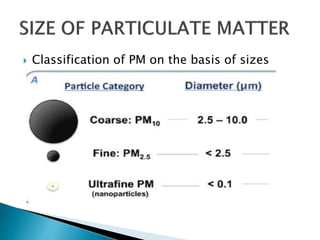
 Classification of PM on the basis of sizes
 COARSE PARTICLES:
 SIZE 2.5-10µm also known as PM10
 usually contain earth crust’s materials
and dust from roads and industries,pollen etc
 FINE PARTICLES:
 SIZE ≤2.5µm so also known as PM2.5
 usually contain secondarily formed
aerosols, combustion particles and organic
and metal vapours.
 Note:
number of PM= 1
mass of that particle in overall PM
i.e ultrafine particles contribute only a few
%to mass,while contribute 90% to the no.
 BECAUSE:
 these properties govern the transport and
removal of the particles from the air
 they govern their deposition within the
respiratory system
 They are associated with chemical
composition and sources of particles
 EFFECTS ON HUMAN HEALTH:
 Due to small size it is inhaled and damages
lungs of both children and adults
 PM can clog stomatal openings of plants and
interfere with photosynthesis functions
 High PM conc.in atmosphere can lead to
growth stunting and mortality in some plants
species.
 Particulated matter emissions are highly
regulated in most industrialized countries.
 Due to environmental concerns, Industries
are required to operate some kind of dust
collection system to control PM emissions.

 Following systems are used for controlling
PM emission
 1) INERTIAL COLLECTORS(CYCLONIC
COLLECTORS)
 2) FABRIC FILTER COLLECTORS(BAGHOUSES)
 3) WET SCRUBBERS
 4)ELECTROSTATIC PRECIPITATORS
 PRINCIPLE:
 centrifugal
Force(separation of
Particles on the basis of
Their sizes)
CONSTRUCTION:
 cylinder
 inlet
 dust outlet
 Clean gas outlet
 The feed is introduced tengentially at high
velocity and acquire an intense spinning
motion, moving downward in cylinder
chamber
 Because of high centrifugal
Force denser particles collide
With the chamber and begin to
Slide down to bottom outlet
 After reaching the conical base
the velocity
increases because of decrease
Area
 Low pressure area is created in
the middle of cyclone providing drag to stream
to move upward and exit through outlet
 Larger particles are collected at the bottom
 It is useful for removing larger coarse
particles and are often employed as a first
step or “pre cleaner” to other more efficient
collectors
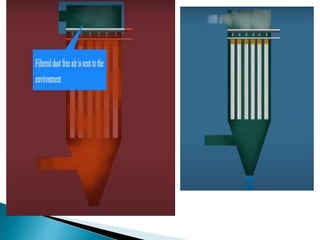
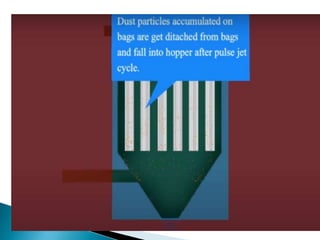
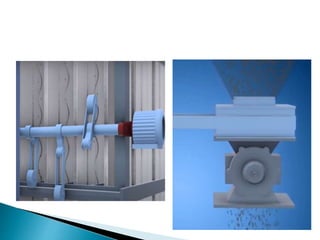
 2)FABRIC FILTER COLLECTOR (BAGHOUSES)
Fabric filters are most commonly employed
in general industry
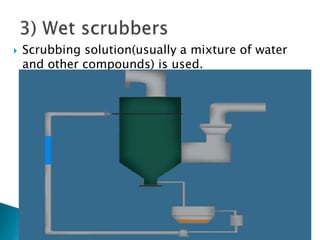
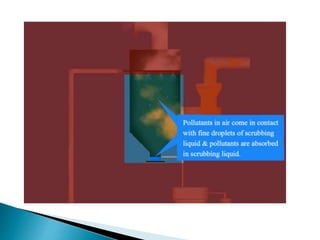
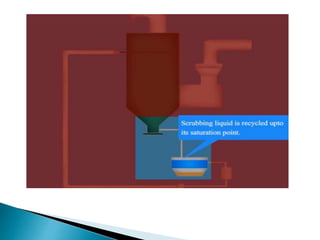
 Scrubbing solution(usually a mixture of water
and other compounds) is used.
 An electrostatic precipitator is a filteration
device that removes fine particles, like dust
and smoke , from a flowing gas using the
force of an induced electrostatic charge
minimally impeding the flow of gases through
the unit.
 It works on the principle of electrostatic
precipitation:
Particulate matter
Particulate matter
Particulate matter
Particulate matter
Particulate matter
Particulate matter
Particulate matter

Particulate matter

  • 1.
    BY: MARIA ARSHAD YOUTUBE CHANNEL: Chemistry Philics Lets make chemistry easy and loveable by having strong concepts PART-3 Explained in detail for BSM.Sc students
  • 2.
     DEFINITION:  “Themicroscopic solid or liquid matter suspended in the earth’s atmosphere is known as particulate matter”  The sources of particulate matter may be  man made or natural
  • 3.
     Atmospheric aerosolsare solid or liquid particles smaller than 100µm in diameter  Pollutant particles in the 0.001 to 10µm range are commonly suspended in the air near the sources of pollution i.e industrial plants,highways etc  Very small solid particles i.e carbon black,silver iodide,combustion nuclei  Large particles e.g cement,dust etc  Liquid particulate matter:mist,fog,H2SO4 mist  Particles of biological origin:bacterial spore etc 
  • 4.
     The compositionof PM depends on source  Classification: 1) Wind blown mineral dust 2) seasalt 3) Secondary particles 4) Organic matter 1) WIND BLOWN MINERAL DUST:  Made up of mineral oxides and material blown from earth crust  This particulate is light absorbing
  • 5.
     2) SEASALT: Mainly consists of NaCl,  depending on the composition of sea water they include magnesium,sulfate,calcium,potassium,O.C etc.  3) SECONDARY PARTICLES:  Derive from the oxidation of primary gases i.e SO2 and Nox into H2SO3 and HNO3  In presence of NH3 they take the form of ammonium salt i.e ammonium sulphate,ammonium nitrate  In the absence of NH3 take acidic form of acids. Both forms are dangerous.  This particulate is light scattering.
  • 6.
     4) ORGANICMATTER:  can be primary or secondary(from the oxidation of VOCs)  it may be biogenic or anthropogenic  this particulate is light absorbing+scattering  Elemental Carbon also known as black carbon is another important aerosol type and is strongly light absorbing  Secondary organic aerosols,tiny “tar balls” resulting fromcombustion products of internal combustion engines  Dangerous to health
  • 7.
     The chemicalcomposition of aerosol directly effects how it interacts with solar radiation  the chemical constituents change the overall refractive index.  The refractive index will determine how much light is scattered and absorbed.  The composition generally causes the visual effects
  • 9.
     Classification ofPM on the basis of sizes
  • 10.
     COARSE PARTICLES: SIZE 2.5-10µm also known as PM10  usually contain earth crust’s materials and dust from roads and industries,pollen etc  FINE PARTICLES:  SIZE ≤2.5µm so also known as PM2.5  usually contain secondarily formed aerosols, combustion particles and organic and metal vapours.  Note: number of PM= 1 mass of that particle in overall PM i.e ultrafine particles contribute only a few %to mass,while contribute 90% to the no.
  • 12.
     BECAUSE:  theseproperties govern the transport and removal of the particles from the air  they govern their deposition within the respiratory system  They are associated with chemical composition and sources of particles
  • 13.
     EFFECTS ONHUMAN HEALTH:  Due to small size it is inhaled and damages lungs of both children and adults
  • 15.
     PM canclog stomatal openings of plants and interfere with photosynthesis functions  High PM conc.in atmosphere can lead to growth stunting and mortality in some plants species.
  • 16.
     Particulated matteremissions are highly regulated in most industrialized countries.  Due to environmental concerns, Industries are required to operate some kind of dust collection system to control PM emissions. 
  • 17.
     Following systemsare used for controlling PM emission  1) INERTIAL COLLECTORS(CYCLONIC COLLECTORS)  2) FABRIC FILTER COLLECTORS(BAGHOUSES)  3) WET SCRUBBERS  4)ELECTROSTATIC PRECIPITATORS
  • 18.
     PRINCIPLE:  centrifugal Force(separationof Particles on the basis of Their sizes) CONSTRUCTION:  cylinder  inlet  dust outlet  Clean gas outlet
  • 19.
     The feedis introduced tengentially at high velocity and acquire an intense spinning motion, moving downward in cylinder chamber
  • 20.
     Because ofhigh centrifugal Force denser particles collide With the chamber and begin to Slide down to bottom outlet  After reaching the conical base the velocity increases because of decrease Area  Low pressure area is created in the middle of cyclone providing drag to stream to move upward and exit through outlet  Larger particles are collected at the bottom
  • 21.
     It isuseful for removing larger coarse particles and are often employed as a first step or “pre cleaner” to other more efficient collectors  2)FABRIC FILTER COLLECTOR (BAGHOUSES) Fabric filters are most commonly employed in general industry
  • 30.
     Scrubbing solution(usuallya mixture of water and other compounds) is used.
  • 36.
     An electrostaticprecipitator is a filteration device that removes fine particles, like dust and smoke , from a flowing gas using the force of an induced electrostatic charge minimally impeding the flow of gases through the unit.
  • 37.
     It workson the principle of electrostatic precipitation: