Iron carbon
Phase diagram
   Definitions
For more help contact me

Muhammad Umair
    Bukhari
Engr.umair.bukhari@gmail.com

   www.bzuiam.webs.com
      03136050151
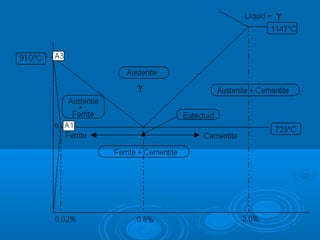
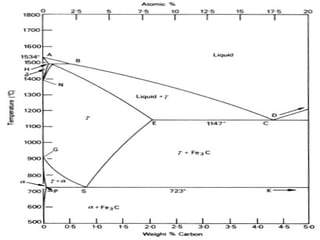
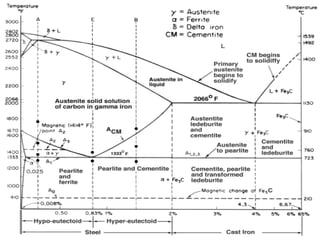
   The best way to understand the metallurgy of
    carbon steel is to study the ‘Iron Carbon
    Diagram’. The diagram shown below is based
    on the transformation that occurs as a result of
    slow heating. Slow cooling will reduce the
    transformation temperatures; for example: the
    A1 point would be reduced from 723°C to 690
    °C. However the fast heating and cooling rates
    encountered in welding will have a significant
    influence on these temperatures, making the
    accurate prediction of weld metallurgy using this
    diagram difficult
 Austenite   This phase is only possible in
  carbon steel at high temperature. It has a
  Face Centre Cubic (F.C.C) atomic
  structure which can contain up to 2%
  carbon in solution.
 Ferrite  This phase has a Body Centre
  Cubic structure (B.C.C) which can hold
  very little carbon; typically 0.0001% at
  room temperature. It can exist as either:
  alpha or delta ferrite.
 Carbon  A very small interstitial atom that
 tends to fit into clusters of iron atoms. It
 strengthens steel and gives it the ability to
 harden by heat treatment. It also causes
 major problems for welding , particularly if
 it exceeds 0.25% as it creates a hard
 microstructure that is susceptible to
 hydrogen cracking. Carbon forms
 compounds with other elements called
 carbides. Iron Carbide, Chrome Carbide
 etc
 Cementite  Unlike ferrite and austenite,
 cementite is a very hard intermetallic
 compound consisting of 6.7% carbon and
 the remainder iron, its chemical symbol is
 Fe3C. Cementite is very hard, but when
 mixed with soft ferrite layers its average
 hardness is reduced considerably. Slow
 cooling gives course perlite; soft easy to
 machine but poor toughness. Faster
 cooling gives very fine layers of ferrite and
 cementite; harder and tougher
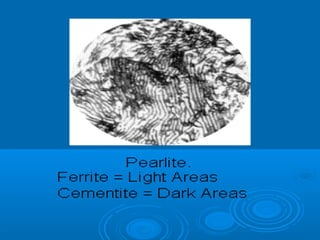
   Pearlite  A mixture of alternate strips of ferrite
    and cementite in a single grain. The distance
    between the plates and their thickness is
    dependant on the cooling rate of the material;
    fast cooling creates thin plates that are close
    together and slow cooling creates a much
    coarser structure possessing less toughness.
    The name for this structure is derived from its
    mother of pearl appearance under a
    microscope. A fully pearlitic structure occurs at
    0.8% Carbon. Further increases in carbon will
    create cementite at the grain boundaries, which
    will start to weaken the steel.
   Cooling of a steel below 0.8% carbon When
    a steel solidifies it forms austenite. When the
    temperature falls below the A3 point, grains of
    ferrite start to form. As more grains of ferrite
    start to form the remaining austenite becomes
    richer in carbon. At about 723°C the remaining
    austenite, which now contains 0.8% carbon,
    changes to pearlite. The resulting structure is a
    mixture consisting of white grains of ferrite mixed
    with darker grains of pearlite. Heating is
    basically the same thing in reverse
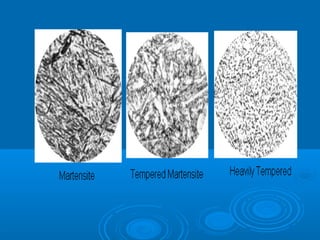
   Marten site
                 If steel is cooled rapidly from
    austenite, the F.C.C structure rapidly changes to
    B.C.C leaving insufficient time for the carbon to
    form pearlite. This results in a distorted
    structure that has the appearance of fine
    needles. There is no partial transformation
    associated with martensite, it either forms or it
    doesn’t. However, only the parts of a section
    that cool fast enough will form martensite; in a
    thick section it will only form to a certain depth,
    and if the shape is complex it may only form in
    small pockets. The hardness of martensite is
    solely dependant on carbon content, it is
    normally very high, unless the carbon content is
    exceptionally low.
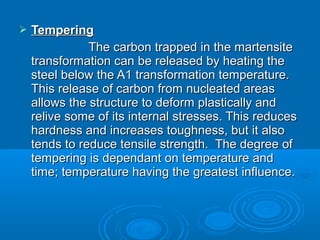
   Tempering
               The carbon trapped in the martensite
    transformation can be released by heating the
    steel below the A1 transformation temperature.
    This release of carbon from nucleated areas
    allows the structure to deform plastically and
    relive some of its internal stresses. This reduces
    hardness and increases toughness, but it also
    tends to reduce tensile strength. The degree of
    tempering is dependant on temperature and
    time; temperature having the greatest influence.
 Annealin
          This term is often used to define
 a heat treatment process that produces
 some softening of the structure. True
 annealing involves heating the steel to
 austenite and holding for some time to
 create a stable structure. The steel is then
 cooled very slowly to room temperature.
 This produces a very soft structure, but
 also creates very large grains, which are
 seldom desirable because of poor
 toughness.
 Normalising   Returns the structure back
 to normal. The steel is heated until it just
 starts to form austenite; it is then cooled in
 air. This moderately rapid transformation
 creates relatively fine grains with uniform
 pearlite.

 Welding   If the temperature profile for a
 typical weld is plotted against the carbon
 equilibrium diagram, a wide variety of
 transformation and heat treatments will be
 observed.

Phase diagram

  • 1.
  • 2.
    For more helpcontact me Muhammad Umair Bukhari Engr.umair.bukhari@gmail.com www.bzuiam.webs.com 03136050151
  • 3.
    The best way to understand the metallurgy of carbon steel is to study the ‘Iron Carbon Diagram’. The diagram shown below is based on the transformation that occurs as a result of slow heating. Slow cooling will reduce the transformation temperatures; for example: the A1 point would be reduced from 723°C to 690 °C. However the fast heating and cooling rates encountered in welding will have a significant influence on these temperatures, making the accurate prediction of weld metallurgy using this diagram difficult
  • 7.
     Austenite   This phaseis only possible in carbon steel at high temperature. It has a Face Centre Cubic (F.C.C) atomic structure which can contain up to 2% carbon in solution.  Ferrite  This phase has a Body Centre Cubic structure (B.C.C) which can hold very little carbon; typically 0.0001% at room temperature. It can exist as either: alpha or delta ferrite.
  • 8.
     Carbon  A verysmall interstitial atom that tends to fit into clusters of iron atoms. It strengthens steel and gives it the ability to harden by heat treatment. It also causes major problems for welding , particularly if it exceeds 0.25% as it creates a hard microstructure that is susceptible to hydrogen cracking. Carbon forms compounds with other elements called carbides. Iron Carbide, Chrome Carbide etc
  • 9.
     Cementite  Unlike ferriteand austenite, cementite is a very hard intermetallic compound consisting of 6.7% carbon and the remainder iron, its chemical symbol is Fe3C. Cementite is very hard, but when mixed with soft ferrite layers its average hardness is reduced considerably. Slow cooling gives course perlite; soft easy to machine but poor toughness. Faster cooling gives very fine layers of ferrite and cementite; harder and tougher
  • 10.
    Pearlite  A mixture of alternate strips of ferrite and cementite in a single grain. The distance between the plates and their thickness is dependant on the cooling rate of the material; fast cooling creates thin plates that are close together and slow cooling creates a much coarser structure possessing less toughness. The name for this structure is derived from its mother of pearl appearance under a microscope. A fully pearlitic structure occurs at 0.8% Carbon. Further increases in carbon will create cementite at the grain boundaries, which will start to weaken the steel.
  • 12.
    Cooling of a steel below 0.8% carbon When a steel solidifies it forms austenite. When the temperature falls below the A3 point, grains of ferrite start to form. As more grains of ferrite start to form the remaining austenite becomes richer in carbon. At about 723°C the remaining austenite, which now contains 0.8% carbon, changes to pearlite. The resulting structure is a mixture consisting of white grains of ferrite mixed with darker grains of pearlite. Heating is basically the same thing in reverse
  • 13.
    Marten site If steel is cooled rapidly from austenite, the F.C.C structure rapidly changes to B.C.C leaving insufficient time for the carbon to form pearlite. This results in a distorted structure that has the appearance of fine needles. There is no partial transformation associated with martensite, it either forms or it doesn’t. However, only the parts of a section that cool fast enough will form martensite; in a thick section it will only form to a certain depth, and if the shape is complex it may only form in small pockets. The hardness of martensite is solely dependant on carbon content, it is normally very high, unless the carbon content is exceptionally low.
  • 15.
    Tempering The carbon trapped in the martensite transformation can be released by heating the steel below the A1 transformation temperature. This release of carbon from nucleated areas allows the structure to deform plastically and relive some of its internal stresses. This reduces hardness and increases toughness, but it also tends to reduce tensile strength. The degree of tempering is dependant on temperature and time; temperature having the greatest influence.
  • 16.
     Annealin This term is often used to define a heat treatment process that produces some softening of the structure. True annealing involves heating the steel to austenite and holding for some time to create a stable structure. The steel is then cooled very slowly to room temperature. This produces a very soft structure, but also creates very large grains, which are seldom desirable because of poor toughness.
  • 17.
     Normalising Returns the structure back to normal. The steel is heated until it just starts to form austenite; it is then cooled in air. This moderately rapid transformation creates relatively fine grains with uniform pearlite.  Welding If the temperature profile for a typical weld is plotted against the carbon equilibrium diagram, a wide variety of transformation and heat treatments will be observed.