COOLING CURVES
Prof. H. K. Khaira
Professor in MSME Deptt.
MANIT, Bhopal
Cooling Curve
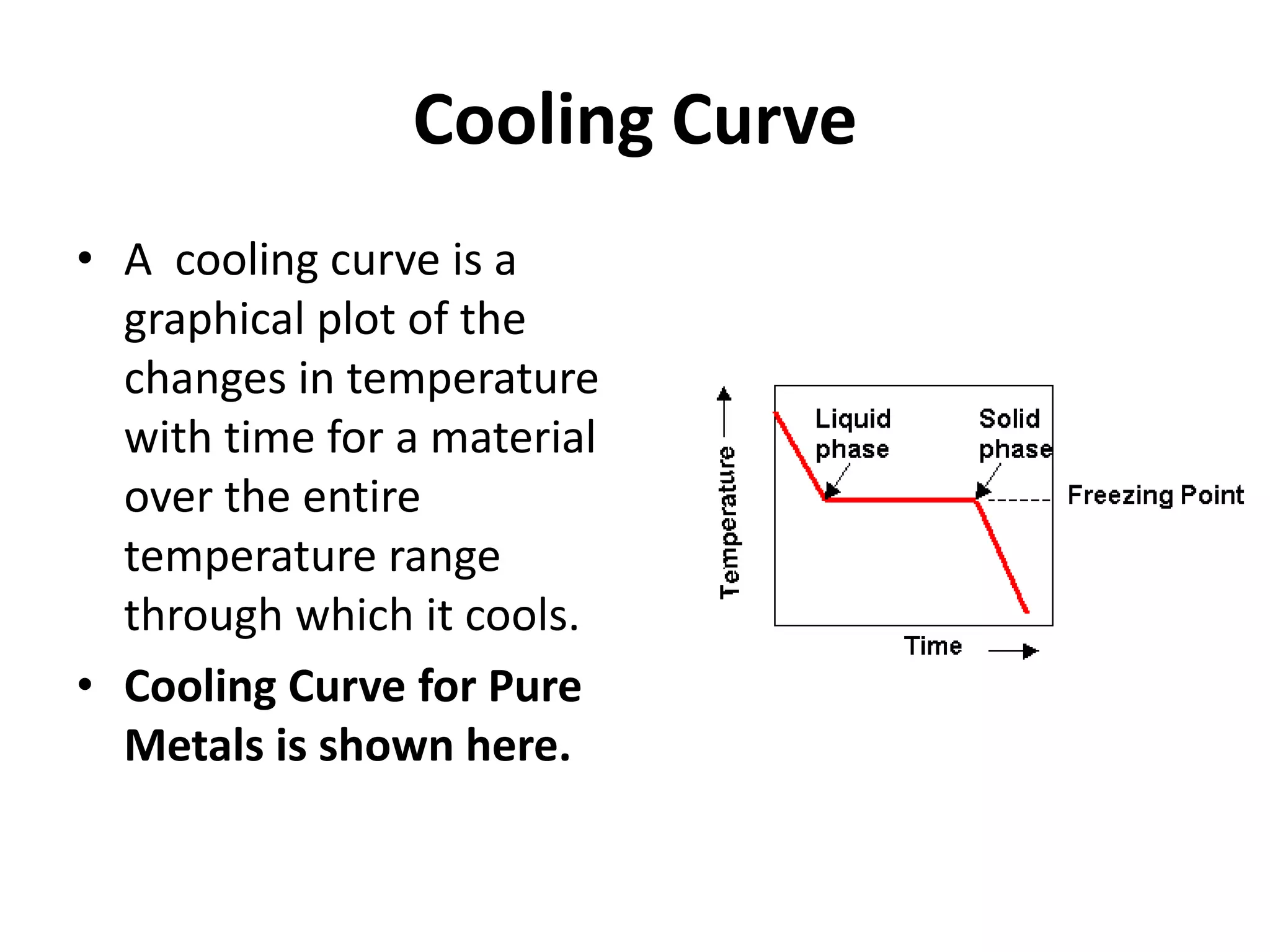
• A cooling curve is a
graphical plot of the
changes in temperature
with time for a material
over the entire
temperature range
through which it cools.
• Cooling Curve for Pure
Metals is shown here.
Cooling Curve
• This is by far the most widely used experimental
method.
• It relies on the information obtained from the cooling
process.
• In this method, alloys with different compositions are
melted and then the temperature of the mixture is
measured at a certain time interval while cooling back
to room temperature.
• A cooling curve for each mixture is constructed and the
initial and final phase change temperatures are
determined. Then these temperatures are used for the
construction of the phase diagrams
Cooling curve for the solidification of
a pure metal
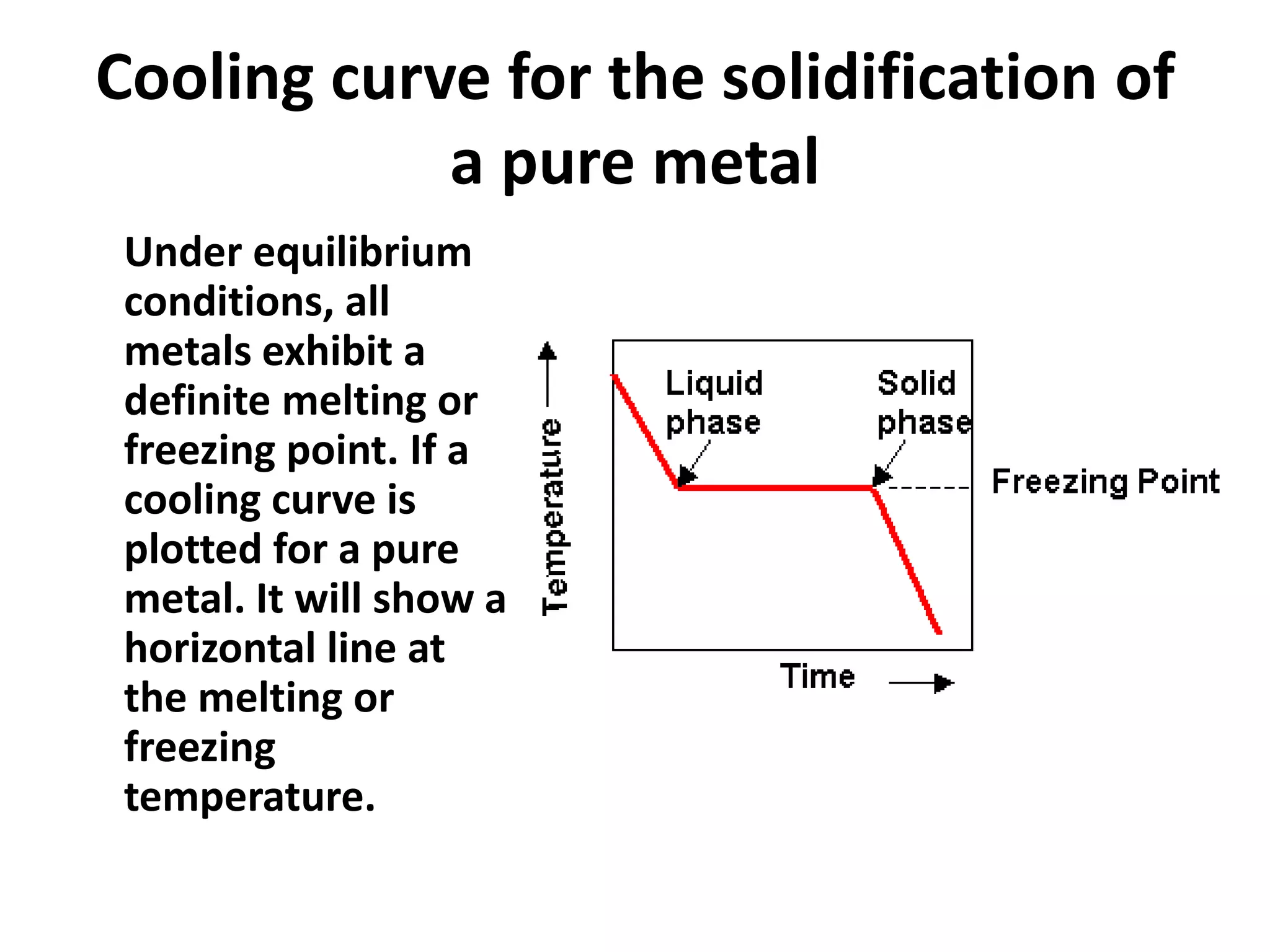
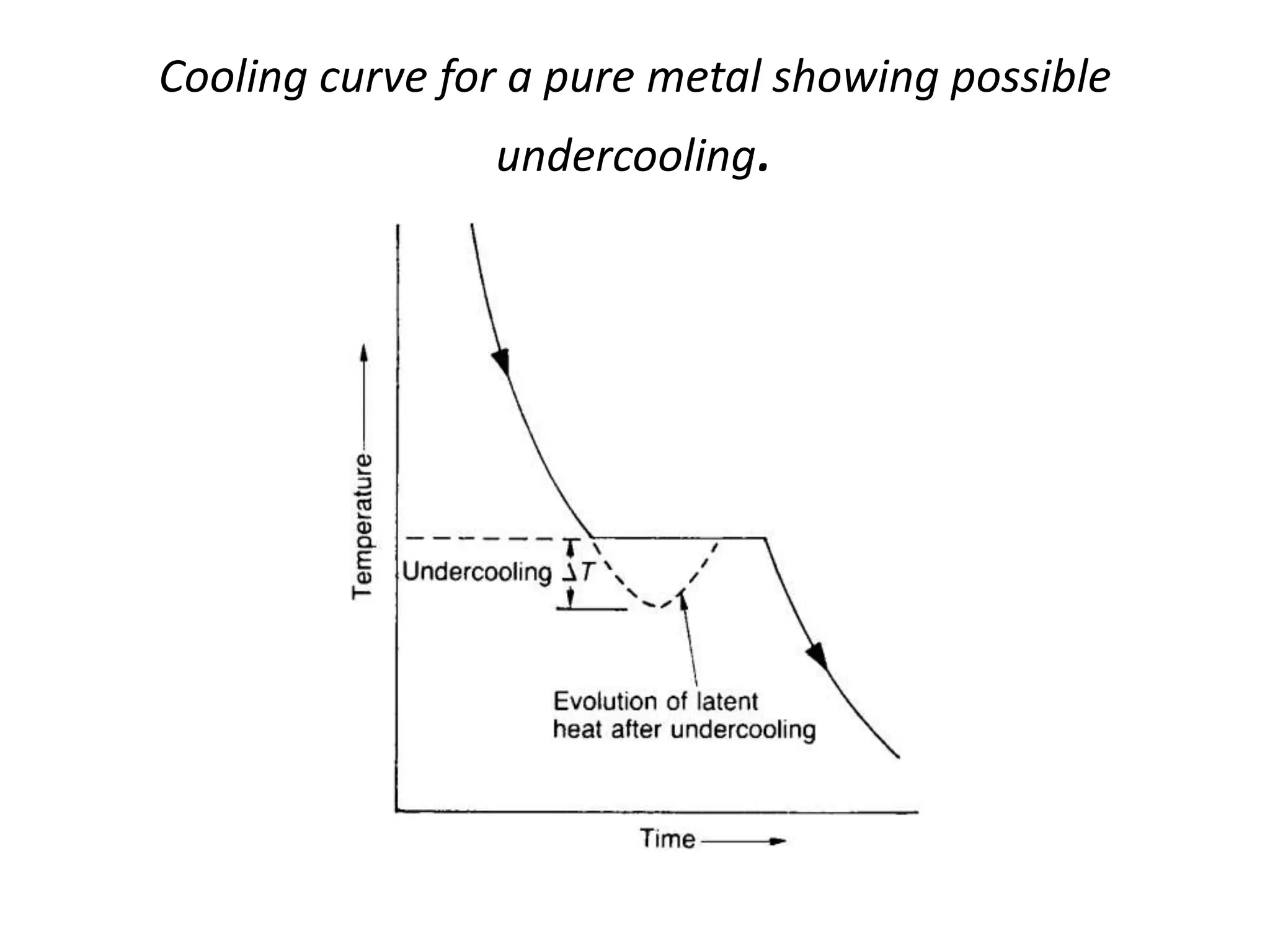
Under equilibrium
conditions, all
metals exhibit a
definite melting or
freezing point. If a
cooling curve is
plotted for a pure
metal. It will show a
horizontal line at
the melting or
freezing
temperature.
Cooling curve for a pure metal showing possible
undercooling.
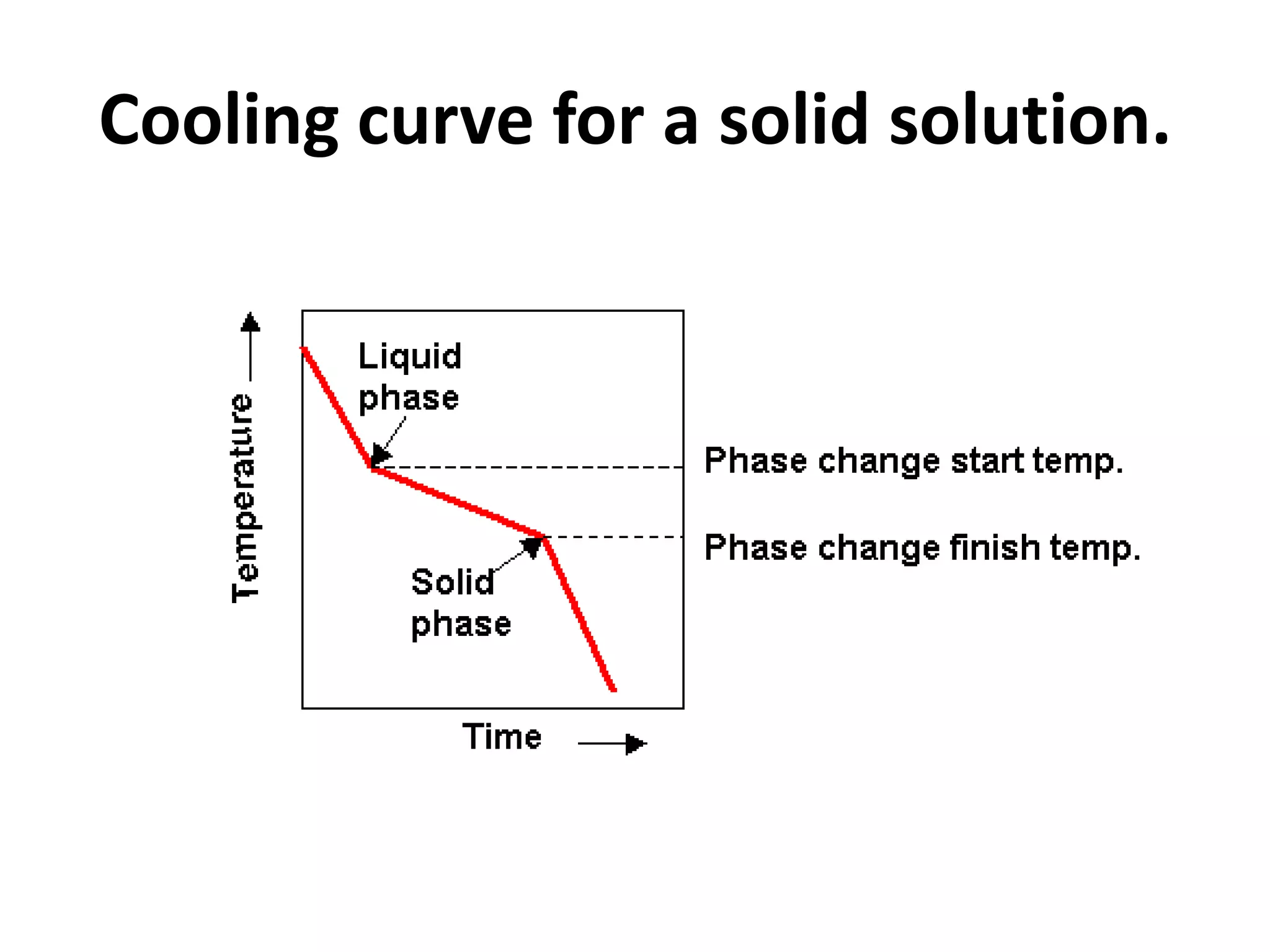
Cooling curve for a solid solution.
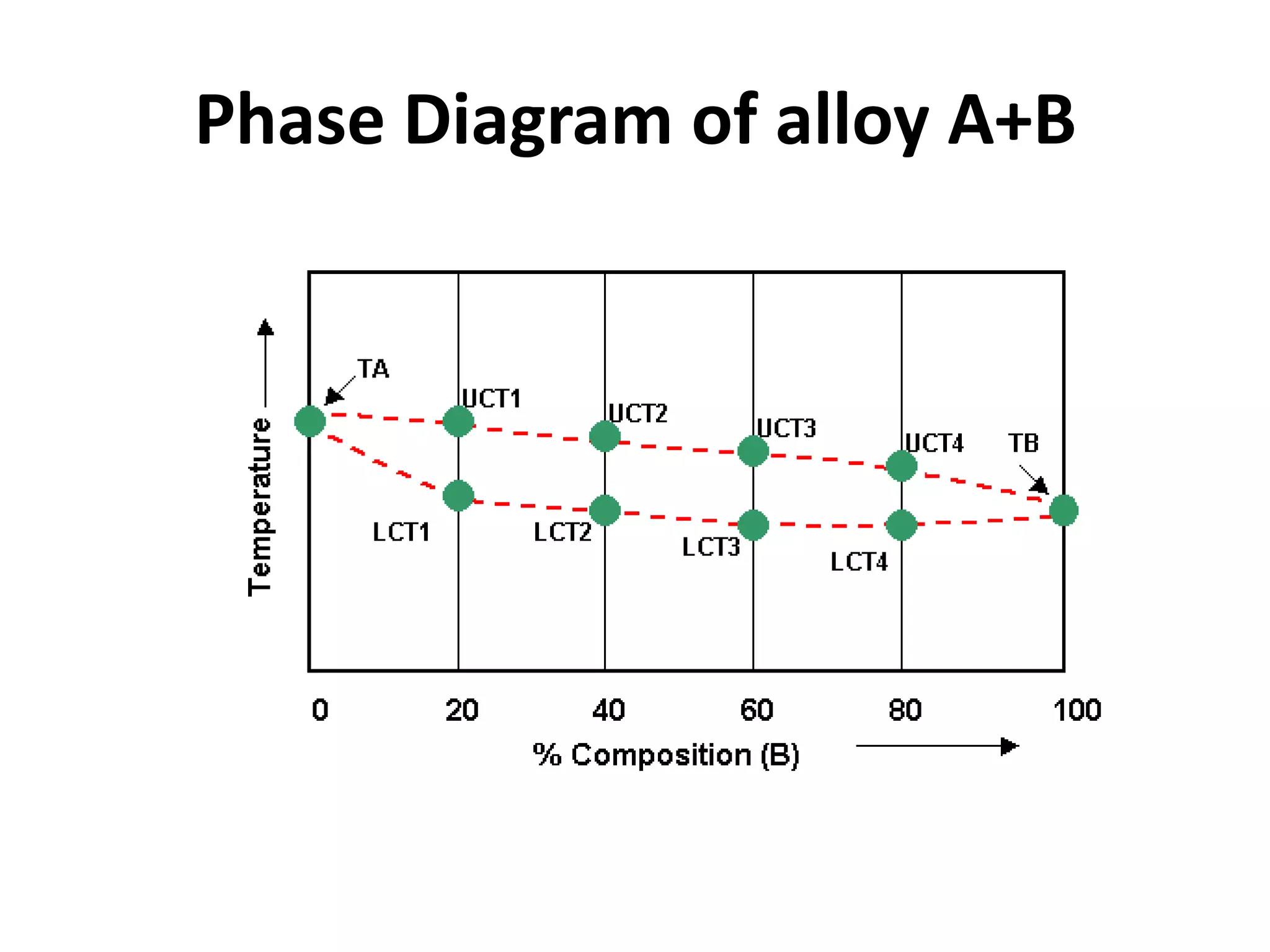
Phase Diagram of alloy A+B
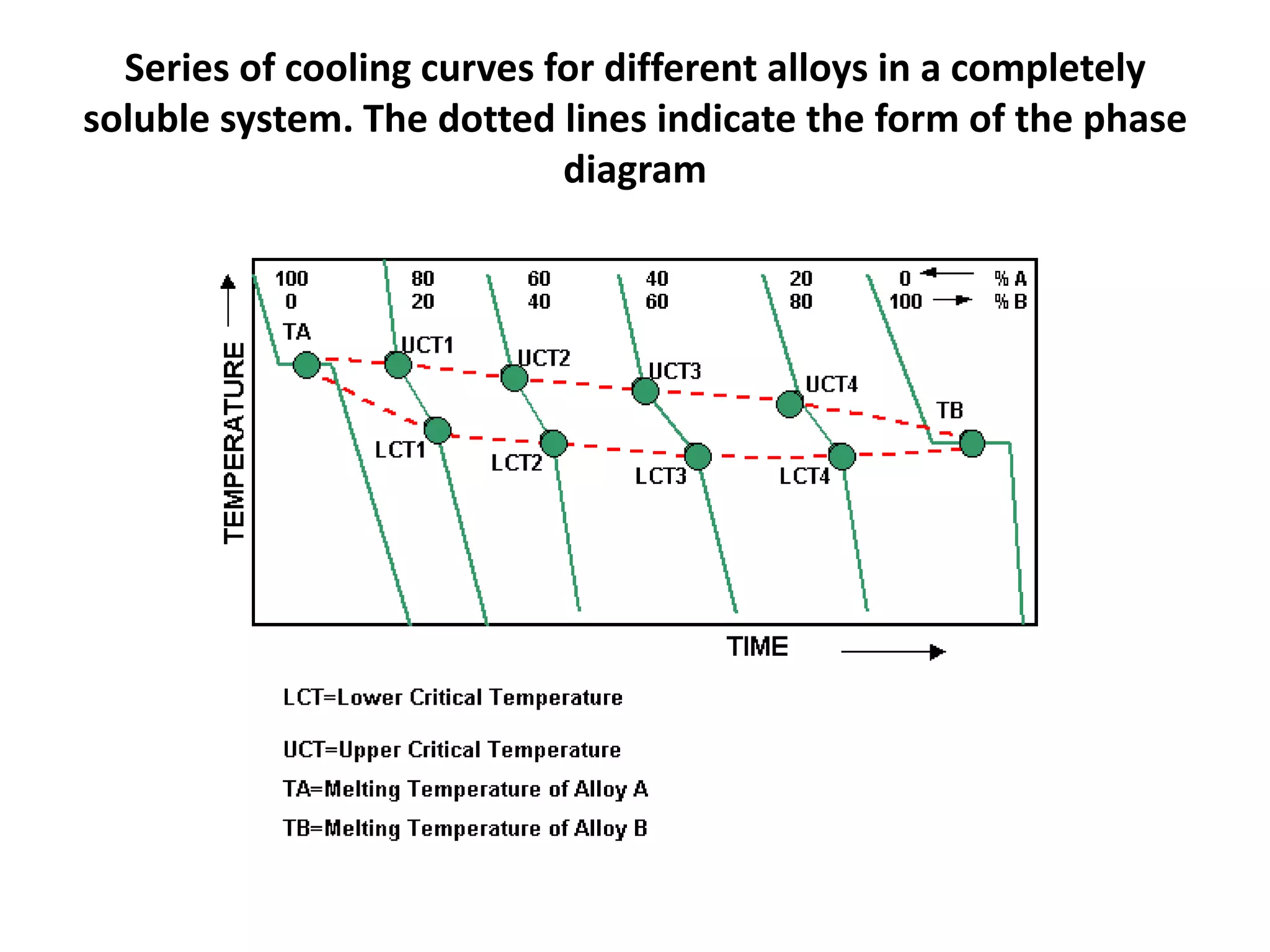
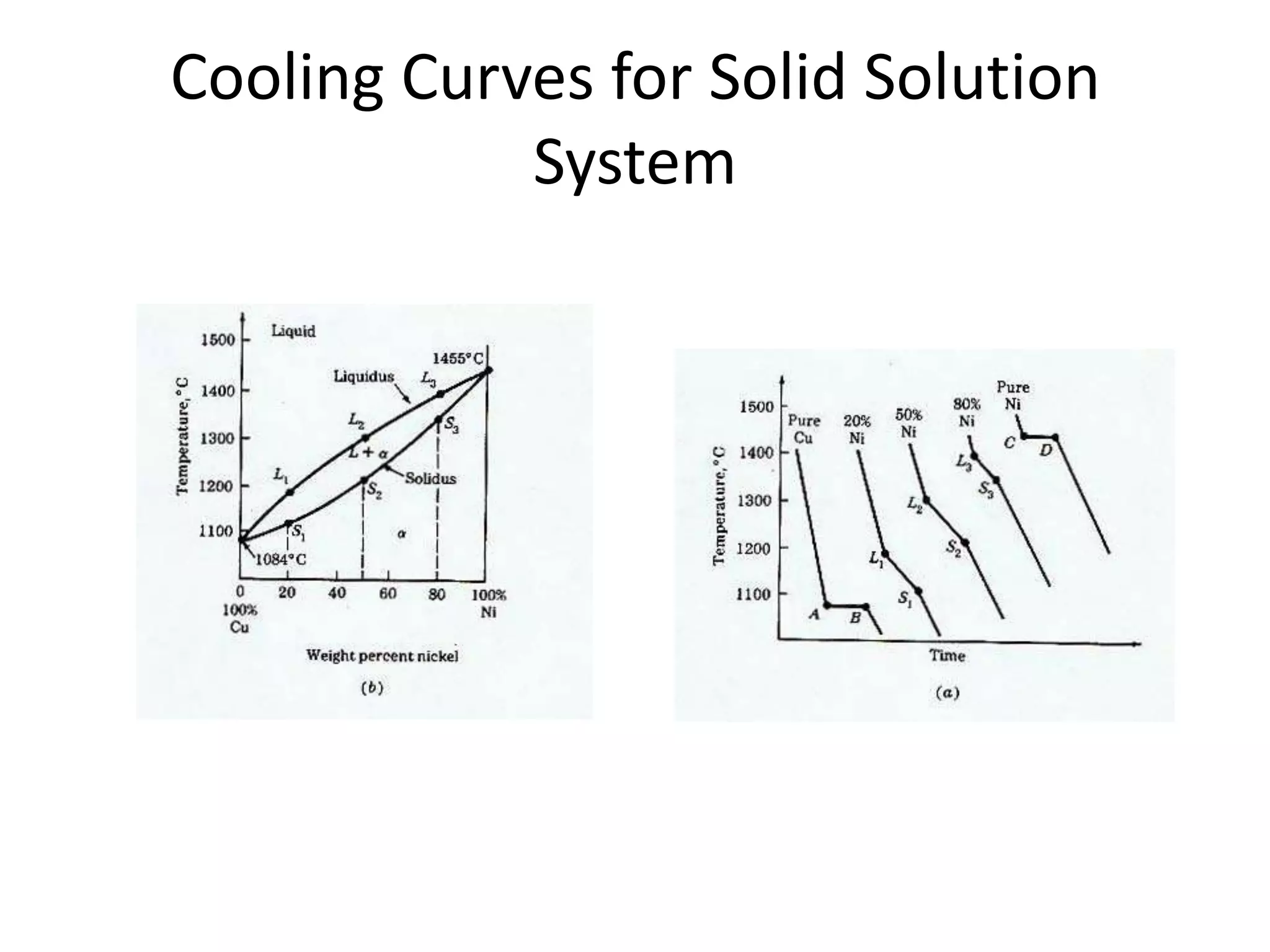
Series of cooling curves for different alloys in a completely
soluble system. The dotted lines indicate the form of the phase
diagram
Cooling Curves for Solid Solution
System
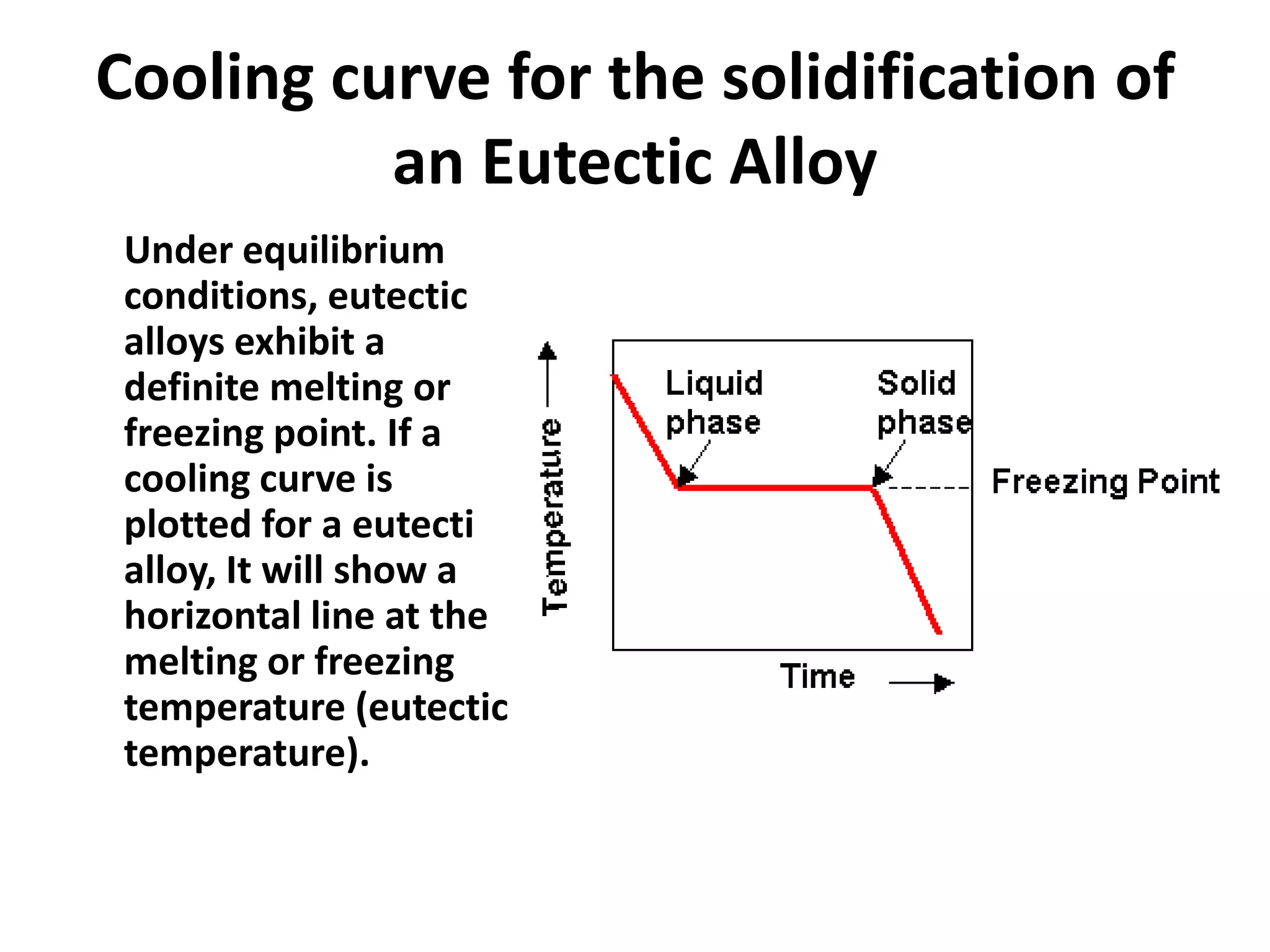
Cooling curve for the solidification of
an Eutectic Alloy
Under equilibrium
conditions, eutectic
alloys exhibit a
definite melting or
freezing point. If a
cooling curve is
plotted for a eutecti
alloy, It will show a
horizontal line at the
melting or freezing
temperature (eutectic
temperature).
Cooling Curve for Hypo and Hyper
Eutectic Alloys
THANKS

Cooling curve

  • 1.
    COOLING CURVES Prof. H.K. Khaira Professor in MSME Deptt. MANIT, Bhopal
  • 2.
    Cooling Curve • Acooling curve is a graphical plot of the changes in temperature with time for a material over the entire temperature range through which it cools. • Cooling Curve for Pure Metals is shown here.
  • 3.
    Cooling Curve • Thisis by far the most widely used experimental method. • It relies on the information obtained from the cooling process. • In this method, alloys with different compositions are melted and then the temperature of the mixture is measured at a certain time interval while cooling back to room temperature. • A cooling curve for each mixture is constructed and the initial and final phase change temperatures are determined. Then these temperatures are used for the construction of the phase diagrams
  • 4.
    Cooling curve forthe solidification of a pure metal Under equilibrium conditions, all metals exhibit a definite melting or freezing point. If a cooling curve is plotted for a pure metal. It will show a horizontal line at the melting or freezing temperature.
  • 5.
    Cooling curve fora pure metal showing possible undercooling.
  • 6.
    Cooling curve fora solid solution.
  • 7.
  • 8.
    Series of coolingcurves for different alloys in a completely soluble system. The dotted lines indicate the form of the phase diagram
  • 9.
    Cooling Curves forSolid Solution System
  • 10.
    Cooling curve forthe solidification of an Eutectic Alloy Under equilibrium conditions, eutectic alloys exhibit a definite melting or freezing point. If a cooling curve is plotted for a eutecti alloy, It will show a horizontal line at the melting or freezing temperature (eutectic temperature).
  • 11.
    Cooling Curve forHypo and Hyper Eutectic Alloys
  • 12.