Muhammad Umair
Bukhari
Engr.umair.bukhari@gmail.com
http://onlinemetallurgy.com
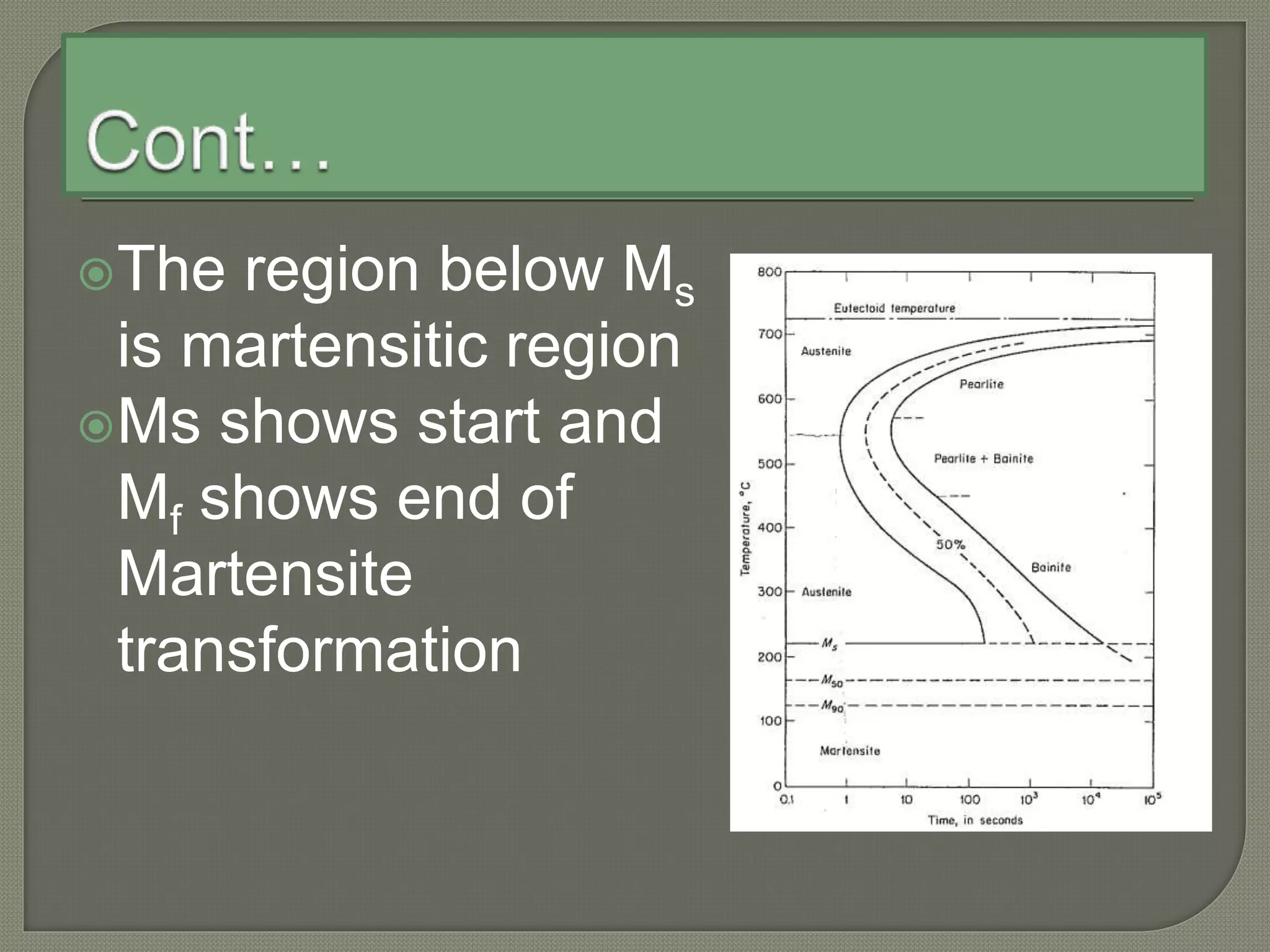
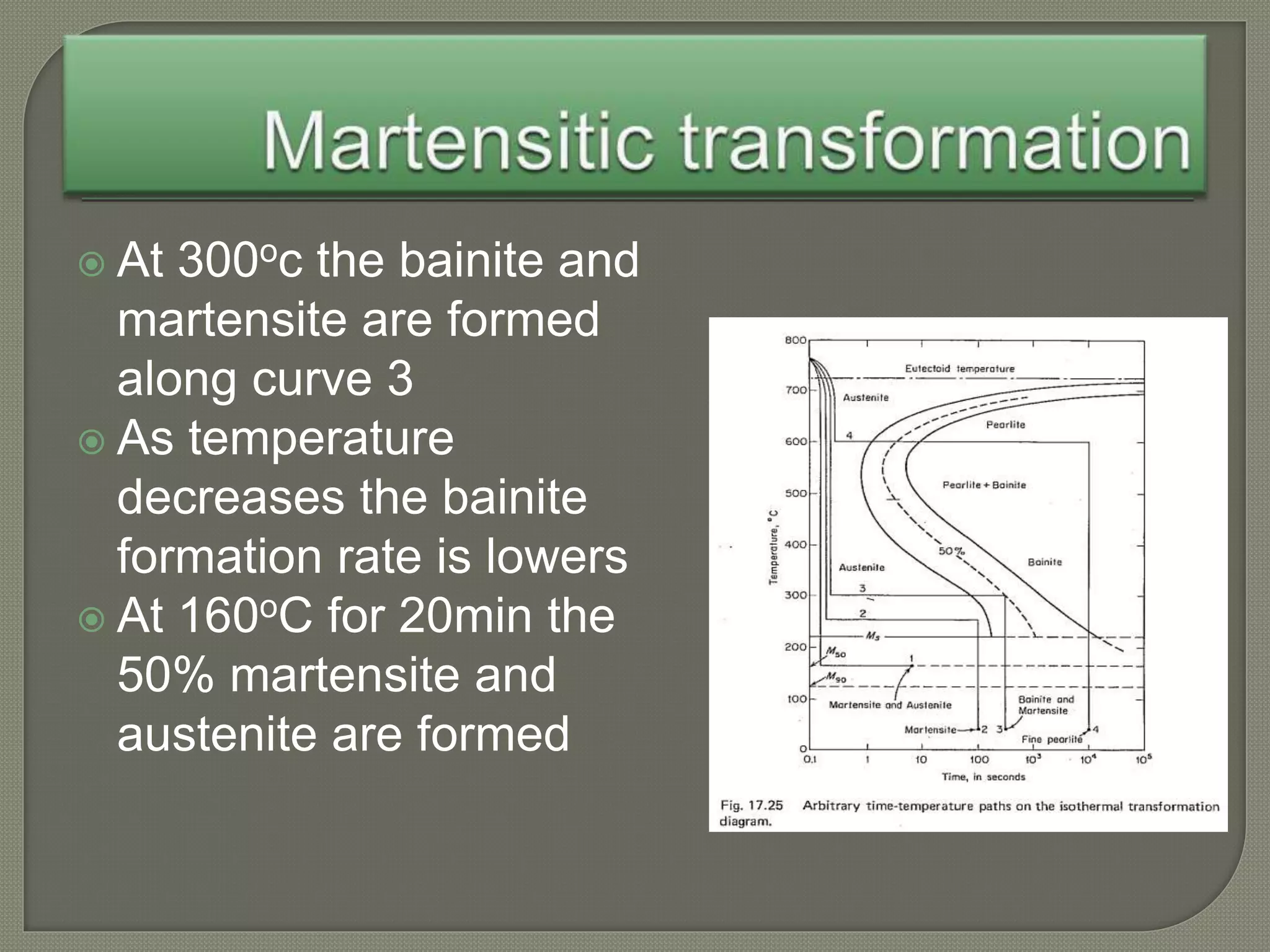
T-T-T diagram is plotted for different length
of times and temperature
These curves gives us the information of
transformation for different phases
With the help of T-T-T diagram we can
control the phase transformation by
changing the conditions
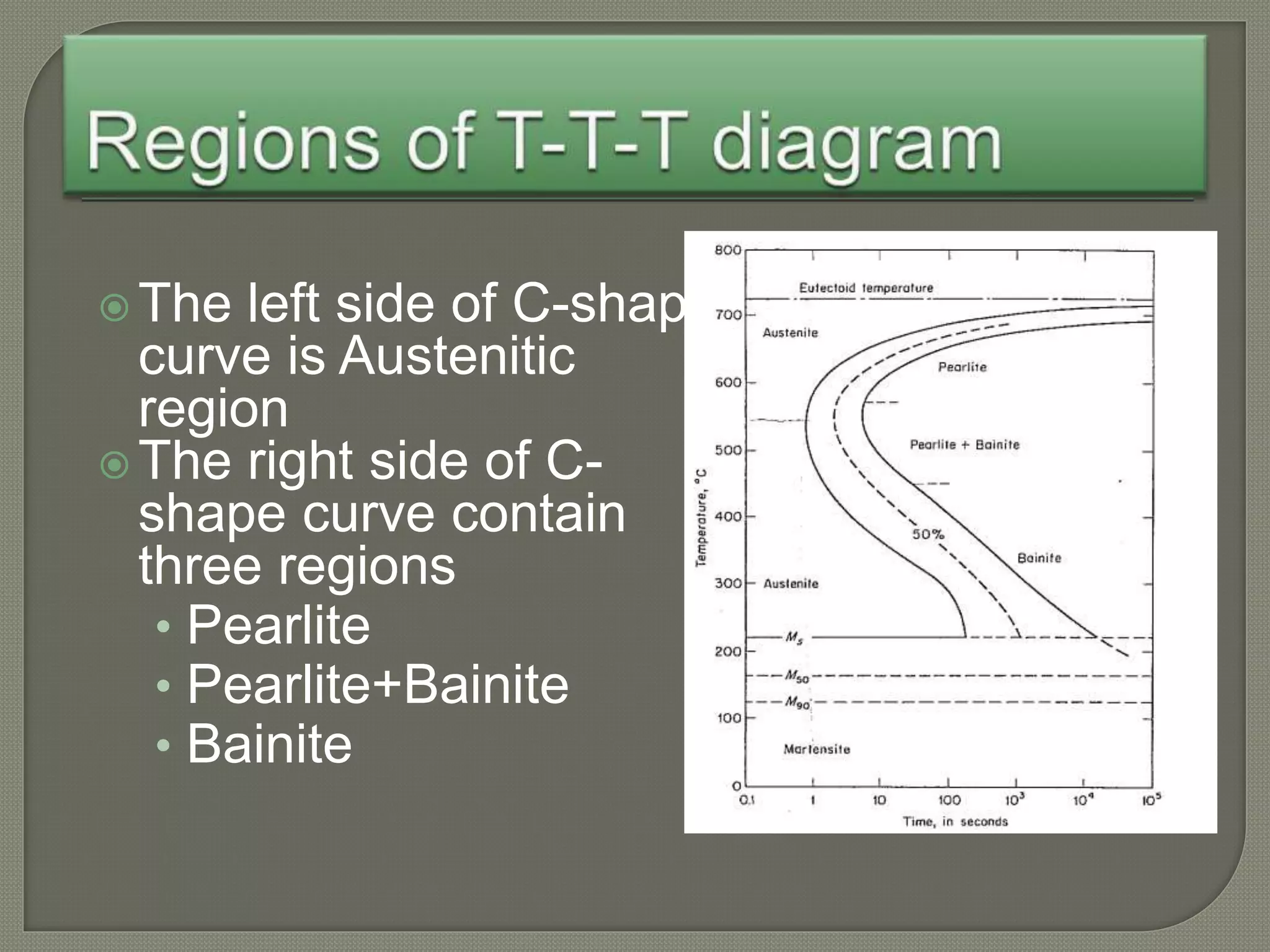
 The left side of C-shape
curve is Austenitic
region
 The right side of C-
shape curve contain
three regions
• Pearlite
• Pearlite+Bainite
• Bainite
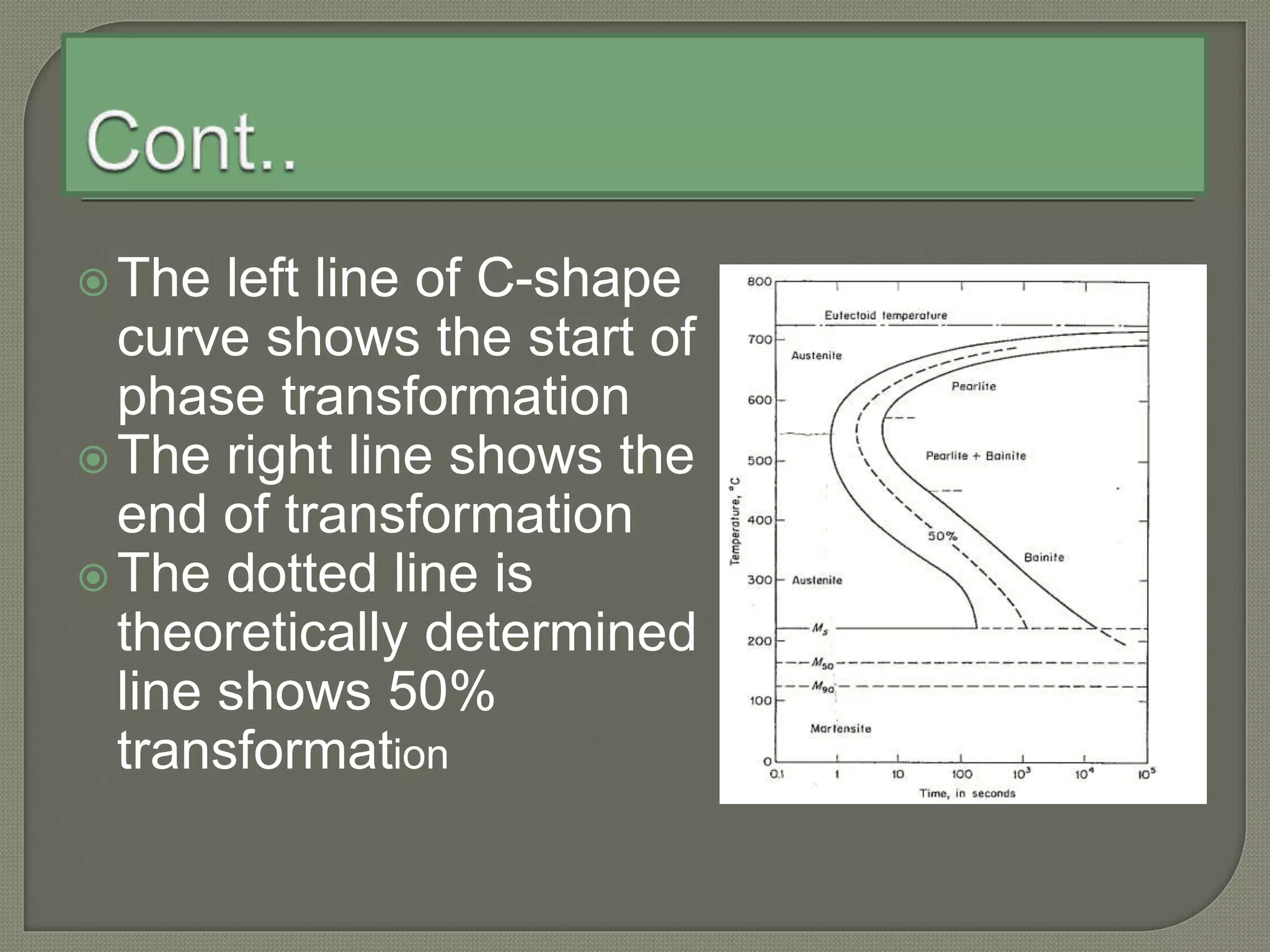
 The left line of C-shape
curve shows the start of
phase transformation
 The right line shows the
end of transformation
 The dotted line is
theoretically determined
line shows 50%
transformation
The region below Ms
is martensitic region
Ms shows start and
Mf shows end of
Martensite
transformation
Martensitic crystal structure is Body
centered tetragonal (BCT)
It is the intermediate structure of Fcc and
Bcc
It forms due to the realignment of atoms
from austenitic structure to martensitic
structure
Atoms arrange themselves to move
towards stability from higher temperature
to lower temperature
Only realignment is occur but there is no
diffusion
There is no concentration change in parent
and product phase
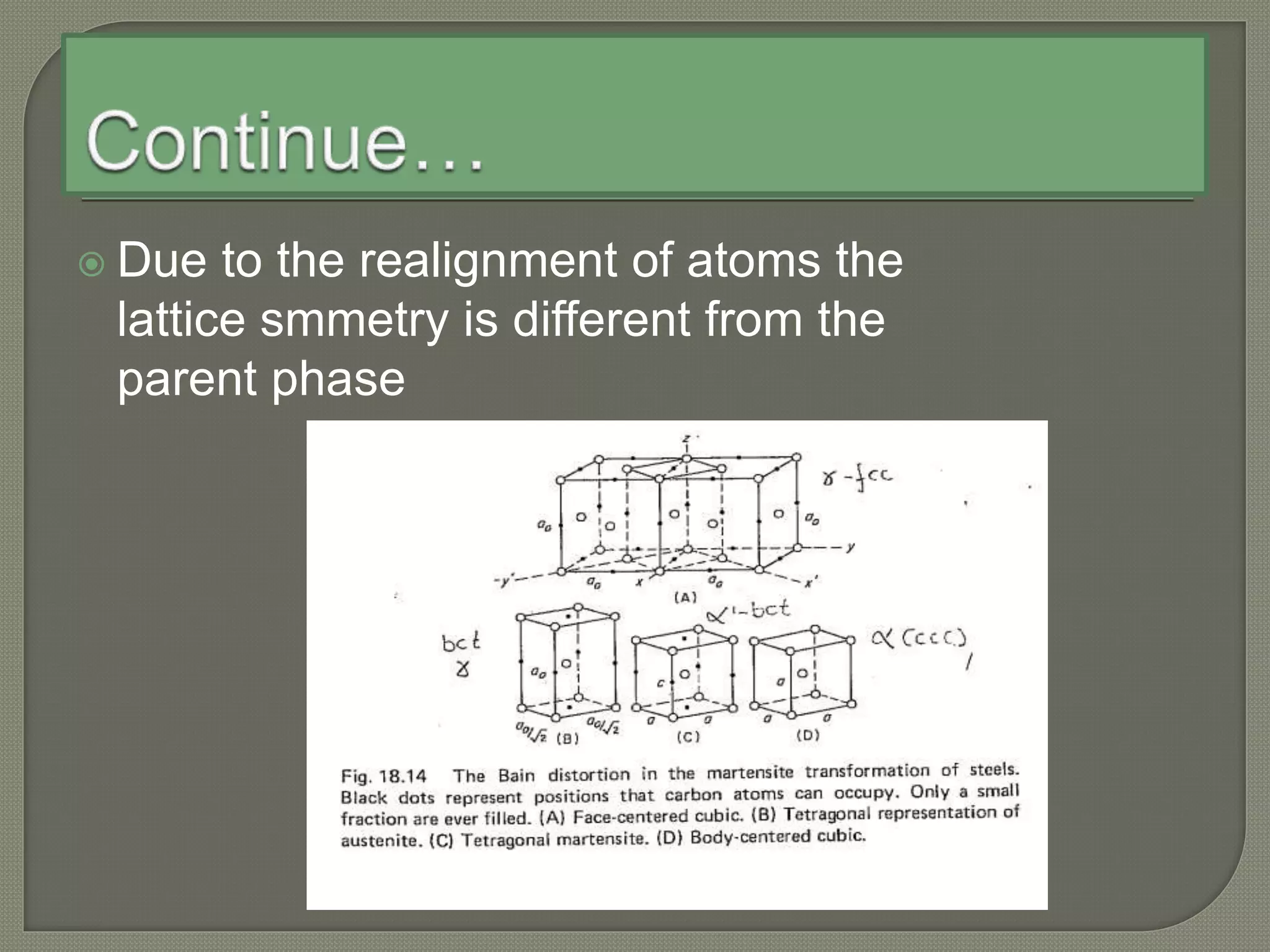
 Due to the realignment of atoms the
lattice smmetry is different from the
parent phase
 At 300oc the bainite and
martensite are formed
along curve 3
 As temperature
decreases the bainite
formation rate is lowers
 At 160oC for 20min the
50% martensite and
austenite are formed
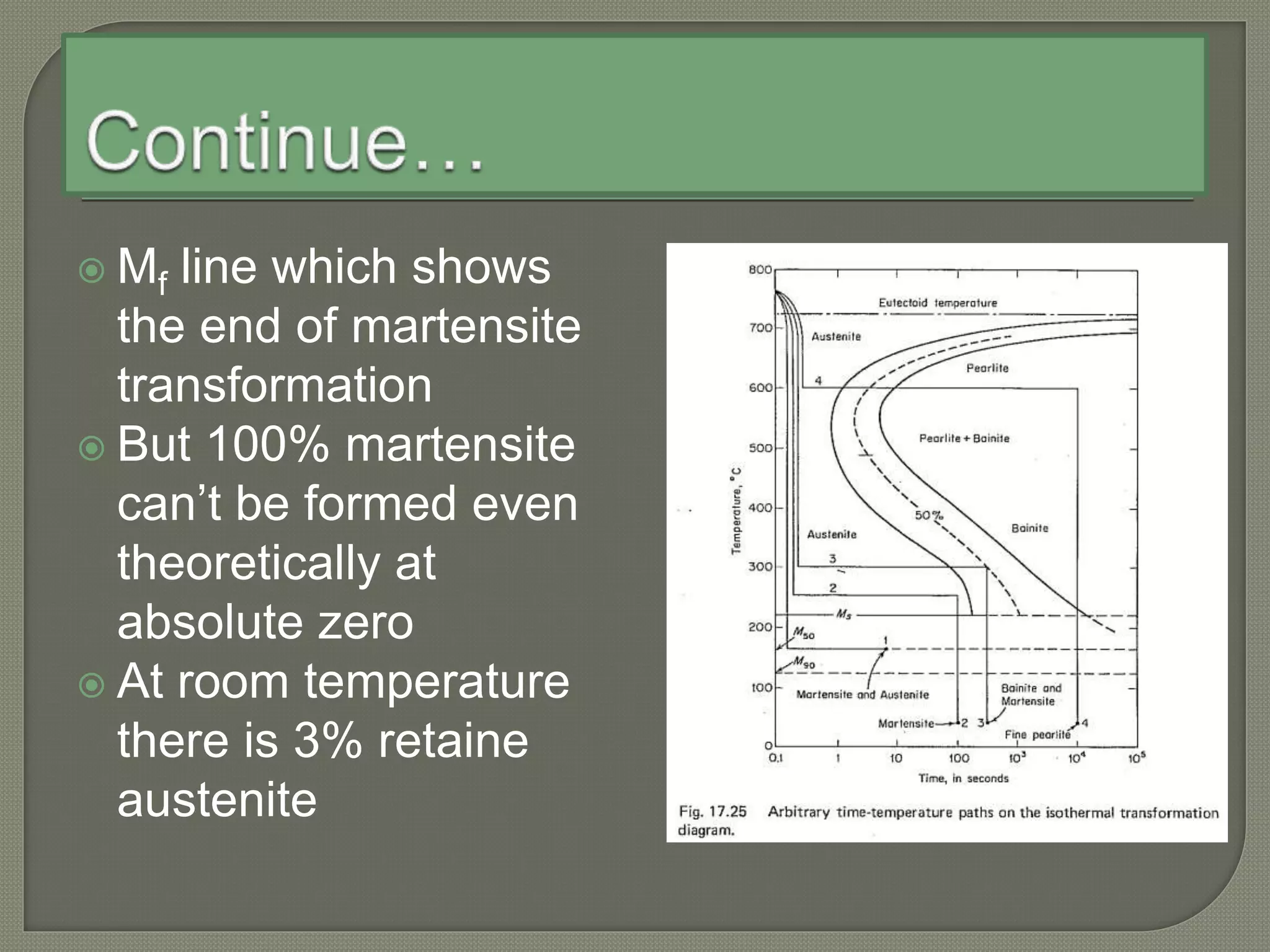
 Mf line which shows
the end of martensite
transformation
 But 100% martensite
can’t be formed even
theoretically at
absolute zero
 At room temperature
there is 3% retaine
austenite
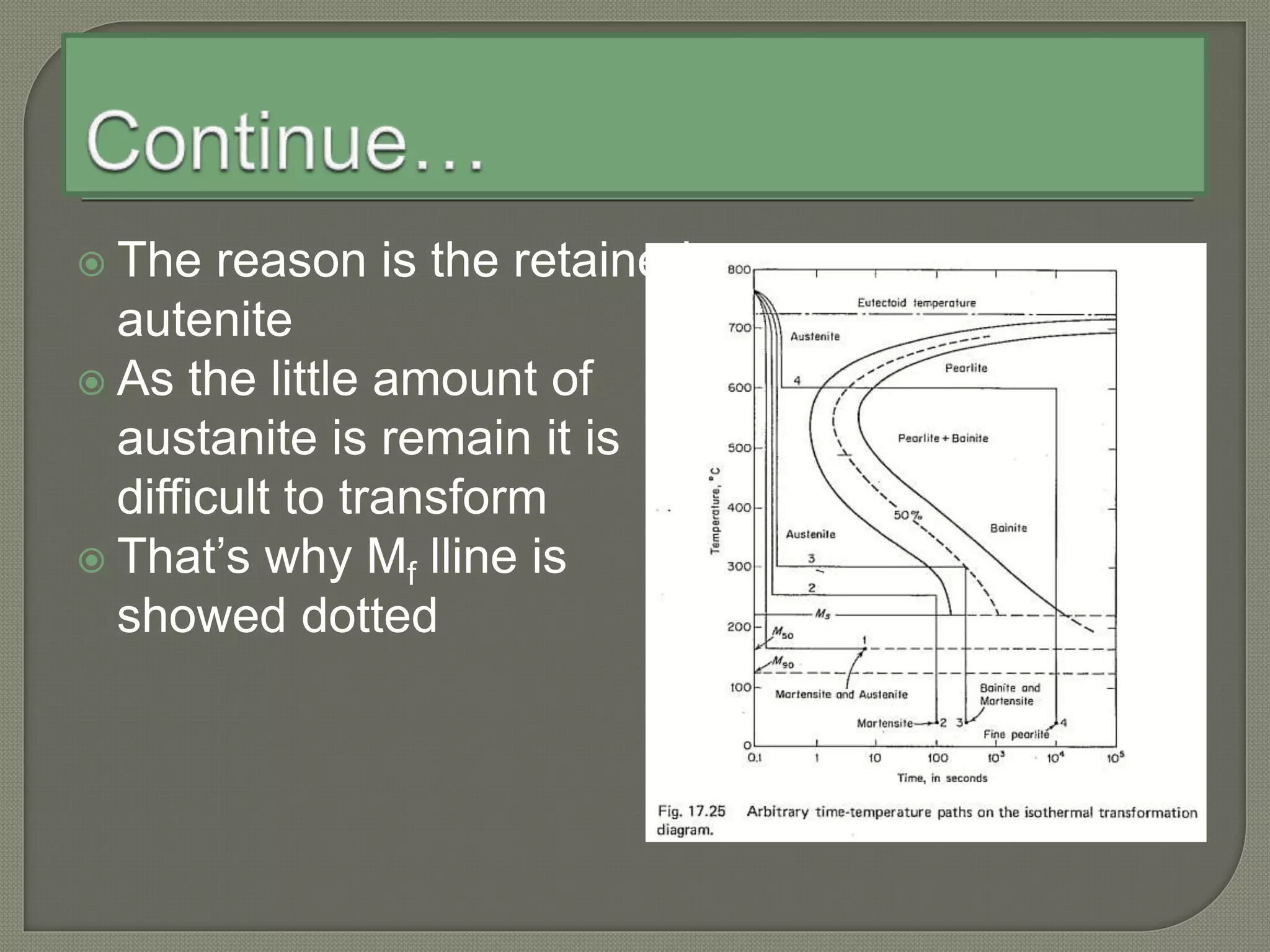
 The reason is the retained
autenite
 As the little amount of
austanite is remain it is
difficult to transform
 That’s why Mf lline is
showed dotted
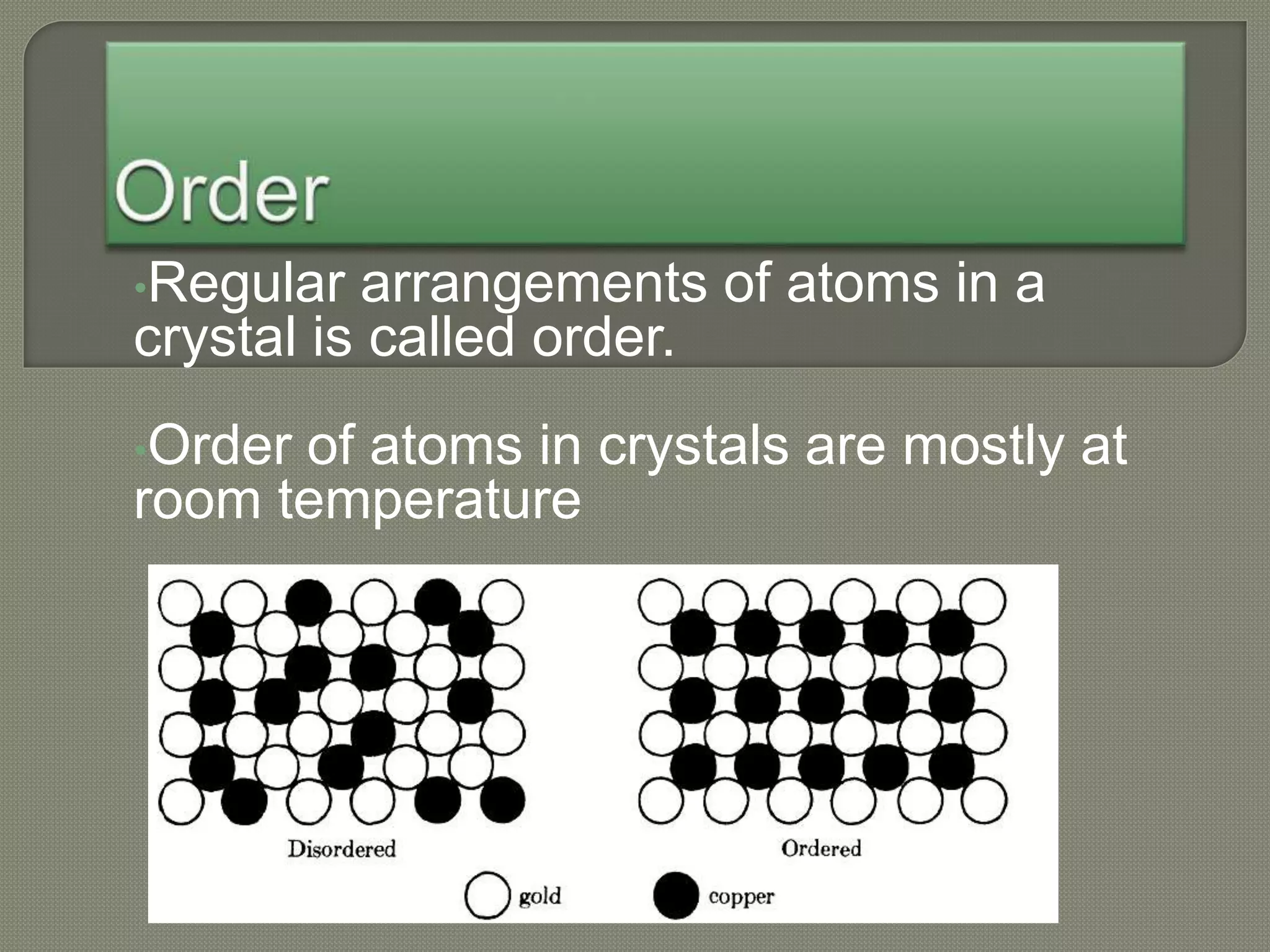
•Regular arrangements of atoms in a
crystal is called order.
•Order of atoms in crystals are mostly at
room temperature
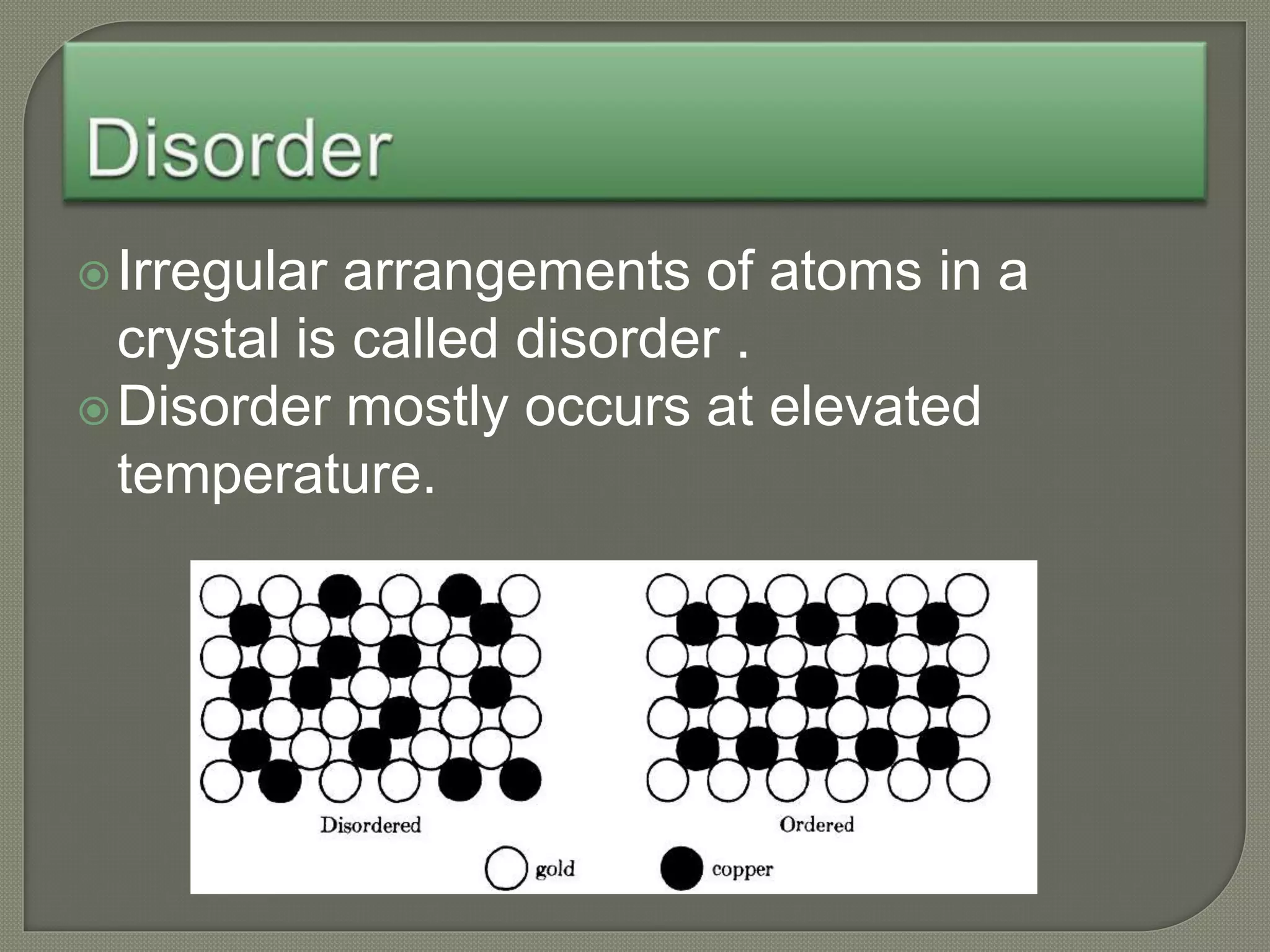
Irregular arrangements of atoms in a
crystal is called disorder .
Disorder mostly occurs at elevated
temperature.
 In most substitutional solid solutions two kinds of
atoms A and B are arranged more or less
random on the atomic sites of the lattice.
 In solution of this type of a change in
temperature is to Increase or decrease of a
thermal vibrations.
 If the ordered solution is heated above Tc the
atomic arrangement becomes more or less
random again and the solution is said to be
disordered.
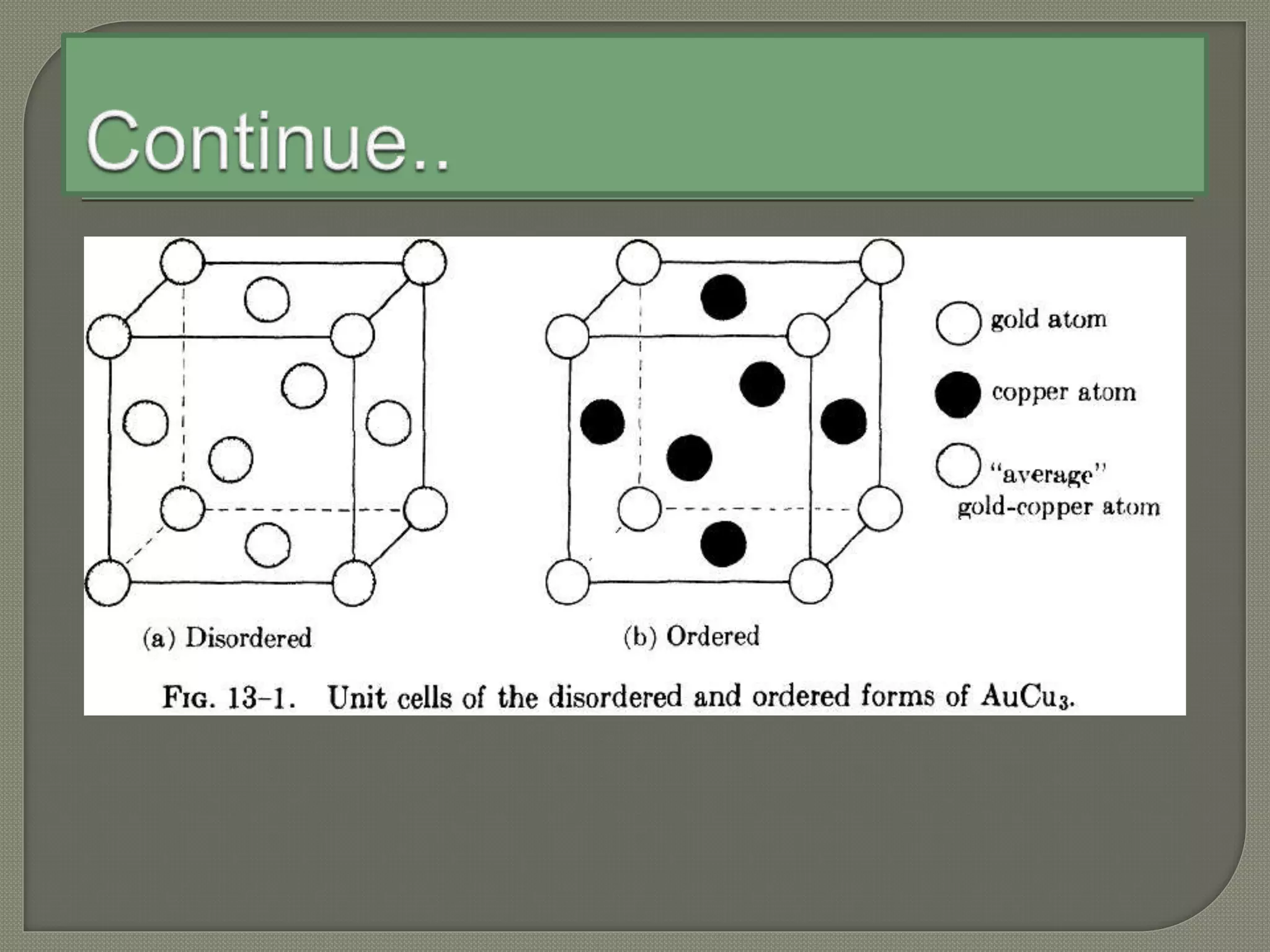
 The gold and copper atoms of AuCu3 above a
critical temperature of about 390’C are arranged
more or less random on the atomistic sites of
FCC lattice as shown in following figure.
 Below the critical temperature the gold atoms in
a perfectly ordered alloy occupy only the corner
position of the unit cube and the copper atoms
on the face centered cubic as shown in following
figure.
When the periodic arrangement of A and B
atoms persists over longer range distance
in a crystal than it is called a long range
order.
TTT diagram of eutectoid steel and martensitic transformation

TTT diagram of eutectoid steel and martensitic transformation

  • 2.
  • 3.
    T-T-T diagram isplotted for different length of times and temperature These curves gives us the information of transformation for different phases With the help of T-T-T diagram we can control the phase transformation by changing the conditions
  • 4.
     The leftside of C-shape curve is Austenitic region  The right side of C- shape curve contain three regions • Pearlite • Pearlite+Bainite • Bainite
  • 5.
     The leftline of C-shape curve shows the start of phase transformation  The right line shows the end of transformation  The dotted line is theoretically determined line shows 50% transformation
  • 6.
    The region belowMs is martensitic region Ms shows start and Mf shows end of Martensite transformation
  • 7.
    Martensitic crystal structureis Body centered tetragonal (BCT) It is the intermediate structure of Fcc and Bcc It forms due to the realignment of atoms from austenitic structure to martensitic structure
  • 8.
    Atoms arrange themselvesto move towards stability from higher temperature to lower temperature Only realignment is occur but there is no diffusion There is no concentration change in parent and product phase
  • 9.
     Due tothe realignment of atoms the lattice smmetry is different from the parent phase
  • 10.
     At 300octhe bainite and martensite are formed along curve 3  As temperature decreases the bainite formation rate is lowers  At 160oC for 20min the 50% martensite and austenite are formed
  • 11.
     Mf linewhich shows the end of martensite transformation  But 100% martensite can’t be formed even theoretically at absolute zero  At room temperature there is 3% retaine austenite
  • 12.
     The reasonis the retained autenite  As the little amount of austanite is remain it is difficult to transform  That’s why Mf lline is showed dotted
  • 13.
    •Regular arrangements ofatoms in a crystal is called order. •Order of atoms in crystals are mostly at room temperature
  • 14.
    Irregular arrangements ofatoms in a crystal is called disorder . Disorder mostly occurs at elevated temperature.
  • 15.
     In mostsubstitutional solid solutions two kinds of atoms A and B are arranged more or less random on the atomic sites of the lattice.  In solution of this type of a change in temperature is to Increase or decrease of a thermal vibrations.  If the ordered solution is heated above Tc the atomic arrangement becomes more or less random again and the solution is said to be disordered.
  • 16.
     The goldand copper atoms of AuCu3 above a critical temperature of about 390’C are arranged more or less random on the atomistic sites of FCC lattice as shown in following figure.  Below the critical temperature the gold atoms in a perfectly ordered alloy occupy only the corner position of the unit cube and the copper atoms on the face centered cubic as shown in following figure.
  • 18.
    When the periodicarrangement of A and B atoms persists over longer range distance in a crystal than it is called a long range order.