EDUCATIONAL
TECHNOLOGY 2
a modern manner of instruction
E D U C A T I O LAN
Technology
An Overview of
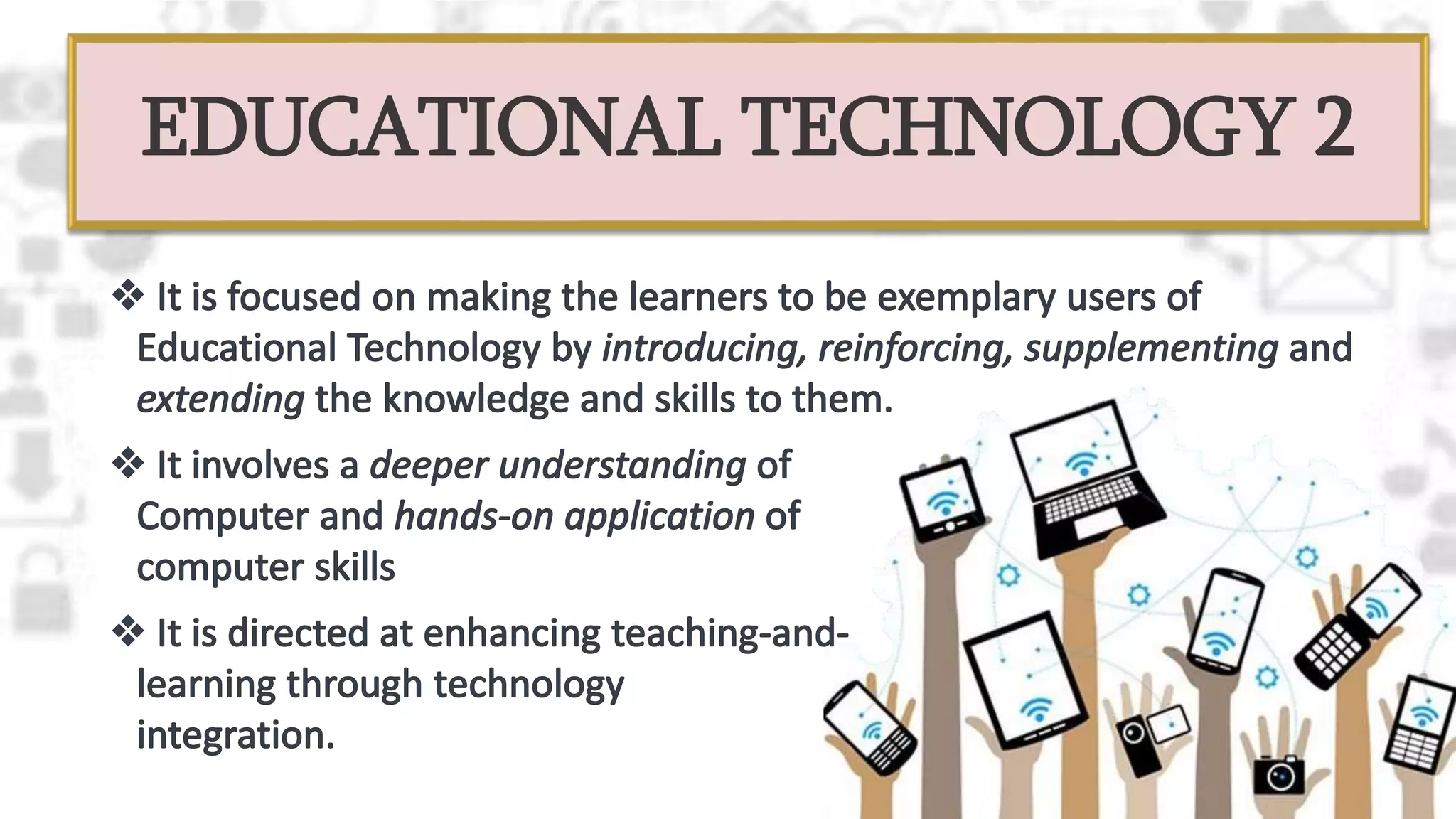
EDUCATIONAL TECHNOLOGY 2
Educational Technology 2 Objectives:
- to provide education in the use of technology in instruction by providing
knowledge and skills on technology integration-in-instruction to learners.
- to engage learners on practical technology integration issues including
managing IT classrooms, use of the Internet for learning, cooperative
learning through the use of information technology.
- to inculcate higher-level thinking
and creativity among students
while providing them knowledge
of IT-related learning theories.
BRIDGING THE
GENERAT I NO
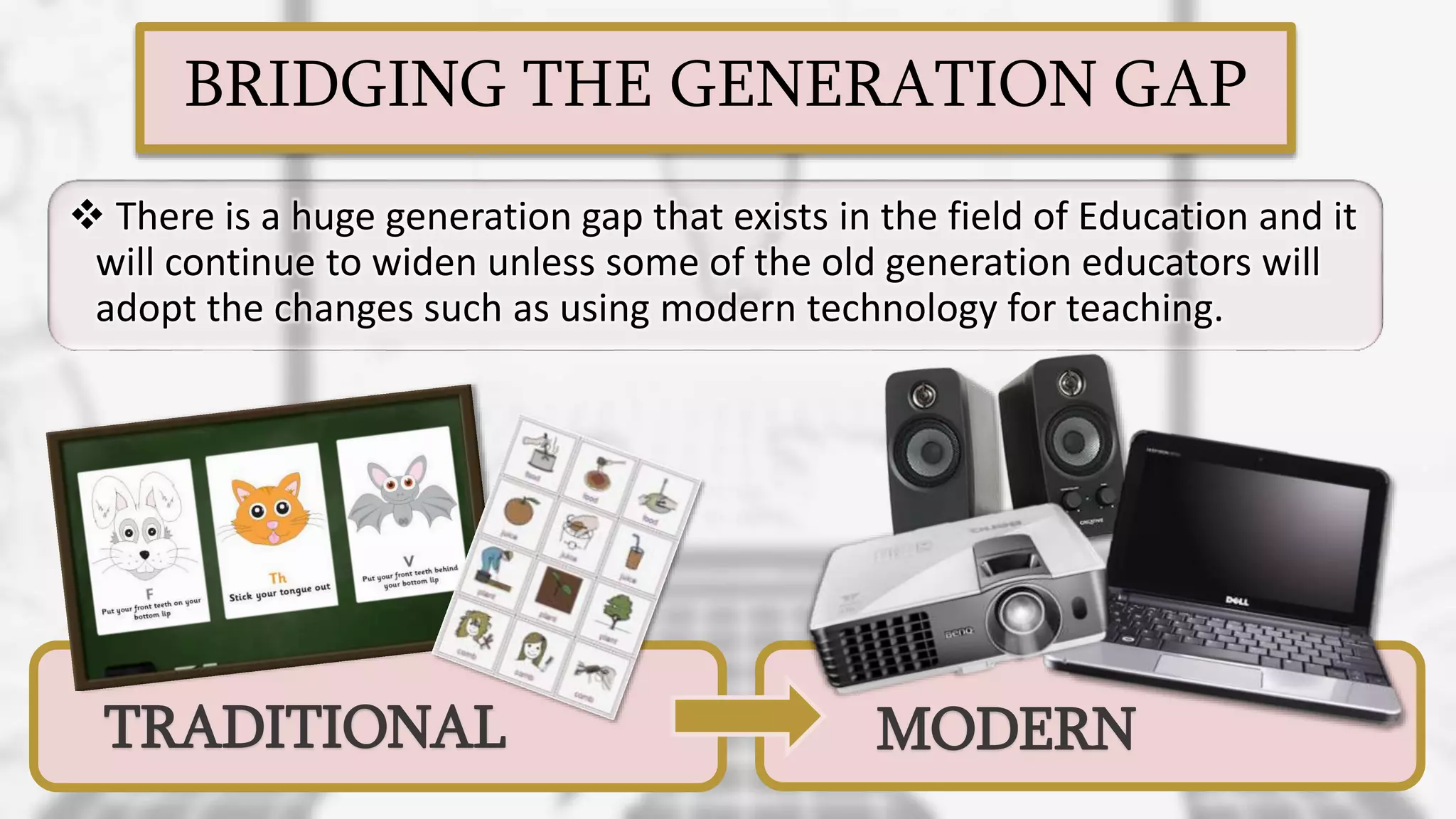
BRIDGING THE GENERATION GAP
 There is a huge generation gap that exists in the field of Education and it
will continue to widen unless some of the old generation educators will
adopt the changes such as using modern technology for teaching.
TRADITIONAL MODERN
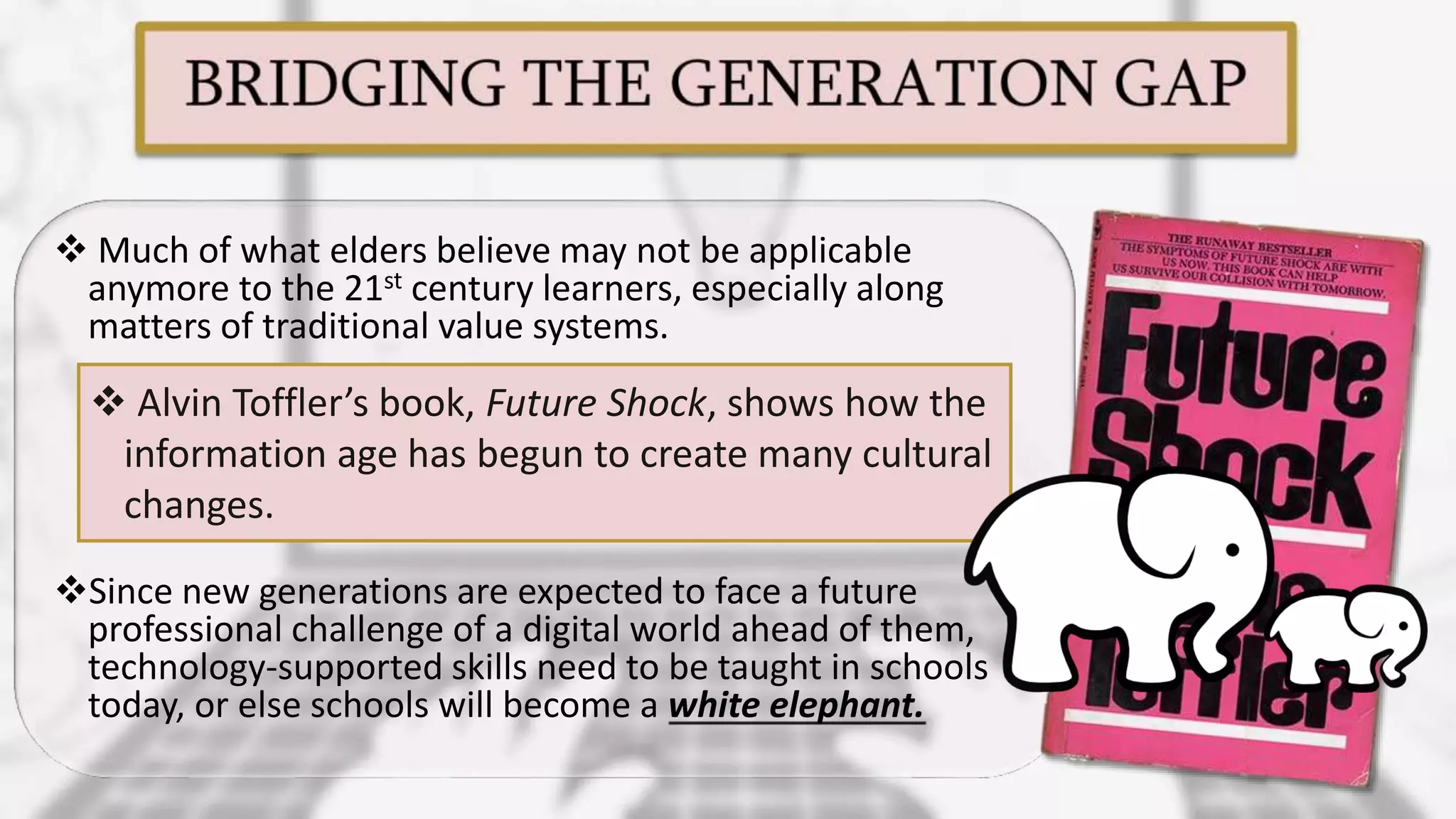
 Much of what elders believe may not be applicable
anymore to the 21st century learners, especially along
matters of traditional value systems.
Since new generations are expected to face a future
professional challenge of a digital world ahead of them,
technology-supported skills need to be taught in schools
today, or else schools will become a white elephant.
 Alvin Toffler’s book, Future Shock, shows how the
information age has begun to create many cultural
changes.
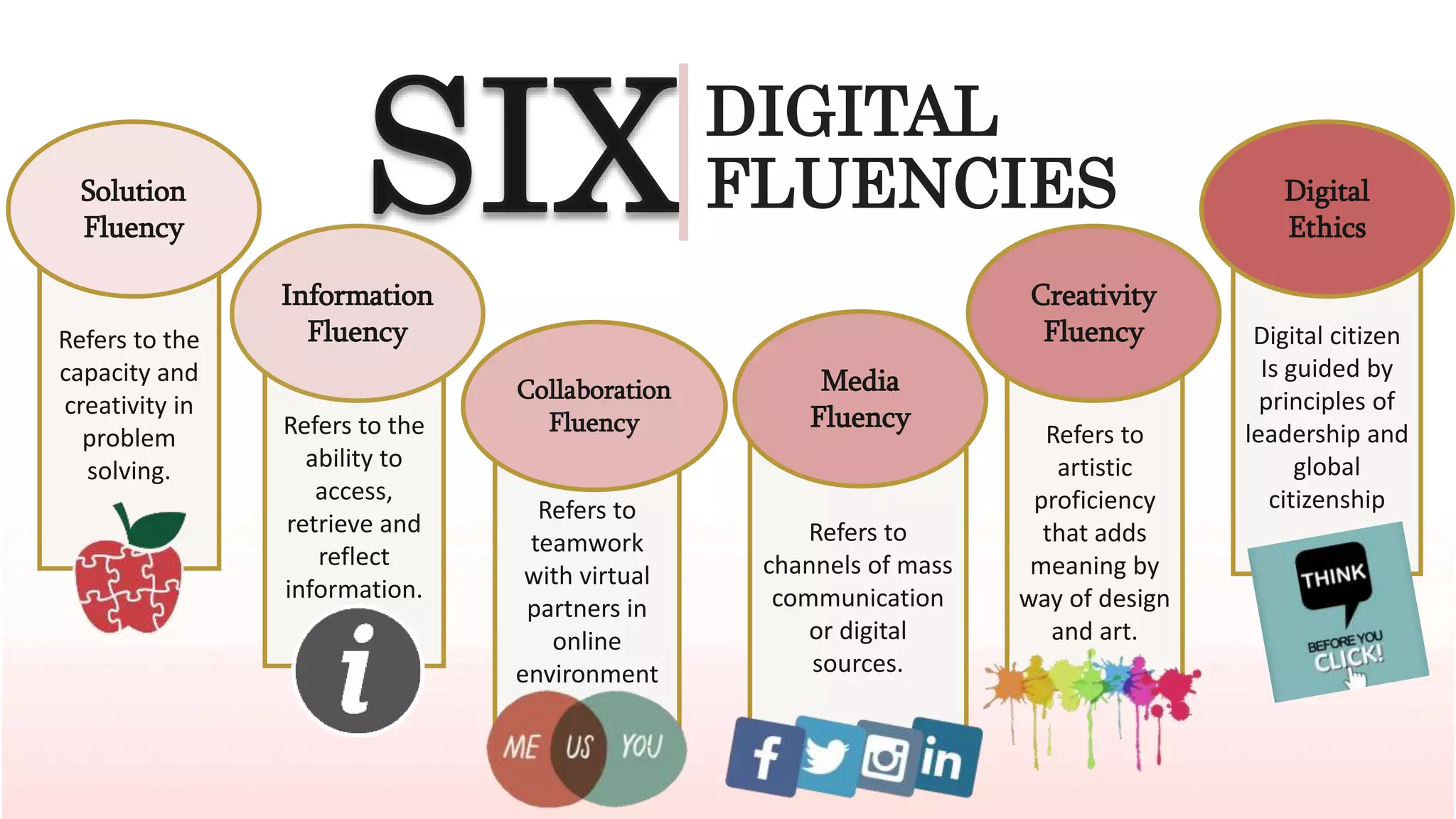
DIGITAL FLUENCIES
Refers to
teamwork
with virtual
partners in
online
environment
Digital citizen
Is guided by
principles of
leadership and
global
citizenship
Refers to
artistic
proficiency
that adds
meaning by
way of design
and art.
Refers to
channels of mass
communication
or digital
sources.
Refers to the
ability to
access,
retrieve and
reflect
information.
Refers to the
capacity and
creativity in
problem
solving.
Solution
Fluency
Information
Fluency
Collaboration
Fluency
Media
Fluency
Creativity
Fluency
Digital
Ethics
DIGITAL
FLUENCIES
The ROLE of
in developing HIGHER
THINGKING SKILLS
Technology
Reflection activities - provide students with opportunities to
track their learning and demonstrate their progress
throughout the semester.
Peer review activities - enable students to demonstrate
communication skills by giving feedback on each other’s
work.
Discussion forums - allow students to communicate with
their peers, answer questions that require them to
demonstrate critical thinking skills.
Small group activities - allow students to communicate,
problem solve, hear different perspectives, and collaborate
to analyze and synthesize course content.
Digital Storytelling Activities - telling this allows students to
use multimedia.
COMPUTER LITERACY
It is the ability to use computers and
related technology efficiently, with a range
of skills covering levels from elementary
use to programming and advanced problem
solving.
it is considered to be a very important
skill to possess while in the first world
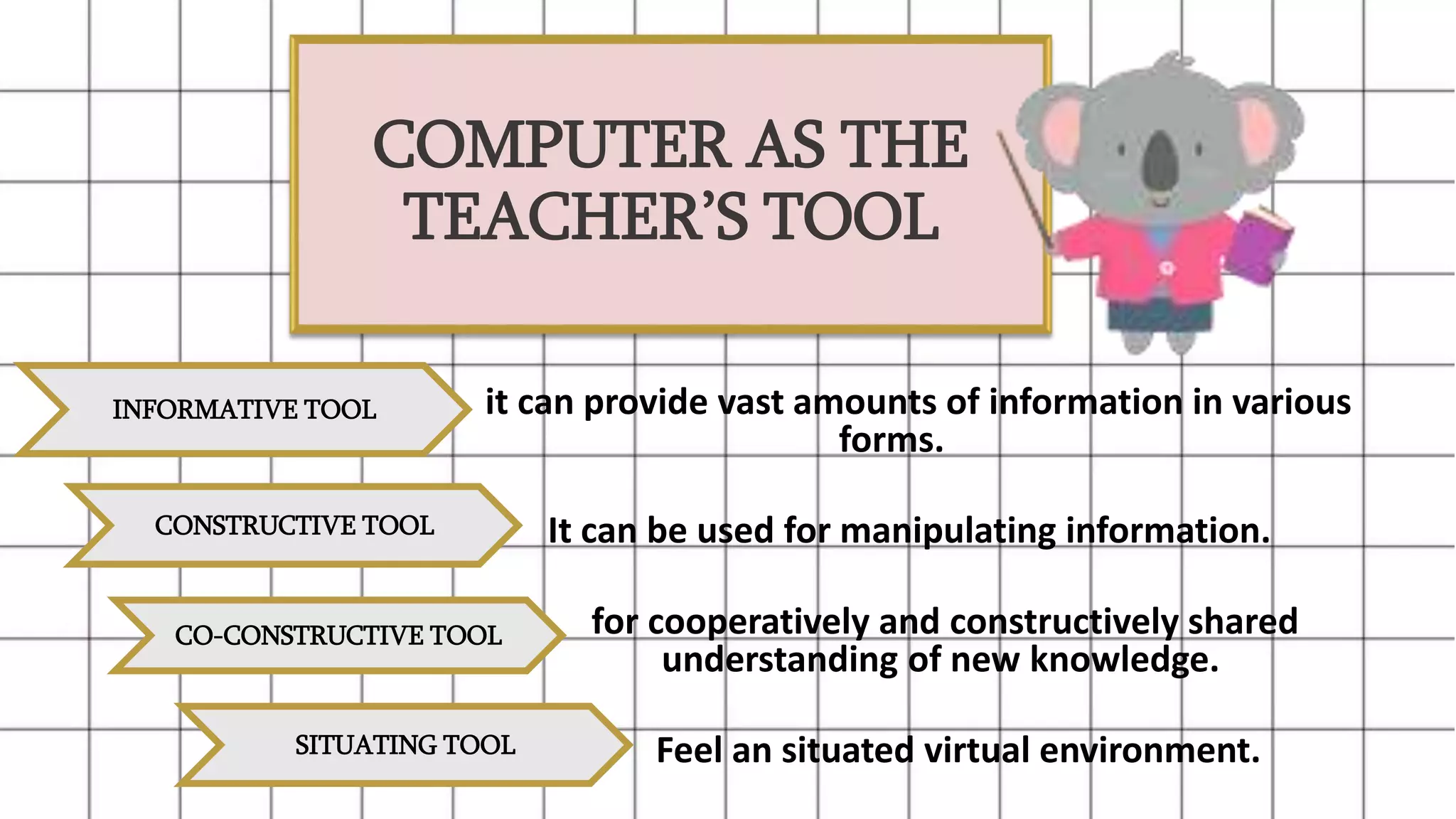
COMPUTER AS THE
TEACHER’S TOOL
COMPUTER AS THE
TEACHER’S TOOL
it can provide vast amounts of information in various
forms.
It can be used for manipulating information.
for cooperatively and constructively shared
understanding of new knowledge.
Feel an situated virtual environment.
INFORMATIVE TOOL
CONSTRUCTIVE TOOL
CO-CONSTRUCTIVE TOOL
SITUATING TOOL
Not only can tablets, apps, video and interactive whiteboards be
learning tools for students, but they can be additional teaching tools
for educators.
Many students are more stimulated and are apt to learn when they
can interact with hands-on learning tools, which various forms of
educational technology provide.
Educational apps, search engines, videos, portable technologies and
interactive activities provide students with a nearly endless supply of
information and resources.
THE IMPACT OF TECHNOLOGY IN TEACHING-
LEARNING PROCESS
WHAT I LEARNED IN
EDUCATIONAL TECHNOLOGY 2?
Educational Technology 2 broaden my knowledge
about the proper use of Technology and how we, future
educators, can use modern technology as an instructional
tool, which is really applicable at the moment because we
need these kinds of modern technology for teaching new
generations/our 21st century learners.
While taking this course subject, it simply and slowly
preparing us for the future because we all know that our
learners were all experts and skilled in using computers.
Peter lance-d.a.-visita-ed tech-2

Peter lance-d.a.-visita-ed tech-2

  • 1.
    EDUCATIONAL TECHNOLOGY 2 a modernmanner of instruction
  • 3.
    E D UC A T I O LAN Technology An Overview of
  • 4.
  • 5.
    Educational Technology 2Objectives: - to provide education in the use of technology in instruction by providing knowledge and skills on technology integration-in-instruction to learners. - to engage learners on practical technology integration issues including managing IT classrooms, use of the Internet for learning, cooperative learning through the use of information technology. - to inculcate higher-level thinking and creativity among students while providing them knowledge of IT-related learning theories.
  • 6.
  • 7.
    BRIDGING THE GENERATIONGAP  There is a huge generation gap that exists in the field of Education and it will continue to widen unless some of the old generation educators will adopt the changes such as using modern technology for teaching. TRADITIONAL MODERN
  • 8.
     Much ofwhat elders believe may not be applicable anymore to the 21st century learners, especially along matters of traditional value systems. Since new generations are expected to face a future professional challenge of a digital world ahead of them, technology-supported skills need to be taught in schools today, or else schools will become a white elephant.  Alvin Toffler’s book, Future Shock, shows how the information age has begun to create many cultural changes.
  • 9.
  • 10.
    Refers to teamwork with virtual partnersin online environment Digital citizen Is guided by principles of leadership and global citizenship Refers to artistic proficiency that adds meaning by way of design and art. Refers to channels of mass communication or digital sources. Refers to the ability to access, retrieve and reflect information. Refers to the capacity and creativity in problem solving. Solution Fluency Information Fluency Collaboration Fluency Media Fluency Creativity Fluency Digital Ethics DIGITAL FLUENCIES
  • 11.
    The ROLE of indeveloping HIGHER THINGKING SKILLS Technology
  • 12.
    Reflection activities -provide students with opportunities to track their learning and demonstrate their progress throughout the semester. Peer review activities - enable students to demonstrate communication skills by giving feedback on each other’s work. Discussion forums - allow students to communicate with their peers, answer questions that require them to demonstrate critical thinking skills. Small group activities - allow students to communicate, problem solve, hear different perspectives, and collaborate to analyze and synthesize course content. Digital Storytelling Activities - telling this allows students to use multimedia.
  • 13.
    COMPUTER LITERACY It isthe ability to use computers and related technology efficiently, with a range of skills covering levels from elementary use to programming and advanced problem solving. it is considered to be a very important skill to possess while in the first world
  • 14.
  • 15.
    COMPUTER AS THE TEACHER’STOOL it can provide vast amounts of information in various forms. It can be used for manipulating information. for cooperatively and constructively shared understanding of new knowledge. Feel an situated virtual environment. INFORMATIVE TOOL CONSTRUCTIVE TOOL CO-CONSTRUCTIVE TOOL SITUATING TOOL
  • 16.
    Not only cantablets, apps, video and interactive whiteboards be learning tools for students, but they can be additional teaching tools for educators. Many students are more stimulated and are apt to learn when they can interact with hands-on learning tools, which various forms of educational technology provide. Educational apps, search engines, videos, portable technologies and interactive activities provide students with a nearly endless supply of information and resources. THE IMPACT OF TECHNOLOGY IN TEACHING- LEARNING PROCESS
  • 17.
    WHAT I LEARNEDIN EDUCATIONAL TECHNOLOGY 2?
  • 18.
    Educational Technology 2broaden my knowledge about the proper use of Technology and how we, future educators, can use modern technology as an instructional tool, which is really applicable at the moment because we need these kinds of modern technology for teaching new generations/our 21st century learners. While taking this course subject, it simply and slowly preparing us for the future because we all know that our learners were all experts and skilled in using computers.