TEACHING-LEARNING
PROCESS
using EDUCATIONAL
TECHNOLOGY II
Cathy Lyn C. Robles
19 years old
3rd year student
Studied at Bulacan State
University
Taking up Bachelor of Secondary
Education Major in Filipino
Overvie
w II
Concerned with “Integrating Technology into
Teaching and Learning.”
Focused on introducing, reinforcing, supplementing
and extending the knowledge and skills to learners.
Primarily directed at enhancing teaching-
learning through technology integration.
EDUCATINAL
TECHNOLOGY 2
OBJECTIVES
To provide
education in the
use of
technology in
instruction
To impart learning
experiences in
instructional
technology
supported
instructional
planning
To acquaint
students on
Information
Technology or IT
related learning
theories.
To learn to use
and evaluate
computer-based
educational
resources.
To engage
learners on
practical
technology
integration
issues.
To inculcate
higher-level
thinking and
creativity among
students.
BRIDGING the DIGITAL GAP in
EDUCATION
The older
generation often
feels there
is a generation
gap between them
and the
younger
generation.
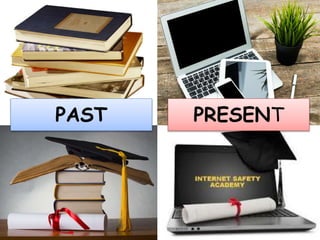
PAST PRESENT
In the field of education, a huge generation gap also exists.
PAST PRESENT
6 DIGITAL
INFLUENCIES
SOLUTION FLUENCY
INFORMATION FLUENCY
COLLABORATION FLUENCY
MEDIA FLUENCY
CREATIVITY FLUENCY
DIGITAL ETHICS
SOLUTION
FLUENCY
- This refers to
the Capacity
and creativity in
problem
solving.
INFORMATION
FLUENCY
- An ability to
Access, retrieve
reflect
information.
COLLABORATION
FLUENCY
- This refers to
teamwork with
virtual or real
partners in the
online
Environment.
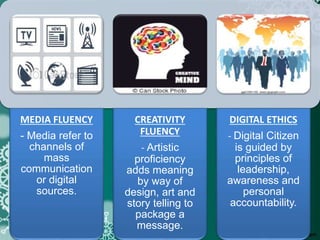
MEDIA FLUENCY
- Media refer to
channels of
mass
communication
or digital
sources.
CREATIVITY
FLUENCY
- Artistic
proficiency
adds meaning
by way of
design, art and
story telling to
package a
message.
DIGITAL ETHICS
- Digital Citizen
is guided by
principles of
leadership,
awareness and
personal
accountability.
The Role of Technology in Developing
Higher Order Thinking Skills of
Students
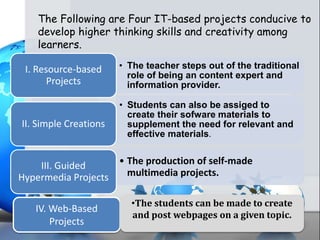
The Following are Four IT-based projects conducive to
develop higher thinking skills and creativity among
learners.
• The teacher steps out of the traditional
role of being an content expert and
information provider.
I. Resource-based
Projects
• Students can also be assiged to
create their sofware materials to
supplement the need for relevant and
effective materials.
II. Simple Creations
• The production of self-made
multimedia projects.
III. Guided
Hypermedia Projects
IV. Web-Based
Projects
•The students can be made to create
and post webpages on a given topic.
Computer Technology Amplifies Learning
along Computer Literacy
The first decade of the 21st century, computer
technology in education has matured to transform
into an educative information and communication
technology (ICT) in education.
Instructional media consist of audio-visual aids that
served to enhance and enrich the teaching-learning
process.
Educational communication media comprises the
media communication including learners using print,
film, radio, television means of communication.
THE COMPUTER
as the
TEACHER’S
TOOL
COMPU
TER
INFORMATIVE
TOOL
SITUATIONAL
TOOL
CO-
CONSTURUCTIVE
TOOL
CONSTRUCTIVE
TOOL
The Impact of Technology in T-L Process
• Computer based networking system has provided the
present day teacher with a choice of modern tools to
deliver the goods in the classroom and end the
instructional boundaries.
• Information and communication technology in which
e-learning, e-teaching, e- teachers are built in
components has some impacts on teaching-learning
process.
I learned that in Educational
Technology 2, learning how to use
computers is very important . As
future educator, we must use
technology to enhance the
teaching- learning process. Also,
using computers in teaching can
motivates the students.
What I learned in Educational Technology 2?
Robles Cathy-Lyn-

Robles Cathy-Lyn-

  • 1.
  • 2.
    Cathy Lyn C.Robles 19 years old 3rd year student Studied at Bulacan State University Taking up Bachelor of Secondary Education Major in Filipino
  • 3.
  • 4.
    Concerned with “IntegratingTechnology into Teaching and Learning.” Focused on introducing, reinforcing, supplementing and extending the knowledge and skills to learners. Primarily directed at enhancing teaching- learning through technology integration. EDUCATINAL TECHNOLOGY 2
  • 5.
    OBJECTIVES To provide education inthe use of technology in instruction To impart learning experiences in instructional technology supported instructional planning To acquaint students on Information Technology or IT related learning theories. To learn to use and evaluate computer-based educational resources. To engage learners on practical technology integration issues. To inculcate higher-level thinking and creativity among students.
  • 6.
    BRIDGING the DIGITALGAP in EDUCATION The older generation often feels there is a generation gap between them and the younger generation.
  • 7.
    PAST PRESENT In thefield of education, a huge generation gap also exists.
  • 8.
  • 9.
    6 DIGITAL INFLUENCIES SOLUTION FLUENCY INFORMATIONFLUENCY COLLABORATION FLUENCY MEDIA FLUENCY CREATIVITY FLUENCY DIGITAL ETHICS
  • 10.
    SOLUTION FLUENCY - This refersto the Capacity and creativity in problem solving. INFORMATION FLUENCY - An ability to Access, retrieve reflect information. COLLABORATION FLUENCY - This refers to teamwork with virtual or real partners in the online Environment.
  • 11.
    MEDIA FLUENCY - Mediarefer to channels of mass communication or digital sources. CREATIVITY FLUENCY - Artistic proficiency adds meaning by way of design, art and story telling to package a message. DIGITAL ETHICS - Digital Citizen is guided by principles of leadership, awareness and personal accountability.
  • 12.
    The Role ofTechnology in Developing Higher Order Thinking Skills of Students
  • 13.
    The Following areFour IT-based projects conducive to develop higher thinking skills and creativity among learners. • The teacher steps out of the traditional role of being an content expert and information provider. I. Resource-based Projects • Students can also be assiged to create their sofware materials to supplement the need for relevant and effective materials. II. Simple Creations • The production of self-made multimedia projects. III. Guided Hypermedia Projects IV. Web-Based Projects •The students can be made to create and post webpages on a given topic.
  • 14.
    Computer Technology AmplifiesLearning along Computer Literacy The first decade of the 21st century, computer technology in education has matured to transform into an educative information and communication technology (ICT) in education. Instructional media consist of audio-visual aids that served to enhance and enrich the teaching-learning process. Educational communication media comprises the media communication including learners using print, film, radio, television means of communication.
  • 15.
  • 16.
  • 17.
    The Impact ofTechnology in T-L Process • Computer based networking system has provided the present day teacher with a choice of modern tools to deliver the goods in the classroom and end the instructional boundaries. • Information and communication technology in which e-learning, e-teaching, e- teachers are built in components has some impacts on teaching-learning process.
  • 18.
    I learned thatin Educational Technology 2, learning how to use computers is very important . As future educator, we must use technology to enhance the teaching- learning process. Also, using computers in teaching can motivates the students. What I learned in Educational Technology 2?