P RO
I
L IOT F
N
N
O
I L
ATACUDE
O
TE CHNO
L
O
G
Y I I
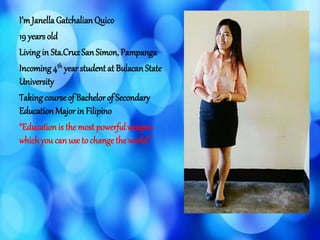
I’mJanella GatchalianQuico
19 years old
Livingin Sta.Cruz SanSimon, Pampanga
Incoming4th year student at BulacanState
University
Takingcourse of Bachelor of Secondary
EducationMajor in Filipino
“Educationis the most powerful weapon
whichyou can use to changethe world.”
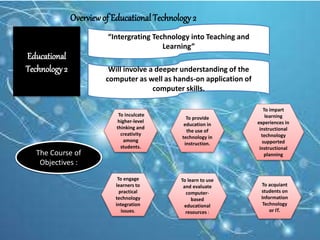
Overviewof Educational Technology2
Educational
Technology2
“Intergrating Technology into Teaching and
Learning”
Will involve a deeper understanding of the
computer as well as hands-on application of
computer skills.
The Course of
Objectives :
To inculcate
higher-level
thinking and
creativity
among
students.
To engage
learners to
practical
technology
integration
issues.
To provide
education in
the use of
technology in
instruction.
To acquiant
students on
Information
Technology
or IT.
To impart
learning
experiences in
instructional
technology
supported
instructional
planning
To learn to use
and evaluate
computer-
based
educational
resources :
Bridging the Generation Gap
• The older generation often
feels there is a generation gap
between them and the younger
generation.
• A huge generation gap also
exists and it will continue to
widden unless some changes
are adapted at the proper time.
Future Shock by Alvin Toffler
SIX DIGITAL FLUENCIES
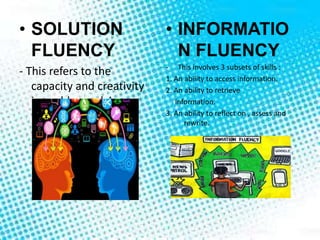
• SOLUTION
FLUENCY
- This refers to the
capacity and creativity
in problem solving.
• INFORMATIO
N FLUENCY
- This involves 3 subsets of skills :
1. An ability to access information.
2. An ability to retrieve
information.
3. An ability to reflect on , assess and
rewrite.
• COLLABORATI
ON FLUENCY
- This refers to teamwork
with virtual or real
partners in the online
environment.
• MEDIA
FLUENCY
- Media refer to channel of
mass communication
(radio,television,magazine,a
dvertising,graphic arts) or
digital sources.
• CREATIVITY
FLUENCY
- Artistic proficiency adds
meaning by the way of
design, art and story telling
to package a messege.
• DIGITAL
ETHICS
- The digital citizen is guided
by principles of leadership,
global responsibility,
environment awareness,
global citizenship and
personal accountability.
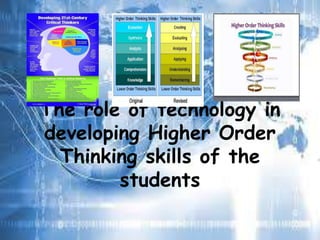
The role of technology in
developing Higher Order
Thinking skills of the
students
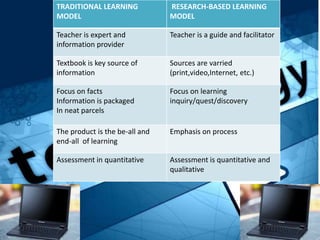
TRADITIONAL LEARNING
MODEL
RESEARCH-BASED LEARNING
MODEL
Teacher is expert and
information provider
Teacher is a guide and facilitator
Textbook is key source of
information
Sources are varried
(print,video,Internet, etc.)
Focus on facts
Information is packaged
In neat parcels
Focus on learning
inquiry/quest/discovery
The product is the be-all and
end-all of learning
Emphasis on process
Assessment in quantitative Assessment is quantitative and
qualitative
COMPUTER
TECHNOLOGY
AND COMPUTER
LITERACY
Computer literacy is the ability to use computers and
related technology efficiently, with a range of skills
covering levels from elementary use to programming
and advanced problem solving.
Computer literacy generally refers to the ability to use
applications rather than to program. Individuals who
are very computer literate are sometimes called power
users.
COMPUTER AS
TEACHER’S
TOOL
An Information tool
A Communication tool
A co-constructive tool
A situating Tool
The teacher can employ the computer as a/an:
• Constructive tool- the computer it self can be used for
manipulating information, visualizing one’s
understanding, and building new knowledge.
• Co-constructive tool- can be used to work
cooperatively and construct a shared understanding
of new knowledge.
• Situating tool- can be used to create 3D images on
display to give the user the feeling that are situated in
virtual environment.
THE COMPUTERS CAPABILITY
THE IMPACT OF
TECHNOLOGY TO
TEACHING-
LEARNING
PROCESS
Students
produce higher
academic
achievements.
Students learn
quickly and
with greater
retention.
Students learning
styles help drive
home the idea of
using technology in
differentiated
instruction.
It is clear that
technology can
and should play a
significant role
Time and
Distance are no
longer hindrance
when it
comes to
teaching-learning
development.
Technology is fast
becoming a part
of our daily lives
and educational
technology must
follow suit.
Bridging the gap
between
students interest
and teachers
knowledge.
Teachers are using
software are
programs to help
students to improve
upon
underdeveloped skills
in a variety of content
areas.
I learned in Educational Technology 2 as
a future teacher/educator we must know
how to adjust to the academic demands
of teaching using the technology to encourage
the students to contribute their learnings after
the disscussion.
And through the use of technology teachers may
prepare their lesson on time and much to enjoy,
Encoding of grades are now easy.
And how to use the technology in a proper way
and easiest way.
WHAT I LEARNED IN EDUCATIONAL
TECHNOLOGY 2 ?

Janella Quico

  • 1.
    P RO I L IOTF N N O I L ATACUDE O TE CHNO L O G Y I I
  • 2.
    I’mJanella GatchalianQuico 19 yearsold Livingin Sta.Cruz SanSimon, Pampanga Incoming4th year student at BulacanState University Takingcourse of Bachelor of Secondary EducationMajor in Filipino “Educationis the most powerful weapon whichyou can use to changethe world.”
  • 3.
    Overviewof Educational Technology2 Educational Technology2 “IntergratingTechnology into Teaching and Learning” Will involve a deeper understanding of the computer as well as hands-on application of computer skills. The Course of Objectives : To inculcate higher-level thinking and creativity among students. To engage learners to practical technology integration issues. To provide education in the use of technology in instruction. To acquiant students on Information Technology or IT. To impart learning experiences in instructional technology supported instructional planning To learn to use and evaluate computer- based educational resources :
  • 4.
    Bridging the GenerationGap • The older generation often feels there is a generation gap between them and the younger generation. • A huge generation gap also exists and it will continue to widden unless some changes are adapted at the proper time.
  • 5.
    Future Shock byAlvin Toffler
  • 6.
  • 7.
    • SOLUTION FLUENCY - Thisrefers to the capacity and creativity in problem solving. • INFORMATIO N FLUENCY - This involves 3 subsets of skills : 1. An ability to access information. 2. An ability to retrieve information. 3. An ability to reflect on , assess and rewrite.
  • 8.
    • COLLABORATI ON FLUENCY -This refers to teamwork with virtual or real partners in the online environment. • MEDIA FLUENCY - Media refer to channel of mass communication (radio,television,magazine,a dvertising,graphic arts) or digital sources.
  • 9.
    • CREATIVITY FLUENCY - Artisticproficiency adds meaning by the way of design, art and story telling to package a messege. • DIGITAL ETHICS - The digital citizen is guided by principles of leadership, global responsibility, environment awareness, global citizenship and personal accountability.
  • 10.
    The role oftechnology in developing Higher Order Thinking skills of the students
  • 11.
    TRADITIONAL LEARNING MODEL RESEARCH-BASED LEARNING MODEL Teacheris expert and information provider Teacher is a guide and facilitator Textbook is key source of information Sources are varried (print,video,Internet, etc.) Focus on facts Information is packaged In neat parcels Focus on learning inquiry/quest/discovery The product is the be-all and end-all of learning Emphasis on process Assessment in quantitative Assessment is quantitative and qualitative
  • 12.
  • 13.
    Computer literacy isthe ability to use computers and related technology efficiently, with a range of skills covering levels from elementary use to programming and advanced problem solving. Computer literacy generally refers to the ability to use applications rather than to program. Individuals who are very computer literate are sometimes called power users.
  • 14.
  • 15.
    An Information tool ACommunication tool A co-constructive tool A situating Tool
  • 16.
    The teacher canemploy the computer as a/an: • Constructive tool- the computer it self can be used for manipulating information, visualizing one’s understanding, and building new knowledge. • Co-constructive tool- can be used to work cooperatively and construct a shared understanding of new knowledge. • Situating tool- can be used to create 3D images on display to give the user the feeling that are situated in virtual environment. THE COMPUTERS CAPABILITY
  • 17.
    THE IMPACT OF TECHNOLOGYTO TEACHING- LEARNING PROCESS
  • 18.
    Students produce higher academic achievements. Students learn quicklyand with greater retention. Students learning styles help drive home the idea of using technology in differentiated instruction. It is clear that technology can and should play a significant role Time and Distance are no longer hindrance when it comes to teaching-learning development. Technology is fast becoming a part of our daily lives and educational technology must follow suit. Bridging the gap between students interest and teachers knowledge. Teachers are using software are programs to help students to improve upon underdeveloped skills in a variety of content areas.
  • 19.
    I learned inEducational Technology 2 as a future teacher/educator we must know how to adjust to the academic demands of teaching using the technology to encourage the students to contribute their learnings after the disscussion. And through the use of technology teachers may prepare their lesson on time and much to enjoy, Encoding of grades are now easy. And how to use the technology in a proper way and easiest way. WHAT I LEARNED IN EDUCATIONAL TECHNOLOGY 2 ?