Performance Calculation of
FEED WATER HEATER
in Thermal Power Plant
Shivaji Choudhury
Purpose of feedwater heaters
in a thermal power plant
 They provide efficiency gains in the
steam cycle by increasing the initial
water temperature to the boiler, so
there is less sensible heat addition
which must occur in the boiler.
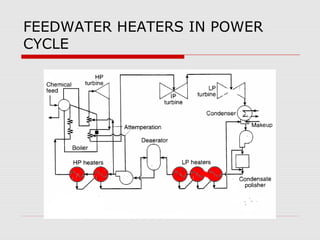
FEEDWATER HEATERS IN POWER
CYCLE
Performance of feedwater heaters
Three variables are used to monitor
feedwater heaters efficiency.
 The heater Terminal Temperature
Difference or TTD .
 The heater Drain Cooler Approach or
DCA .
 Feedwater temperature rise (TR)
Terminal temperature difference -
TTD
 The heater Terminal Temperature
Difference or TTD is a measure of
how close the outlet feedwater
temperature is to the feedwater
heater saturation temperature.
Terminal temperature difference -
TTD
 The TTD is a measure of the heat transfer
capability of the feedwater heater.
 The higher the TTD is above design, the
poorer the performance of the heater.
 Actual measurements should be compared
with controlled performance tests at various
power levels to determine if serious changes
are occurring.
 If the TTD is substantially higher than normal
for the existing conditions, the heater has
problems.
Drain Cooler Approach- DCA
 The heater Drain Cooler Approach or
DCA is a measure of how close the
heater drain outlet temperature is to
the feedwater inlet temperature.
DCA low
 The DCA temperature is a critical factor in
the assurance of a long service life for a
closed feedwater heater.
 If the actual drains approach is at or
slightly better (lower) than the designated
value, the drains cooling zone should be in
good physical condition
DCA High
 If the DCA temperature is too high for the existing
power level, a serious operating condition exists.
 This condition threatens to do severe damage to the
tubes and other internals, such as the drains cooling
zone end plate and baffles. Rapid heater destruction
may follow, especially in a horizontal heater.
 Corrective action usually consists of restoring the
water level to the proper range from a level that is
too low.
 Failure to do so can allow flashing to develop
destructive velocities and rapid erosion in the drains
cooling zone.
Feedwater Heater performance
Calculations
1. Drain Cooler Approach temperature
difference (DCA)
2. Feedwater heater Terminal
Temperature Difference (TTD)
3. Feedwater temperature rise (TR)
1.Drain Cooler Approach
temperature difference (DCA)
 Input variables
TDO = Heater drain out temp ( in deg C)
TFWI=Feedwater inlet temp ( in deg C)
 calculation for DCA
DCA= TDO-TFWI ( unit in deg C)
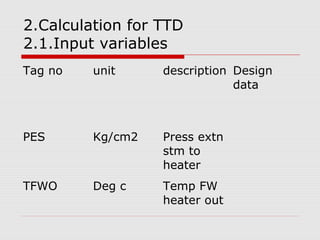
2.Calculation for TTD
2.1.Input variables
Tag no unit description Design
data
PES Kg/cm2 Press extn
stm to
heater
TFWO Deg c Temp FW
heater out
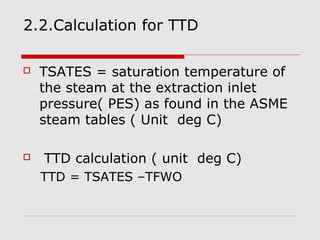
2.2.Calculation for TTD
 TSATES = saturation temperature of
the steam at the extraction inlet
pressure( PES) as found in the ASME
steam tables ( Unit deg C)
 TTD calculation ( unit deg C)
TTD = TSATES –TFWO
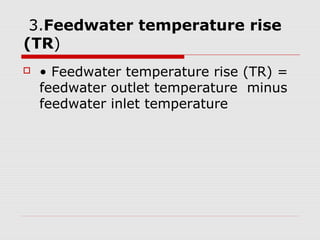
3.Feedwater temperature rise
(TR)
 • Feedwater temperature rise (TR) =
feedwater outlet temperature minus
feedwater inlet temperature
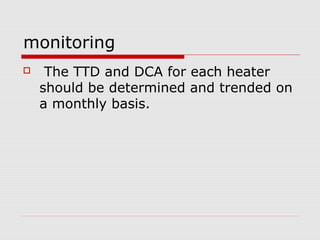
monitoring
 The TTD and DCA for each heater
should be determined and trended on
a monthly basis.
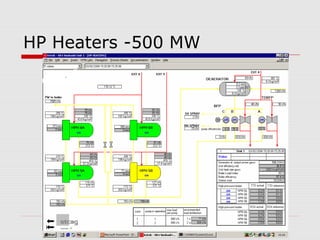
HP Heaters -500 MW
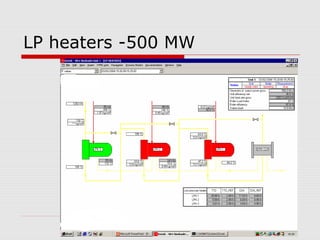
LP heaters -500 MW
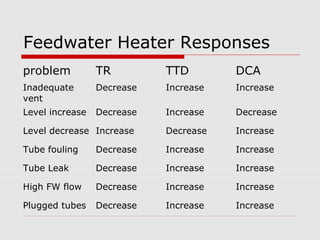
Feedwater Heater Responses
problem TR TTD DCA
Inadequate
vent
Decrease Increase Increase
Level increase Decrease Increase Decrease
Level decrease Increase Decrease Increase
Tube fouling Decrease Increase Increase
Tube Leak Decrease Increase Increase
High FW flow Decrease Increase Increase
Plugged tubes Decrease Increase Increase
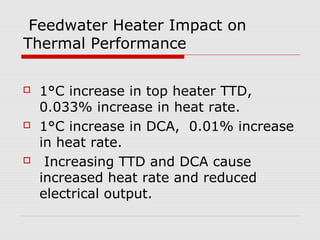
Feedwater Heater Impact on
Thermal Performance
 1°C increase in top heater TTD,
0.033% increase in heat rate.
 1°C increase in DCA, 0.01% increase
in heat rate.
 Increasing TTD and DCA cause
increased heat rate and reduced
electrical output.
Thank you

Performance calculation for feed water heater

  • 1.
    Performance Calculation of FEEDWATER HEATER in Thermal Power Plant Shivaji Choudhury
  • 2.
    Purpose of feedwaterheaters in a thermal power plant  They provide efficiency gains in the steam cycle by increasing the initial water temperature to the boiler, so there is less sensible heat addition which must occur in the boiler.
  • 3.
  • 4.
    Performance of feedwaterheaters Three variables are used to monitor feedwater heaters efficiency.  The heater Terminal Temperature Difference or TTD .  The heater Drain Cooler Approach or DCA .  Feedwater temperature rise (TR)
  • 5.
    Terminal temperature difference- TTD  The heater Terminal Temperature Difference or TTD is a measure of how close the outlet feedwater temperature is to the feedwater heater saturation temperature.
  • 6.
    Terminal temperature difference- TTD  The TTD is a measure of the heat transfer capability of the feedwater heater.  The higher the TTD is above design, the poorer the performance of the heater.  Actual measurements should be compared with controlled performance tests at various power levels to determine if serious changes are occurring.  If the TTD is substantially higher than normal for the existing conditions, the heater has problems.
  • 7.
    Drain Cooler Approach-DCA  The heater Drain Cooler Approach or DCA is a measure of how close the heater drain outlet temperature is to the feedwater inlet temperature.
  • 8.
    DCA low  TheDCA temperature is a critical factor in the assurance of a long service life for a closed feedwater heater.  If the actual drains approach is at or slightly better (lower) than the designated value, the drains cooling zone should be in good physical condition
  • 9.
    DCA High  Ifthe DCA temperature is too high for the existing power level, a serious operating condition exists.  This condition threatens to do severe damage to the tubes and other internals, such as the drains cooling zone end plate and baffles. Rapid heater destruction may follow, especially in a horizontal heater.  Corrective action usually consists of restoring the water level to the proper range from a level that is too low.  Failure to do so can allow flashing to develop destructive velocities and rapid erosion in the drains cooling zone.
  • 10.
    Feedwater Heater performance Calculations 1.Drain Cooler Approach temperature difference (DCA) 2. Feedwater heater Terminal Temperature Difference (TTD) 3. Feedwater temperature rise (TR)
  • 11.
    1.Drain Cooler Approach temperaturedifference (DCA)  Input variables TDO = Heater drain out temp ( in deg C) TFWI=Feedwater inlet temp ( in deg C)  calculation for DCA DCA= TDO-TFWI ( unit in deg C)
  • 12.
    2.Calculation for TTD 2.1.Inputvariables Tag no unit description Design data PES Kg/cm2 Press extn stm to heater TFWO Deg c Temp FW heater out
  • 13.
    2.2.Calculation for TTD TSATES = saturation temperature of the steam at the extraction inlet pressure( PES) as found in the ASME steam tables ( Unit deg C)  TTD calculation ( unit deg C) TTD = TSATES –TFWO
  • 14.
    3.Feedwater temperature rise (TR) • Feedwater temperature rise (TR) = feedwater outlet temperature minus feedwater inlet temperature
  • 15.
    monitoring  The TTDand DCA for each heater should be determined and trended on a monthly basis.
  • 16.
  • 17.
  • 18.
    Feedwater Heater Responses problemTR TTD DCA Inadequate vent Decrease Increase Increase Level increase Decrease Increase Decrease Level decrease Increase Decrease Increase Tube fouling Decrease Increase Increase Tube Leak Decrease Increase Increase High FW flow Decrease Increase Increase Plugged tubes Decrease Increase Increase
  • 19.
    Feedwater Heater Impacton Thermal Performance  1°C increase in top heater TTD, 0.033% increase in heat rate.  1°C increase in DCA, 0.01% increase in heat rate.  Increasing TTD and DCA cause increased heat rate and reduced electrical output.
  • 20.