Boiler Circulation
Theory
Presented by
Nauman Salim Kalshekar
Manager-Operations
Nabha Power Ltd.
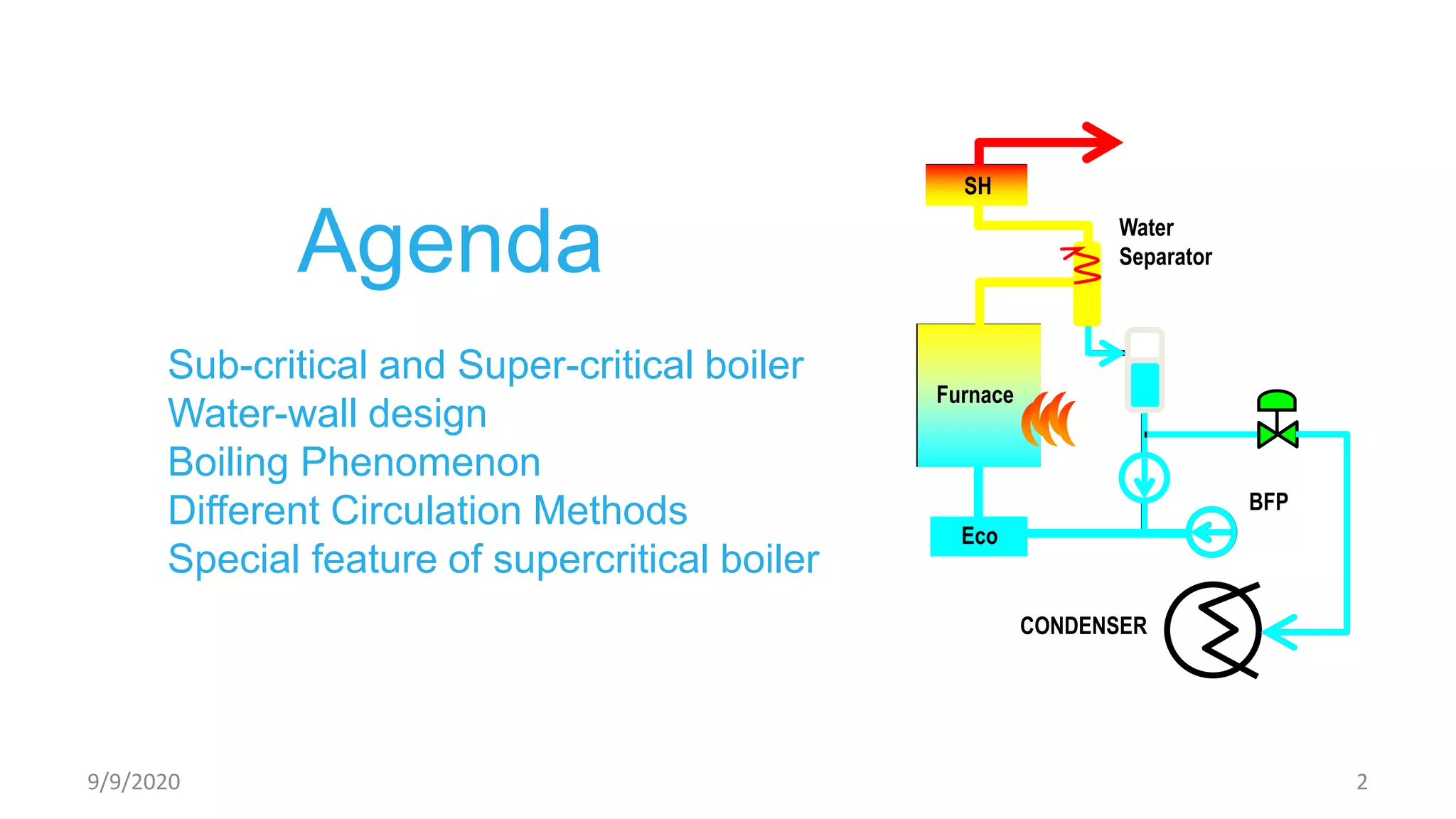
SH
Furnace
Eco
Water
Separator
BFP
BCP
WSDT
Eco
Furnace
SH
CONDENSER
9/9/2020 2
Sub-critical and Super-critical boiler
Water-wall design
Boiling Phenomenon
Different Circulation Methods
Special feature of supercritical boiler
Agenda
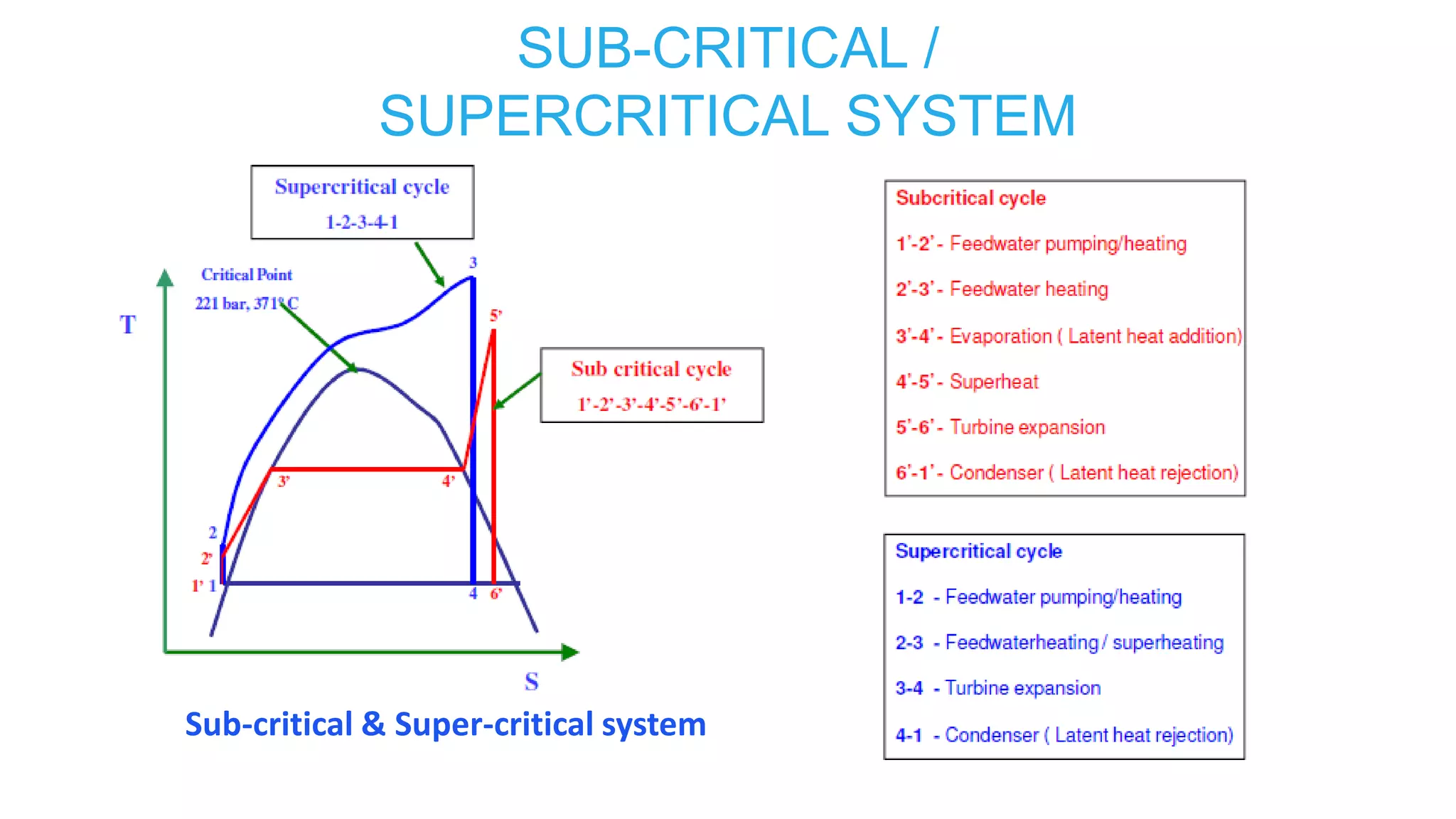
SUB-CRITICAL /
SUPERCRITICAL SYSTEM
Sub-critical & Super-critical system
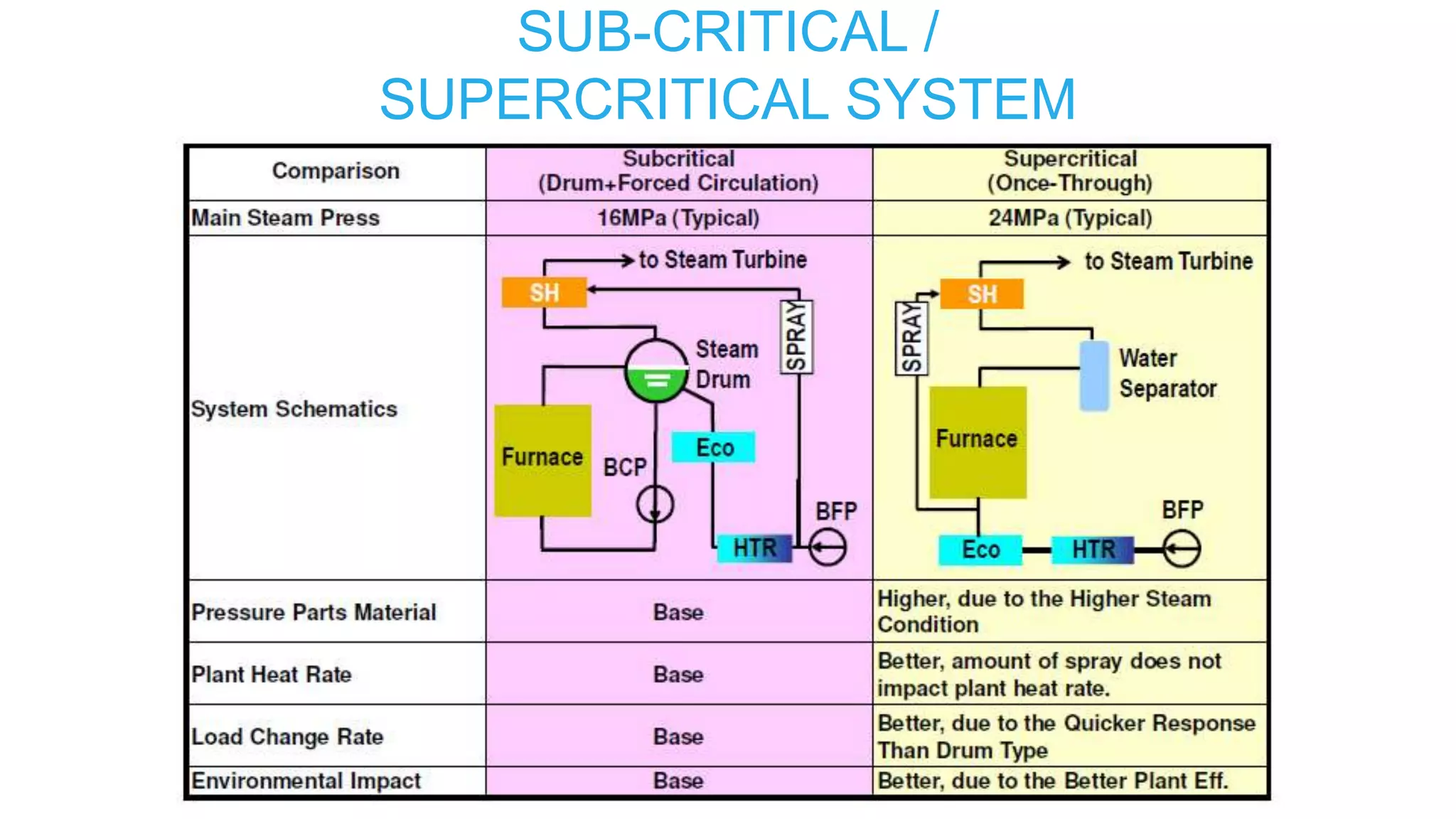
SUB-CRITICAL /
SUPERCRITICAL SYSTEM
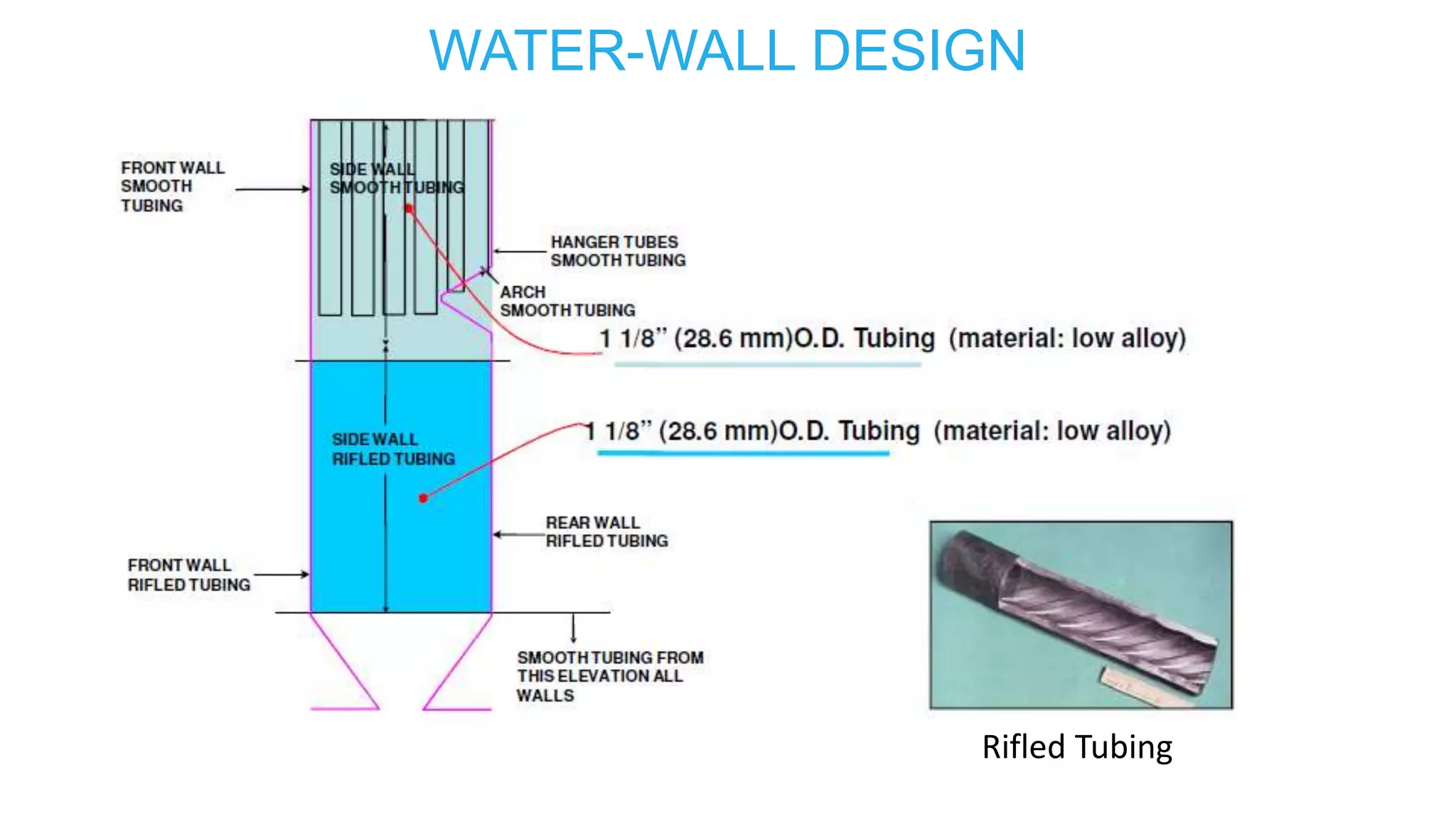
WATER-WALL DESIGN
Rifled Tubing
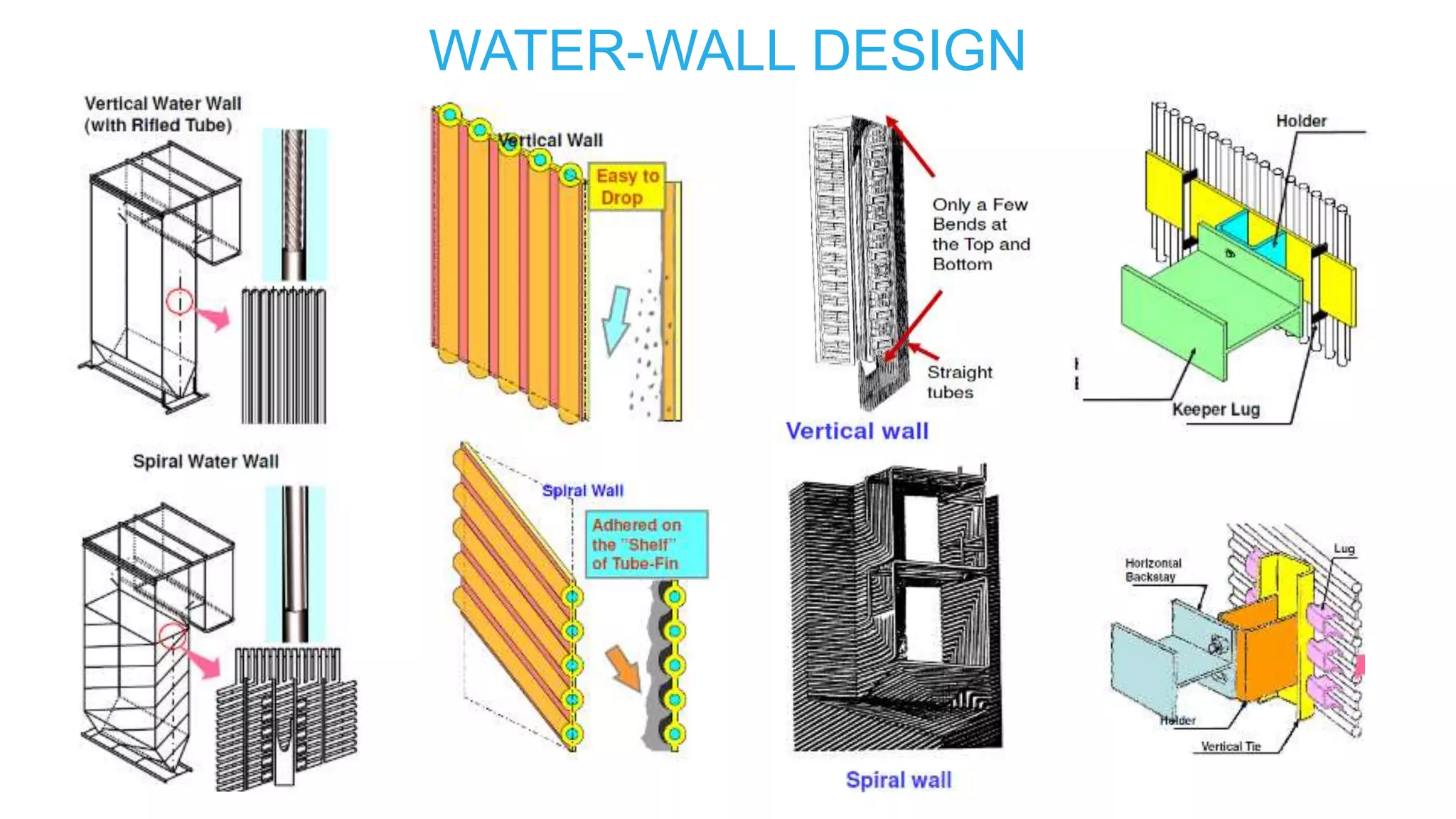
WATER-WALL DESIGN
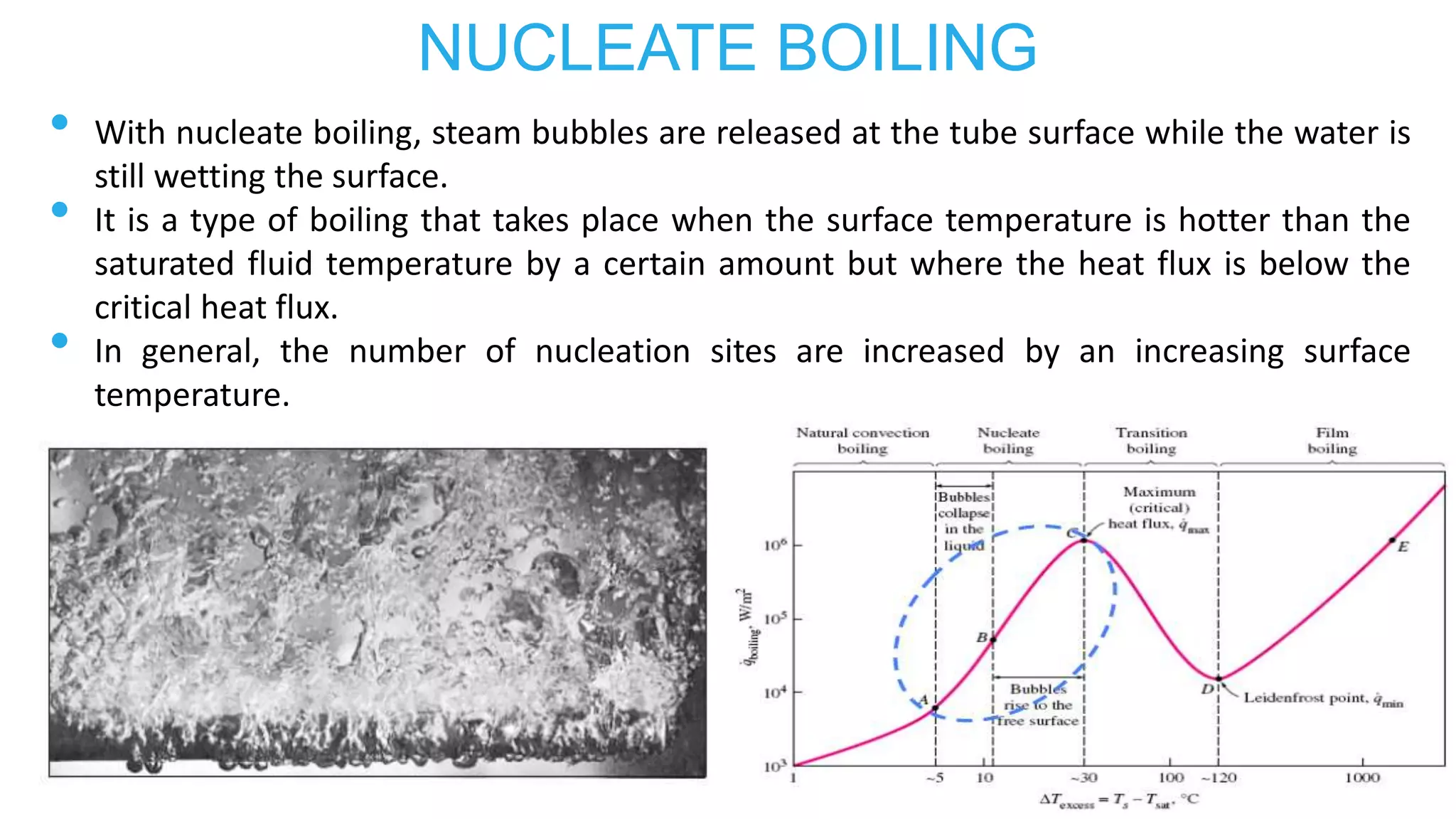
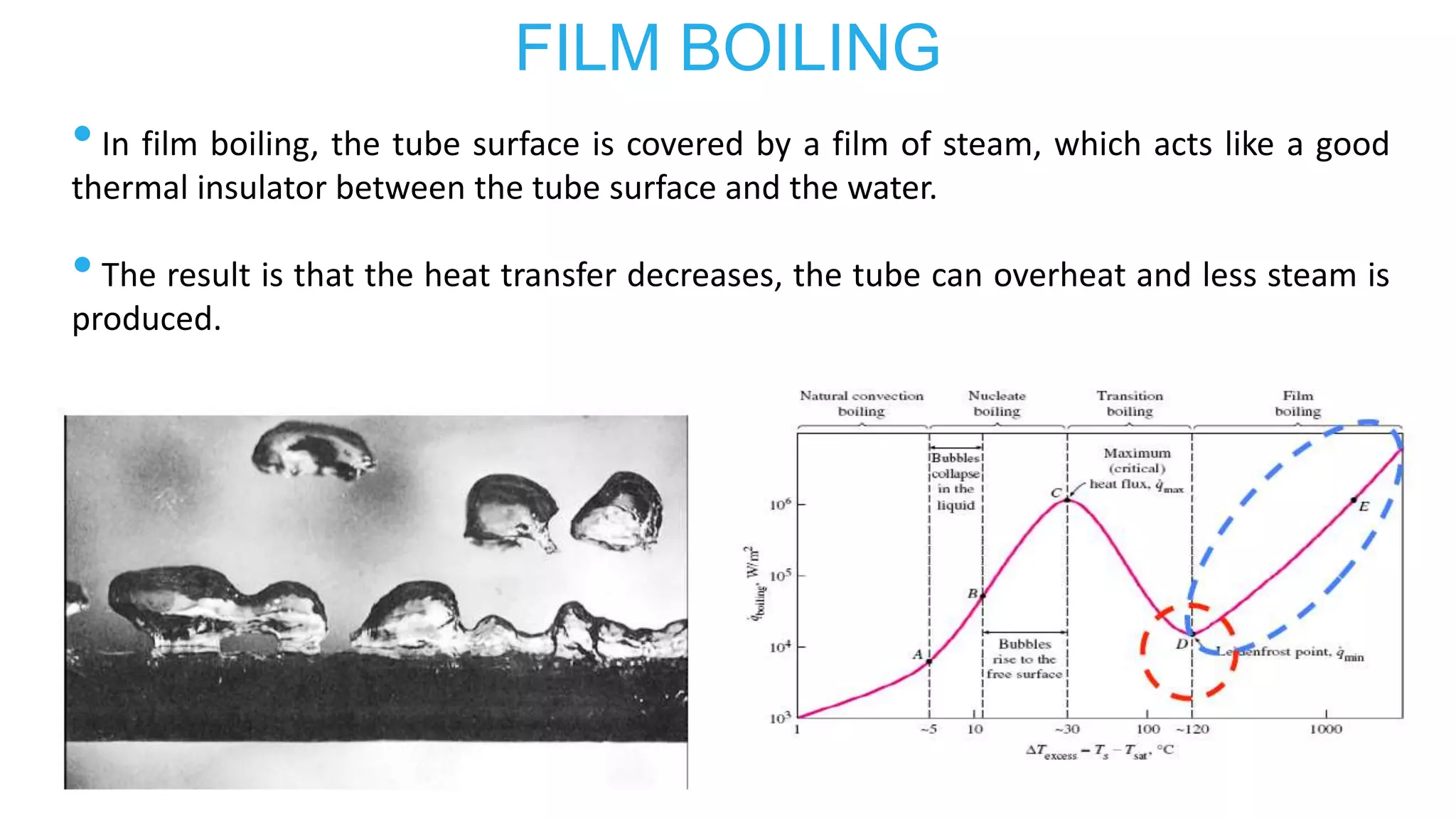
NUCLEATE BOILING
• With nucleate boiling, steam bubbles are released at the tube surface while the water is
still wetting the surface.
• It is a type of boiling that takes place when the surface temperature is hotter than the
saturated fluid temperature by a certain amount but where the heat flux is below the
critical heat flux.
• In general, the number of nucleation sites are increased by an increasing surface
temperature.
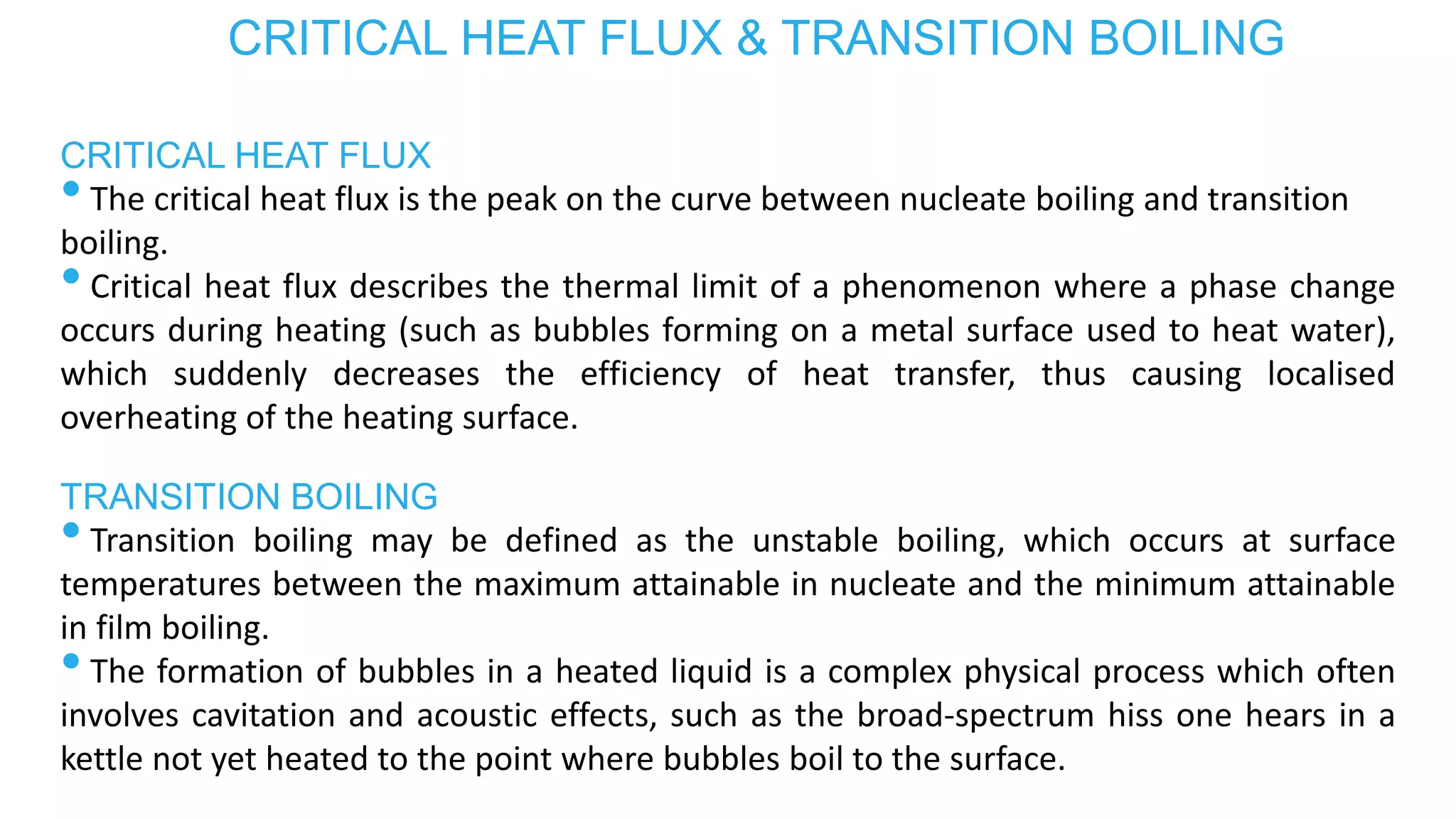
CRITICAL HEAT FLUX & TRANSITION BOILING
CRITICAL HEAT FLUX
•The critical heat flux is the peak on the curve between nucleate boiling and transition
boiling.
•Critical heat flux describes the thermal limit of a phenomenon where a phase change
occurs during heating (such as bubbles forming on a metal surface used to heat water),
which suddenly decreases the efficiency of heat transfer, thus causing localised
overheating of the heating surface.
TRANSITION BOILING
•Transition boiling may be defined as the unstable boiling, which occurs at surface
temperatures between the maximum attainable in nucleate and the minimum attainable
in film boiling.
•The formation of bubbles in a heated liquid is a complex physical process which often
involves cavitation and acoustic effects, such as the broad-spectrum hiss one hears in a
kettle not yet heated to the point where bubbles boil to the surface.
FILM BOILING
•In film boiling, the tube surface is covered by a film of steam, which acts like a good
thermal insulator between the tube surface and the water.
•The result is that the heat transfer decreases, the tube can overheat and less steam is
produced.
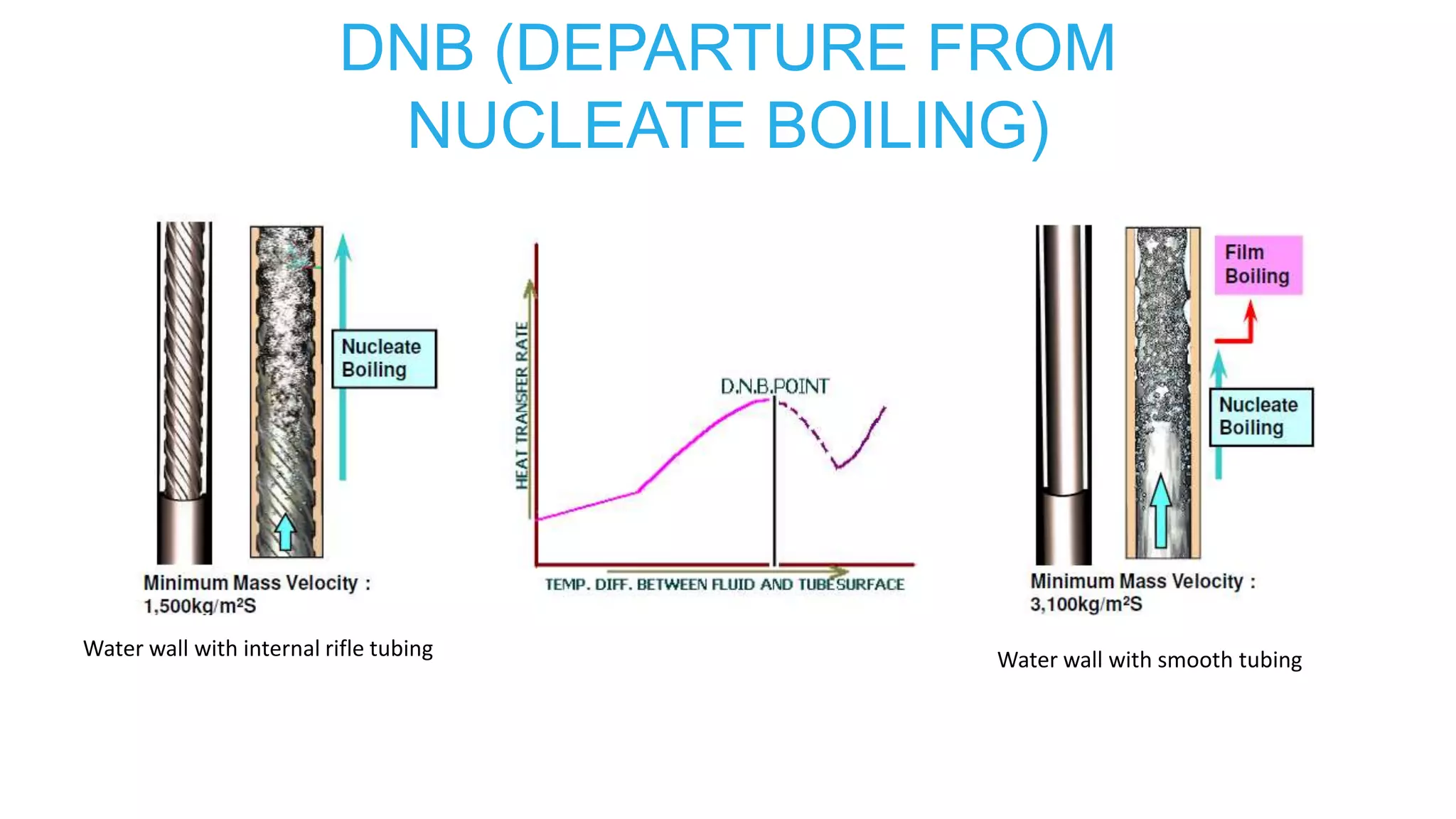
DNB (DEPARTURE FROM
NUCLEATE BOILING)
Water wall with internal rifle tubing Water wall with smooth tubing
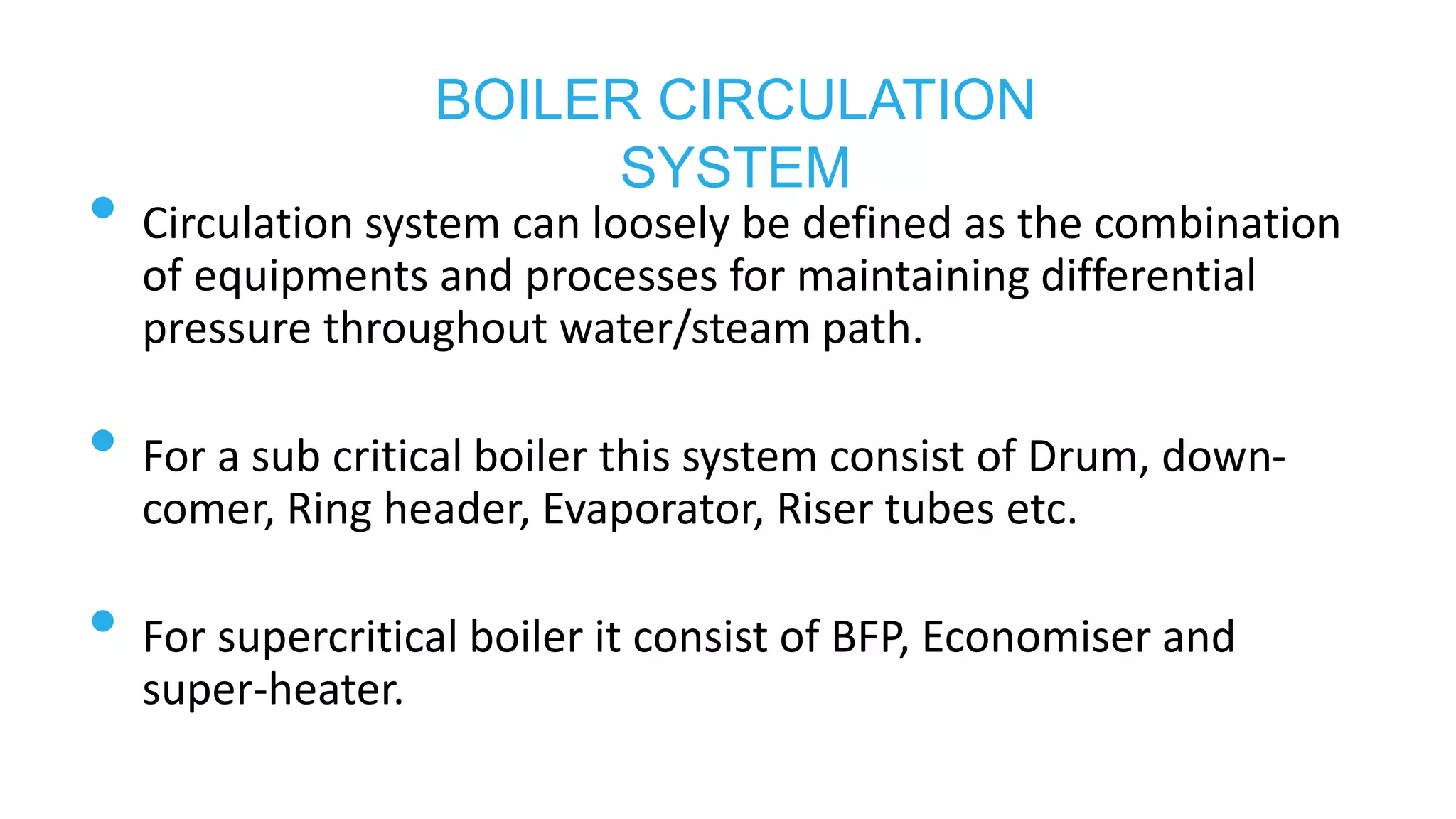
• Circulation system can loosely be defined as the combination
of equipments and processes for maintaining differential
pressure throughout water/steam path.
• For a sub critical boiler this system consist of Drum, down-
comer, Ring header, Evaporator, Riser tubes etc.
• For supercritical boiler it consist of BFP, Economiser and
super-heater.
BOILER CIRCULATION
SYSTEM
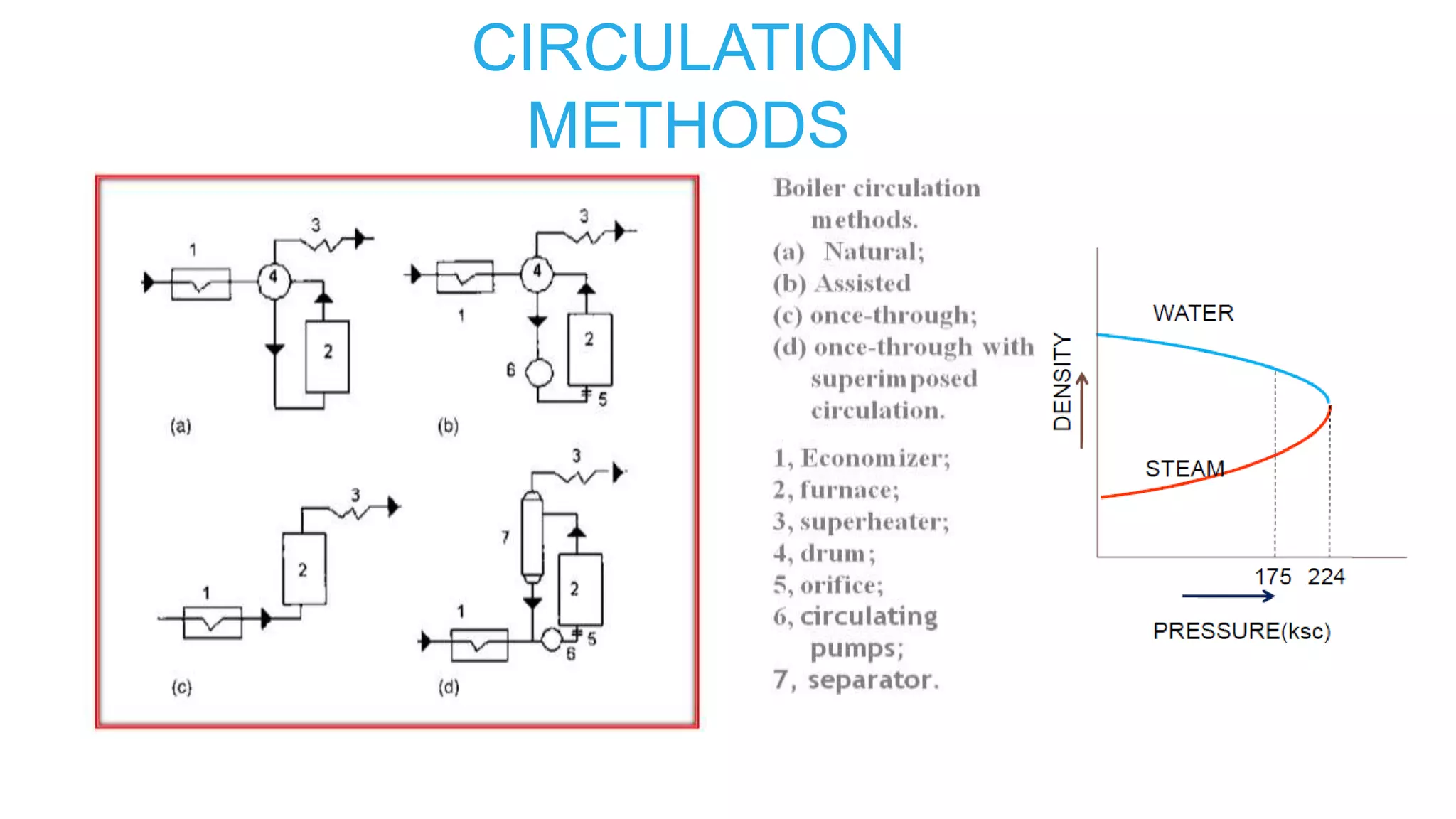
CIRCULATION
METHODS
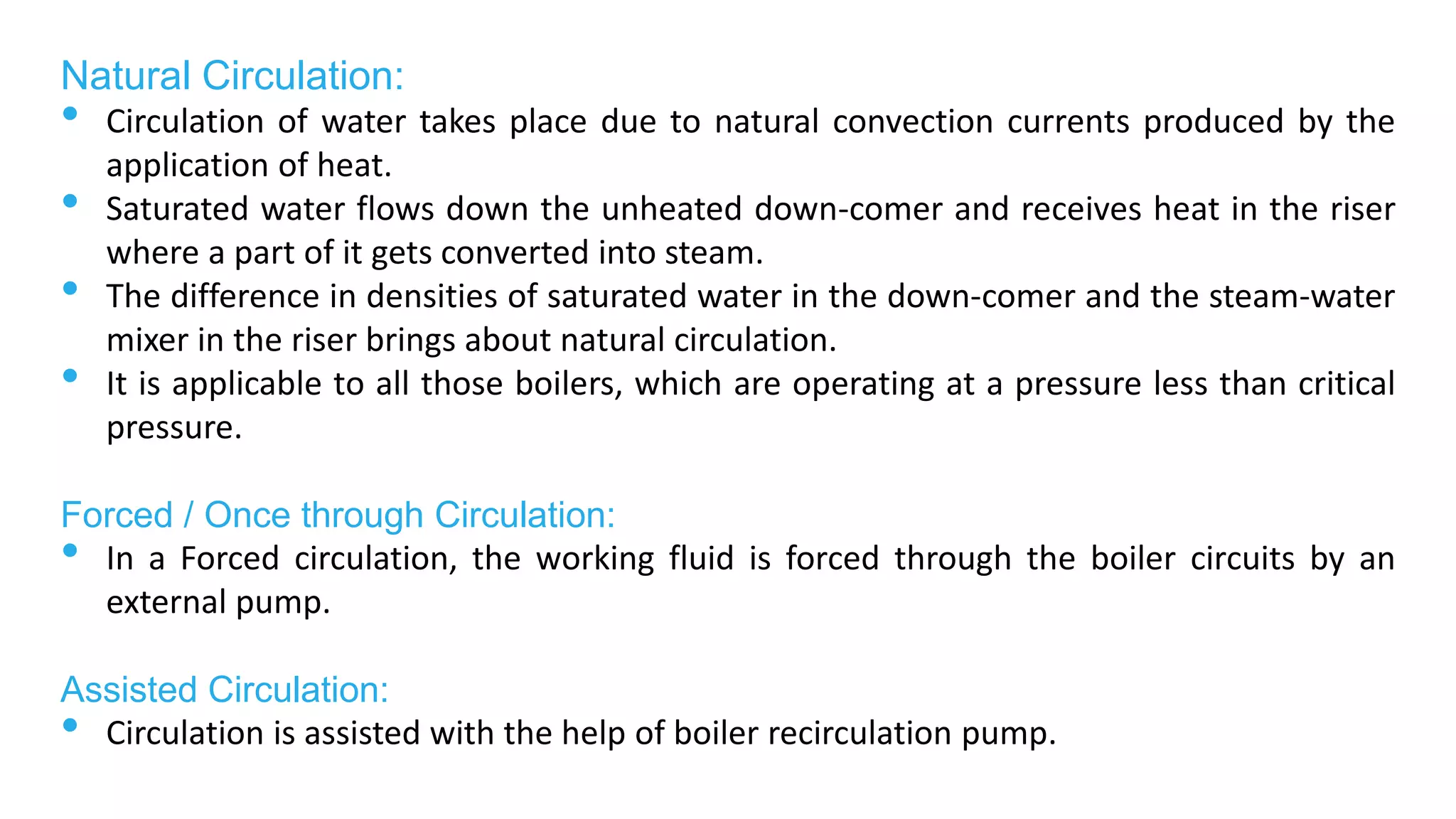
Natural Circulation:
• Circulation of water takes place due to natural convection currents produced by the
application of heat.
• Saturated water flows down the unheated down-comer and receives heat in the riser
where a part of it gets converted into steam.
• The difference in densities of saturated water in the down-comer and the steam-water
mixer in the riser brings about natural circulation.
• It is applicable to all those boilers, which are operating at a pressure less than critical
pressure.
Forced / Once through Circulation:
• In a Forced circulation, the working fluid is forced through the boiler circuits by an
external pump.
Assisted Circulation:
• Circulation is assisted with the help of boiler recirculation pump.
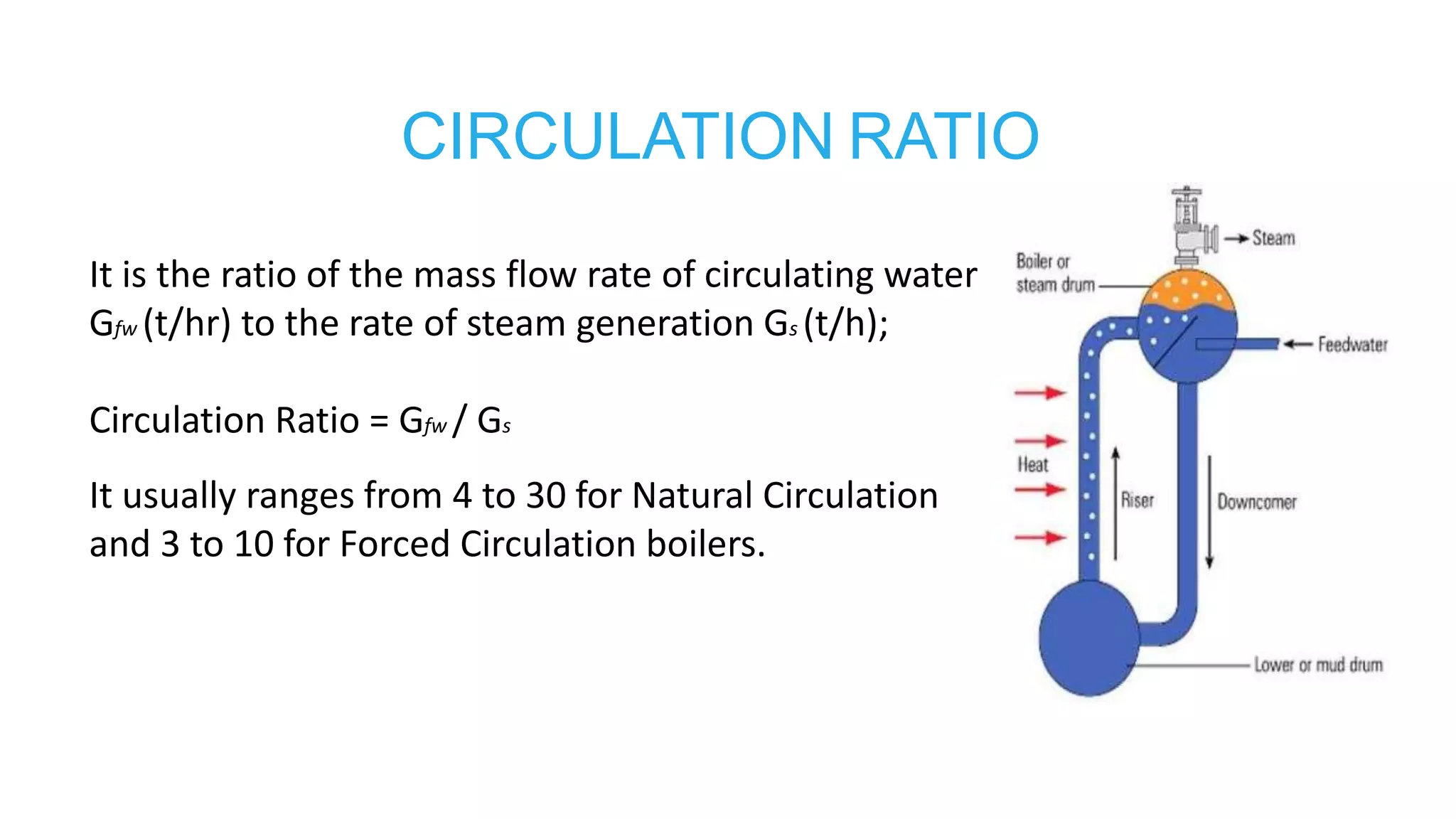
CIRCULATION RATIO
It is the ratio of the mass flow rate of circulating water
Gfw (t/hr) to the rate of steam generation Gs (t/h);
Circulation Ratio = Gfw / Gs
It usually ranges from 4 to 30 for Natural Circulation
and 3 to 10 for Forced Circulation boilers.
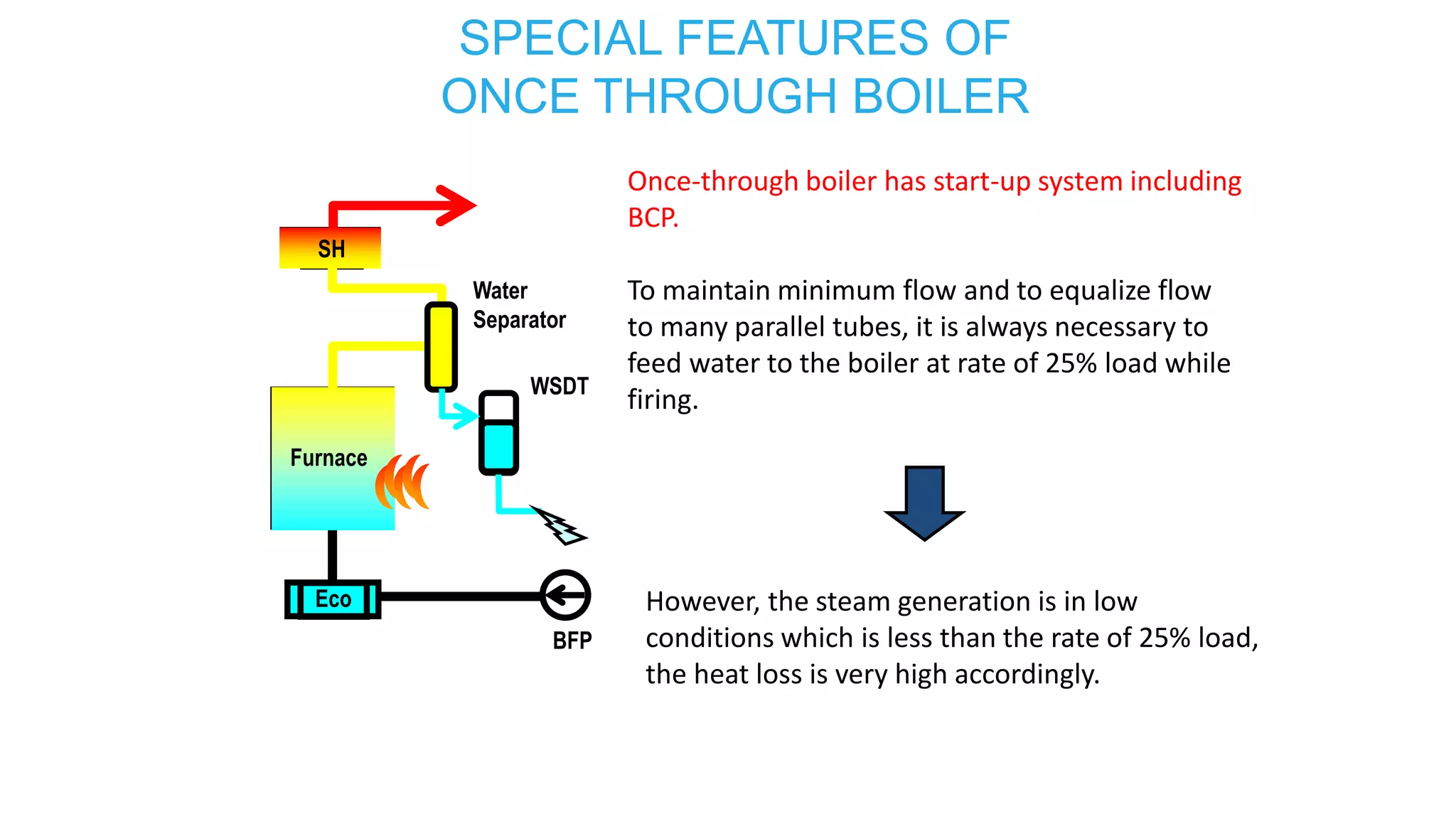
Once-through boiler has start-up system including
BCP.
To maintain minimum flow and to equalize flow
to many parallel tubes, it is always necessary to
feed water to the boiler at rate of 25% load while
firing.
SH
Furnace
Eco
Water
Separator
BFP
WSDT
Eco
Furnace
SH
However, the steam generation is in low
conditions which is less than the rate of 25% load,
the heat loss is very high accordingly.
SPECIAL FEATURES OF
ONCE THROUGH BOILER
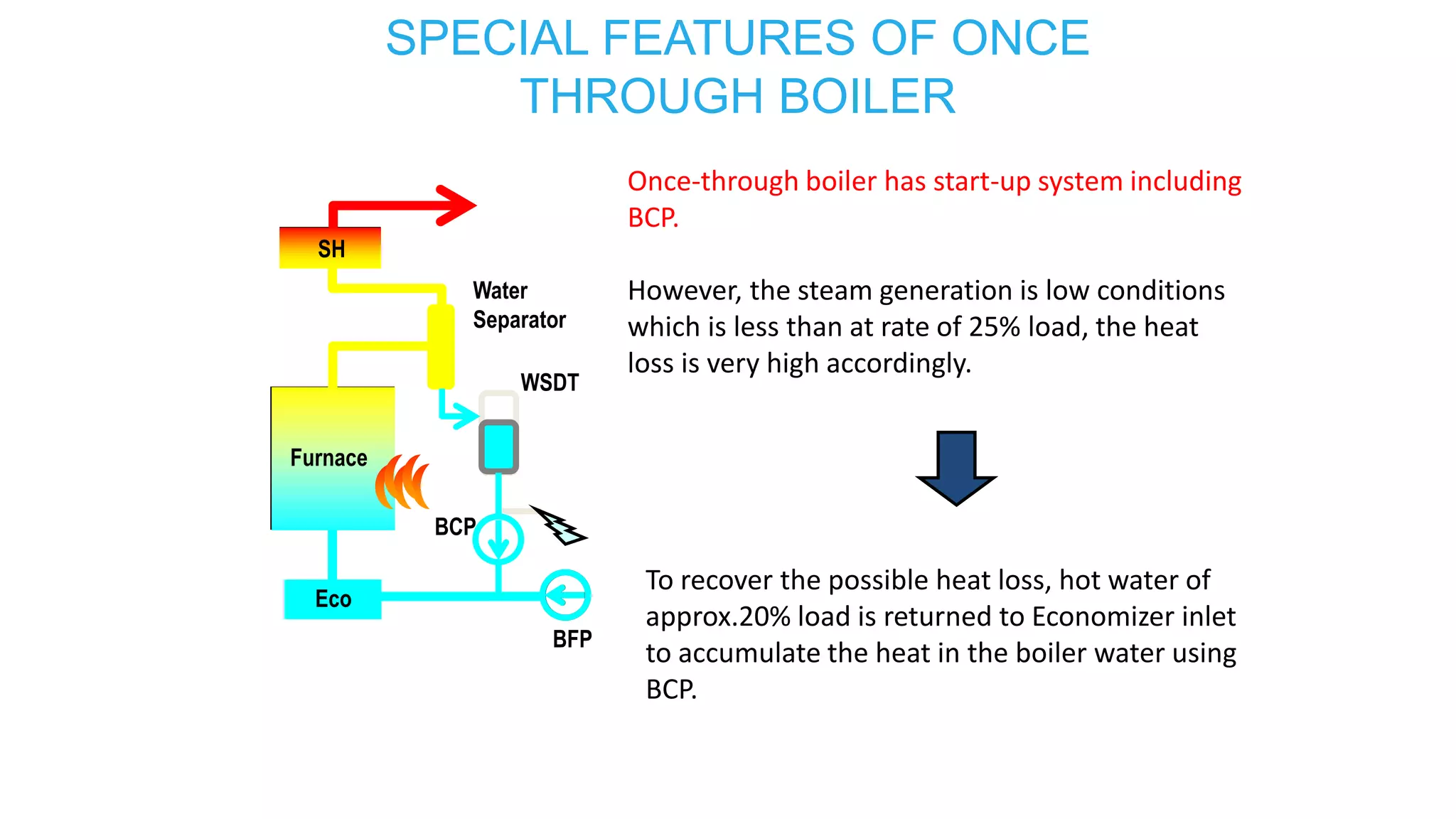
Once-through boiler has start-up system including
BCP.
However, the steam generation is low conditions
which is less than at rate of 25% load, the heat
loss is very high accordingly.
SH
Furnace
Eco
Water
Separator
BFP
WSDT
Eco
Furnace
SH
To recover the possible heat loss, hot water of
approx.20% load is returned to Economizer inlet
to accumulate the heat in the boiler water using
BCP.
BCPBCP
SPECIAL FEATURES OF ONCE
THROUGH BOILER
Once-through boiler has start-up system including
BCP.
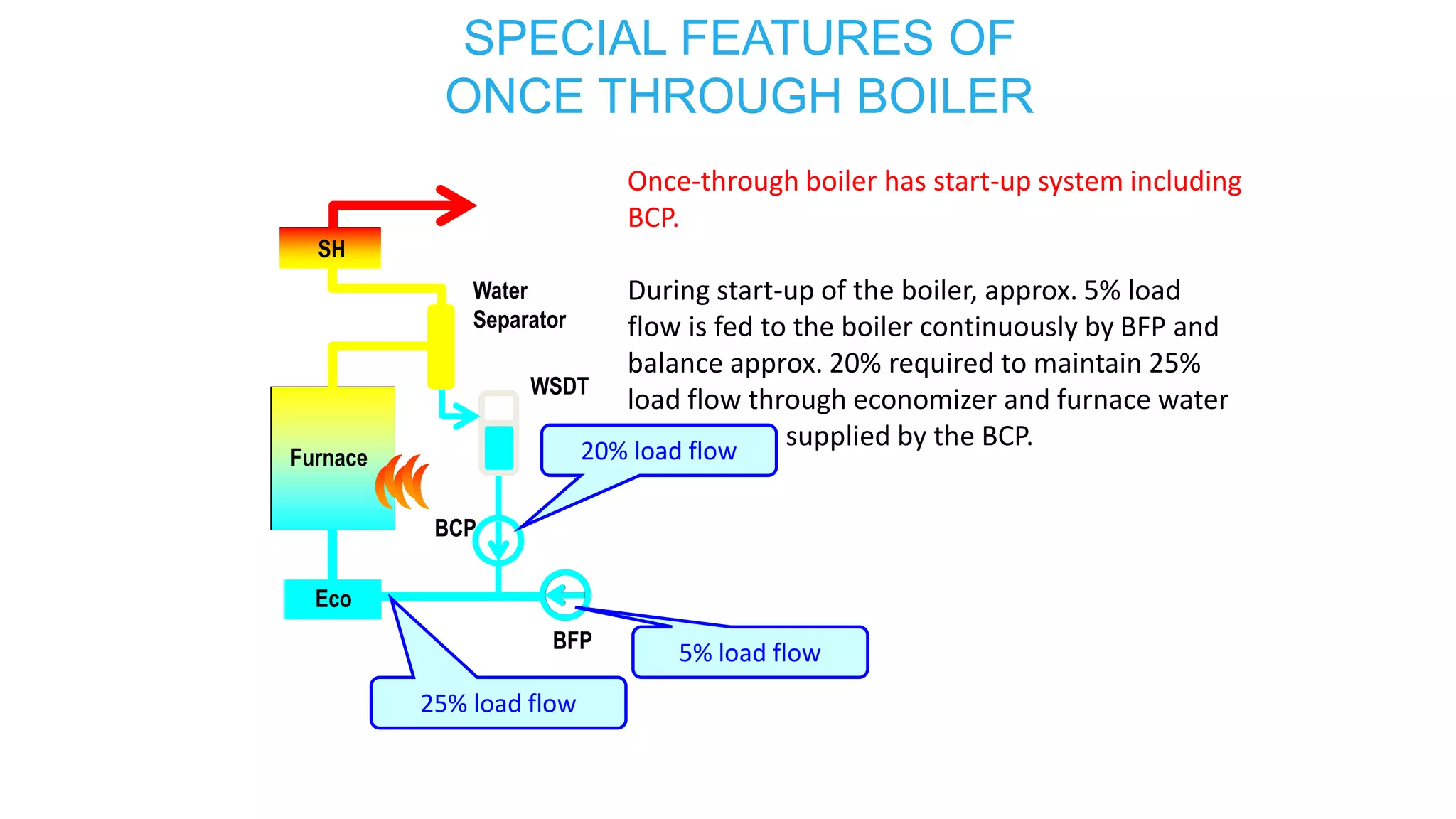
During start-up of the boiler, approx. 5% load
flow is fed to the boiler continuously by BFP and
balance approx. 20% required to maintain 25%
load flow through economizer and furnace water
wall tubes is supplied by the BCP.
SH
Furnace
Eco
Water
Separator
BFP
BCP
WSDT
Eco
Furnace
SH
25% load flow
5% load flow
20% load flow
SPECIAL FEATURES OF
ONCE THROUGH BOILER
Once-through boiler has start-up system including
BCP.
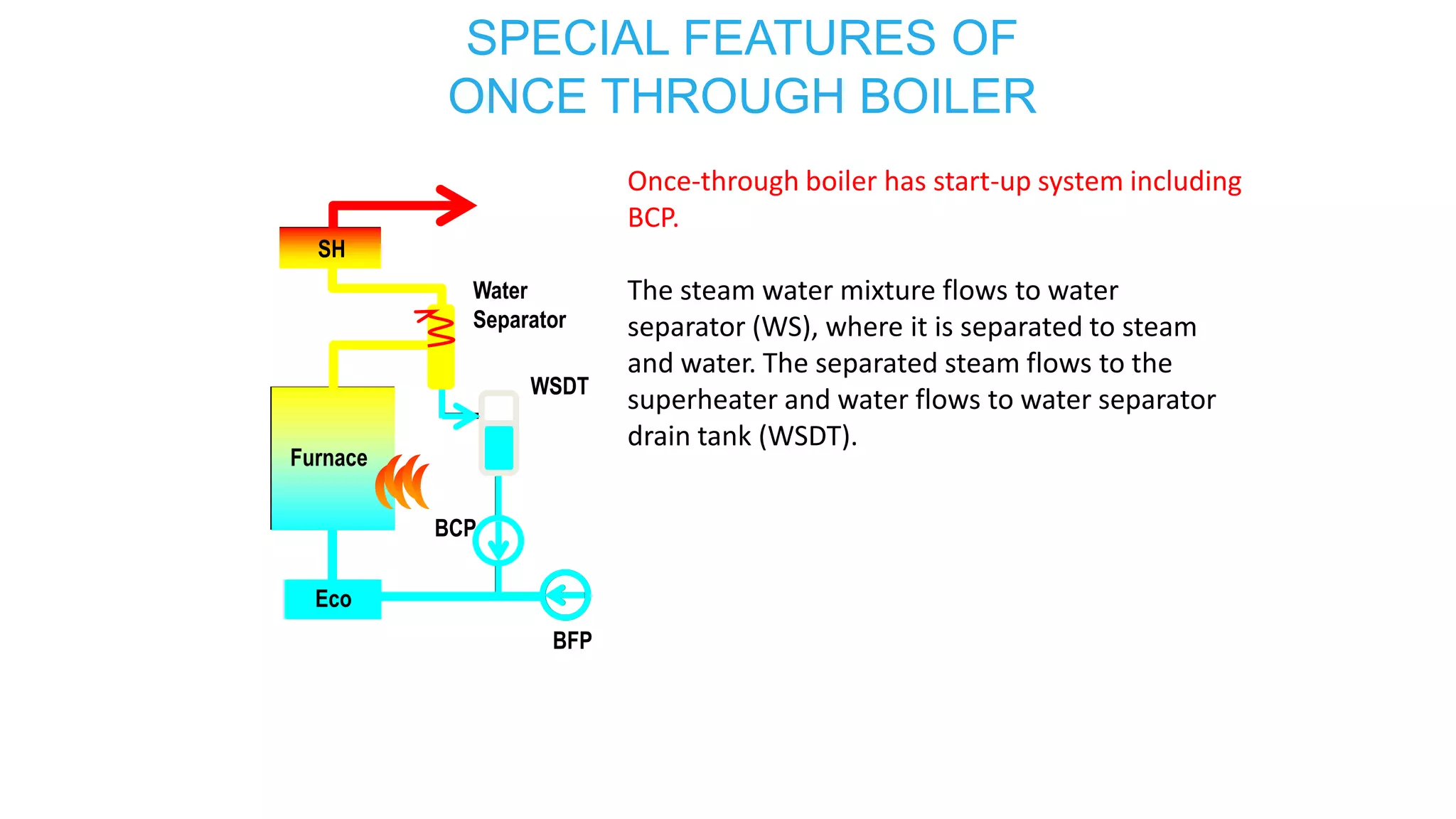
The steam water mixture flows to water
separator (WS), where it is separated to steam
and water. The separated steam flows to the
superheater and water flows to water separator
drain tank (WSDT).
SH
Furnace
Eco
Water
Separator
BFP
BCP
WSDT
Eco
Furnace
SH
SPECIAL FEATURES OF
ONCE THROUGH BOILER
Once-through boiler has start-up system including
BCP.
SH
Furnace
Eco
Water
Separator
BFP
BCP
WSDT
Eco
Furnace
SH
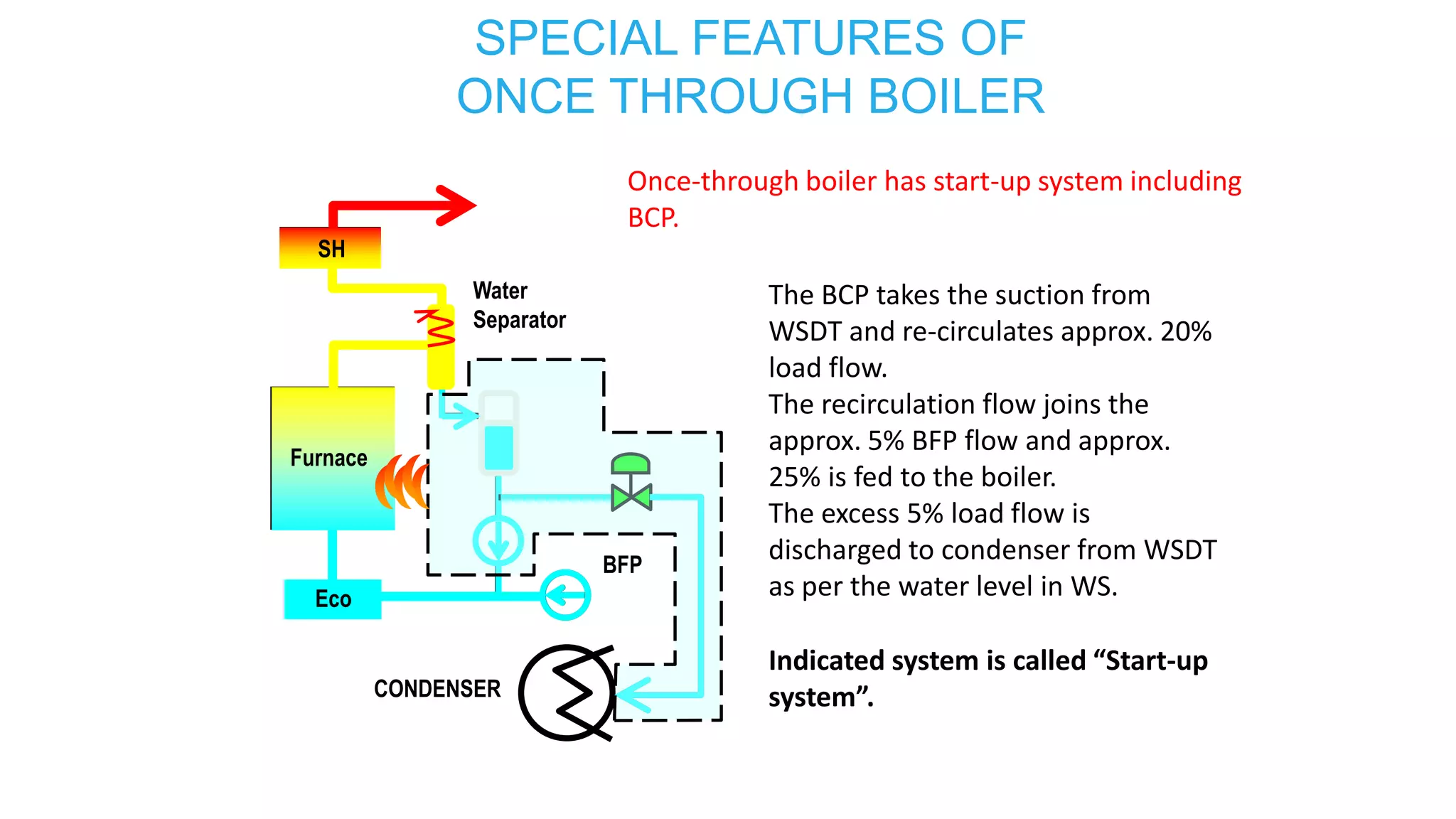
The BCP takes the suction from
WSDT and re-circulates approx. 20%
load flow.
The recirculation flow joins the
approx. 5% BFP flow and approx.
25% is fed to the boiler.
CONDENSER
The excess 5% load flow is
discharged to condenser from WSDT
as per the water level in WS.
Indicated system is called “Start-up
system”.
SPECIAL FEATURES OF
ONCE THROUGH BOILER
Boiler circulation theory

Boiler circulation theory

  • 1.
    Boiler Circulation Theory Presented by NaumanSalim Kalshekar Manager-Operations Nabha Power Ltd.
  • 2.
    SH Furnace Eco Water Separator BFP BCP WSDT Eco Furnace SH CONDENSER 9/9/2020 2 Sub-critical andSuper-critical boiler Water-wall design Boiling Phenomenon Different Circulation Methods Special feature of supercritical boiler Agenda
  • 3.
  • 4.
  • 5.
  • 6.
  • 7.
    NUCLEATE BOILING • Withnucleate boiling, steam bubbles are released at the tube surface while the water is still wetting the surface. • It is a type of boiling that takes place when the surface temperature is hotter than the saturated fluid temperature by a certain amount but where the heat flux is below the critical heat flux. • In general, the number of nucleation sites are increased by an increasing surface temperature.
  • 8.
    CRITICAL HEAT FLUX& TRANSITION BOILING CRITICAL HEAT FLUX •The critical heat flux is the peak on the curve between nucleate boiling and transition boiling. •Critical heat flux describes the thermal limit of a phenomenon where a phase change occurs during heating (such as bubbles forming on a metal surface used to heat water), which suddenly decreases the efficiency of heat transfer, thus causing localised overheating of the heating surface. TRANSITION BOILING •Transition boiling may be defined as the unstable boiling, which occurs at surface temperatures between the maximum attainable in nucleate and the minimum attainable in film boiling. •The formation of bubbles in a heated liquid is a complex physical process which often involves cavitation and acoustic effects, such as the broad-spectrum hiss one hears in a kettle not yet heated to the point where bubbles boil to the surface.
  • 9.
    FILM BOILING •In filmboiling, the tube surface is covered by a film of steam, which acts like a good thermal insulator between the tube surface and the water. •The result is that the heat transfer decreases, the tube can overheat and less steam is produced.
  • 10.
    DNB (DEPARTURE FROM NUCLEATEBOILING) Water wall with internal rifle tubing Water wall with smooth tubing
  • 11.
    • Circulation systemcan loosely be defined as the combination of equipments and processes for maintaining differential pressure throughout water/steam path. • For a sub critical boiler this system consist of Drum, down- comer, Ring header, Evaporator, Riser tubes etc. • For supercritical boiler it consist of BFP, Economiser and super-heater. BOILER CIRCULATION SYSTEM
  • 12.
  • 13.
    Natural Circulation: • Circulationof water takes place due to natural convection currents produced by the application of heat. • Saturated water flows down the unheated down-comer and receives heat in the riser where a part of it gets converted into steam. • The difference in densities of saturated water in the down-comer and the steam-water mixer in the riser brings about natural circulation. • It is applicable to all those boilers, which are operating at a pressure less than critical pressure. Forced / Once through Circulation: • In a Forced circulation, the working fluid is forced through the boiler circuits by an external pump. Assisted Circulation: • Circulation is assisted with the help of boiler recirculation pump.
  • 14.
    CIRCULATION RATIO It isthe ratio of the mass flow rate of circulating water Gfw (t/hr) to the rate of steam generation Gs (t/h); Circulation Ratio = Gfw / Gs It usually ranges from 4 to 30 for Natural Circulation and 3 to 10 for Forced Circulation boilers.
  • 15.
    Once-through boiler hasstart-up system including BCP. To maintain minimum flow and to equalize flow to many parallel tubes, it is always necessary to feed water to the boiler at rate of 25% load while firing. SH Furnace Eco Water Separator BFP WSDT Eco Furnace SH However, the steam generation is in low conditions which is less than the rate of 25% load, the heat loss is very high accordingly. SPECIAL FEATURES OF ONCE THROUGH BOILER
  • 16.
    Once-through boiler hasstart-up system including BCP. However, the steam generation is low conditions which is less than at rate of 25% load, the heat loss is very high accordingly. SH Furnace Eco Water Separator BFP WSDT Eco Furnace SH To recover the possible heat loss, hot water of approx.20% load is returned to Economizer inlet to accumulate the heat in the boiler water using BCP. BCPBCP SPECIAL FEATURES OF ONCE THROUGH BOILER
  • 17.
    Once-through boiler hasstart-up system including BCP. During start-up of the boiler, approx. 5% load flow is fed to the boiler continuously by BFP and balance approx. 20% required to maintain 25% load flow through economizer and furnace water wall tubes is supplied by the BCP. SH Furnace Eco Water Separator BFP BCP WSDT Eco Furnace SH 25% load flow 5% load flow 20% load flow SPECIAL FEATURES OF ONCE THROUGH BOILER
  • 18.
    Once-through boiler hasstart-up system including BCP. The steam water mixture flows to water separator (WS), where it is separated to steam and water. The separated steam flows to the superheater and water flows to water separator drain tank (WSDT). SH Furnace Eco Water Separator BFP BCP WSDT Eco Furnace SH SPECIAL FEATURES OF ONCE THROUGH BOILER
  • 19.
    Once-through boiler hasstart-up system including BCP. SH Furnace Eco Water Separator BFP BCP WSDT Eco Furnace SH The BCP takes the suction from WSDT and re-circulates approx. 20% load flow. The recirculation flow joins the approx. 5% BFP flow and approx. 25% is fed to the boiler. CONDENSER The excess 5% load flow is discharged to condenser from WSDT as per the water level in WS. Indicated system is called “Start-up system”. SPECIAL FEATURES OF ONCE THROUGH BOILER