POLY ACRYLAMIDE GEL
ELECTROPHORESIS (PAGE)
Tapeshwar Yadav
(Lecturer)
BMLT, DNHE,
M.Sc. Medical Biochemistry
ELECTROPHORE
SIS
 Electrophoresis is a separation technique that is
based on the movement of charged particles in an
electric field.
 The term electrophoresis was coined from a
Greek word “Phoresis” which means “Being
Carried Away”.
 Hence literal meaning of the word
electrophoresis means “to carry with electricity.”
PRINCIPLE
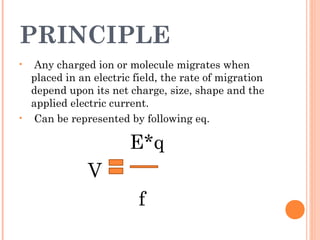
• Any charged ion or molecule migrates when
placed in an electric field, the rate of migration
depend upon its net charge, size, shape and the
applied electric current.
• Can be represented by following eq.
E*q
V
f
PRINCIPLE…CONT.
Whereby,
 v = velocity of migration of the molecule.
 E = electric field in volts per cm
 q = net electric charge on the molecule
 f = frictional coefficient
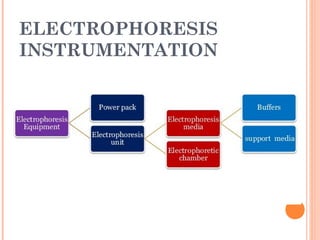
ELECTROPHORESIS
INSTRUMENTATION
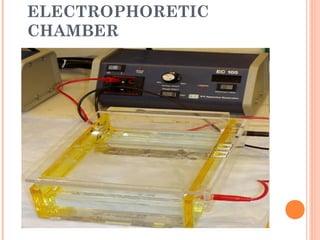
ELECTROPHORETIC
CHAMBER
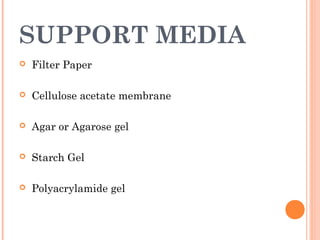
SUPPORT MEDIA
 Filter Paper
 Cellulose acetate membrane
 Agar or Agarose gel
 Starch Gel
 Polyacrylamide gel
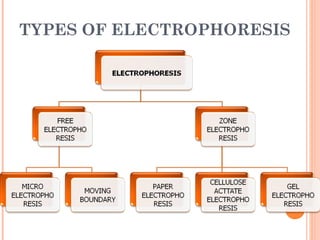
TYPES OF ELECTROPHORESIS
GEL TYPES
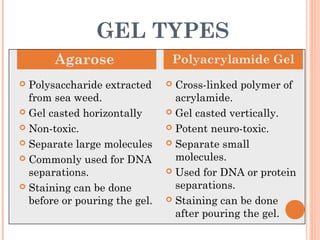
 Polysaccharide extracted
from sea weed.
 Gel casted horizontally
 Non-toxic.
 Separate large molecules
 Commonly used for DNA
separations.
 Staining can be done
before or pouring the gel.
 Cross-linked polymer of
acrylamide.
 Gel casted vertically.
 Potent neuro-toxic.
 Separate small
molecules.
 Used for DNA or protein
separations.
 Staining can be done
after pouring the gel.
Agarose Polyacrylamide Gel
POLY ACRYLAMIDE GEL
ELECTROPHORESIS
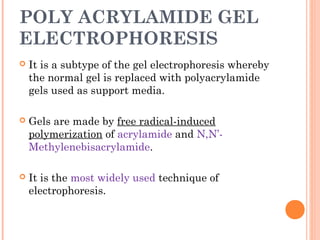
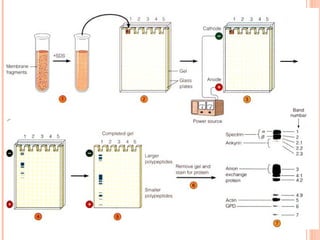
 It is a subtype of the gel electrophoresis whereby
the normal gel is replaced with polyacrylamide
gels used as support media.
 Gels are made by free radical-induced
polymerization of acrylamide and N,N’-
Methylenebisacrylamide.
 It is the most widely used technique of
electrophoresis.
PROCEDUR
E
VISUALIZATI
ON
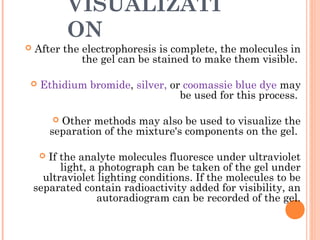
 After the electrophoresis is complete, the molecules in
the gel can be stained to make them visible.
 Ethidium bromide, silver, or coomassie blue dye may
be used for this process.
 Other methods may also be used to visualize the
separation of the mixture's components on the gel.
 If the analyte molecules fluoresce under ultraviolet
light, a photograph can be taken of the gel under
ultraviolet lighting conditions. If the molecules to be
separated contain radioactivity added for visibility, an
autoradiogram can be recorded of the gel.
TYPES OF PAGE
SDS - PAGE
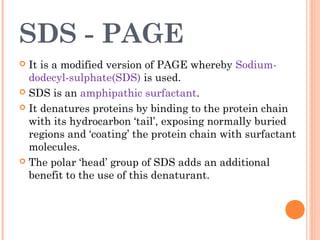
 It is a modified version of PAGE whereby Sodium-
dodecyl-sulphate(SDS) is used.
 SDS is an amphipathic surfactant.
 It denatures proteins by binding to the protein chain
with its hydrocarbon ‘tail’, exposing normally buried
regions and ‘coating’ the protein chain with surfactant
molecules.
 The polar ‘head’ group of SDS adds an additional
benefit to the use of this denaturant.
SDS-PAGE
WHY ? ? ?
 In their native form, proteins fold into a variety of
shapes, some compact, some elongated.
 The rate of migration of native proteins through a sieving
medium is therefore more a reflection of their relative
compactness, and less an accurate measure of molecular
weight.
 Denaturing the proteins nullifies structural effects on
mobility, allowing separation on a true charge/mass ratio
basis.
 It also separates subunits in multimeric proteins,
allowing analysis of large, complex aggregates.
BEFORE SDS
AFTER SDS
DIFFERENCE
S
• Separation is
based upon charge,
size, and shape of
macromolecules.
• Useful for
separation and/or
purification of
mixture of proteins
• This was the
original mode of
electrophoresis.
• Separation is based
upon the molecular
weight of proteins.
• The most common
method for
determining MW of
proteins
• Very useful for
checking purity of
protein samples
Native PAGE SDS PAGE
ADVANTAGE
S
APPLICATION
S
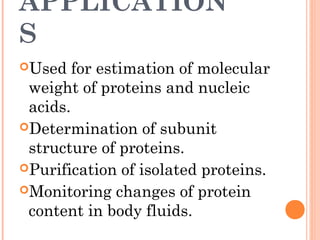
Used for estimation of molecular
weight of proteins and nucleic
acids.
Determination of subunit
structure of proteins.
Purification of isolated proteins.
Monitoring changes of protein
content in body fluids.
REFERENCES
 BIOCHEMISTRY by Donald Voet & Judith Voet,
Wiley publications.
 BIOCHEMISTRY by Satyanarayana & Chakrapani.
 Biochemistry by Upadhyay , Upadhyay and Nath.
PAGE- Electrophoresis

PAGE- Electrophoresis

  • 1.
    POLY ACRYLAMIDE GEL ELECTROPHORESIS(PAGE) Tapeshwar Yadav (Lecturer) BMLT, DNHE, M.Sc. Medical Biochemistry
  • 2.
    ELECTROPHORE SIS  Electrophoresis isa separation technique that is based on the movement of charged particles in an electric field.  The term electrophoresis was coined from a Greek word “Phoresis” which means “Being Carried Away”.  Hence literal meaning of the word electrophoresis means “to carry with electricity.”
  • 3.
    PRINCIPLE • Any chargedion or molecule migrates when placed in an electric field, the rate of migration depend upon its net charge, size, shape and the applied electric current. • Can be represented by following eq. E*q V f
  • 4.
    PRINCIPLE…CONT. Whereby,  v =velocity of migration of the molecule.  E = electric field in volts per cm  q = net electric charge on the molecule  f = frictional coefficient
  • 5.
  • 6.
  • 8.
    SUPPORT MEDIA  FilterPaper  Cellulose acetate membrane  Agar or Agarose gel  Starch Gel  Polyacrylamide gel
  • 9.
  • 11.
    GEL TYPES  Polysaccharideextracted from sea weed.  Gel casted horizontally  Non-toxic.  Separate large molecules  Commonly used for DNA separations.  Staining can be done before or pouring the gel.  Cross-linked polymer of acrylamide.  Gel casted vertically.  Potent neuro-toxic.  Separate small molecules.  Used for DNA or protein separations.  Staining can be done after pouring the gel. Agarose Polyacrylamide Gel
  • 12.
    POLY ACRYLAMIDE GEL ELECTROPHORESIS It is a subtype of the gel electrophoresis whereby the normal gel is replaced with polyacrylamide gels used as support media.  Gels are made by free radical-induced polymerization of acrylamide and N,N’- Methylenebisacrylamide.  It is the most widely used technique of electrophoresis.
  • 14.
  • 15.
    VISUALIZATI ON  After theelectrophoresis is complete, the molecules in the gel can be stained to make them visible.  Ethidium bromide, silver, or coomassie blue dye may be used for this process.  Other methods may also be used to visualize the separation of the mixture's components on the gel.  If the analyte molecules fluoresce under ultraviolet light, a photograph can be taken of the gel under ultraviolet lighting conditions. If the molecules to be separated contain radioactivity added for visibility, an autoradiogram can be recorded of the gel.
  • 16.
  • 17.
    SDS - PAGE It is a modified version of PAGE whereby Sodium- dodecyl-sulphate(SDS) is used.  SDS is an amphipathic surfactant.  It denatures proteins by binding to the protein chain with its hydrocarbon ‘tail’, exposing normally buried regions and ‘coating’ the protein chain with surfactant molecules.  The polar ‘head’ group of SDS adds an additional benefit to the use of this denaturant.
  • 18.
  • 19.
     In theirnative form, proteins fold into a variety of shapes, some compact, some elongated.  The rate of migration of native proteins through a sieving medium is therefore more a reflection of their relative compactness, and less an accurate measure of molecular weight.  Denaturing the proteins nullifies structural effects on mobility, allowing separation on a true charge/mass ratio basis.  It also separates subunits in multimeric proteins, allowing analysis of large, complex aggregates.
  • 20.
  • 23.
    DIFFERENCE S • Separation is basedupon charge, size, and shape of macromolecules. • Useful for separation and/or purification of mixture of proteins • This was the original mode of electrophoresis. • Separation is based upon the molecular weight of proteins. • The most common method for determining MW of proteins • Very useful for checking purity of protein samples Native PAGE SDS PAGE
  • 24.
  • 25.
    APPLICATION S Used for estimationof molecular weight of proteins and nucleic acids. Determination of subunit structure of proteins. Purification of isolated proteins. Monitoring changes of protein content in body fluids.
  • 26.
    REFERENCES  BIOCHEMISTRY byDonald Voet & Judith Voet, Wiley publications.  BIOCHEMISTRY by Satyanarayana & Chakrapani.  Biochemistry by Upadhyay , Upadhyay and Nath.