

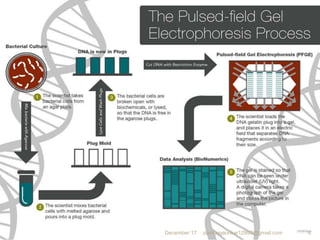



Pulsed-field gel electrophoresis (PFGE) is a technique used to separate large DNA molecules and generate DNA fingerprints for bacterial isolates. It involves using restriction enzymes to cut bacterial DNA into large fragments, which are then separated in an agarose gel using an electric field that periodically changes direction. PFGE allows discrimination of bacterial strains and is commonly used in epidemiological studies to link clinical infections to environmental or food isolates. While time-consuming, it provides stable, reproducible patterns and has been shown to be more discriminating than other subtyping methods for many bacteria.


