Presented by:
Ritam Mukherjee
ISF College of Pharmacy, Moga
TOPIC : Gel Electrophoresis
Guided by:
Dr. Pooja Chawla
Professor and HOD Dept. of Chemistry
ISF College of Pharmacy, Moga
2
Serial Number Topic
1. Electrophoresis (Introduction)
2. Factors Affecting Electrophoresis
3. Type of Electrophoresis
4. Gel Electrophoresis (Principle)
5. Methodology
6. Requirement of Gel Electrophoresis
7. Agarose Gel Electrophoresis
8. Polyacrylamide Gel Electrophoresis
9. Application of Gel Electrophoresis
Definition –
Electrophoresis may be defined as the migration of the charged particle through a
solution under the influence of an external electric field.
Ions that are suspended between two electrodes tend to travel towards the electrodes
that bear opposite charges.
3
Electrophoresis
Principle –
• The charge particle/molecule under the influence of electric filled migrates
towards oppositely charged electrodes.
• Those molecules with +ve charged move towards the cathode and –ve charged
molecules move towards the anodes.
• When electricity is applied, the molecule starts moving to its respective electrodes.
• If the charged molecule is more, the migration is faster.
• If the charge is less, then migration is slower.
4
Factors
Affecting
Electrophoresis
Sample
a) Charge b) Size c) Shape
Electric Field
Supporting
Medium
Buffer
a) Voltage b) Current c) Resistance
a) Adsorption
b) Electored
osmosis
c) Molecular
Sieving
a) Composition b) Ionic Strength c) pH
5
Electrophoresis
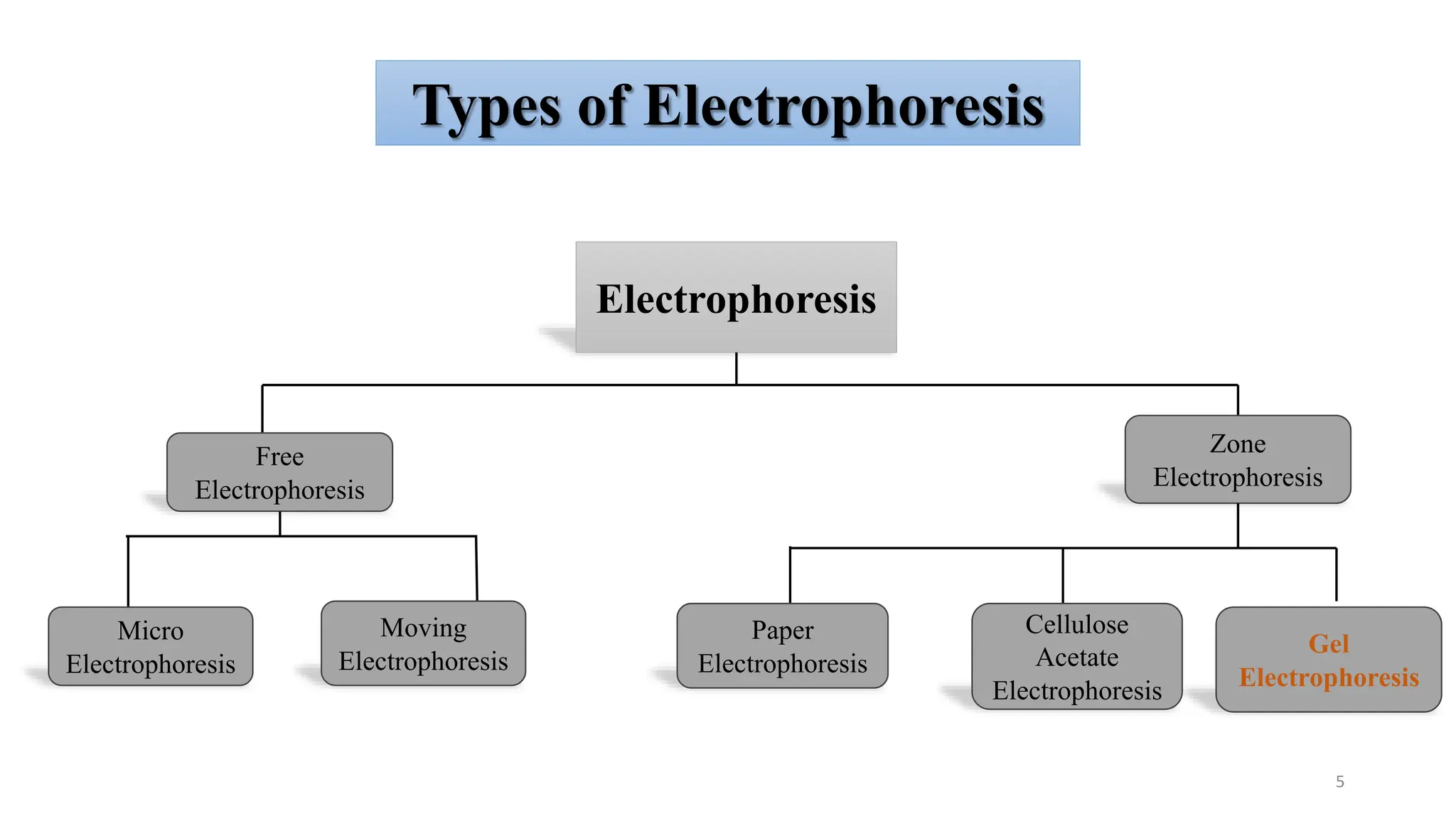
Free
Electrophoresis
Zone
Electrophoresis
Micro
Electrophoresis
Moving
Electrophoresis
Paper
Electrophoresis
Cellulose
Acetate
Electrophoresis
Gel
Electrophoresis
Types of Electrophoresis
Gel Electrophoresis
• Separation is brought about through molecular sieving techniques, based on the
molecular size of the substances. Gel material acts as a “ molecular sieve”
• It is important that support media is electrically neutral.
• There are different types of gel that can be used, they are Agarose,
Polyacrylamide, Starch, and Sephadex.
• A porous gel acts as a sieve by retarding or, in some cases by completely
obstructing the movement of macromolecules which allowed smaller molecules to
migrate freely.
6
7
• By placing the substance to be separated in wells of the gel and applying an electric
current, allows the molecule to move through the matrix at different rates towards
the anode if negatively charged or toward the cathode if positively charged.
• As they move through the gel, the larger molecules will be held up as they try to
pass through the pores of the gel, while the smaller molecules will be impeded less
and move faster.
• This results in a separation by size, with the larger molecules nearer the well and
the smaller molecules farther away.
Principle
Principle of separation
• According to charge: When charged molecules are placed in an electric field, they
migrate toward either the positive (anode) or negative (cathode) pole according to their
charge.
• According to size: The smaller molecules move more swiftly than the larger-sized ones,
as they can travel through the pores more easily than the later.
• According to Molecular weight: The smaller molecular weight will move faster than the
larger molecular weight compound.
8
9
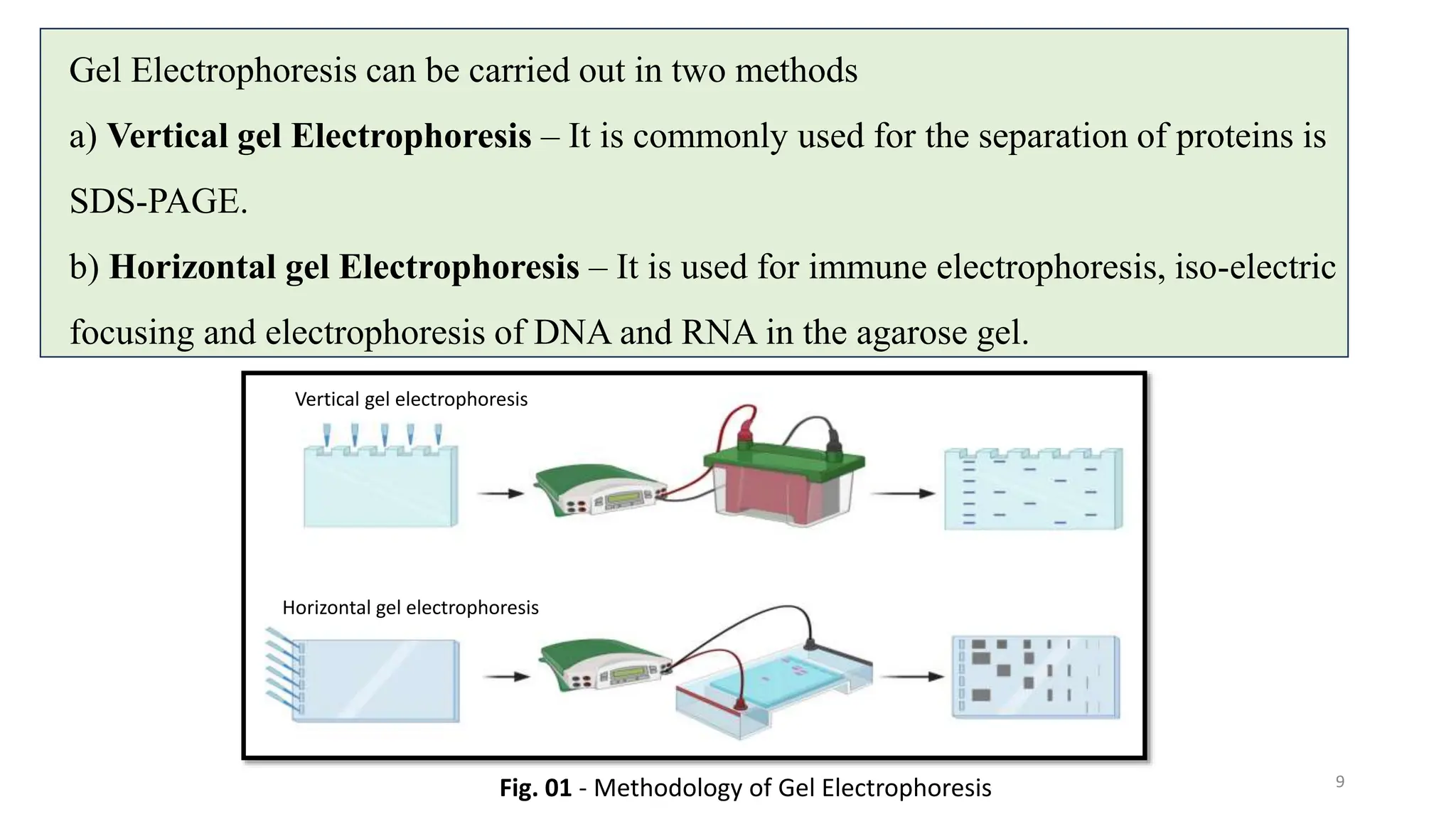
Vertical gel electrophoresis
Horizontal gel electrophoresis
Fig. 01 - Methodology of Gel Electrophoresis
Gel Electrophoresis can be carried out in two methods
a) Vertical gel Electrophoresis – It is commonly used for the separation of proteins is
SDS-PAGE.
b) Horizontal gel Electrophoresis – It is used for immune electrophoresis, iso-electric
focusing and electrophoresis of DNA and RNA in the agarose gel.
Requirements for Gel Electrophoresis
10
The equipment and supplies necessary for conducting gel electrophoresis are:
An electrophoresis chamber – Where the Electrophoresis is done.
Power supply – DNA separation occurs with the help of this.
Gel casting trays – Where the gels are poured.
Sample combs - Around which molten medium is poured to form sample wells in
the gel.
Electrophoresis buffer – TAE buffer - Tris buffer, Acetic Acid, EDTA
TBE buffer - Tris buffer, Boric Acid, EDTA
Loading buffer – Contains bromophenol blue, glycerol helps to track how far your
DNA sample has traveled, allowing the sample to sink into the gel.
Staining – Ethidium bromide with the concentration 0.5-1 μg/ml.
Agarose Gel Electrophoresis
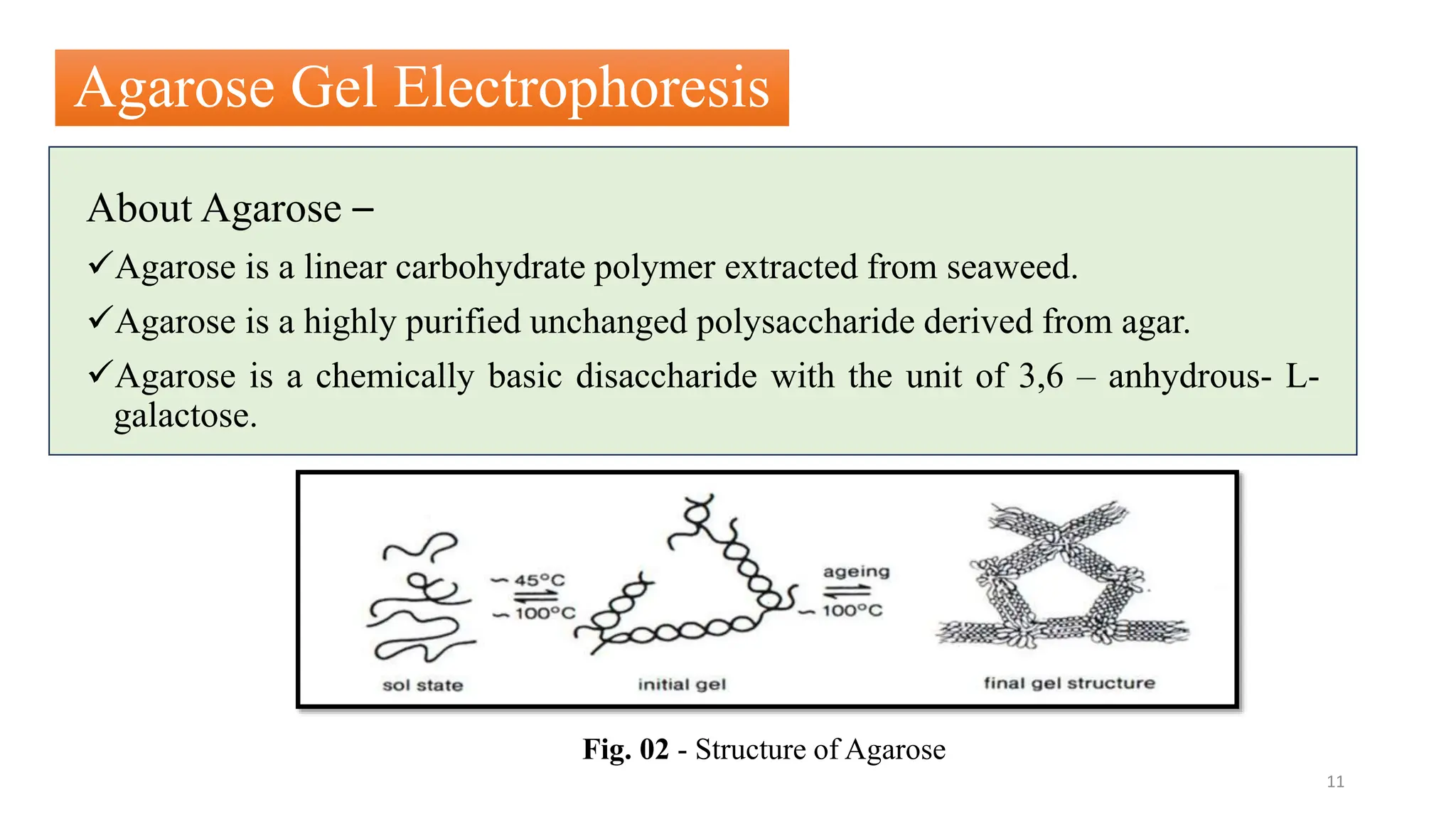
About Agarose –
Agarose is a linear carbohydrate polymer extracted from seaweed.
Agarose is a highly purified unchanged polysaccharide derived from agar.
Agarose is a chemically basic disaccharide with the unit of 3,6 – anhydrous- L-
galactose.
11
Fig. 02 - Structure of Agarose
12
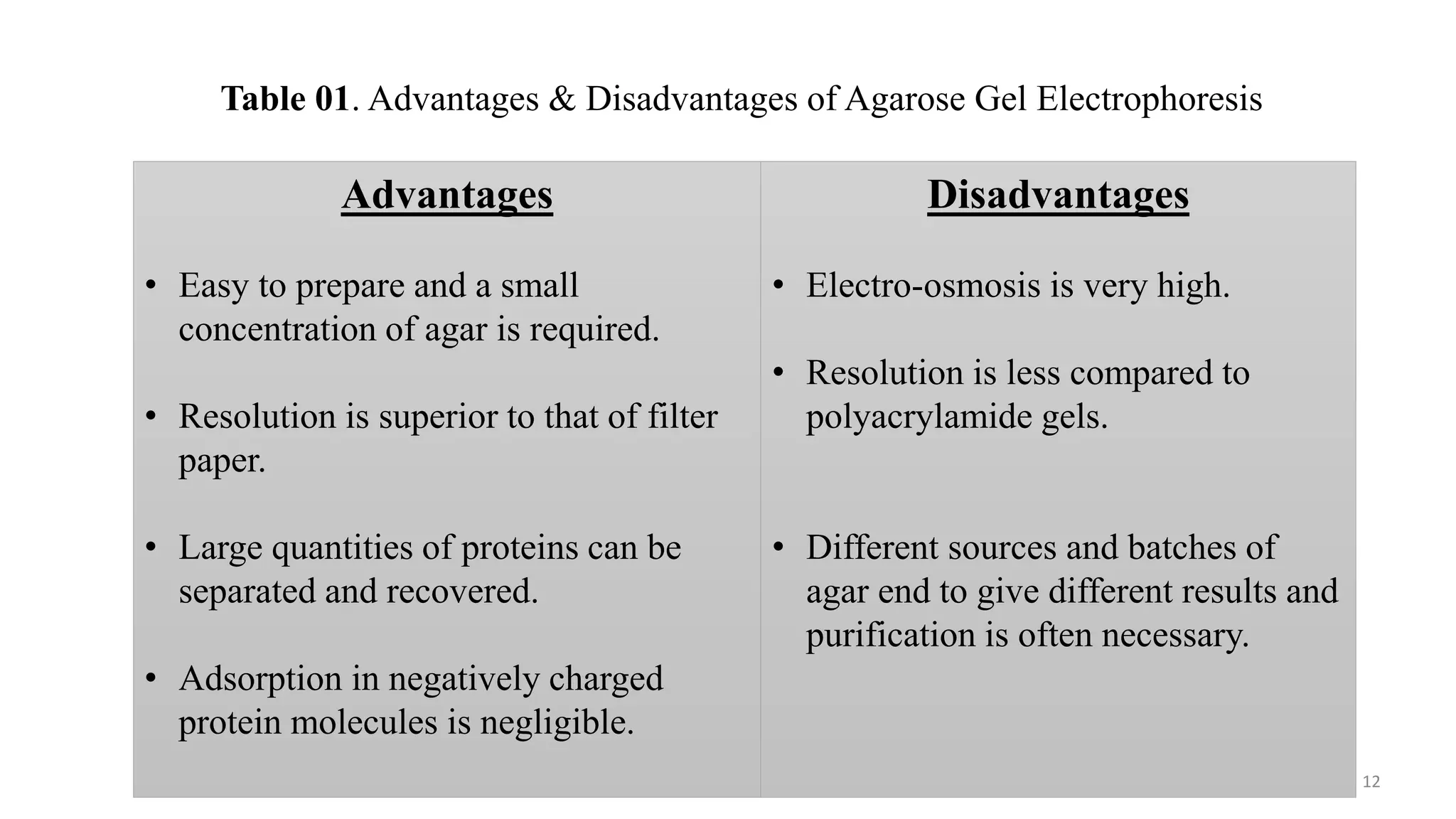
Advantages
• Easy to prepare and a small
concentration of agar is required.
• Resolution is superior to that of filter
paper.
• Large quantities of proteins can be
separated and recovered.
• Adsorption in negatively charged
protein molecules is negligible.
Disadvantages
• Electro-osmosis is very high.
• Resolution is less compared to
polyacrylamide gels.
• Different sources and batches of
agar end to give different results and
purification is often necessary.
Table 01. Advantages & Disadvantages of Agarose Gel Electrophoresis
13
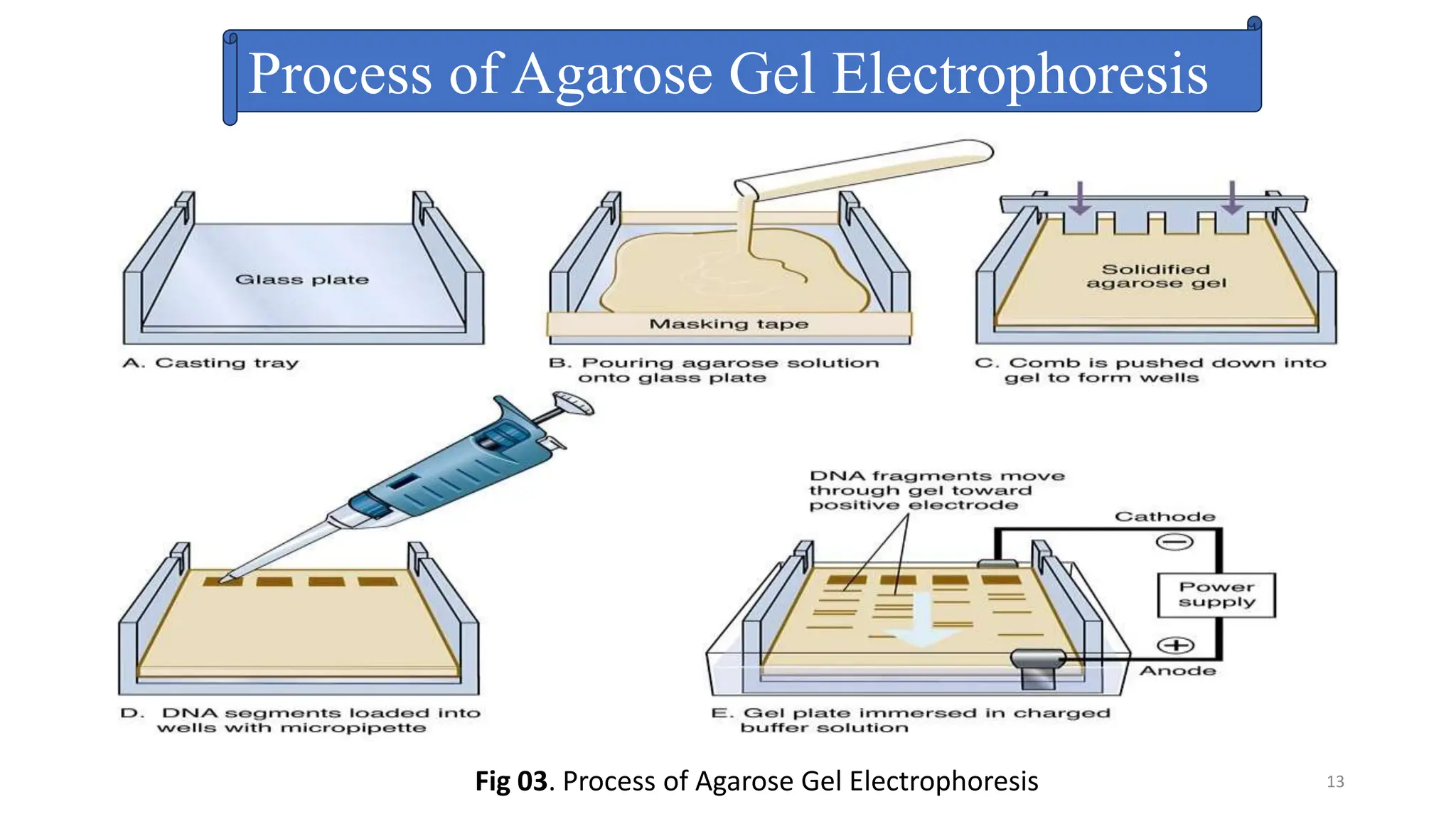
Process of Agarose Gel Electrophoresis
Fig 03. Process of Agarose Gel Electrophoresis
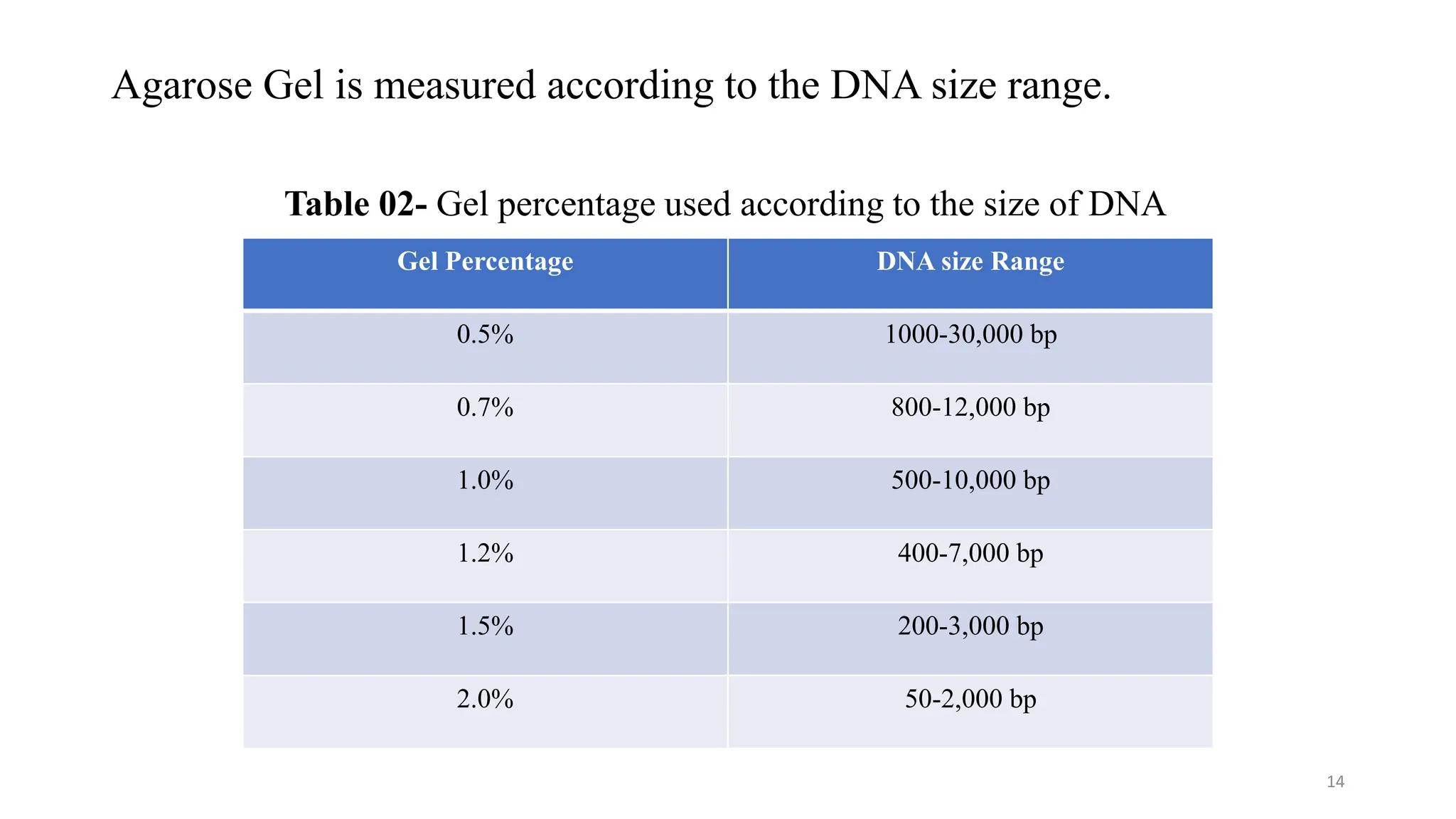
Agarose Gel is measured according to the DNA size range.
Table 02- Gel percentage used according to the size of DNA
14
Gel Percentage DNA size Range
0.5% 1000-30,000 bp
0.7% 800-12,000 bp
1.0% 500-10,000 bp
1.2% 400-7,000 bp
1.5% 200-3,000 bp
2.0% 50-2,000 bp
About Polyacrylamide –
It is prepared by polymerizing acrylamide monomers in
the presence of methylene-bis-acrylamide to cross-link
the monomers.
Polyacrylamide gel structure held together by covalent
cross-links.
15
Polyacrylamide Gel Electrophoresis
Fig.04 Basic structure of the
Polyacrylamide
It is thermostable, transparent, strong, and relatively chemically inert.
Gels are uncharged and are prepared in a variety of pore sizes.
16
Fig 05. Structure of Polyacrylamide
17
Advantages Disadvantages
Stable chemically
cross-linked gel
Toxic monomers
Sharp bands Gels are tedious to
prepare and often
leak
Good for separation
of low molecular
weight fragments.
Need new gel for
each experiment
Table 03 - Advantages & Disadvantages of PAGE
Fig 06. Polyacrylamide gel Electrophoresis
18
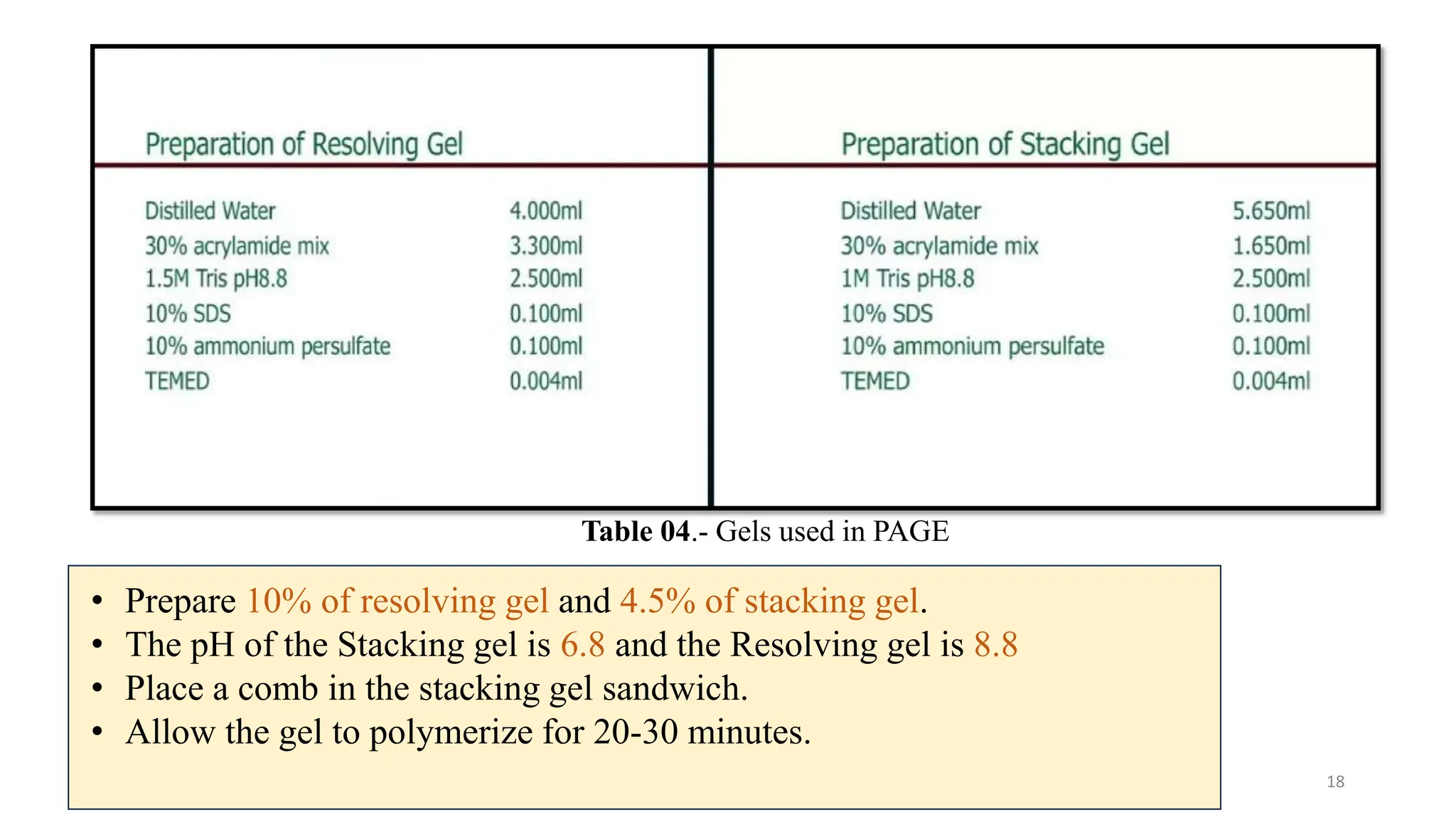
• Prepare 10% of resolving gel and 4.5% of stacking gel.
• The pH of the Stacking gel is 6.8 and the Resolving gel is 8.8
• Place a comb in the stacking gel sandwich.
• Allow the gel to polymerize for 20-30 minutes.
Table 04.- Gels used in PAGE
19
Process of Polyacrylamide Gel Electrophoresis
Fig 07. Process of PAGE
20
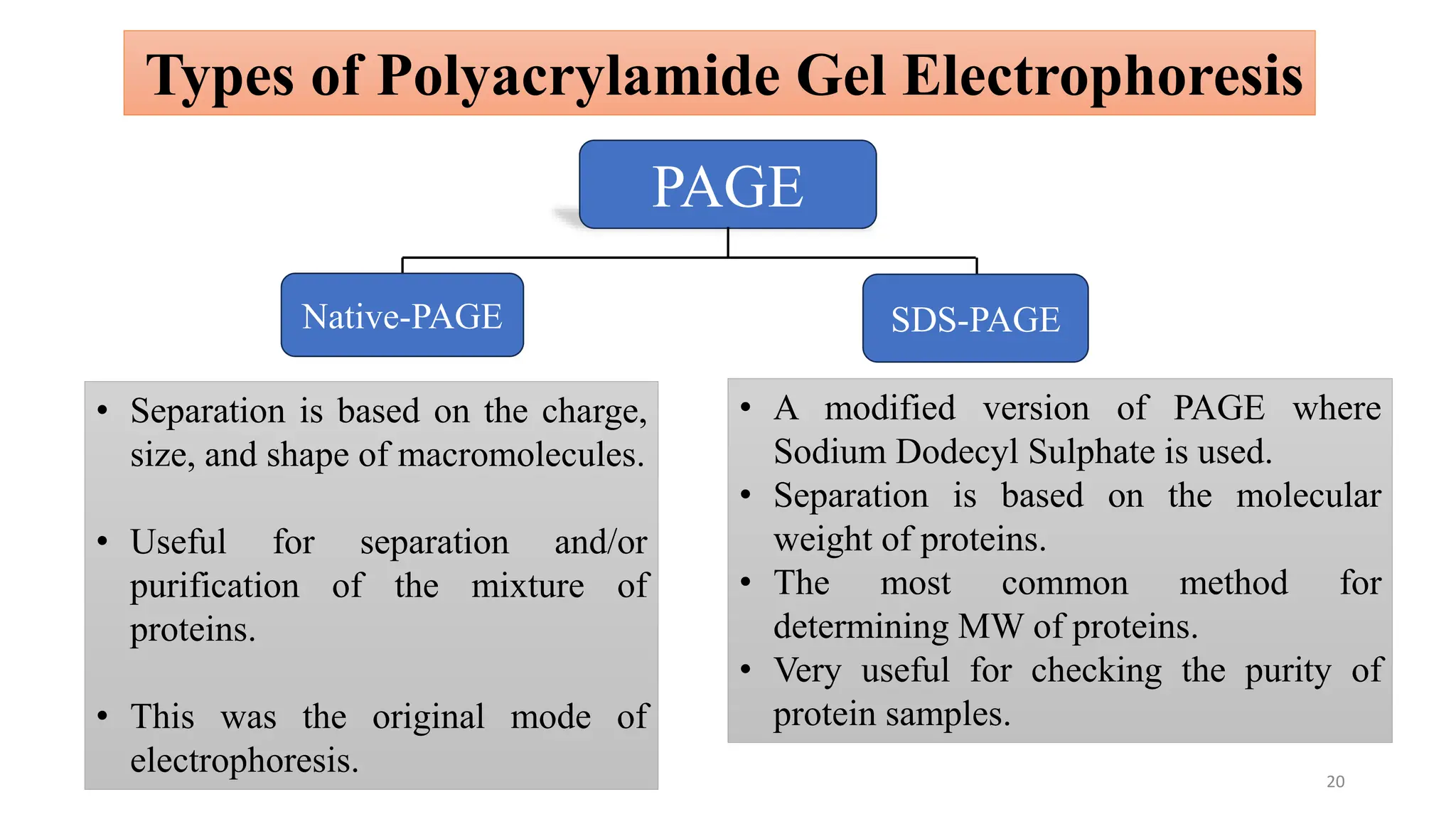
PAGE
Native-PAGE SDS-PAGE
• Separation is based on the charge,
size, and shape of macromolecules.
• Useful for separation and/or
purification of the mixture of
proteins.
• This was the original mode of
electrophoresis.
• A modified version of PAGE where
Sodium Dodecyl Sulphate is used.
• Separation is based on the molecular
weight of proteins.
• The most common method for
determining MW of proteins.
• Very useful for checking the purity of
protein samples.
Types of Polyacrylamide Gel Electrophoresis
• It is a modified version of PAGE whereby
Sodium-dodecyl-sulphate (SDS) is used.
• SDS is an amphipathic surfactant.
• It denatures proteins by binding to the protein
chain with its hydrocarbon 'tail', exposing
normally buried regions and 'coating' the protein
chain with surfactant molecules.
• The polar 'head' group of SDS adds an additional
benefit to the use of this denaturant.
21
Fig 08.
Fig 09. Protein before and after SDS
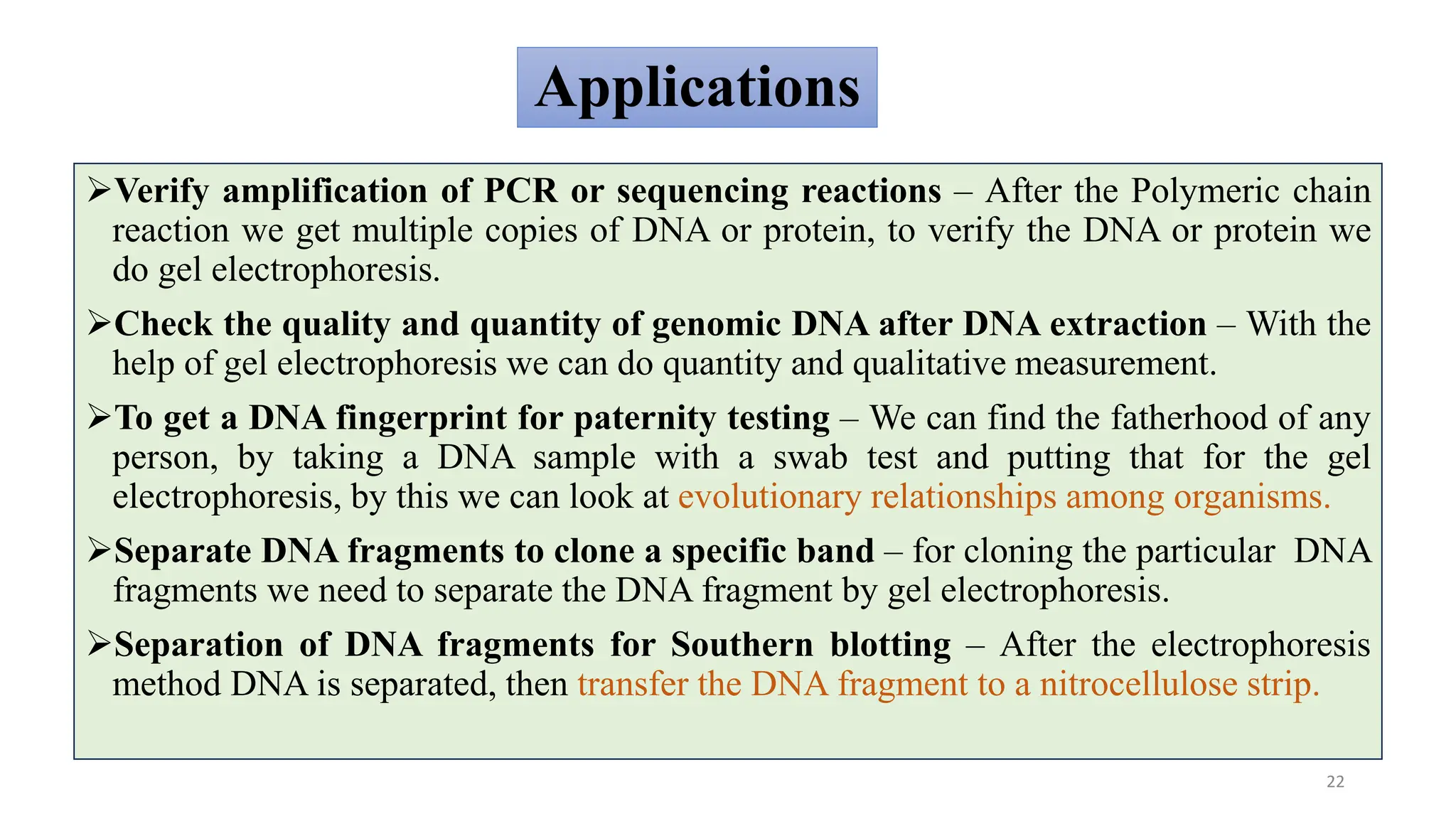
Applications
Verify amplification of PCR or sequencing reactions – After the Polymeric chain
reaction we get multiple copies of DNA or protein, to verify the DNA or protein we
do gel electrophoresis.
Check the quality and quantity of genomic DNA after DNA extraction – With the
help of gel electrophoresis we can do quantity and qualitative measurement.
To get a DNA fingerprint for paternity testing – We can find the fatherhood of any
person, by taking a DNA sample with a swab test and putting that for the gel
electrophoresis, by this we can look at evolutionary relationships among organisms.
Separate DNA fragments to clone a specific band – for cloning the particular DNA
fragments we need to separate the DNA fragment by gel electrophoresis.
Separation of DNA fragments for Southern blotting – After the electrophoresis
method DNA is separated, then transfer the DNA fragment to a nitrocellulose strip.
22
References
Sameh Magdeldin “GEL ELECTROPHORESIS- PRINCIPLES AND BASICS”
Published by InTech page number. 3-20.ISBN 978-953-51-0458-2.
Reiner Westermeier, “Gel Electrophoresis” Encyclopedia Of Life Sciences &
2005, John Wiley & Sons, Ltd. Pg no.1-5.
Matthew Robbins Gel Electrophoresis Principles and Applications November 14,
2019 by plant breeding genomics.
23
24

Gel Electrophoresis, ITS FACTOR AFFECTING, ITS TYPES,NORMAL METHODOLOGY, PAGE

  • 1.
    Presented by: Ritam Mukherjee ISFCollege of Pharmacy, Moga TOPIC : Gel Electrophoresis Guided by: Dr. Pooja Chawla Professor and HOD Dept. of Chemistry ISF College of Pharmacy, Moga
  • 2.
    2 Serial Number Topic 1.Electrophoresis (Introduction) 2. Factors Affecting Electrophoresis 3. Type of Electrophoresis 4. Gel Electrophoresis (Principle) 5. Methodology 6. Requirement of Gel Electrophoresis 7. Agarose Gel Electrophoresis 8. Polyacrylamide Gel Electrophoresis 9. Application of Gel Electrophoresis
  • 3.
    Definition – Electrophoresis maybe defined as the migration of the charged particle through a solution under the influence of an external electric field. Ions that are suspended between two electrodes tend to travel towards the electrodes that bear opposite charges. 3 Electrophoresis Principle – • The charge particle/molecule under the influence of electric filled migrates towards oppositely charged electrodes. • Those molecules with +ve charged move towards the cathode and –ve charged molecules move towards the anodes. • When electricity is applied, the molecule starts moving to its respective electrodes. • If the charged molecule is more, the migration is faster. • If the charge is less, then migration is slower.
  • 4.
    4 Factors Affecting Electrophoresis Sample a) Charge b)Size c) Shape Electric Field Supporting Medium Buffer a) Voltage b) Current c) Resistance a) Adsorption b) Electored osmosis c) Molecular Sieving a) Composition b) Ionic Strength c) pH
  • 5.
  • 6.
    Gel Electrophoresis • Separationis brought about through molecular sieving techniques, based on the molecular size of the substances. Gel material acts as a “ molecular sieve” • It is important that support media is electrically neutral. • There are different types of gel that can be used, they are Agarose, Polyacrylamide, Starch, and Sephadex. • A porous gel acts as a sieve by retarding or, in some cases by completely obstructing the movement of macromolecules which allowed smaller molecules to migrate freely. 6
  • 7.
    7 • By placingthe substance to be separated in wells of the gel and applying an electric current, allows the molecule to move through the matrix at different rates towards the anode if negatively charged or toward the cathode if positively charged. • As they move through the gel, the larger molecules will be held up as they try to pass through the pores of the gel, while the smaller molecules will be impeded less and move faster. • This results in a separation by size, with the larger molecules nearer the well and the smaller molecules farther away. Principle
  • 8.
    Principle of separation •According to charge: When charged molecules are placed in an electric field, they migrate toward either the positive (anode) or negative (cathode) pole according to their charge. • According to size: The smaller molecules move more swiftly than the larger-sized ones, as they can travel through the pores more easily than the later. • According to Molecular weight: The smaller molecular weight will move faster than the larger molecular weight compound. 8
  • 9.
    9 Vertical gel electrophoresis Horizontalgel electrophoresis Fig. 01 - Methodology of Gel Electrophoresis Gel Electrophoresis can be carried out in two methods a) Vertical gel Electrophoresis – It is commonly used for the separation of proteins is SDS-PAGE. b) Horizontal gel Electrophoresis – It is used for immune electrophoresis, iso-electric focusing and electrophoresis of DNA and RNA in the agarose gel.
  • 10.
    Requirements for GelElectrophoresis 10 The equipment and supplies necessary for conducting gel electrophoresis are: An electrophoresis chamber – Where the Electrophoresis is done. Power supply – DNA separation occurs with the help of this. Gel casting trays – Where the gels are poured. Sample combs - Around which molten medium is poured to form sample wells in the gel. Electrophoresis buffer – TAE buffer - Tris buffer, Acetic Acid, EDTA TBE buffer - Tris buffer, Boric Acid, EDTA Loading buffer – Contains bromophenol blue, glycerol helps to track how far your DNA sample has traveled, allowing the sample to sink into the gel. Staining – Ethidium bromide with the concentration 0.5-1 μg/ml.
  • 11.
    Agarose Gel Electrophoresis AboutAgarose – Agarose is a linear carbohydrate polymer extracted from seaweed. Agarose is a highly purified unchanged polysaccharide derived from agar. Agarose is a chemically basic disaccharide with the unit of 3,6 – anhydrous- L- galactose. 11 Fig. 02 - Structure of Agarose
  • 12.
    12 Advantages • Easy toprepare and a small concentration of agar is required. • Resolution is superior to that of filter paper. • Large quantities of proteins can be separated and recovered. • Adsorption in negatively charged protein molecules is negligible. Disadvantages • Electro-osmosis is very high. • Resolution is less compared to polyacrylamide gels. • Different sources and batches of agar end to give different results and purification is often necessary. Table 01. Advantages & Disadvantages of Agarose Gel Electrophoresis
  • 13.
    13 Process of AgaroseGel Electrophoresis Fig 03. Process of Agarose Gel Electrophoresis
  • 14.
    Agarose Gel ismeasured according to the DNA size range. Table 02- Gel percentage used according to the size of DNA 14 Gel Percentage DNA size Range 0.5% 1000-30,000 bp 0.7% 800-12,000 bp 1.0% 500-10,000 bp 1.2% 400-7,000 bp 1.5% 200-3,000 bp 2.0% 50-2,000 bp
  • 15.
    About Polyacrylamide – Itis prepared by polymerizing acrylamide monomers in the presence of methylene-bis-acrylamide to cross-link the monomers. Polyacrylamide gel structure held together by covalent cross-links. 15 Polyacrylamide Gel Electrophoresis Fig.04 Basic structure of the Polyacrylamide It is thermostable, transparent, strong, and relatively chemically inert. Gels are uncharged and are prepared in a variety of pore sizes.
  • 16.
    16 Fig 05. Structureof Polyacrylamide
  • 17.
    17 Advantages Disadvantages Stable chemically cross-linkedgel Toxic monomers Sharp bands Gels are tedious to prepare and often leak Good for separation of low molecular weight fragments. Need new gel for each experiment Table 03 - Advantages & Disadvantages of PAGE Fig 06. Polyacrylamide gel Electrophoresis
  • 18.
    18 • Prepare 10%of resolving gel and 4.5% of stacking gel. • The pH of the Stacking gel is 6.8 and the Resolving gel is 8.8 • Place a comb in the stacking gel sandwich. • Allow the gel to polymerize for 20-30 minutes. Table 04.- Gels used in PAGE
  • 19.
    19 Process of PolyacrylamideGel Electrophoresis Fig 07. Process of PAGE
  • 20.
    20 PAGE Native-PAGE SDS-PAGE • Separationis based on the charge, size, and shape of macromolecules. • Useful for separation and/or purification of the mixture of proteins. • This was the original mode of electrophoresis. • A modified version of PAGE where Sodium Dodecyl Sulphate is used. • Separation is based on the molecular weight of proteins. • The most common method for determining MW of proteins. • Very useful for checking the purity of protein samples. Types of Polyacrylamide Gel Electrophoresis
  • 21.
    • It isa modified version of PAGE whereby Sodium-dodecyl-sulphate (SDS) is used. • SDS is an amphipathic surfactant. • It denatures proteins by binding to the protein chain with its hydrocarbon 'tail', exposing normally buried regions and 'coating' the protein chain with surfactant molecules. • The polar 'head' group of SDS adds an additional benefit to the use of this denaturant. 21 Fig 08. Fig 09. Protein before and after SDS
  • 22.
    Applications Verify amplification ofPCR or sequencing reactions – After the Polymeric chain reaction we get multiple copies of DNA or protein, to verify the DNA or protein we do gel electrophoresis. Check the quality and quantity of genomic DNA after DNA extraction – With the help of gel electrophoresis we can do quantity and qualitative measurement. To get a DNA fingerprint for paternity testing – We can find the fatherhood of any person, by taking a DNA sample with a swab test and putting that for the gel electrophoresis, by this we can look at evolutionary relationships among organisms. Separate DNA fragments to clone a specific band – for cloning the particular DNA fragments we need to separate the DNA fragment by gel electrophoresis. Separation of DNA fragments for Southern blotting – After the electrophoresis method DNA is separated, then transfer the DNA fragment to a nitrocellulose strip. 22
  • 23.
    References Sameh Magdeldin “GELELECTROPHORESIS- PRINCIPLES AND BASICS” Published by InTech page number. 3-20.ISBN 978-953-51-0458-2. Reiner Westermeier, “Gel Electrophoresis” Encyclopedia Of Life Sciences & 2005, John Wiley & Sons, Ltd. Pg no.1-5. Matthew Robbins Gel Electrophoresis Principles and Applications November 14, 2019 by plant breeding genomics. 23
  • 24.