PAEDIATRIC
BASIC LIFE SUPPORT
By : Dr. Praman Kushwah
Dr. Nilofer Mujawar (Prof. & Head, Dept of Paediatrics)
Dr. Ashish Vaidya (Lecturer Dept. of Paediatrics)
INTRODUCTION
1. Children are much more than ‘Little Adults’.
2. They need to be cared for DIFFERENTLY in an
emergency.
3. A child is defined as the age of 1 to the onset of
PUBERTY.
4. For infants and children up to the age of 17 years,
you MUST OBTAINCONSENT from the child’s parent
or legal guardian
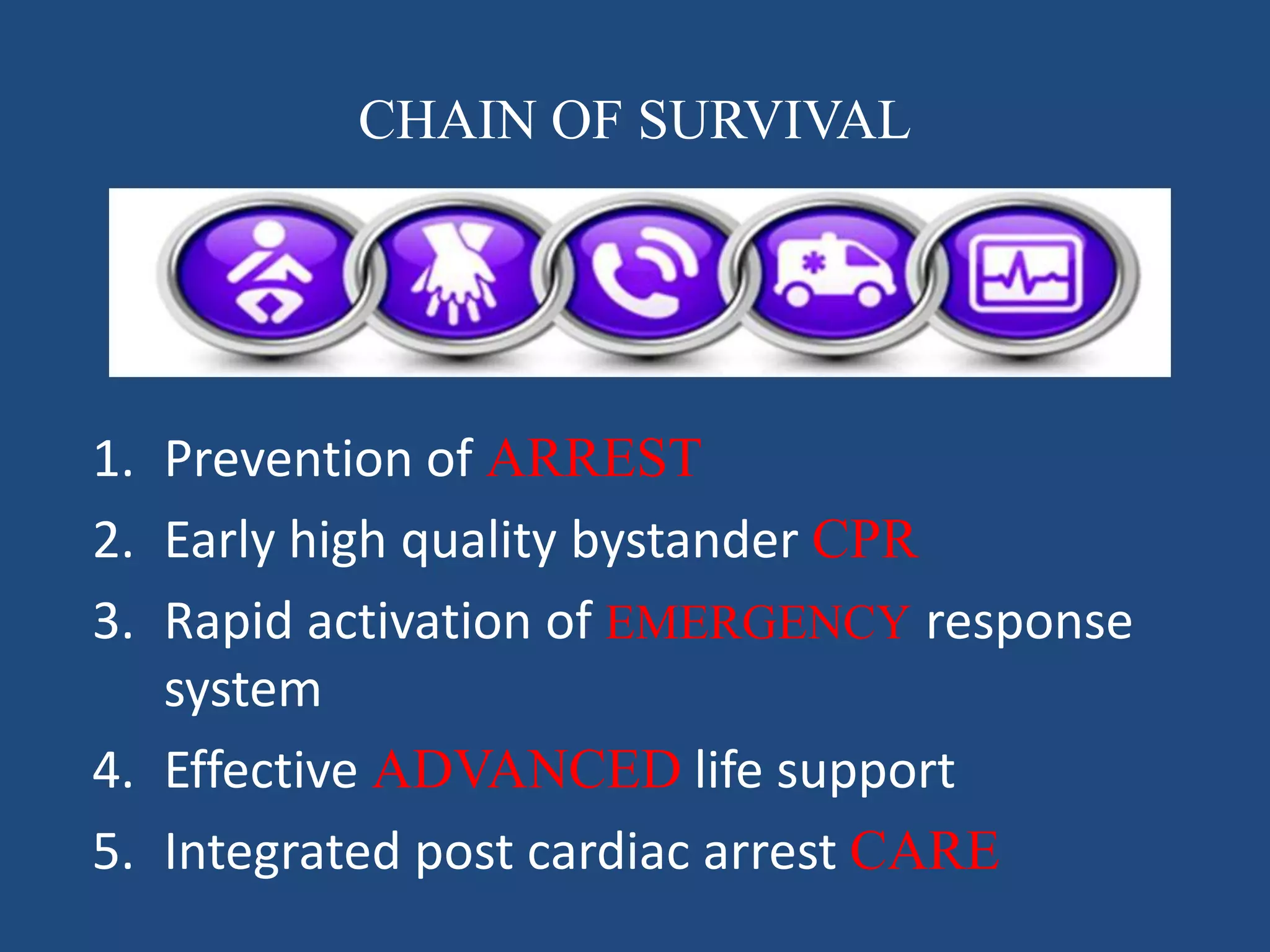
CHAIN OF SURVIVAL
1. Prevention of ARREST
2. Early high quality bystander CPR
3. Rapid activation of EMERGENCY response
system
4. Effective ADVANCED life support
5. Integrated post cardiac arrest CARE
Check for safety
Check for response
shout for Help
Check for pulse
Give cpr
Check airway
Check breathing
Simultaneously
Safety
SAFETY
 Check for Your Safety
Avoid danger to –
• You
• Others
• Casualty
 Make the area safer or remove
yourself and casualty to an area of
safety.
 If an area is too dangerous stand
back and call emergency services
response
response
 Response may vary
according to age of child
 Rubbing on the palms of
the hands or soles of an
infant’s feet may elicit a
response
 Can also use the COWS
Method.
•C an you hear me?
•O pen your eyes.
•W hat is your name?
•S queeze my hand
Shout for help
 Help can be ANYONE
nearby.
o ACTIVATE Emergency
response system
o And GET an Automated
External Defibrillator.
circulation
Cpr
chest compression & ventilation
Cpr - assessment
 Most important step is recognising need for
CPR.
 CPR should be commenced immediately in
children if;
– Unresponsive
– Not breathing normally
– Not moving, signs of life.
 Lay rescuers should begin CPR, based upon the
above information. Checking for a pulse is not
required or recommended.
 For Health care personnel , the carotid or Femoral
pulse are typically the easiest to assess. If pulse
not identified within <10 seconds CPR should
commence
HIGH QUALITY Cpr
 S tart COMPRESSION within 10 seconds of recognition of arrest
 P USH HARD ,PUSH FAST :
 Rate at least 100/min
 Depth at least 5 cm in child and 4 cm for infants
 Complete chest Recoil
 Minimize Interruptions
 Give effective Breathing
 Avoid excessive ventilation
 Cycle : 5 cycles of [30:2] in approximately 2minutes. Recheck
for signs of life at the end of cycle
Ratio : 30 compression to 2 ventilation for 1 rescuer
: 15 compression to 2 ventilation for 2 rescuer
Cpr :
 Where to do it
 Compressions are done in the midline on the lower
half of the sternum or the ‘centre of the chest
 How to do it
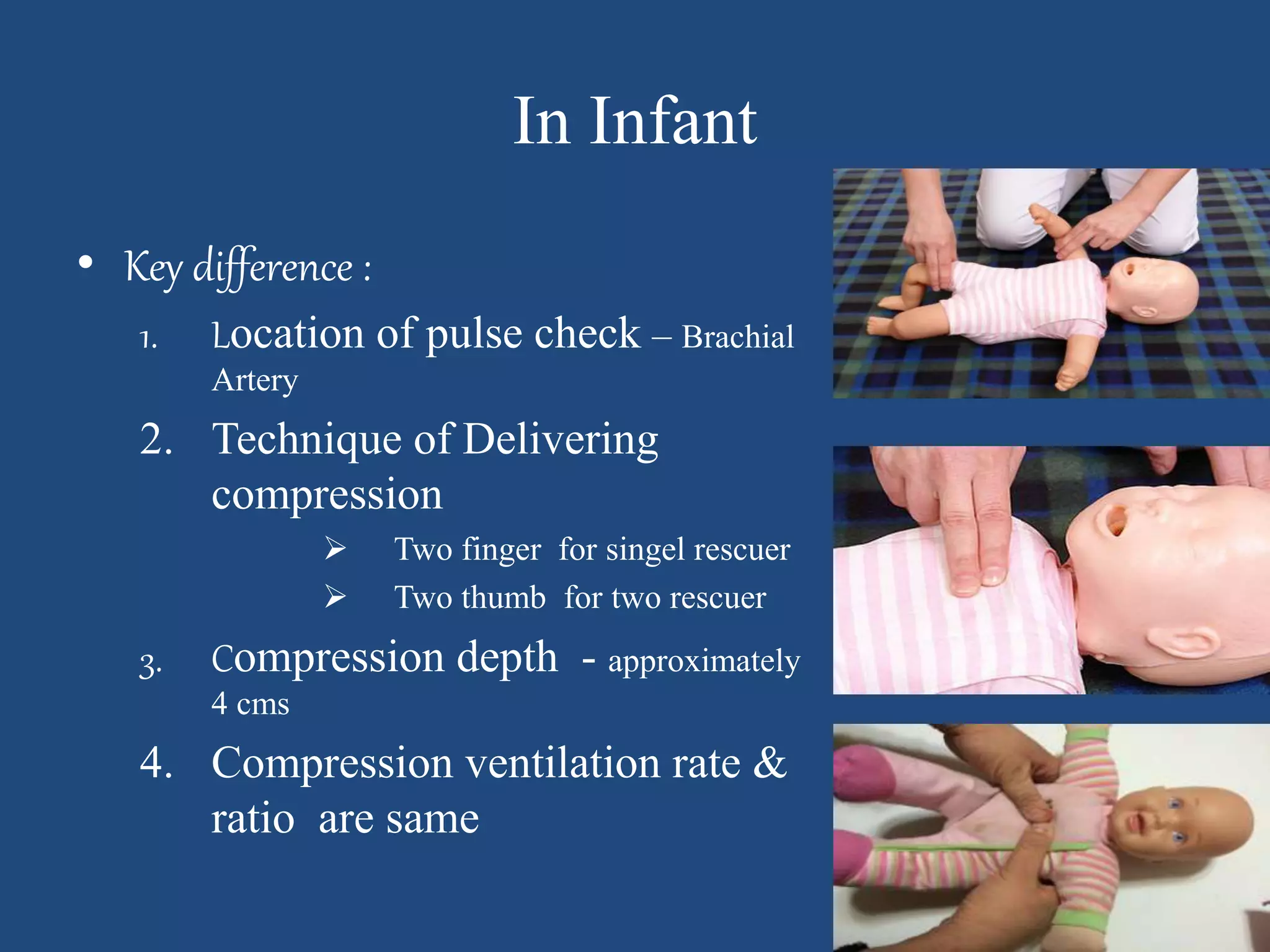
 Infants(<1yo)
 Use 2 fingers over the centre of the chest.
 Compress to 1/3 depth of chest wall
(~4cm).
 Child(1-8yrs)
 Use heel of 1 hand, or alternatively 2 hands,
with one positioned on top of the other.
 Compress 1/3 depth of chest wall (~5cm) in
the centre of the chest.
 Greater than 8yrs = same as adult
airway
-clearance
- maneuvers
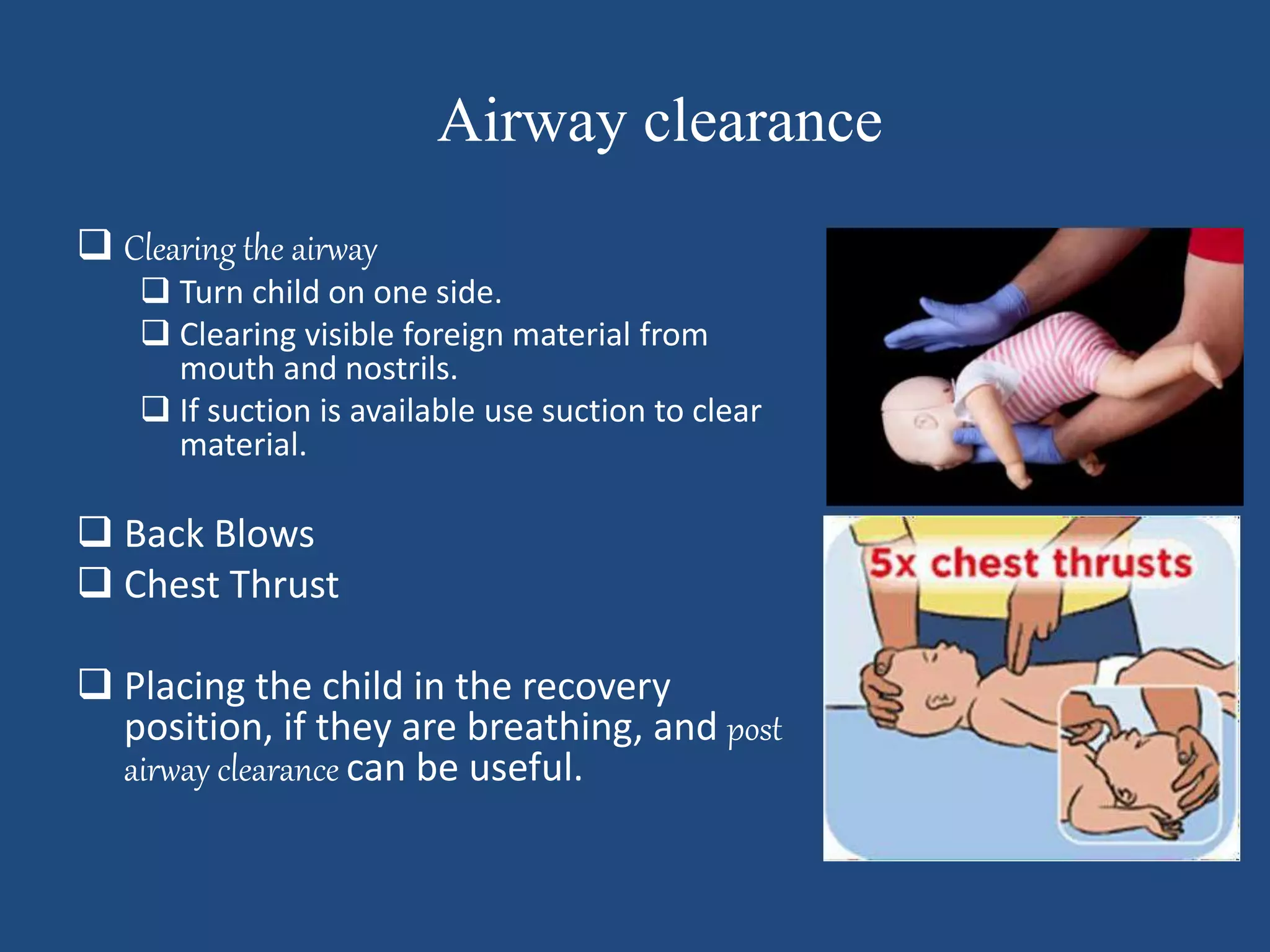
Airway clearance
 Clearing the airway
 Turn child on one side.
 Clearing visible foreign material from
mouth and nostrils.
 If suction is available use suction to clear
material.
 Back Blows
 Chest Thrust
 Placing the child in the recovery
position, if they are breathing, and post
airway clearance can be useful.
Airway maneuvers
 Airway manoeuvres and appropriate positioning in children can differ from
adults, dependant upon size.
 Infants (<1yr) should have their head in the horizontal or neutral position
Head tilt/Chin lift
Tilt head backwards (not neck)
Support jaw at the point of the
chin
Jaw Thrust
Good if neck injury is suspected
Difficulty with obtaining
adequate airway with Head tilt/chin
lift.
breathing
breathing
Look, Listen & Feel is now omitted
If not breathing, and the casualty has
a patent airway, rescue breathing
should be commenced.
 1 breath after every 3 seconds
In clinical situations use a face mask
to deliver breaths.
 Seal mask against face using index finger and
thumb
 Deliver air over 1 second to make chest rise.
In Infant
• Key difference :
1. Location of pulse check – Brachial
Artery
2. Technique of Delivering
compression
 Two finger for singel rescuer
 Two thumb for two rescuer
3. Compression depth - approximately
4 cms
4. Compression ventilation rate &
ratio are same
automated electronic
defibrillator
(AED)
Using an AED
(automated electronic defibrillator)
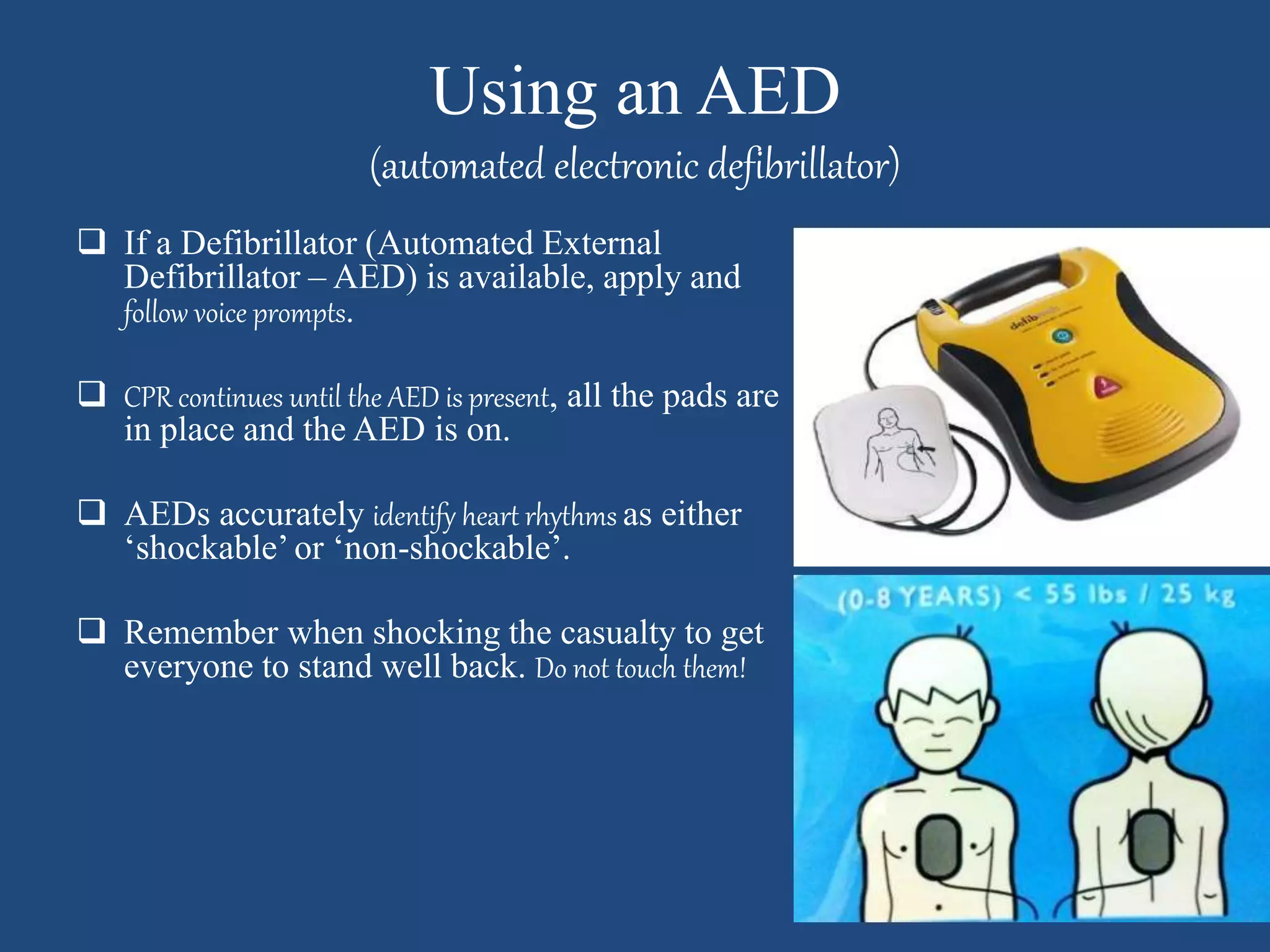
 If a Defibrillator (Automated External
Defibrillator – AED) is available, apply and
follow voice prompts.
 CPR continues until the AED is present, all the pads are
in place and the AED is on.
 AEDs accurately identify heart rhythms as either
‘shockable’ or ‘non-shockable’.
 Remember when shocking the casualty to get
everyone to stand well back. Do not touch them!
algorithm
Chocking child
• Infant and child
– Conscious
• Five back blows
• Five abdominal thurst
– Unconscious
• Rescue breathing
Take home message
• Shift from ABC to CAB
• High quality CPR
• Use of AED
References & acknowledgements
Information
o American Heart Association
Thank you

Paediatric bls

  • 1.
    PAEDIATRIC BASIC LIFE SUPPORT By: Dr. Praman Kushwah Dr. Nilofer Mujawar (Prof. & Head, Dept of Paediatrics) Dr. Ashish Vaidya (Lecturer Dept. of Paediatrics)
  • 2.
    INTRODUCTION 1. Children aremuch more than ‘Little Adults’. 2. They need to be cared for DIFFERENTLY in an emergency. 3. A child is defined as the age of 1 to the onset of PUBERTY. 4. For infants and children up to the age of 17 years, you MUST OBTAINCONSENT from the child’s parent or legal guardian
  • 3.
    CHAIN OF SURVIVAL 1.Prevention of ARREST 2. Early high quality bystander CPR 3. Rapid activation of EMERGENCY response system 4. Effective ADVANCED life support 5. Integrated post cardiac arrest CARE
  • 4.
    Check for safety Checkfor response shout for Help Check for pulse Give cpr Check airway Check breathing Simultaneously
  • 5.
  • 6.
    SAFETY  Check forYour Safety Avoid danger to – • You • Others • Casualty  Make the area safer or remove yourself and casualty to an area of safety.  If an area is too dangerous stand back and call emergency services
  • 7.
  • 8.
    response  Response mayvary according to age of child  Rubbing on the palms of the hands or soles of an infant’s feet may elicit a response  Can also use the COWS Method. •C an you hear me? •O pen your eyes. •W hat is your name? •S queeze my hand
  • 9.
    Shout for help Help can be ANYONE nearby. o ACTIVATE Emergency response system o And GET an Automated External Defibrillator.
  • 10.
  • 11.
  • 12.
    Cpr - assessment Most important step is recognising need for CPR.  CPR should be commenced immediately in children if; – Unresponsive – Not breathing normally – Not moving, signs of life.  Lay rescuers should begin CPR, based upon the above information. Checking for a pulse is not required or recommended.  For Health care personnel , the carotid or Femoral pulse are typically the easiest to assess. If pulse not identified within <10 seconds CPR should commence
  • 13.
    HIGH QUALITY Cpr S tart COMPRESSION within 10 seconds of recognition of arrest  P USH HARD ,PUSH FAST :  Rate at least 100/min  Depth at least 5 cm in child and 4 cm for infants  Complete chest Recoil  Minimize Interruptions  Give effective Breathing  Avoid excessive ventilation  Cycle : 5 cycles of [30:2] in approximately 2minutes. Recheck for signs of life at the end of cycle Ratio : 30 compression to 2 ventilation for 1 rescuer : 15 compression to 2 ventilation for 2 rescuer
  • 14.
    Cpr :  Whereto do it  Compressions are done in the midline on the lower half of the sternum or the ‘centre of the chest  How to do it  Infants(<1yo)  Use 2 fingers over the centre of the chest.  Compress to 1/3 depth of chest wall (~4cm).  Child(1-8yrs)  Use heel of 1 hand, or alternatively 2 hands, with one positioned on top of the other.  Compress 1/3 depth of chest wall (~5cm) in the centre of the chest.  Greater than 8yrs = same as adult
  • 15.
  • 16.
    Airway clearance  Clearingthe airway  Turn child on one side.  Clearing visible foreign material from mouth and nostrils.  If suction is available use suction to clear material.  Back Blows  Chest Thrust  Placing the child in the recovery position, if they are breathing, and post airway clearance can be useful.
  • 17.
    Airway maneuvers  Airwaymanoeuvres and appropriate positioning in children can differ from adults, dependant upon size.  Infants (<1yr) should have their head in the horizontal or neutral position Head tilt/Chin lift Tilt head backwards (not neck) Support jaw at the point of the chin Jaw Thrust Good if neck injury is suspected Difficulty with obtaining adequate airway with Head tilt/chin lift.
  • 18.
  • 19.
    breathing Look, Listen &Feel is now omitted If not breathing, and the casualty has a patent airway, rescue breathing should be commenced.  1 breath after every 3 seconds In clinical situations use a face mask to deliver breaths.  Seal mask against face using index finger and thumb  Deliver air over 1 second to make chest rise.
  • 20.
    In Infant • Keydifference : 1. Location of pulse check – Brachial Artery 2. Technique of Delivering compression  Two finger for singel rescuer  Two thumb for two rescuer 3. Compression depth - approximately 4 cms 4. Compression ventilation rate & ratio are same
  • 21.
  • 22.
    Using an AED (automatedelectronic defibrillator)  If a Defibrillator (Automated External Defibrillator – AED) is available, apply and follow voice prompts.  CPR continues until the AED is present, all the pads are in place and the AED is on.  AEDs accurately identify heart rhythms as either ‘shockable’ or ‘non-shockable’.  Remember when shocking the casualty to get everyone to stand well back. Do not touch them!
  • 23.
  • 24.
    Chocking child • Infantand child – Conscious • Five back blows • Five abdominal thurst – Unconscious • Rescue breathing
  • 25.
    Take home message •Shift from ABC to CAB • High quality CPR • Use of AED
  • 26.
  • 27.