BASIC LIFE SUPPORT
DR. BIVEK KUMAR YADAV
PEDIATRIC RESIDENT FIRST YEAR
CONTENTS
 INTRODUCTION
 ASSESSMENT
 CIRCULATION
 AIRWAY
 BREATHING
 AUTOMED EXTERNAL DEFRILATTOR (AED)
 BLS ALGORITHM
 POST RESUSCITAION CARE
 REFERENCES
INTRODUCTION
 Cardiopulmonary arrest in children is much less common than
adults
 The major causes of death in infants and children
 Respiratory failure
 Sepsis
Neurologic disease
Drowning and injuries
Sudden infant death syndrome ( SIDS)
INTRODUCTION..
 Basic life support-A protocol mandatory in cases of
cardiopulmonary arrest providing cardiopulmonary
resuscitation (CPR) till advanced life support (ALS) can be
provided
 Two major objectives of cardiopulmonary resuscitation are:
1. To preserve organ viability
2. To help return spontaneous circulation
SEQUENCE OF BLS
 Assessment
 Circulation
 Airway
 Breathing
ASSESSMENT
 Done to look for the evidence of cardiac arrest
 Most accurate method of recognizing cardiac arrest;
combination of
 unresponsiveness
 absent or abnormal breathing
 In infants and children with no signs of life, health care providers
should begin CPR unless they definitely palpate a pulse within 10
seconds.
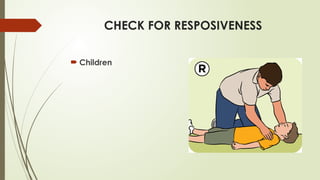
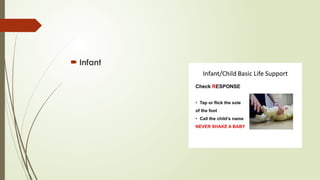
CHECK FOR RESPOSIVENESS
 Children
 Infant
CIRCULATION
 The CPR should begin with chest compression
 To provide optimum chest compression position should be
lying supine on a hard and flat surface
 High quality chest compressions should be given by
pushing hard, to a depth of at least one third the antero-
posterior dimension or approximately 1.5” (4cm) in infants
and 2” (5cm) in children
KEYS TO HIGH QUALITY CPR
 Push hard
 Push fast
 Minimize interruptions
 Allow full chest recoil
 Avoid excess ventilation
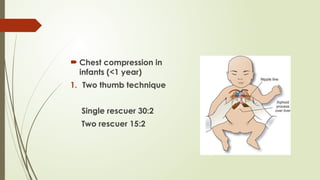
 Chest compression in
infants (<1 year)
1. Two thumb technique
Single rescuer 30:2
Two rescuer 15:2
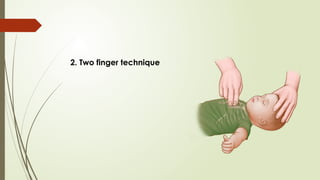
2. Two finger technique
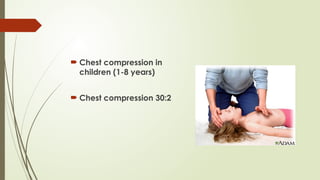
 Chest compression in
children (1-8 years)
 Chest compression 30:2
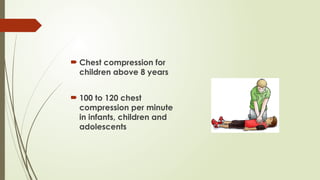
 Chest compression for
children above 8 years
 100 to 120 chest
compression per minute
in infants, children and
adolescents
AIRWAY
 Infants and children are at higher risk of having
respiratory obstruction and failure due to the following
reasons:
- smaller size of upper airway
- large size of tongue
- smaller and compliant subglottic area
- relatively compliant chest wall and rib cage
- limited oxygen reserve
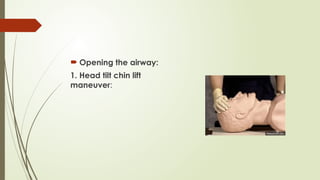
 Opening the airway:
1. Head tilt chin lift
maneuver:
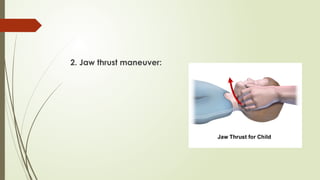
2. Jaw thrust maneuver:
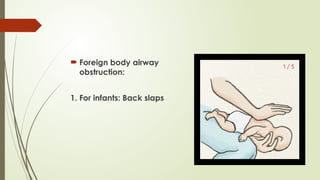
 Foreign body airway
obstruction:
1. For infants: Back slaps
 Chest thrust
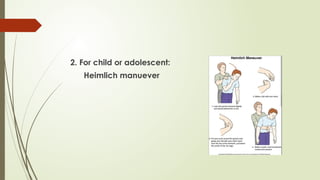
2. For child or adolescent:
Heimlich manuever
BREATHING
 Check for breathing, periodic gasping also called
agonal gasp, is not breathing
 2 breaths every 2 to 3 seconds-(2020 AHA BLS Update)
 Infants: at least 30 breaths/min
 Older children: at least 25 breaths/min
 One should see the chest rise and fall to confirm
appropriate rescue breaths
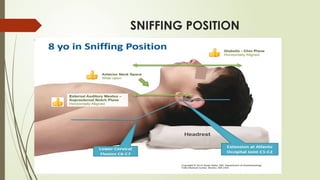
SNIFFING POSITION
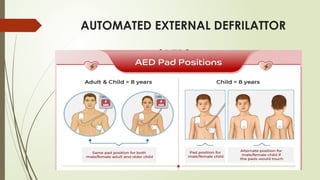
AUTOMATED EXTERNAL DEFRILATTOR
(AED)
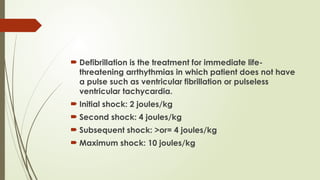
 Defibrillation is the treatment for immediate life-
threatening arrthythmias in which patient does not have
a pulse such as ventricular fibrillation or pulseless
ventricular tachycardia.
 Initial shock: 2 joules/kg
 Second shock: 4 joules/kg
 Subsequent shock: >or= 4 joules/kg
 Maximum shock: 10 joules/kg
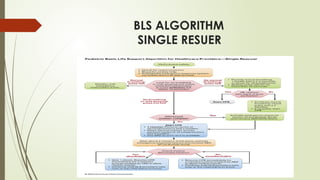
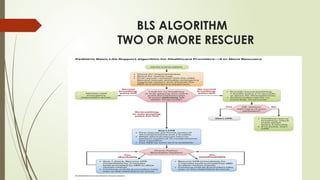
BLS ALGORITHM
SINGLE RESUER
BLS ALGORITHM
TWO OR MORE RESCUER
POST RESUSCITATION CARE
 Refers to a period between restoration of a spontaneous
circulation and transfer of patient to a healthcare facility
 This period should be less than 30 minutes (CRUCIAL
TIME)
 Immediate goal is to optimize tissue perfusion,
especially to the brain.
REFERENCES
 GHAI ESSENTAIL PEDATRICS
 American heart association (AHA) Guidelines 2020
 Special thanks:
-DR. Anita lammichhne
-DR. Uma Devi Chhetri

BASIC LIFE SUPPORT.pptx algorithm for single and double rescuer

  • 1.
    BASIC LIFE SUPPORT DR.BIVEK KUMAR YADAV PEDIATRIC RESIDENT FIRST YEAR
  • 3.
    CONTENTS  INTRODUCTION  ASSESSMENT CIRCULATION  AIRWAY  BREATHING  AUTOMED EXTERNAL DEFRILATTOR (AED)  BLS ALGORITHM  POST RESUSCITAION CARE  REFERENCES
  • 4.
    INTRODUCTION  Cardiopulmonary arrestin children is much less common than adults  The major causes of death in infants and children  Respiratory failure  Sepsis Neurologic disease Drowning and injuries Sudden infant death syndrome ( SIDS)
  • 5.
    INTRODUCTION..  Basic lifesupport-A protocol mandatory in cases of cardiopulmonary arrest providing cardiopulmonary resuscitation (CPR) till advanced life support (ALS) can be provided  Two major objectives of cardiopulmonary resuscitation are: 1. To preserve organ viability 2. To help return spontaneous circulation
  • 6.
    SEQUENCE OF BLS Assessment  Circulation  Airway  Breathing
  • 7.
    ASSESSMENT  Done tolook for the evidence of cardiac arrest  Most accurate method of recognizing cardiac arrest; combination of  unresponsiveness  absent or abnormal breathing  In infants and children with no signs of life, health care providers should begin CPR unless they definitely palpate a pulse within 10 seconds.
  • 8.
  • 9.
  • 10.
    CIRCULATION  The CPRshould begin with chest compression  To provide optimum chest compression position should be lying supine on a hard and flat surface  High quality chest compressions should be given by pushing hard, to a depth of at least one third the antero- posterior dimension or approximately 1.5” (4cm) in infants and 2” (5cm) in children
  • 11.
    KEYS TO HIGHQUALITY CPR  Push hard  Push fast  Minimize interruptions  Allow full chest recoil  Avoid excess ventilation
  • 12.
     Chest compressionin infants (<1 year) 1. Two thumb technique Single rescuer 30:2 Two rescuer 15:2
  • 13.
    2. Two fingertechnique
  • 14.
     Chest compressionin children (1-8 years)  Chest compression 30:2
  • 15.
     Chest compressionfor children above 8 years  100 to 120 chest compression per minute in infants, children and adolescents
  • 16.
    AIRWAY  Infants andchildren are at higher risk of having respiratory obstruction and failure due to the following reasons: - smaller size of upper airway - large size of tongue - smaller and compliant subglottic area - relatively compliant chest wall and rib cage - limited oxygen reserve
  • 17.
     Opening theairway: 1. Head tilt chin lift maneuver:
  • 18.
    2. Jaw thrustmaneuver:
  • 19.
     Foreign bodyairway obstruction: 1. For infants: Back slaps
  • 20.
  • 21.
    2. For childor adolescent: Heimlich manuever
  • 22.
    BREATHING  Check forbreathing, periodic gasping also called agonal gasp, is not breathing  2 breaths every 2 to 3 seconds-(2020 AHA BLS Update)  Infants: at least 30 breaths/min  Older children: at least 25 breaths/min  One should see the chest rise and fall to confirm appropriate rescue breaths
  • 23.
  • 24.
  • 25.
     Defibrillation isthe treatment for immediate life- threatening arrthythmias in which patient does not have a pulse such as ventricular fibrillation or pulseless ventricular tachycardia.  Initial shock: 2 joules/kg  Second shock: 4 joules/kg  Subsequent shock: >or= 4 joules/kg  Maximum shock: 10 joules/kg
  • 26.
  • 27.
  • 29.
    POST RESUSCITATION CARE Refers to a period between restoration of a spontaneous circulation and transfer of patient to a healthcare facility  This period should be less than 30 minutes (CRUCIAL TIME)  Immediate goal is to optimize tissue perfusion, especially to the brain.
  • 30.
    REFERENCES  GHAI ESSENTAILPEDATRICS  American heart association (AHA) Guidelines 2020
  • 31.
     Special thanks: -DR.Anita lammichhne -DR. Uma Devi Chhetri