EXCHANGE
TRANSFUSION
By : JYOTIKA ABRAHAM
DEFINITION
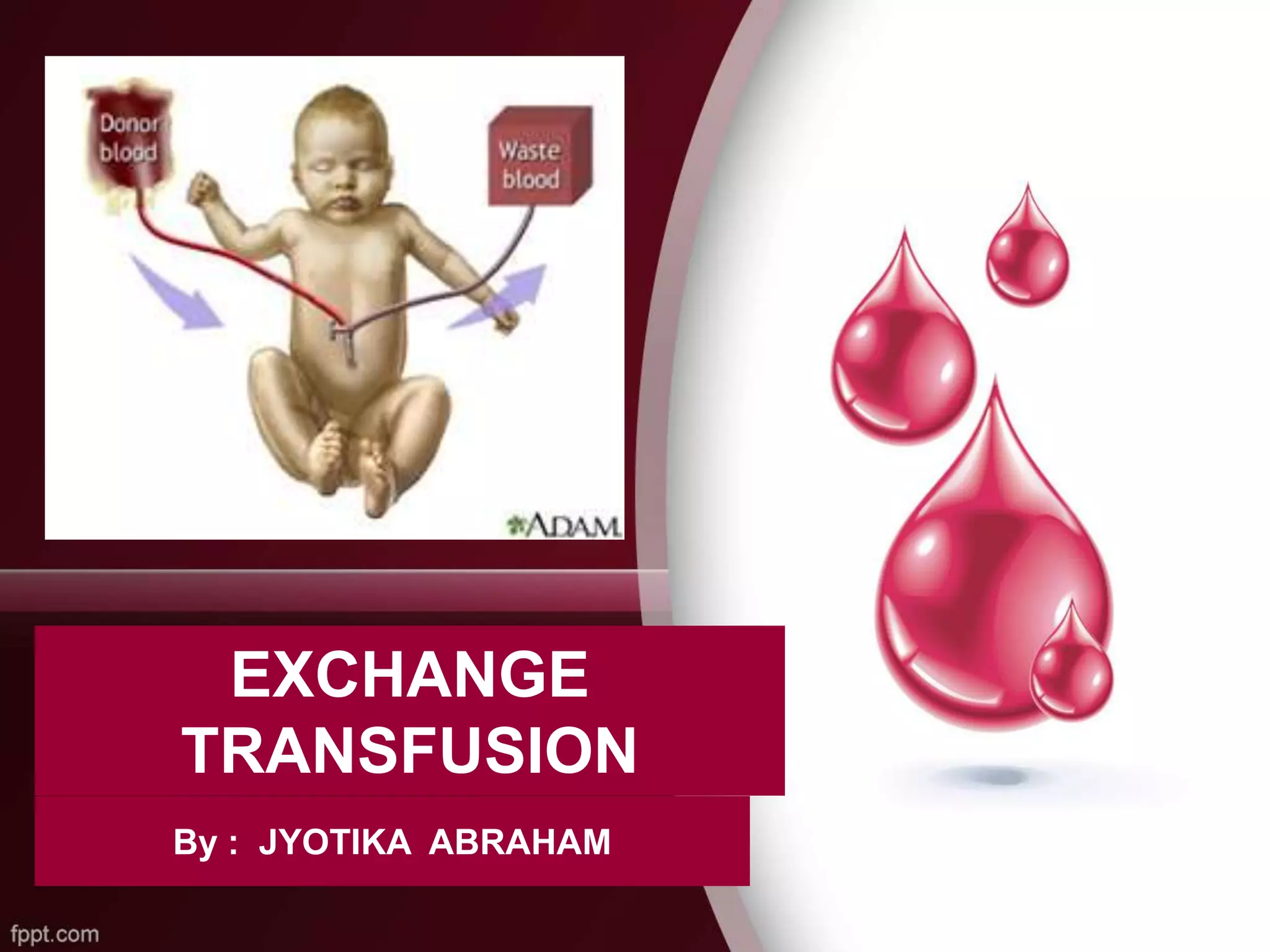
Withdrawing a baby’s blood which has
high bilirubin content and replacing it
with fresh blood through umbilical vein.
AIMS
1.To correct anemia by replacing the
Rh positive sensitized red cells.
2.To remove the circulatory antibodies
3.To eliminate circulatory bilirubin
INDICATIONS
1. Non obstructive jaundice with serum
bilirubin level of 20mg/dl or more in full
term and 15mg/dl in preterm infants,
e.g. Rh or ABO incompatibility.
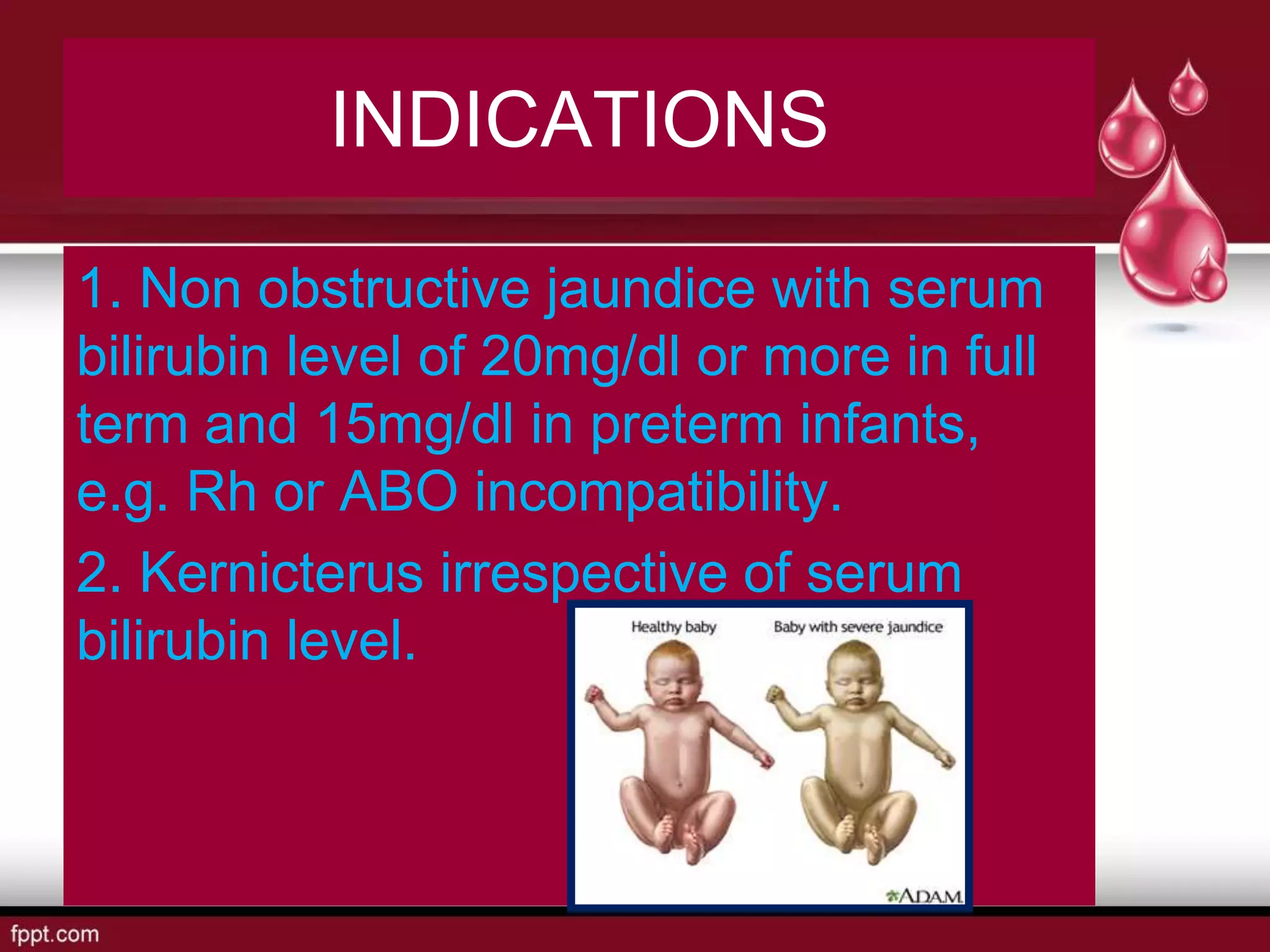
2. Kernicterus irrespective of serum
bilirubin level.
CONTD.
3.Hemolytic disease of the newborn
under following situations:
Cord Hb 10% or less.
Cord bilirubin 5mg/dl or more.
CONTD.
Rise of serum bilirubin of more than
1mg/dl/hr
Maternal antibody titer of 1:64 or
more, positive direct Coomb’s test
and previous history of severely
affected baby
ARTICLES
Exchange transfusion set containing:
• Kidney tray – 1
• Bowls – 2
• Metal scale – 1
• Suture scissors – 1
• Fine scissors – 1
• Vein dilator – 1
CONTD.
• Fine toothed forceps – 1
• Fine non-toothed forceps – 1
• Curved mosquito forceps - 1
• Straight mosquito forceps – 1
• Dressing forceps – 1
• Surgical towel – 2
CONTD.
• 20cc syringe – 2
• 10cc syringe – 2
• Cross splint, pads and bandages
• Injection tray with antiseptic
• Small dressing pack
• Sterile scalpel blade 3/11
CONTD.
• Sterile feeding tray with pacifier
• I.V. Stand
• Injection normal saline 500ml
• Injection Heparin
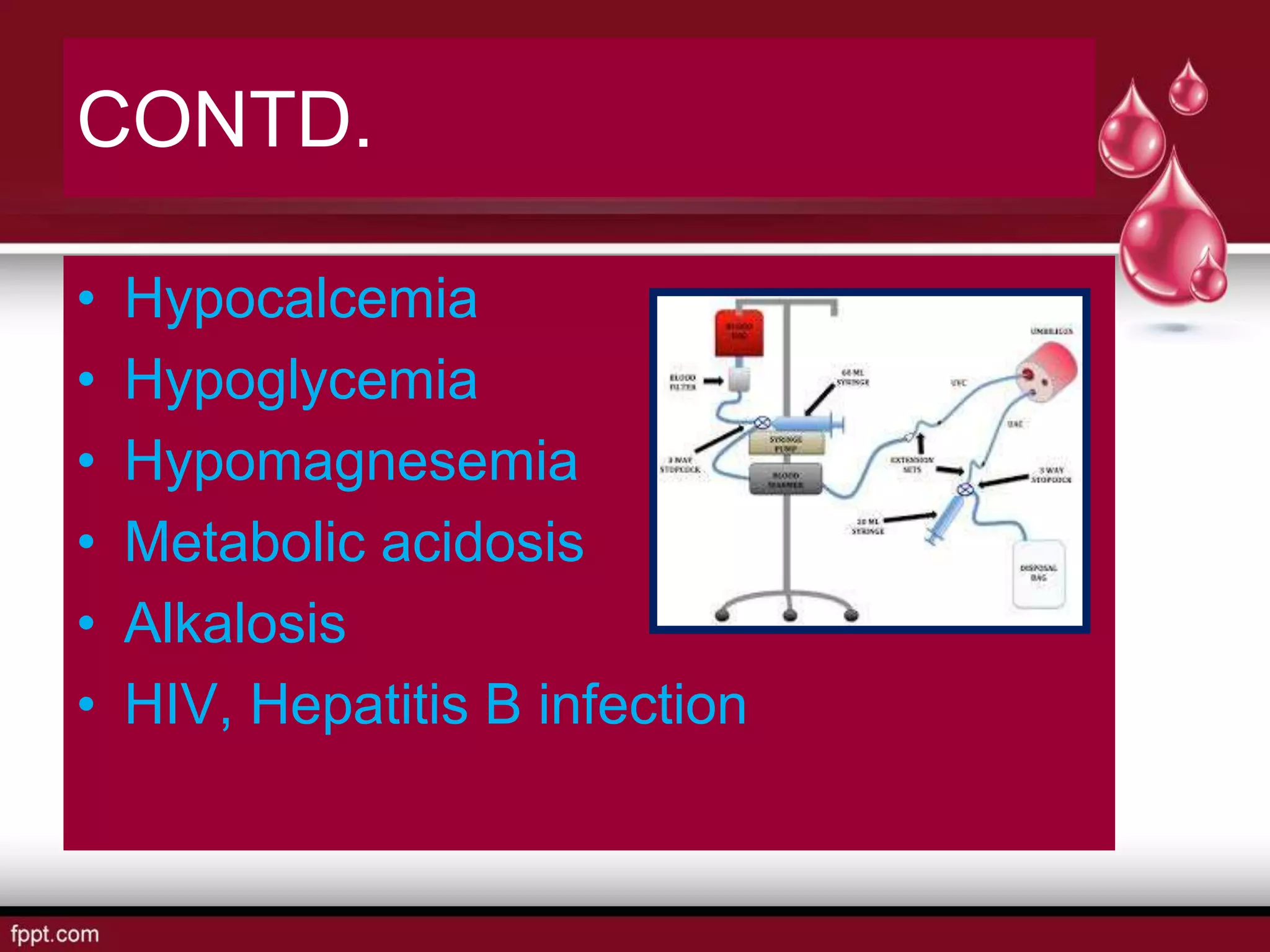
• 3-way stopcock
• Resuscitation equipment and oxygen
source
CONTD.
• Suction apparatus with mucus sucker
• Umbilical vein catheter
• NG tube no. 5,6, 8
• Sterile linen bundle with 2 sheets and
1 biopsy towel
• Mask and gloves
• Cord tie
CONTD.
• Specimen containers
• Specimen tubes
• Adhesive plaster, scissors, extra
syringes
• Emergency drugs like:
Inj. Adrenalin
Inj. Calcium Gluconate
CONTD.
Inj. Soda bicarbonate
Inj. Aminophylline
• Blood giving set
• Cross splint
CHOICE OF DONOR
BLOOD
• The donor blood should be fresh(less
than 3 days old)
• The amount needed for an adequate
exchange is about 160ml/kg(double
the blood volume of the baby)
• The blood should be cross matched
against mother’s blood.
• It should be made sure that blood is
slowly warmed to infant’s temperature.
CONTD.
• Fresh heparinized blood or blood
preserved with acid citrate dextrose is
used.
• In Rh incompatibility the transfusions
are performed with group O, Rh
negative blood whereas in case of
ABO incompatibility and G-6-PD
deficiency the procedure has to be
performed with the same ABO and Rh
groups of the baby.
CONTD.
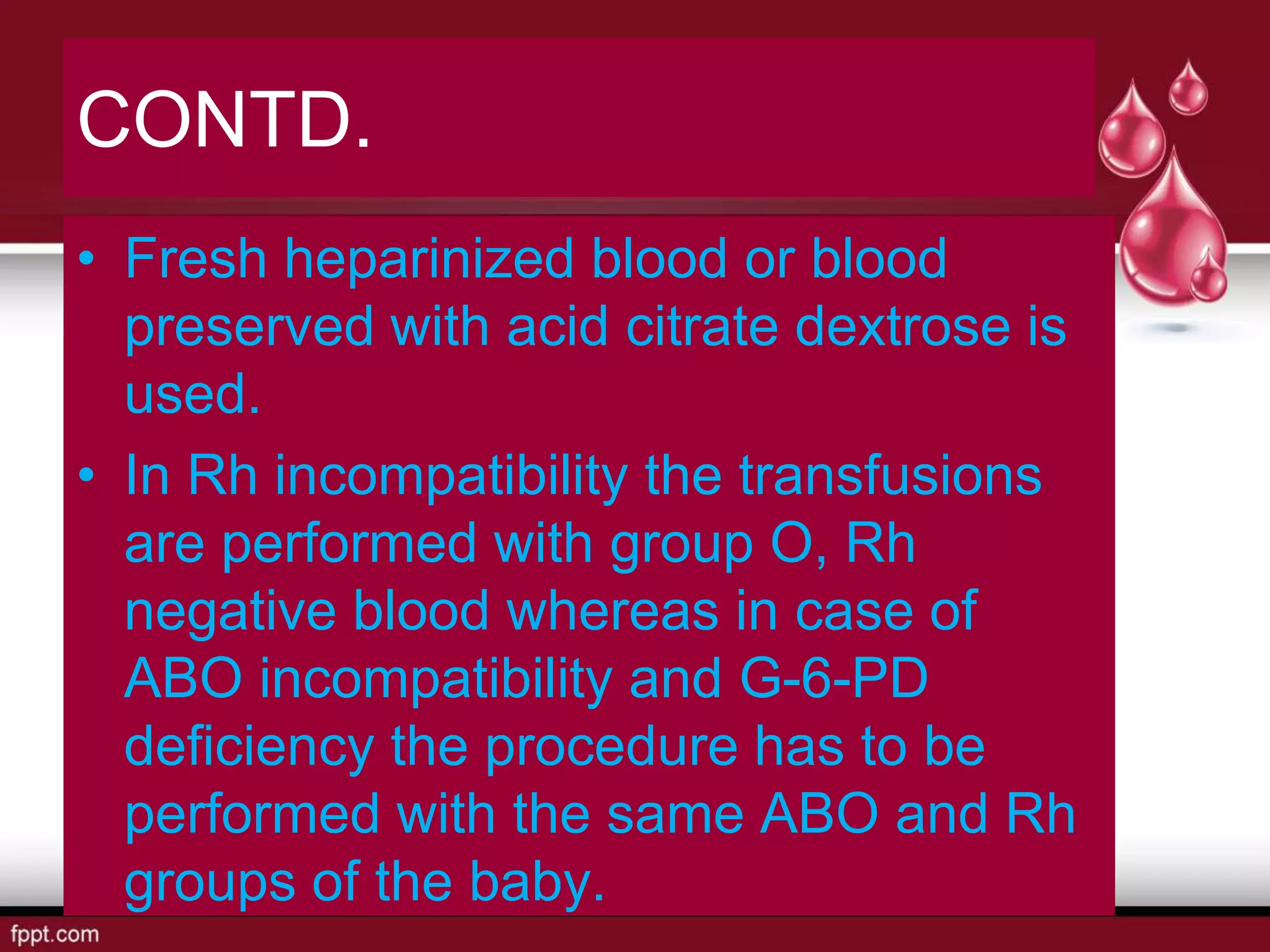
• 20 – 30 ml of blood is withdrawn and
10 – 20 ml are replaced each time
PROCEDURE
NURSING ACTION
• Explain procedure to parents.
• Get informed consent from the parent.
• Collect the blood from blood bank and
place in tepid water and check the
blood type and group against the
neonate’s blood before administering.
CONTD.
• Procedure should be carried out in an
incubator maintaining the temperature
at 27 – 30°centigrade.
• NPO should be maintained 4 hours
before procedure. Stomach should be
aspirated before the exchange.
• Expose and immobilize the baby on
cross splint.
CONTD.
• Open dressing pack and assist in
cleaning of umbilical stump.
• Assist in cleaning the umbilical cord
and draping the sterile linen.
• Pour 500 ml of I.V. normal saline into a
sterile bowl and add 1 ml injection
heparin into it.
CONTD.
• Umbilical cord cut to less than 2.5 cm
from the skin surface.
• Attach ligature loosely round the base
of the cord. Insert umbilical catheter
into the vein.
• The catheter should be filled with a
flushing solution, or donor blood before
insertion.
CONTD.
• When free flow of blood is obtained,
ligature is tightened and catheter
should be deep enough to reach
inferior vena cava.
• Make sure that heat source is available
throughout the procedure.
• Measure CVP after insertion of
catheter into the umbilical vein.
CONTD.
• Take sample of pre exchanged blood
as well as after exchange for
investigation.
• Monitor heart rate, respiratory rate and
condition of the baby hourly during the
procedure.
CONTD.
• The physician removes 10 ml of the
umbilical blood and replaces with 10ml
of fresh blood immediately, until
calculated volume is exchanged
• Apply cord tie at umbilicus, seal
umbilicus with tincture benzoin, apply
small gauze and secure with adhesive.
CONTD.
• Replace equipment and start
phototherapy.
• Document time of starting, duration,
completion time, amount and type of
blood exchanged, condition of baby
during and after procedure, drugs
given during procedure and samples
sent to the lab.
POST TRANSFUSION
CARE
• Place the baby in a radiant warmer.
• Inspect umbilicus for evidence of
bleeding.
• Repeat serum bilirubin as required.
• Check infant’s blood glucose regularly.
COMPLICATIONS
• Bacterial sepsis
• Thrombocytopenia
• Portal vein thrombosis
• Umbilical vein perforation
• Dysrhythmia
• Cardiac arrest
CONTD.
• Hypocalcemia
• Hypoglycemia
• Hypomagnesemia
• Metabolic acidosis
• Alkalosis
• HIV, Hepatitis B infection
SPECIAL
CONSIDERATIONS
• If citrated or heparinized donor blood is
used, one should be prepared for
hypocalcemia, hypoglycemia,
hyperkalemia and metabolic acidosis.
• Citrated blood leaves the infant with
low Hb levels, so as a precaution
calcium Gluconate at regular intervals
should be given.
CONTD.
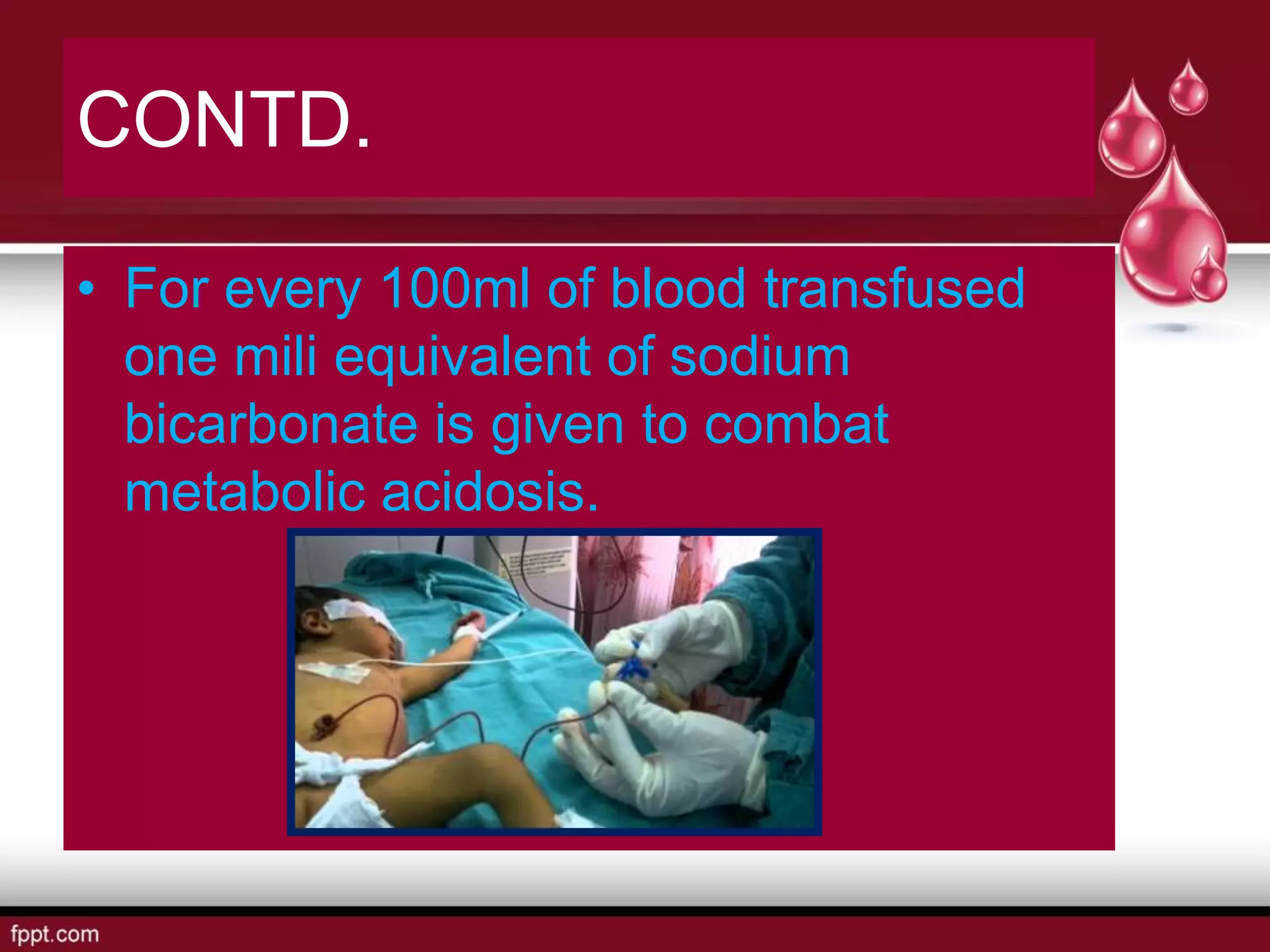
• For every 100ml of blood transfused
one mili equivalent of sodium
bicarbonate is given to combat
metabolic acidosis.
Exchange Transfusion PPT

Exchange Transfusion PPT

  • 1.
  • 2.
    DEFINITION Withdrawing a baby’sblood which has high bilirubin content and replacing it with fresh blood through umbilical vein.
  • 3.
    AIMS 1.To correct anemiaby replacing the Rh positive sensitized red cells. 2.To remove the circulatory antibodies 3.To eliminate circulatory bilirubin
  • 4.
    INDICATIONS 1. Non obstructivejaundice with serum bilirubin level of 20mg/dl or more in full term and 15mg/dl in preterm infants, e.g. Rh or ABO incompatibility. 2. Kernicterus irrespective of serum bilirubin level.
  • 5.
    CONTD. 3.Hemolytic disease ofthe newborn under following situations: Cord Hb 10% or less. Cord bilirubin 5mg/dl or more.
  • 6.
    CONTD. Rise of serumbilirubin of more than 1mg/dl/hr Maternal antibody titer of 1:64 or more, positive direct Coomb’s test and previous history of severely affected baby
  • 7.
    ARTICLES Exchange transfusion setcontaining: • Kidney tray – 1 • Bowls – 2 • Metal scale – 1 • Suture scissors – 1 • Fine scissors – 1 • Vein dilator – 1
  • 8.
    CONTD. • Fine toothedforceps – 1 • Fine non-toothed forceps – 1 • Curved mosquito forceps - 1 • Straight mosquito forceps – 1 • Dressing forceps – 1 • Surgical towel – 2
  • 9.
    CONTD. • 20cc syringe– 2 • 10cc syringe – 2 • Cross splint, pads and bandages • Injection tray with antiseptic • Small dressing pack • Sterile scalpel blade 3/11
  • 10.
    CONTD. • Sterile feedingtray with pacifier • I.V. Stand • Injection normal saline 500ml • Injection Heparin • 3-way stopcock • Resuscitation equipment and oxygen source
  • 11.
    CONTD. • Suction apparatuswith mucus sucker • Umbilical vein catheter • NG tube no. 5,6, 8 • Sterile linen bundle with 2 sheets and 1 biopsy towel • Mask and gloves • Cord tie
  • 12.
    CONTD. • Specimen containers •Specimen tubes • Adhesive plaster, scissors, extra syringes • Emergency drugs like: Inj. Adrenalin Inj. Calcium Gluconate
  • 13.
    CONTD. Inj. Soda bicarbonate Inj.Aminophylline • Blood giving set • Cross splint
  • 14.
    CHOICE OF DONOR BLOOD •The donor blood should be fresh(less than 3 days old) • The amount needed for an adequate exchange is about 160ml/kg(double the blood volume of the baby) • The blood should be cross matched against mother’s blood. • It should be made sure that blood is slowly warmed to infant’s temperature.
  • 15.
    CONTD. • Fresh heparinizedblood or blood preserved with acid citrate dextrose is used. • In Rh incompatibility the transfusions are performed with group O, Rh negative blood whereas in case of ABO incompatibility and G-6-PD deficiency the procedure has to be performed with the same ABO and Rh groups of the baby.
  • 16.
    CONTD. • 20 –30 ml of blood is withdrawn and 10 – 20 ml are replaced each time
  • 17.
    PROCEDURE NURSING ACTION • Explainprocedure to parents. • Get informed consent from the parent. • Collect the blood from blood bank and place in tepid water and check the blood type and group against the neonate’s blood before administering.
  • 18.
    CONTD. • Procedure shouldbe carried out in an incubator maintaining the temperature at 27 – 30°centigrade. • NPO should be maintained 4 hours before procedure. Stomach should be aspirated before the exchange. • Expose and immobilize the baby on cross splint.
  • 19.
    CONTD. • Open dressingpack and assist in cleaning of umbilical stump. • Assist in cleaning the umbilical cord and draping the sterile linen. • Pour 500 ml of I.V. normal saline into a sterile bowl and add 1 ml injection heparin into it.
  • 20.
    CONTD. • Umbilical cordcut to less than 2.5 cm from the skin surface. • Attach ligature loosely round the base of the cord. Insert umbilical catheter into the vein. • The catheter should be filled with a flushing solution, or donor blood before insertion.
  • 21.
    CONTD. • When freeflow of blood is obtained, ligature is tightened and catheter should be deep enough to reach inferior vena cava. • Make sure that heat source is available throughout the procedure. • Measure CVP after insertion of catheter into the umbilical vein.
  • 22.
    CONTD. • Take sampleof pre exchanged blood as well as after exchange for investigation. • Monitor heart rate, respiratory rate and condition of the baby hourly during the procedure.
  • 23.
    CONTD. • The physicianremoves 10 ml of the umbilical blood and replaces with 10ml of fresh blood immediately, until calculated volume is exchanged • Apply cord tie at umbilicus, seal umbilicus with tincture benzoin, apply small gauze and secure with adhesive.
  • 24.
    CONTD. • Replace equipmentand start phototherapy. • Document time of starting, duration, completion time, amount and type of blood exchanged, condition of baby during and after procedure, drugs given during procedure and samples sent to the lab.
  • 25.
    POST TRANSFUSION CARE • Placethe baby in a radiant warmer. • Inspect umbilicus for evidence of bleeding. • Repeat serum bilirubin as required. • Check infant’s blood glucose regularly.
  • 26.
    COMPLICATIONS • Bacterial sepsis •Thrombocytopenia • Portal vein thrombosis • Umbilical vein perforation • Dysrhythmia • Cardiac arrest
  • 27.
    CONTD. • Hypocalcemia • Hypoglycemia •Hypomagnesemia • Metabolic acidosis • Alkalosis • HIV, Hepatitis B infection
  • 28.
    SPECIAL CONSIDERATIONS • If citratedor heparinized donor blood is used, one should be prepared for hypocalcemia, hypoglycemia, hyperkalemia and metabolic acidosis. • Citrated blood leaves the infant with low Hb levels, so as a precaution calcium Gluconate at regular intervals should be given.
  • 29.
    CONTD. • For every100ml of blood transfused one mili equivalent of sodium bicarbonate is given to combat metabolic acidosis.