Dr Nadia Shams
Assistant Professor
Medicine
RIHS
Approach to overweight and obesity –
management of adiposity and adiposopathy
Gonzalez-Campoy JM et al. Endocr Pract. 2013;19 Suppl 3:1-82.
Overweight and obesity should be
treated as any other chronic disease
Overview
 Definition, Prevalence & Consequences of
Obesity
 Assessment of Obesity
 Treatments for Obesity
 Edmonton obesity staging system
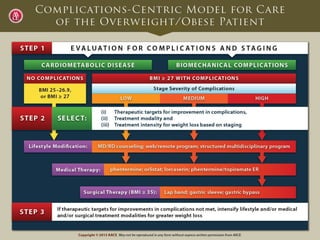
 AACE guidelines
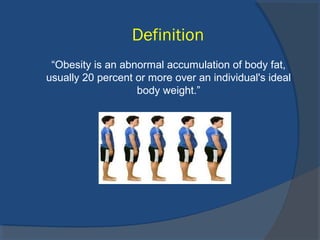
Definition
“Obesity is an abnormal accumulation of body fat,
usually 20 percent or more over an individual's ideal
body weight.”
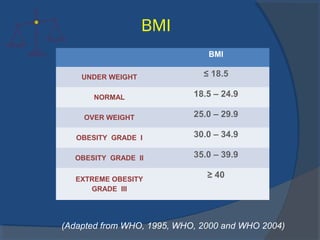
BMI
(Adapted from WHO, 1995, WHO, 2000 and WHO 2004)
BMI
UNDER WEIGHT ≤ 18.5
NORMAL 18.5 – 24.9
OVER WEIGHT 25.0 – 29.9
OBESITY GRADE I 30.0 – 34.9
OBESITY GRADE II 35.0 – 39.9
EXTREME OBESITY
GRADE III
≥ 40
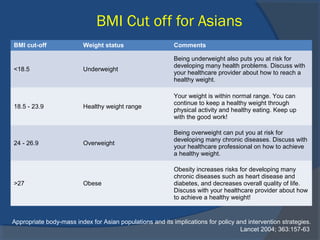
BMI Cut off for Asians
BMI cut-off Weight status Comments
<18.5 Underweight
Being underweight also puts you at risk for
developing many health problems. Discuss with
your healthcare provider about how to reach a
healthy weight.
18.5 - 23.9 Healthy weight range
Your weight is within normal range. You can
continue to keep a healthy weight through
physical activity and healthy eating. Keep up
with the good work!
24 - 26.9 Overweight
Being overweight can put you at risk for
developing many chronic diseases. Discuss with
your healthcare professional on how to achieve
a healthy weight.
>27 Obese
Obesity increases risks for developing many
chronic diseases such as heart disease and
diabetes, and decreases overall quality of life.
Discuss with your healthcare provider about how
to achieve a healthy weight!
Appropriate body-mass index for Asian populations and its implications for policy and intervention strategies.
Lancet 2004; 363:157-63
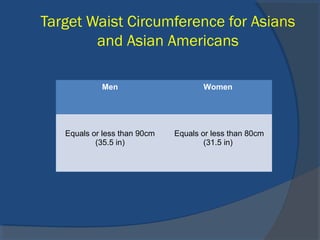
Target Waist Circumference for Asians
and Asian Americans
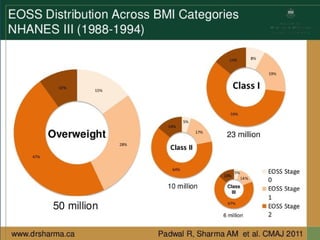
Men Women
Equals or less than 90cm
(35.5 in)
Equals or less than 80cm
(31.5 in)
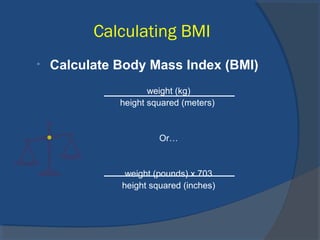
Calculating BMI
• Calculate Body Mass Index (BMI)
weight (kg)
height squared (meters)
Or…
weight (pounds) x 703
height squared (inches)
Prevalence of Obesity
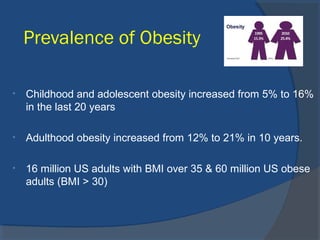
• Childhood and adolescent obesity increased from 5% to 16%
in the last 20 years
• Adulthood obesity increased from 12% to 21% in 10 years.
• 16 million US adults with BMI over 35 & 60 million US obese
adults (BMI > 30)
Prevalence of Obesity in Pakistan
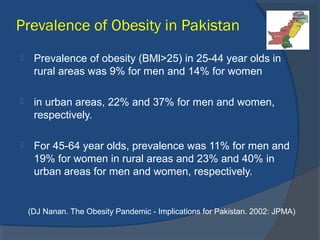
 Prevalence of obesity (BMl>25) in 25-44 year olds in
rural areas was 9% for men and 14% for women
 in urban areas, 22% and 37% for men and women,
respectively.
 For 45-64 year olds, prevalence was 11% for men and
19% for women in rural areas and 23% and 40% in
urban areas for men and women, respectively.
(DJ Nanan. The Obesity Pandemic - Implications for Pakistan. 2002: JPMA)
Factors predisposing to obesity
• Genetic – familial tendency.
• Gender – women more susceptible .
• Activity – lack of physical activity.
• Psychogenic – depression .
• Social class – poorer classes.
• Alcohol – problem drinking.
• Smoking – cessation smoking.
• Prescribed drugs – tricyclic derivatives.
Medications leading to weight gain
Disease Examples
Diabetes Insulin, sulfonylureas
Depression Tricyclics
Seizures Valproic acid, Tegretol
Hypertension Clonidine, α-blockers, β-blockers
Hormones Progesterone
Weight Gain: How Does It Happen?
•Calories consumed are not equal to calories
used
•Occurs over a long period of time due to
combination of several factors
• Individual behaviors
• Social interactions
• Environmental factors
• Genetics
Weight Gain: Energy In
3500 calories = 1 pound
• 100 calories extra per day
• = 36,500 extra per year
• = 10.4 lbs weight gain
Question: How much is 100 calories?
Answer: Not very much!
• 1 glass skim milk, or
• 1 banana, or
• 1 slice cheese, or
• 1 tablespoon butter
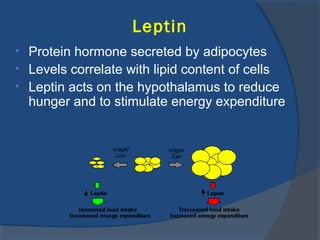
Leptin
• Protein hormone secreted by adipocytes
• Levels correlate with lipid content of cells
• Leptin acts on the hypothalamus to reduce
hunger and to stimulate energy expenditure
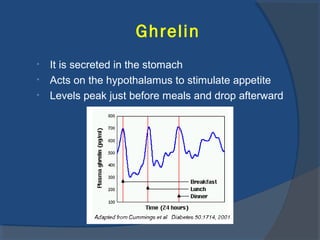
Ghrelin
• It is secreted in the stomach
• Acts on the hypothalamus to stimulate appetite
• Levels peak just before meals and drop afterward
Bad News for Dieters
• Leptin
• Dieting decreases the leptin levels
• Thus reducing metabolism, stimulating appetite
• Ghrelin
• Levels in dieters are higher after weight loss
• The body steps up ghrelin production in
response to weight loss
• The higher the weight loss, the higher the
ghrelin levels
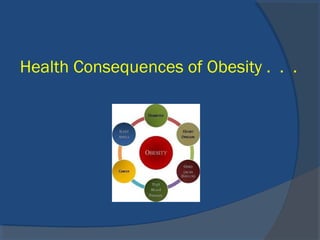
Health Consequences of Obesity . . .
Health Consequences of Obesity
• Major cause of preventable
death
• Increase in mortality from
all causes
• Increased risk for these
cancers
• Endometrial carcinoma
• CA Breast
• CA Prostate
• CA Colon
• Increased risk of:
• Hypertension
• Dyslipidemia
• Diabetes Mellitus type 2
• Coronary artery disease
• CVA
• Gallbladder disease
• Osteoarthritis
• Sleep apnea & respiratory
problems
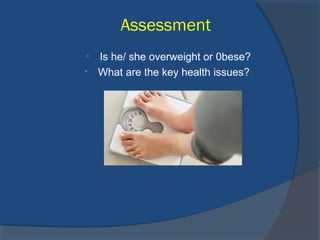
Assessment
• Is he/ she overweight or 0bese?
• What are the key health issues?
Assessment
• Measure the Body Mass Index- BMI
• Measure waist circumference
• “Apple shape” body is higher risk for DM, CVD, HTN
• Waist larger than 40 inches for men
• Waist larger than 35 inches for women
Assess for other risk factors
• Pre-existing high risk disease:
• coronary heart disease; Type 2 diabetes;
• sleep apnea
• Diseases associated with obesity
• Gynecological problems; osteoarthritis; gallstones; stress
incontinence
• Cardiovascular risk factors (3 or more = high risk)
• Cigarette smoking; Hypertension; LDL >130; HDL <35; fasting
glucose = 110 to 125; family history of premature CHD; men age
> 45; women age > 55
• Presence of other risk factors
• Physical inactivity; elevated serum triglycerides
• Medications associated with obesity
Assess for other risk factors
Cardiovascular risk factors (3 or more = high risk)
________________________________________
•Cigarette smoking
•Hypertension; LDL >130
•HDL <35
•fasting glucose = 110 to 125
•family history of premature CHD
•men age > 45
•women age > 55
Treatment Approach
• A multi-faceted
approach is best
• Diet
• Physical activity
• Behavior change
Treatment Approach
• Initial goal: 10% weight loss
• Significantly decreases risk factors
• Rate of weight loss
• 1 to 2 pounds per week
• Reduction of caloric intake 500-1000 per day
• Slow weight loss is more stable
• Rapid weight loss is almost always followed by weight
gain
• Rapid weight loss increases risk for gallstones &
electrolyte imbalances
Treatment Approach
• Aim for 4 - 6 months of weight loss effort
• Most people will lose 20 to 25 pounds
• After 6 months, weight loss is more difficult
• Ghrelin & Leptin are at work!
• Changes in resting metabolic rate
• Energy requirements decrease as weight decreases
• Diet adherence wavers
• Set goals for weight maintenance for next 6
months, then reassess.
Dietary Therapy
• Weight reduction with dietary treatment is
recommended for virtuallyall patients with a
BMI 25-30 who have comorbidities and for all
patients over BMI 30.
• Strategies of dietary therapy include teaching
about calorie content of different foods, food
composition (fats, carbohydrates, and
proteins), reading nutrition labels, types of
foods to buy, and how to prepare foods.
Low-Calorie Step I Diet
• 1000 to 1200 kcal/day for women
• 1200 to 1600 kcal/day for men
• Adjust for current weight & activity
• Too hungry?
• increase kcal by 100 - 200/day
• Not losing?
• decrease kcal by 100 - 200/day
How Much is 1200 Calories?
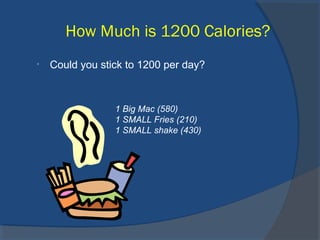
• Could you stick to 1200 per day?
1 Big Mac (580)
1 SMALL Fries (210)
1 SMALL shake (430)
Low-Calorie Step I Diet
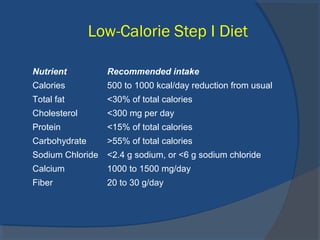
Nutrient Recommended intake
Calories 500 to 1000 kcal/day reduction from usual
Total fat <30% of total calories
Cholesterol <300 mg per day
Protein <15% of total calories
Carbohydrate >55% of total calories
Sodium Chloride <2.4 g sodium, or <6 g sodium chloride
Calcium 1000 to 1500 mg/day
Fiber 20 to 30 g/day
Weight Maintenance:
How Much Should People Eat?
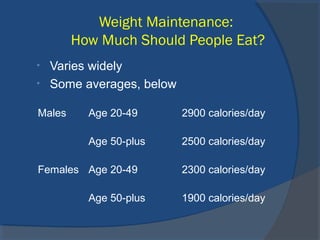
• Varies widely
• Some averages, below
Males Age 20-49 2900 calories/day
Age 50-plus 2500 calories/day
Females Age 20-49 2300 calories/day
Age 50-plus 1900 calories/day
Physical Activity
• Physical activity should be an integral part of
weight loss
• Physical activity alone is less successful than a
combined diet & exercise program
• Increased activity alone
does not decrease weight
• Sustained activity does
prevent weight regain
• risk for heart disease & diabetes
Physical Activity
• Start slowly
• Many obese people live sedentary lives
• Avoid injury
• Early changes can be activities of daily living
• Increase intensity & duration gradually
• Long-term goal
• 30 to 45 minutes or more of physical activity
• 5 or more days per week
• Burn 1000+ calories per week
Recommended Physical Activity
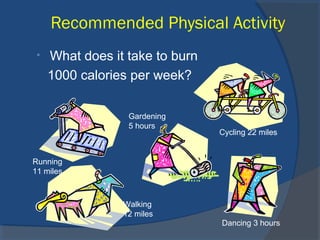
• What does it take to burn
1000 calories per week?
Running
11 miles
Walking
12 miles
Dancing 3 hours
Gardening
5 hours
Cycling 22 miles
Behavioral Strategies
• Keep a journal of diet & activity
• Very powerful intervention!
• Set specific goals re: behaviors
• Eating
• Activity
• Related behaviors
• Track improvement
• Weigh & measure on a regular basis
Cognitive Strategies
• Focus on the goals
• Plan meals & activity
• Develop reminder systems
• Anticipate temptations & plan resistance
• Reward yourself
• Limit quantities, but do not deprive yourself
• Have confidence in your ability to succeed
• Do positive self-talk
Pharmacotherapy
for Weight Loss
_______________________
Pharmacotherapy for Weight Loss
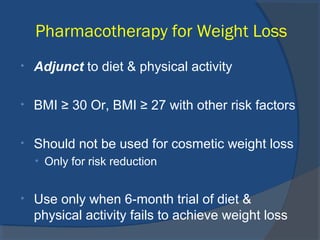
• Adjunct to diet & physical activity
• BMI ≥ 30 Or, BMI ≥ 27 with other risk factors
• Should not be used for cosmetic weight loss
• Only for risk reduction
• Use only when 6-month trial of diet &
physical activity fails to achieve weight loss
Pharmacotherapy for Weight Loss
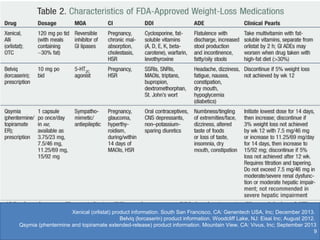
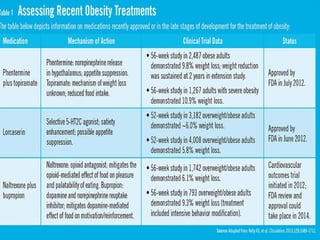
• These drugs are only modestly effective
• 2 to 10 kilogram loss
• Most occurs in the first 6 months
• If patient does not lose 2 kilograms in the first 4
weeks, success is unlikely
• If the first 6 months is successful, continue
medication as long as…
• It is effective in maintaining weight, and
• Adverse effects are not serious
Xenical (orlistat) product information. South San Francisco, CA: Genentech USA, Inc; December 2013.
Belviq (lorcaserin) product information. Woodcliff Lake, NJ: Eisai Inc; August 2012.
Qsymia (phentermine and topiramate extended-release) product information. Mountain View, CA: Vivus, Inc; September 2013
9
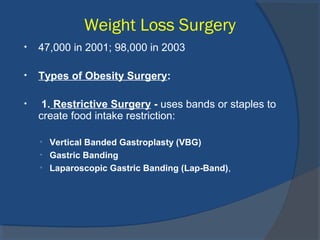
Weight Loss Surgery
• 47,000 in 2001; 98,000 in 2003
• Types of Obesity Surgery:
• 1. Restrictive Surgery - uses bands or staples to
create food intake restriction:
• Vertical Banded Gastroplasty (VBG)
• Gastric Banding
• Laparoscopic Gastric Banding (Lap-Band),
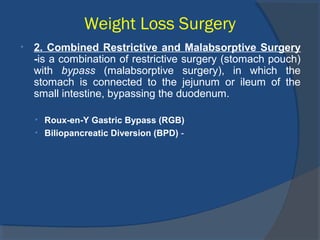
Weight Loss Surgery
• 2. Combined Restrictive and Malabsorptive Surgery
-is a combination of restrictive surgery (stomach pouch)
with bypass (malabsorptive surgery), in which the
stomach is connected to the jejunum or ileum of the
small intestine, bypassing the duodenum.
• Roux-en-Y Gastric Bypass (RGB)
• Biliopancreatic Diversion (BPD) -
Weight Loss Surgery
 Indications
100 pounds overweight or more
Or, BMI > 40
Or, BMI > 35 and 2 significant comorbidities
Age 18 to 60
Documented failure at nonsurgical efforts
Psychological stability
Weight Loss Surgery
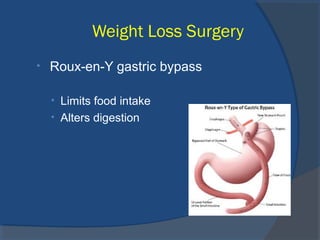
• Roux-en-Y gastric bypass
• Limits food intake
• Alters digestion
Weight Loss Surgery
• Complications of surgery
• Mortality
• <1% mortality in healthy young adults BMI < 50
• 2-4% mortality in patients with disease and BMI > 60
• Operative complications
• < 10%
• Late complications are uncommon
• Incisional hernias
• Gallstones
• Vitamin B12 & iron deficiency
• Weight loss failure
• Neurologic symptoms in unusual cases
Weight Loss Surgery Outcomes
• Durable weight loss
• One study followed pts for 14 years
• Average excess weight loss = 61.2%
• 77% with diabetes no longer require
meds
• From Wald meta-analysis in JAMA 2004)
Followup
• Schedule a return visit in 2 to 4 weeks after
starting weight loss plan
• Monitor treatment effectiveness & side effects
• Schedule monthly visits for first 3 months
• If making favorable progress
• See more frequently if monitoring medical
complications or chronic disease
• Reduce frequency of visits after 6 months
Followup
• Monitor weight, BP, pulse at each visit
• Monitor waist size intermittently
• Share progress with patient; praise efforts
• Share lab results with patient
• Emphasize findings associated with weight reduction
• Focus on medical benefits
• Most weight loss doesn’t reach individual’s ‘ideal’ (cosmetic)
goal
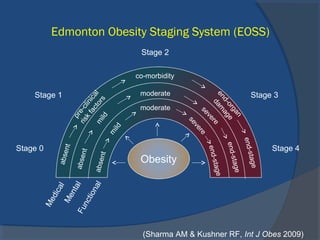
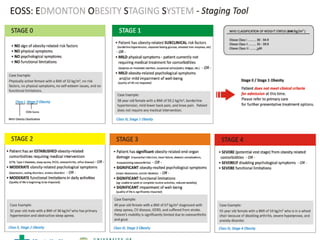
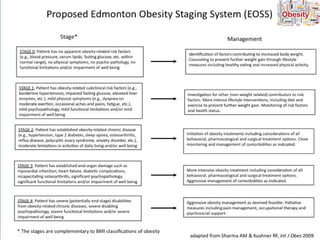
EDMONTON OBESITY STAGING SYSTEM
 Anthropometric measures alone are not a
good reflection of the severity or extent of
obesity-related comorbidities.
 Sharma and Kushner have suggested a
clinical staging system to complement the
BMI when describing the severity of obesity.
(http://www.drsharma.ca/clinical-assessment-edmonton-obesity-staging-system)
The Edmonton Obesity Staging System is
used together with BMI class for
management of obesity.
____________________________________
Edmonton Obesity Staging System (EOSS)
Stage 0
(Sharma AM & Kushner RF, Int J Obes 2009)
Stage 1
Stage 2
Stage 3
Stage 4
Medical
MentalFunctional
absent
absent
absent
pre-clinical
risk
factors
m
ild
m
ild
co-morbidity
moderate
moderate
end-organ
dam
age
severe
severe
end-stage
end-stage
end-stage
Obesity
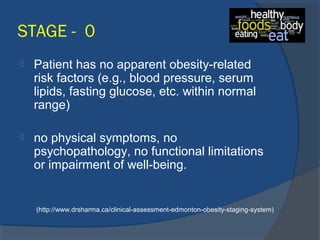
STAGE - 0
 Patient has no apparent obesity-related
risk factors (e.g., blood pressure, serum
lipids, fasting glucose, etc. within normal
range)
 no physical symptoms, no
psychopathology, no functional limitations
or impairment of well-being.
(http://www.drsharma.ca/clinical-assessment-edmonton-obesity-staging-system)
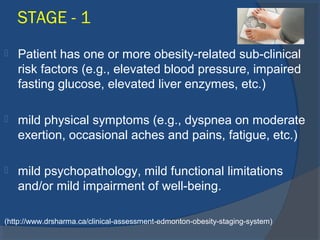
STAGE - 1
 Patient has one or more obesity-related sub-clinical
risk factors (e.g., elevated blood pressure, impaired
fasting glucose, elevated liver enzymes, etc.)
 mild physical symptoms (e.g., dyspnea on moderate
exertion, occasional aches and pains, fatigue, etc.)
 mild psychopathology, mild functional limitations
and/or mild impairment of well-being.
(http://www.drsharma.ca/clinical-assessment-edmonton-obesity-staging-system)
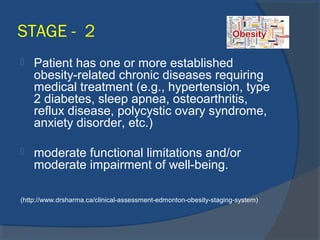
STAGE - 2
 Patient has one or more established
obesity-related chronic diseases requiring
medical treatment (e.g., hypertension, type
2 diabetes, sleep apnea, osteoarthritis,
reflux disease, polycystic ovary syndrome,
anxiety disorder, etc.)
 moderate functional limitations and/or
moderate impairment of well-being.
(http://www.drsharma.ca/clinical-assessment-edmonton-obesity-staging-system)
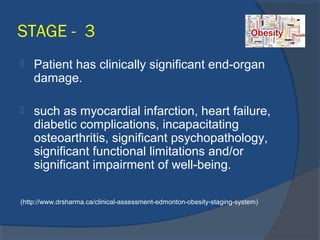
STAGE - 3
 Patient has clinically significant end-organ
damage.
 such as myocardial infarction, heart failure,
diabetic complications, incapacitating
osteoarthritis, significant psychopathology,
significant functional limitations and/or
significant impairment of well-being.
(http://www.drsharma.ca/clinical-assessment-edmonton-obesity-staging-system)
STAGE - 4
 Patient has severe (potentially end-stage)
disabilities from obesity-related chronic
diseases, severe disabling
psychopathology, severe functional
limitations and/or severe impairment of
well-being .
(http://www.drsharma.ca/clinical-assessment-edmonton-obesity-staging-system)
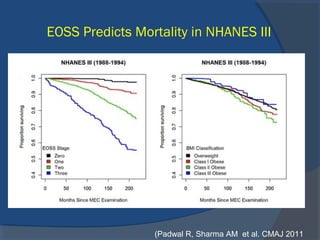
EOSS Predicts Mortality in NHANES III
(Padwal R, Sharma AM et al. CMAJ 2011
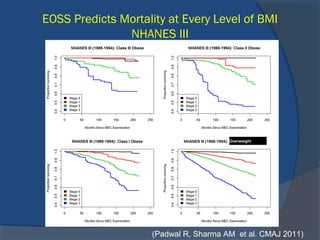
EOSS Predicts Mortality at Every Level of BMI
NHANES III
(Padwal R, Sharma AM et al. CMAJ 2011)
Overweight
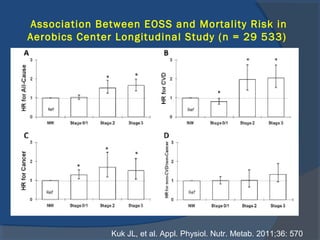
Association Between EOSS and Mortality Risk in
Aerobics Center Longitudinal Study (n = 29 533)
Kuk JL, et al. Appl. Physiol. Nutr. Metab. 2011;36: 570
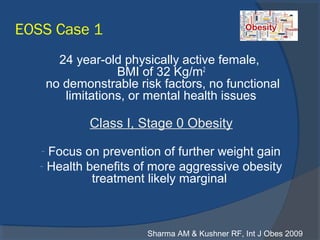
EOSS Case 1
24 year-old physically active female,
BMI of 32 Kg/m2
no demonstrable risk factors, no functional
limitations, or mental health issues
Class I, Stage 0 Obesity
- Focus on prevention of further weight gain
- Health benefits of more aggressive obesity
treatment likely marginal
Sharma AM & Kushner RF, Int J Obes 2009
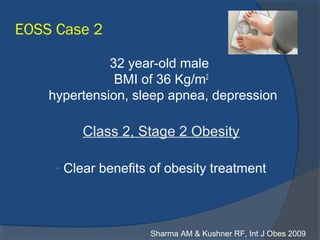
EOSS Case 2
32 year-old male
BMI of 36 Kg/m2
hypertension, sleep apnea, depression
Class 2, Stage 2 Obesity
- Clear benefits of obesity treatment
Sharma AM & Kushner RF, Int J Obes 2009
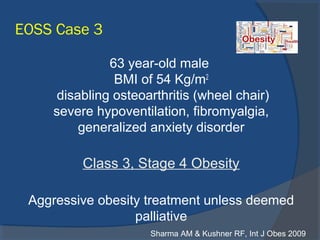
EOSS Case 3
63 year-old male
BMI of 54 Kg/m2
disabling osteoarthritis (wheel chair)
severe hypoventilation, fibromyalgia,
generalized anxiety disorder
Class 3, Stage 4 Obesity
Aggressive obesity treatment unless deemed
palliative
Sharma AM & Kushner RF, Int J Obes 2009
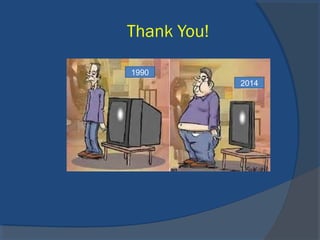
Thank You!
2014
1990

Obesity

  • 1.
    Dr Nadia Shams AssistantProfessor Medicine RIHS
  • 2.
    Approach to overweightand obesity – management of adiposity and adiposopathy Gonzalez-Campoy JM et al. Endocr Pract. 2013;19 Suppl 3:1-82. Overweight and obesity should be treated as any other chronic disease
  • 3.
    Overview  Definition, Prevalence& Consequences of Obesity  Assessment of Obesity  Treatments for Obesity  Edmonton obesity staging system  AACE guidelines
  • 4.
    Definition “Obesity is anabnormal accumulation of body fat, usually 20 percent or more over an individual's ideal body weight.”
  • 5.
    BMI (Adapted from WHO,1995, WHO, 2000 and WHO 2004) BMI UNDER WEIGHT ≤ 18.5 NORMAL 18.5 – 24.9 OVER WEIGHT 25.0 – 29.9 OBESITY GRADE I 30.0 – 34.9 OBESITY GRADE II 35.0 – 39.9 EXTREME OBESITY GRADE III ≥ 40
  • 6.
    BMI Cut offfor Asians BMI cut-off Weight status Comments <18.5 Underweight Being underweight also puts you at risk for developing many health problems. Discuss with your healthcare provider about how to reach a healthy weight. 18.5 - 23.9 Healthy weight range Your weight is within normal range. You can continue to keep a healthy weight through physical activity and healthy eating. Keep up with the good work! 24 - 26.9 Overweight Being overweight can put you at risk for developing many chronic diseases. Discuss with your healthcare professional on how to achieve a healthy weight. >27 Obese Obesity increases risks for developing many chronic diseases such as heart disease and diabetes, and decreases overall quality of life. Discuss with your healthcare provider about how to achieve a healthy weight! Appropriate body-mass index for Asian populations and its implications for policy and intervention strategies. Lancet 2004; 363:157-63
  • 7.
    Target Waist Circumferencefor Asians and Asian Americans Men Women Equals or less than 90cm (35.5 in) Equals or less than 80cm (31.5 in)
  • 8.
    Calculating BMI • CalculateBody Mass Index (BMI) weight (kg) height squared (meters) Or… weight (pounds) x 703 height squared (inches)
  • 9.
    Prevalence of Obesity •Childhood and adolescent obesity increased from 5% to 16% in the last 20 years • Adulthood obesity increased from 12% to 21% in 10 years. • 16 million US adults with BMI over 35 & 60 million US obese adults (BMI > 30)
  • 10.
    Prevalence of Obesityin Pakistan  Prevalence of obesity (BMl>25) in 25-44 year olds in rural areas was 9% for men and 14% for women  in urban areas, 22% and 37% for men and women, respectively.  For 45-64 year olds, prevalence was 11% for men and 19% for women in rural areas and 23% and 40% in urban areas for men and women, respectively. (DJ Nanan. The Obesity Pandemic - Implications for Pakistan. 2002: JPMA)
  • 11.
    Factors predisposing toobesity • Genetic – familial tendency. • Gender – women more susceptible . • Activity – lack of physical activity. • Psychogenic – depression . • Social class – poorer classes. • Alcohol – problem drinking. • Smoking – cessation smoking. • Prescribed drugs – tricyclic derivatives.
  • 12.
    Medications leading toweight gain Disease Examples Diabetes Insulin, sulfonylureas Depression Tricyclics Seizures Valproic acid, Tegretol Hypertension Clonidine, α-blockers, β-blockers Hormones Progesterone
  • 13.
    Weight Gain: HowDoes It Happen? •Calories consumed are not equal to calories used •Occurs over a long period of time due to combination of several factors • Individual behaviors • Social interactions • Environmental factors • Genetics
  • 14.
    Weight Gain: EnergyIn 3500 calories = 1 pound • 100 calories extra per day • = 36,500 extra per year • = 10.4 lbs weight gain Question: How much is 100 calories? Answer: Not very much! • 1 glass skim milk, or • 1 banana, or • 1 slice cheese, or • 1 tablespoon butter
  • 15.
    Leptin • Protein hormonesecreted by adipocytes • Levels correlate with lipid content of cells • Leptin acts on the hypothalamus to reduce hunger and to stimulate energy expenditure
  • 16.
    Ghrelin • It issecreted in the stomach • Acts on the hypothalamus to stimulate appetite • Levels peak just before meals and drop afterward
  • 17.
    Bad News forDieters • Leptin • Dieting decreases the leptin levels • Thus reducing metabolism, stimulating appetite • Ghrelin • Levels in dieters are higher after weight loss • The body steps up ghrelin production in response to weight loss • The higher the weight loss, the higher the ghrelin levels
  • 18.
  • 19.
    Health Consequences ofObesity • Major cause of preventable death • Increase in mortality from all causes • Increased risk for these cancers • Endometrial carcinoma • CA Breast • CA Prostate • CA Colon • Increased risk of: • Hypertension • Dyslipidemia • Diabetes Mellitus type 2 • Coronary artery disease • CVA • Gallbladder disease • Osteoarthritis • Sleep apnea & respiratory problems
  • 20.
    Assessment • Is he/she overweight or 0bese? • What are the key health issues?
  • 21.
    Assessment • Measure theBody Mass Index- BMI • Measure waist circumference • “Apple shape” body is higher risk for DM, CVD, HTN • Waist larger than 40 inches for men • Waist larger than 35 inches for women
  • 22.
    Assess for otherrisk factors • Pre-existing high risk disease: • coronary heart disease; Type 2 diabetes; • sleep apnea • Diseases associated with obesity • Gynecological problems; osteoarthritis; gallstones; stress incontinence • Cardiovascular risk factors (3 or more = high risk) • Cigarette smoking; Hypertension; LDL >130; HDL <35; fasting glucose = 110 to 125; family history of premature CHD; men age > 45; women age > 55 • Presence of other risk factors • Physical inactivity; elevated serum triglycerides • Medications associated with obesity
  • 23.
    Assess for otherrisk factors Cardiovascular risk factors (3 or more = high risk) ________________________________________ •Cigarette smoking •Hypertension; LDL >130 •HDL <35 •fasting glucose = 110 to 125 •family history of premature CHD •men age > 45 •women age > 55
  • 24.
    Treatment Approach • Amulti-faceted approach is best • Diet • Physical activity • Behavior change
  • 25.
    Treatment Approach • Initialgoal: 10% weight loss • Significantly decreases risk factors • Rate of weight loss • 1 to 2 pounds per week • Reduction of caloric intake 500-1000 per day • Slow weight loss is more stable • Rapid weight loss is almost always followed by weight gain • Rapid weight loss increases risk for gallstones & electrolyte imbalances
  • 26.
    Treatment Approach • Aimfor 4 - 6 months of weight loss effort • Most people will lose 20 to 25 pounds • After 6 months, weight loss is more difficult • Ghrelin & Leptin are at work! • Changes in resting metabolic rate • Energy requirements decrease as weight decreases • Diet adherence wavers • Set goals for weight maintenance for next 6 months, then reassess.
  • 27.
    Dietary Therapy • Weightreduction with dietary treatment is recommended for virtuallyall patients with a BMI 25-30 who have comorbidities and for all patients over BMI 30. • Strategies of dietary therapy include teaching about calorie content of different foods, food composition (fats, carbohydrates, and proteins), reading nutrition labels, types of foods to buy, and how to prepare foods.
  • 28.
    Low-Calorie Step IDiet • 1000 to 1200 kcal/day for women • 1200 to 1600 kcal/day for men • Adjust for current weight & activity • Too hungry? • increase kcal by 100 - 200/day • Not losing? • decrease kcal by 100 - 200/day
  • 29.
    How Much is1200 Calories? • Could you stick to 1200 per day? 1 Big Mac (580) 1 SMALL Fries (210) 1 SMALL shake (430)
  • 30.
    Low-Calorie Step IDiet Nutrient Recommended intake Calories 500 to 1000 kcal/day reduction from usual Total fat <30% of total calories Cholesterol <300 mg per day Protein <15% of total calories Carbohydrate >55% of total calories Sodium Chloride <2.4 g sodium, or <6 g sodium chloride Calcium 1000 to 1500 mg/day Fiber 20 to 30 g/day
  • 31.
    Weight Maintenance: How MuchShould People Eat? • Varies widely • Some averages, below Males Age 20-49 2900 calories/day Age 50-plus 2500 calories/day Females Age 20-49 2300 calories/day Age 50-plus 1900 calories/day
  • 32.
    Physical Activity • Physicalactivity should be an integral part of weight loss • Physical activity alone is less successful than a combined diet & exercise program • Increased activity alone does not decrease weight • Sustained activity does prevent weight regain • risk for heart disease & diabetes
  • 33.
    Physical Activity • Startslowly • Many obese people live sedentary lives • Avoid injury • Early changes can be activities of daily living • Increase intensity & duration gradually • Long-term goal • 30 to 45 minutes or more of physical activity • 5 or more days per week • Burn 1000+ calories per week
  • 34.
    Recommended Physical Activity •What does it take to burn 1000 calories per week? Running 11 miles Walking 12 miles Dancing 3 hours Gardening 5 hours Cycling 22 miles
  • 35.
    Behavioral Strategies • Keepa journal of diet & activity • Very powerful intervention! • Set specific goals re: behaviors • Eating • Activity • Related behaviors • Track improvement • Weigh & measure on a regular basis
  • 36.
    Cognitive Strategies • Focuson the goals • Plan meals & activity • Develop reminder systems • Anticipate temptations & plan resistance • Reward yourself • Limit quantities, but do not deprive yourself • Have confidence in your ability to succeed • Do positive self-talk
  • 37.
  • 38.
    Pharmacotherapy for WeightLoss • Adjunct to diet & physical activity • BMI ≥ 30 Or, BMI ≥ 27 with other risk factors • Should not be used for cosmetic weight loss • Only for risk reduction • Use only when 6-month trial of diet & physical activity fails to achieve weight loss
  • 39.
    Pharmacotherapy for WeightLoss • These drugs are only modestly effective • 2 to 10 kilogram loss • Most occurs in the first 6 months • If patient does not lose 2 kilograms in the first 4 weeks, success is unlikely • If the first 6 months is successful, continue medication as long as… • It is effective in maintaining weight, and • Adverse effects are not serious
  • 40.
    Xenical (orlistat) productinformation. South San Francisco, CA: Genentech USA, Inc; December 2013. Belviq (lorcaserin) product information. Woodcliff Lake, NJ: Eisai Inc; August 2012. Qsymia (phentermine and topiramate extended-release) product information. Mountain View, CA: Vivus, Inc; September 2013 9
  • 42.
    Weight Loss Surgery •47,000 in 2001; 98,000 in 2003 • Types of Obesity Surgery: • 1. Restrictive Surgery - uses bands or staples to create food intake restriction: • Vertical Banded Gastroplasty (VBG) • Gastric Banding • Laparoscopic Gastric Banding (Lap-Band),
  • 43.
    Weight Loss Surgery •2. Combined Restrictive and Malabsorptive Surgery -is a combination of restrictive surgery (stomach pouch) with bypass (malabsorptive surgery), in which the stomach is connected to the jejunum or ileum of the small intestine, bypassing the duodenum. • Roux-en-Y Gastric Bypass (RGB) • Biliopancreatic Diversion (BPD) -
  • 44.
    Weight Loss Surgery Indications 100 pounds overweight or more Or, BMI > 40 Or, BMI > 35 and 2 significant comorbidities Age 18 to 60 Documented failure at nonsurgical efforts Psychological stability
  • 45.
    Weight Loss Surgery •Roux-en-Y gastric bypass • Limits food intake • Alters digestion
  • 46.
    Weight Loss Surgery •Complications of surgery • Mortality • <1% mortality in healthy young adults BMI < 50 • 2-4% mortality in patients with disease and BMI > 60 • Operative complications • < 10% • Late complications are uncommon • Incisional hernias • Gallstones • Vitamin B12 & iron deficiency • Weight loss failure • Neurologic symptoms in unusual cases
  • 47.
    Weight Loss SurgeryOutcomes • Durable weight loss • One study followed pts for 14 years • Average excess weight loss = 61.2% • 77% with diabetes no longer require meds • From Wald meta-analysis in JAMA 2004)
  • 48.
    Followup • Schedule areturn visit in 2 to 4 weeks after starting weight loss plan • Monitor treatment effectiveness & side effects • Schedule monthly visits for first 3 months • If making favorable progress • See more frequently if monitoring medical complications or chronic disease • Reduce frequency of visits after 6 months
  • 49.
    Followup • Monitor weight,BP, pulse at each visit • Monitor waist size intermittently • Share progress with patient; praise efforts • Share lab results with patient • Emphasize findings associated with weight reduction • Focus on medical benefits • Most weight loss doesn’t reach individual’s ‘ideal’ (cosmetic) goal
  • 50.
    EDMONTON OBESITY STAGINGSYSTEM  Anthropometric measures alone are not a good reflection of the severity or extent of obesity-related comorbidities.  Sharma and Kushner have suggested a clinical staging system to complement the BMI when describing the severity of obesity. (http://www.drsharma.ca/clinical-assessment-edmonton-obesity-staging-system)
  • 51.
    The Edmonton ObesityStaging System is used together with BMI class for management of obesity. ____________________________________
  • 52.
    Edmonton Obesity StagingSystem (EOSS) Stage 0 (Sharma AM & Kushner RF, Int J Obes 2009) Stage 1 Stage 2 Stage 3 Stage 4 Medical MentalFunctional absent absent absent pre-clinical risk factors m ild m ild co-morbidity moderate moderate end-organ dam age severe severe end-stage end-stage end-stage Obesity
  • 53.
    STAGE - 0 Patient has no apparent obesity-related risk factors (e.g., blood pressure, serum lipids, fasting glucose, etc. within normal range)  no physical symptoms, no psychopathology, no functional limitations or impairment of well-being. (http://www.drsharma.ca/clinical-assessment-edmonton-obesity-staging-system)
  • 54.
    STAGE - 1 Patient has one or more obesity-related sub-clinical risk factors (e.g., elevated blood pressure, impaired fasting glucose, elevated liver enzymes, etc.)  mild physical symptoms (e.g., dyspnea on moderate exertion, occasional aches and pains, fatigue, etc.)  mild psychopathology, mild functional limitations and/or mild impairment of well-being. (http://www.drsharma.ca/clinical-assessment-edmonton-obesity-staging-system)
  • 55.
    STAGE - 2 Patient has one or more established obesity-related chronic diseases requiring medical treatment (e.g., hypertension, type 2 diabetes, sleep apnea, osteoarthritis, reflux disease, polycystic ovary syndrome, anxiety disorder, etc.)  moderate functional limitations and/or moderate impairment of well-being. (http://www.drsharma.ca/clinical-assessment-edmonton-obesity-staging-system)
  • 56.
    STAGE - 3 Patient has clinically significant end-organ damage.  such as myocardial infarction, heart failure, diabetic complications, incapacitating osteoarthritis, significant psychopathology, significant functional limitations and/or significant impairment of well-being. (http://www.drsharma.ca/clinical-assessment-edmonton-obesity-staging-system)
  • 57.
    STAGE - 4 Patient has severe (potentially end-stage) disabilities from obesity-related chronic diseases, severe disabling psychopathology, severe functional limitations and/or severe impairment of well-being . (http://www.drsharma.ca/clinical-assessment-edmonton-obesity-staging-system)
  • 58.
    EOSS Predicts Mortalityin NHANES III (Padwal R, Sharma AM et al. CMAJ 2011
  • 59.
    EOSS Predicts Mortalityat Every Level of BMI NHANES III (Padwal R, Sharma AM et al. CMAJ 2011) Overweight
  • 61.
    Association Between EOSSand Mortality Risk in Aerobics Center Longitudinal Study (n = 29 533) Kuk JL, et al. Appl. Physiol. Nutr. Metab. 2011;36: 570
  • 62.
    EOSS Case 1 24year-old physically active female, BMI of 32 Kg/m2 no demonstrable risk factors, no functional limitations, or mental health issues Class I, Stage 0 Obesity - Focus on prevention of further weight gain - Health benefits of more aggressive obesity treatment likely marginal Sharma AM & Kushner RF, Int J Obes 2009
  • 63.
    EOSS Case 2 32year-old male BMI of 36 Kg/m2 hypertension, sleep apnea, depression Class 2, Stage 2 Obesity - Clear benefits of obesity treatment Sharma AM & Kushner RF, Int J Obes 2009
  • 64.
    EOSS Case 3 63year-old male BMI of 54 Kg/m2 disabling osteoarthritis (wheel chair) severe hypoventilation, fibromyalgia, generalized anxiety disorder Class 3, Stage 4 Obesity Aggressive obesity treatment unless deemed palliative Sharma AM & Kushner RF, Int J Obes 2009
  • 69.

Editor's Notes

  • #3 Overweight and obesity should be managed as any other chronic disease There should be no time limit to treat this chronic disease A team approach is ideal Nutrition counseling for overweight and obesity is recommended This recommendation should decrease fat mass and correct adipose tissue dysfunction (adiposopathy) Adult feeding behavior is solidly rooted from childhood Adult patients should include their families in healthy eating behavior changes Nutrition counseling should meet individual patient needs Such needs include cultural, linguistic, and educational needs