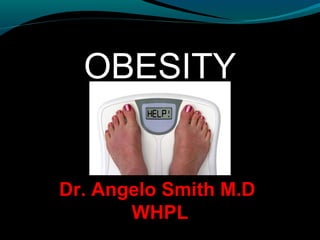
OBESITY
Dr. Angelo Smith M.D
WHPL
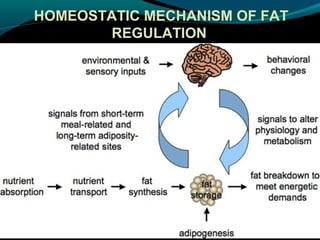
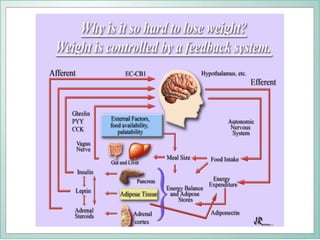
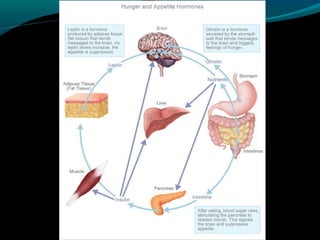
HOMEOSTATIC MECHANISM OF FAT
REGULATION
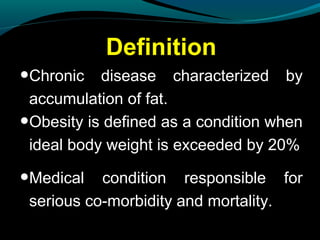
Definition
•Chronic disease characterized by
accumulation of fat.
•Obesity is defined as a condition when
ideal body weight is exceeded by 20%
•Medical condition responsible for
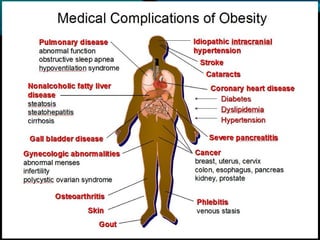
serious co-morbidity and mortality.
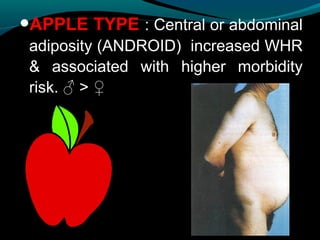
•APPLE TYPE : Central or abdominal
adiposity (ANDROID) increased WHR
& associated with higher morbidity
risk. ♂ > ♀
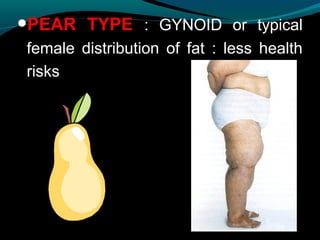
•PEAR TYPE : GYNOID or typical
female distribution of fat : less health
risks
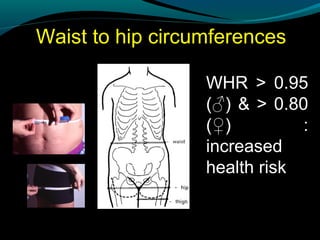
Waist to hip circumferences
WHR > 0.95
(♂) & > 0.80
(♀) :
increased
health risk
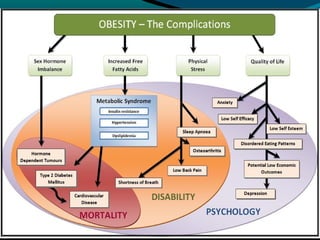
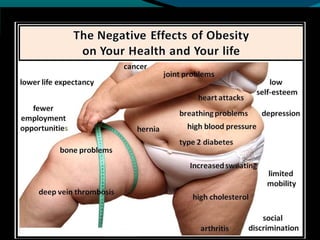
Psychosocial consequence
•Economical impact of obesity
•Prejudice and Discrimination
•Considered lazy, incompetent and more
often absent due to illness
•Confronted with more problems at job
application :
oVery few executive managers with
overweight in the US
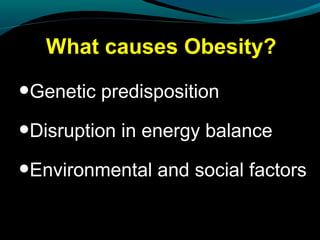
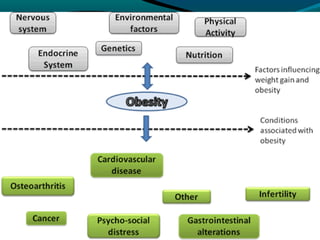
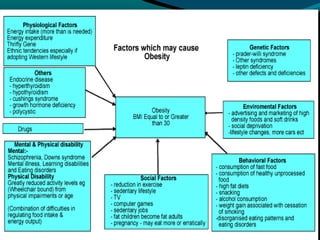
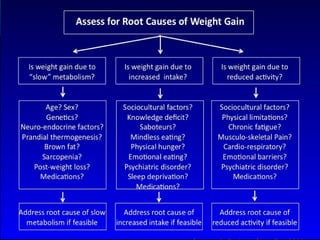
What causes Obesity?
•Genetic predisposition
•Disruption in energy balance
•Environmental and social factors
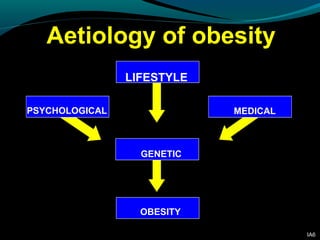
Aetiology of obesity
LIFESTYLE
PSYCHOLOGICAL MEDICAL
GENETIC
OBESITY
IA6
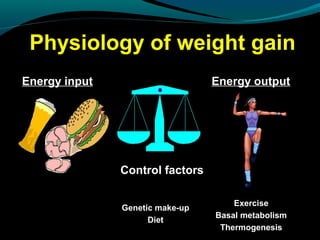
Physiology of weight gain
Energy input Energy output
Control factors
Genetic make-up
Diet
Exercise
Basal metabolism
Thermogenesis
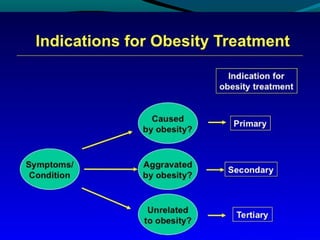
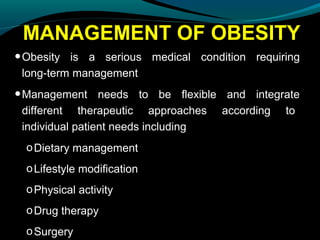
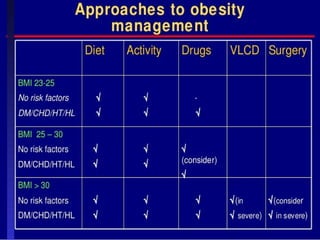
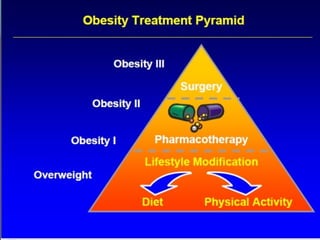
MANAGEMENT OF OBESITY
•Obesity is a serious medical condition requiring
long-term management
•Management needs to be flexible and integrate
different therapeutic approaches according to
individual patient needs including
oDietary management
oLifestyle modification
oPhysical activity
oDrug therapy
oSurgery
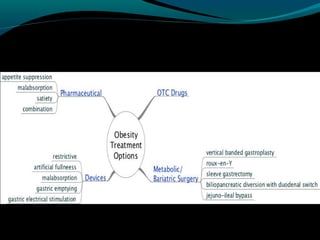
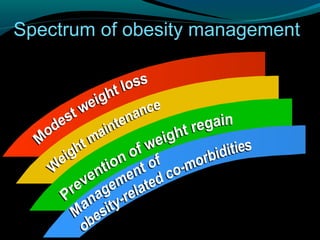
Spectrum of obesity management
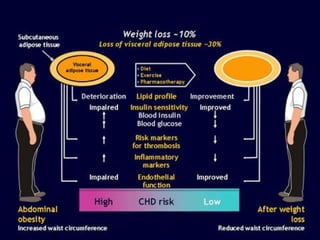
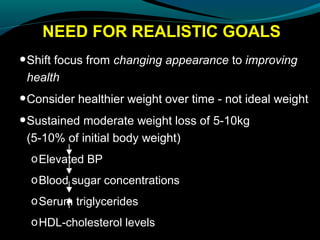
NEED FOR REALISTIC GOALS
•Shift focus from changing appearance to improving
health
•Consider healthier weight over time - not ideal weight
•Sustained moderate weight loss of 5-10kg
(5-10% of initial body weight)
oElevated BP
oBlood sugar concentrations
oSerum triglycerides
oHDL-cholesterol levels

Obesity

  • 1.
  • 2.
  • 6.
    Definition •Chronic disease characterizedby accumulation of fat. •Obesity is defined as a condition when ideal body weight is exceeded by 20% •Medical condition responsible for serious co-morbidity and mortality.
  • 9.
    •APPLE TYPE :Central or abdominal adiposity (ANDROID) increased WHR & associated with higher morbidity risk. ♂ > ♀
  • 10.
    •PEAR TYPE :GYNOID or typical female distribution of fat : less health risks
  • 11.
    Waist to hipcircumferences WHR > 0.95 (♂) & > 0.80 (♀) : increased health risk
  • 12.
    Psychosocial consequence •Economical impactof obesity •Prejudice and Discrimination •Considered lazy, incompetent and more often absent due to illness •Confronted with more problems at job application : oVery few executive managers with overweight in the US
  • 16.
    What causes Obesity? •Geneticpredisposition •Disruption in energy balance •Environmental and social factors
  • 17.
  • 20.
    Physiology of weightgain Energy input Energy output Control factors Genetic make-up Diet Exercise Basal metabolism Thermogenesis
  • 27.
    MANAGEMENT OF OBESITY •Obesityis a serious medical condition requiring long-term management •Management needs to be flexible and integrate different therapeutic approaches according to individual patient needs including oDietary management oLifestyle modification oPhysical activity oDrug therapy oSurgery
  • 42.
  • 43.
    NEED FOR REALISTICGOALS •Shift focus from changing appearance to improving health •Consider healthier weight over time - not ideal weight •Sustained moderate weight loss of 5-10kg (5-10% of initial body weight) oElevated BP oBlood sugar concentrations oSerum triglycerides oHDL-cholesterol levels