



PROGRAMI-CAREA HOLISTIC APPROACH TO WEIGHT MANAGEMENTBY DR LEE OI WAHPENGARAH HCM
OverviewDefinition, Prevalence & Consequences of ObesityHealthy LifestylesAssessment of ObesityTreatments for Obesity
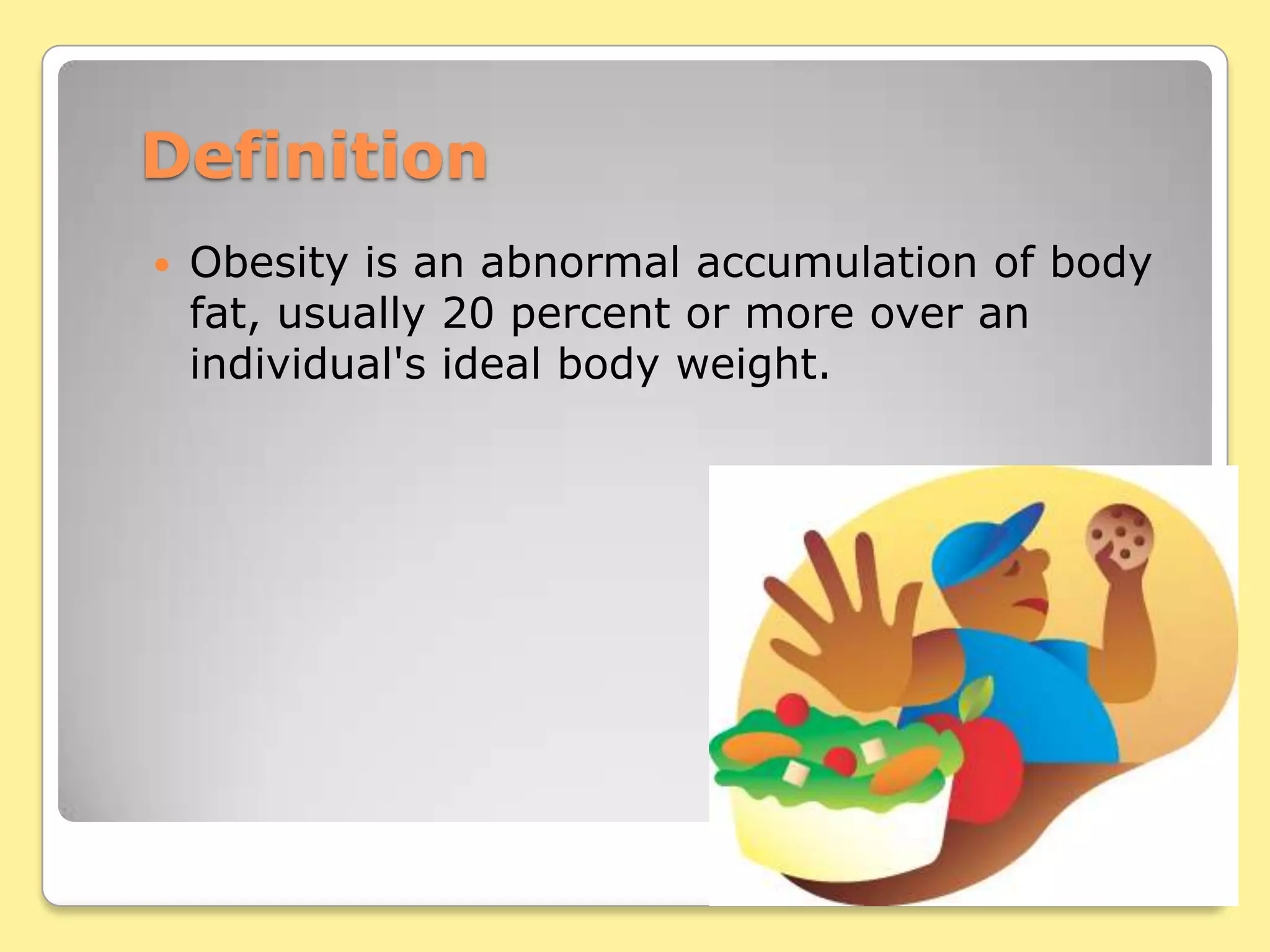
DefinitionObesity is an abnormal accumulation of body fat, usually 20 percent or more over an individual's ideal body weight.
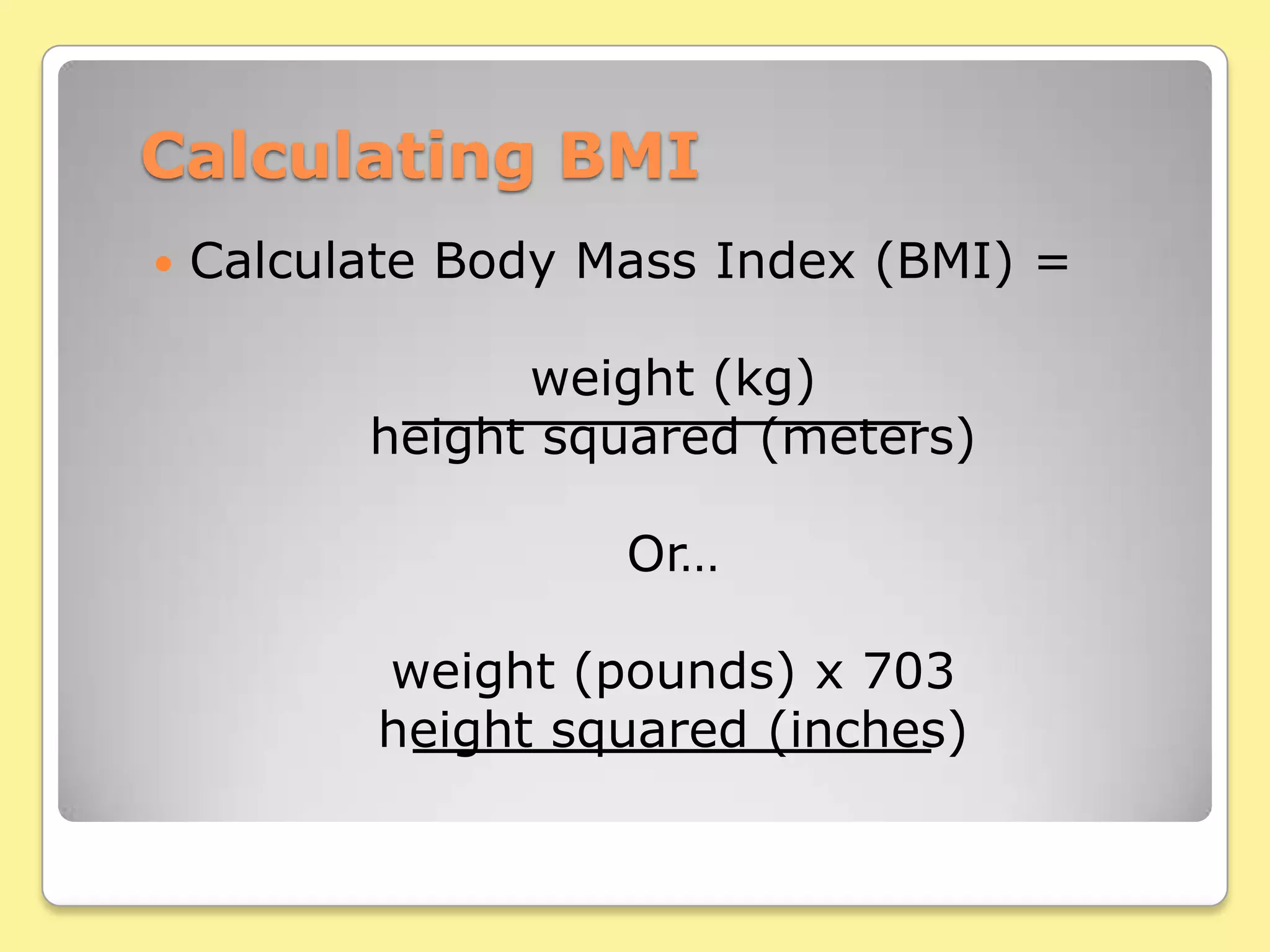
Calculating BMICalculate Body Mass Index (BMI) = weight (kg)height squared (meters) Or…weight (pounds) x 703height squared (inches)
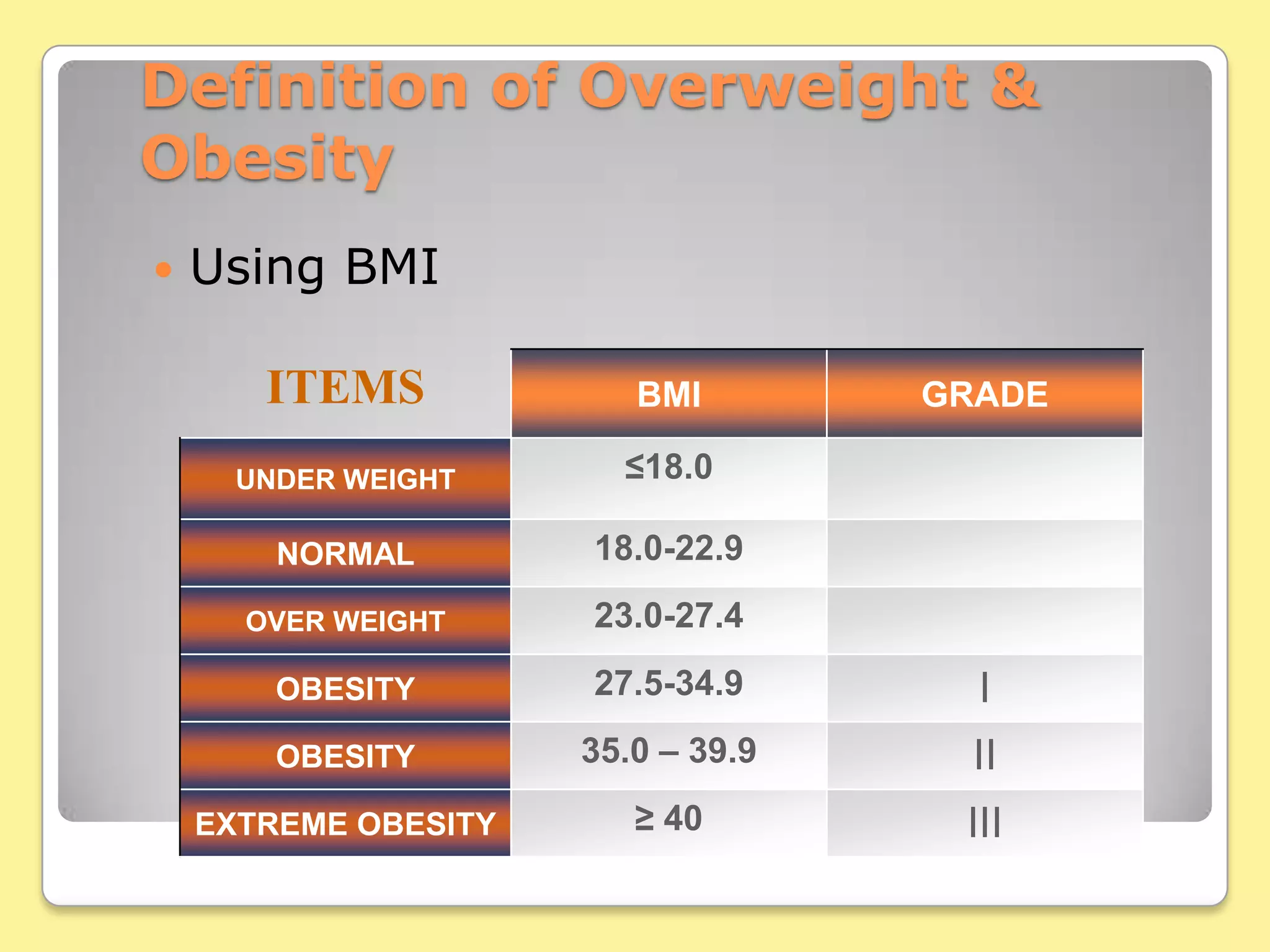
Definition of Overweight & ObesityUsing BMI
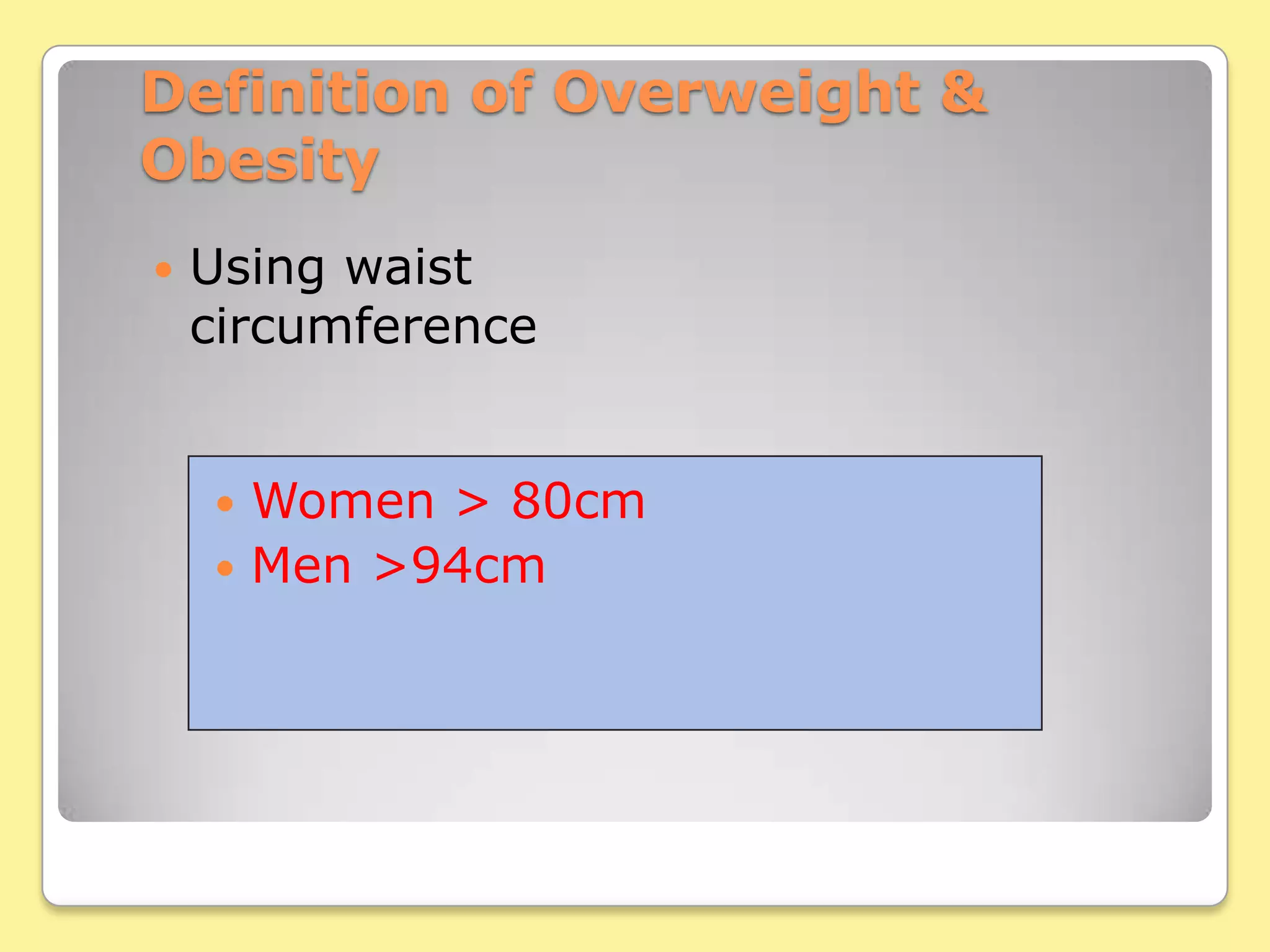
Definition of Overweight & ObesityUsing waist circumferenceWomen > 80cm
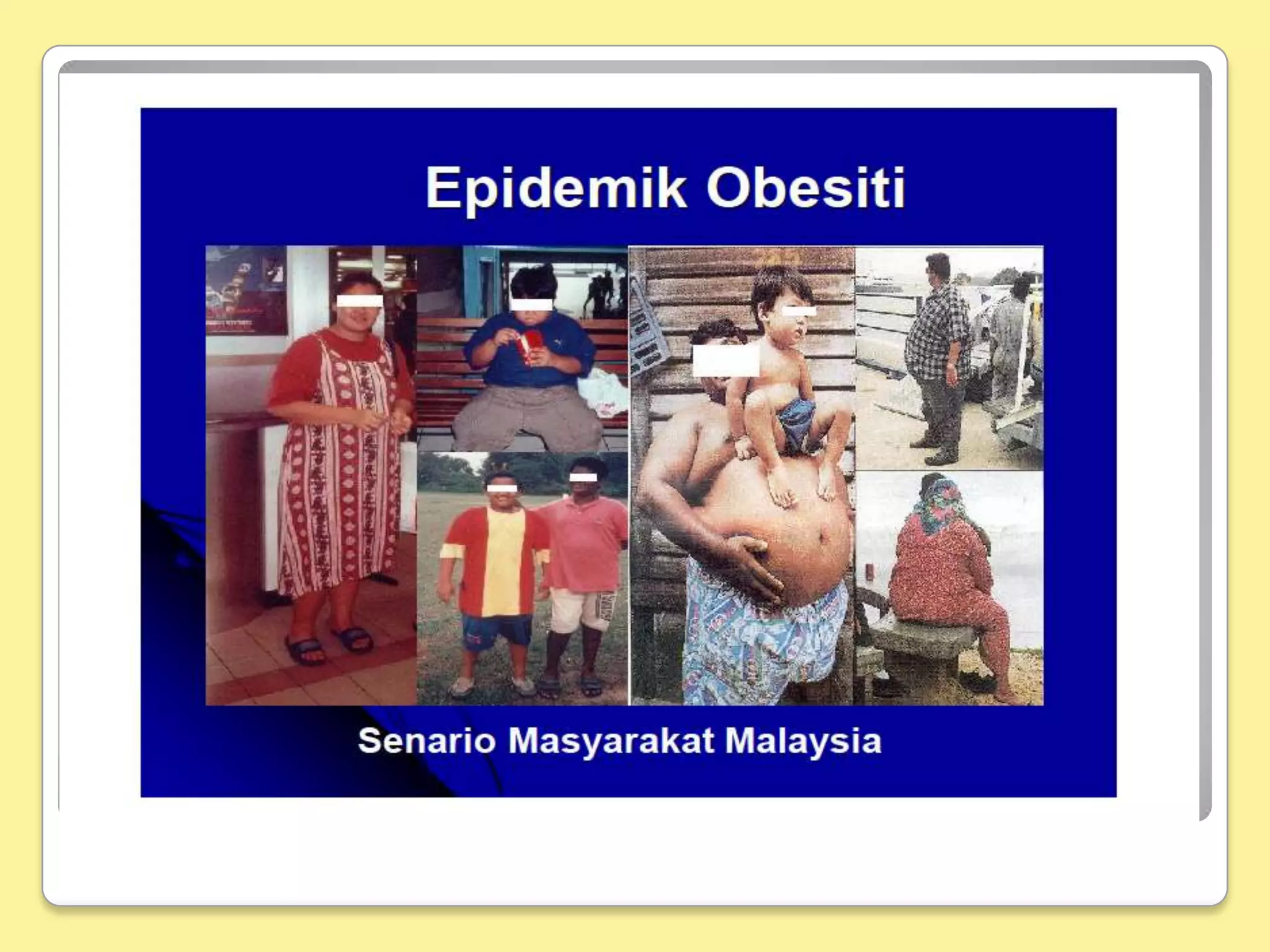
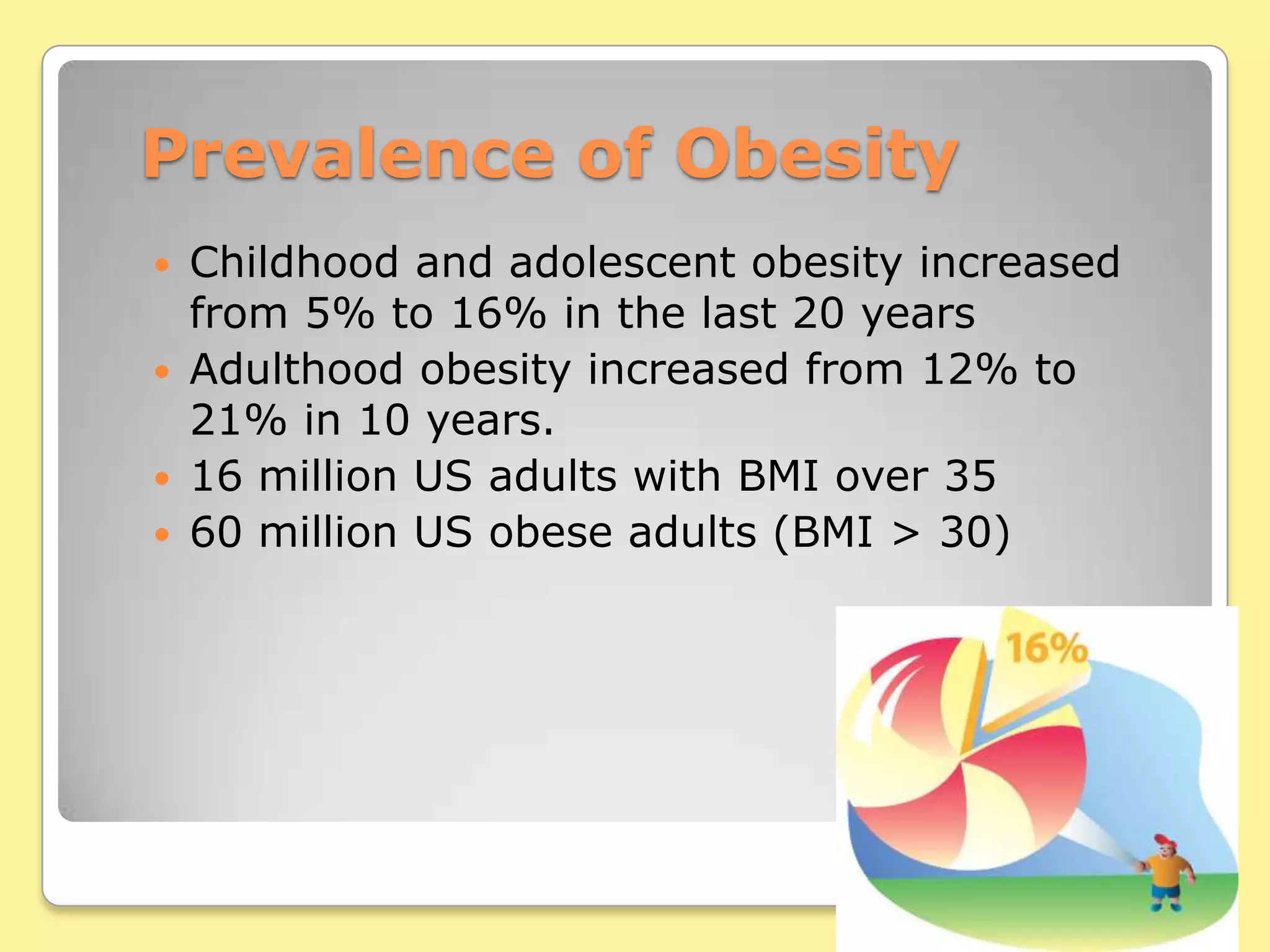
Men >94cmPrevalence of ObesityChildhood and adolescent obesity increased from 5% to 16% in the last 20 yearsAdulthood obesity increased from 12% to 21% in 10 years.16 million US adults with BMI over 3560 million US obese adults (BMI > 30)
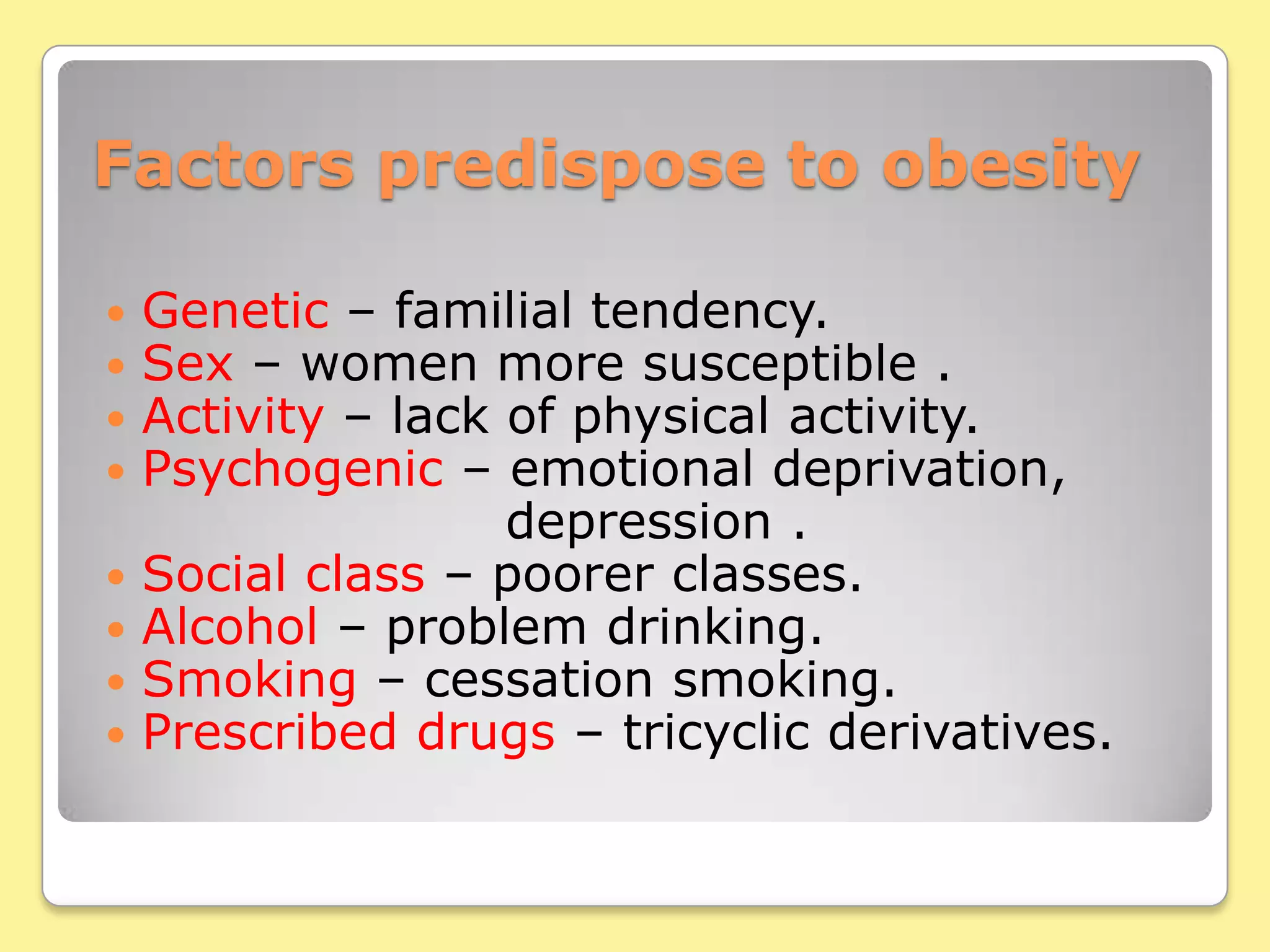
Factors predispose to obesityGenetic – familial tendency.
Sex – women more susceptible .
Activity – lack of physical activity.
Psychogenic – emotional deprivation,                        depression .Social class – poorer classes.
Alcohol – problem drinking.
Smoking – cessation smoking.
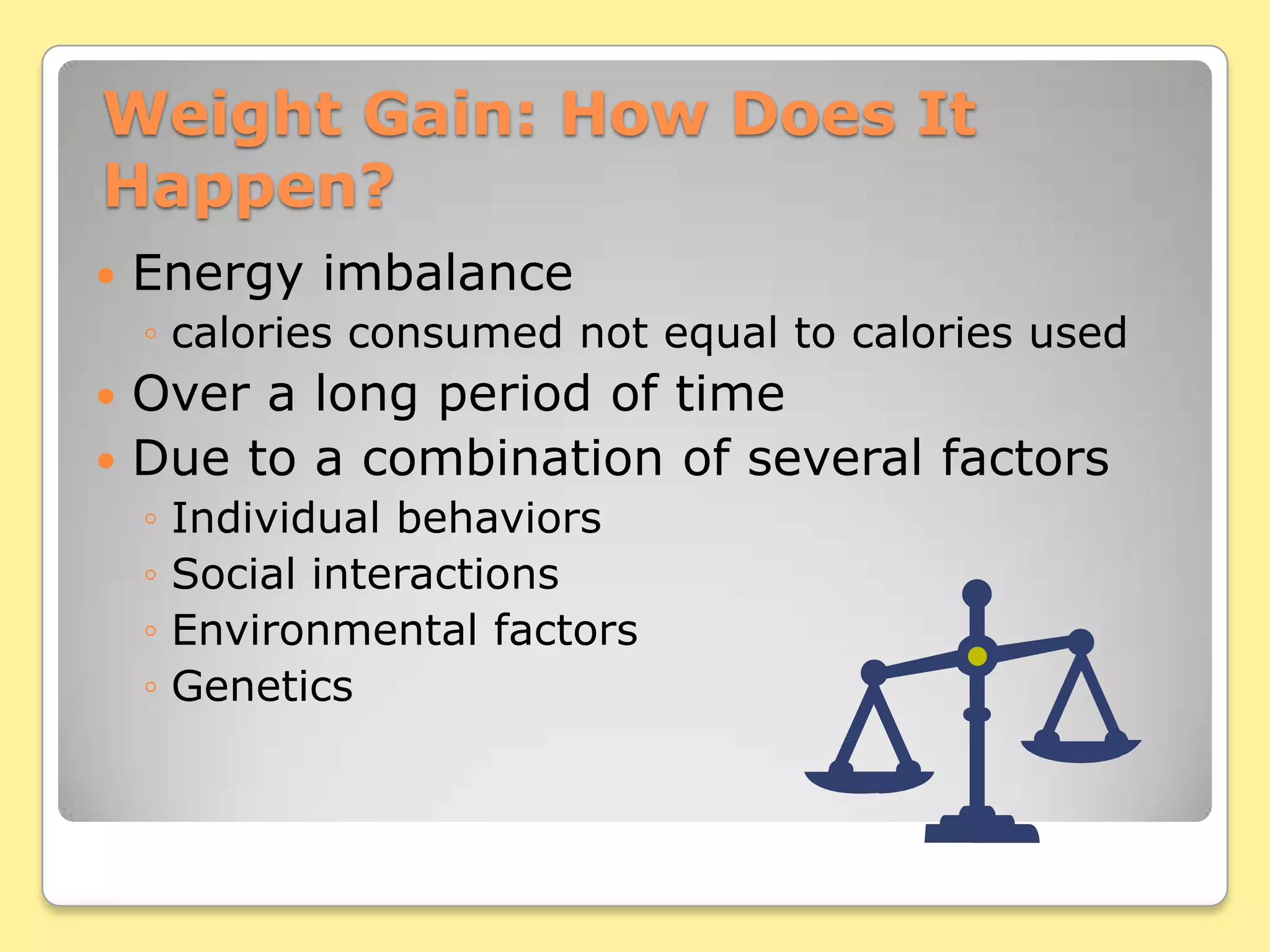
Prescribed drugs – tricyclic derivatives.Weight Gain: How Does It Happen?Energy imbalance calories consumed not equal to calories used Over a long period of timeDue to a combination of several factorsIndividual behaviorsSocial interactionsEnvironmental factorsGenetics
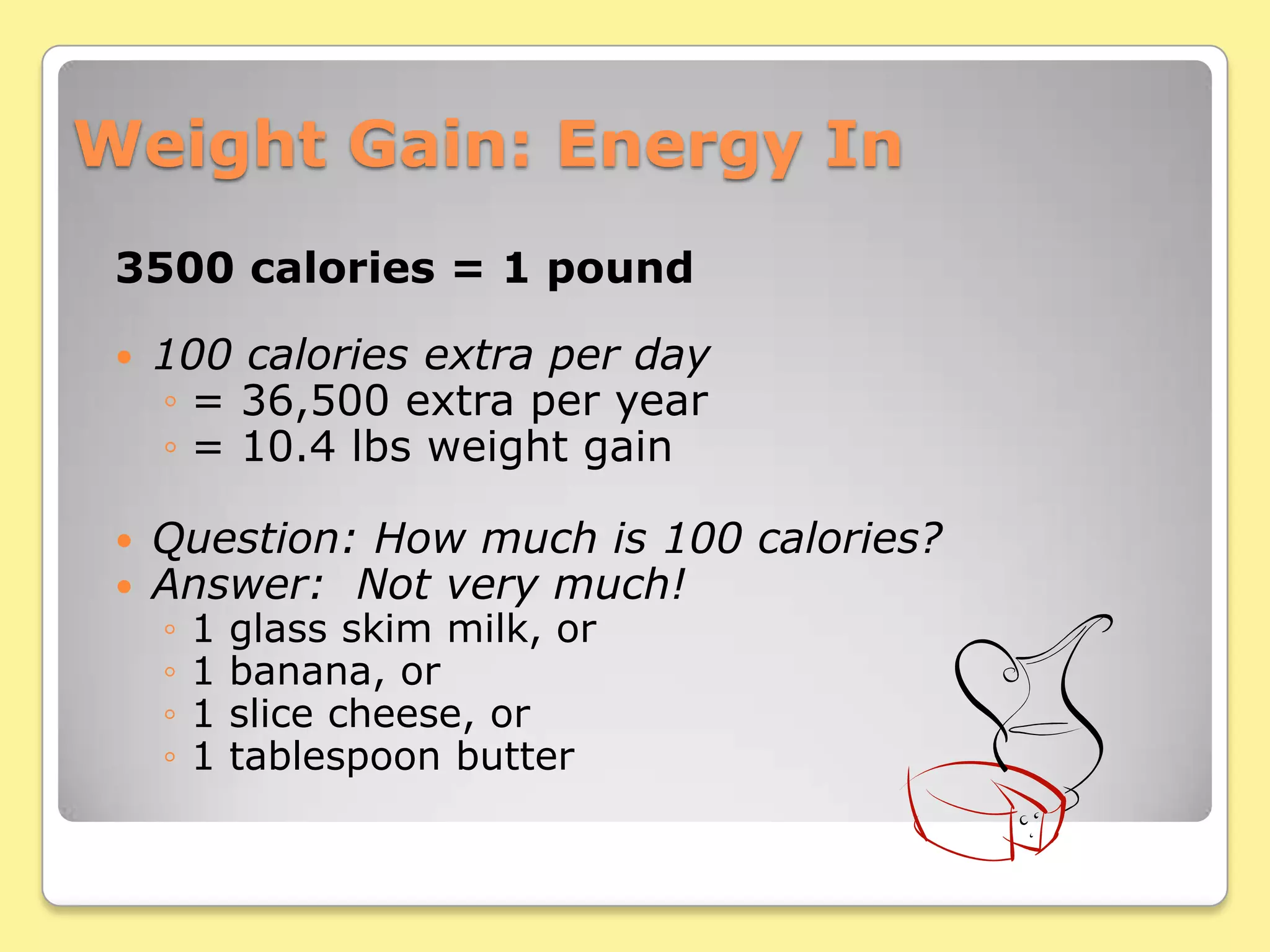
Weight Gain: Energy In3500 calories = 1 pound100 calories extra per day= 36,500 extra per year= 10.4 lbs weight gainQuestion: How much is 100 calories?Answer:  Not very much!1 glass skim milk, or1 banana, or1 slice cheese, or1 tablespoon butter
Health Consequences of ObesityMajor cause of preventable death Increase in mortality from all causesIncrease in risk for these cancersEndometriumBreastProstateColonIncrease in risk of:HypertensionDyslipidemiaDiabetes type 2Coronary artery diseaseStrokeGallbladder diseaseOsteoarthritisSleep apnea & respiratory problems
Health Consequences of ObesityStill doing nothing about that extra flab? Major cause of preventable death Increase in mortality from all causesIncrease in risk for these cancersEndometriumBreastProstateColonIncrease in risk of:HypertensionDyslipidemiaDiabetes type 2Coronary artery diseaseStrokeGallbladder diseaseOsteoarthritisSleep apnea & respiratory problems
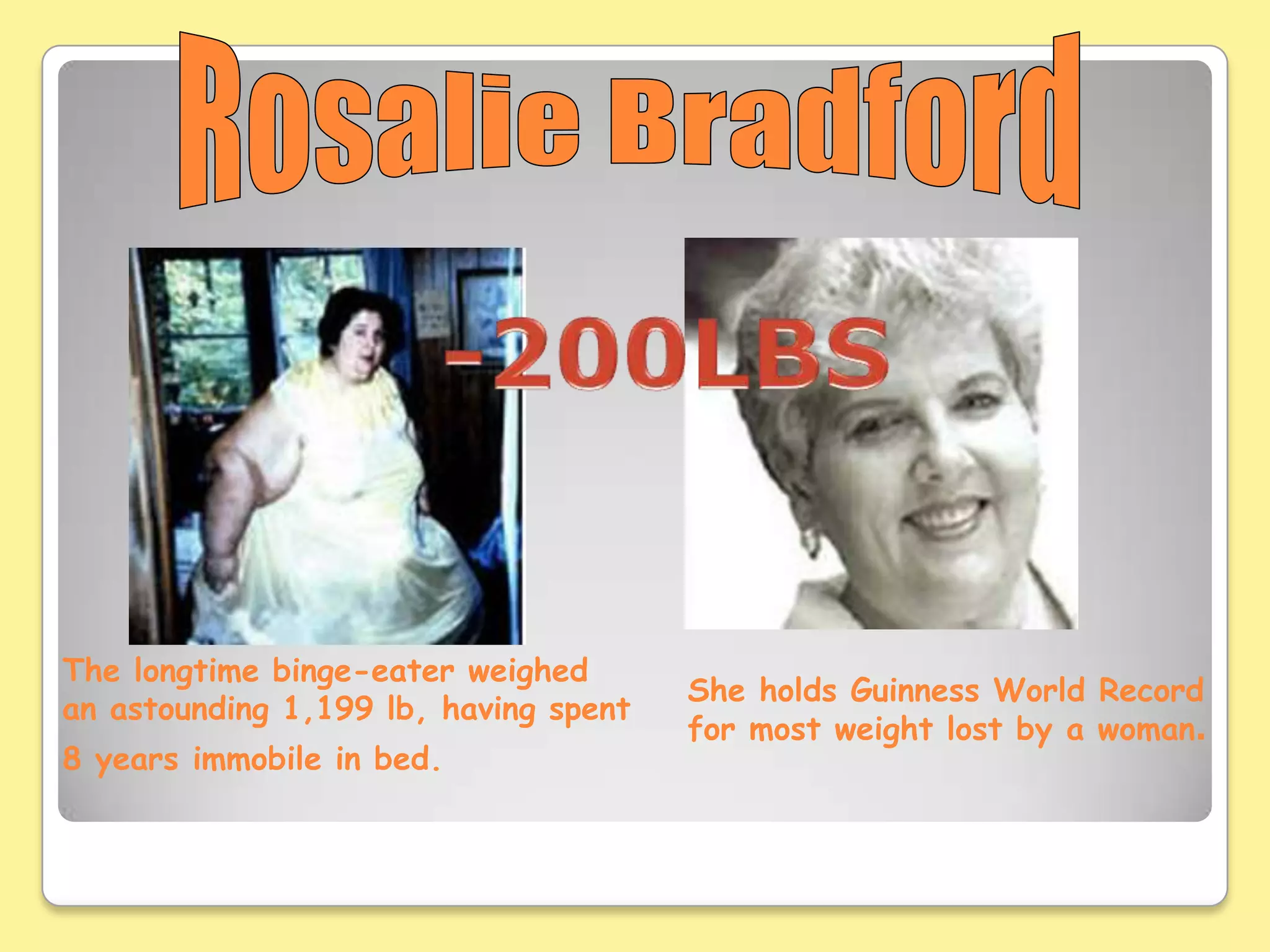
Rosalie Bradford-200LBSThe longtime binge-eater weighed an astounding 1,199 lb, having spent 8 years immobile in bed.She holds Guinness World Record for most weight lost by a woman.
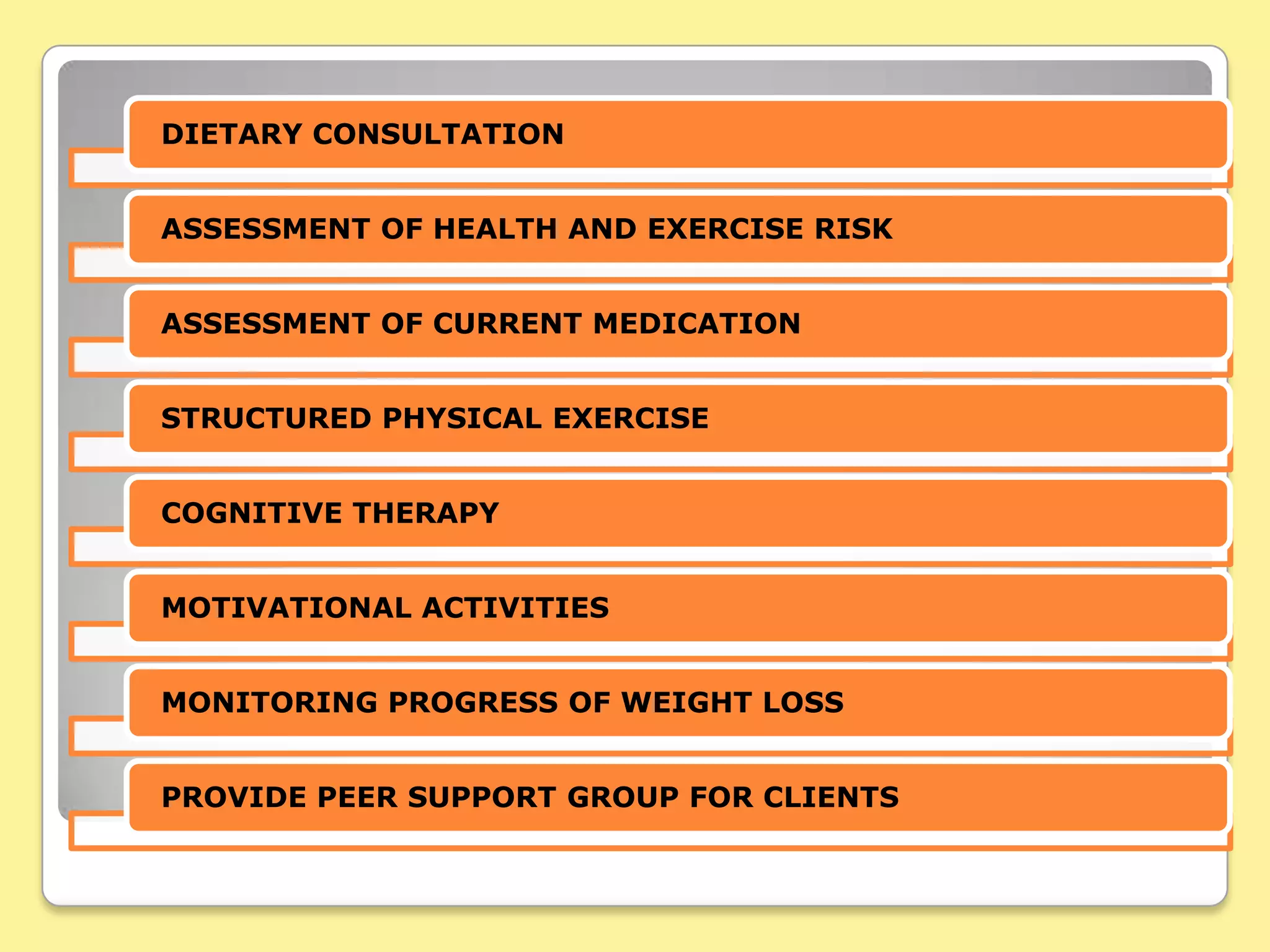
I-CARE :WHAT DO WE DO?
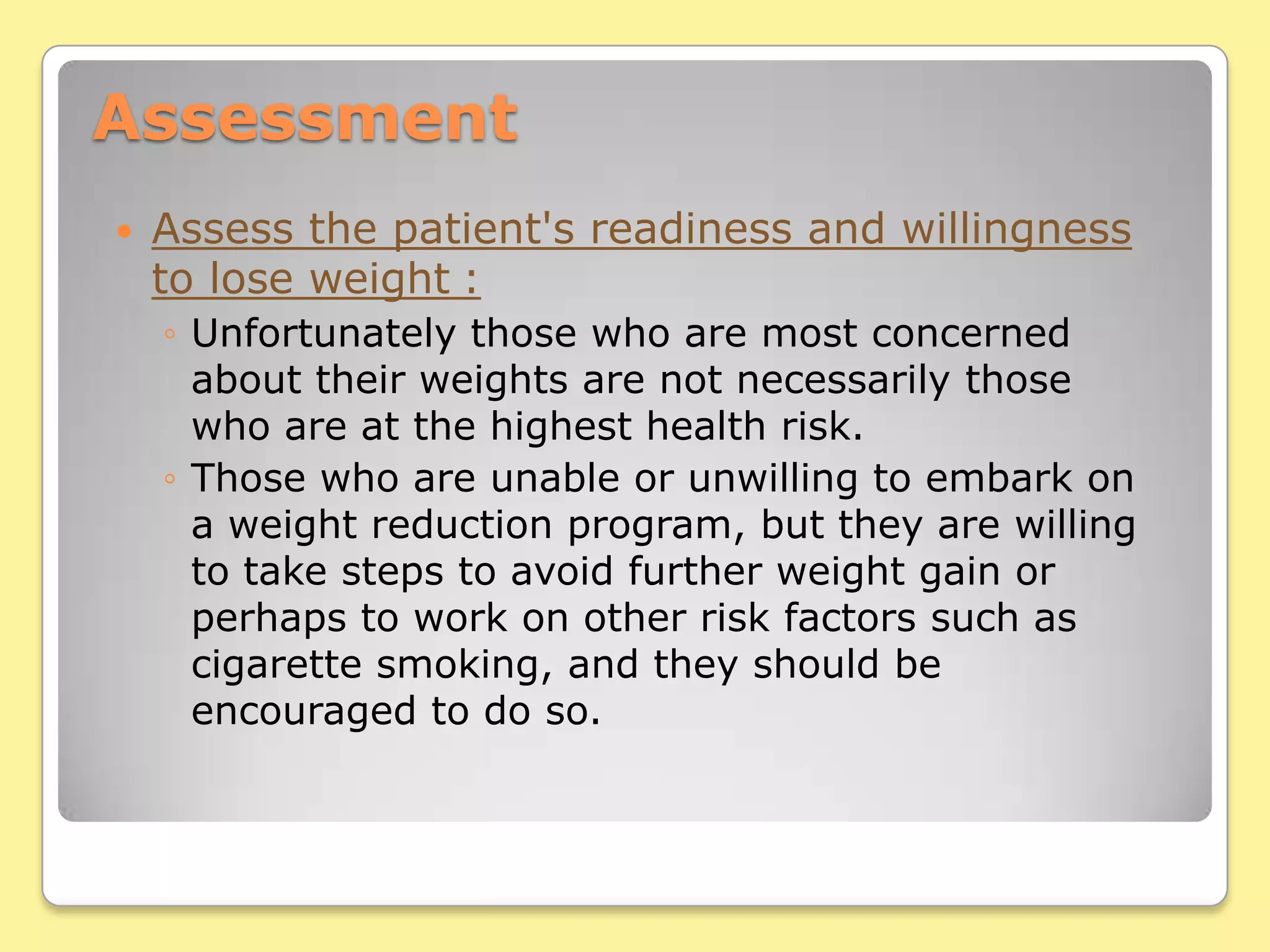
Assessment Assess the patient's readiness and willingness to lose weight:Unfortunately those who are most concerned about their weights are not necessarily those who are at the highest health risk.Those who are unable or unwilling to embark on a weight reduction program, but they are willing to take steps to avoid further weight gain or perhaps to work on other risk factors such as cigarette smoking, and they should be encouraged to do so.
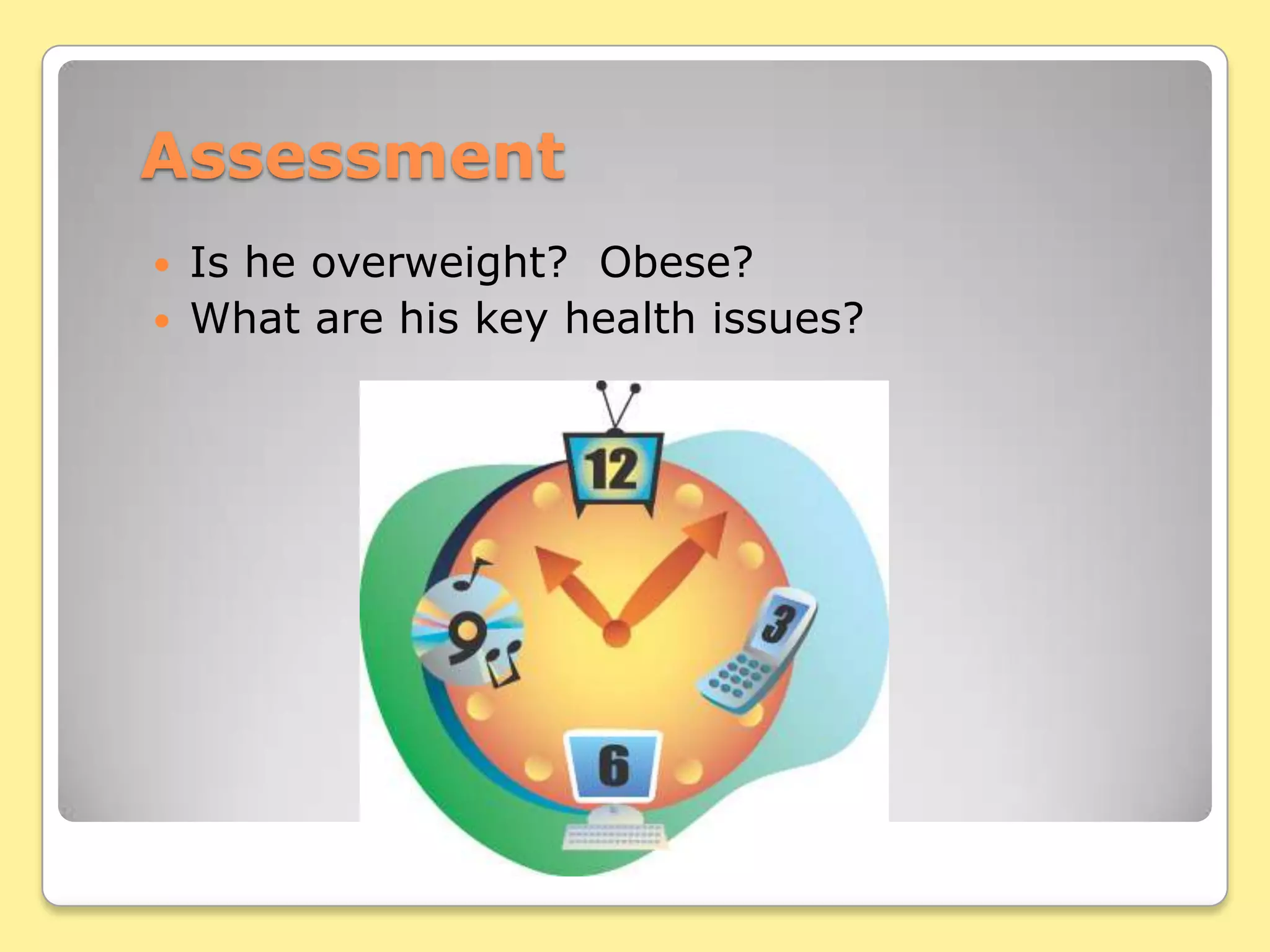
Assessment Is he overweight?  Obese?What are his key health issues?
Assessment	Measure BMIMeasure waist circumference“Apple shape” body is higher risk for DM, CVD, HTNWaist larger than 40 inches for men Waist larger than 35 inches for women
AssessmentAssess for other risk factors
Existing high risk disease:
coronary heart disease; other atherosclerotic diseases; type 2 diabetes; sleep apnea
Diseases associated with obesity
Gynecological problems; osteoarthritis; gallstones; stress incontinence
Cardiovascular risk factors (3 or more = high risk)
Cigarette smoking; Hypertension; LDL >130; HDL <35; fasting glucose = 110 to 125; family history of premature CHD; men age > 45; women age > 55
Other risk factors
Physical inactivity; elevated serum triglycerides

A holistic approach to weight management

  • 1.
    PROGRAMI-CAREA HOLISTIC APPROACHTO WEIGHT MANAGEMENTBY DR LEE OI WAHPENGARAH HCM
  • 3.
    OverviewDefinition, Prevalence &Consequences of ObesityHealthy LifestylesAssessment of ObesityTreatments for Obesity
  • 4.
    DefinitionObesity is anabnormal accumulation of body fat, usually 20 percent or more over an individual's ideal body weight.
  • 5.
    Calculating BMICalculate BodyMass Index (BMI) = weight (kg)height squared (meters) Or…weight (pounds) x 703height squared (inches)
  • 6.
    Definition of Overweight& ObesityUsing BMI
  • 7.
    Definition of Overweight& ObesityUsing waist circumferenceWomen > 80cm
  • 8.
    Men >94cmPrevalence ofObesityChildhood and adolescent obesity increased from 5% to 16% in the last 20 yearsAdulthood obesity increased from 12% to 21% in 10 years.16 million US adults with BMI over 3560 million US obese adults (BMI > 30)
  • 9.
    Factors predispose toobesityGenetic – familial tendency.
  • 10.
    Sex – womenmore susceptible .
  • 11.
    Activity – lackof physical activity.
  • 12.
    Psychogenic – emotionaldeprivation, depression .Social class – poorer classes.
  • 13.
  • 14.
  • 15.
    Prescribed drugs –tricyclic derivatives.Weight Gain: How Does It Happen?Energy imbalance calories consumed not equal to calories used Over a long period of timeDue to a combination of several factorsIndividual behaviorsSocial interactionsEnvironmental factorsGenetics
  • 16.
    Weight Gain: EnergyIn3500 calories = 1 pound100 calories extra per day= 36,500 extra per year= 10.4 lbs weight gainQuestion: How much is 100 calories?Answer: Not very much!1 glass skim milk, or1 banana, or1 slice cheese, or1 tablespoon butter
  • 17.
    Health Consequences ofObesityMajor cause of preventable death Increase in mortality from all causesIncrease in risk for these cancersEndometriumBreastProstateColonIncrease in risk of:HypertensionDyslipidemiaDiabetes type 2Coronary artery diseaseStrokeGallbladder diseaseOsteoarthritisSleep apnea & respiratory problems
  • 19.
    Health Consequences ofObesityStill doing nothing about that extra flab? Major cause of preventable death Increase in mortality from all causesIncrease in risk for these cancersEndometriumBreastProstateColonIncrease in risk of:HypertensionDyslipidemiaDiabetes type 2Coronary artery diseaseStrokeGallbladder diseaseOsteoarthritisSleep apnea & respiratory problems
  • 20.
    Rosalie Bradford-200LBSThe longtimebinge-eater weighed an astounding 1,199 lb, having spent 8 years immobile in bed.She holds Guinness World Record for most weight lost by a woman.
  • 21.
  • 23.
    Assessment Assess thepatient's readiness and willingness to lose weight:Unfortunately those who are most concerned about their weights are not necessarily those who are at the highest health risk.Those who are unable or unwilling to embark on a weight reduction program, but they are willing to take steps to avoid further weight gain or perhaps to work on other risk factors such as cigarette smoking, and they should be encouraged to do so.
  • 24.
    Assessment Is heoverweight? Obese?What are his key health issues?
  • 25.
    Assessment Measure BMIMeasure waistcircumference“Apple shape” body is higher risk for DM, CVD, HTNWaist larger than 40 inches for men Waist larger than 35 inches for women
  • 26.
  • 27.
  • 28.
    coronary heart disease;other atherosclerotic diseases; type 2 diabetes; sleep apnea
  • 29.
  • 30.
    Gynecological problems; osteoarthritis;gallstones; stress incontinence
  • 31.
    Cardiovascular risk factors(3 or more = high risk)
  • 32.
    Cigarette smoking; Hypertension;LDL >130; HDL <35; fasting glucose = 110 to 125; family history of premature CHD; men age > 45; women age > 55
  • 33.
  • 34.
  • 35.
    Medications associated withobesityTreatment ApproachA multi-faceted approach is bestDietPhysical activityBehavior change“A” Recommendation
  • 36.
    Treatment ApproachAim for4 - 6 months of weight loss effortMost people will lose 20 to 25 pounds After 6 months, weight loss is more difficultChanges in resting metabolic rateEnergy requirements decrease as weight decreasesDiet adherence waversSet goals for weight maintenance for next 6 months, then reassess.
  • 37.
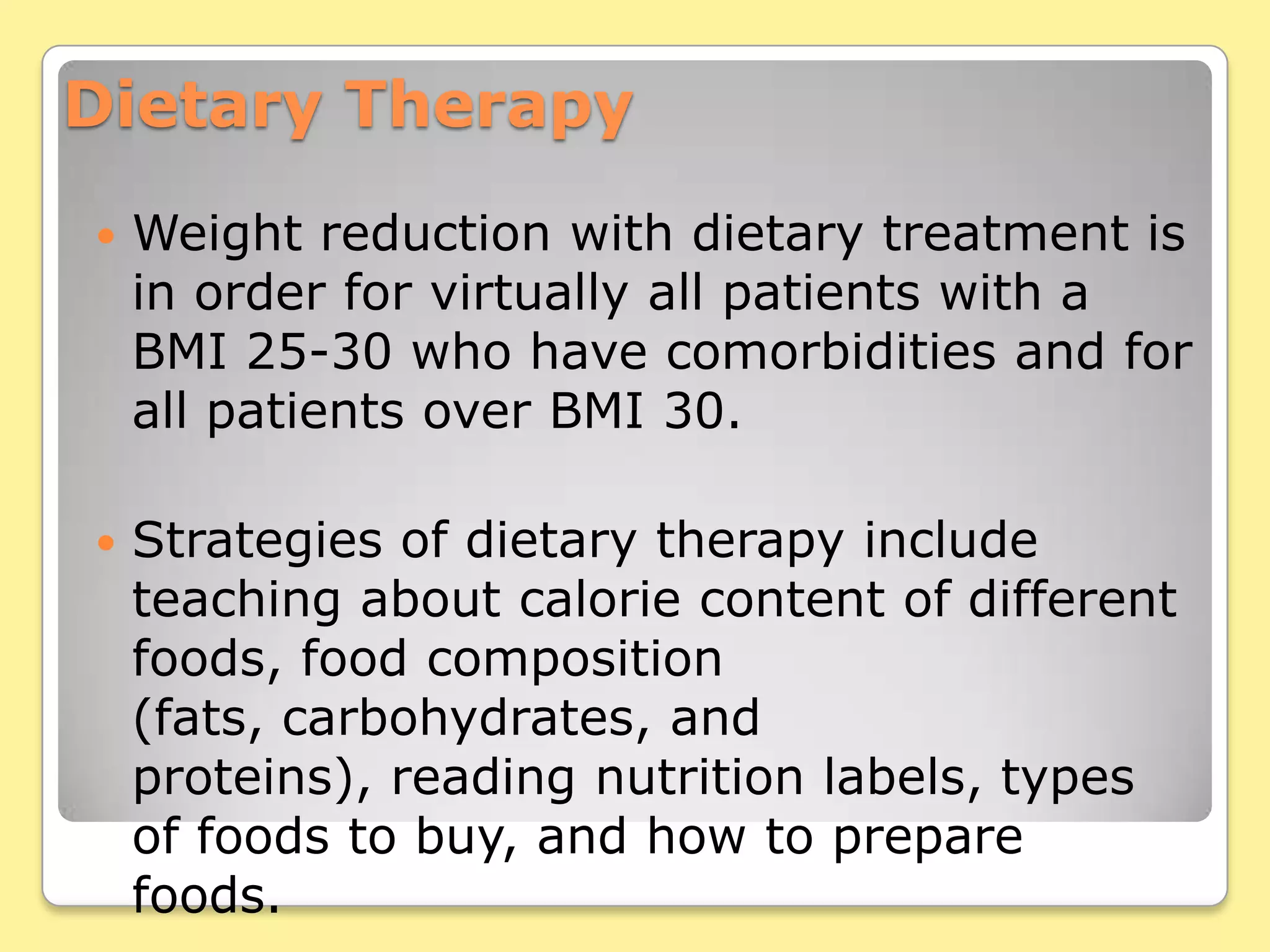
    Dietary TherapyWeight reductionwith dietary treatment is in order for virtually all patients with a BMI 25-30 who have comorbidities and for all patients over BMI 30.Strategies of dietary therapy include teaching about calorie content of different foods, food composition (fats, carbohydrates, and proteins), reading nutrition labels, types of foods to buy, and how to prepare foods.
  • 38.
  • 39.
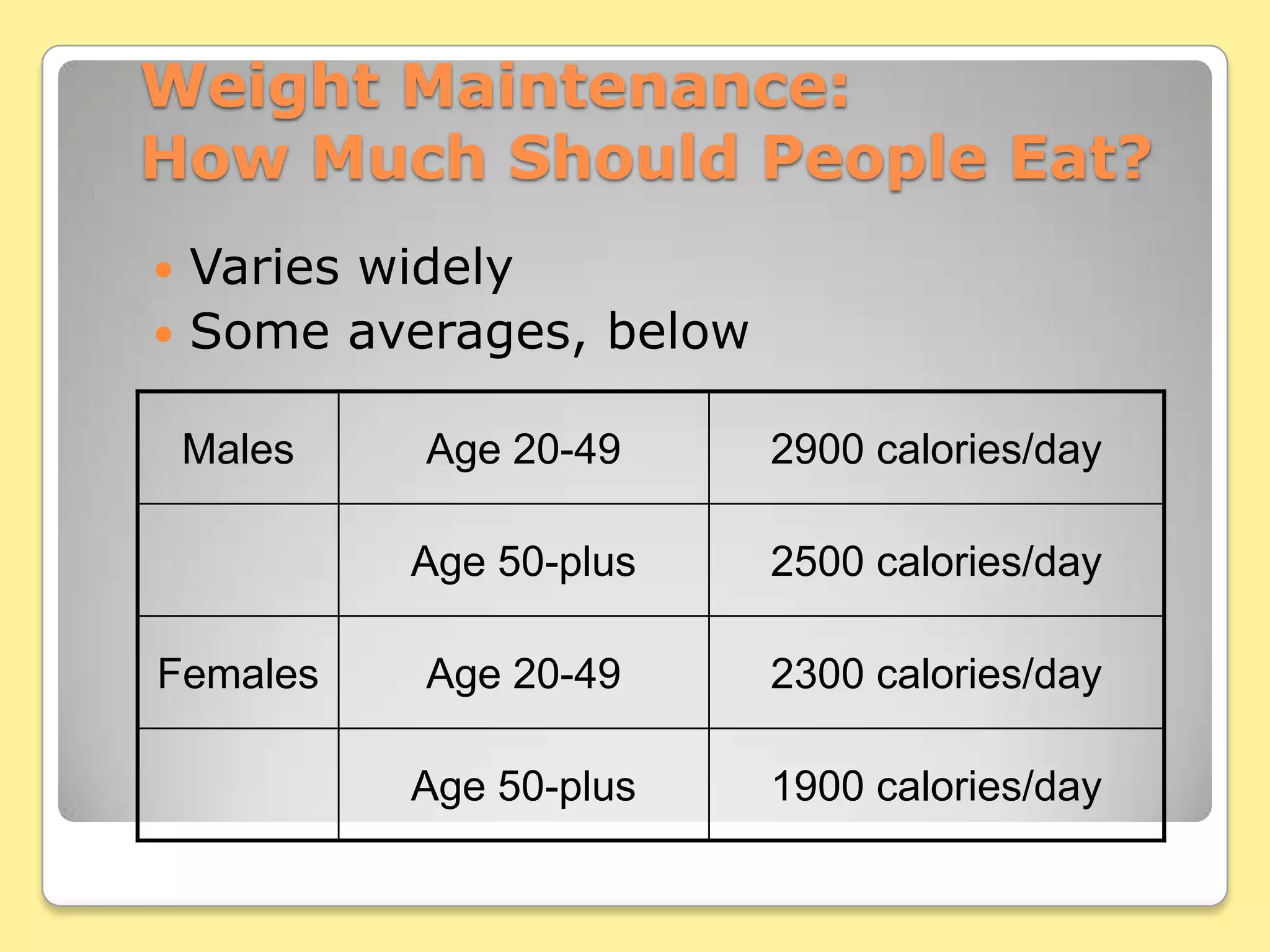
    Weight Maintenance: HowMuch Should People Eat?Varies widelySome averages, below
  • 40.
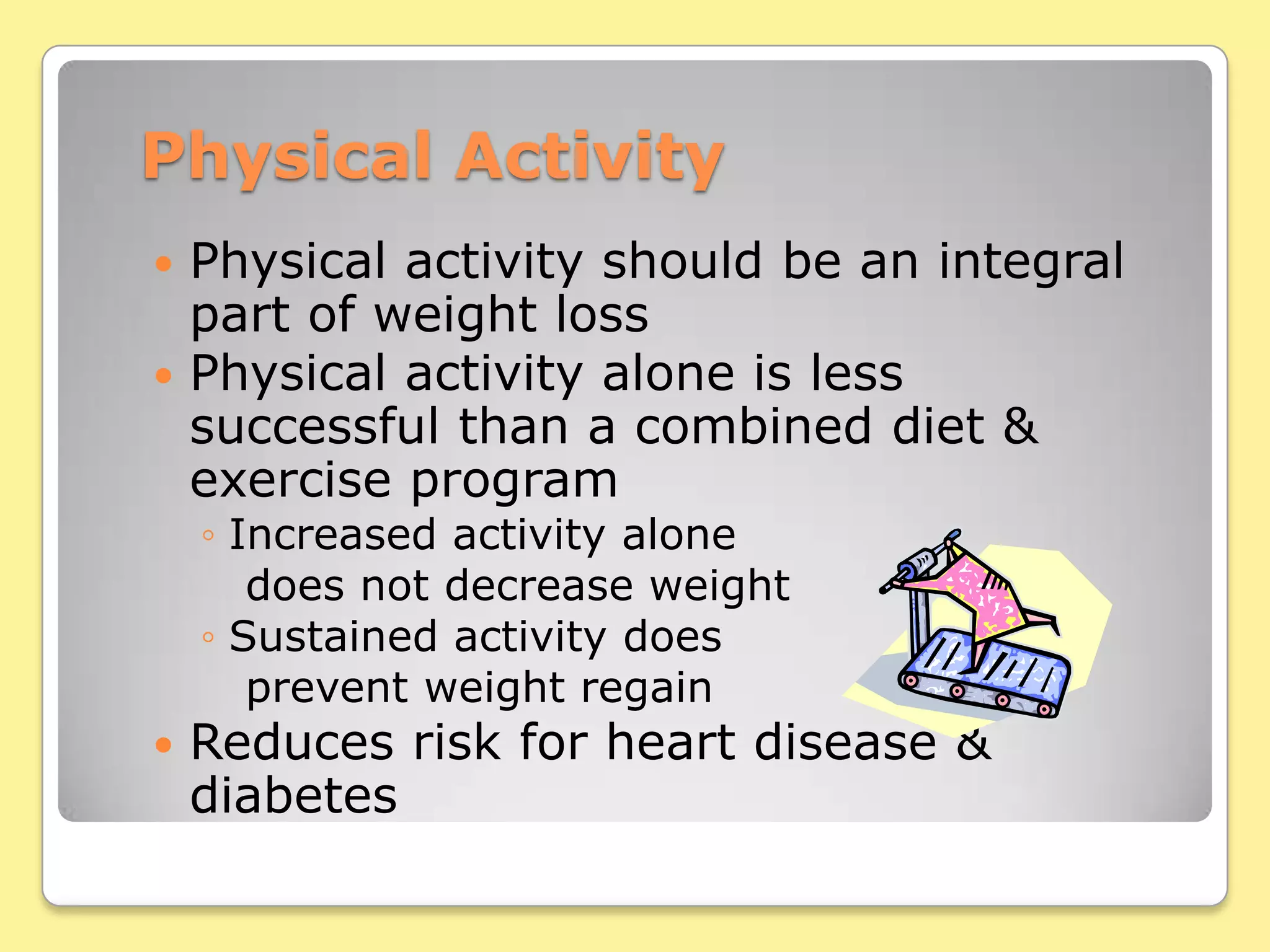
    Physical ActivityPhysical activityshould be an integral part of weight loss
  • 41.
    Physical activity aloneis less successful than a combined diet & exercise program
  • 42.
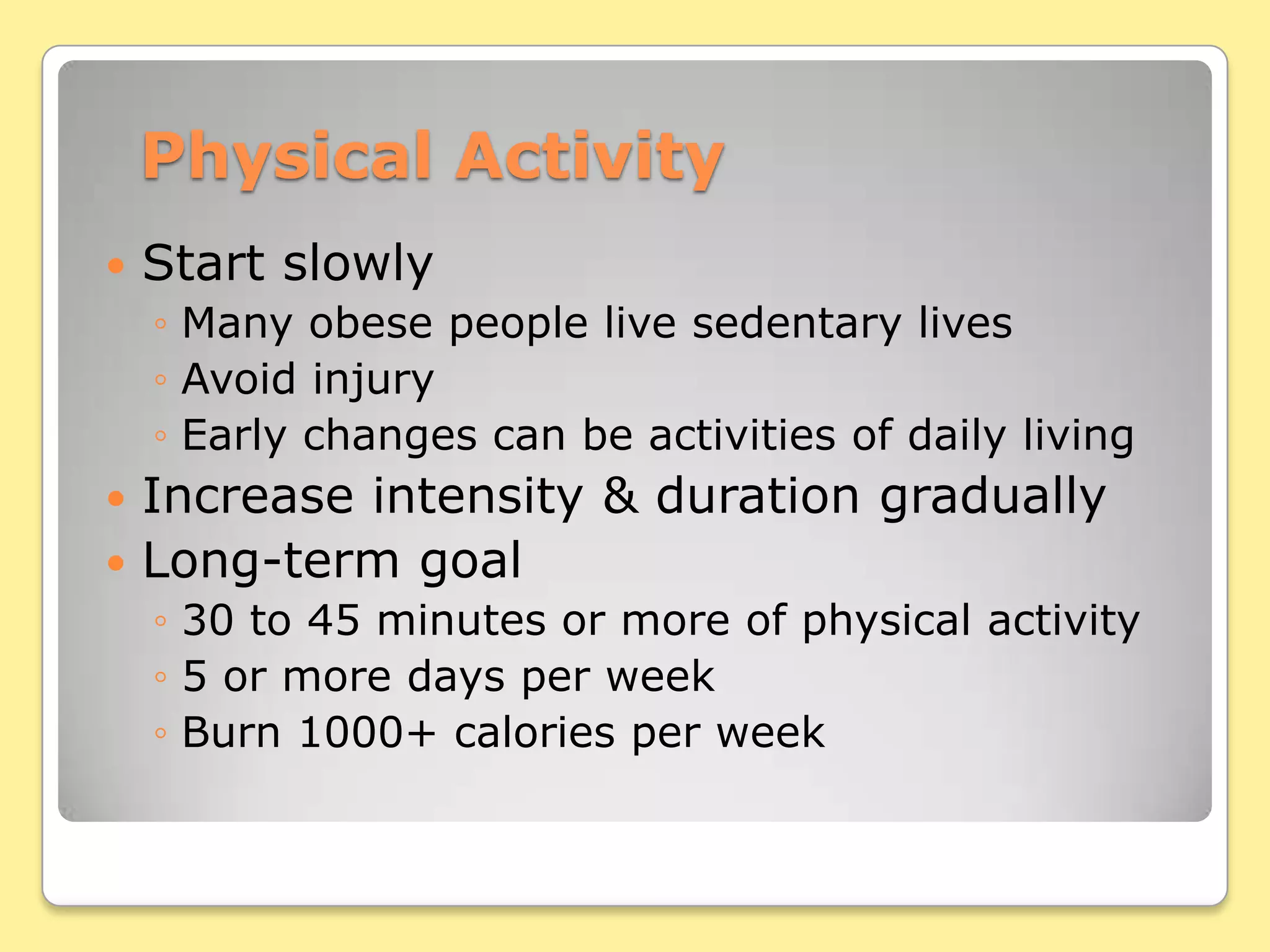
    Increased activity alone does not decrease weightSustained activity does prevent weight regainReduces risk for heart disease & diabetesPhysical ActivityStart slowlyMany obese people live sedentary livesAvoid injuryEarly changes can be activities of daily livingIncrease intensity & duration graduallyLong-term goal30 to 45 minutes or more of physical activity5 or more days per weekBurn 1000+ calories per week
  • 43.
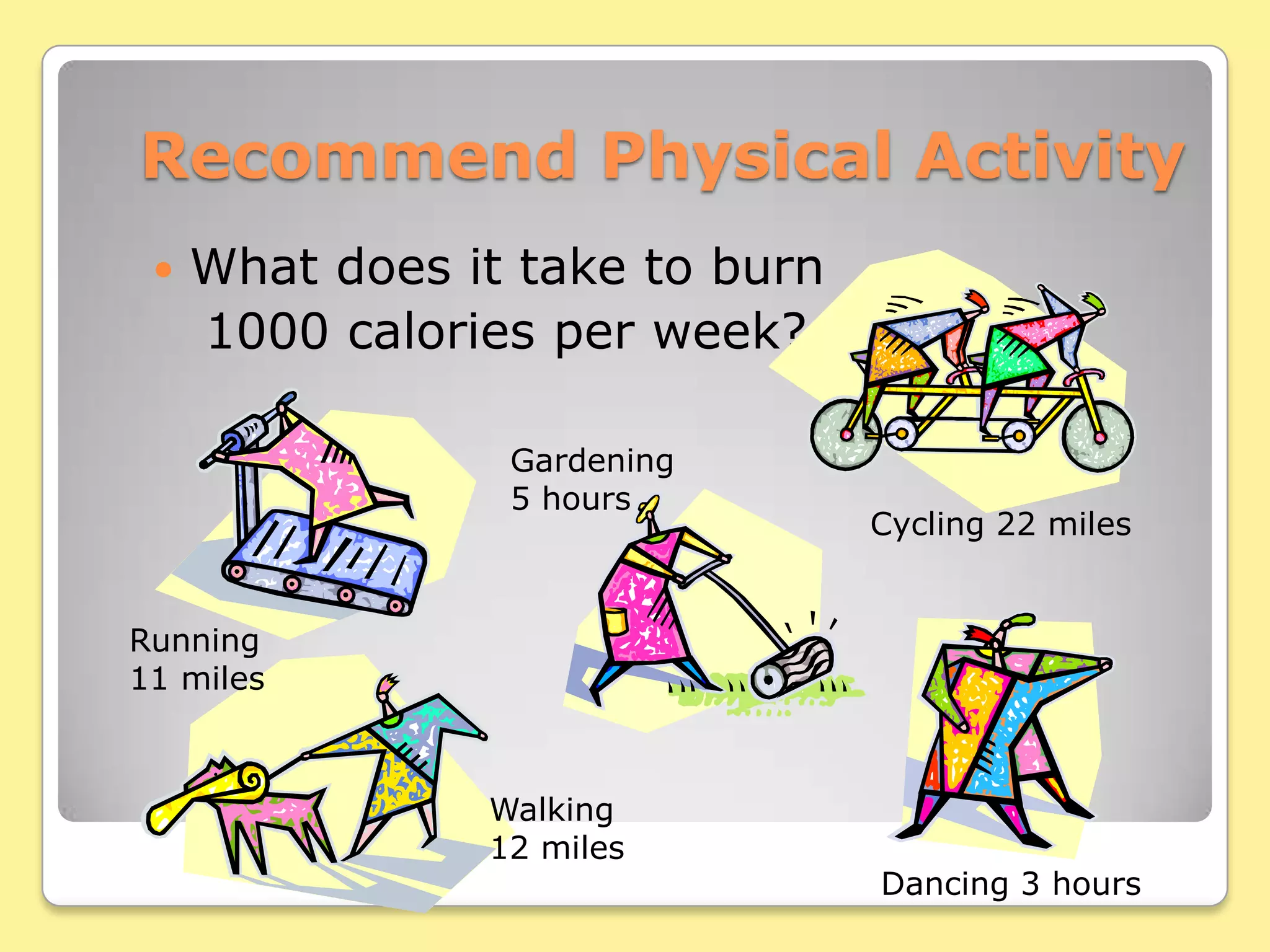
    Recommend Physical ActivityWhatdoes it take to burn 1000 calories per week?Gardening 5 hoursCycling 22 milesRunning 11 milesWalking 12 milesDancing 3 hours
  • 45.
    Behavioral StrategiesKeep ajournal of diet & activityVery powerful intervention!Set specific goals re: behaviorsEatingActivityRelated behaviorsTrack improvement Weigh & measure on a regular basis
  • 46.
  • 47.
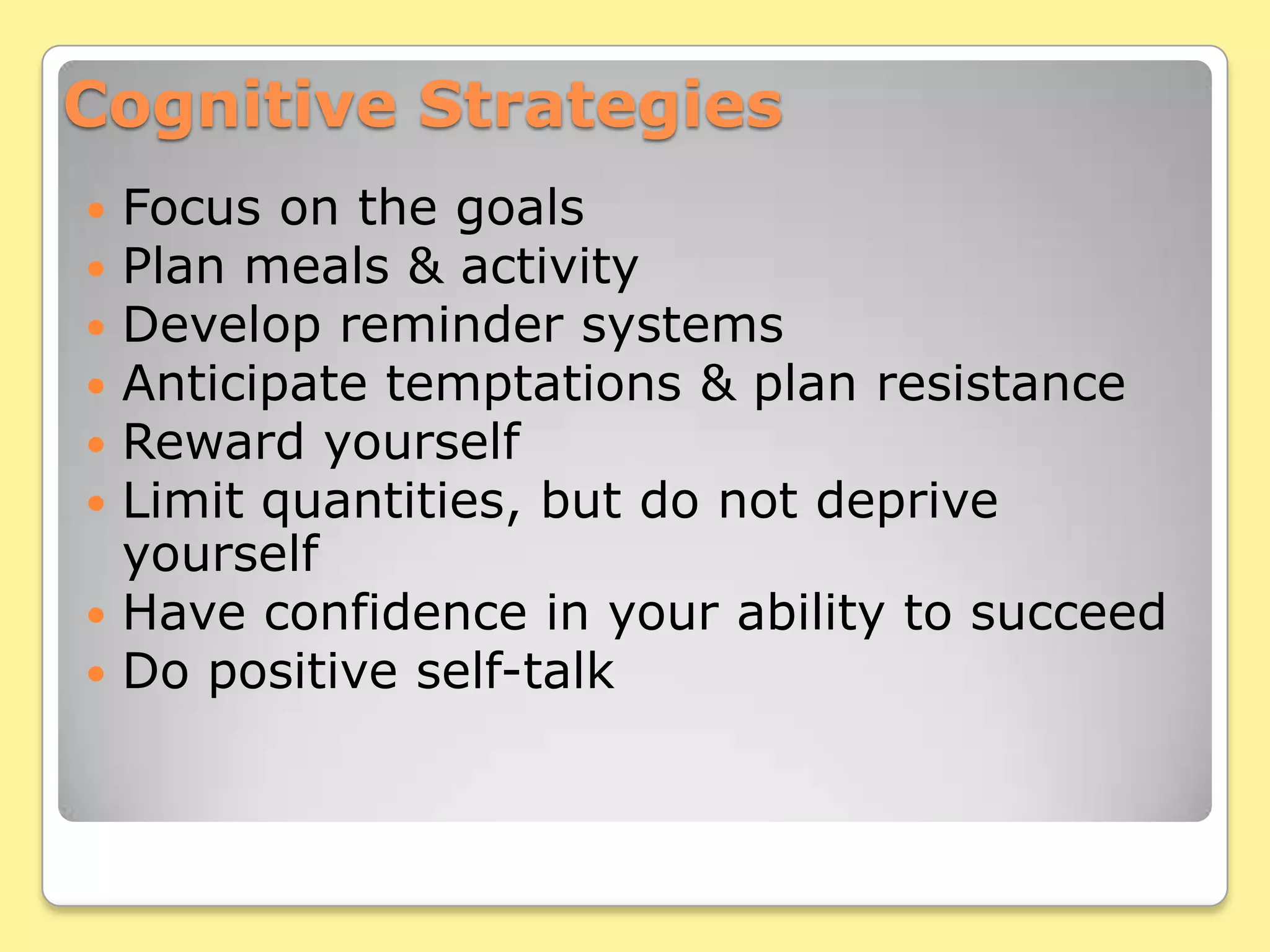
    Plan meals &activity
  • 48.
  • 49.
  • 50.
  • 51.
    Limit quantities, butdo not deprive yourself
  • 52.
    Have confidence inyour ability to succeed
  • 53.
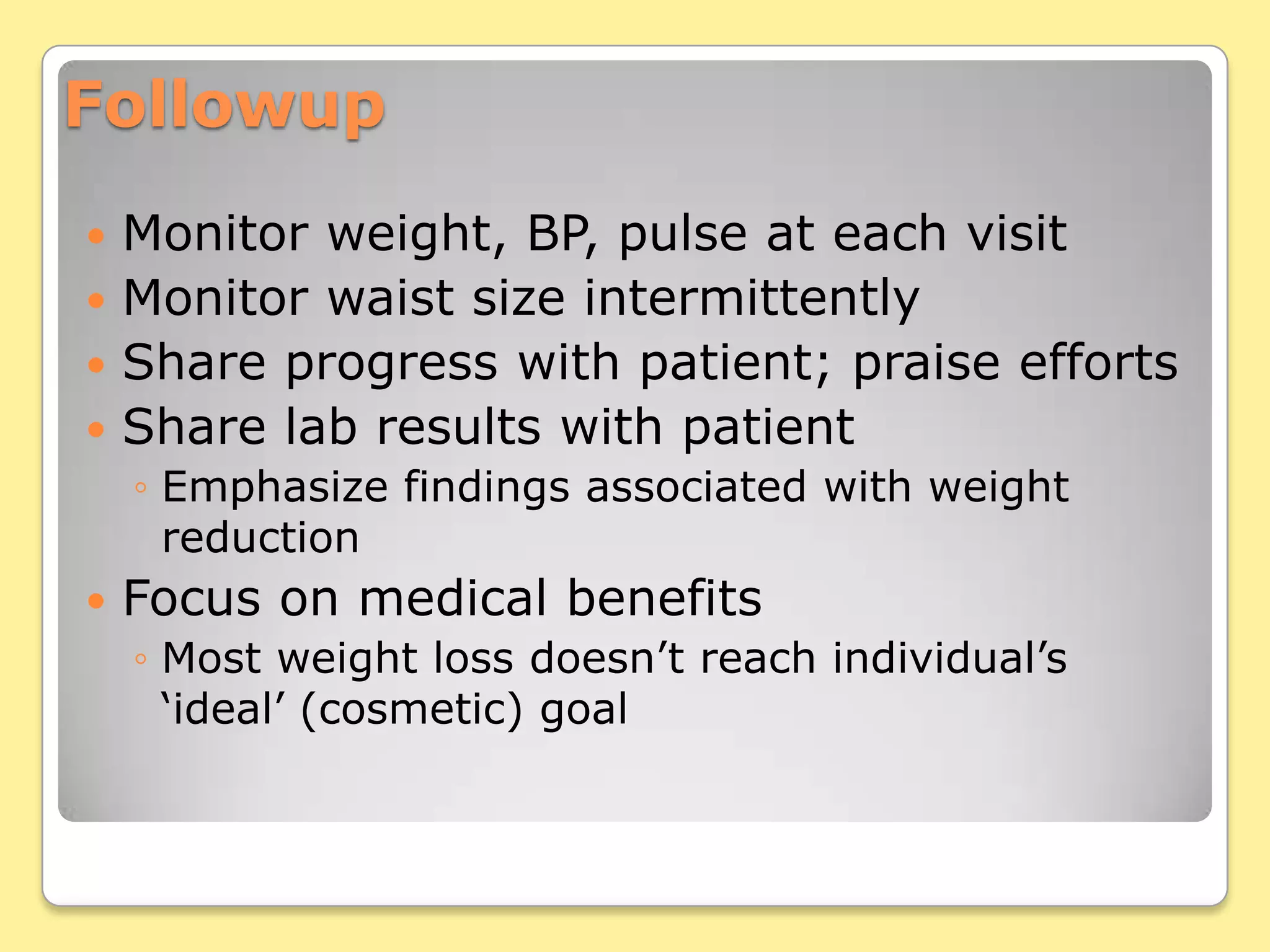
    Do positive self-talkFollowupMonitorweight, BP, pulse at each visitMonitor waist size intermittentlyShare progress with patient; praise effortsShare lab results with patientEmphasize findings associated with weight reductionFocus on medical benefitsMost weight loss doesn’t reach individual’s ‘ideal’ (cosmetic) goal
  • 54.
    Thank You andGood Luck!