ENERGY
Calorie  - used as standard unit for measuring the energy value of food - amount of heat necessary to raise 1 gram of water by 1̊C  measures human energy expenditures 1 Kcal = 4.184 kilojoules (KJ) 1000 KJ  = 1 megajoule (MJ) 1000 Kcal = 4.184 MJ 1 MJ = 239 Kcal
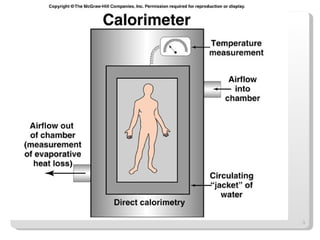
Methods of Energy Measurement Direct calorimetry Measures amount of energy expended by monitoring heat production Bomb calorimeter – heat of combustion = gross energy value of food Respiration chamber – heat released from a person’s body determine how much energy each activity has burned for that person
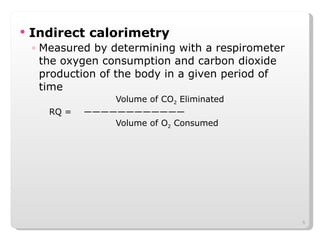
Indirect calorimetry Measured by determining with a respirometer the oxygen consumption and carbon dioxide production of the body in a given period of time  Volume of CO 2  Eliminated RQ =  ———————————— Volume of O 2  Consumed
Indirect Calorimeter - Atwater (physiologic fuel value of food)
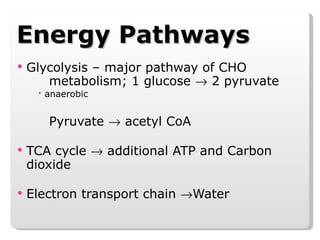
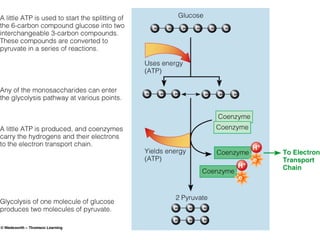
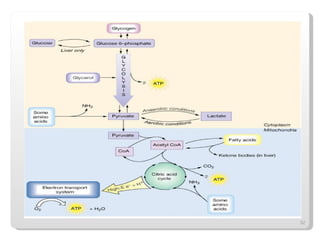
Energy Pathways Glycolysis – major pathway of CHO  metabolism; 1 glucose    2 pyruvate anaerobic Pyruvate    acetyl CoA TCA cycle    additional ATP and Carbon dioxide Electron transport chain   Water
WMSU BSND Review 2007
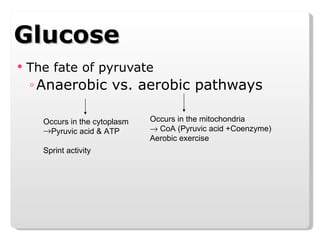
Glucose The fate of pyruvate Anaerobic vs. aerobic pathways Occurs in the cytoplasm Pyruvic acid & ATP Sprint activity Occurs in the mitochondria    CoA (Pyruvic acid +Coenzyme) Aerobic exercise
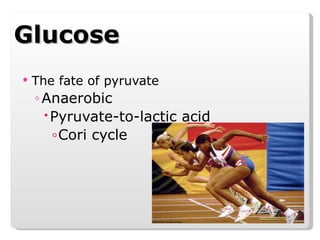
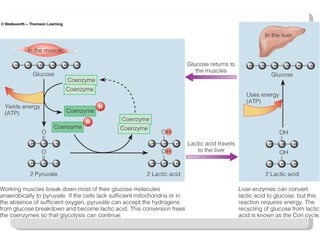
Glucose The fate of pyruvate  Anaerobic Pyruvate-to-lactic acid Cori cycle
 
Glucose The fate of pyruvate Aerobic Pyruvate-to-acetyl CoA
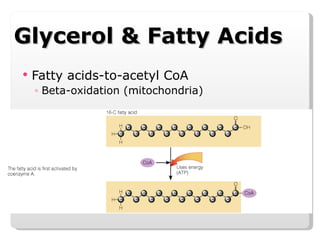
Glycerol & Fatty Acids Fatty acids-to-acetyl CoA Beta-oxidation (mitochondria)
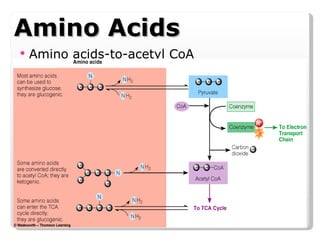
Amino Acids Amino acids-to-acetyl CoA WMSU BSND Review 2007
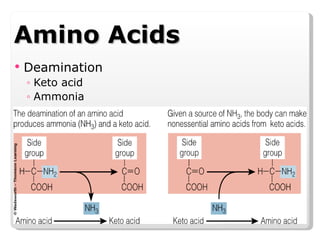
Amino Acids Deamination Keto acid Ammonia WMSU BSND Review 2007
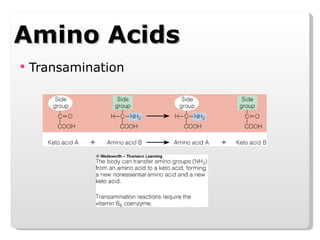
Amino Acids Transamination
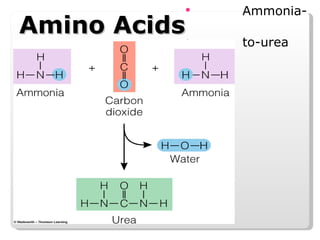
Amino Acids Ammonia-  to-urea
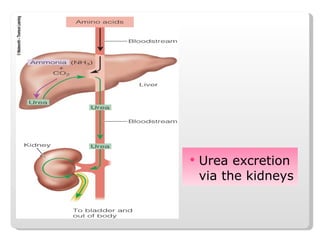
Urea excretion via the kidneys
 
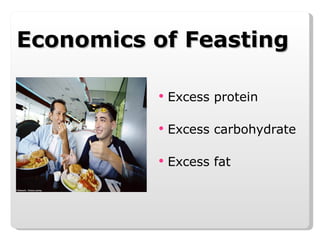
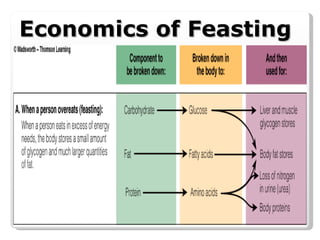
Economics of Feasting Excess protein Excess carbohydrate Excess fat
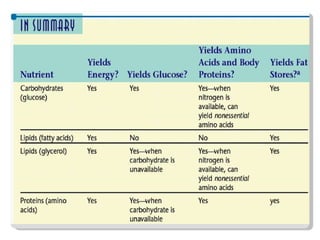
Economics of Feasting
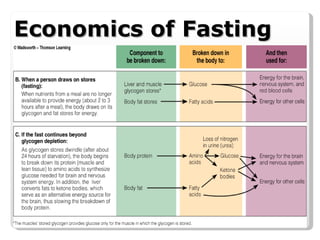
Economics of Fasting WMSU BSND Review 2007
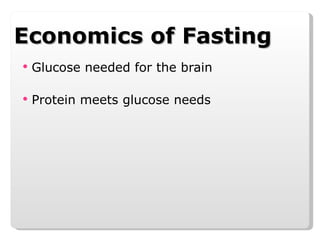
Economics of Fasting Glucose needed for the brain Protein meets glucose needs
Economics of Fasting Shift to ketosis
Economics of Fasting Suppression of appetite Slowing of metabolism Symptoms of starvation
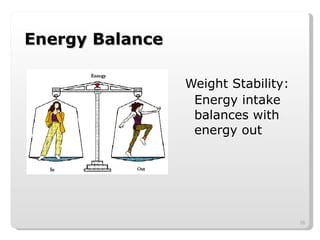
Energy Balance Weight Stability: Energy intake balances with energy out
Energy Balance Overweight and obesity result from an energy imbalance Body weight is the result of genes, metabolism, behavior, environment, culture and socio-economic status Behavior and environment play a large role causing people to be overweight and obese  (greatest areas for prevention and treatment actions)
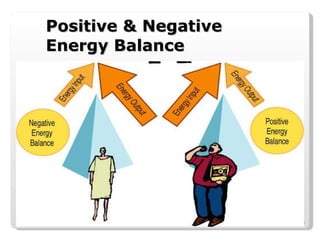
Positive & Negative  Energy Balance
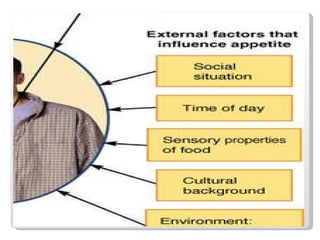
Energy Intake What regulates our food intake? Hunger Prompts eating; physiological desire Hypothalamus :  center that control activities such as maintenance of water balance, temperature regulation, appetite control Appetite The integrated response to the sight, smell, thought or taste of food that initiates or delays eating Satiation Feeling of satisfaction and fullness that occurs during a meal signals to stop eating Satiety Feeling of satisfaction that occurs after a meal; inhibits eating until the next meal
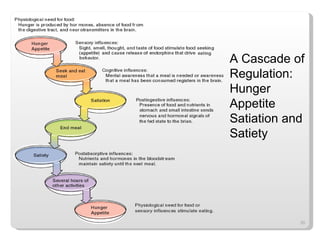
A Cascade of Regulation:  Hunger Appetite Satiation and Satiety
WMSU BSND Review 2007
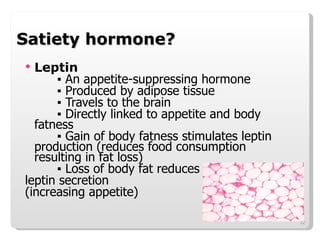
Satiety hormone? Leptin ▪  An appetite-suppressing hormone ▪  Produced by adipose tissue ▪  Travels to the brain ▪  Directly linked to appetite and body fatness ▪  Gain of body fatness stimulates leptin  production (reduces food consumption  resulting in fat loss) ▪  Loss of body fat reduces  leptin secretion  (increasing appetite)
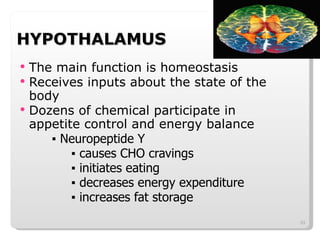
HYPOTHALAMUS The main function is homeostasis Receives inputs about the state of the body Dozens of chemical participate in appetite control and energy balance ▪  Neuropeptide Y   ▪  causes CHO cravings   ▪  initiates eating   ▪  decreases energy expenditure   ▪  increases fat storage
COMPOSITION OF FOODS/MEALS IMPACTS SATIATION AND SATIETY Protein – most satiating; may account for the popularity of high-protein weight loss diet Complex CHO/Fibers – fill stomach, delay absorption of nutrients Fat – weaker impact on satiation, however, in the intestine secretes CCK which signals satiety
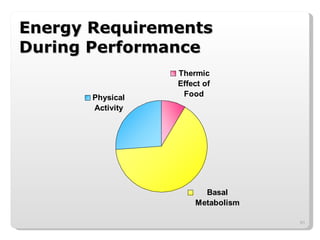
Energy Expenditure Energy Out: Components of Energy Expenditure Basal Metabolism (BMR) Physical Activity (PA) Thermic Effect of Food (TEF)
Basal Metabolic Rate Basal metabolism – is the basic essential metabolic processes by the body at rest also defined as the minimum amount of energy required to carry out vital processes. Basal metabolic rate – the amount of energy required for basal metabolic processes per unit of body weight per unit of time.
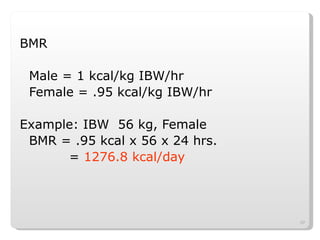
BMR  Male = 1 kcal/kg IBW/hr Female = .95 kcal/kg IBW/hr Example: IBW  56 kg, Female BMR = .95 kcal x 56 x 24 hrs.   =  1276.8 kcal/day
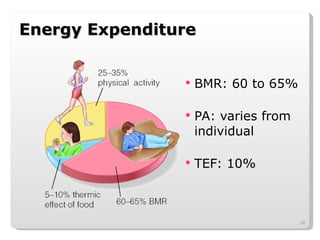
Energy Expenditure BMR: 60 to 65%  PA: varies from individual TEF: 10%
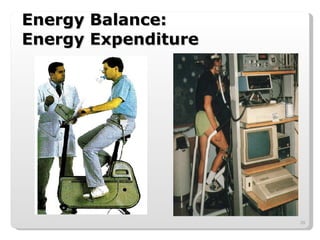
Energy Balance:  Energy Expenditure
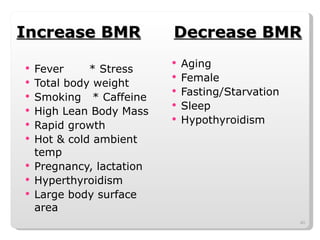
Increase BMR   Decrease BMR Fever * Stress Total body weight Smoking  * Caffeine High Lean Body Mass  Rapid growth Hot & cold ambient temp Pregnancy, lactation Hyperthyroidism Large body surface area Aging Female Fasting/Starvation Sleep Hypothyroidism
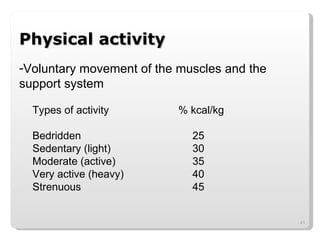
Physical activity Voluntary movement of the muscles and the support system Types of activity   % kcal/kg Bedridden 25 Sedentary (light) 30 Moderate (active) 35 Very active (heavy) 40 Strenuous 45
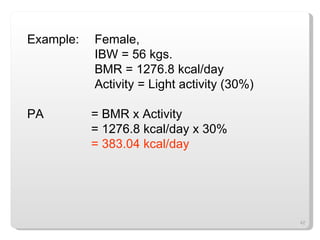
Example:  Female,   IBW = 56 kgs.   BMR = 1276.8 kcal/day   Activity = Light activity (30%) PA  = BMR x Activity  = 1276.8 kcal/day x 30% = 383.04 kcal/day
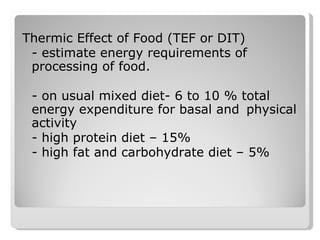
Thermic Effect of Food (TEF or DIT) - estimate energy requirements of processing of food. - on usual mixed diet- 6 to 10 % total  energy expenditure for basal and  physical activity - high protein diet – 15% - high fat and carbohydrate diet – 5%
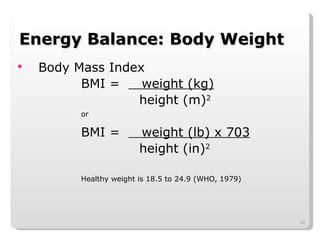
Energy Balance: Body Weight Body Mass Index BMI =  weight (kg)   height (m) 2 or BMI =  weight (lb) x 703   height (in) 2 Healthy weight is 18.5 to 24.9 (WHO, 1979)
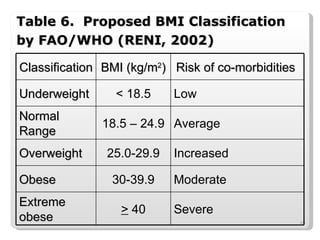
Table 6.  Proposed BMI Classification by FAO/WHO (RENI, 2002)   Classification BMI (kg/m 2 ) Risk of co-morbidities  Underweight < 18.5 Low Normal Range 18.5 – 24.9 Average Overweight 25.0-29.9 Increased Obese  30-39.9 Moderate Extreme obese >  40 Severe
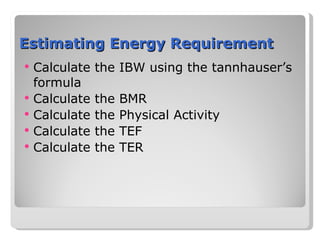
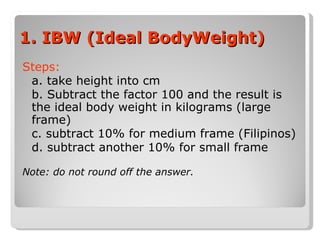
Estimating Energy Requirement   Calculate the IBW using the tannhauser’s formula Calculate the BMR Calculate the Physical Activity Calculate the TEF Calculate the TER
1. IBW (Ideal BodyWeight) Steps: a. take height into cm b. Subtract the factor 100 and the result is the ideal body weight in kilograms (large frame) c. subtract 10% for medium frame (Filipinos) d. subtract another 10% for small frame Note: do not round off the answer.
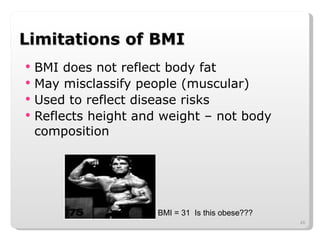
Limitations of BMI BMI does not reflect body fat May misclassify people (muscular) Used to reflect disease risks Reflects height and weight – not body composition BMI = 31  Is this obese???
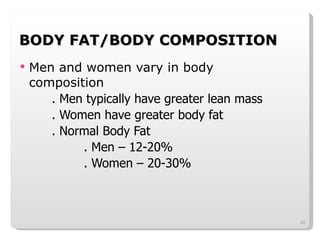
BODY FAT/BODY COMPOSITION Men and women vary in body composition . Men typically have greater lean mass . Women have greater body fat . Normal Body Fat . Men – 12-20% . Women – 20-30%
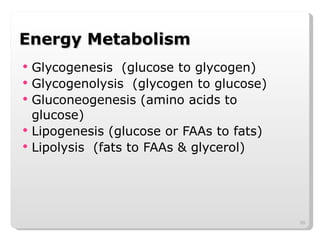
Energy Metabolism Glycogenesis  (glucose to glycogen) Glycogenolysis  (glycogen to glucose) Gluconeogenesis (amino acids to glucose) Lipogenesis (glucose or FAAs to fats) Lipolysis  (fats to FAAs & glycerol)
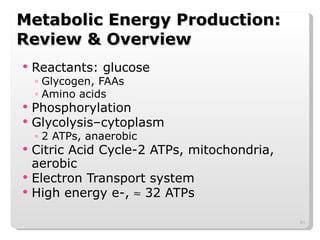
Metabolic Energy Production: Review & Overview Reactants: glucose Glycogen, FAAs Amino acids Phosphorylation Glycolysis–cytoplasm 2 ATPs, anaerobic Citric Acid Cycle-2 ATPs, mitochondria, aerobic Electron Transport system High energy e-,    32 ATPs
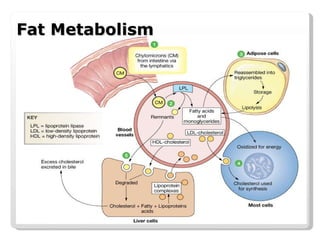
Fat Metabolism WMSU BSND Review 2007
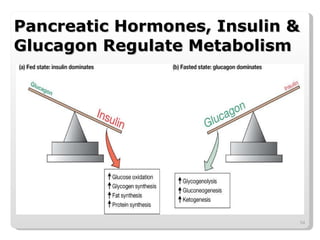
Pancreatic Hormones, Insulin & Glucagon Regulate Metabolism
NUTRITION AND ALCOHOL
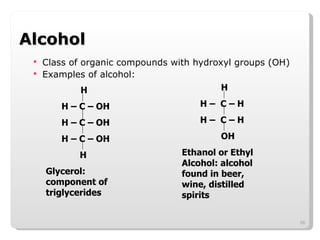
Alcohol Class of organic compounds with hydroxyl groups (OH) Examples of alcohol:   H H – C – OH H – C – OH H – C – OH H Glycerol: component of triglycerides H H –  C – H H –  C – H OH Ethanol or Ethyl Alcohol: alcohol found in beer, wine, distilled spirits
Facts About Ethanol 1 g ethanol = 7 kcal without additional nutrients Medically defined as a depressant drug when taken in low levels    euphoric effect could dissolve lipids in cell membranes    rapidly enter cells Production of ethanol: anaerobic metabolism of CHO by microorganisms “  proof” : amount of ethanol stated in distilled liquors 100 proof = 50% ethanol   80 proof = 40% ethanol
Facts About Alcohol 1 alcoholic drink contains ½ oz of pure ethanol 4-5 oz wine 10 oz wine cooler 12 oz beer 1 ¼ oz distilled liquor  (80 proof- whiskey, scotch, rum, vodka)
Digestion, Metabolism and Utilization A. In the Stomach -  no digestion needed, quickly absorbed - if stomach is empty, then 20% directly absorbed through gastric lining - Alcohol absorption is minimized in the presence of food - Alcohol in stomach    breakdown by alcohol dehydrogenase * Women produce less alcohol dehydrogenase
B. In the Duodenum -  Alcohol readily absorbed and metabolized compared to other nutrients     transported through intestinal veins and capillaries to the liver
C. In the Liver - Liver produces alcohol dehydrogenase that oxidizes  alcohol - Normally: liver breaks and uses fatty acids as its energy source - in the presence of alcohol, liver metabolize alcohol first instead of fat - Liver can process ½ oz of ethanol per our alcohol consumed > available enzymes, extra alcohol circulates throughout the body
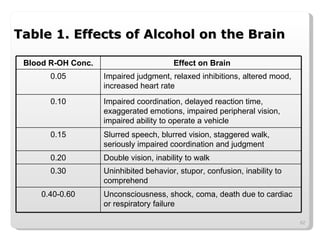
Table 1. Effects of Alcohol on the Brain Blood R-OH Conc. Effect on Brain 0.05 Impaired judgment, relaxed inhibitions, altered mood, increased heart rate 0.10 Impaired coordination, delayed reaction time, exaggerated emotions, impaired peripheral vision, impaired ability to operate a vehicle 0.15 Slurred speech, blurred vision, staggered walk, seriously impaired coordination and judgment 0.20 Double vision, inability to walk 0.30 Uninhibited behavior, stupor, confusion, inability to comprehend 0.40-0.60 Unconsciousness, shock, coma, death due to cardiac or respiratory failure
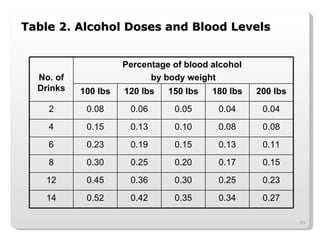
Table 2. Alcohol Doses and Blood Levels No. of Drinks Percentage of blood alcohol  by body weight 100 lbs 120 lbs 150 lbs 180 lbs 200 lbs 2 0.08 0.06 0.05 0.04 0.04 4 0.15 0.13 0.10 0.08 0.08 6 0.23 0.19 0.15 0.13 0.11 8 0.30 0.25 0.20 0.17 0.15 12 0.45 0.36 0.30 0.25 0.23 14 0.52 0.42 0.35 0.34 0.27
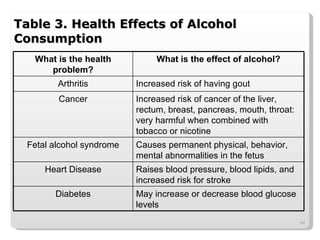
Table 3. Health Effects of Alcohol Consumption What is the health problem? What is the effect of alcohol? Arthritis Increased risk of having gout Cancer Increased risk of cancer of the liver, rectum, breast, pancreas, mouth, throat: very harmful when combined with tobacco or nicotine Fetal alcohol syndrome Causes permanent physical, behavior, mental abnormalities in the fetus Heart Disease Raises blood pressure, blood lipids, and increased risk for stroke Diabetes May increase or decrease blood glucose levels
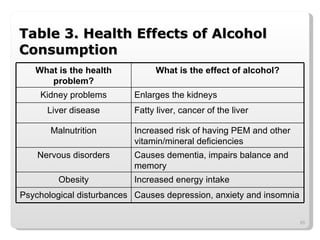
Table 3. Health Effects of Alcohol Consumption What is the health problem? What is the effect of alcohol? Kidney problems Enlarges the kidneys Liver disease Fatty liver, cancer of the liver Malnutrition Increased risk of having PEM and other vitamin/mineral deficiencies Nervous disorders Causes dementia, impairs balance and memory Obesity Increased energy intake Psychological disturbances Causes depression, anxiety and insomnia
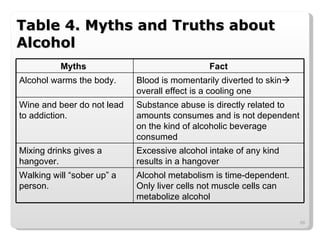
Table 4. Myths and Truths about Alcohol Myths  Fact Alcohol warms the body. Blood is momentarily diverted to skin   overall effect is a cooling one Wine and beer do not lead to addiction. Substance abuse is directly related to amounts consumes and is not dependent on the kind of alcoholic beverage consumed Mixing drinks gives a hangover. Excessive alcohol intake of any kind results in a hangover Walking will “sober up” a person. Alcohol metabolism is time-dependent. Only liver cells not muscle cells can metabolize alcohol
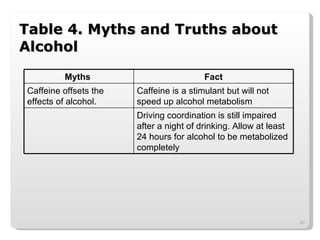
Table 4. Myths and Truths about Alcohol Myths  Fact Caffeine offsets the effects of alcohol. Caffeine is a stimulant but will not speed up alcohol metabolism Driving coordination is still impaired after a night of drinking. Allow at least 24 hours for alcohol to be metabolized completely
NUTRITION  AND  PHYSICAL FITNESS
Physical Fitness A set of abilities individuals possess to perform specific types of physical activity Physically fit individuals have energy for both planned and unplanned activities at home or the workspace
Physical Fitness Physical Activity can be classified as: Unstructured physical activity Usual activities of daily life Structured physical activity Planned program designed to improve physical fitness
Physical Fitness Benefits of physical fitness: Restful sleep Nutritional health Optimal body composition Optimal bone density Lower incidence of anxiety and depression Improves self image Improves circulation and lung function &quot;Those who do not find time for exercise will have to find time for illness.&quot;  ~  Earl of Derby
Excessive Exercise Risks Children Energy needs not achieved and limited growth and development Teens Inadequate energy intake Dietary protein used for energy Amenorrhea Negative calcium balance and reduced bone mass Sports anemia Adults Possible increased need for riboflavin and vitamin B6 Exercise-related injuries Pregnant Women Low weight gain Low-birth-weight infant Nursing mothers Excessive rate of weight loss, reducing milk production and limiting the  infant growth Older adults Exercise-related injuries leading to disability
Components of Fitness Flexibility – ability to bend and recover without injury Muscle strength – ability of ,muscles to work against resistance Muscle endurance – ability of muscle to contact repeatedly without being exhausted Cardio-respiratory endurance – ability to perform large muscle dynamic exercise of moderate to high intensity for prolonged periods.
Basic Elements of the Exercise Prescription Frequency Intensity Time Mode Rate of Progression
Frequency Number of days per week Hard/Easy principle Active rest
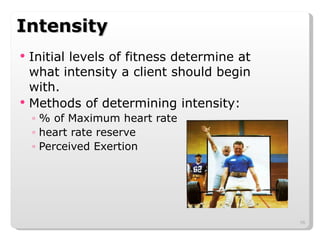
Intensity Initial levels of fitness determine at what intensity a client should begin with. Methods of determining intensity: % of Maximum heart rate heart rate reserve Perceived Exertion
Time ACSM recommendation: “ every individual should accumulate 30 minutes or more of moderate physical activity on most , but preferably all days of the week”.
Mode What the client likes or will do! Health and weight loss should involve using large muscle groups. Weight bearing exercise for strengthening bones. Specific exercise for performance. Swimming is not great for weight loss.
Rate of Progression 3 stages: initial conditioning stage-4 weeks. improvement stage- 4 to 5 months. maintenance stage- begins 6 months after start, can last a lifetime!
Exercise Prescription Simultaneous increase in any 3 elements may overload the individual's physiological system increasing risk to exercise-related injuries and exercise burn out
Stages of Progression in  Exercise Program Stages: Initial Conditioning Improvement Maintenance
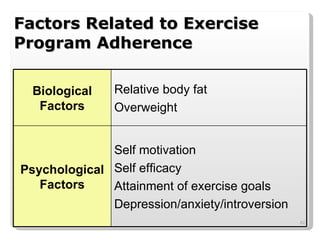
Factors Related to Exercise Program Adherence Biological Factors Relative body fat Overweight Psychological Factors Self motivation Self efficacy Attainment of exercise goals Depression/anxiety/introversion
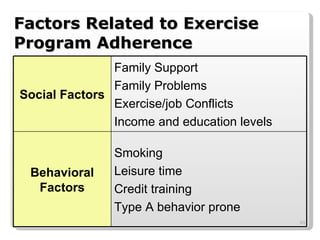
Factors Related to Exercise Program Adherence Social Factors Family Support Family Problems Exercise/job Conflicts Income and education levels Behavioral Factors Smoking Leisure time Credit training Type A behavior prone
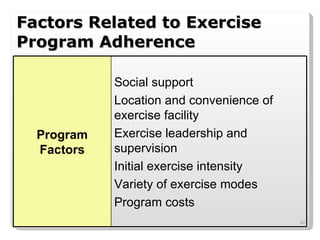
Factors Related to Exercise Program Adherence Program Factors Social support Location and convenience of exercise facility Exercise leadership and supervision Initial exercise intensity Variety of exercise modes Program costs
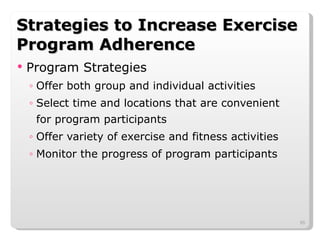
Strategies to Increase Exercise Program Adherence Program Strategies Offer both group and individual activities Select time and locations that are convenient for program participants Offer variety of exercise and fitness activities Monitor the progress of program participants
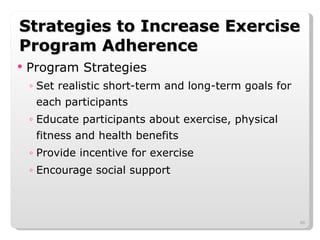
Strategies to Increase Exercise Program Adherence Program Strategies Set realistic short-term and long-term goals for each participants Educate participants about exercise, physical fitness and health benefits Provide incentive for exercise Encourage social support
Strategies to Increase Exercise Program Adherence Behavioral Strategies for Exercise Leaders Be a positive role model Show interest in participants Exhibit enthusiasm
Strategies to Increase Exercise Program Adherence Behavioral Strategies for Exercise Leaders Develop good rapport with each participant Motivate and encourage Attend to orthopedic and musculoskeletal problems of participants
Importance of  Nutrition in Performance Inadequate intake of essential nutrients impair performance due to: Inadequate energy supply Inability to regulate exercise metabolism at an optimal level Decreased synthesis of key body tissues or enzymes
Importance of  Nutrition in Performance Excessive intake of essential nutrients impair performance results to: Increased proportions of body fat Poor athletic performance Increased risk of developing diseases Toxicity symptoms
Energy Requirements  During Performance
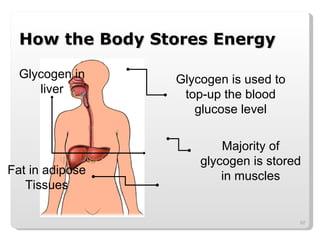
How the Body Stores Energy Glycogen in liver Fat in adipose Tissues Glycogen is used to top-up the blood glucose level Majority of glycogen is stored in muscles
How the Body Stores Energy Exercise    converts stored energy to kinetic energy and heat Muscles use energy at a rate  directly proportional  to the rate and intensity of the activity or exercise
Factors that Influence  Fuel Choices 1. Fuel availability from the diet 2. Intensity and duration 3. Degree to which the body is conditioned to perform the activity
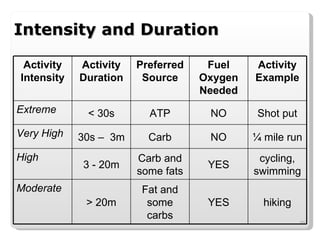
Intensity and Duration Activity Intensity Activity Duration Preferred Source Fuel Oxygen Needed Activity Example Extreme < 30s ATP NO Shot put Very High 30s –  3m Carb NO ¼ mile run High 3 - 20m Carb and some fats YES cycling, swimming Moderate > 20m Fat and some carbs YES hiking
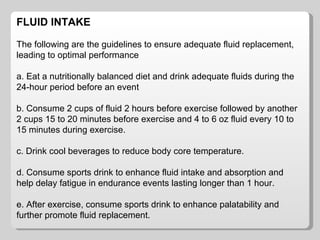
FLUID INTAKE The following are the guidelines to ensure adequate fluid replacement, leading to optimal performance a. Eat a nutritionally balanced diet and drink adequate fluids during the 24-hour period before an event b. Consume 2 cups of fluid 2 hours before exercise followed by another 2 cups 15 to 20 minutes before exercise and 4 to 6 oz fluid every 10 to 15 minutes during exercise. c. Drink cool beverages to reduce body core temperature.  d. Consume sports drink to enhance fluid intake and absorption and help delay fatigue in endurance events lasting longer than 1 hour. e. After exercise, consume sports drink to enhance palatability and further promote fluid replacement.

Nutrition and energy

  • 1.
  • 2.
    Calorie -used as standard unit for measuring the energy value of food - amount of heat necessary to raise 1 gram of water by 1̊C measures human energy expenditures 1 Kcal = 4.184 kilojoules (KJ) 1000 KJ = 1 megajoule (MJ) 1000 Kcal = 4.184 MJ 1 MJ = 239 Kcal
  • 4.
    Methods of EnergyMeasurement Direct calorimetry Measures amount of energy expended by monitoring heat production Bomb calorimeter – heat of combustion = gross energy value of food Respiration chamber – heat released from a person’s body determine how much energy each activity has burned for that person
  • 5.
    Indirect calorimetry Measuredby determining with a respirometer the oxygen consumption and carbon dioxide production of the body in a given period of time Volume of CO 2 Eliminated RQ = ———————————— Volume of O 2 Consumed
  • 6.
    Indirect Calorimeter -Atwater (physiologic fuel value of food)
  • 7.
    Energy Pathways Glycolysis– major pathway of CHO metabolism; 1 glucose  2 pyruvate anaerobic Pyruvate  acetyl CoA TCA cycle  additional ATP and Carbon dioxide Electron transport chain  Water
  • 8.
  • 9.
    Glucose The fateof pyruvate Anaerobic vs. aerobic pathways Occurs in the cytoplasm Pyruvic acid & ATP Sprint activity Occurs in the mitochondria  CoA (Pyruvic acid +Coenzyme) Aerobic exercise
  • 10.
    Glucose The fateof pyruvate Anaerobic Pyruvate-to-lactic acid Cori cycle
  • 11.
  • 12.
    Glucose The fateof pyruvate Aerobic Pyruvate-to-acetyl CoA
  • 13.
    Glycerol & FattyAcids Fatty acids-to-acetyl CoA Beta-oxidation (mitochondria)
  • 14.
    Amino Acids Aminoacids-to-acetyl CoA WMSU BSND Review 2007
  • 15.
    Amino Acids DeaminationKeto acid Ammonia WMSU BSND Review 2007
  • 16.
  • 17.
  • 18.
    Urea excretion viathe kidneys
  • 19.
  • 20.
    Economics of FeastingExcess protein Excess carbohydrate Excess fat
  • 21.
  • 22.
    Economics of FastingWMSU BSND Review 2007
  • 23.
    Economics of FastingGlucose needed for the brain Protein meets glucose needs
  • 24.
    Economics of FastingShift to ketosis
  • 25.
    Economics of FastingSuppression of appetite Slowing of metabolism Symptoms of starvation
  • 26.
    Energy Balance WeightStability: Energy intake balances with energy out
  • 27.
    Energy Balance Overweightand obesity result from an energy imbalance Body weight is the result of genes, metabolism, behavior, environment, culture and socio-economic status Behavior and environment play a large role causing people to be overweight and obese (greatest areas for prevention and treatment actions)
  • 28.
    Positive & Negative Energy Balance
  • 29.
    Energy Intake Whatregulates our food intake? Hunger Prompts eating; physiological desire Hypothalamus : center that control activities such as maintenance of water balance, temperature regulation, appetite control Appetite The integrated response to the sight, smell, thought or taste of food that initiates or delays eating Satiation Feeling of satisfaction and fullness that occurs during a meal signals to stop eating Satiety Feeling of satisfaction that occurs after a meal; inhibits eating until the next meal
  • 30.
    A Cascade ofRegulation: Hunger Appetite Satiation and Satiety
  • 31.
  • 32.
    Satiety hormone? Leptin▪ An appetite-suppressing hormone ▪ Produced by adipose tissue ▪ Travels to the brain ▪ Directly linked to appetite and body fatness ▪ Gain of body fatness stimulates leptin production (reduces food consumption resulting in fat loss) ▪ Loss of body fat reduces leptin secretion (increasing appetite)
  • 33.
    HYPOTHALAMUS The mainfunction is homeostasis Receives inputs about the state of the body Dozens of chemical participate in appetite control and energy balance ▪ Neuropeptide Y ▪ causes CHO cravings ▪ initiates eating ▪ decreases energy expenditure ▪ increases fat storage
  • 34.
    COMPOSITION OF FOODS/MEALSIMPACTS SATIATION AND SATIETY Protein – most satiating; may account for the popularity of high-protein weight loss diet Complex CHO/Fibers – fill stomach, delay absorption of nutrients Fat – weaker impact on satiation, however, in the intestine secretes CCK which signals satiety
  • 35.
    Energy Expenditure EnergyOut: Components of Energy Expenditure Basal Metabolism (BMR) Physical Activity (PA) Thermic Effect of Food (TEF)
  • 36.
    Basal Metabolic RateBasal metabolism – is the basic essential metabolic processes by the body at rest also defined as the minimum amount of energy required to carry out vital processes. Basal metabolic rate – the amount of energy required for basal metabolic processes per unit of body weight per unit of time.
  • 37.
    BMR Male= 1 kcal/kg IBW/hr Female = .95 kcal/kg IBW/hr Example: IBW 56 kg, Female BMR = .95 kcal x 56 x 24 hrs. = 1276.8 kcal/day
  • 38.
    Energy Expenditure BMR:60 to 65% PA: varies from individual TEF: 10%
  • 39.
    Energy Balance: Energy Expenditure
  • 40.
    Increase BMR Decrease BMR Fever * Stress Total body weight Smoking * Caffeine High Lean Body Mass Rapid growth Hot & cold ambient temp Pregnancy, lactation Hyperthyroidism Large body surface area Aging Female Fasting/Starvation Sleep Hypothyroidism
  • 41.
    Physical activity Voluntarymovement of the muscles and the support system Types of activity % kcal/kg Bedridden 25 Sedentary (light) 30 Moderate (active) 35 Very active (heavy) 40 Strenuous 45
  • 42.
    Example: Female, IBW = 56 kgs. BMR = 1276.8 kcal/day Activity = Light activity (30%) PA = BMR x Activity = 1276.8 kcal/day x 30% = 383.04 kcal/day
  • 43.
    Thermic Effect ofFood (TEF or DIT) - estimate energy requirements of processing of food. - on usual mixed diet- 6 to 10 % total energy expenditure for basal and physical activity - high protein diet – 15% - high fat and carbohydrate diet – 5%
  • 44.
    Energy Balance: BodyWeight Body Mass Index BMI = weight (kg) height (m) 2 or BMI = weight (lb) x 703 height (in) 2 Healthy weight is 18.5 to 24.9 (WHO, 1979)
  • 45.
    Table 6. Proposed BMI Classification by FAO/WHO (RENI, 2002) Classification BMI (kg/m 2 ) Risk of co-morbidities Underweight < 18.5 Low Normal Range 18.5 – 24.9 Average Overweight 25.0-29.9 Increased Obese 30-39.9 Moderate Extreme obese > 40 Severe
  • 46.
    Estimating Energy Requirement Calculate the IBW using the tannhauser’s formula Calculate the BMR Calculate the Physical Activity Calculate the TEF Calculate the TER
  • 47.
    1. IBW (IdealBodyWeight) Steps: a. take height into cm b. Subtract the factor 100 and the result is the ideal body weight in kilograms (large frame) c. subtract 10% for medium frame (Filipinos) d. subtract another 10% for small frame Note: do not round off the answer.
  • 48.
    Limitations of BMIBMI does not reflect body fat May misclassify people (muscular) Used to reflect disease risks Reflects height and weight – not body composition BMI = 31 Is this obese???
  • 49.
    BODY FAT/BODY COMPOSITIONMen and women vary in body composition . Men typically have greater lean mass . Women have greater body fat . Normal Body Fat . Men – 12-20% . Women – 20-30%
  • 50.
    Energy Metabolism Glycogenesis (glucose to glycogen) Glycogenolysis (glycogen to glucose) Gluconeogenesis (amino acids to glucose) Lipogenesis (glucose or FAAs to fats) Lipolysis (fats to FAAs & glycerol)
  • 51.
    Metabolic Energy Production:Review & Overview Reactants: glucose Glycogen, FAAs Amino acids Phosphorylation Glycolysis–cytoplasm 2 ATPs, anaerobic Citric Acid Cycle-2 ATPs, mitochondria, aerobic Electron Transport system High energy e-,  32 ATPs
  • 53.
    Fat Metabolism WMSUBSND Review 2007
  • 54.
    Pancreatic Hormones, Insulin& Glucagon Regulate Metabolism
  • 55.
  • 56.
    Alcohol Class oforganic compounds with hydroxyl groups (OH) Examples of alcohol: H H – C – OH H – C – OH H – C – OH H Glycerol: component of triglycerides H H – C – H H – C – H OH Ethanol or Ethyl Alcohol: alcohol found in beer, wine, distilled spirits
  • 57.
    Facts About Ethanol1 g ethanol = 7 kcal without additional nutrients Medically defined as a depressant drug when taken in low levels  euphoric effect could dissolve lipids in cell membranes  rapidly enter cells Production of ethanol: anaerobic metabolism of CHO by microorganisms “ proof” : amount of ethanol stated in distilled liquors 100 proof = 50% ethanol 80 proof = 40% ethanol
  • 58.
    Facts About Alcohol1 alcoholic drink contains ½ oz of pure ethanol 4-5 oz wine 10 oz wine cooler 12 oz beer 1 ¼ oz distilled liquor (80 proof- whiskey, scotch, rum, vodka)
  • 59.
    Digestion, Metabolism andUtilization A. In the Stomach - no digestion needed, quickly absorbed - if stomach is empty, then 20% directly absorbed through gastric lining - Alcohol absorption is minimized in the presence of food - Alcohol in stomach  breakdown by alcohol dehydrogenase * Women produce less alcohol dehydrogenase
  • 60.
    B. In theDuodenum - Alcohol readily absorbed and metabolized compared to other nutrients  transported through intestinal veins and capillaries to the liver
  • 61.
    C. In theLiver - Liver produces alcohol dehydrogenase that oxidizes alcohol - Normally: liver breaks and uses fatty acids as its energy source - in the presence of alcohol, liver metabolize alcohol first instead of fat - Liver can process ½ oz of ethanol per our alcohol consumed > available enzymes, extra alcohol circulates throughout the body
  • 62.
    Table 1. Effectsof Alcohol on the Brain Blood R-OH Conc. Effect on Brain 0.05 Impaired judgment, relaxed inhibitions, altered mood, increased heart rate 0.10 Impaired coordination, delayed reaction time, exaggerated emotions, impaired peripheral vision, impaired ability to operate a vehicle 0.15 Slurred speech, blurred vision, staggered walk, seriously impaired coordination and judgment 0.20 Double vision, inability to walk 0.30 Uninhibited behavior, stupor, confusion, inability to comprehend 0.40-0.60 Unconsciousness, shock, coma, death due to cardiac or respiratory failure
  • 63.
    Table 2. AlcoholDoses and Blood Levels No. of Drinks Percentage of blood alcohol by body weight 100 lbs 120 lbs 150 lbs 180 lbs 200 lbs 2 0.08 0.06 0.05 0.04 0.04 4 0.15 0.13 0.10 0.08 0.08 6 0.23 0.19 0.15 0.13 0.11 8 0.30 0.25 0.20 0.17 0.15 12 0.45 0.36 0.30 0.25 0.23 14 0.52 0.42 0.35 0.34 0.27
  • 64.
    Table 3. HealthEffects of Alcohol Consumption What is the health problem? What is the effect of alcohol? Arthritis Increased risk of having gout Cancer Increased risk of cancer of the liver, rectum, breast, pancreas, mouth, throat: very harmful when combined with tobacco or nicotine Fetal alcohol syndrome Causes permanent physical, behavior, mental abnormalities in the fetus Heart Disease Raises blood pressure, blood lipids, and increased risk for stroke Diabetes May increase or decrease blood glucose levels
  • 65.
    Table 3. HealthEffects of Alcohol Consumption What is the health problem? What is the effect of alcohol? Kidney problems Enlarges the kidneys Liver disease Fatty liver, cancer of the liver Malnutrition Increased risk of having PEM and other vitamin/mineral deficiencies Nervous disorders Causes dementia, impairs balance and memory Obesity Increased energy intake Psychological disturbances Causes depression, anxiety and insomnia
  • 66.
    Table 4. Mythsand Truths about Alcohol Myths Fact Alcohol warms the body. Blood is momentarily diverted to skin  overall effect is a cooling one Wine and beer do not lead to addiction. Substance abuse is directly related to amounts consumes and is not dependent on the kind of alcoholic beverage consumed Mixing drinks gives a hangover. Excessive alcohol intake of any kind results in a hangover Walking will “sober up” a person. Alcohol metabolism is time-dependent. Only liver cells not muscle cells can metabolize alcohol
  • 67.
    Table 4. Mythsand Truths about Alcohol Myths Fact Caffeine offsets the effects of alcohol. Caffeine is a stimulant but will not speed up alcohol metabolism Driving coordination is still impaired after a night of drinking. Allow at least 24 hours for alcohol to be metabolized completely
  • 68.
    NUTRITION AND PHYSICAL FITNESS
  • 69.
    Physical Fitness Aset of abilities individuals possess to perform specific types of physical activity Physically fit individuals have energy for both planned and unplanned activities at home or the workspace
  • 70.
    Physical Fitness PhysicalActivity can be classified as: Unstructured physical activity Usual activities of daily life Structured physical activity Planned program designed to improve physical fitness
  • 71.
    Physical Fitness Benefitsof physical fitness: Restful sleep Nutritional health Optimal body composition Optimal bone density Lower incidence of anxiety and depression Improves self image Improves circulation and lung function &quot;Those who do not find time for exercise will have to find time for illness.&quot; ~ Earl of Derby
  • 72.
    Excessive Exercise RisksChildren Energy needs not achieved and limited growth and development Teens Inadequate energy intake Dietary protein used for energy Amenorrhea Negative calcium balance and reduced bone mass Sports anemia Adults Possible increased need for riboflavin and vitamin B6 Exercise-related injuries Pregnant Women Low weight gain Low-birth-weight infant Nursing mothers Excessive rate of weight loss, reducing milk production and limiting the infant growth Older adults Exercise-related injuries leading to disability
  • 73.
    Components of FitnessFlexibility – ability to bend and recover without injury Muscle strength – ability of ,muscles to work against resistance Muscle endurance – ability of muscle to contact repeatedly without being exhausted Cardio-respiratory endurance – ability to perform large muscle dynamic exercise of moderate to high intensity for prolonged periods.
  • 74.
    Basic Elements ofthe Exercise Prescription Frequency Intensity Time Mode Rate of Progression
  • 75.
    Frequency Number ofdays per week Hard/Easy principle Active rest
  • 76.
    Intensity Initial levelsof fitness determine at what intensity a client should begin with. Methods of determining intensity: % of Maximum heart rate heart rate reserve Perceived Exertion
  • 77.
    Time ACSM recommendation:“ every individual should accumulate 30 minutes or more of moderate physical activity on most , but preferably all days of the week”.
  • 78.
    Mode What theclient likes or will do! Health and weight loss should involve using large muscle groups. Weight bearing exercise for strengthening bones. Specific exercise for performance. Swimming is not great for weight loss.
  • 79.
    Rate of Progression3 stages: initial conditioning stage-4 weeks. improvement stage- 4 to 5 months. maintenance stage- begins 6 months after start, can last a lifetime!
  • 80.
    Exercise Prescription Simultaneousincrease in any 3 elements may overload the individual's physiological system increasing risk to exercise-related injuries and exercise burn out
  • 81.
    Stages of Progressionin Exercise Program Stages: Initial Conditioning Improvement Maintenance
  • 82.
    Factors Related toExercise Program Adherence Biological Factors Relative body fat Overweight Psychological Factors Self motivation Self efficacy Attainment of exercise goals Depression/anxiety/introversion
  • 83.
    Factors Related toExercise Program Adherence Social Factors Family Support Family Problems Exercise/job Conflicts Income and education levels Behavioral Factors Smoking Leisure time Credit training Type A behavior prone
  • 84.
    Factors Related toExercise Program Adherence Program Factors Social support Location and convenience of exercise facility Exercise leadership and supervision Initial exercise intensity Variety of exercise modes Program costs
  • 85.
    Strategies to IncreaseExercise Program Adherence Program Strategies Offer both group and individual activities Select time and locations that are convenient for program participants Offer variety of exercise and fitness activities Monitor the progress of program participants
  • 86.
    Strategies to IncreaseExercise Program Adherence Program Strategies Set realistic short-term and long-term goals for each participants Educate participants about exercise, physical fitness and health benefits Provide incentive for exercise Encourage social support
  • 87.
    Strategies to IncreaseExercise Program Adherence Behavioral Strategies for Exercise Leaders Be a positive role model Show interest in participants Exhibit enthusiasm
  • 88.
    Strategies to IncreaseExercise Program Adherence Behavioral Strategies for Exercise Leaders Develop good rapport with each participant Motivate and encourage Attend to orthopedic and musculoskeletal problems of participants
  • 89.
    Importance of Nutrition in Performance Inadequate intake of essential nutrients impair performance due to: Inadequate energy supply Inability to regulate exercise metabolism at an optimal level Decreased synthesis of key body tissues or enzymes
  • 90.
    Importance of Nutrition in Performance Excessive intake of essential nutrients impair performance results to: Increased proportions of body fat Poor athletic performance Increased risk of developing diseases Toxicity symptoms
  • 91.
    Energy Requirements During Performance
  • 92.
    How the BodyStores Energy Glycogen in liver Fat in adipose Tissues Glycogen is used to top-up the blood glucose level Majority of glycogen is stored in muscles
  • 93.
    How the BodyStores Energy Exercise  converts stored energy to kinetic energy and heat Muscles use energy at a rate directly proportional to the rate and intensity of the activity or exercise
  • 94.
    Factors that Influence Fuel Choices 1. Fuel availability from the diet 2. Intensity and duration 3. Degree to which the body is conditioned to perform the activity
  • 95.
    Intensity and DurationActivity Intensity Activity Duration Preferred Source Fuel Oxygen Needed Activity Example Extreme < 30s ATP NO Shot put Very High 30s – 3m Carb NO ¼ mile run High 3 - 20m Carb and some fats YES cycling, swimming Moderate > 20m Fat and some carbs YES hiking
  • 96.
    FLUID INTAKE Thefollowing are the guidelines to ensure adequate fluid replacement, leading to optimal performance a. Eat a nutritionally balanced diet and drink adequate fluids during the 24-hour period before an event b. Consume 2 cups of fluid 2 hours before exercise followed by another 2 cups 15 to 20 minutes before exercise and 4 to 6 oz fluid every 10 to 15 minutes during exercise. c. Drink cool beverages to reduce body core temperature. d. Consume sports drink to enhance fluid intake and absorption and help delay fatigue in endurance events lasting longer than 1 hour. e. After exercise, consume sports drink to enhance palatability and further promote fluid replacement.