NURSING MANAGEMENT
ON SHOCK
A N A M I K A R A M AWAT
M . S C . N U R S I N G P R E V.
B ATC H - 2 0 1 7 - 1 8
G C O N , J O D H P U R
INTRODUCTION
Shock is a condition in which tissue perfusion is
inadequate to deliver oxygen and nutrients to
support vital organ and cellular function.
DEFINITION
“Shock is defined as a complex, life threatening
condition or syndrome characterized by
inadequate blood flow to the tissues and cells of
the body.”
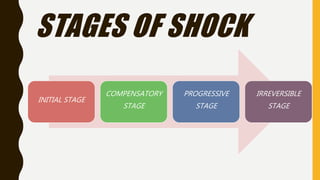
STAGES OF SHOCK
INITIAL STAGE
COMPENSATORY
STAGE
PROGRESSIVE
STAGE
IRREVERSIBLE
STAGE
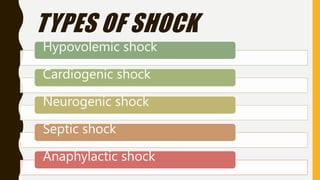
TYPES OF SHOCK
Hypovolemic shock
Cardiogenic shock
Neurogenic shock
Septic shock
Anaphylactic shock
NURSING MANAGEMENT
NURSING ASSESSMENT
 CABs: Circulation, Airway, breathing, and Focused
assessment of tissue perfusion;
• Vital signs
• Peripheral pulses
• Level of consciousness
• Capillary refill
CONT…
•Skin (e.g., temperature, color, moisture)
•Urine output
•Brief history Taking
•Events leading to shock
•Onset and duration of symptoms
•Allergies
IMMEDIATE NURSING
CARE OF SHOCK
• Check for a response.
• Give Rescue Breaths or CPR as needed.
• Lay the person flat, face-up, but do not move him or her if you
suspect a head, back, or neck injury.
• Raise the person's feet about 12 inches. Use a box, etc. If
raising the legs will cause pain or further injury, keep him or
her flat. Keep the person still.
• Do not raise the feet or move the legs if hip or leg bones are
broken. Keep the person lying flat.
• Check for signs of circulation. If absent, begin CPR.
• Keep the person warm and comfortable. Loosen belt (s) and tight
clothing and cover the person with a blanket.
• NPO: Even if the person complains of thirst, give nothing by mouth.
If the person wants water, moisten the lips.
• Reassure the person. Make him or her as comfortable.
• Fluid and blood replacement: Open IV line on both hands with two
wide bore cannulas and start fluid rapidly as advised.
• Administer oxygen via face mask.
• Identify the cause and treat accordingly.
• Vasoactive medications to improve cardiac contractility, i.e.
Dopamine, Dobutamine, Noradrenaline.
SUMMARY…
THANK YOU

Nursing management on shock

  • 1.
    NURSING MANAGEMENT ON SHOCK AN A M I K A R A M AWAT M . S C . N U R S I N G P R E V. B ATC H - 2 0 1 7 - 1 8 G C O N , J O D H P U R
  • 2.
    INTRODUCTION Shock is acondition in which tissue perfusion is inadequate to deliver oxygen and nutrients to support vital organ and cellular function.
  • 3.
    DEFINITION “Shock is definedas a complex, life threatening condition or syndrome characterized by inadequate blood flow to the tissues and cells of the body.”
  • 4.
    STAGES OF SHOCK INITIALSTAGE COMPENSATORY STAGE PROGRESSIVE STAGE IRREVERSIBLE STAGE
  • 5.
    TYPES OF SHOCK Hypovolemicshock Cardiogenic shock Neurogenic shock Septic shock Anaphylactic shock
  • 6.
  • 7.
    NURSING ASSESSMENT  CABs:Circulation, Airway, breathing, and Focused assessment of tissue perfusion; • Vital signs • Peripheral pulses • Level of consciousness • Capillary refill
  • 8.
    CONT… •Skin (e.g., temperature,color, moisture) •Urine output •Brief history Taking •Events leading to shock •Onset and duration of symptoms •Allergies
  • 9.
  • 10.
    • Check fora response. • Give Rescue Breaths or CPR as needed. • Lay the person flat, face-up, but do not move him or her if you suspect a head, back, or neck injury. • Raise the person's feet about 12 inches. Use a box, etc. If raising the legs will cause pain or further injury, keep him or her flat. Keep the person still. • Do not raise the feet or move the legs if hip or leg bones are broken. Keep the person lying flat. • Check for signs of circulation. If absent, begin CPR.
  • 11.
    • Keep theperson warm and comfortable. Loosen belt (s) and tight clothing and cover the person with a blanket. • NPO: Even if the person complains of thirst, give nothing by mouth. If the person wants water, moisten the lips. • Reassure the person. Make him or her as comfortable. • Fluid and blood replacement: Open IV line on both hands with two wide bore cannulas and start fluid rapidly as advised. • Administer oxygen via face mask. • Identify the cause and treat accordingly. • Vasoactive medications to improve cardiac contractility, i.e. Dopamine, Dobutamine, Noradrenaline.
  • 12.
  • 13.