Concept and Principles of
Critical Care Nursing
Prof. (Ms.) Feba Geevarghese
Vice Principal and Ph.D. Scholar
College of Nursing
St. Stephen’s Hospital
Delhi
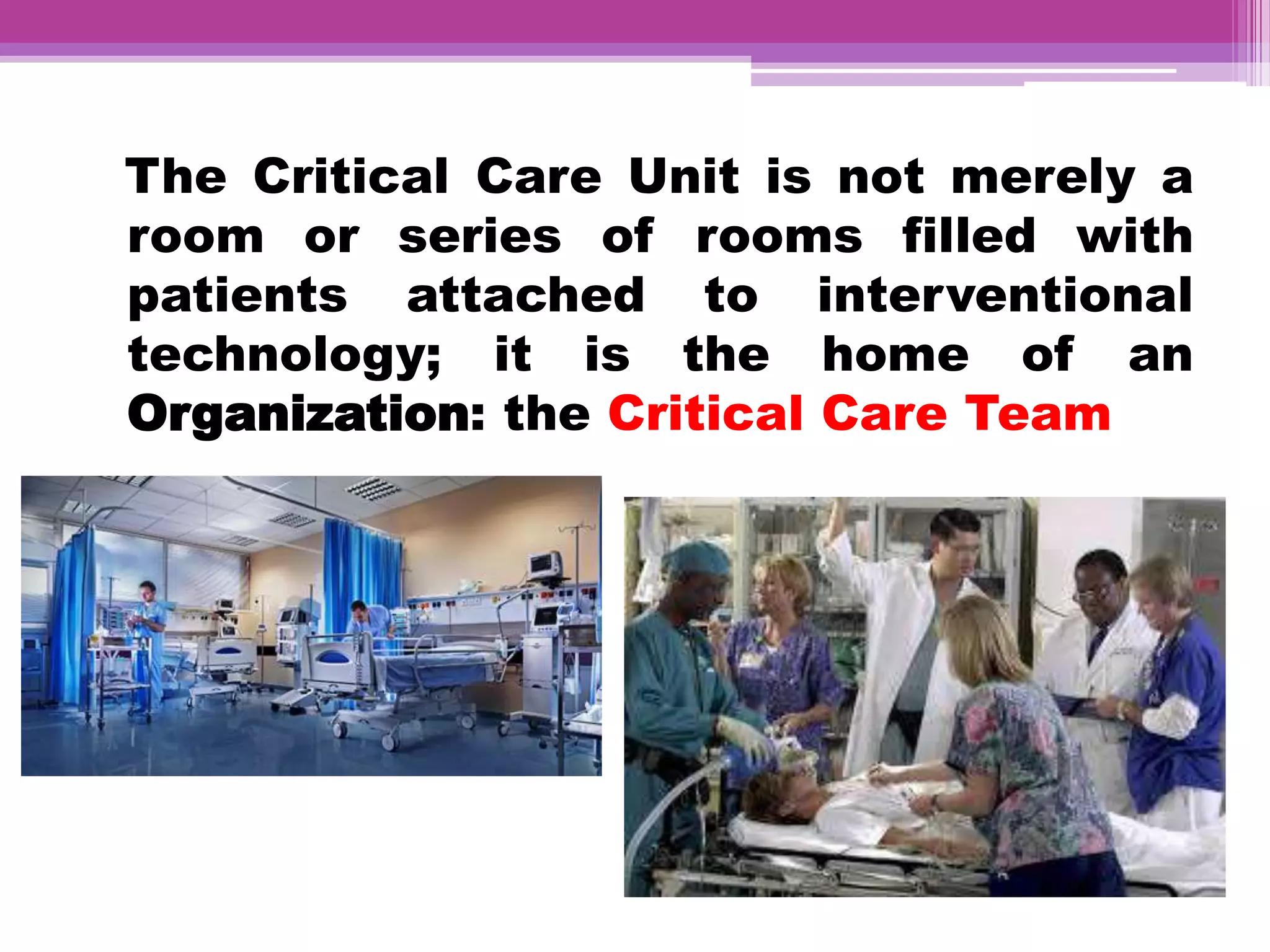
The Critical Care Unit is not merely a
room or series of rooms filled with
patients attached to interventional
technology; it is the home of an
Organization: the Critical Care Team
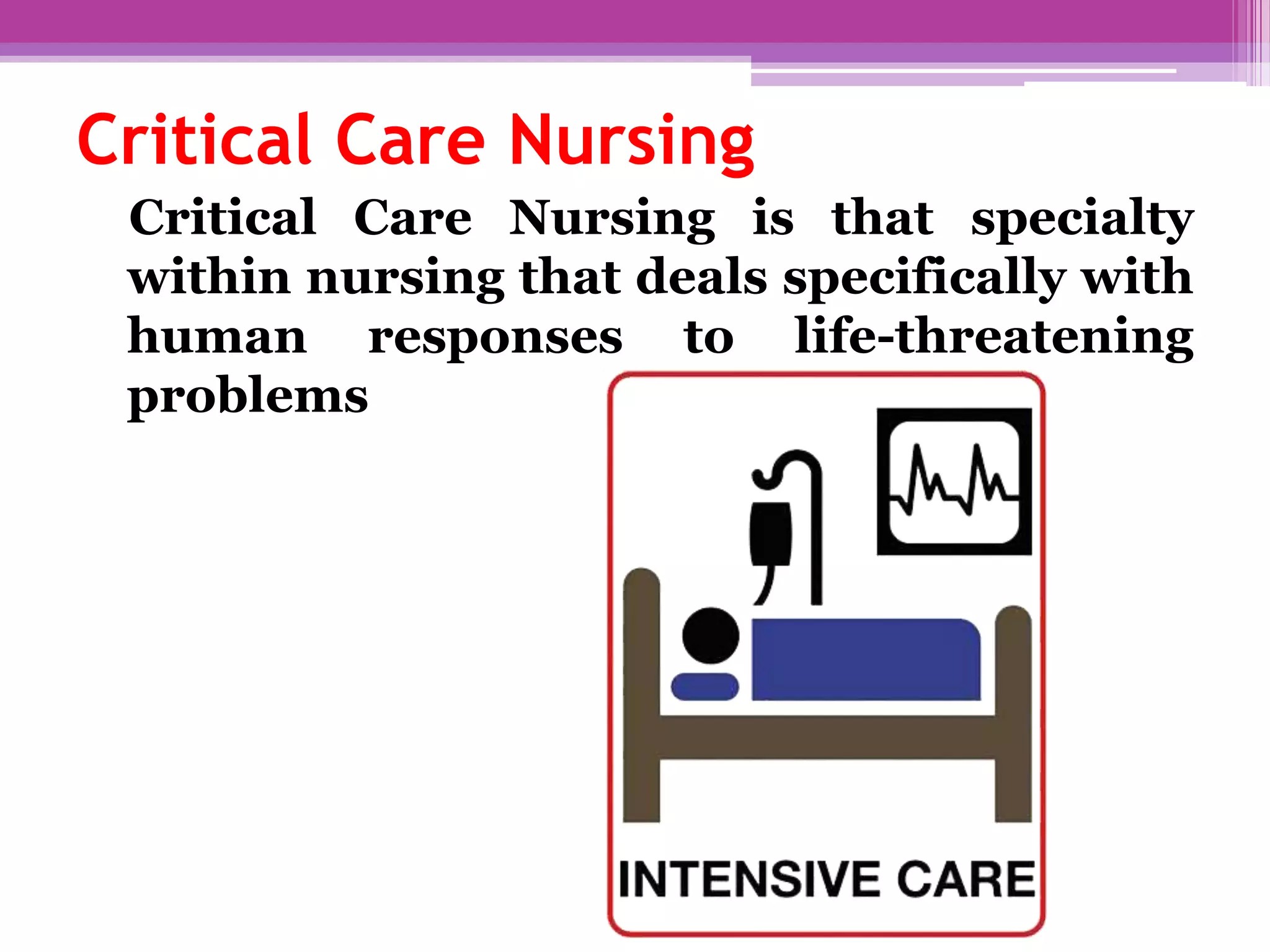
Critical Care Nursing
Critical Care Nursing is that specialty
within nursing that deals specifically with
human responses to life-threatening
problems
7 C’s of Critical Care
Compassion
Communication
Consideration (of patients, relatives
and colleagues) and avoidance of
Conflict
Comfort: protection of patient from
suffering
7 C’s of Critical Care
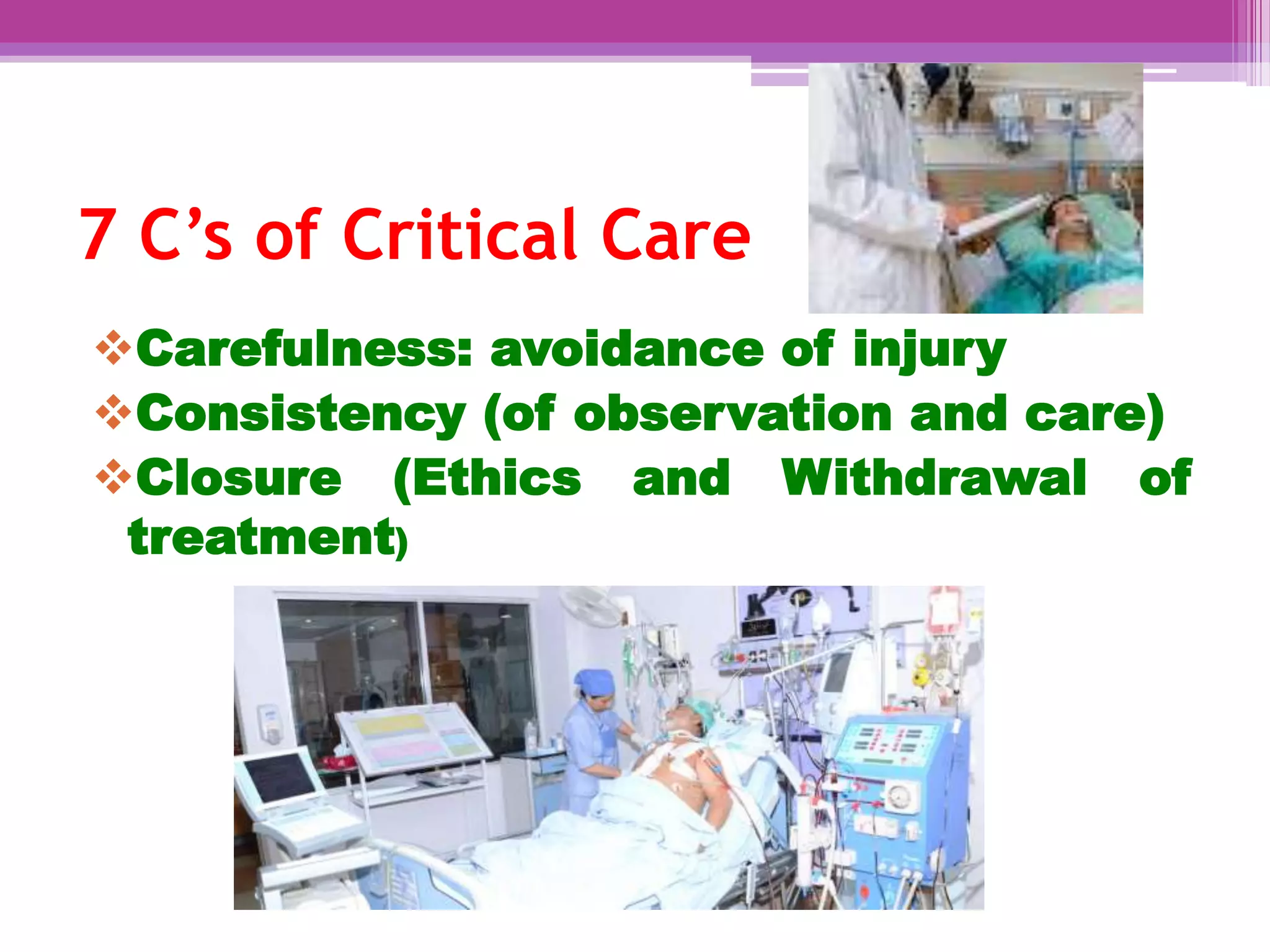
Carefulness: avoidance of injury
Consistency (of observation and care)
Closure (Ethics and Withdrawal of
treatment)
Critical Care Nurse
A Critical Care Nurse is a licensed
professional nurse who is responsible
for ensuring that acutely and critically
ill patients and their families receive
optimal care
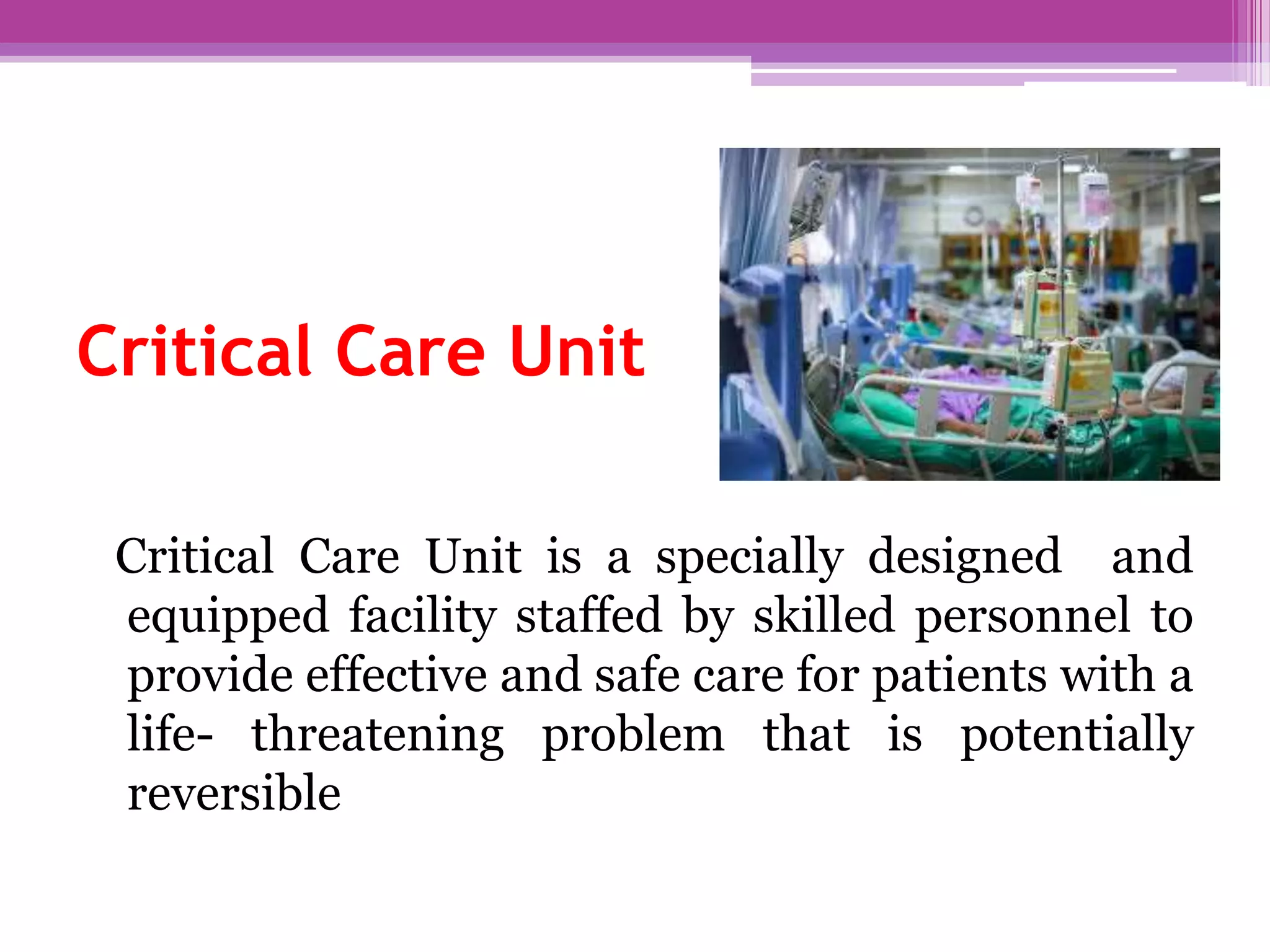
Critical Care Unit
Critical Care Unit is a specially designed and
equipped facility staffed by skilled personnel to
provide effective and safe care for patients with a
life- threatening problem that is potentially
reversible
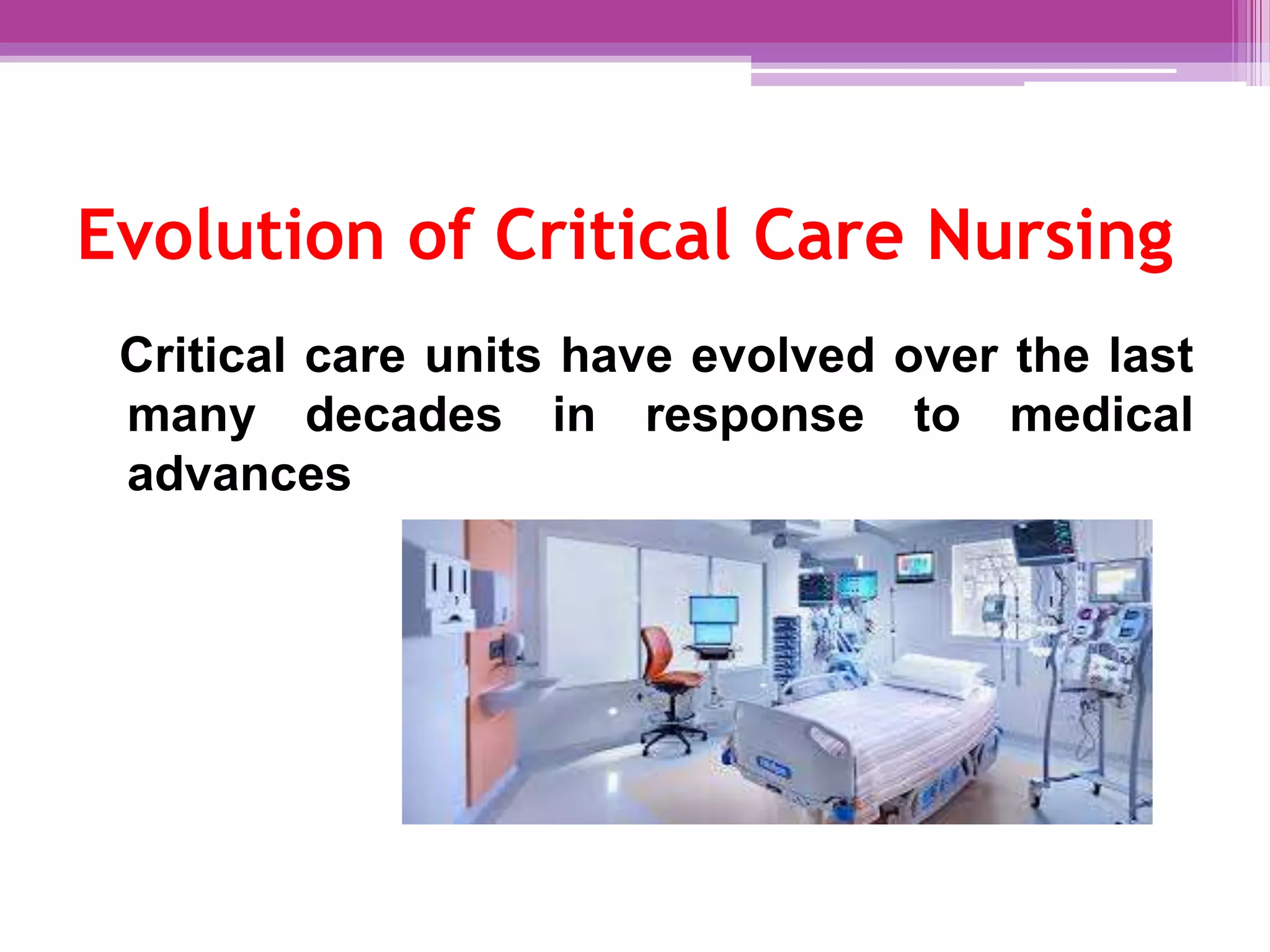
Evolution of Critical Care Nursing
Critical care units have evolved over the last
many decades in response to medical
advances
Historical Perspective
• Florence Nightingale recognized the need to
consider the severity of illness for bed allocation
of patients and she placed the seriously ill
patients near the nurses’ station.
• In 1923, John Hopkins University Hospital
developed a special care unit for neurosurgical
patients .
• After World War II: Modern medicines, concept
of triage and speciality nursing came into
existence
Historical Perspective
• As surgical techniques advanced, it became
necessary that post-operative patients required
careful monitoring and this brought about the
Recovery Room
• In 1950, the epidemic of poliomyelitis necessitated
thousands of patients requiring respiratory assist
devices and intensive nursing care
• At the same time came about newer horizons in
cardiothoracic surgery, with refinements in intra-
operative membrane oxygen techniques
Historical Perspective
• Late 1950’s – beginning of Critical Care Units
• 1965 – 1st specialized ICU – The Coronary Care
Unit
• Emergence of Specialized ICUs
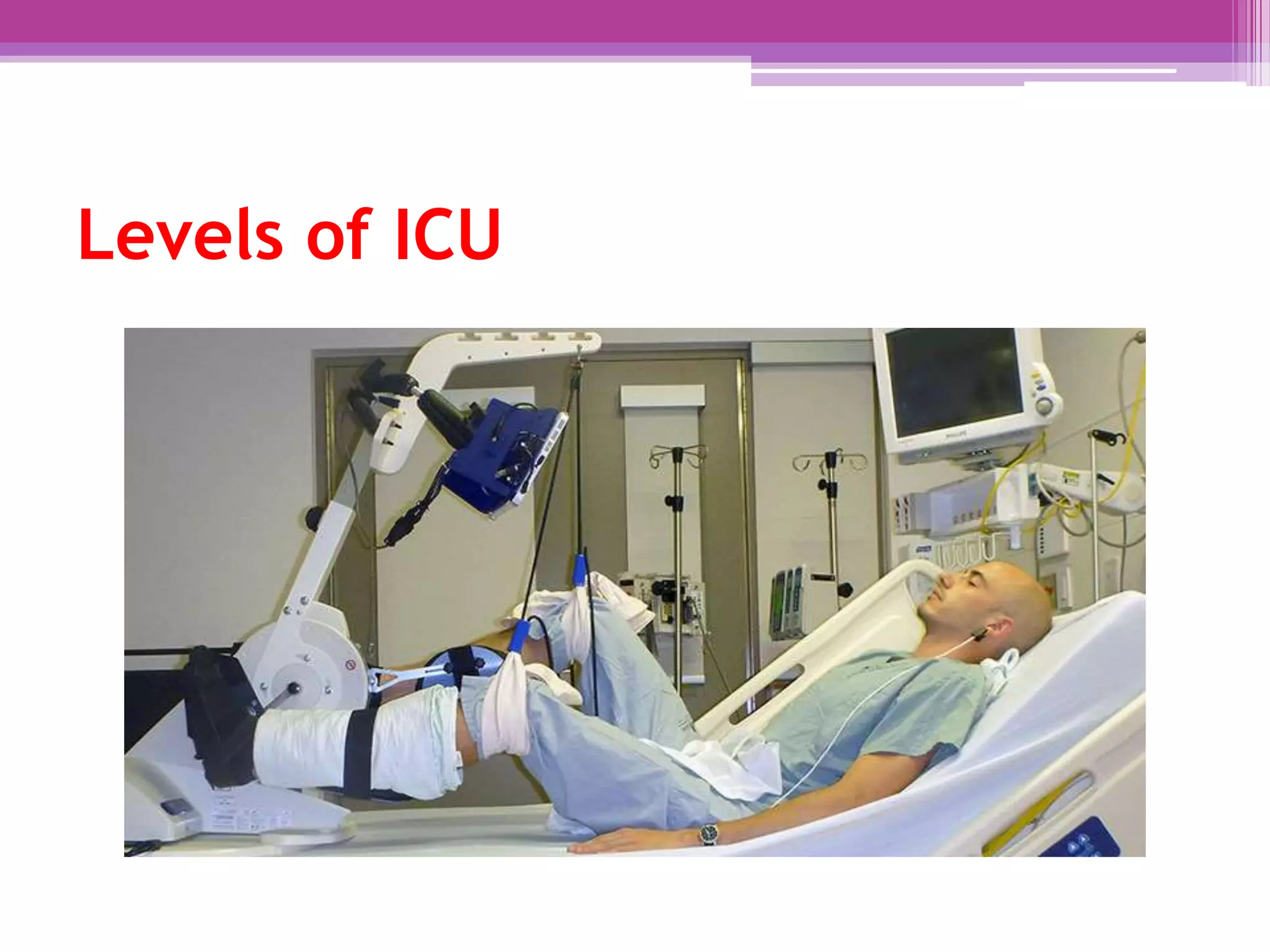
Levels of ICU
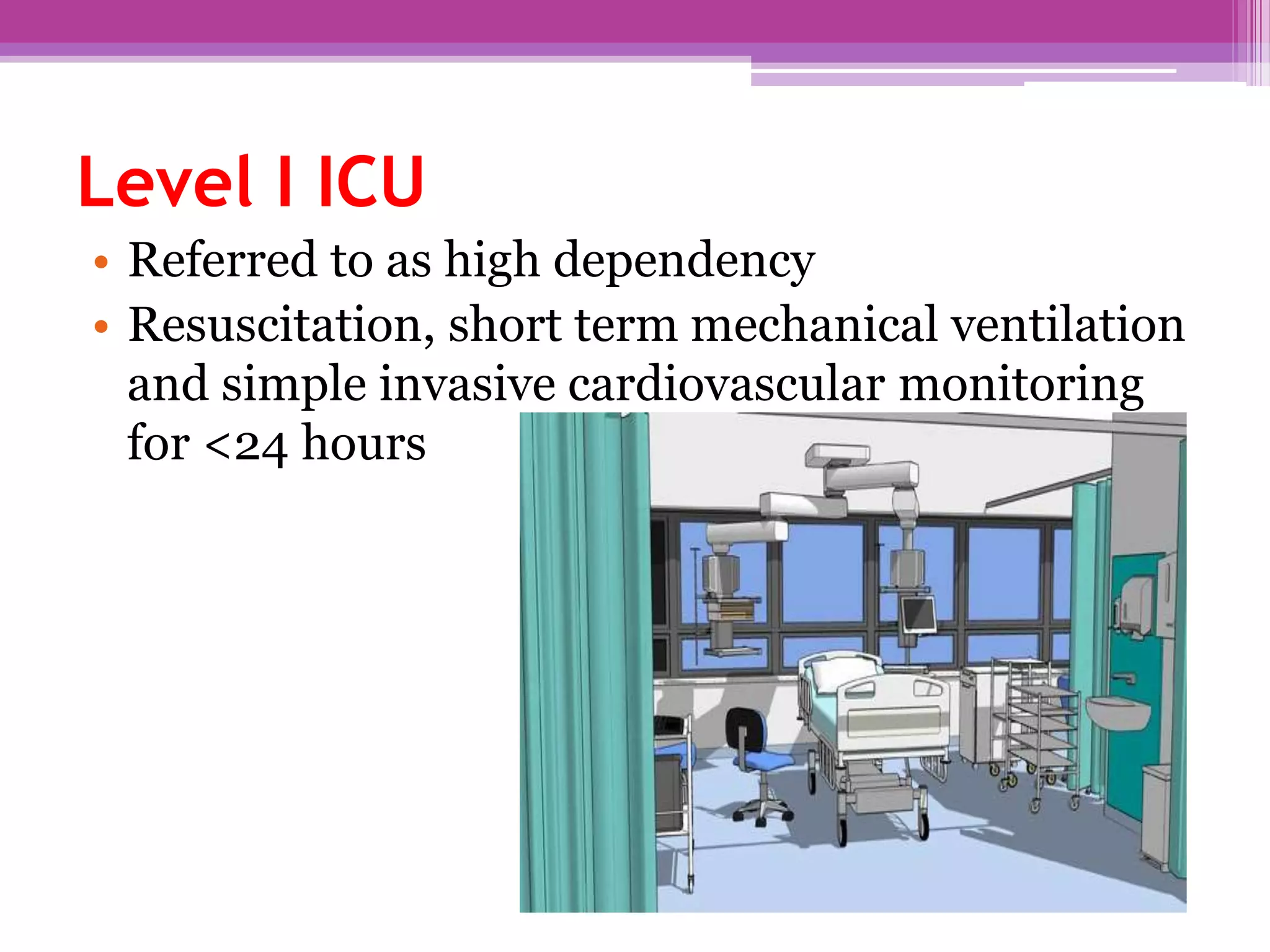
• Referred to as high dependency
• Resuscitation, short term mechanical ventilation
and simple invasive cardiovascular monitoring
for <24 hours
Level I ICU
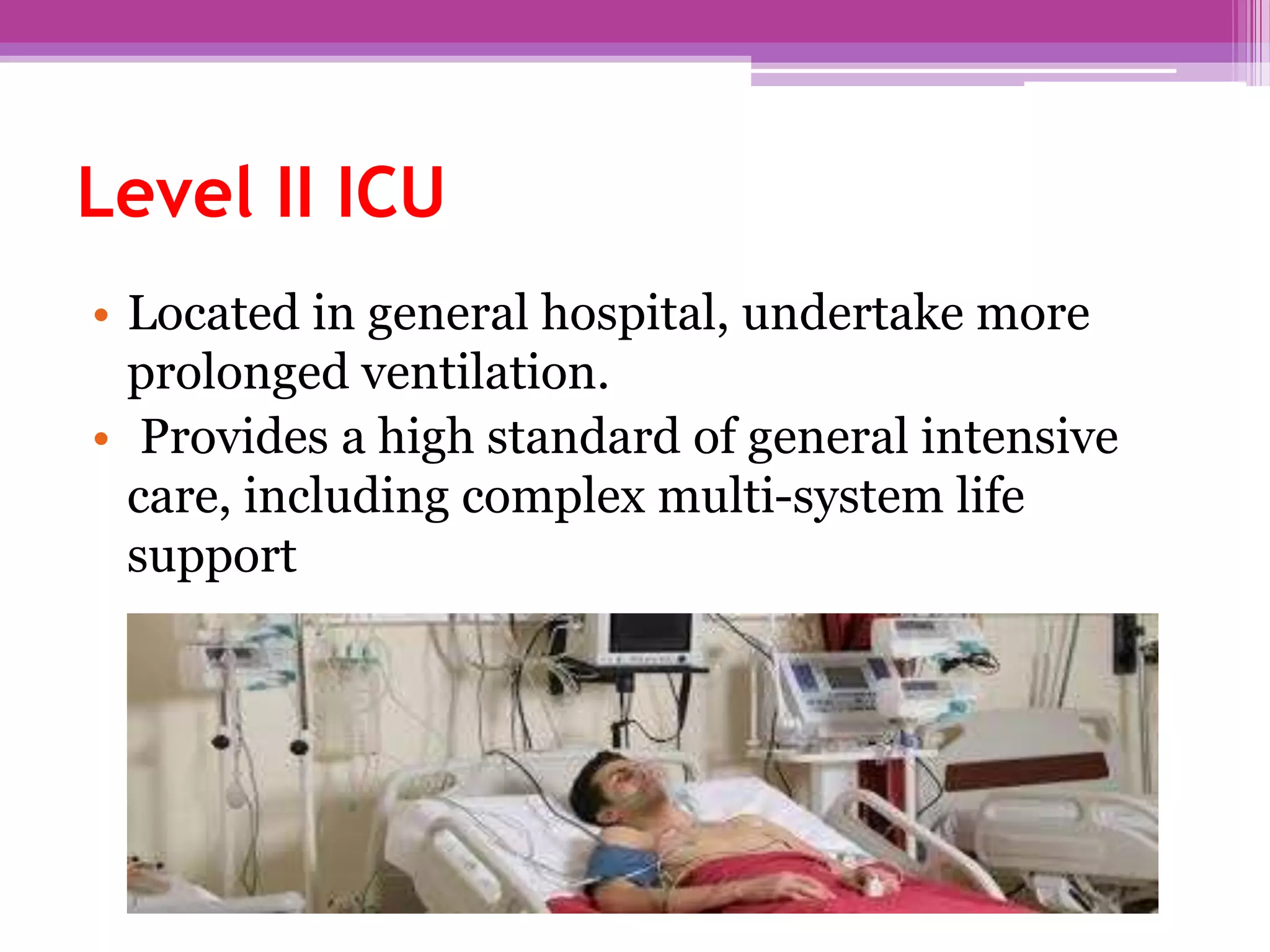
Level II ICU
• Located in general hospital, undertake more
prolonged ventilation.
• Provides a high standard of general intensive
care, including complex multi-system life
support
Level III ICU
• Tertiary referral unit for intensive care patients
• Provides comprehensive critical care including
complex multi-system life support for an
indefinite period
• Demonstrated commitment to academic
education and research
Roles and Responsibilities of
Critical Care Nurse
• Assessing a patient’s condition and planning and
implementing patient care plans
• Provides direct comprehensive bedside care to
patients
• Treating wounds and providing advanced life
support
• Assisting physicians in performing procedures
• Able to attach equipments on patients as
ordered and interprets the data, graphs on
monitors etc.
Roles and Responsibilities of
Critical Care Nurse
• Observing and recording patient vital signs
• Ensuring that ventilators, monitors and other
types of medical equipment function properly
• Administering intravenous fluids and
medications
• Collaborating with fellow members of the critical
care team
• Responding to life-saving situations, using
nursing standards and protocols for treatment
Roles and Responsibilities of
Critical Care Nurse
• Acting as patient advocate
• Documents appropriately
• Ensures patient safety
• Follows the policies and procedures of the unit
and the institution
• Is an expert in nursing knowledge and practice
• Promotes quality assurance in nursing
• Providing education and support to patient
families
Principles of Critical Care Nursing
Anticipatory Nursing Care
Early Detection and Prompt Action
Expertise
Supportive Care
Communication
Collaborative Practice
Principles of Critical Care Nursing
Preservation of Patient’s Physiological Defenses
Prevention of Infection
Crisis Intervention
Stress Reduction
Ethical Principles
ORGANIZATIONAL
MODELS FOR ICU
Open model
allows many
different
members of the
medical staff to
manage
patients in the
ICU
Closed model
is limited to
ICU-certified
physicians/
intensivists
managing the
care of all
patients
Hybrid model,
which combines
aspects of open
and closed models
by staffing the ICU
with an attending
physician and/or
team to work in
association with
primary
physicians
Staffing
Staffing
• Medical staffing, including an ICU
Director/Intensivist, with sufficient experience to
provide for patient care, administration, teaching,
research, audits etc.
• Trained Nursing staff: 1:1 for ventilated patients and
1:2 for other patients; Nurse in charge with ICU
qualification
• Allied health and ancillary staff: Respiratory
services, physiotherapist, dietician, biomedical
engineer, technicians, computer programmer, social
worker, counsellor, housekeeping staff etc.
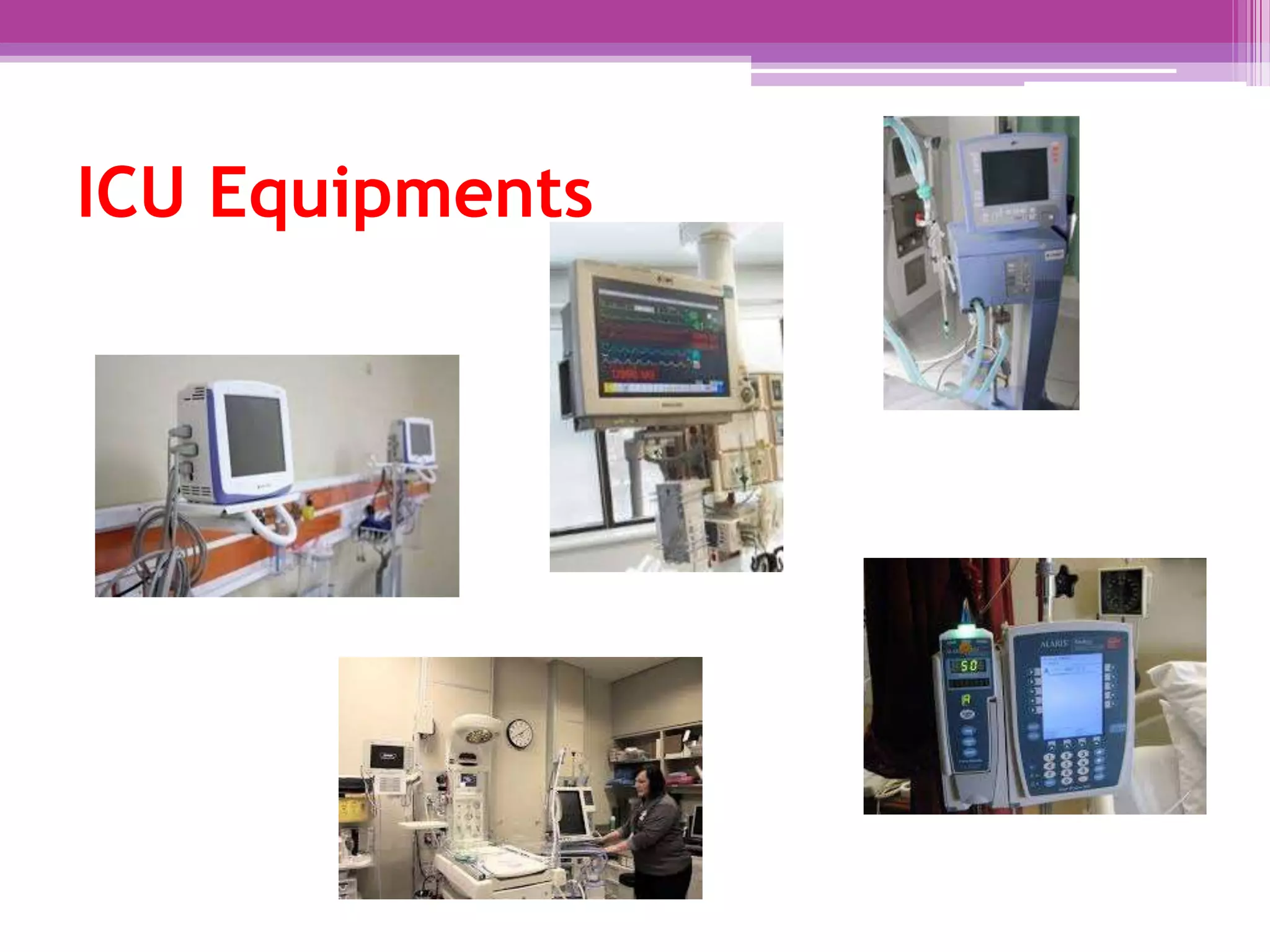
ICU Equipments
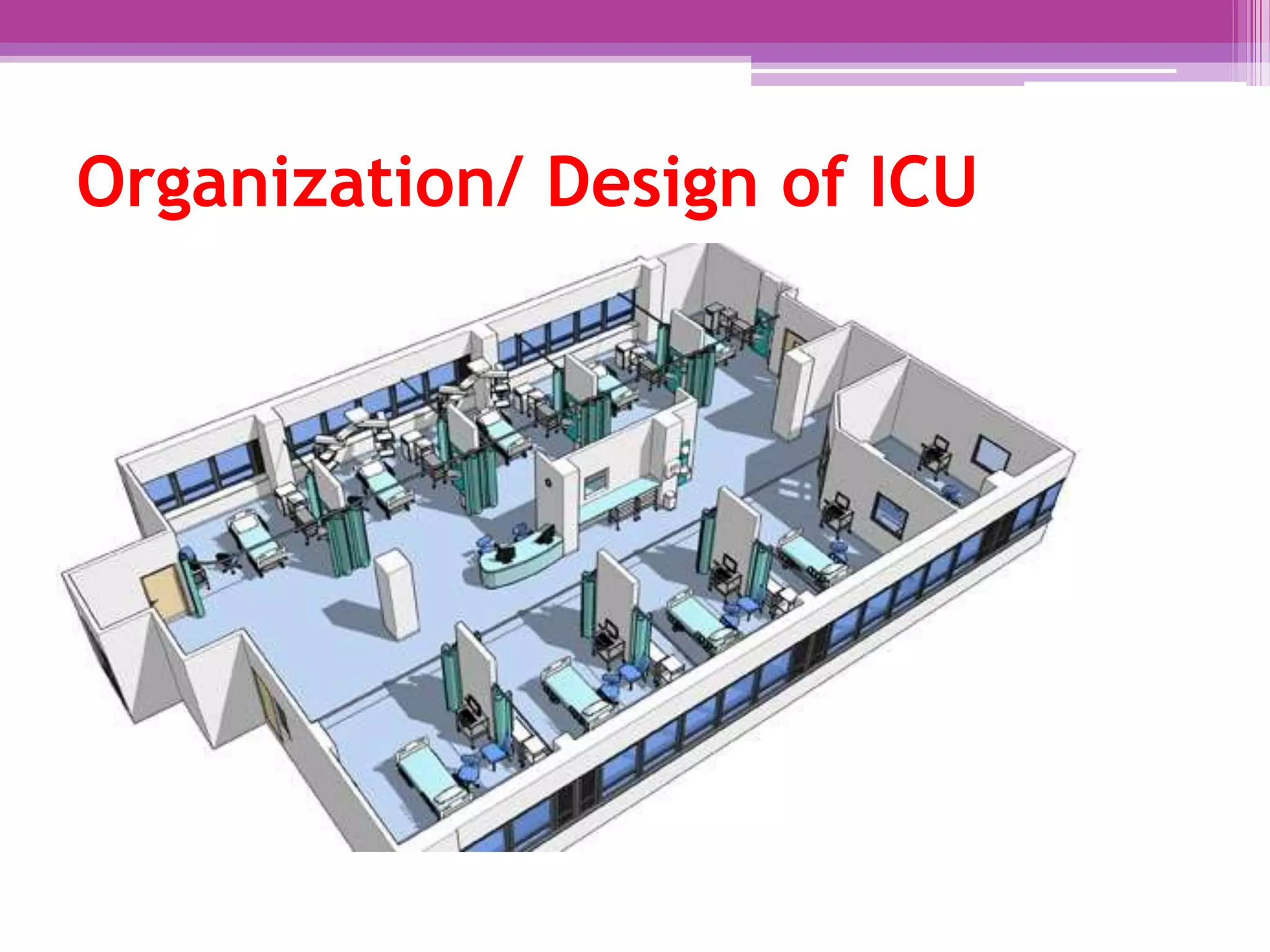
Organization/ Design of ICU
Organization of ICU
• It requires intelligent planning
• One must keep the need of the hospital and its location
• One ICU may not cater to all needs
• An institute may plan beds into multiple units under separate
management by single discipline specialist such as Medical
ICU, Surgical ICU, CCU, Burns ICU, Trauma ICU etc.
• The number of ICU beds in a hospital ranges from 2 to 20% of
the total number of hospital beds. ICUs with fewer than the
recommended number of beds are not cost- effective and
excess beds are unmanageable. 10% of total ICU beds are
allotted towards Isolation Room.
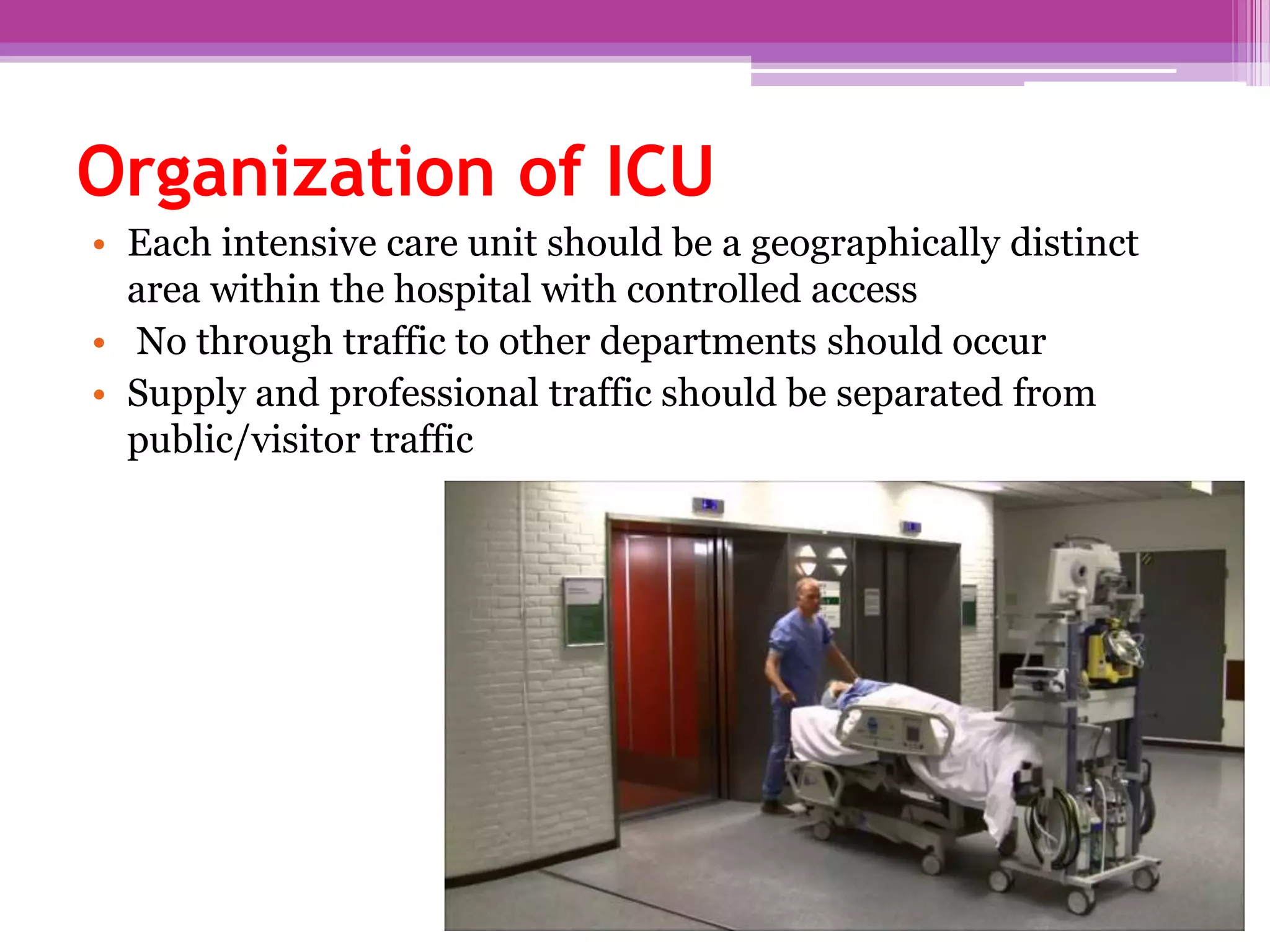
Organization of ICU
• Each intensive care unit should be a geographically distinct
area within the hospital with controlled access
• No through traffic to other departments should occur
• Supply and professional traffic should be separated from
public/visitor traffic
Organization of ICU
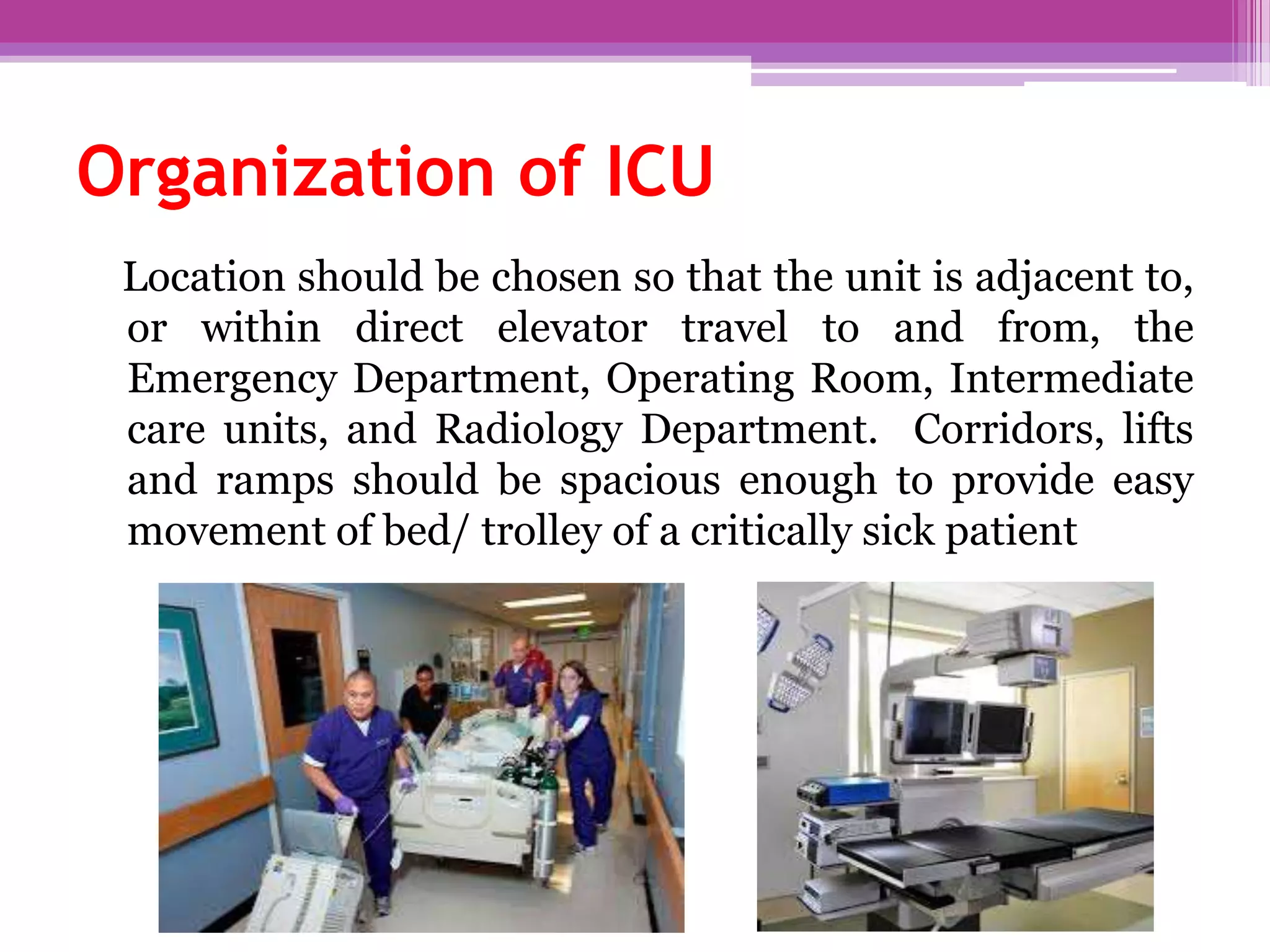
Location should be chosen so that the unit is adjacent to,
or within direct elevator travel to and from, the
Emergency Department, Operating Room, Intermediate
care units, and Radiology Department. Corridors, lifts
and ramps should be spacious enough to provide easy
movement of bed/ trolley of a critically sick patient
Organization of ICU
Bed Space
• 150- 200 sq. ft. area per open bed with 8 ft.
between beds
• 225- 250 sq. ft. area per bed if in a single room.
Beds should be adjustable with side rails and
wheels; no head board should be there.
Isolation Room: 250 sq. ft
Patient Areas
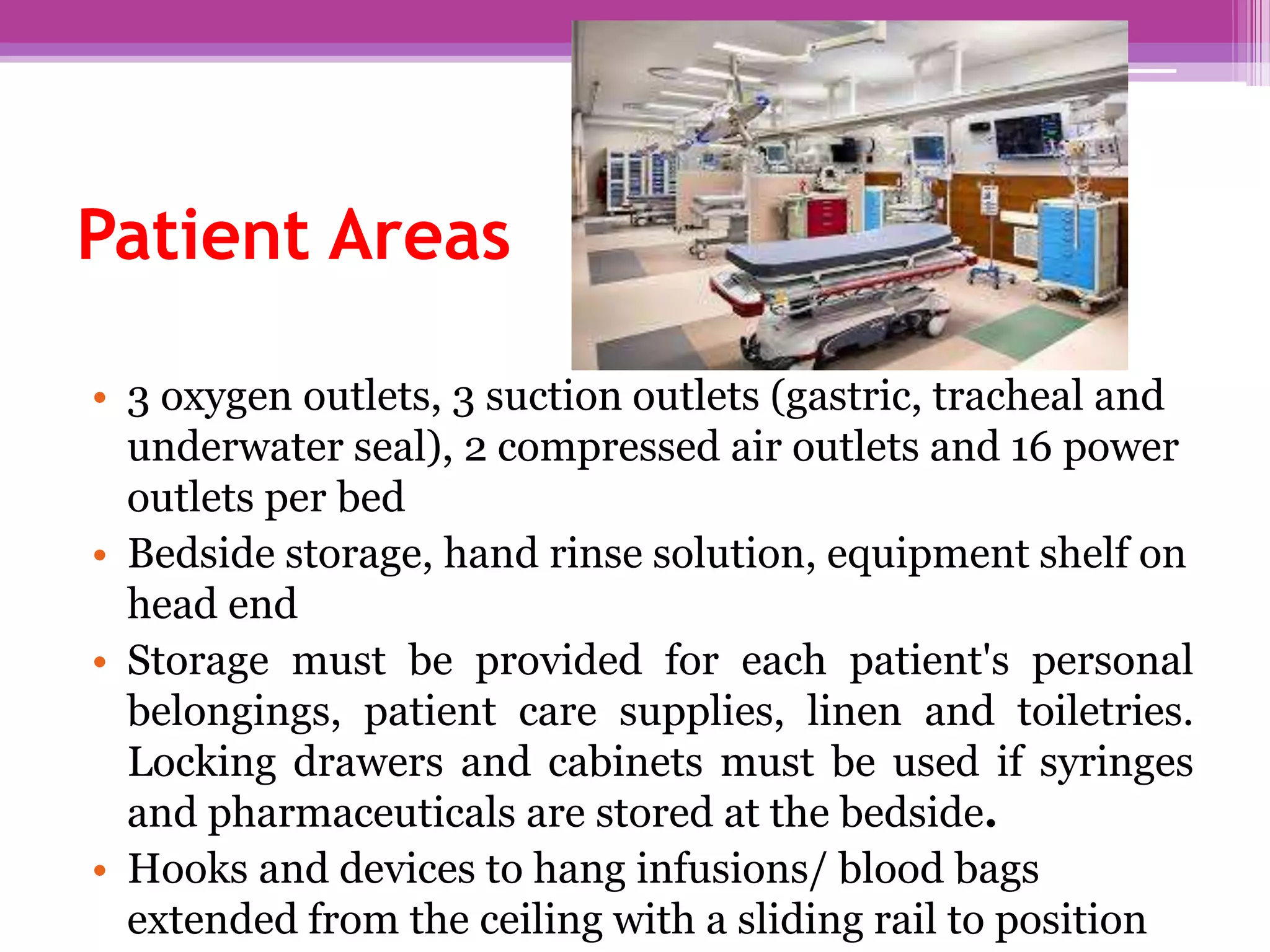
• 3 oxygen outlets, 3 suction outlets (gastric, tracheal and
underwater seal), 2 compressed air outlets and 16 power
outlets per bed
• Bedside storage, hand rinse solution, equipment shelf on
head end
• Storage must be provided for each patient's personal
belongings, patient care supplies, linen and toiletries.
Locking drawers and cabinets must be used if syringes
and pharmaceuticals are stored at the bedside.
• Hooks and devices to hang infusions/ blood bags
extended from the ceiling with a sliding rail to position
Patient Areas
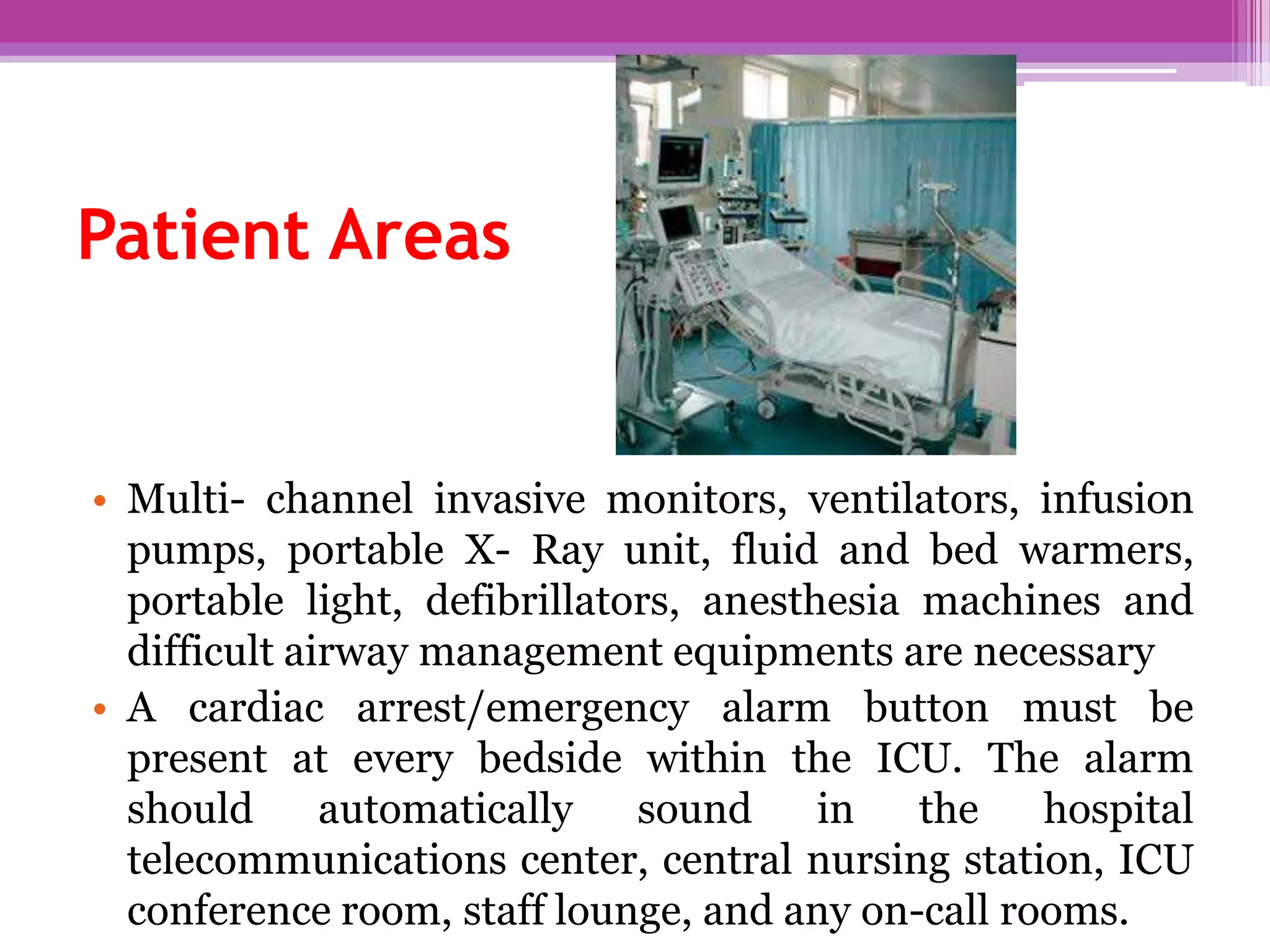
• Multi- channel invasive monitors, ventilators, infusion
pumps, portable X- Ray unit, fluid and bed warmers,
portable light, defibrillators, anesthesia machines and
difficult airway management equipments are necessary
• A cardiac arrest/emergency alarm button must be
present at every bedside within the ICU. The alarm
should automatically sound in the hospital
telecommunications center, central nursing station, ICU
conference room, staff lounge, and any on-call rooms.
Therapeutic Elements in ICU
Environment
• Window and art that provides natural views; views of
nature can reduce stress, hasten recovery, lower blood
pressure and lower pain medication needs.
• Family participation, including facilities for overnight
stay and comfortable waiting rooms
• Providing a measure of privacy and personal control
through adjustable curtains and blinds, accessible bed
controls
• Noise reduction through computerized pagers and silent
alarms
• Medical team continuity that allows one team to follow
the patient through his or her entire stay
Central Nursing Station
• Patients must be situated so that direct or
indirect (e.g. by video monitor) visualization by
healthcare providers is possible at all times. This
permits the monitoring of patient status under
both routine and emergency circumstances. The
preferred design is to allow a direct line of vision
between the patient and the central nursing
station.
• In ICUs with a modular design, patients should
be visible from their respective nursing
substation
Central Nursing Station
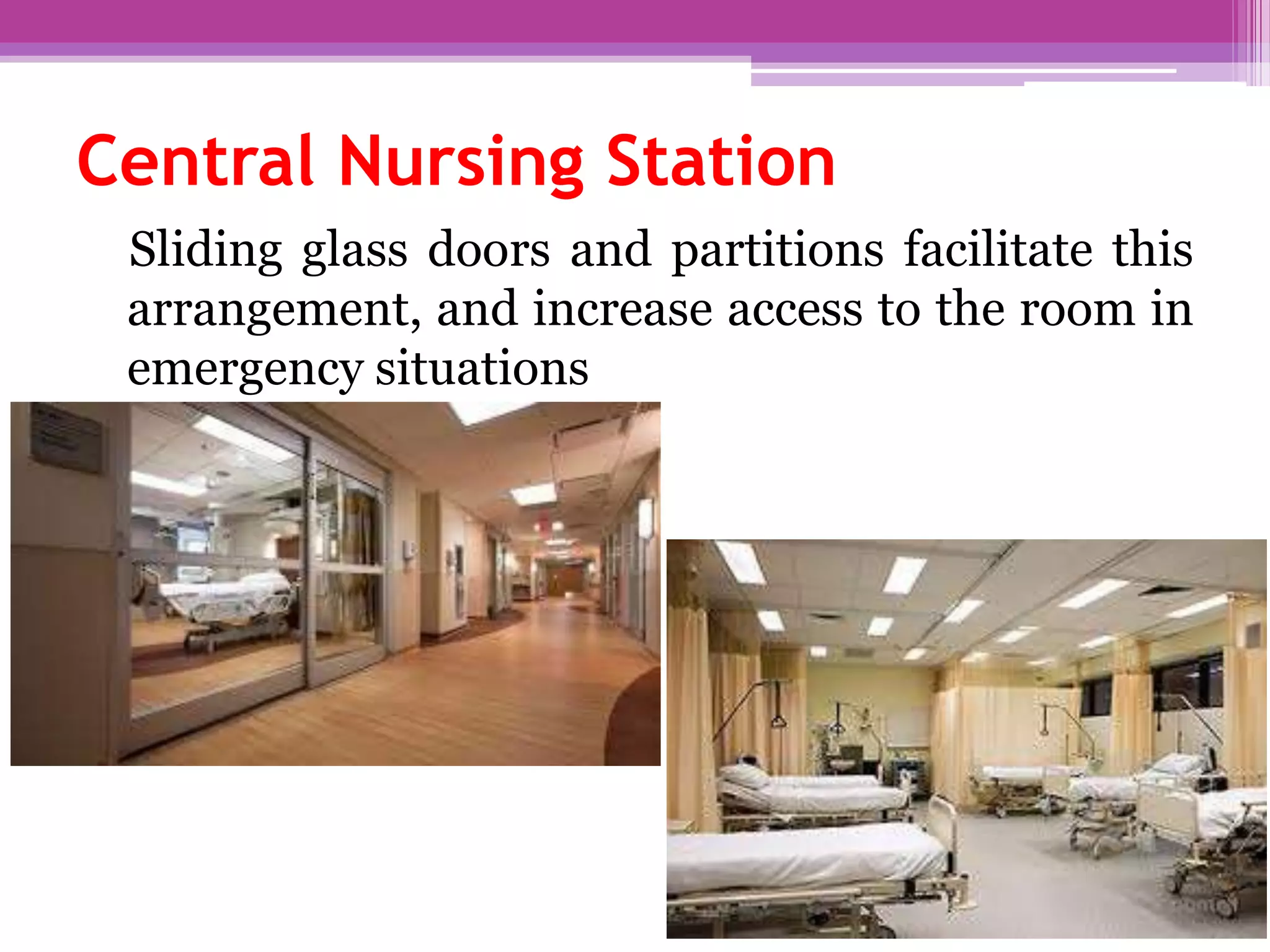
Sliding glass doors and partitions facilitate this
arrangement, and increase access to the room in
emergency situations
X- Ray Viewing Area
Work Areas and Storage
Equipment Storage
Special Procedures Room
Reception Area
Clean Utility Room
Dirty Utility Room
Pantry
Staff Lounge
Conference Room
Visitors' Lounge or Waiting Area
Patient Transportation
Supply and Service Corridors
Patient Modules
Each Intensive Care Unit must have :-
• Electric Power
• Water Supply
• Oxygen, Compressed Air, Vacuum
• Lighting
• Environmental control systems
Electric Supply
Water Supply
Lighting
Environmental Control Systems
Computerized Charting
Other Facilities
Critical care nursing

Critical care nursing

  • 1.
    Concept and Principlesof Critical Care Nursing Prof. (Ms.) Feba Geevarghese Vice Principal and Ph.D. Scholar College of Nursing St. Stephen’s Hospital Delhi
  • 2.
    The Critical CareUnit is not merely a room or series of rooms filled with patients attached to interventional technology; it is the home of an Organization: the Critical Care Team
  • 3.
    Critical Care Nursing CriticalCare Nursing is that specialty within nursing that deals specifically with human responses to life-threatening problems
  • 4.
    7 C’s ofCritical Care Compassion Communication Consideration (of patients, relatives and colleagues) and avoidance of Conflict Comfort: protection of patient from suffering
  • 5.
    7 C’s ofCritical Care Carefulness: avoidance of injury Consistency (of observation and care) Closure (Ethics and Withdrawal of treatment)
  • 6.
    Critical Care Nurse ACritical Care Nurse is a licensed professional nurse who is responsible for ensuring that acutely and critically ill patients and their families receive optimal care
  • 7.
    Critical Care Unit CriticalCare Unit is a specially designed and equipped facility staffed by skilled personnel to provide effective and safe care for patients with a life- threatening problem that is potentially reversible
  • 8.
    Evolution of CriticalCare Nursing Critical care units have evolved over the last many decades in response to medical advances
  • 9.
    Historical Perspective • FlorenceNightingale recognized the need to consider the severity of illness for bed allocation of patients and she placed the seriously ill patients near the nurses’ station. • In 1923, John Hopkins University Hospital developed a special care unit for neurosurgical patients . • After World War II: Modern medicines, concept of triage and speciality nursing came into existence
  • 11.
    Historical Perspective • Assurgical techniques advanced, it became necessary that post-operative patients required careful monitoring and this brought about the Recovery Room • In 1950, the epidemic of poliomyelitis necessitated thousands of patients requiring respiratory assist devices and intensive nursing care • At the same time came about newer horizons in cardiothoracic surgery, with refinements in intra- operative membrane oxygen techniques
  • 12.
    Historical Perspective • Late1950’s – beginning of Critical Care Units • 1965 – 1st specialized ICU – The Coronary Care Unit • Emergence of Specialized ICUs
  • 13.
  • 14.
    • Referred toas high dependency • Resuscitation, short term mechanical ventilation and simple invasive cardiovascular monitoring for <24 hours Level I ICU
  • 15.
    Level II ICU •Located in general hospital, undertake more prolonged ventilation. • Provides a high standard of general intensive care, including complex multi-system life support
  • 16.
    Level III ICU •Tertiary referral unit for intensive care patients • Provides comprehensive critical care including complex multi-system life support for an indefinite period • Demonstrated commitment to academic education and research
  • 17.
    Roles and Responsibilitiesof Critical Care Nurse • Assessing a patient’s condition and planning and implementing patient care plans • Provides direct comprehensive bedside care to patients • Treating wounds and providing advanced life support • Assisting physicians in performing procedures • Able to attach equipments on patients as ordered and interprets the data, graphs on monitors etc.
  • 18.
    Roles and Responsibilitiesof Critical Care Nurse • Observing and recording patient vital signs • Ensuring that ventilators, monitors and other types of medical equipment function properly • Administering intravenous fluids and medications • Collaborating with fellow members of the critical care team • Responding to life-saving situations, using nursing standards and protocols for treatment
  • 19.
    Roles and Responsibilitiesof Critical Care Nurse • Acting as patient advocate • Documents appropriately • Ensures patient safety • Follows the policies and procedures of the unit and the institution • Is an expert in nursing knowledge and practice • Promotes quality assurance in nursing • Providing education and support to patient families
  • 20.
    Principles of CriticalCare Nursing Anticipatory Nursing Care Early Detection and Prompt Action Expertise Supportive Care Communication Collaborative Practice
  • 21.
    Principles of CriticalCare Nursing Preservation of Patient’s Physiological Defenses Prevention of Infection Crisis Intervention Stress Reduction Ethical Principles
  • 22.
    ORGANIZATIONAL MODELS FOR ICU Openmodel allows many different members of the medical staff to manage patients in the ICU Closed model is limited to ICU-certified physicians/ intensivists managing the care of all patients Hybrid model, which combines aspects of open and closed models by staffing the ICU with an attending physician and/or team to work in association with primary physicians
  • 23.
  • 24.
    Staffing • Medical staffing,including an ICU Director/Intensivist, with sufficient experience to provide for patient care, administration, teaching, research, audits etc. • Trained Nursing staff: 1:1 for ventilated patients and 1:2 for other patients; Nurse in charge with ICU qualification • Allied health and ancillary staff: Respiratory services, physiotherapist, dietician, biomedical engineer, technicians, computer programmer, social worker, counsellor, housekeeping staff etc.
  • 25.
  • 26.
  • 27.
    Organization of ICU •It requires intelligent planning • One must keep the need of the hospital and its location • One ICU may not cater to all needs • An institute may plan beds into multiple units under separate management by single discipline specialist such as Medical ICU, Surgical ICU, CCU, Burns ICU, Trauma ICU etc. • The number of ICU beds in a hospital ranges from 2 to 20% of the total number of hospital beds. ICUs with fewer than the recommended number of beds are not cost- effective and excess beds are unmanageable. 10% of total ICU beds are allotted towards Isolation Room.
  • 28.
    Organization of ICU •Each intensive care unit should be a geographically distinct area within the hospital with controlled access • No through traffic to other departments should occur • Supply and professional traffic should be separated from public/visitor traffic
  • 29.
    Organization of ICU Locationshould be chosen so that the unit is adjacent to, or within direct elevator travel to and from, the Emergency Department, Operating Room, Intermediate care units, and Radiology Department. Corridors, lifts and ramps should be spacious enough to provide easy movement of bed/ trolley of a critically sick patient
  • 30.
    Organization of ICU BedSpace • 150- 200 sq. ft. area per open bed with 8 ft. between beds • 225- 250 sq. ft. area per bed if in a single room. Beds should be adjustable with side rails and wheels; no head board should be there.
  • 32.
  • 33.
    Patient Areas • 3oxygen outlets, 3 suction outlets (gastric, tracheal and underwater seal), 2 compressed air outlets and 16 power outlets per bed • Bedside storage, hand rinse solution, equipment shelf on head end • Storage must be provided for each patient's personal belongings, patient care supplies, linen and toiletries. Locking drawers and cabinets must be used if syringes and pharmaceuticals are stored at the bedside. • Hooks and devices to hang infusions/ blood bags extended from the ceiling with a sliding rail to position
  • 35.
    Patient Areas • Multi-channel invasive monitors, ventilators, infusion pumps, portable X- Ray unit, fluid and bed warmers, portable light, defibrillators, anesthesia machines and difficult airway management equipments are necessary • A cardiac arrest/emergency alarm button must be present at every bedside within the ICU. The alarm should automatically sound in the hospital telecommunications center, central nursing station, ICU conference room, staff lounge, and any on-call rooms.
  • 36.
    Therapeutic Elements inICU Environment • Window and art that provides natural views; views of nature can reduce stress, hasten recovery, lower blood pressure and lower pain medication needs. • Family participation, including facilities for overnight stay and comfortable waiting rooms • Providing a measure of privacy and personal control through adjustable curtains and blinds, accessible bed controls • Noise reduction through computerized pagers and silent alarms • Medical team continuity that allows one team to follow the patient through his or her entire stay
  • 38.
  • 39.
    Central Nursing Station •Patients must be situated so that direct or indirect (e.g. by video monitor) visualization by healthcare providers is possible at all times. This permits the monitoring of patient status under both routine and emergency circumstances. The preferred design is to allow a direct line of vision between the patient and the central nursing station. • In ICUs with a modular design, patients should be visible from their respective nursing substation
  • 41.
    Central Nursing Station Slidingglass doors and partitions facilitate this arrangement, and increase access to the room in emergency situations
  • 42.
  • 43.
  • 44.
  • 45.
  • 46.
  • 47.
  • 48.
  • 49.
  • 50.
  • 51.
  • 52.
    Visitors' Lounge orWaiting Area
  • 53.
  • 54.
  • 55.
  • 56.
    Each Intensive CareUnit must have :- • Electric Power • Water Supply • Oxygen, Compressed Air, Vacuum • Lighting • Environmental control systems
  • 57.
  • 58.
  • 59.
  • 60.
  • 61.
  • 62.