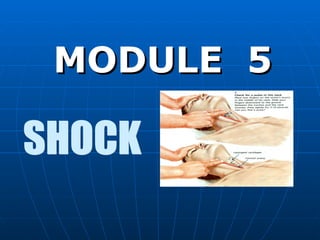

MODULE  5 SHOCK
DEFINITION BASIC CAUSES CONTRIBUTORY FACTORS DANGERS OF SHOCK SIGNS AND SYMPTOMS  FIRST AID TYPES  Scope of Presentation
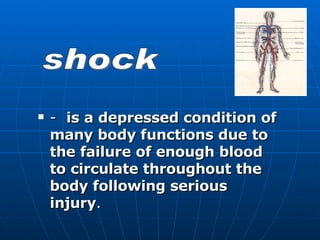
-  is a depressed condition of many body functions due to the failure of enough blood to circulate throughout the body following serious injury . shock
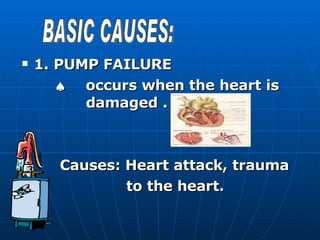
1. PUMP FAILURE    occurs when the heart is  damaged . Causes: Heart attack, trauma  to the heart. BASIC CAUSES:
2.  HYPOVOLEMIA  -  blood or fluid loss from blood vessels decreases blood volume, usually a result of bleeding, and results in adequate perfusion. CAUSES:   Trauma to vessels or tissues,  fluid loss from GI tract  (vomiting/diarrhea)
3.  BLOOD VESSELS DILATE ( RELATIVE HYPOVOLEMIA)  - the blood vessels can dilate enough that the  blood within them, even though it is of normal value, is inadequate to fill the system and provide efficient perfusion. CAUSES: Infection, drug overdose (narcotic), and spinal cord injury .
CAUSES: 1.  Severe bleeding 2. Crushing injury 3. Infection 4. Heart Attack 5. Perforation 6. Anaphylaxis 7. Shell bomb and  bullet wound 8. Rupture of tubal pregnancies 9. Starvation and disease
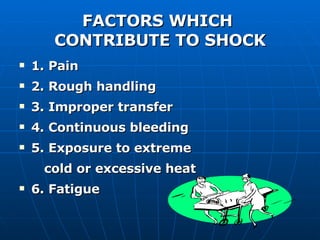
FACTORS WHICH  CONTRIBUTE TO SHOCK 1. Pain 2. Rough handling 3. Improper transfer  4. Continuous bleeding 5. Exposure to extreme  cold or excessive heat 6. Fatigue
DANGERS OF SHOCK 1. Lead to death 2. Predisposes body to infection 3. Lead to loss of body part
SIGNS AND SYMPTOMS OF SHOCK 1.  EARLY STAGE Face - pale or cyanotic in color Skin - cold and clammy Breathing – irregular Pulse – rapid and weak Nausea and vomiting Weakness  Thirsty
2 .  LATE STAGE    Apathetic or relatively unresponsive    Eyes will be sunken with vacant expression    Pupils are dilated    Blood vessels may be congested producing mottled appearances    Blood pressure level      Unconsciousness may occur, body temperature falls
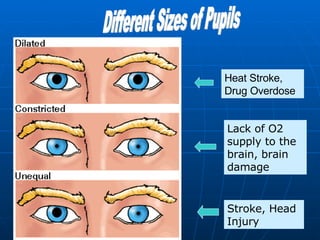
Heat Stroke, Drug Overdose Lack of O2 supply to the brain, brain damage Stroke, Head Injury Different Sizes of Pupils
OBJECTIVES OF FIRST AID 1. To improve circulation of the blood 2. To ensure an adequate supply of   oxygen. 3. To maintain normal body  temperature
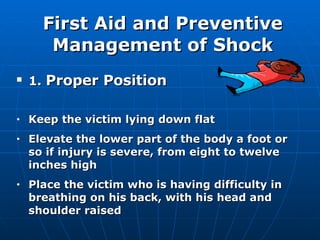
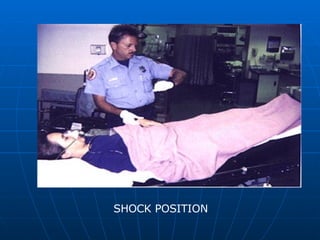
First Aid and Preventive Management of Shock 1.  Proper Position  Keep the victim lying down flat Elevate the lower part of the body a foot or so if injury is severe, from eight to twelve inches high Place the victim who is having difficulty in breathing on his back, with his head and shoulder raised
SHOCK POSITION
Head injury - apply pressure on the injury  and  keep the victim lying flat. Do not elevate  head or lower extremities. When the  color of the face return to normal, elevate  head and shoulder and continue giving  care to the injury. Chest injury  - raise the head and shoulder    slightly. Nausea and vomiting or unconsciousness -  keep the victim lying on one side (known  as recovery, coma or lateral position)  preferably opposite from his injury  except for sucking wound and stroke.
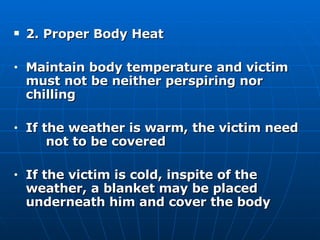
2. Proper Body Heat  Maintain body temperature and victim  must not be neither perspiring nor  chilling If the weather is warm, the victim need  not to be covered If the victim is cold, inspite of the  weather, a blanket may be placed  underneath him and cover the body
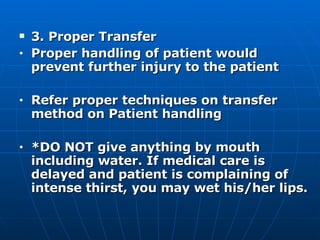
3. Proper Transfer Proper handling of patient would  prevent further injury to the patient Refer proper techniques on transfer method on Patient handling *DO NOT give anything by mouth including water. If medical care is delayed and patient is complaining of intense thirst, you may wet his/her lips.
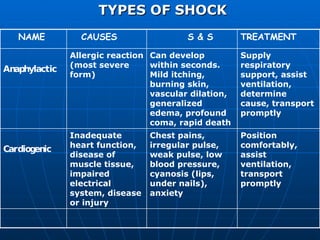
TYPES OF SHOCK   Position comfortably, assist ventilation, transport promptly Chest pains, irregular pulse, weak pulse, low blood pressure, cyanosis (lips, under nails), anxiety Inadequate heart function, disease of muscle tissue, impaired electrical system, disease or injury Cardiogenic Supply respiratory support, assist ventilation, determine cause, transport promptly Can develop within seconds. Mild itching, burning skin, vascular dilation, generalized edema, profound coma, rapid death Allergic reaction (most severe form) Anaphylactic  TREATMENT S & S CAUSES  NAME
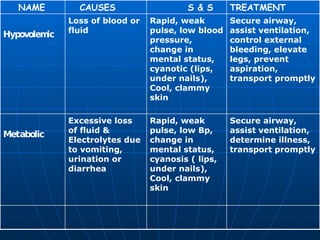
  Secure airway, assist ventilation, determine illness, transport promptly Rapid, weak pulse, low Bp, change in mental status, cyanosis ( lips, under nails), Cool, clammy skin Excessive loss of fluid & Electrolytes due to vomiting, urination or diarrhea Metabolic Secure airway, assist ventilation, control external bleeding, elevate legs, prevent aspiration, transport promptly Rapid, weak pulse, low blood pressure, change in mental status, cyanotic (lips, under nails), Cool, clammy skin Loss of blood or fluid Hypovolemic TREATMENT S & S CAUSES  NAME
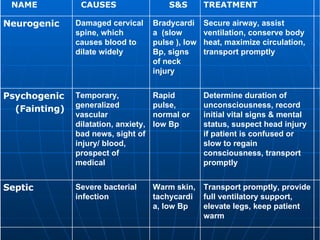
Transport promptly, provide full ventilatory support, elevate legs, keep patient warm Warm skin, tachycardia, low Bp Severe bacterial infection Septic Determine duration of unconsciousness, record initial vital signs & mental status, suspect head injury if patient is confused or slow to regain consciousness, transport promptly Rapid pulse, normal or low Bp Temporary, generalized vascular dilatation, anxiety, bad news, sight of injury/ blood, prospect of medical Psychogenic (Fainting) Secure airway, assist ventilation, conserve body heat, maximize circulation, transport promptly Bradycardia  (slow pulse ), low Bp, signs of neck injury Damaged cervical spine, which causes blood to dilate widely Neurogenic TREATMENT S&S CAUSES NAME
Thank you! ….. Have A Nice Day!

Shock

  • 1.
    MODULE 5SHOCK
  • 2.
    DEFINITION BASIC CAUSESCONTRIBUTORY FACTORS DANGERS OF SHOCK SIGNS AND SYMPTOMS FIRST AID TYPES Scope of Presentation
  • 3.
    - isa depressed condition of many body functions due to the failure of enough blood to circulate throughout the body following serious injury . shock
  • 4.
    1. PUMP FAILURE occurs when the heart is damaged . Causes: Heart attack, trauma to the heart. BASIC CAUSES:
  • 5.
    2. HYPOVOLEMIA - blood or fluid loss from blood vessels decreases blood volume, usually a result of bleeding, and results in adequate perfusion. CAUSES: Trauma to vessels or tissues, fluid loss from GI tract (vomiting/diarrhea)
  • 6.
    3. BLOODVESSELS DILATE ( RELATIVE HYPOVOLEMIA) - the blood vessels can dilate enough that the blood within them, even though it is of normal value, is inadequate to fill the system and provide efficient perfusion. CAUSES: Infection, drug overdose (narcotic), and spinal cord injury .
  • 7.
    CAUSES: 1. Severe bleeding 2. Crushing injury 3. Infection 4. Heart Attack 5. Perforation 6. Anaphylaxis 7. Shell bomb and bullet wound 8. Rupture of tubal pregnancies 9. Starvation and disease
  • 8.
    FACTORS WHICH CONTRIBUTE TO SHOCK 1. Pain 2. Rough handling 3. Improper transfer 4. Continuous bleeding 5. Exposure to extreme cold or excessive heat 6. Fatigue
  • 9.
    DANGERS OF SHOCK1. Lead to death 2. Predisposes body to infection 3. Lead to loss of body part
  • 10.
    SIGNS AND SYMPTOMSOF SHOCK 1. EARLY STAGE Face - pale or cyanotic in color Skin - cold and clammy Breathing – irregular Pulse – rapid and weak Nausea and vomiting Weakness Thirsty
  • 11.
    2 . LATE STAGE  Apathetic or relatively unresponsive  Eyes will be sunken with vacant expression  Pupils are dilated  Blood vessels may be congested producing mottled appearances  Blood pressure level   Unconsciousness may occur, body temperature falls
  • 12.
    Heat Stroke, DrugOverdose Lack of O2 supply to the brain, brain damage Stroke, Head Injury Different Sizes of Pupils
  • 13.
    OBJECTIVES OF FIRSTAID 1. To improve circulation of the blood 2. To ensure an adequate supply of oxygen. 3. To maintain normal body temperature
  • 14.
    First Aid andPreventive Management of Shock 1. Proper Position Keep the victim lying down flat Elevate the lower part of the body a foot or so if injury is severe, from eight to twelve inches high Place the victim who is having difficulty in breathing on his back, with his head and shoulder raised
  • 15.
  • 16.
    Head injury -apply pressure on the injury and keep the victim lying flat. Do not elevate head or lower extremities. When the color of the face return to normal, elevate head and shoulder and continue giving care to the injury. Chest injury - raise the head and shoulder slightly. Nausea and vomiting or unconsciousness - keep the victim lying on one side (known as recovery, coma or lateral position) preferably opposite from his injury except for sucking wound and stroke.
  • 17.
    2. Proper BodyHeat Maintain body temperature and victim must not be neither perspiring nor chilling If the weather is warm, the victim need not to be covered If the victim is cold, inspite of the weather, a blanket may be placed underneath him and cover the body
  • 18.
    3. Proper TransferProper handling of patient would prevent further injury to the patient Refer proper techniques on transfer method on Patient handling *DO NOT give anything by mouth including water. If medical care is delayed and patient is complaining of intense thirst, you may wet his/her lips.
  • 19.
    TYPES OF SHOCK Position comfortably, assist ventilation, transport promptly Chest pains, irregular pulse, weak pulse, low blood pressure, cyanosis (lips, under nails), anxiety Inadequate heart function, disease of muscle tissue, impaired electrical system, disease or injury Cardiogenic Supply respiratory support, assist ventilation, determine cause, transport promptly Can develop within seconds. Mild itching, burning skin, vascular dilation, generalized edema, profound coma, rapid death Allergic reaction (most severe form) Anaphylactic TREATMENT S & S CAUSES NAME
  • 20.
    Secureairway, assist ventilation, determine illness, transport promptly Rapid, weak pulse, low Bp, change in mental status, cyanosis ( lips, under nails), Cool, clammy skin Excessive loss of fluid & Electrolytes due to vomiting, urination or diarrhea Metabolic Secure airway, assist ventilation, control external bleeding, elevate legs, prevent aspiration, transport promptly Rapid, weak pulse, low blood pressure, change in mental status, cyanotic (lips, under nails), Cool, clammy skin Loss of blood or fluid Hypovolemic TREATMENT S & S CAUSES NAME
  • 21.
    Transport promptly, providefull ventilatory support, elevate legs, keep patient warm Warm skin, tachycardia, low Bp Severe bacterial infection Septic Determine duration of unconsciousness, record initial vital signs & mental status, suspect head injury if patient is confused or slow to regain consciousness, transport promptly Rapid pulse, normal or low Bp Temporary, generalized vascular dilatation, anxiety, bad news, sight of injury/ blood, prospect of medical Psychogenic (Fainting) Secure airway, assist ventilation, conserve body heat, maximize circulation, transport promptly Bradycardia (slow pulse ), low Bp, signs of neck injury Damaged cervical spine, which causes blood to dilate widely Neurogenic TREATMENT S&S CAUSES NAME
  • 22.
    Thank you! …..Have A Nice Day!