• Endotracheal suctioning is a
  component of bronchial hygiene
  therapy and mechanical ventilation
  and involves the mechanical
  aspiration of pulmonary secretions
  from a patient with an artificial
  airway in place.
• ETT suctioning is defined as the
  procedure to remove pulmonary
  secretion mechanically from the
  patient’s airway passages via nose or
  mouth where ETT (Endotracheal tube)
  is in place.
• To maintain a patent airway by
  removing accumulated
  tracheobronchial secretions using
  sterile technique.
• To improve oxygenation and reduce
  the work of breathing.
• Stimulate the cough reflex.
• Prevent infection and atelactasis
  from the retained secretion.
The need to remove accumulated
pulmonary secretions as evidenced by
one of the following:
• Coarse breath sounds by auscultation
  of lungs or 'noisy' breathing.(rhonchi
  sound)
• Increased peak inspiratory pressures
  during volume-controlled mechanical
  ventilation or decreased tidal volume
  during pressure-controlled ventilation.
• Patient's inability to generate an
  effective spontaneous cough.
• Visible secretions in the airway.
• Changes in monitored flow and
  pressure graphics.
• Deterioration of arterial blood gas
  values.
• Suspected aspiration of gastric or
  upper airway secretions.
• Clinically apparent increased work of
  breathing.
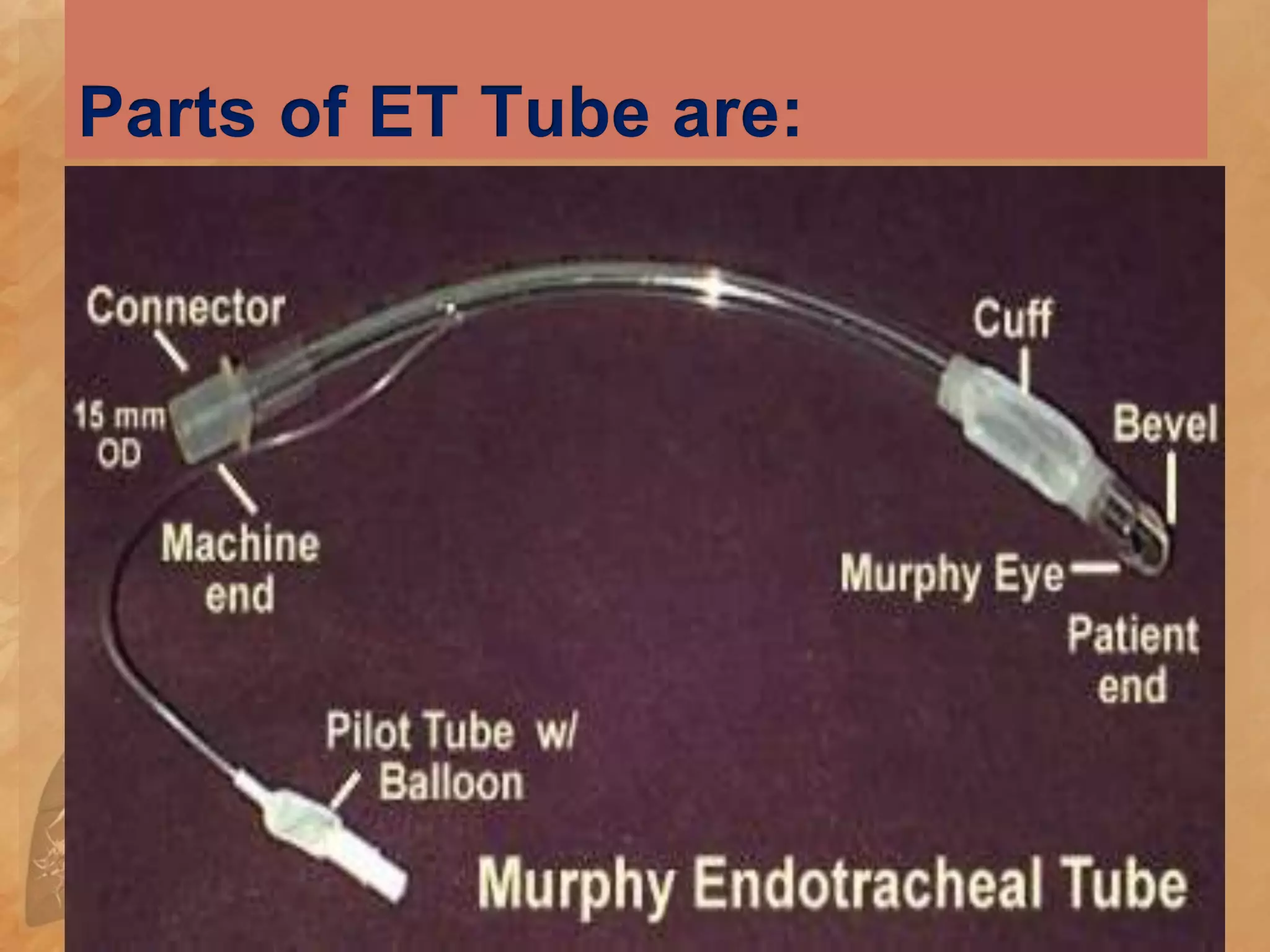
• An endotracheal tube is an
  artificial airway inserted into the
  trachea through the mouth or
  nose. It is usually made of
  polyvinyl chloride.
• It is available in various sizes . the size
  is indicated by internal diameter (ID) in
  millimeters.8/ 8.5 mm ID used for adult
  male & 7/7.5 mm ID used for adult
  female.
• Hypoxemia ( decreased O2 in the blood)
• Dysrhythmias
• Nosocomial pulmonary tract infection
  (most common complication of ETT
  tube suctioning)
Atelectasis
• Sepsis
• Mucosal trauma with increase
  secretions
• Cardiac arrest
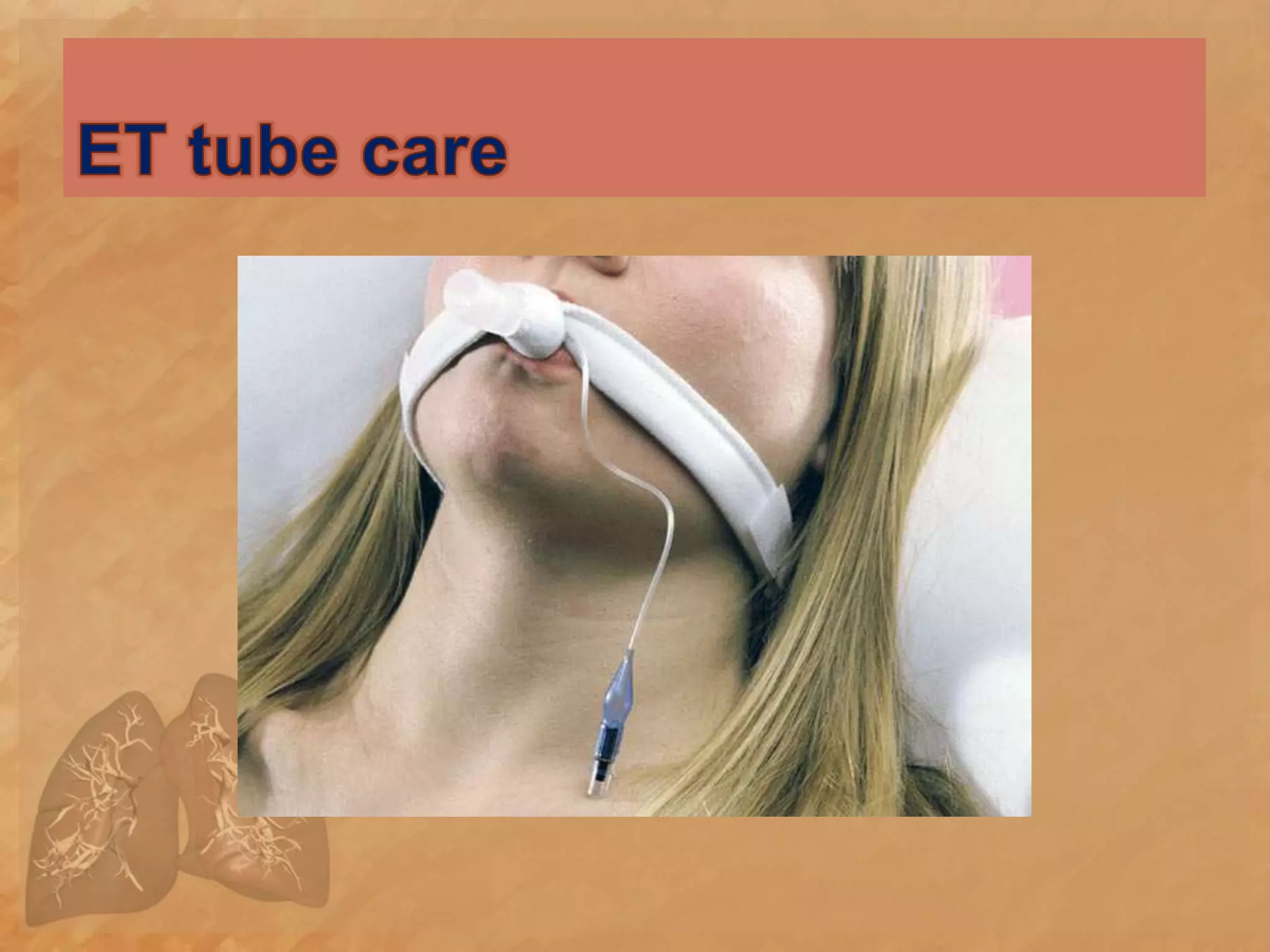
• Observe for the sign and symptoms of need
  to perform ET tube care: soiled or loose tape,
  pressure sore or nares, lips or corner of
  mouth, and excess nasal or oral secretions.
• Observe for factors that increase risk of
  complications from ET tube: type and size of
  tube, movement of tube up and down
  trachea( in and out), duration of tube
  placement, cuff over inflation or under
  inflation, presence of facial trauma,
  malnutrition and neck or thoracic radiation.
• Assess client’s knowledge of
  procedure.
• Obtain another nurse’s assistance in
  the procedure.
• Explain procedure and client’s
  participation including importance of
  the following: not biting or moving ET
  tube with tongue, trying not to cough
  when tape is off ET tube, keeping
  hands down and not pulling on tubing,
  removal of tape from face can be
  uncomfortable.
• Assist client to assume position
  comfortable for both nurse and
  client(usually supine or semi fowler’s)
• Wash hands and administer
  endotracheal, nasopharyngeal and
  oropharyngeal suction.
Et tube suctioning ppt

Et tube suctioning ppt

  • 2.
    • Endotracheal suctioningis a component of bronchial hygiene therapy and mechanical ventilation and involves the mechanical aspiration of pulmonary secretions from a patient with an artificial airway in place.
  • 4.
    • ETT suctioningis defined as the procedure to remove pulmonary secretion mechanically from the patient’s airway passages via nose or mouth where ETT (Endotracheal tube) is in place.
  • 5.
    • To maintaina patent airway by removing accumulated tracheobronchial secretions using sterile technique. • To improve oxygenation and reduce the work of breathing. • Stimulate the cough reflex. • Prevent infection and atelactasis from the retained secretion.
  • 6.
    The need toremove accumulated pulmonary secretions as evidenced by one of the following: • Coarse breath sounds by auscultation of lungs or 'noisy' breathing.(rhonchi sound) • Increased peak inspiratory pressures during volume-controlled mechanical ventilation or decreased tidal volume during pressure-controlled ventilation.
  • 7.
    • Patient's inabilityto generate an effective spontaneous cough. • Visible secretions in the airway. • Changes in monitored flow and pressure graphics. • Deterioration of arterial blood gas values. • Suspected aspiration of gastric or upper airway secretions. • Clinically apparent increased work of breathing.
  • 8.
    • An endotrachealtube is an artificial airway inserted into the trachea through the mouth or nose. It is usually made of polyvinyl chloride.
  • 10.
    • It isavailable in various sizes . the size is indicated by internal diameter (ID) in millimeters.8/ 8.5 mm ID used for adult male & 7/7.5 mm ID used for adult female.
  • 11.
    • Hypoxemia (decreased O2 in the blood) • Dysrhythmias • Nosocomial pulmonary tract infection (most common complication of ETT tube suctioning)
  • 12.
  • 13.
    • Sepsis • Mucosaltrauma with increase secretions • Cardiac arrest
  • 16.
    • Observe forthe sign and symptoms of need to perform ET tube care: soiled or loose tape, pressure sore or nares, lips or corner of mouth, and excess nasal or oral secretions. • Observe for factors that increase risk of complications from ET tube: type and size of tube, movement of tube up and down trachea( in and out), duration of tube placement, cuff over inflation or under inflation, presence of facial trauma, malnutrition and neck or thoracic radiation.
  • 17.
    • Assess client’sknowledge of procedure. • Obtain another nurse’s assistance in the procedure. • Explain procedure and client’s participation including importance of the following: not biting or moving ET tube with tongue, trying not to cough when tape is off ET tube, keeping hands down and not pulling on tubing, removal of tape from face can be uncomfortable.
  • 18.
    • Assist clientto assume position comfortable for both nurse and client(usually supine or semi fowler’s) • Wash hands and administer endotracheal, nasopharyngeal and oropharyngeal suction.