SEMINAR ON HEMODYNAMIC
MONITORING
BY
BY UMAdevi.k
UMA MSc NURSING
IIND YEAR
The
IIND YEAR oxford NURSING
MSC college of nursing
INTRODUCTION
Critically ill patients require continuos assessment of their
cardiovascular system to diagnose and manage their complex
medical conditions.This is most commonly achieved by the use
of direct pressure monitoring systems,often refered to as
hemodynamic monitoring.Heart function is the main focus of
hemodynamic

studies.

Hemodynamic

pressure

monitoring

provides information about blood volume , fluid balance and how
well the heart is pumping. Nurses are responsible for the

collection measurement and interpretation of these dynamic
patient status parameters.
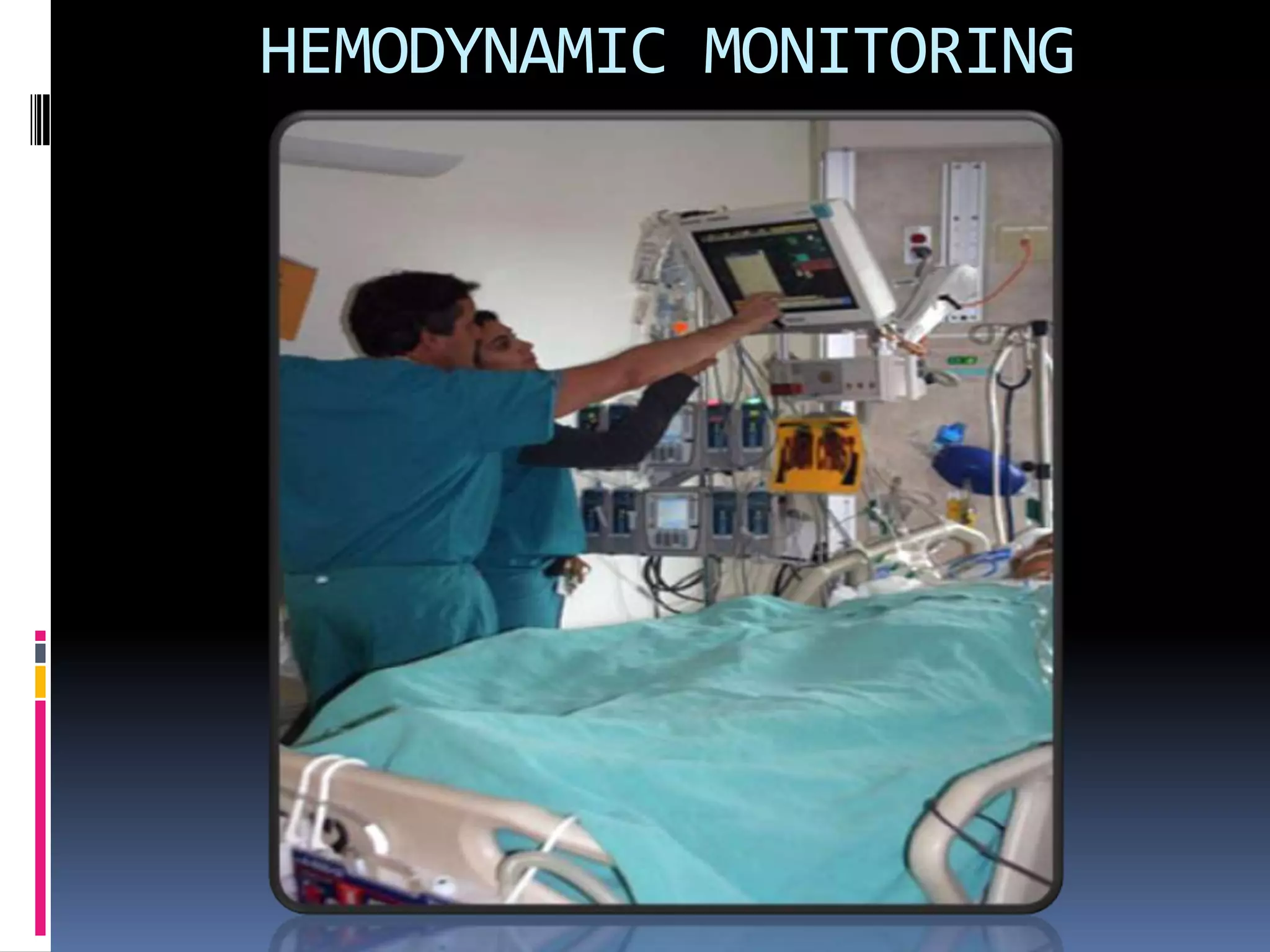
HEMODYNAMIC MONITORING
HEMODYNAMICS
 Hemodynamics

are the forces which
circulate blood through the body.
Specifically, hemodynamics is the term
used to describe the intravascular
pressure and flow that occurs when the
heart muscle contracts and pumps blood
throughout the body.
DEFINITION
Hemodynamic monitoring refers to
measurement of pressure, flow and
oxygenation of blood within the cardiovascular
system.
OR
Using invasive technology to provide
quantitative information about vascular
capacity, blood volume, pump effectiveness
and tissue perfusion.
OR
Hemodynamic monitoring is the measurement
and interpretation of biological sytems that
describes the performance of cardiovascular
system
PURPOSES
 Early detection, identification and

treatment of life threatening conditions
such as heart failure and cardiac
tamponade.
 Evaluate the patient’s immediate response
to treatment such as drugs and
mechanical support.
 Evaluate the effectiveness of
cardiovascular function such as cardiac
output and index.
INDICATIONS
 Any deficits or loss of cardiac function: such

as myocardial infarction, congestive heart
failure, cardiomyopathy.
 All types of shock; cardiogenic
shock, neurogenic shock or anaphylactic
shock.

 Decreased urine output from
dehydration, hemorrhage. G.I bleed, burns or
surgery.
SPECIALISED EQUIPMENTS NEEDED
FOR INVASIVE MONITORING


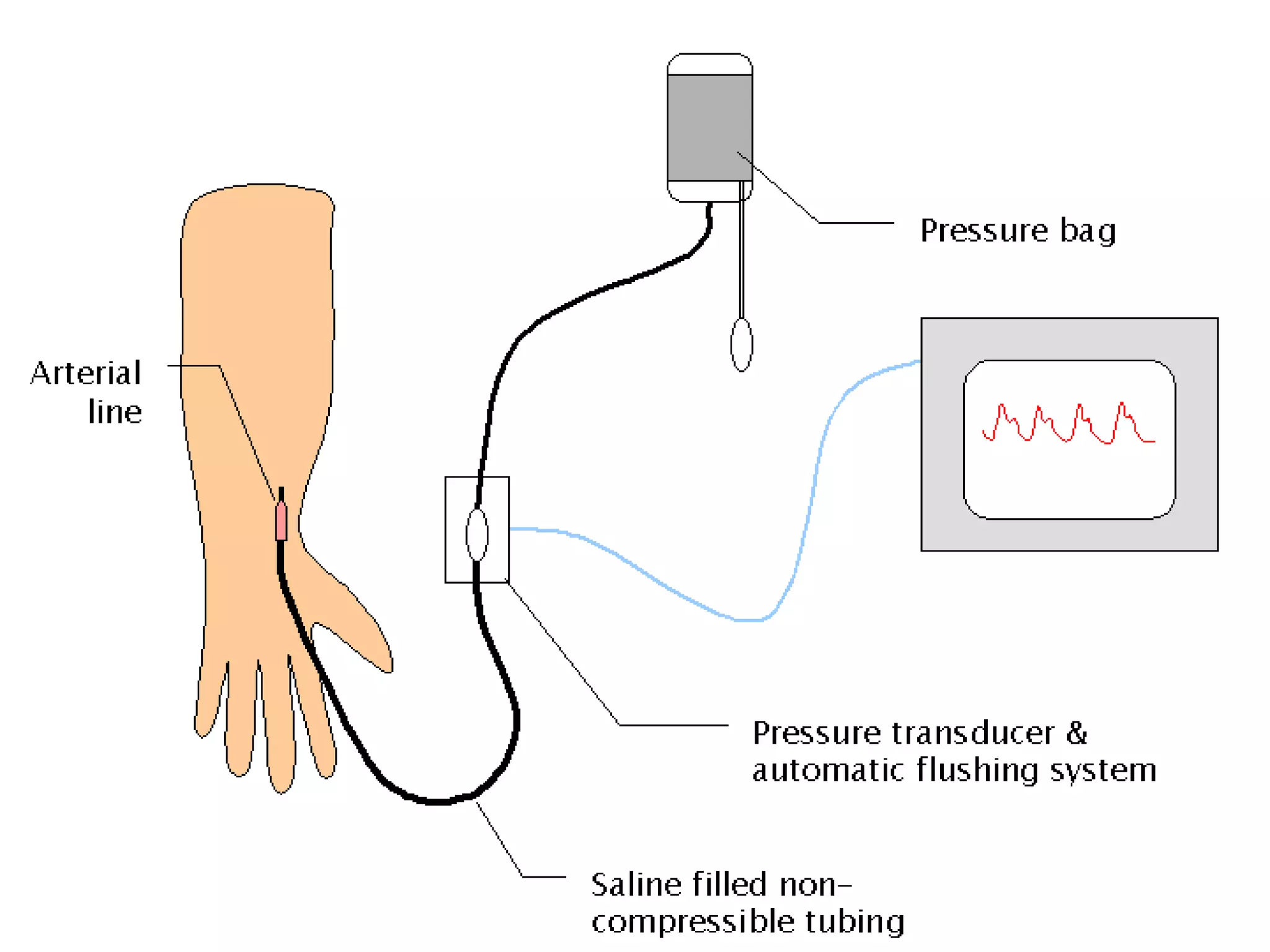
A CVP,pulmonary artery ,arterial catheter



A flush system composed of intravenous solution,tubing stop cocks
and a flush device which provides for continous and manual flushing of
system.



A pressure bag placed around the flush solution that is maintained at
300 mmhg pressure ;the pressurized flush system delivers 3-5ml of
solution per hour through the catheter to prevent clotting and backflow
of blood into the pressure monitoring system.



A tranducer to convert the pressure coming from artery or heart
chamber into an electrical signal



An amplifier or moniter which increases the size of electrical signal for
display on an occilloscope.
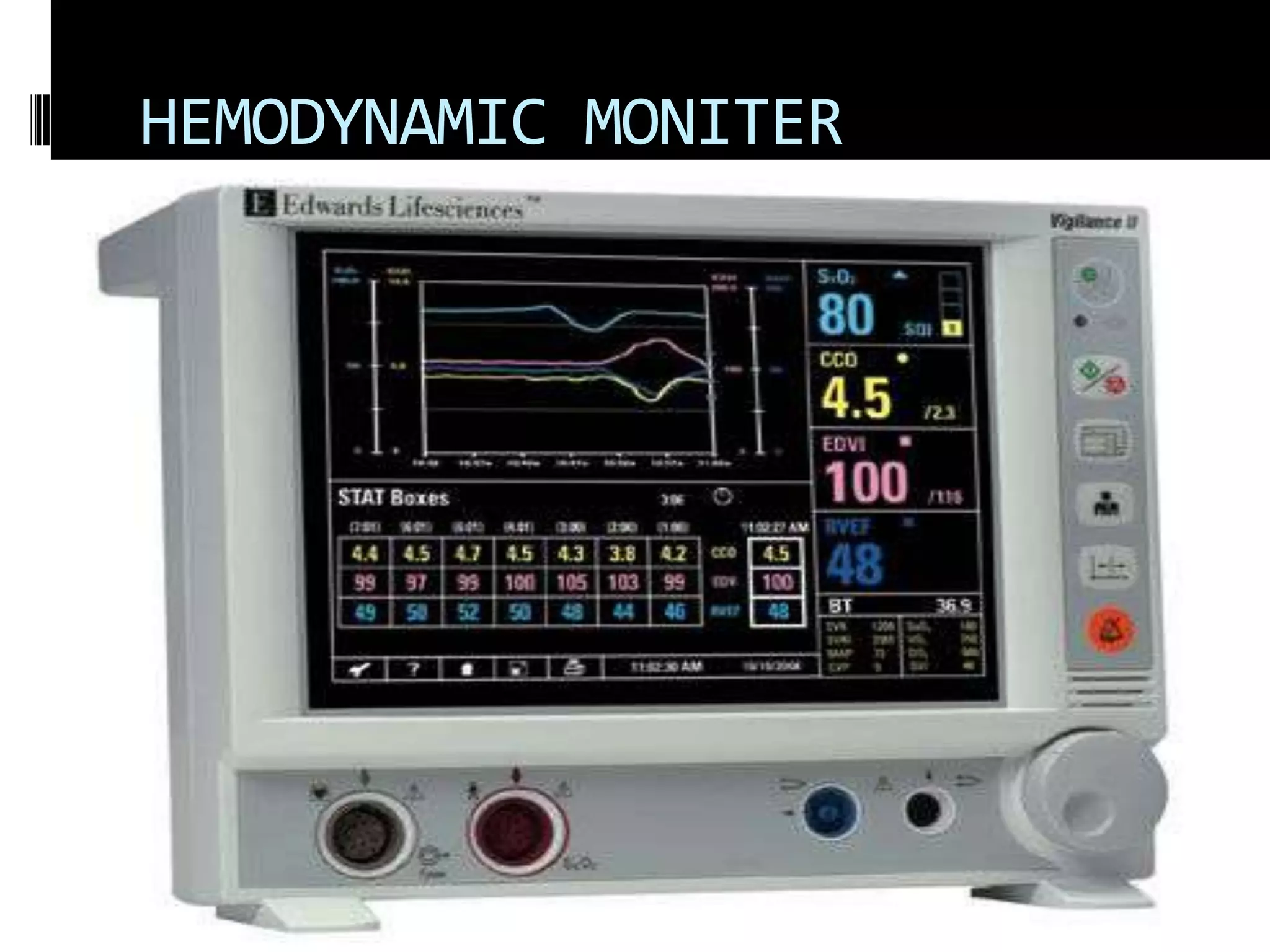
HEMODYNAMIC MONITER
SETUP FOR HEMODYNAMIC
PRESSURE MONITORING
 Obtain barrier kit, sterile gloves and correct swan catheter.

Also need extra iv pole, transducer holder, boxes and
cables.
 Check to make sure signed consent is in chart , and that

patient and or family understand procedure.
 Everyone in the room should be wearing a mask.
 Position patient supine and flat if tolerated.
 On the monitor , press “change screen” button , then select

“swan ganz” to allow physician to view catheter wave forms
which inserting.

 Assist physician in sterile draping and sterile setup for swan

insertion.
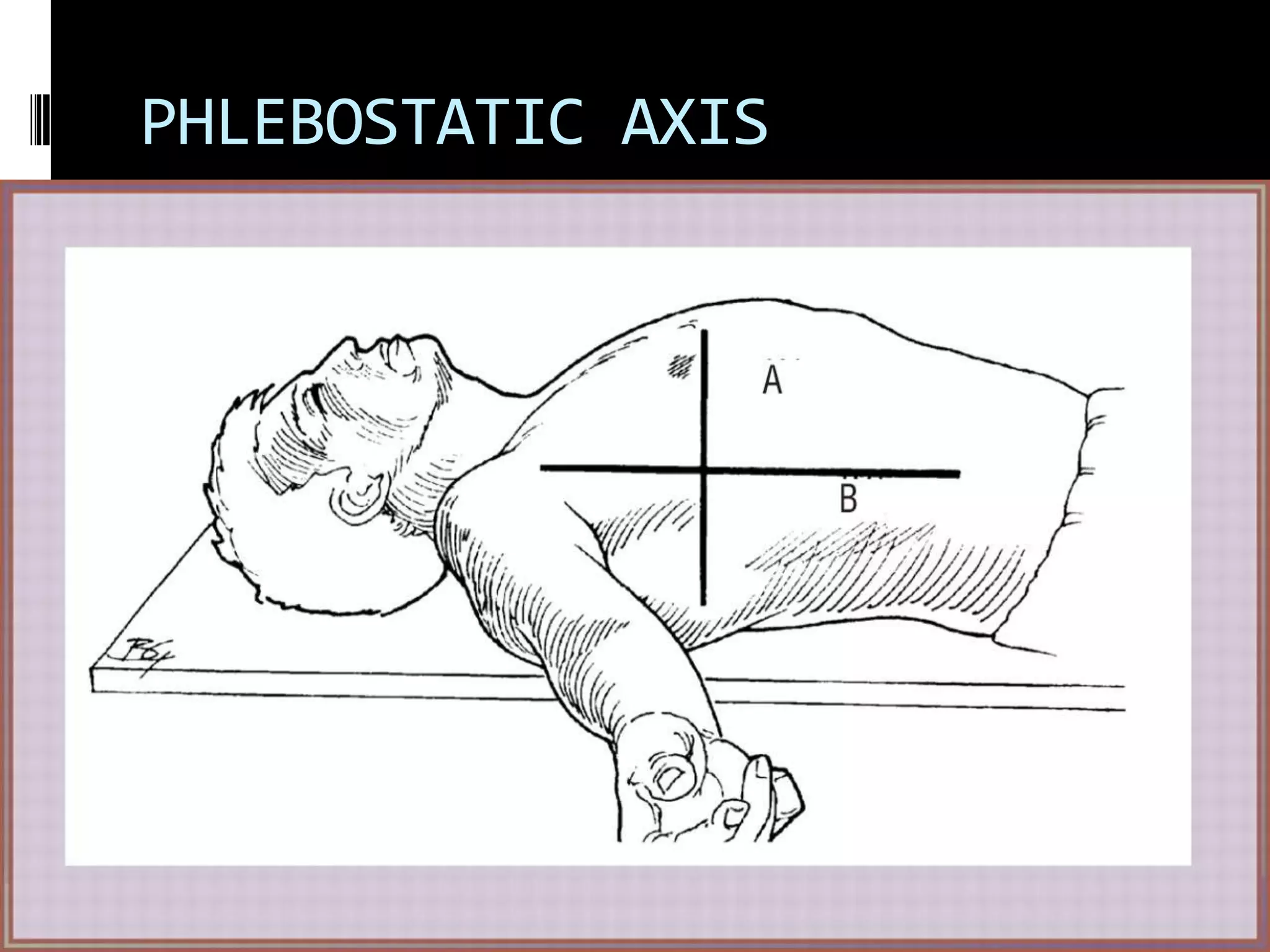
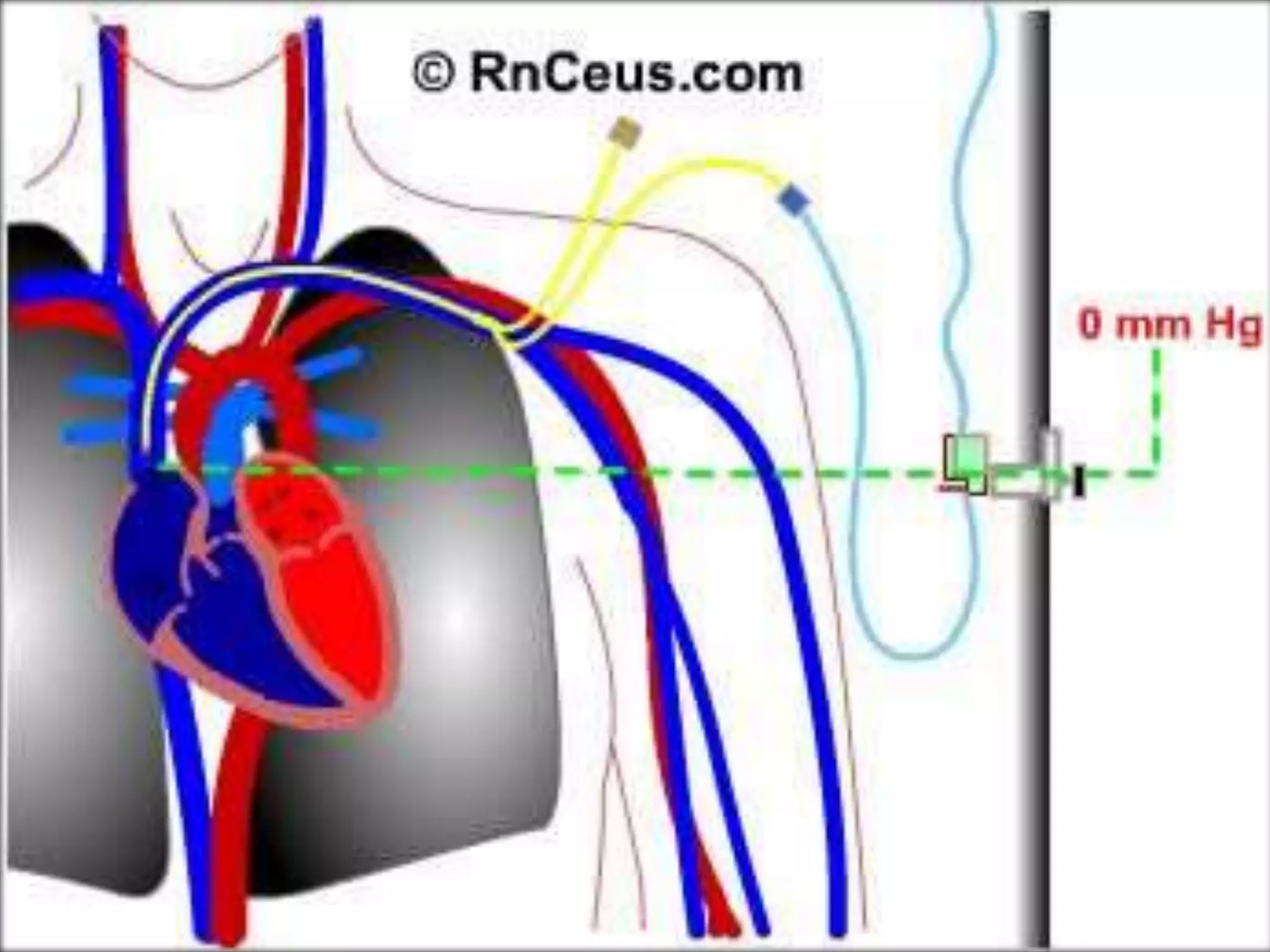
 Setup pressure lines and transducers. Level pressure flush

monitoring system and transducers to the phlebostatic axis.
 Connect tubings to patient when patient is ready to flush the

swann.
 While floating the swann, observe for ventricular ectopy on

the monitor.
 After swann is in place, assist with cleanup and let patient

know procedure is complete.
 Obtain all the values. For cardiac output inject 10mls of D5w

after pushing the start button.
 Perform hemocalculations.
 Document findings in ICU flow sheet.
PHLEBOSTATIC AXIS
DETERMINANTS OF CARDIAC
PERFORMNACE
 PRELOAD (estimated by end diastolic

volume CVP for RVEDV ; PAOP (wedge)
pressure for LVEDV
 AFTERLOAD (SVR = [MAP-CVP]/CO*80)
 CONTRACTILITY
METHODS OF HEMODYNAMIC
MONITORING
 1.ARTERIAL BLOOD PRESSURE
 a)Non Invasive
 b)Intra arterial blood pressure

measurement
 2.CENTRAL VENOUS PRESSURE
 3.PULMONARY ARTERY CATHETER
PRESSURE MONITORING
NON INVASIVE ARTERIAL BP
MONITORING
 With manual or automated devices
 Method of measurement

 Oscillometry (most common)
 MAP most accurate DP least accurate

 Auscultatory (korotkoff sounds)
 Combination
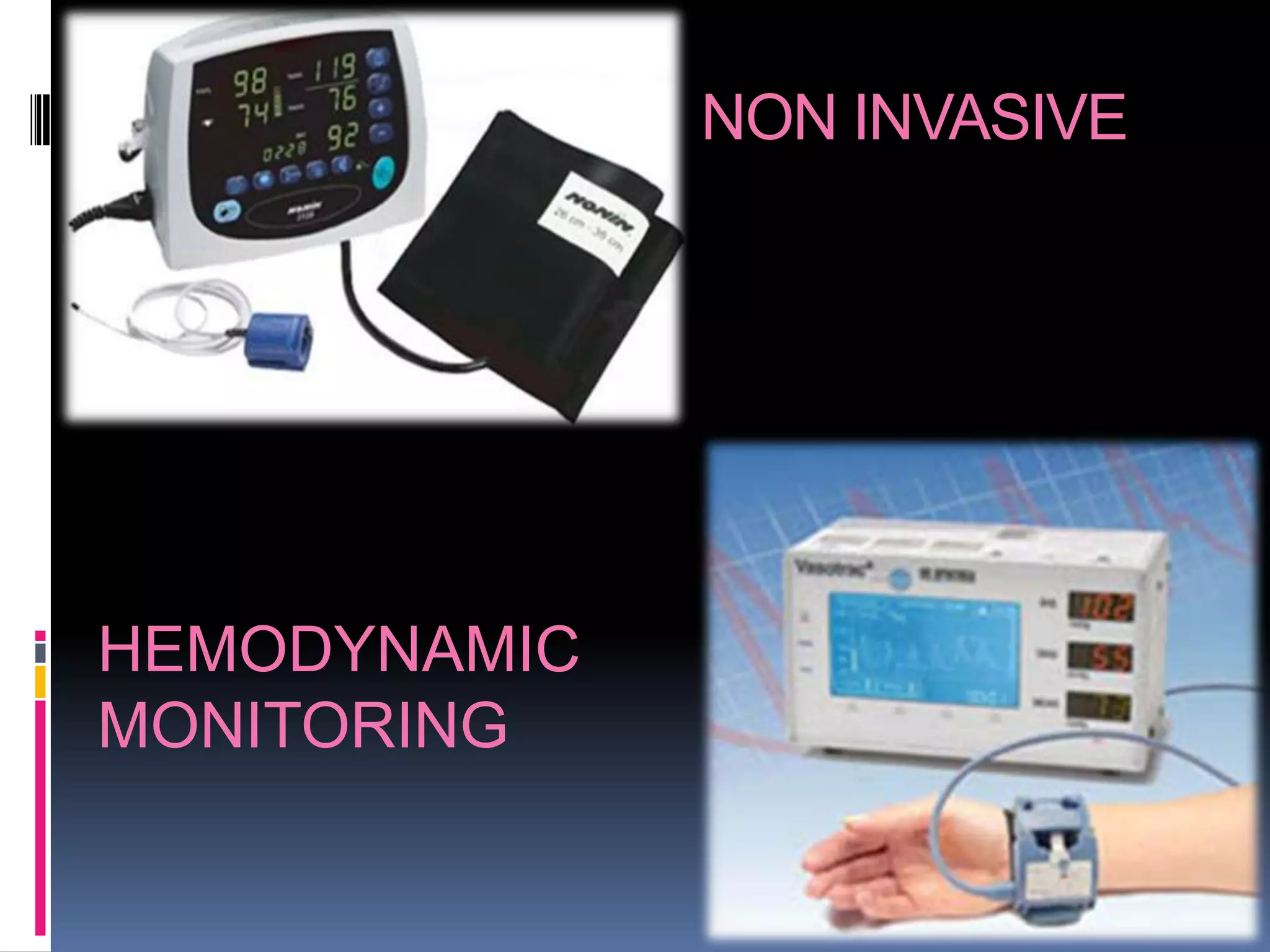
NON INVASIVE

HEMODYNAMIC
MONITORING
LIMITATIONS
 Cuff must be placed correctly and must be

appropriately sized
 Auscultatory method is very inaccurate

(Korotkoff sound is difficult to hear)
 Significant

underestimation

in

low

flow

(shock)
 Oscillometric also mostly in accurate

( >5mmhg off directly recorded pressures)
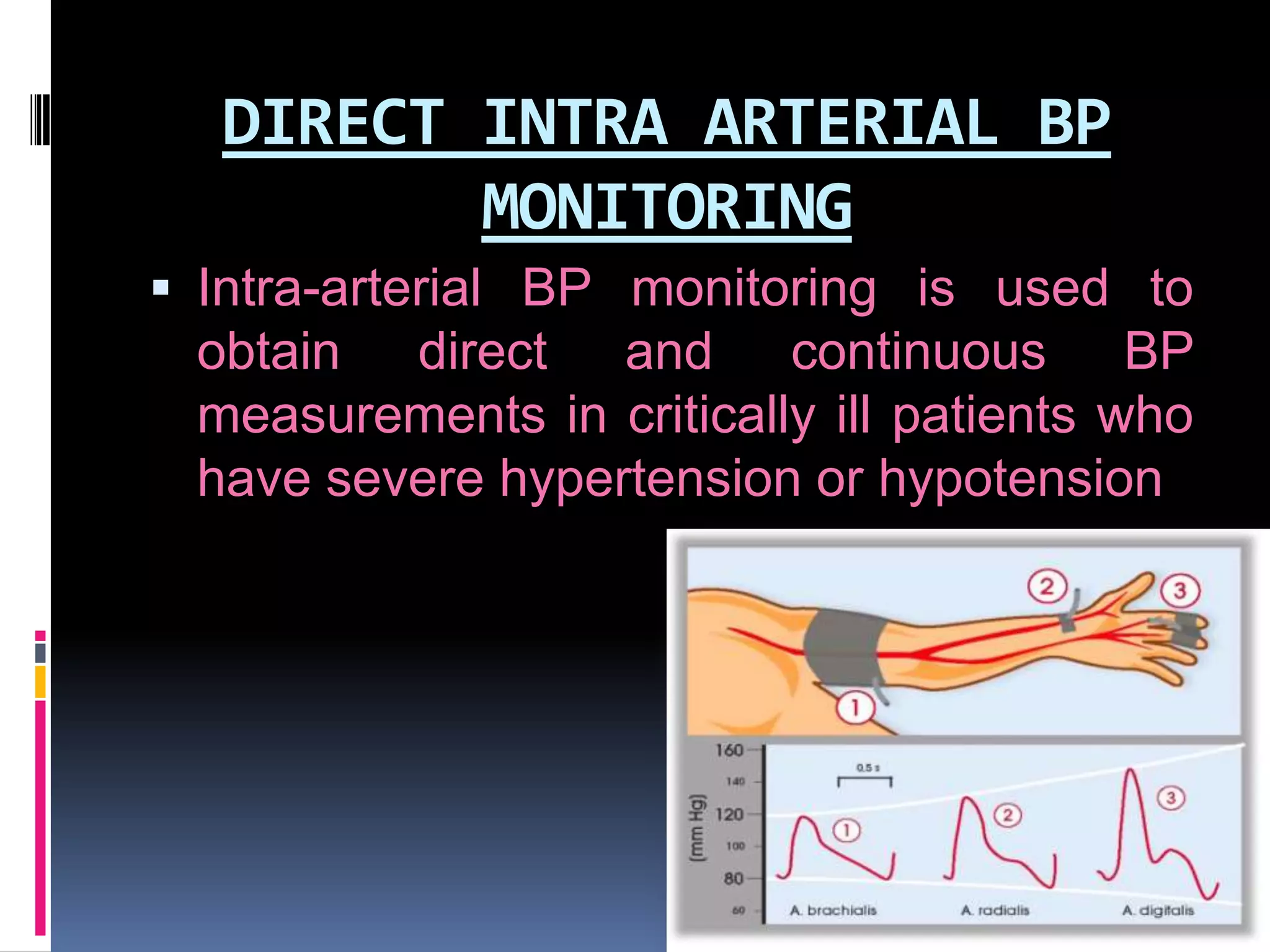
DIRECT INTRA ARTERIAL BP
MONITORING
 Intra-arterial BP monitoring is used to

obtain direct and continuous BP
measurements in critically ill patients who
have severe hypertension or hypotension
PROCEDURE
 Once
an
arterial
site
(radial, brachial, femoral,

is
selected
or dorsalis
pedis), collateral circulation to the area must
be confirmed before the catheter is placed.
This is a safety precaution to prevent
compromised arterial perfusion to the area
distal to the arterial catheter insertion site. If
no collateral circulation exists and the
cannulated
artery
became
occluded, ischemia and infarction of the area
distal to that artery could occur.

 Collateral circulation to the hand can be
checked by the Allen test
 With the Allen test, the nurse compresses the
radial and ulnar arteries simultaneously and
asks the patient to make a fist, causing the
hand to blanch.

 After the patient opens the fist, the nurse

releases the pressure on the ulnar artery
while maintaining pressure on the radial
artery. The patient’s hand will turn pink if the
ulnar artery is patent.
COMPLICATIONS










Local destruction with distal ischemia
external hemorrhage
massive ecchymosis
dissection
air embolism
blood loss
pain
arteriospasm and
infection.
NURSING INTERVENTIONS
 Before insertion of a catheter, the site is
prepared by shaving if necessary and by

cleansing with an antiseptic solution. A local
anesthetic may be used.
 Once the arterial catheter is inserted, it is

secured and a dry, sterile dressing is applied.
 The site is inspected daily for signs of
infection. The dressing and pressure

monitoring system or water manometer are
changed according to hospital policy.
 In general, the dressing is to be kept dry and air

occlusive.
 Dressing changes are performed with the use of sterile

technique.
 Arterial catheters can be used for infusing intravenous

fluids, administering intravenous medications, and
drawing blood specimens in addition to monitoring
pressure.
 To measure the arterial pressure, the transducer (when

a pressure monitoring system is used) or the zero mark
on the manometer (when a water manometer is used)
must be placed at a standard reference point, called
the phlebostatic axis .
 After locating this position, the nurse may make an ink

mark on the chest
CENTRAL VENOUS PRESSURE
MONITORING
The CVP, the pressure in the vena cava
or right atrium, is used to assess right
ventricular function and venous blood
return to the right side of the heart. The
CVP can be continuously measured by
connecting either a catheter positioned in
the vena cava or the proximal port of a
pulmonary artery catheter to a pressure
monitoring system
PROCEDURE
 Before insertion of a CVP catheter, the site is
prepared by shaving if necessary and by

cleansing with an antiseptic solution.
 A local anesthetic may be used. The
physician threads a single lumen or
multilumen catheter through the external
jugular, antecubital, or femoral vein into the
vena cava just above or within the right

atrium
NURSING INTERVENTIONS
 Once the CVP catheter is inserted, it is secured and a

dry, sterile dressing is applied.
 Catheter placement is confirmed by a chest x-ray, and the

site is inspected daily for signs of infection. The dressing
and pressure monitoring system or water manometer are
changed according to hospital policy.
 In general, the dressing is to be kept dry and air occlusive.
 Dressing changes are performed with the use of sterile

technique.
 CVP catheters can be used for infusing
intravenous fluids, administering intravenous
medications, and drawing blood specimens
in addition to monitoring pressure.
 To measure the CVP, the transducer (when a
pressure monitoring system is used) or the
zero mark on the manometer (when a water
manometer is used) must be placed at a

standard reference
phlebostatic axis .

point,

called

the

 After locating this position, the nurse may

make an ink mark on the chest
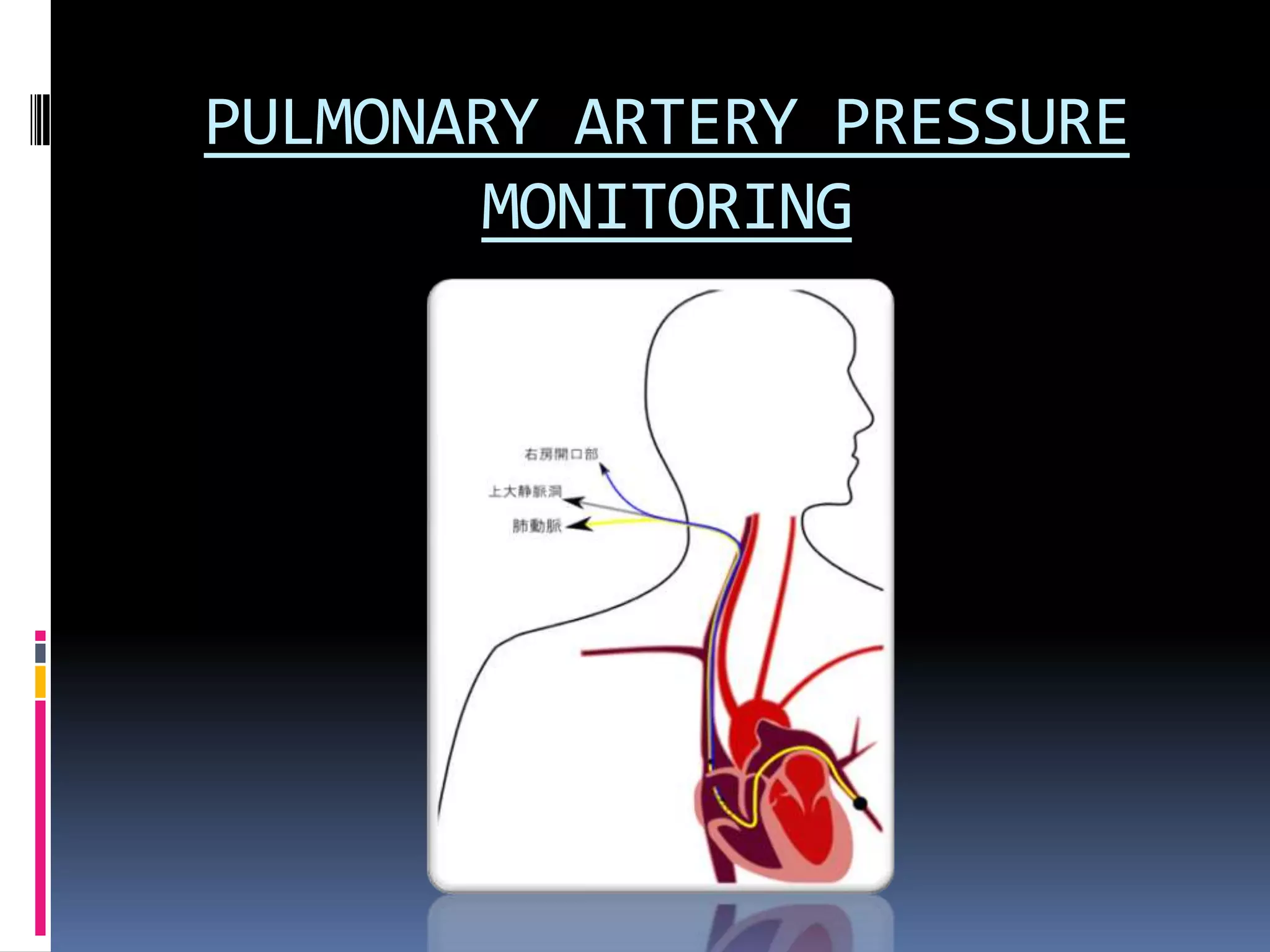
PULMONARY ARTERY PRESSURE
MONITORING
 Pulmonary artery pressure monitoring is an important

tool used in critical care for assessing left ventricular
function, diagnosing the etiology of shock, and
evaluating

the

patient’s

response

to

medical

interventions (eg, fluid administration, vasoactive
medications). Pulmonary artery pressure monitoring
is achieved by using a pulmonary artery catheter and
pressure monitoring system.
PULMONARY ARTERY PRESSURE
MONITORING
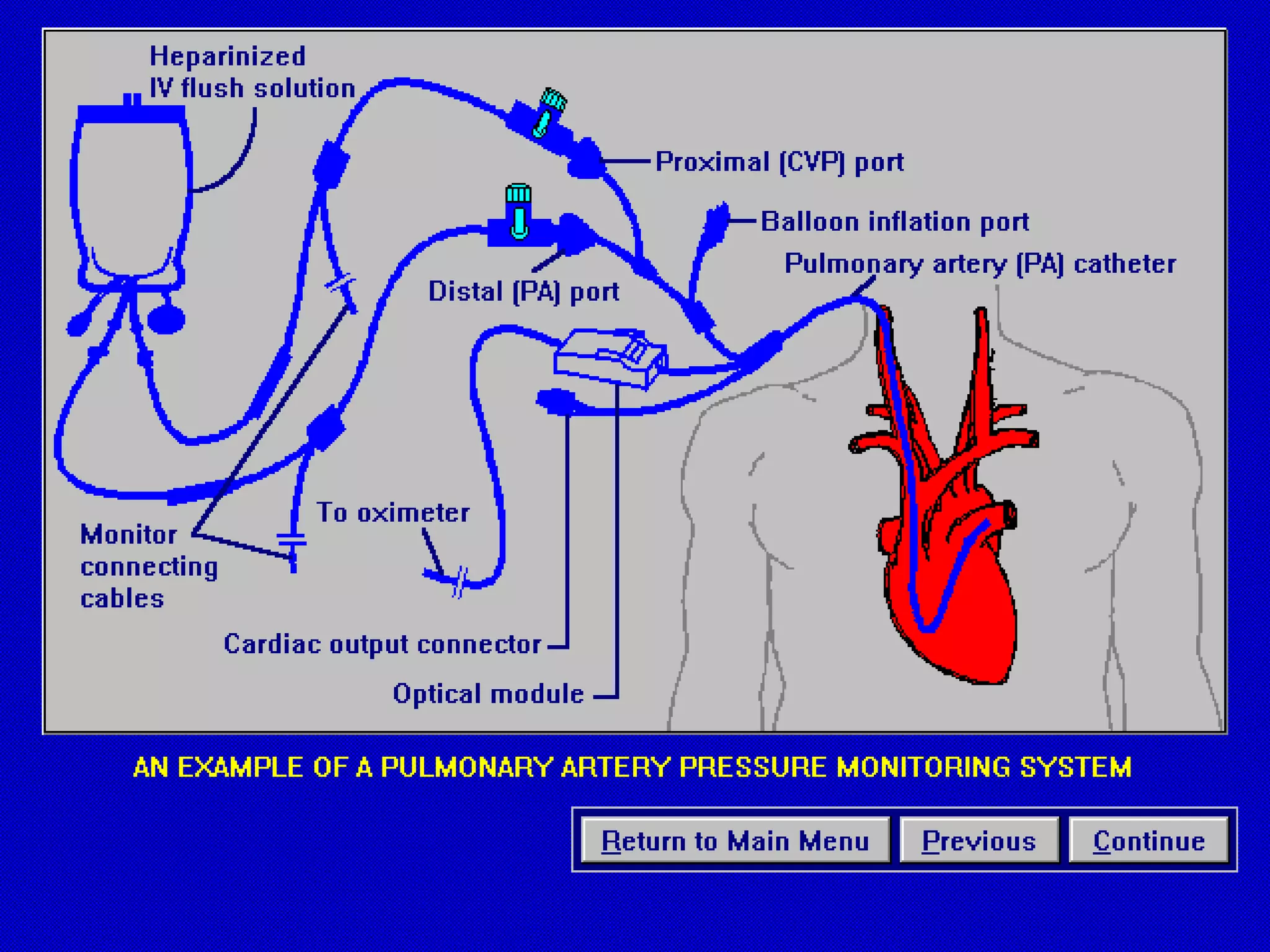
PULMONARY ARTERY CATHETER
 Development of the balloon-tipped flow

directed catheter has enabled continuous
direct monitoring of PA pressure.
Pulmonary artery catheter otherwise
known as “swan- ganz catheter”.
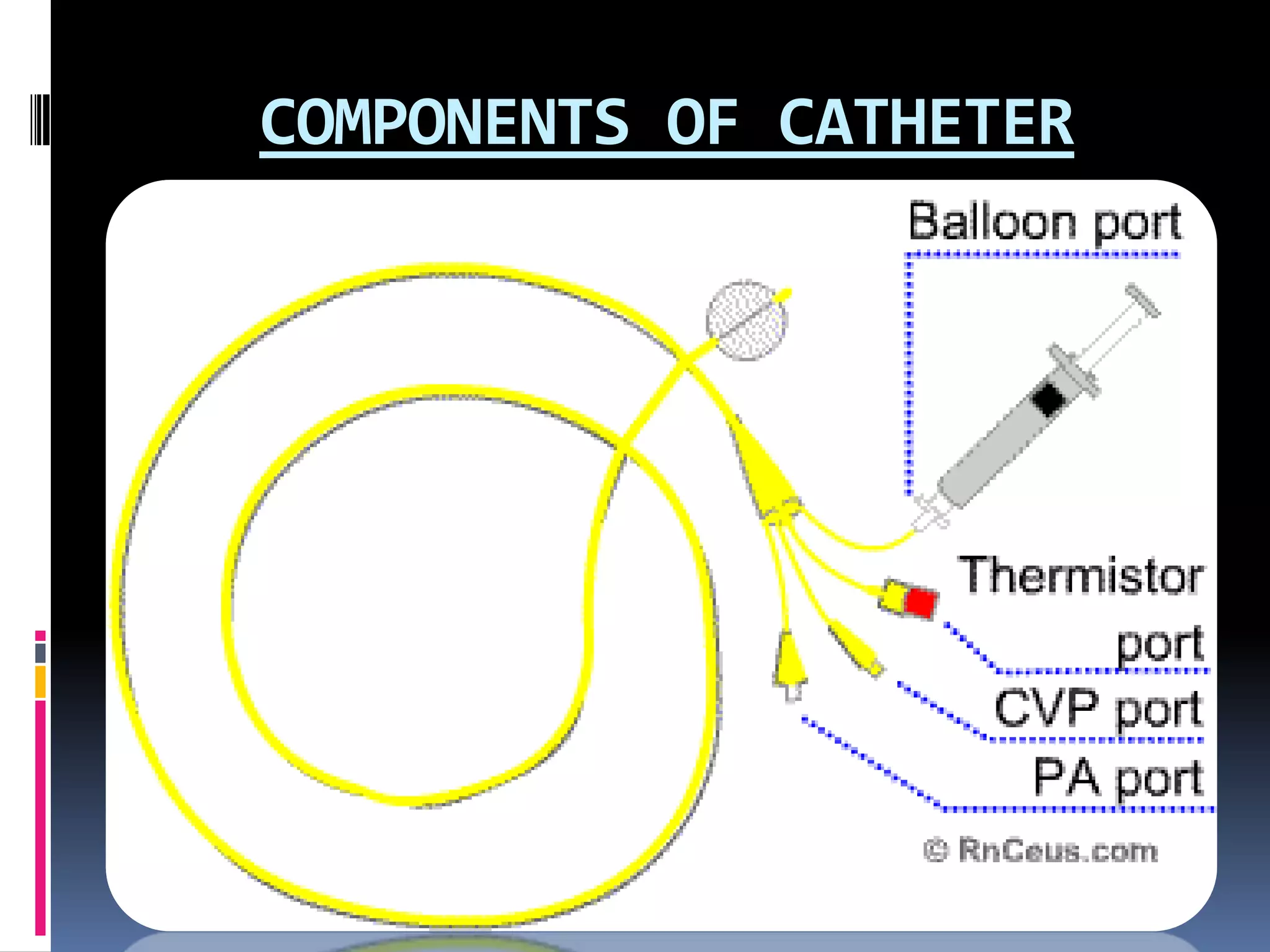
COMPONENTS OF CATHETER
INSERTION OF PAC
 PA monitoring must be carried out in a critical
care unit under careful scrutiny of an
experienced nursing staff.
 Before insertion of the catheter , explain to
the client that;
 The procedure may be uncomfortable but not

painful.
 A local anesthetic will be given at the
catheter insertion site. Support
of the
critically ill client at this time helps promote
cooperation and lessen anxiety.
Procedure
 This procedure can be performed in the
operating room or cardiac catheterization

laboratory or at the bedside in the critical care
unit.Catheters vary in their number of lumens
and their types of measurement (eg, cardiac
output, oxygen saturation) or pacing
capabilities.
 All types require that a balloon-tipped, flowdirected catheter be inserted into a large vein
(usually the subclavian, jugular, or femoral

vein); the catheter is then passed into the
vena cava and right atrium.
 In the right atrium, the balloon tip is
inflated, and the catheter is carried rapidly by
the flow of blood through the tricuspid
valve, into the right ventricle, through the
pulmonic valve, and into a branch of the
pulmonary artery.
 (During insertion of the pulmonary artery
catheter, the bedside monitor is observed for
waveform andECG changes as the catheter
is movedthrough the heart chambers on the
right side and into the pulmonary Artery)
 When the catheter reaches a small pulmonary

artery, the balloon is deflated and the catheter is
secured with sutures.
 Fluoroscopy may be used during insertion to

visualize the progression of the catheter through
the heart chambers to the pulmonary artery.
 After the catheter is correctly positioned, the

following pressures can be measured:
 CVP or right atrial pressure
 pulmonary artery systolic and
 diastolic pressures, mean pulmonary artery

pressure, and pulmonary artery wedge
pressure).
NORMAL RESULTS
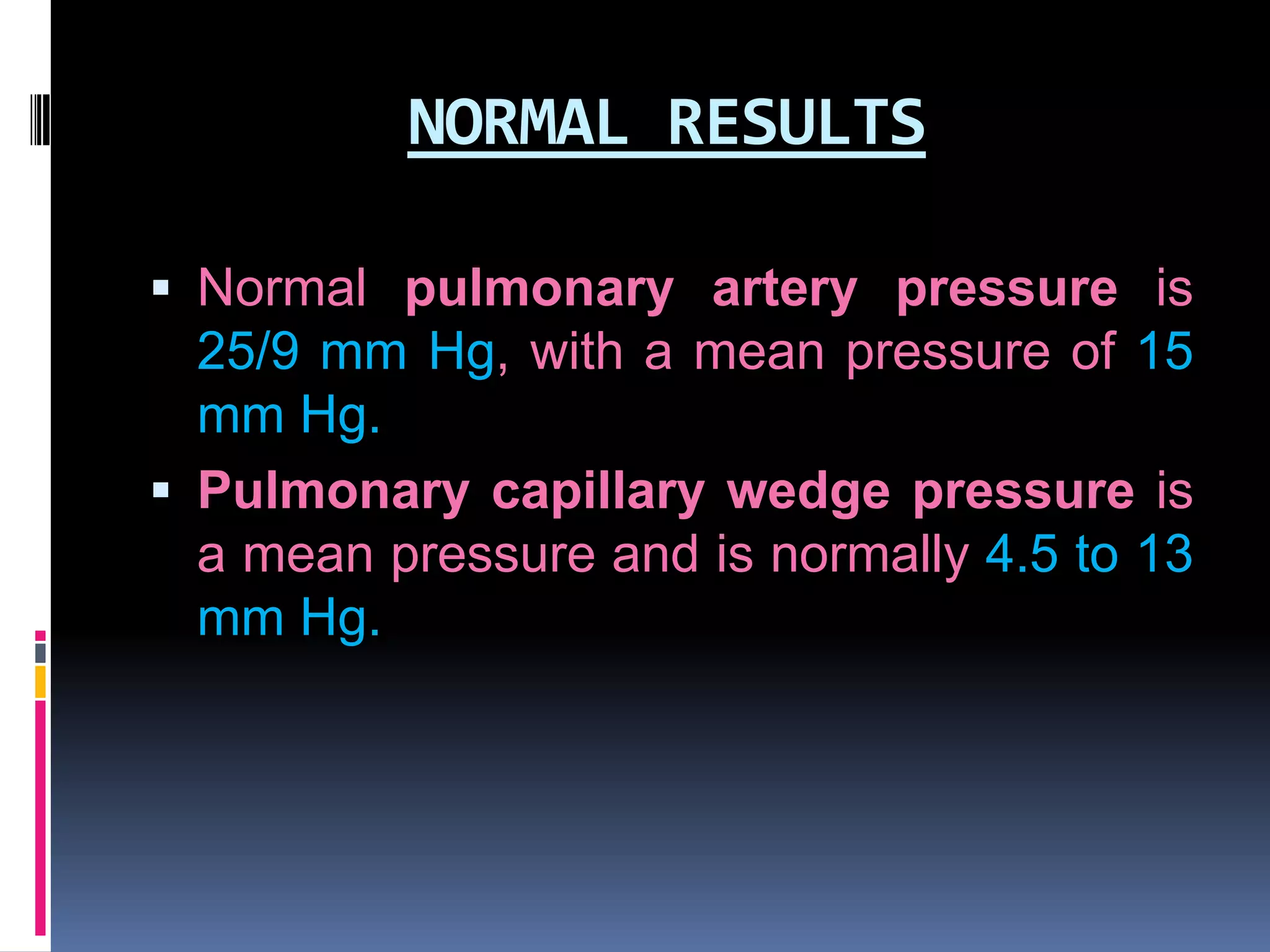
 Normal pulmonary artery pressure is

25/9 mm Hg, with a mean pressure of 15
mm Hg.
 Pulmonary capillary wedge pressure is
a mean pressure and is normally 4.5 to 13
mm Hg.
NURSING INTERVENTIONS
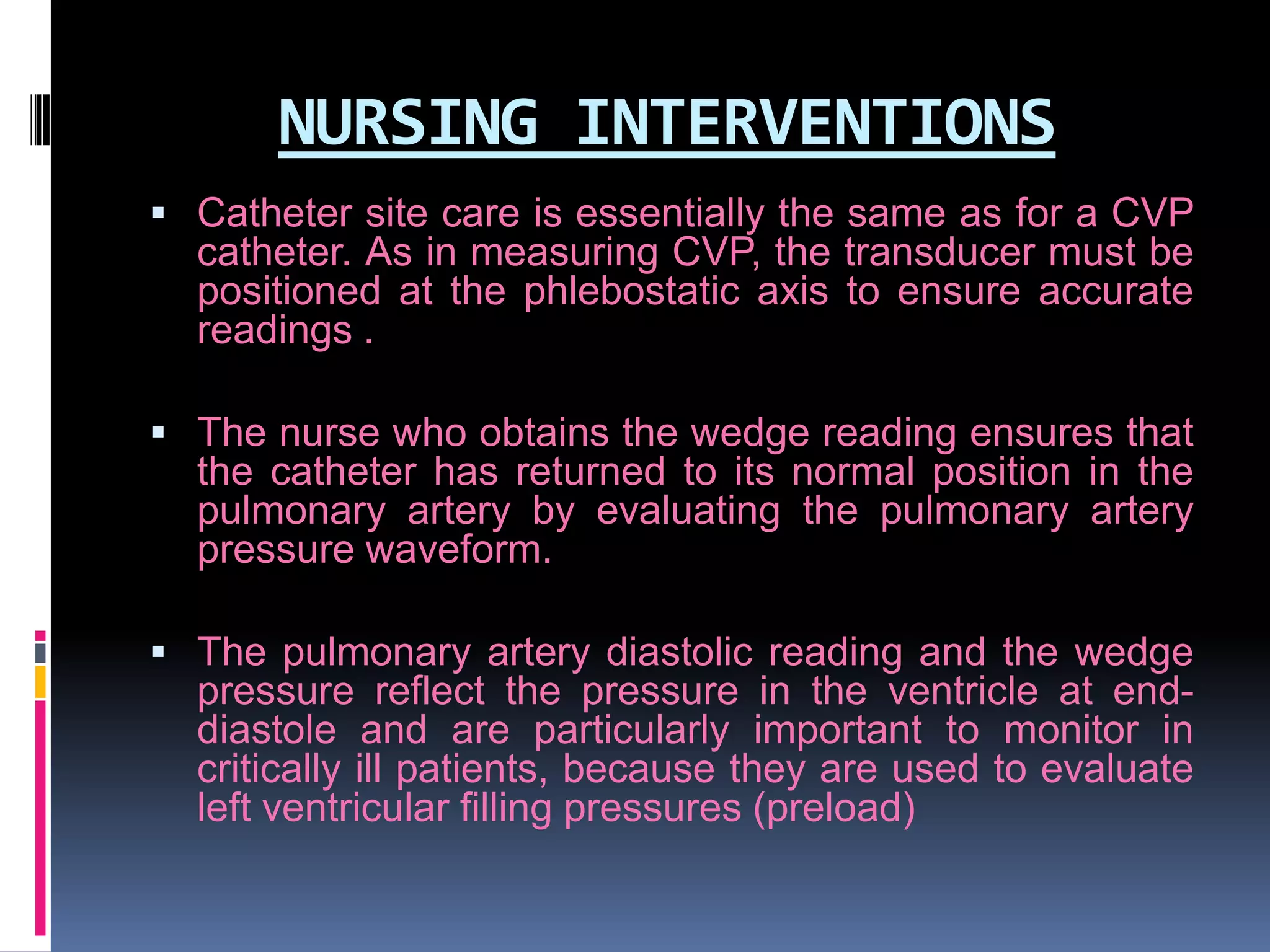
 Catheter site care is essentially the same as for a CVP

catheter. As in measuring CVP, the transducer must be
positioned at the phlebostatic axis to ensure accurate
readings .
 The nurse who obtains the wedge reading ensures that

the catheter has returned to its normal position in the
pulmonary artery by evaluating the pulmonary artery
pressure waveform.
 The pulmonary artery diastolic reading and the wedge

pressure reflect the pressure in the ventricle at enddiastole and are particularly important to monitor in
critically ill patients, because they are used to evaluate
left ventricular filling pressures (preload)
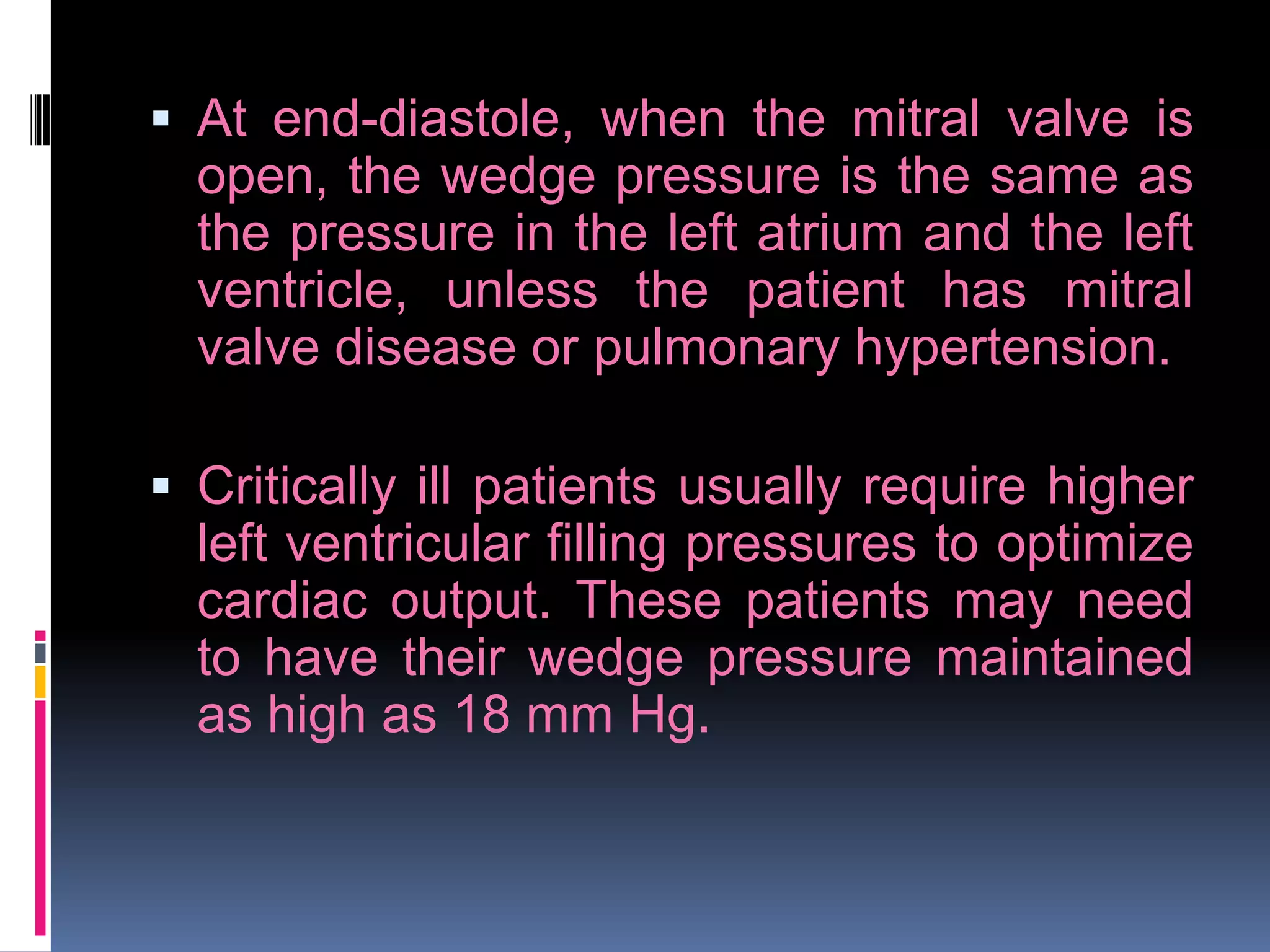
 At end-diastole, when the mitral valve is
open, the wedge pressure is the same as
the pressure in the left atrium and the left
ventricle, unless the patient has mitral
valve disease or pulmonary hypertension.
 Critically ill patients usually require higher

left ventricular filling pressures to optimize
cardiac output. These patients may need
to have their wedge pressure maintained
as high as 18 mm Hg.
COMPLICATIONS








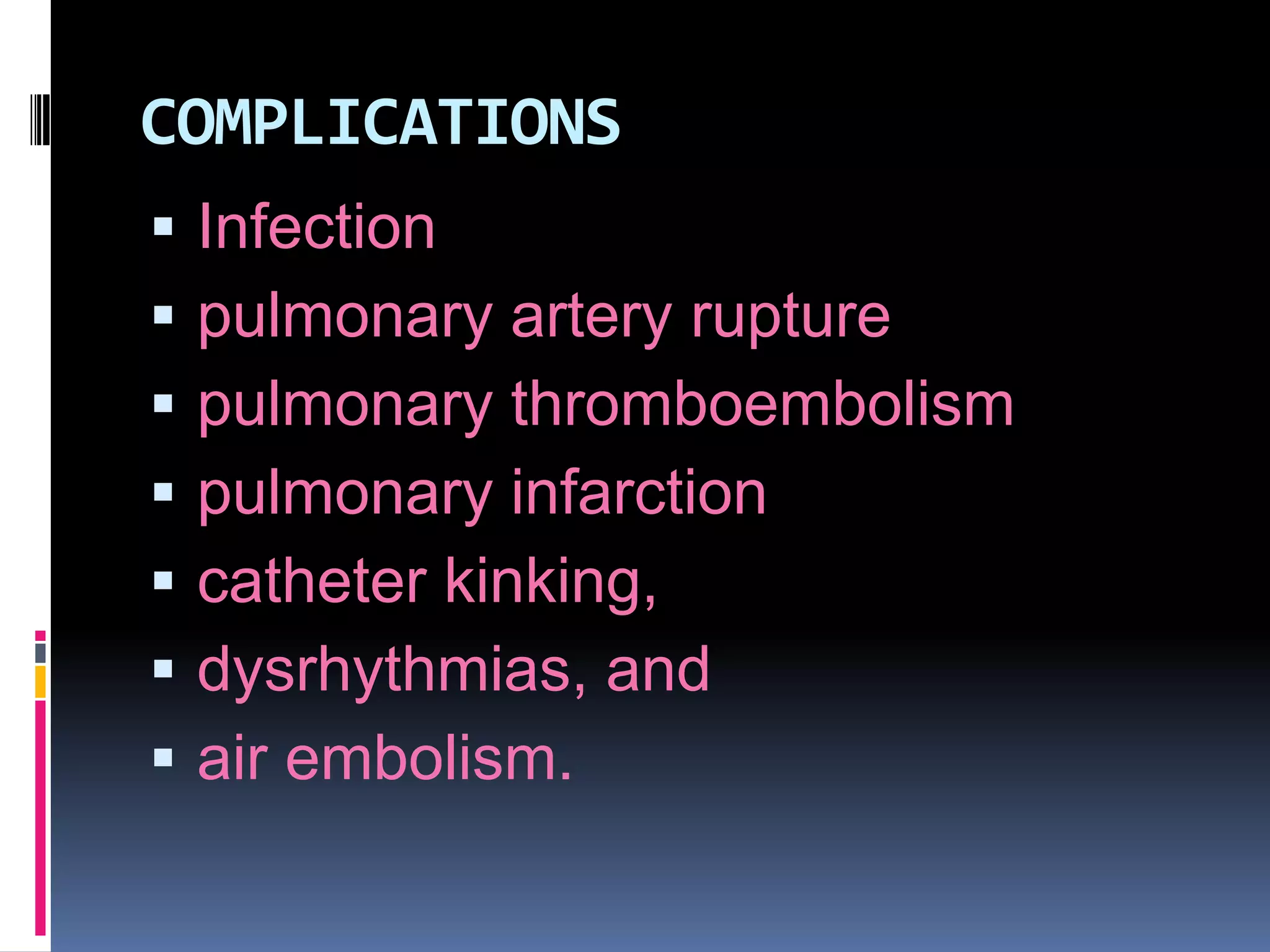
Infection
pulmonary artery rupture
pulmonary thromboembolism
pulmonary infarction
catheter kinking,
dysrhythmias, and
air embolism.
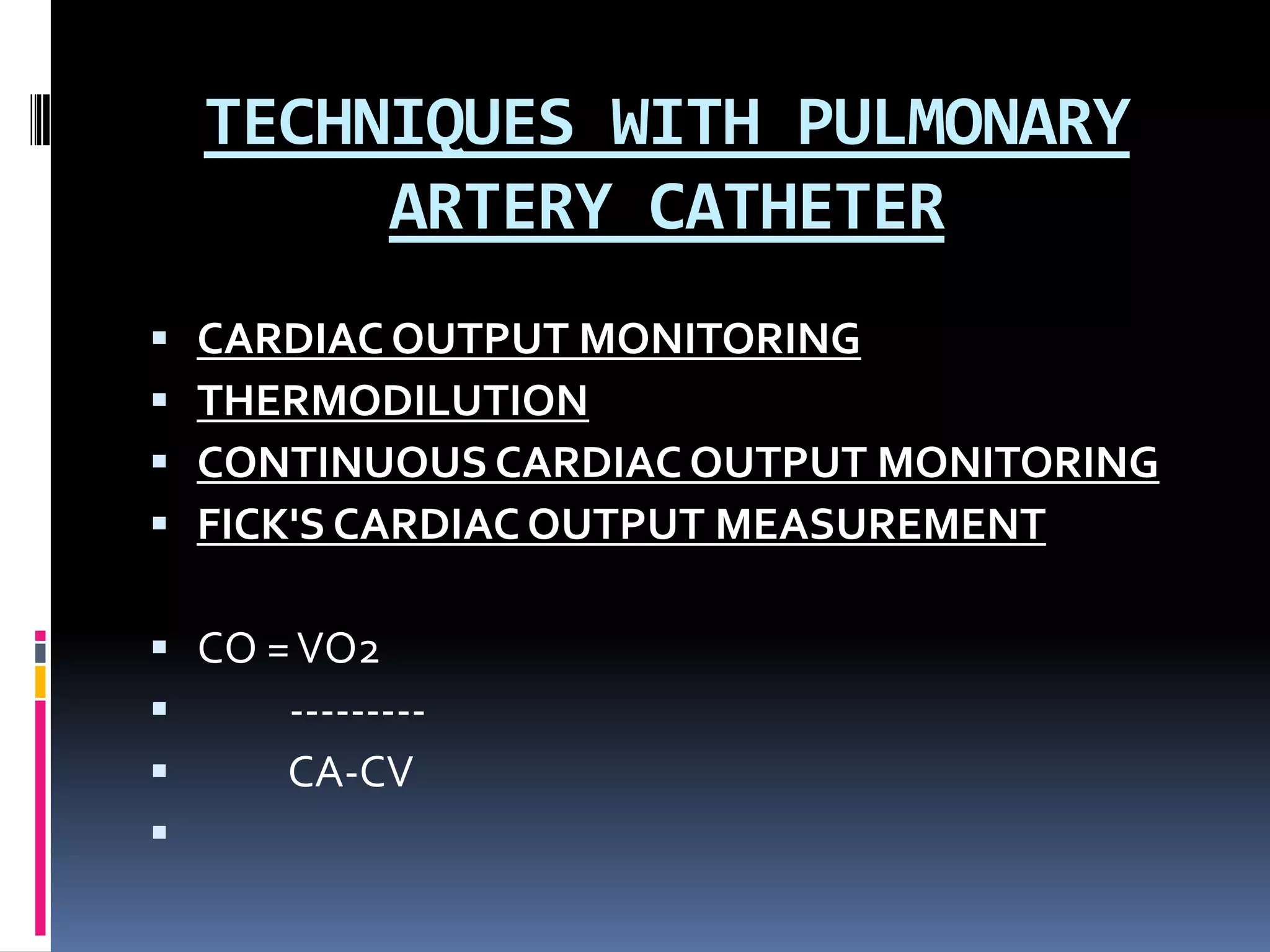
TECHNIQUES WITH PULMONARY
ARTERY CATHETER





CARDIAC OUTPUT MONITORING
THERMODILUTION
CONTINUOUS CARDIAC OUTPUT MONITORING
FICK'S CARDIAC OUTPUT MEASUREMENT

 CO = VO2

--------
CA-CV

DERIVED PARAMETERS
 Cardiac o/p measurements may be combined with systemic

arterial, venous, and PAP determinations to calculate a number
of variables useful in assessing the overall hemodynamic status
of the patient.


They are,

 Cardiac index = Cardiac output / Body surface area

 Systemic vascular resistance = [(Mean arterial pressure -

resistance CVP or rt atrial pressure)/Cardiac output] x 80
 Pulmonary vascular resistance = [(PAP - PAWP) / Cardiac

vascular resistance output] x 80
 Mixed venous oxygen saturation (SvO2)

(SvO2 = SaO2 - [VO2 / (1.36 x Hb x CO)]
(6)
NURSING RESPONSIBILITIES
 Site Care and Catheter Safety:
 A sterile dressing is placed over the insertion site

and the catheter is taped in place. The insertion
site should be assessed for infection and the
dressing changed every 72 hours and prn.
 The placement of the catheter, stated in
centimeters, should be documented and assessed
every shift.
 The integrity of the sterile sleeve must be maintained
so the catheter can be advanced or pulled back
without contamination.
 The catheter tubing should be labeled and all the
connections secure. The balloon should always be
deflated and the syringe closed and locked unless
you are taking a PCWP measurement
Patient Activity and
Positioning:
 Many physicians allow stable patients who

have PA catheters, such as post CABG
patients, to getout of bed and sit. The nurse
must position the patient in a manner that
avoids
dislodging
the
catheter.
 Proper

positioning during hemodynamic
readings will ensure accuracy.
Dysrhythmia Prevention:
 Continuous EKG monitoring is essential

while the PA catheter is in place.
 Do not advance the catheter unless the

balloon is inflated.
 Antiarrhythmic medications should be

readily available to treat lethal
dysrhythmias.
Monitoring Waveforms for
Proper Catheter Placement:
 The nurse must be vigilant in assessing

the patient for proper catheter placement.
If the PA waveform suddenly looks like the
RV or PCWP waveform, the catheter may
have become misplaced. The nurse must
implement the proper procedures for
correcting the situation.
Monitoring Hemodynamic
Values for Response to
Treatments:
 The purpose of the PA catheter is to assist
healthcare team members in assessing
the patient’s condition and response to

treatment.
Therefore,
accurate
documentation of values before and after
treatment changes is necessary.
Assessing the Patient for Complications
Associated with the PA Catheter:
 Occluded ports
 Balloon rupture caused by overinflating the balloon or








frequent use of the balloon.
Pneumothorax - may occur during initial placement.
Dysrhythmias - caused by catheter migration
Air embolism - caused by balloon rupture or air in the
infusion line.
Pulmonary thromboembolism - improper flushing
technique, non-heparinized flush solution.
Pulmonary artery rupture - perforation during
placement, overinflation of the balloon, overuse of the
balloon.
Pulmonary infarction - caused by the catheter migrating
into the wedge position, the balloon left inflated, or
thrombus formation around the catheter which causes
an occlusion.
CONCLUSION
 Hemodynamics is the forces involved in blood circulation.

Hemodynamic monitoring started with the estimation of heart rate
using the simple skill of 'finger on the pulse' and then moved on to
more and more sophisticated techniques

like stethoscope,

sphygmomanometer, ECG etc. The status of critically ill patients
can be assessed either from non-invasive single parameter

indicators or various invasive techniques that provide multiparameter

hemodynamic

measurements.

As

a

result,

comprehensive data can be provided for the clinician to proactively
address hemodynamic crisis and safely manage the patient instead
of reacting to late indicators of hemodynamic instability
THANK
UUUUUUUUU………………………….

Hemodynamic monitoring ppt

  • 1.
    SEMINAR ON HEMODYNAMIC MONITORING BY BYUMAdevi.k UMA MSc NURSING IIND YEAR The IIND YEAR oxford NURSING MSC college of nursing
  • 2.
    INTRODUCTION Critically ill patientsrequire continuos assessment of their cardiovascular system to diagnose and manage their complex medical conditions.This is most commonly achieved by the use of direct pressure monitoring systems,often refered to as hemodynamic monitoring.Heart function is the main focus of hemodynamic studies. Hemodynamic pressure monitoring provides information about blood volume , fluid balance and how well the heart is pumping. Nurses are responsible for the collection measurement and interpretation of these dynamic patient status parameters.
  • 3.
  • 4.
    HEMODYNAMICS  Hemodynamics are theforces which circulate blood through the body. Specifically, hemodynamics is the term used to describe the intravascular pressure and flow that occurs when the heart muscle contracts and pumps blood throughout the body.
  • 5.
    DEFINITION Hemodynamic monitoring refersto measurement of pressure, flow and oxygenation of blood within the cardiovascular system. OR Using invasive technology to provide quantitative information about vascular capacity, blood volume, pump effectiveness and tissue perfusion. OR Hemodynamic monitoring is the measurement and interpretation of biological sytems that describes the performance of cardiovascular system
  • 6.
    PURPOSES  Early detection,identification and treatment of life threatening conditions such as heart failure and cardiac tamponade.  Evaluate the patient’s immediate response to treatment such as drugs and mechanical support.  Evaluate the effectiveness of cardiovascular function such as cardiac output and index.
  • 7.
    INDICATIONS  Any deficitsor loss of cardiac function: such as myocardial infarction, congestive heart failure, cardiomyopathy.  All types of shock; cardiogenic shock, neurogenic shock or anaphylactic shock.  Decreased urine output from dehydration, hemorrhage. G.I bleed, burns or surgery.
  • 8.
    SPECIALISED EQUIPMENTS NEEDED FORINVASIVE MONITORING  A CVP,pulmonary artery ,arterial catheter  A flush system composed of intravenous solution,tubing stop cocks and a flush device which provides for continous and manual flushing of system.  A pressure bag placed around the flush solution that is maintained at 300 mmhg pressure ;the pressurized flush system delivers 3-5ml of solution per hour through the catheter to prevent clotting and backflow of blood into the pressure monitoring system.  A tranducer to convert the pressure coming from artery or heart chamber into an electrical signal  An amplifier or moniter which increases the size of electrical signal for display on an occilloscope.
  • 10.
  • 11.
    SETUP FOR HEMODYNAMIC PRESSUREMONITORING  Obtain barrier kit, sterile gloves and correct swan catheter. Also need extra iv pole, transducer holder, boxes and cables.  Check to make sure signed consent is in chart , and that patient and or family understand procedure.  Everyone in the room should be wearing a mask.  Position patient supine and flat if tolerated.  On the monitor , press “change screen” button , then select “swan ganz” to allow physician to view catheter wave forms which inserting.  Assist physician in sterile draping and sterile setup for swan insertion.
  • 12.
     Setup pressurelines and transducers. Level pressure flush monitoring system and transducers to the phlebostatic axis.  Connect tubings to patient when patient is ready to flush the swann.  While floating the swann, observe for ventricular ectopy on the monitor.  After swann is in place, assist with cleanup and let patient know procedure is complete.  Obtain all the values. For cardiac output inject 10mls of D5w after pushing the start button.  Perform hemocalculations.  Document findings in ICU flow sheet.
  • 13.
  • 14.
    DETERMINANTS OF CARDIAC PERFORMNACE PRELOAD (estimated by end diastolic volume CVP for RVEDV ; PAOP (wedge) pressure for LVEDV  AFTERLOAD (SVR = [MAP-CVP]/CO*80)  CONTRACTILITY
  • 15.
    METHODS OF HEMODYNAMIC MONITORING 1.ARTERIAL BLOOD PRESSURE  a)Non Invasive  b)Intra arterial blood pressure measurement  2.CENTRAL VENOUS PRESSURE  3.PULMONARY ARTERY CATHETER PRESSURE MONITORING
  • 16.
    NON INVASIVE ARTERIALBP MONITORING  With manual or automated devices  Method of measurement  Oscillometry (most common)  MAP most accurate DP least accurate  Auscultatory (korotkoff sounds)  Combination
  • 17.
  • 18.
    LIMITATIONS  Cuff mustbe placed correctly and must be appropriately sized  Auscultatory method is very inaccurate (Korotkoff sound is difficult to hear)  Significant underestimation in low flow (shock)  Oscillometric also mostly in accurate ( >5mmhg off directly recorded pressures)
  • 19.
    DIRECT INTRA ARTERIALBP MONITORING  Intra-arterial BP monitoring is used to obtain direct and continuous BP measurements in critically ill patients who have severe hypertension or hypotension
  • 20.
    PROCEDURE  Once an arterial site (radial, brachial,femoral, is selected or dorsalis pedis), collateral circulation to the area must be confirmed before the catheter is placed. This is a safety precaution to prevent compromised arterial perfusion to the area distal to the arterial catheter insertion site. If no collateral circulation exists and the cannulated artery became occluded, ischemia and infarction of the area distal to that artery could occur.  Collateral circulation to the hand can be checked by the Allen test
  • 21.
     With theAllen test, the nurse compresses the radial and ulnar arteries simultaneously and asks the patient to make a fist, causing the hand to blanch.  After the patient opens the fist, the nurse releases the pressure on the ulnar artery while maintaining pressure on the radial artery. The patient’s hand will turn pink if the ulnar artery is patent.
  • 22.
    COMPLICATIONS          Local destruction withdistal ischemia external hemorrhage massive ecchymosis dissection air embolism blood loss pain arteriospasm and infection.
  • 23.
    NURSING INTERVENTIONS  Beforeinsertion of a catheter, the site is prepared by shaving if necessary and by cleansing with an antiseptic solution. A local anesthetic may be used.  Once the arterial catheter is inserted, it is secured and a dry, sterile dressing is applied.  The site is inspected daily for signs of infection. The dressing and pressure monitoring system or water manometer are changed according to hospital policy.
  • 24.
     In general,the dressing is to be kept dry and air occlusive.  Dressing changes are performed with the use of sterile technique.  Arterial catheters can be used for infusing intravenous fluids, administering intravenous medications, and drawing blood specimens in addition to monitoring pressure.  To measure the arterial pressure, the transducer (when a pressure monitoring system is used) or the zero mark on the manometer (when a water manometer is used) must be placed at a standard reference point, called the phlebostatic axis .  After locating this position, the nurse may make an ink mark on the chest
  • 25.
    CENTRAL VENOUS PRESSURE MONITORING TheCVP, the pressure in the vena cava or right atrium, is used to assess right ventricular function and venous blood return to the right side of the heart. The CVP can be continuously measured by connecting either a catheter positioned in the vena cava or the proximal port of a pulmonary artery catheter to a pressure monitoring system
  • 26.
    PROCEDURE  Before insertionof a CVP catheter, the site is prepared by shaving if necessary and by cleansing with an antiseptic solution.  A local anesthetic may be used. The physician threads a single lumen or multilumen catheter through the external jugular, antecubital, or femoral vein into the vena cava just above or within the right atrium
  • 28.
    NURSING INTERVENTIONS  Oncethe CVP catheter is inserted, it is secured and a dry, sterile dressing is applied.  Catheter placement is confirmed by a chest x-ray, and the site is inspected daily for signs of infection. The dressing and pressure monitoring system or water manometer are changed according to hospital policy.  In general, the dressing is to be kept dry and air occlusive.  Dressing changes are performed with the use of sterile technique.
  • 29.
     CVP catheterscan be used for infusing intravenous fluids, administering intravenous medications, and drawing blood specimens in addition to monitoring pressure.  To measure the CVP, the transducer (when a pressure monitoring system is used) or the zero mark on the manometer (when a water manometer is used) must be placed at a standard reference phlebostatic axis . point, called the  After locating this position, the nurse may make an ink mark on the chest
  • 30.
    PULMONARY ARTERY PRESSURE MONITORING Pulmonary artery pressure monitoring is an important tool used in critical care for assessing left ventricular function, diagnosing the etiology of shock, and evaluating the patient’s response to medical interventions (eg, fluid administration, vasoactive medications). Pulmonary artery pressure monitoring is achieved by using a pulmonary artery catheter and pressure monitoring system.
  • 31.
  • 32.
    PULMONARY ARTERY CATHETER Development of the balloon-tipped flow directed catheter has enabled continuous direct monitoring of PA pressure. Pulmonary artery catheter otherwise known as “swan- ganz catheter”.
  • 33.
  • 34.
    INSERTION OF PAC PA monitoring must be carried out in a critical care unit under careful scrutiny of an experienced nursing staff.  Before insertion of the catheter , explain to the client that;  The procedure may be uncomfortable but not painful.  A local anesthetic will be given at the catheter insertion site. Support of the critically ill client at this time helps promote cooperation and lessen anxiety.
  • 35.
    Procedure  This procedurecan be performed in the operating room or cardiac catheterization laboratory or at the bedside in the critical care unit.Catheters vary in their number of lumens and their types of measurement (eg, cardiac output, oxygen saturation) or pacing capabilities.  All types require that a balloon-tipped, flowdirected catheter be inserted into a large vein (usually the subclavian, jugular, or femoral vein); the catheter is then passed into the vena cava and right atrium.
  • 36.
     In theright atrium, the balloon tip is inflated, and the catheter is carried rapidly by the flow of blood through the tricuspid valve, into the right ventricle, through the pulmonic valve, and into a branch of the pulmonary artery.  (During insertion of the pulmonary artery catheter, the bedside monitor is observed for waveform andECG changes as the catheter is movedthrough the heart chambers on the right side and into the pulmonary Artery)
  • 37.
     When thecatheter reaches a small pulmonary artery, the balloon is deflated and the catheter is secured with sutures.  Fluoroscopy may be used during insertion to visualize the progression of the catheter through the heart chambers to the pulmonary artery.  After the catheter is correctly positioned, the following pressures can be measured:  CVP or right atrial pressure  pulmonary artery systolic and  diastolic pressures, mean pulmonary artery pressure, and pulmonary artery wedge pressure).
  • 39.
    NORMAL RESULTS  Normalpulmonary artery pressure is 25/9 mm Hg, with a mean pressure of 15 mm Hg.  Pulmonary capillary wedge pressure is a mean pressure and is normally 4.5 to 13 mm Hg.
  • 40.
    NURSING INTERVENTIONS  Cathetersite care is essentially the same as for a CVP catheter. As in measuring CVP, the transducer must be positioned at the phlebostatic axis to ensure accurate readings .  The nurse who obtains the wedge reading ensures that the catheter has returned to its normal position in the pulmonary artery by evaluating the pulmonary artery pressure waveform.  The pulmonary artery diastolic reading and the wedge pressure reflect the pressure in the ventricle at enddiastole and are particularly important to monitor in critically ill patients, because they are used to evaluate left ventricular filling pressures (preload)
  • 41.
     At end-diastole,when the mitral valve is open, the wedge pressure is the same as the pressure in the left atrium and the left ventricle, unless the patient has mitral valve disease or pulmonary hypertension.  Critically ill patients usually require higher left ventricular filling pressures to optimize cardiac output. These patients may need to have their wedge pressure maintained as high as 18 mm Hg.
  • 42.
    COMPLICATIONS        Infection pulmonary artery rupture pulmonarythromboembolism pulmonary infarction catheter kinking, dysrhythmias, and air embolism.
  • 43.
    TECHNIQUES WITH PULMONARY ARTERYCATHETER     CARDIAC OUTPUT MONITORING THERMODILUTION CONTINUOUS CARDIAC OUTPUT MONITORING FICK'S CARDIAC OUTPUT MEASUREMENT  CO = VO2  -------- CA-CV 
  • 44.
    DERIVED PARAMETERS  Cardiaco/p measurements may be combined with systemic arterial, venous, and PAP determinations to calculate a number of variables useful in assessing the overall hemodynamic status of the patient.  They are,  Cardiac index = Cardiac output / Body surface area  Systemic vascular resistance = [(Mean arterial pressure - resistance CVP or rt atrial pressure)/Cardiac output] x 80  Pulmonary vascular resistance = [(PAP - PAWP) / Cardiac vascular resistance output] x 80  Mixed venous oxygen saturation (SvO2) (SvO2 = SaO2 - [VO2 / (1.36 x Hb x CO)] (6)
  • 45.
    NURSING RESPONSIBILITIES  SiteCare and Catheter Safety:  A sterile dressing is placed over the insertion site and the catheter is taped in place. The insertion site should be assessed for infection and the dressing changed every 72 hours and prn.  The placement of the catheter, stated in centimeters, should be documented and assessed every shift.  The integrity of the sterile sleeve must be maintained so the catheter can be advanced or pulled back without contamination.  The catheter tubing should be labeled and all the connections secure. The balloon should always be deflated and the syringe closed and locked unless you are taking a PCWP measurement
  • 46.
    Patient Activity and Positioning: Many physicians allow stable patients who have PA catheters, such as post CABG patients, to getout of bed and sit. The nurse must position the patient in a manner that avoids dislodging the catheter.  Proper positioning during hemodynamic readings will ensure accuracy.
  • 47.
    Dysrhythmia Prevention:  ContinuousEKG monitoring is essential while the PA catheter is in place.  Do not advance the catheter unless the balloon is inflated.  Antiarrhythmic medications should be readily available to treat lethal dysrhythmias.
  • 48.
    Monitoring Waveforms for ProperCatheter Placement:  The nurse must be vigilant in assessing the patient for proper catheter placement. If the PA waveform suddenly looks like the RV or PCWP waveform, the catheter may have become misplaced. The nurse must implement the proper procedures for correcting the situation.
  • 49.
    Monitoring Hemodynamic Values forResponse to Treatments:  The purpose of the PA catheter is to assist healthcare team members in assessing the patient’s condition and response to treatment. Therefore, accurate documentation of values before and after treatment changes is necessary.
  • 50.
    Assessing the Patientfor Complications Associated with the PA Catheter:  Occluded ports  Balloon rupture caused by overinflating the balloon or       frequent use of the balloon. Pneumothorax - may occur during initial placement. Dysrhythmias - caused by catheter migration Air embolism - caused by balloon rupture or air in the infusion line. Pulmonary thromboembolism - improper flushing technique, non-heparinized flush solution. Pulmonary artery rupture - perforation during placement, overinflation of the balloon, overuse of the balloon. Pulmonary infarction - caused by the catheter migrating into the wedge position, the balloon left inflated, or thrombus formation around the catheter which causes an occlusion.
  • 51.
    CONCLUSION  Hemodynamics isthe forces involved in blood circulation. Hemodynamic monitoring started with the estimation of heart rate using the simple skill of 'finger on the pulse' and then moved on to more and more sophisticated techniques like stethoscope, sphygmomanometer, ECG etc. The status of critically ill patients can be assessed either from non-invasive single parameter indicators or various invasive techniques that provide multiparameter hemodynamic measurements. As a result, comprehensive data can be provided for the clinician to proactively address hemodynamic crisis and safely manage the patient instead of reacting to late indicators of hemodynamic instability
  • 52.