FROST BITE AND SHOCK
Dr. Anjalatchi Muthukumaran MD(AM),
Ph.D (N) MBA (HA), MA (Soc)
Vice Principal Cum Nursing Superintendent
Era College Of Nursing , ELMCH,EU
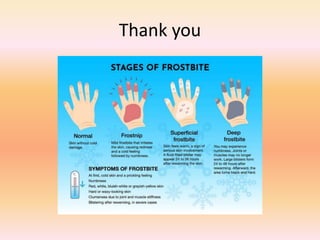
Frost Bite
• It is a condition in which skin and the tissue
below the skin freeze. This is caused due to
prolonged exposure to intense cold. Frostbite
is often accompanied by hypothermia.
Signs and symptoms
• At first, the feeling of prick by “pins-and-
needles”
• Paleness followed by numbness
• A hardening and stiffening of the skin.
• A color change to the skin of the affected area.
Management;
• a. Very gently remove gloves rings and other
constriction.
• b. Warm the affected part with your hands.
• c. Move the casualty into warm before you
thaw the affected part.
• d. Place the affected part in warm water
• e. Apply a high dressing of fluffed-up, dry gauze
bandage.
• f. Raise and support the limb to reduce swelling.
Shock
• Shock is a life- threatening condition in which
not enough blood is reaching the vital organs
in the body as a result of injury or illness.
Effects of shock
• Early loss of consciousness
• Failing heart output and insufficient oxygen
to cells that are vital for survival.
• Sustained lowered blood pressure
Types of Shock
Neurogenic Shock
• From damage to the nervous system such as a
severed spine or a brain injury.
Haemorrhagic Shock
• Loss of blood due to wound and internal
bleeding.
Respiratory Shock
• Insufficient amount of oxygen in the blood due to
inadequate breathing.
Continued
Cardiogenic Shock
• Cardiac muscle not pumping effectively due to injury or
previous heart attack.
Circulatory shock,
• It is a life-threatening medical condition of low blood
perfusion to tissues resulting in cellular injury and
inadequate tissue function.
Hypovolemic shock
• Related to low bloodvolume from hemorrhage, internal
bleeding, severe dehydration, vomiting, diarrhea,
uncontrolled diabetes, large areas of severely-burned
skin, or extreme heat stress.
Continued
Metabolic
• Loss of body fluids with a change in biochemical
equilibrium
Septic Shock
• Toxin causes pooling of blood in capillaries not enough
blood available for tissues.
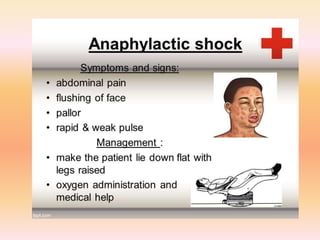
Anaphylactic Shock
• Severe allergic reaction of the body to sensitization by
a foreign protein caused by an allergic reaction to a
food, drug, or venom.
Continued
Traumatic shock
Brought on by either a traumatic physical injury such as being
hit by a car or a mental/emotional blow such as seeing a
loved one killed.
Insulin shock
Hypoglycemic (low blood sugar) reaction to an overdose of
insulin, a skipped meal, or strenuous exercise.
Electric shock
• Injuries caused when electric current passes through body.
Management
• a) Immediately reassure and comfort the
casuality.
• b) Normally the lower extremities should be
elevated. This reduces the blood in the
extremities and improves the blood supply to
the heart.
• c) If there are indications of the head injuries,
the head could be raised slightly to reduce
pressure on the brain.
Continued
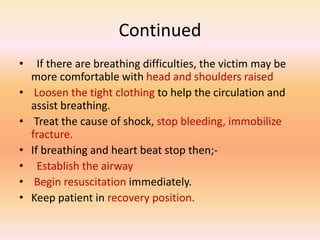
• If there are breathing difficulties, the victim may be
more comfortable with head and shoulders raised
• Loosen the tight clothing to help the circulation and
assist breathing.
• Treat the cause of shock, stop bleeding, immobilize
fracture.
• If breathing and heart beat stop then;-
• Establish the airway
• Begin resuscitation immediately.
• Keep patient in recovery position.
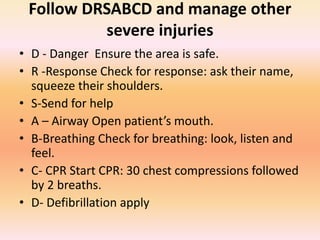
Follow DRSABCD and manage other
severe injuries
• D - Danger Ensure the area is safe.
• R -Response Check for response: ask their name,
squeeze their shoulders.
• S-Send for help
• A – Airway Open patient’s mouth.
• B-Breathing Check for breathing: look, listen and
feel.
• C- CPR Start CPR: 30 chest compressions followed
by 2 breaths.
• D- Defibrillation apply
Thank you

first Aid for Stroke and Shock.pptx

  • 1.
    FROST BITE ANDSHOCK Dr. Anjalatchi Muthukumaran MD(AM), Ph.D (N) MBA (HA), MA (Soc) Vice Principal Cum Nursing Superintendent Era College Of Nursing , ELMCH,EU
  • 2.
    Frost Bite • Itis a condition in which skin and the tissue below the skin freeze. This is caused due to prolonged exposure to intense cold. Frostbite is often accompanied by hypothermia.
  • 3.
    Signs and symptoms •At first, the feeling of prick by “pins-and- needles” • Paleness followed by numbness • A hardening and stiffening of the skin. • A color change to the skin of the affected area.
  • 4.
    Management; • a. Verygently remove gloves rings and other constriction. • b. Warm the affected part with your hands. • c. Move the casualty into warm before you thaw the affected part. • d. Place the affected part in warm water • e. Apply a high dressing of fluffed-up, dry gauze bandage. • f. Raise and support the limb to reduce swelling.
  • 5.
    Shock • Shock isa life- threatening condition in which not enough blood is reaching the vital organs in the body as a result of injury or illness.
  • 7.
    Effects of shock •Early loss of consciousness • Failing heart output and insufficient oxygen to cells that are vital for survival. • Sustained lowered blood pressure
  • 8.
    Types of Shock NeurogenicShock • From damage to the nervous system such as a severed spine or a brain injury. Haemorrhagic Shock • Loss of blood due to wound and internal bleeding. Respiratory Shock • Insufficient amount of oxygen in the blood due to inadequate breathing.
  • 9.
    Continued Cardiogenic Shock • Cardiacmuscle not pumping effectively due to injury or previous heart attack. Circulatory shock, • It is a life-threatening medical condition of low blood perfusion to tissues resulting in cellular injury and inadequate tissue function. Hypovolemic shock • Related to low bloodvolume from hemorrhage, internal bleeding, severe dehydration, vomiting, diarrhea, uncontrolled diabetes, large areas of severely-burned skin, or extreme heat stress.
  • 10.
    Continued Metabolic • Loss ofbody fluids with a change in biochemical equilibrium Septic Shock • Toxin causes pooling of blood in capillaries not enough blood available for tissues. Anaphylactic Shock • Severe allergic reaction of the body to sensitization by a foreign protein caused by an allergic reaction to a food, drug, or venom.
  • 11.
    Continued Traumatic shock Brought onby either a traumatic physical injury such as being hit by a car or a mental/emotional blow such as seeing a loved one killed. Insulin shock Hypoglycemic (low blood sugar) reaction to an overdose of insulin, a skipped meal, or strenuous exercise. Electric shock • Injuries caused when electric current passes through body.
  • 12.
    Management • a) Immediatelyreassure and comfort the casuality. • b) Normally the lower extremities should be elevated. This reduces the blood in the extremities and improves the blood supply to the heart. • c) If there are indications of the head injuries, the head could be raised slightly to reduce pressure on the brain.
  • 14.
    Continued • If thereare breathing difficulties, the victim may be more comfortable with head and shoulders raised • Loosen the tight clothing to help the circulation and assist breathing. • Treat the cause of shock, stop bleeding, immobilize fracture. • If breathing and heart beat stop then;- • Establish the airway • Begin resuscitation immediately. • Keep patient in recovery position.
  • 15.
    Follow DRSABCD andmanage other severe injuries • D - Danger Ensure the area is safe. • R -Response Check for response: ask their name, squeeze their shoulders. • S-Send for help • A – Airway Open patient’s mouth. • B-Breathing Check for breathing: look, listen and feel. • C- CPR Start CPR: 30 chest compressions followed by 2 breaths. • D- Defibrillation apply
  • 16.