Copyright © 2017 Pearson Education, Ltd. Chapter 6, Slide 1
Chapter 6
The Normal
Distribution
Copyright © 2017 Pearson Education, Ltd. Chapter 6, Slide 1
Copyright © 2017 Pearson Education, Ltd. Chapter 6, Slide 2
Chapter 6
The Normal Distribution
Copyright © 2017 Pearson Education, Ltd. Chapter 6, Slide 3
Section 6.1
Introducing Normally
Distributed Variables
Copyright © 2017 Pearson Education, Ltd. Chapter 6, Slide 4
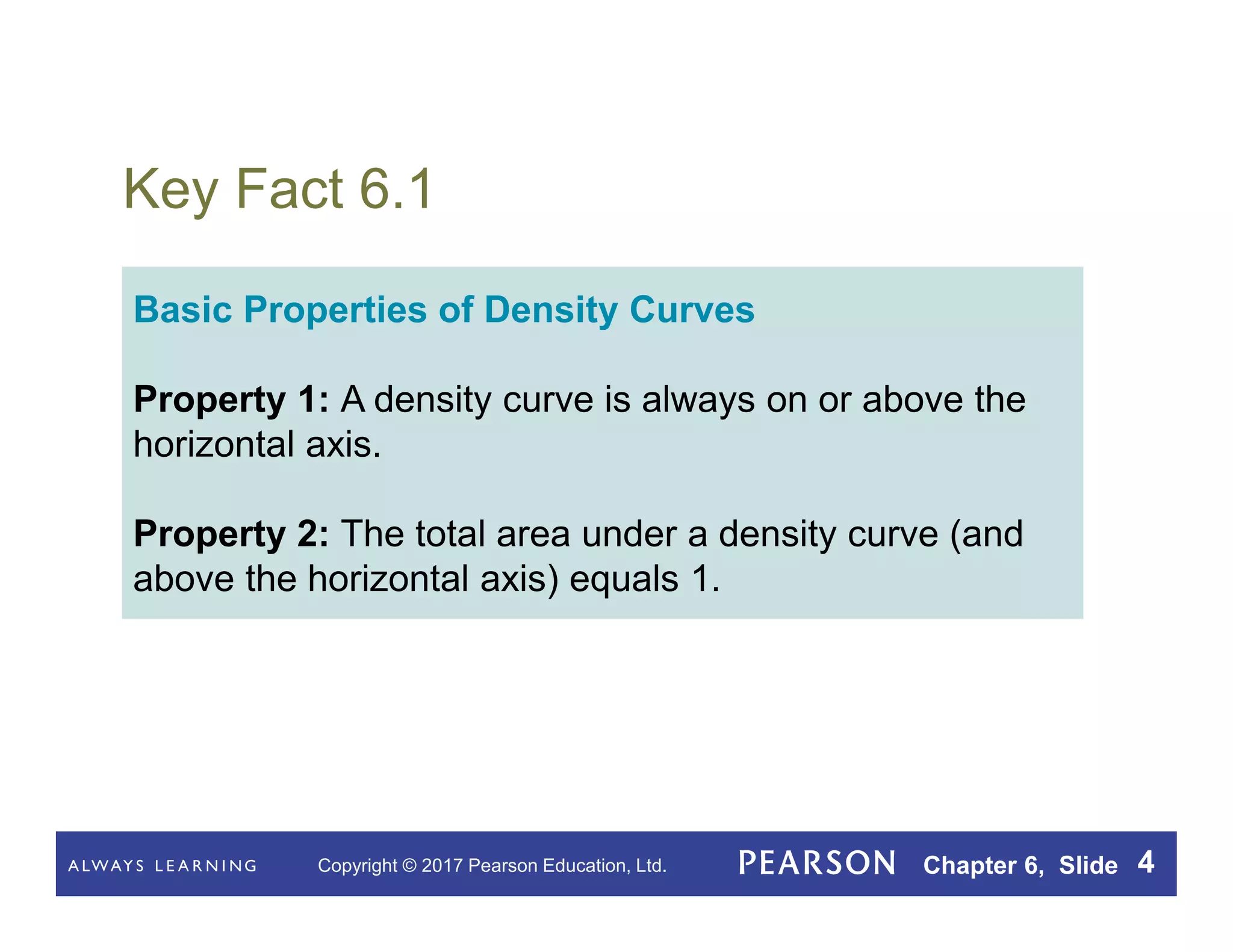
Key Fact 6.1
Basic Properties of Density Curves
Property 1: A density curve is always on or above the
horizontal axis.
Property 2: The total area under a density curve (and
above the horizontal axis) equals 1.
Copyright © 2017 Pearson Education, Ltd. Chapter 6, Slide 5
Figure 6.1
Properties 1 and 2 of Key Fact 6.1
Copyright © 2017 Pearson Education, Ltd. Chapter 6, Slide 6
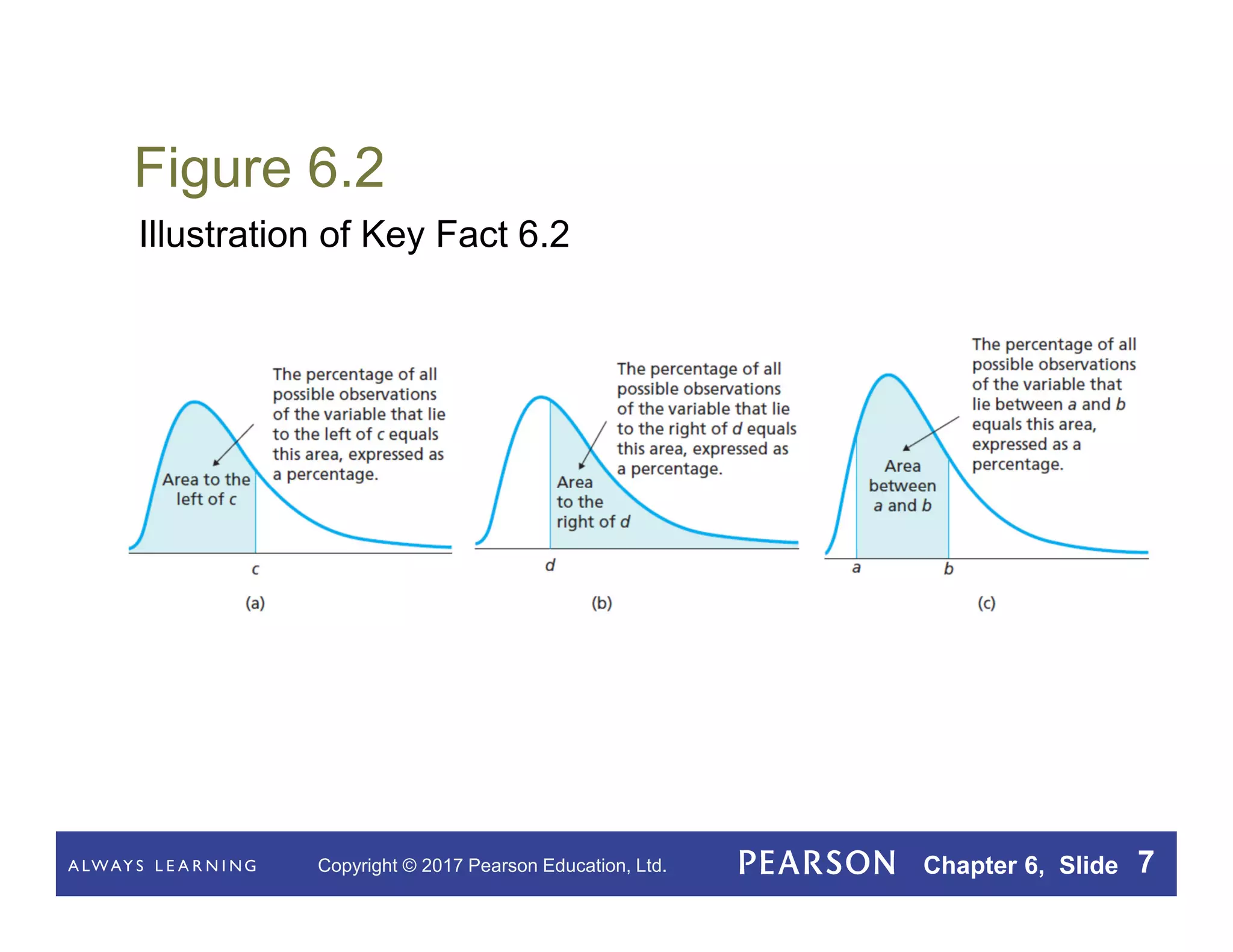
Key Fact 6.2
Variables and Their Density Curves
For a variable with a density curve, the percentage of all
possible observations of the variable that lie within any
specified range equals (at least approximately) the
corresponding area under the density curve, expressed
as a percentage.
Copyright © 2017 Pearson Education, Ltd. Chapter 6, Slide 7
Figure 6.2
Illustration of Key Fact 6.2
Copyright © 2017 Pearson Education, Ltd. Chapter 6, Slide 8
Definition 6.1
Normally Distributed Variable
A variable is said to be a normally distributed variable
or to have a normal distribution if its distribution has the
shape of a normal curve.
Copyright © 2017 Pearson Education, Ltd. Chapter 6, Slide 9
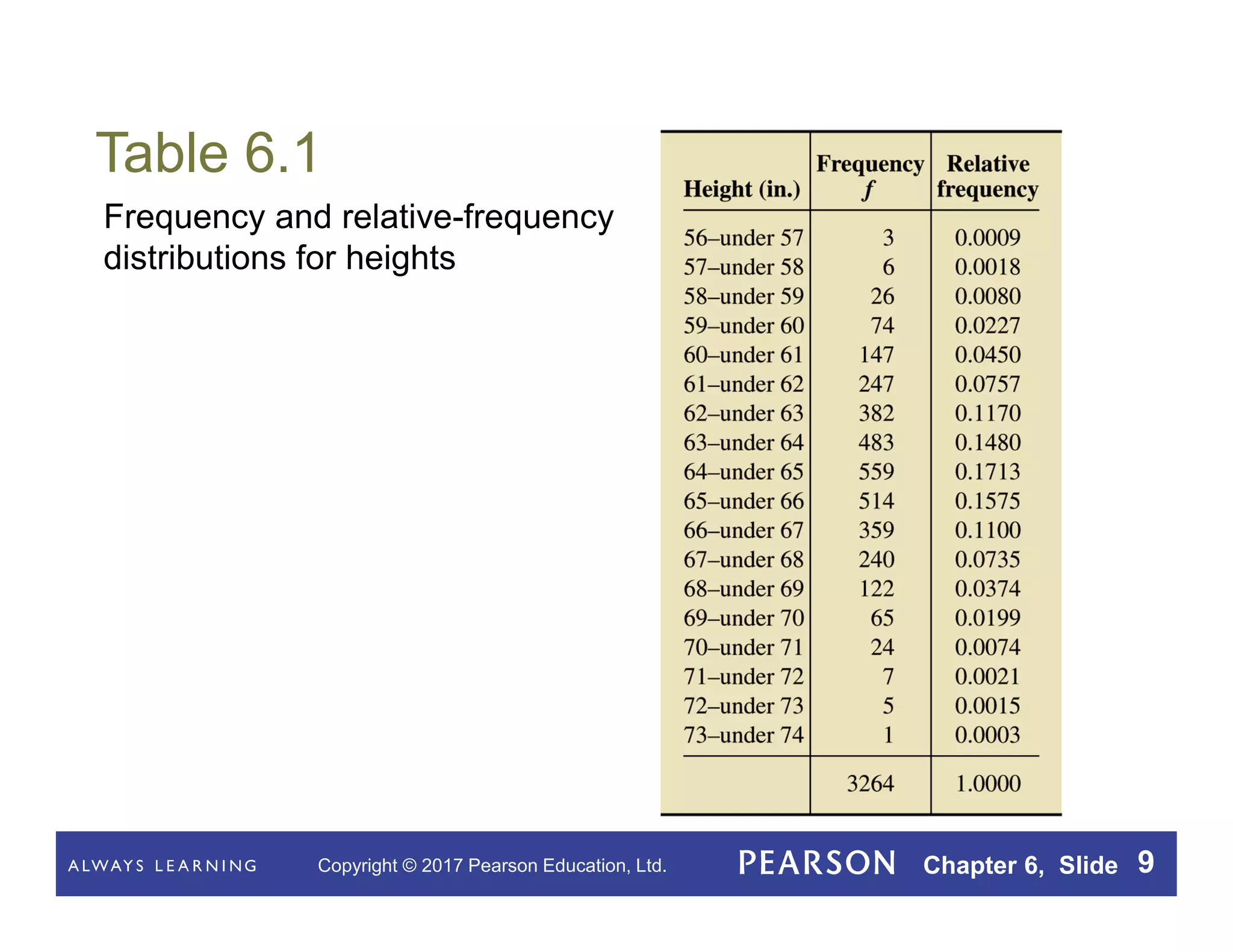
Table 6.1
Frequency and relative-frequency
distributions for heights
Copyright © 2017 Pearson Education, Ltd. Chapter 6, Slide 10
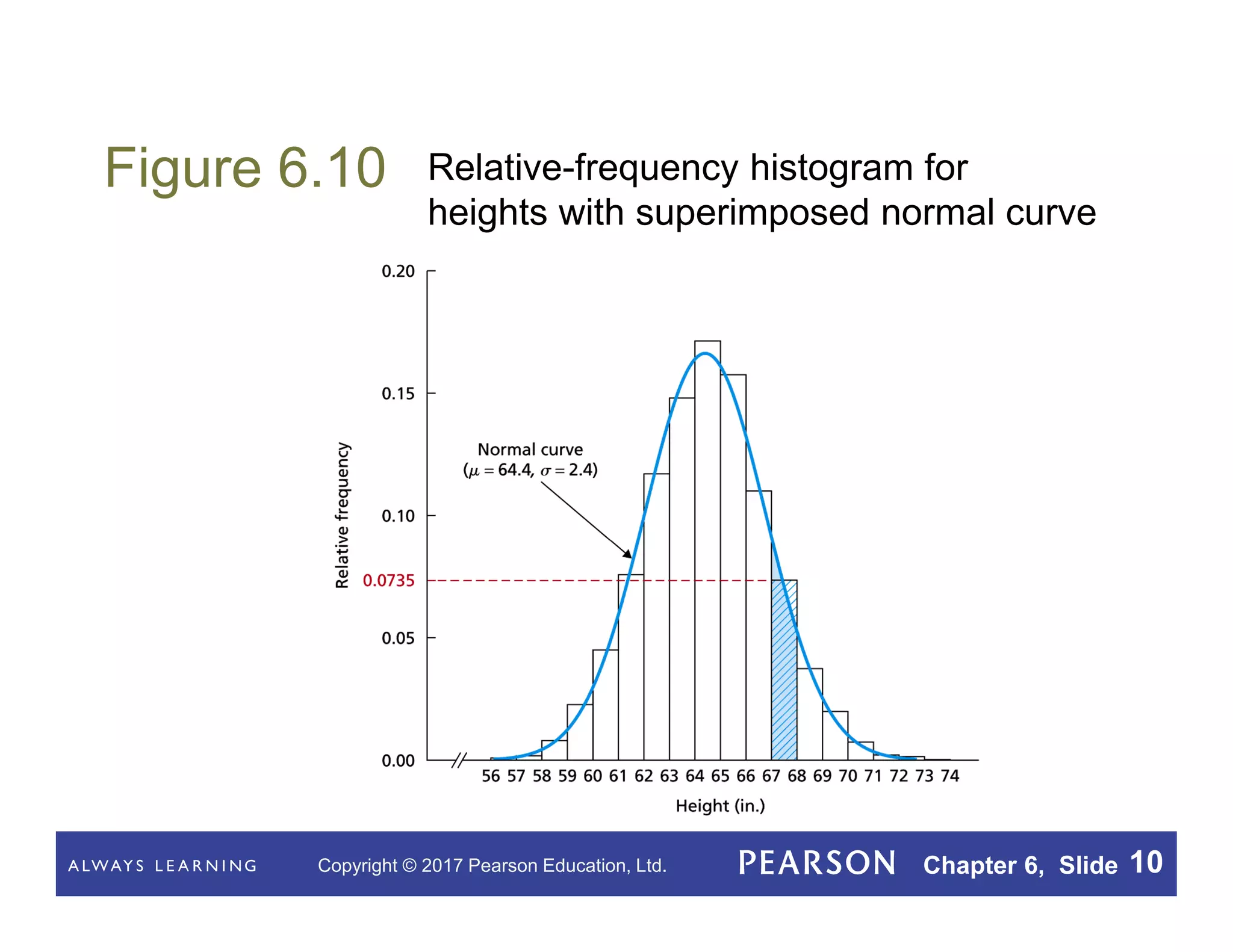
Figure 6.10 Relative-frequency histogram for
heights with superimposed normal curve
Copyright © 2017 Pearson Education, Ltd. Chapter 6, Slide 11
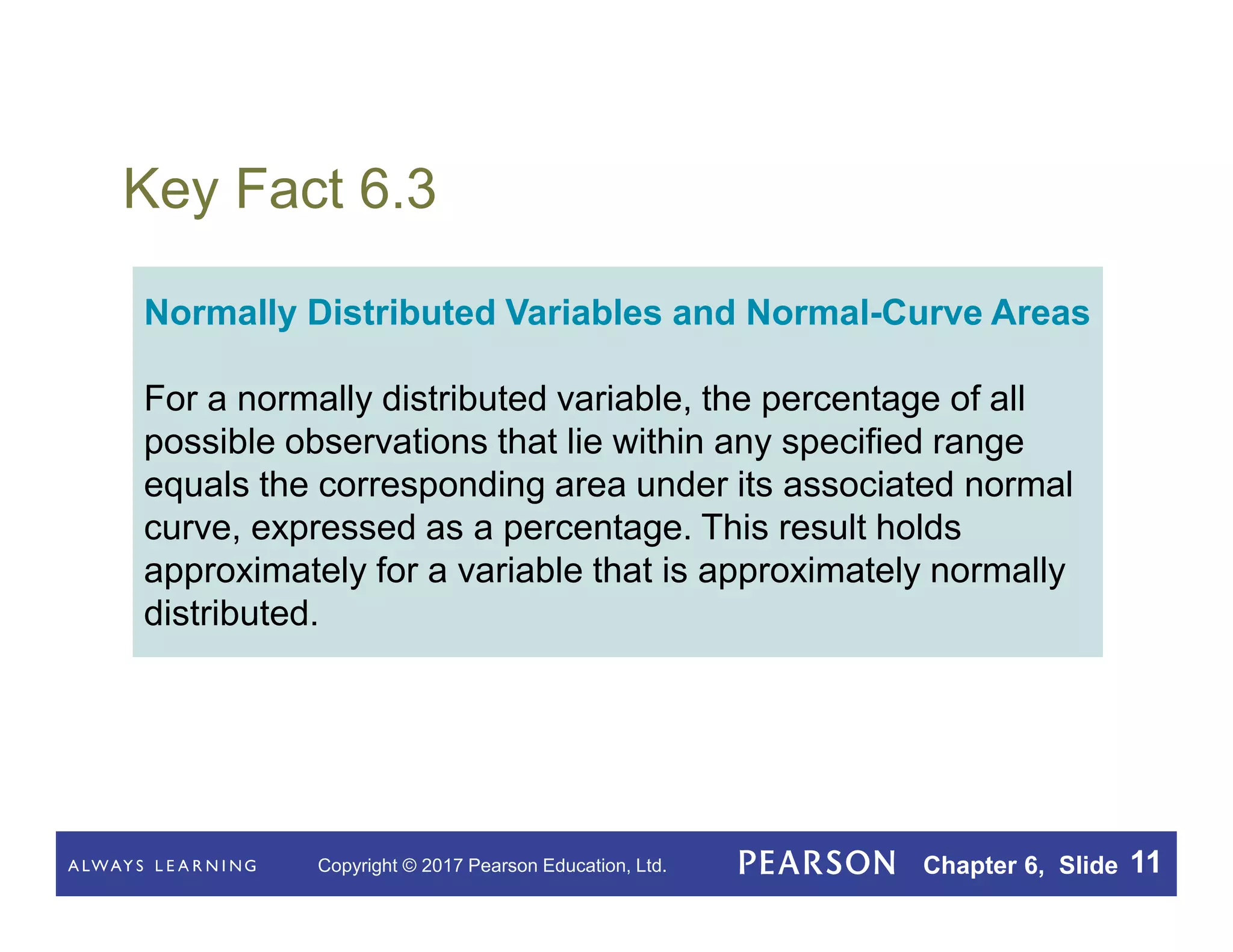
Key Fact 6.3
Normally Distributed Variables and Normal-Curve Areas
For a normally distributed variable, the percentage of all
possible observations that lie within any specified range
equals the corresponding area under its associated normal
curve, expressed as a percentage. This result holds
approximately for a variable that is approximately normally
distributed.
Copyright © 2017 Pearson Education, Ltd. Chapter 6, Slide 12
Definition 6.2
Standard Normal Distribution; Standard Normal Curve
A normally distributed variable having mean 0 and
standard deviation 1 is said to have the standard
normal distribution. Its associated normal curve is
called the standard normal curve, which is shown in
Fig. 6.11.
Figure 6.11
Copyright © 2017 Pearson Education, Ltd. Chapter 6, Slide 13
Key Fact 6.4
Copyright © 2017 Pearson Education, Ltd. Chapter 6, Slide 14
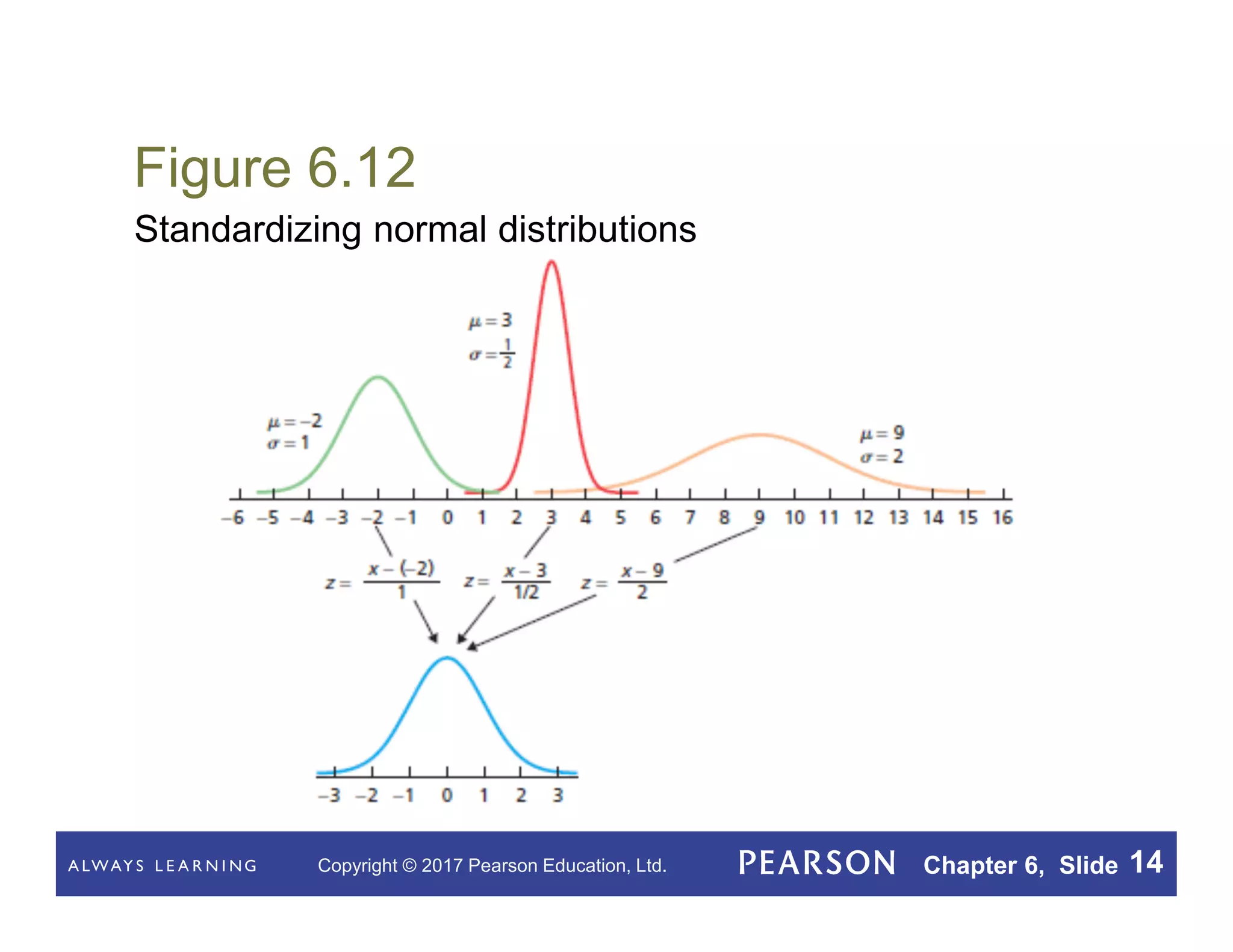
Figure 6.12
Standardizing normal distributions
Copyright © 2017 Pearson Education, Ltd. Chapter 6, Slide 15
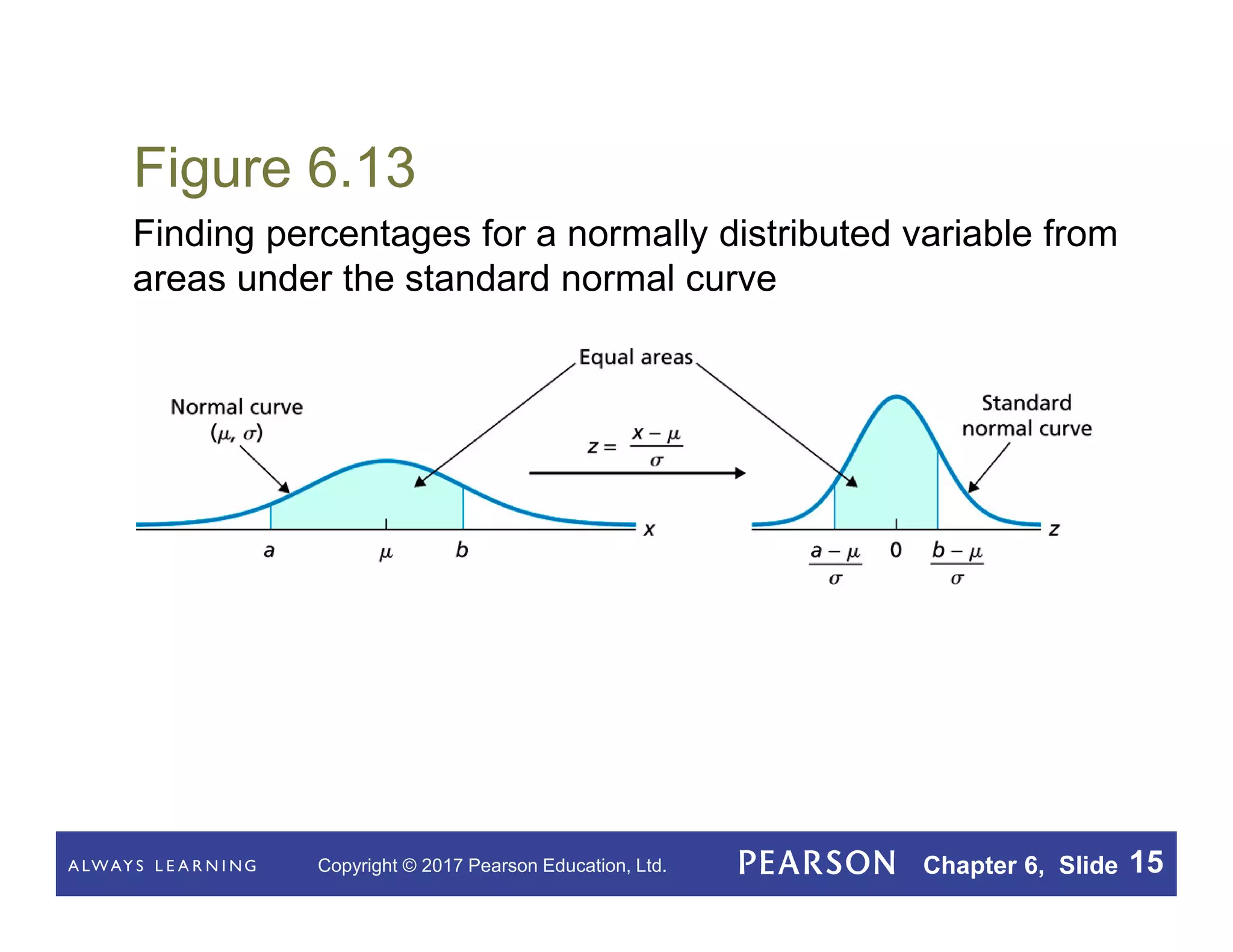
Figure 6.13
Finding percentages for a normally distributed variable from
areas under the standard normal curve
Copyright © 2017 Pearson Education, Ltd. Chapter 6, Slide 16
Section 6.2
Areas Under the Standard
Normal Curve
Copyright © 2017 Pearson Education, Ltd. Chapter 6, Slide 17
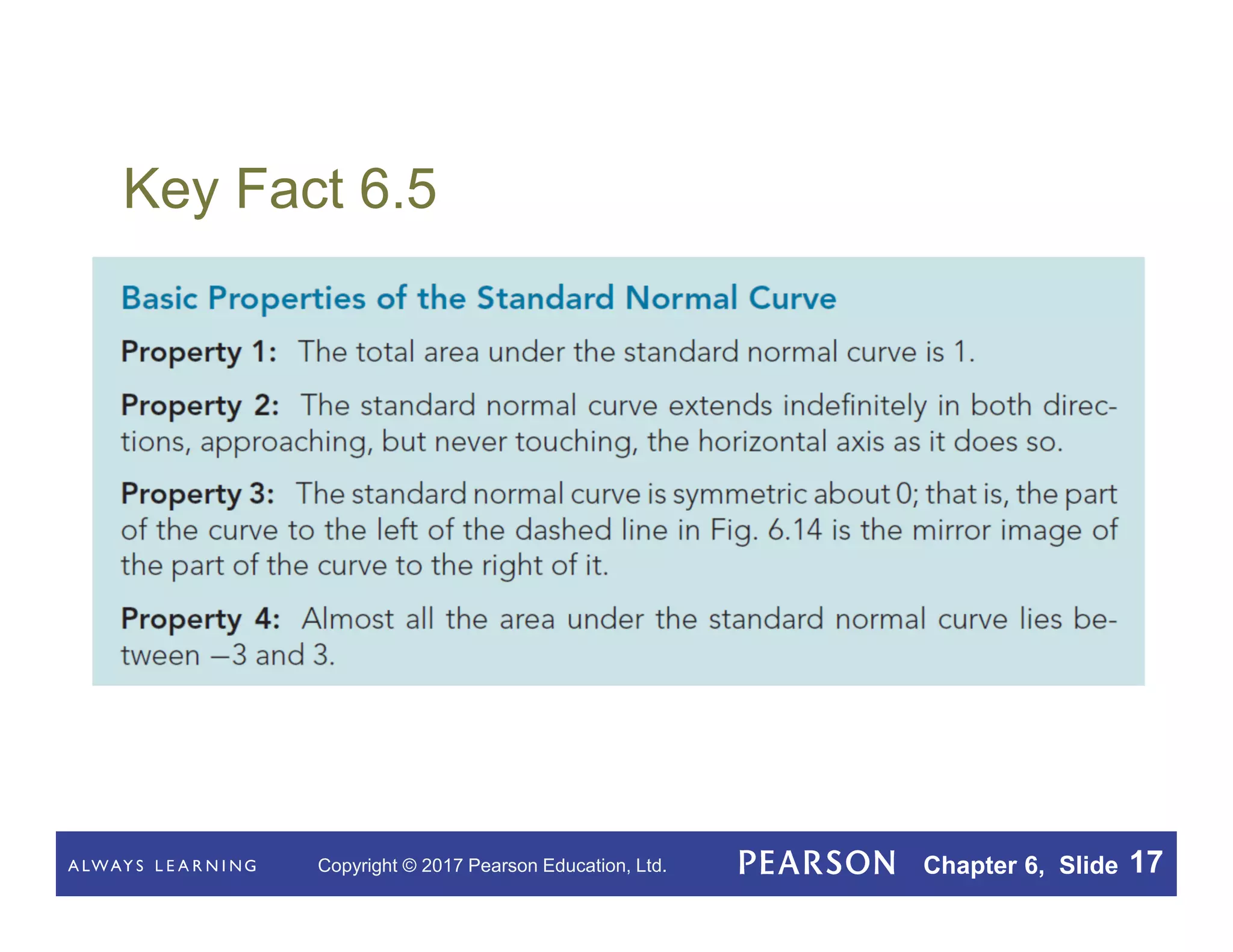
Key Fact 6.5
Copyright © 2017 Pearson Education, Ltd. Chapter 6, Slide 18
Table 6.2
Areas under the standard normal curve
Copyright © 2017 Pearson Education, Ltd. Chapter 6, Slide 19
Figure 6.18
Using Table II to find the area under the standard normal
curve that lies (a) to the left of a specified z-score, (b) to
the right of a specified z-score, and (c) between two
specified z-scores
1.23
0.8907
-0.68 1.82
0.2483 0.9656
Copyright © 2017 Pearson Education, Ltd. Chapter 6, Slide 20
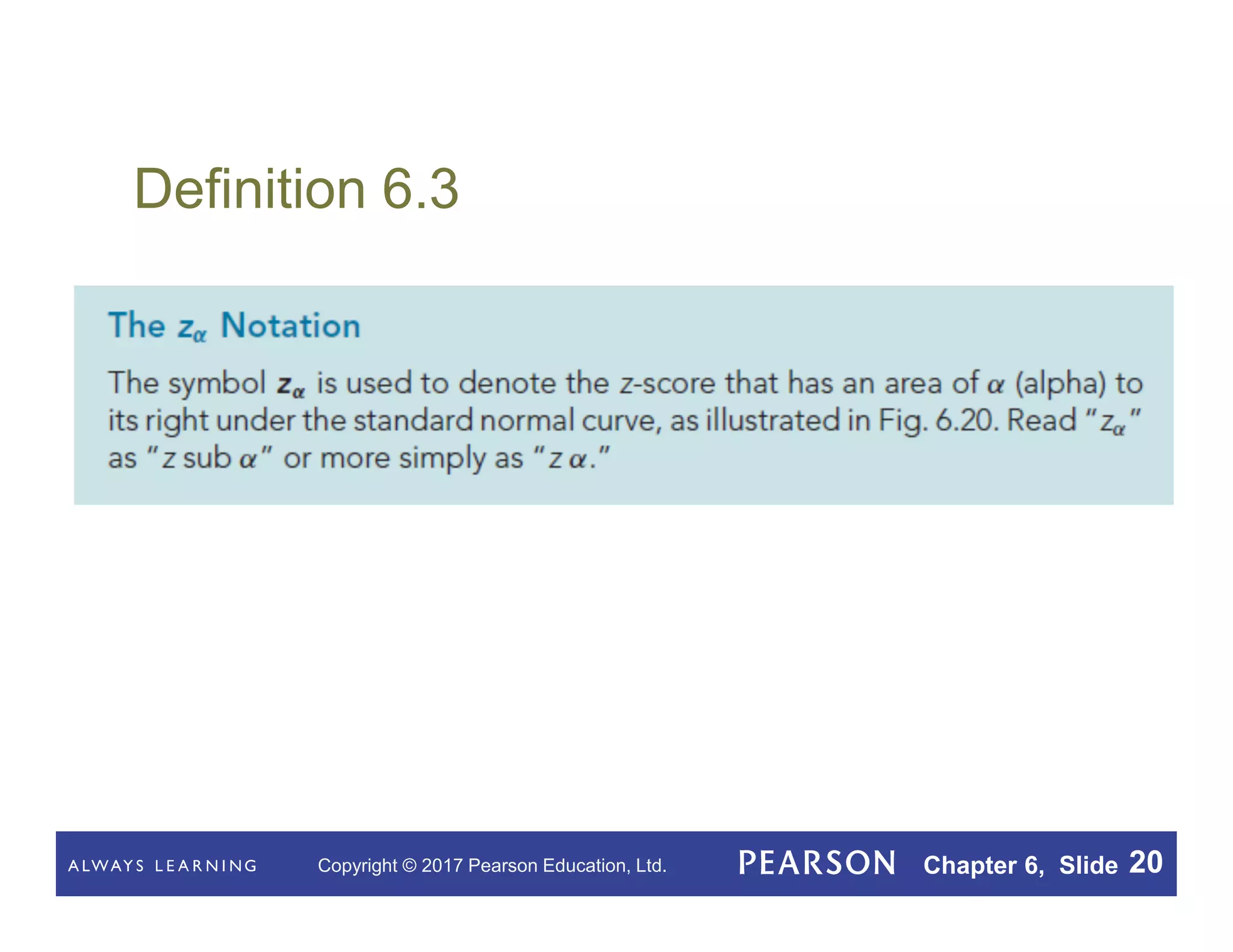
Definition 6.3
Copyright © 2017 Pearson Education, Ltd. Chapter 6, Slide 21
Figures 6.21 & 6.22
Finding z 0.025
Finding z 0.05
Z 0.0344 = -1.82
Zα
Copyright © 2017 Pearson Education, Ltd. Chapter 6, Slide 22
Section 6.3
Working with Normally
Distributed Variables
Copyright © 2017 Pearson Education, Ltd. Chapter 6, Slide 23
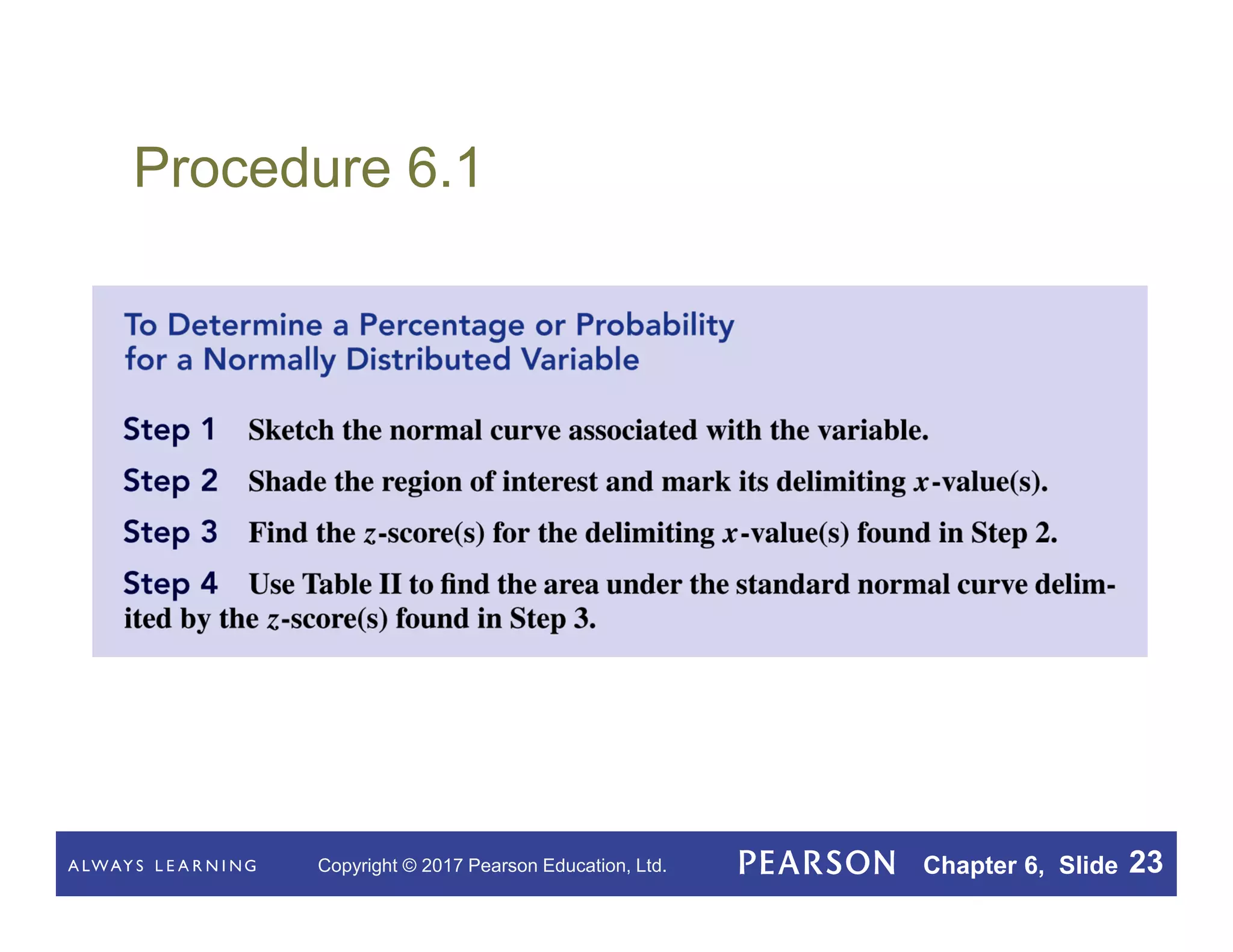
Procedure 6.1
Copyright © 2017 Pearson Education, Ltd. Chapter 6, Slide 24
Figure 6.25
Determination of the percentage of people having IQs
between 115 and 140
x=115 x=140
Z1= 115-100/16= 0.94 = 0.8264
Z2= 140-100/16= 2.50 = 0.9938
0.9938-0.8264= 0.1674 16.74%
Copyright © 2017 Pearson Education, Ltd. Chapter 6, Slide 25
Key Fact 6.6
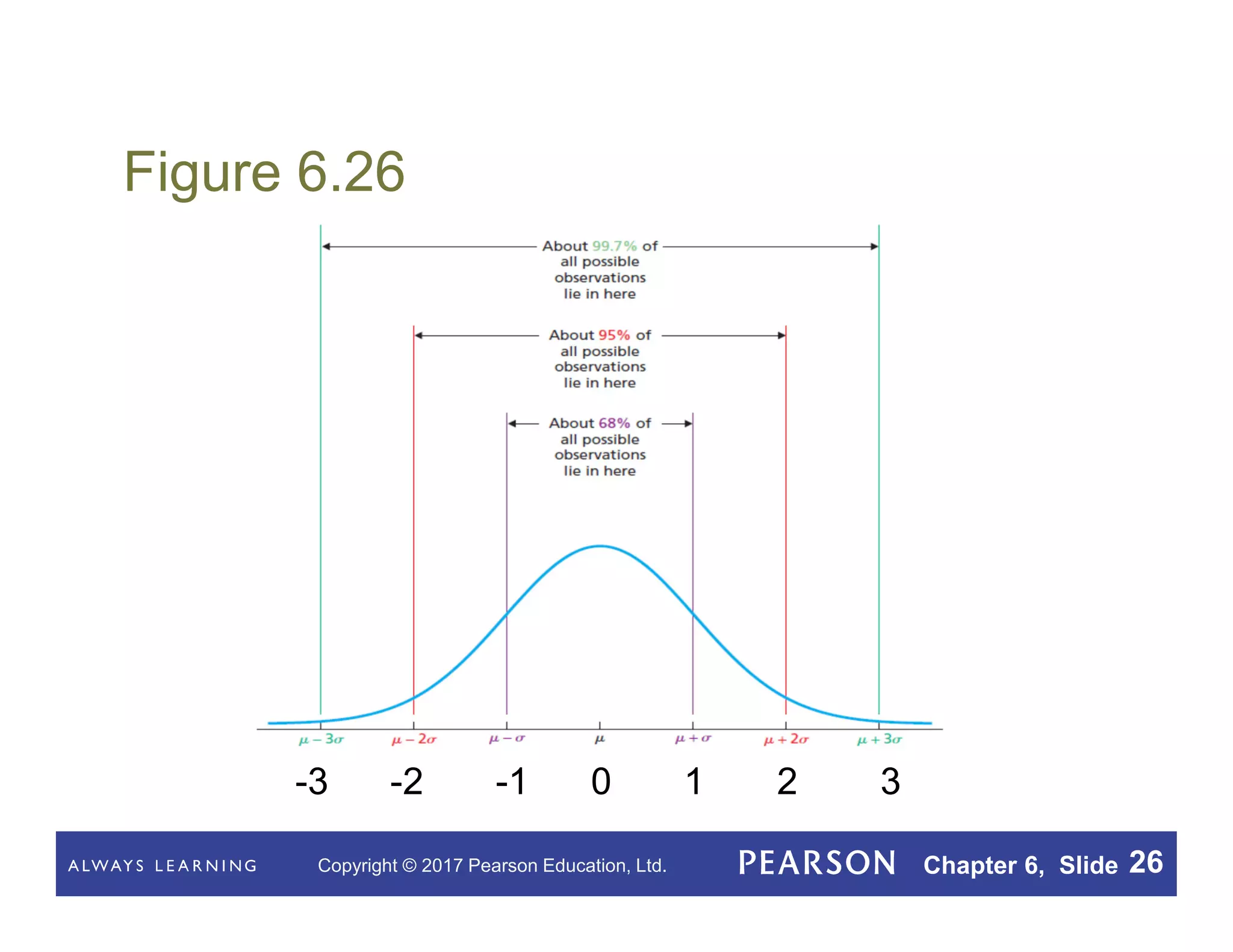
Copyright © 2017 Pearson Education, Ltd. Chapter 6, Slide 26
Figure 6.26
-3 -2 -1 0 1 2 3
Copyright © 2017 Pearson Education, Ltd. Chapter 6, Slide 27
Procedure 6.2
Copyright © 2017 Pearson Education, Ltd. Chapter 6, Slide 28
Section 6.4
Assessing Normality; Normal
Probability Plots
Copyright © 2017 Pearson Education, Ltd. Chapter 6, Slide 29
Key Fact 6.7
Copyright © 2017 Pearson Education, Ltd. Chapter 6, Slide 30
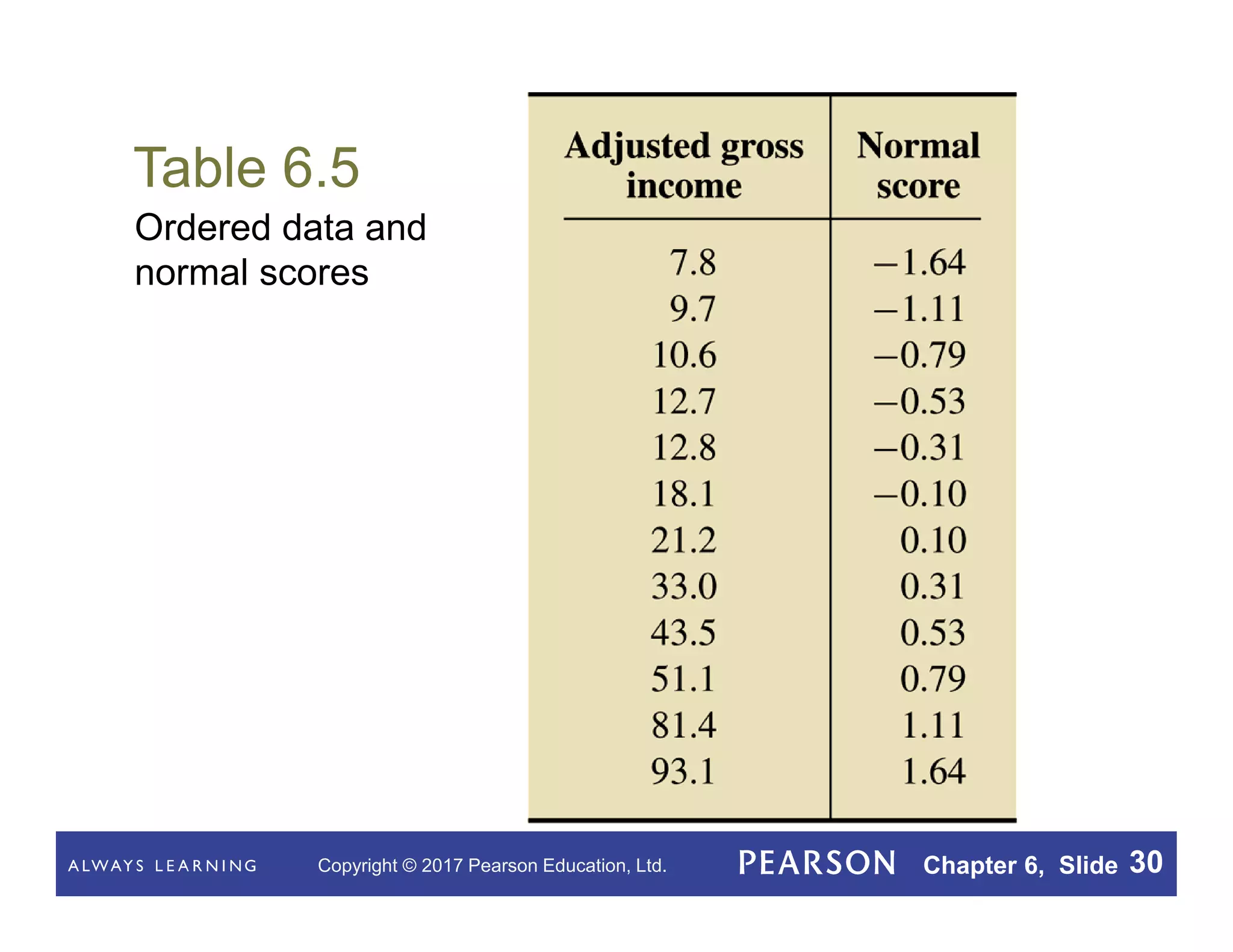
Table 6.5
Ordered data and
normal scores
Copyright © 2017 Pearson Education, Ltd. Chapter 6, Slide 31
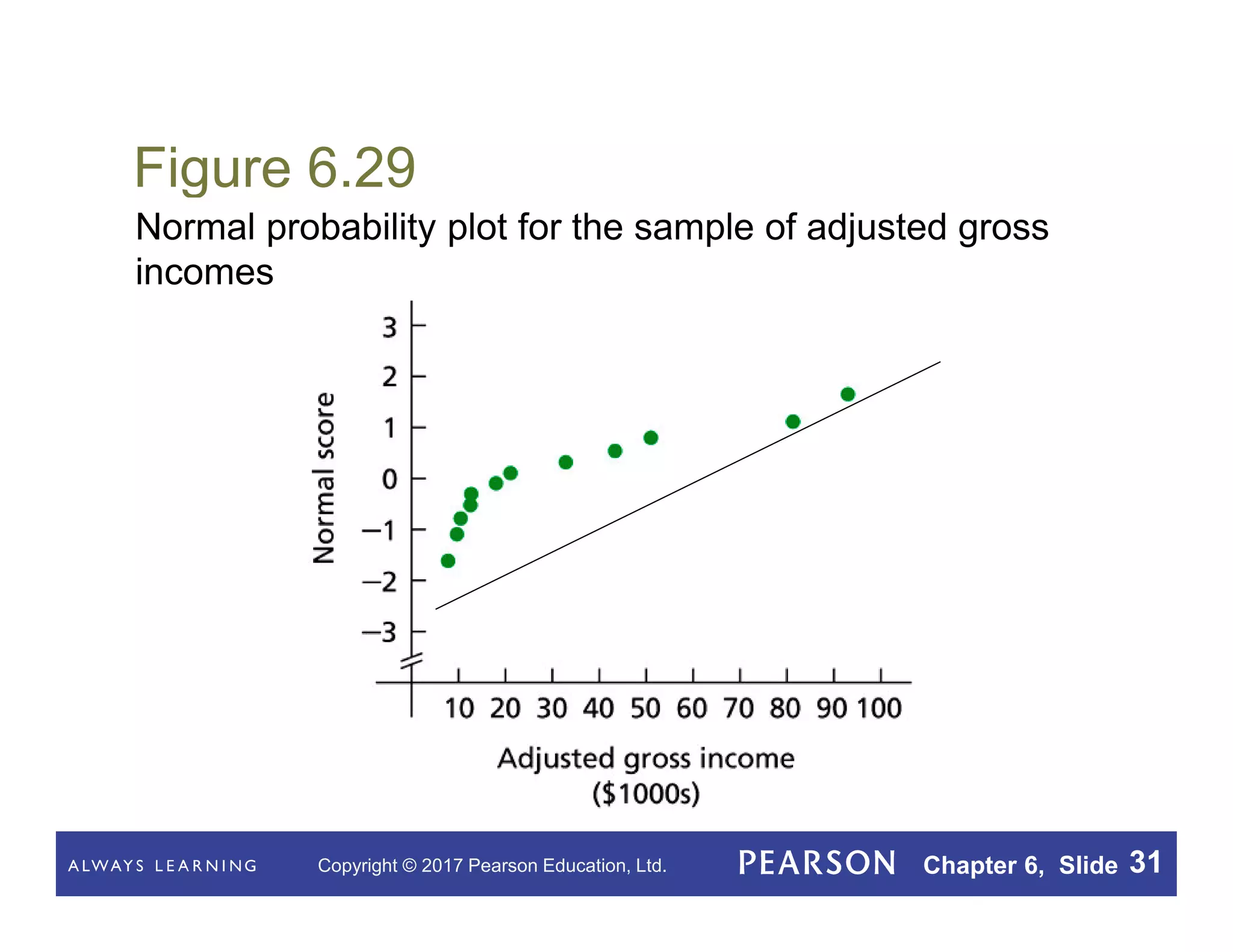
Figure 6.29
Normal probability plot for the sample of adjusted gross
incomes

Normal Distribution.pdf

  • 1.
    Copyright © 2017Pearson Education, Ltd. Chapter 6, Slide 1 Chapter 6 The Normal Distribution Copyright © 2017 Pearson Education, Ltd. Chapter 6, Slide 1
  • 2.
    Copyright © 2017Pearson Education, Ltd. Chapter 6, Slide 2 Chapter 6 The Normal Distribution
  • 3.
    Copyright © 2017Pearson Education, Ltd. Chapter 6, Slide 3 Section 6.1 Introducing Normally Distributed Variables
  • 4.
    Copyright © 2017Pearson Education, Ltd. Chapter 6, Slide 4 Key Fact 6.1 Basic Properties of Density Curves Property 1: A density curve is always on or above the horizontal axis. Property 2: The total area under a density curve (and above the horizontal axis) equals 1.
  • 5.
    Copyright © 2017Pearson Education, Ltd. Chapter 6, Slide 5 Figure 6.1 Properties 1 and 2 of Key Fact 6.1
  • 6.
    Copyright © 2017Pearson Education, Ltd. Chapter 6, Slide 6 Key Fact 6.2 Variables and Their Density Curves For a variable with a density curve, the percentage of all possible observations of the variable that lie within any specified range equals (at least approximately) the corresponding area under the density curve, expressed as a percentage.
  • 7.
    Copyright © 2017Pearson Education, Ltd. Chapter 6, Slide 7 Figure 6.2 Illustration of Key Fact 6.2
  • 8.
    Copyright © 2017Pearson Education, Ltd. Chapter 6, Slide 8 Definition 6.1 Normally Distributed Variable A variable is said to be a normally distributed variable or to have a normal distribution if its distribution has the shape of a normal curve.
  • 9.
    Copyright © 2017Pearson Education, Ltd. Chapter 6, Slide 9 Table 6.1 Frequency and relative-frequency distributions for heights
  • 10.
    Copyright © 2017Pearson Education, Ltd. Chapter 6, Slide 10 Figure 6.10 Relative-frequency histogram for heights with superimposed normal curve
  • 11.
    Copyright © 2017Pearson Education, Ltd. Chapter 6, Slide 11 Key Fact 6.3 Normally Distributed Variables and Normal-Curve Areas For a normally distributed variable, the percentage of all possible observations that lie within any specified range equals the corresponding area under its associated normal curve, expressed as a percentage. This result holds approximately for a variable that is approximately normally distributed.
  • 12.
    Copyright © 2017Pearson Education, Ltd. Chapter 6, Slide 12 Definition 6.2 Standard Normal Distribution; Standard Normal Curve A normally distributed variable having mean 0 and standard deviation 1 is said to have the standard normal distribution. Its associated normal curve is called the standard normal curve, which is shown in Fig. 6.11. Figure 6.11
  • 13.
    Copyright © 2017Pearson Education, Ltd. Chapter 6, Slide 13 Key Fact 6.4
  • 14.
    Copyright © 2017Pearson Education, Ltd. Chapter 6, Slide 14 Figure 6.12 Standardizing normal distributions
  • 15.
    Copyright © 2017Pearson Education, Ltd. Chapter 6, Slide 15 Figure 6.13 Finding percentages for a normally distributed variable from areas under the standard normal curve
  • 16.
    Copyright © 2017Pearson Education, Ltd. Chapter 6, Slide 16 Section 6.2 Areas Under the Standard Normal Curve
  • 17.
    Copyright © 2017Pearson Education, Ltd. Chapter 6, Slide 17 Key Fact 6.5
  • 18.
    Copyright © 2017Pearson Education, Ltd. Chapter 6, Slide 18 Table 6.2 Areas under the standard normal curve
  • 19.
    Copyright © 2017Pearson Education, Ltd. Chapter 6, Slide 19 Figure 6.18 Using Table II to find the area under the standard normal curve that lies (a) to the left of a specified z-score, (b) to the right of a specified z-score, and (c) between two specified z-scores 1.23 0.8907 -0.68 1.82 0.2483 0.9656
  • 20.
    Copyright © 2017Pearson Education, Ltd. Chapter 6, Slide 20 Definition 6.3
  • 21.
    Copyright © 2017Pearson Education, Ltd. Chapter 6, Slide 21 Figures 6.21 & 6.22 Finding z 0.025 Finding z 0.05 Z 0.0344 = -1.82 Zα
  • 22.
    Copyright © 2017Pearson Education, Ltd. Chapter 6, Slide 22 Section 6.3 Working with Normally Distributed Variables
  • 23.
    Copyright © 2017Pearson Education, Ltd. Chapter 6, Slide 23 Procedure 6.1
  • 24.
    Copyright © 2017Pearson Education, Ltd. Chapter 6, Slide 24 Figure 6.25 Determination of the percentage of people having IQs between 115 and 140 x=115 x=140 Z1= 115-100/16= 0.94 = 0.8264 Z2= 140-100/16= 2.50 = 0.9938 0.9938-0.8264= 0.1674 16.74%
  • 25.
    Copyright © 2017Pearson Education, Ltd. Chapter 6, Slide 25 Key Fact 6.6
  • 26.
    Copyright © 2017Pearson Education, Ltd. Chapter 6, Slide 26 Figure 6.26 -3 -2 -1 0 1 2 3
  • 27.
    Copyright © 2017Pearson Education, Ltd. Chapter 6, Slide 27 Procedure 6.2
  • 28.
    Copyright © 2017Pearson Education, Ltd. Chapter 6, Slide 28 Section 6.4 Assessing Normality; Normal Probability Plots
  • 29.
    Copyright © 2017Pearson Education, Ltd. Chapter 6, Slide 29 Key Fact 6.7
  • 30.
    Copyright © 2017Pearson Education, Ltd. Chapter 6, Slide 30 Table 6.5 Ordered data and normal scores
  • 31.
    Copyright © 2017Pearson Education, Ltd. Chapter 6, Slide 31 Figure 6.29 Normal probability plot for the sample of adjusted gross incomes