INFECTIVE
ENDOCADITIS
- RAHUL SUTHAR
DEFINITION
•Infective Endocarditis: a
microbial infection of the endocardial
surface of the heart
• Classification:
• acute or subacute-chronic on temporal
basis, severity of presentation and
progression
• By organism
• Native valve or prosthetic valve
Common SITE
• Heart valve,
• Most common mitral and aortic
valve
• Chordae tendinea,
• Wall of ventricle with VSD or
• in the mural endocardium
EPIDEMIOLOGY
• Incidence difficult to ascertain and varies according to
location
• Much more common in males than in females
• May occur in persons of any age and increasingly
common in elderly (large number of risk factors)
• Mortality ranges from 20-30%
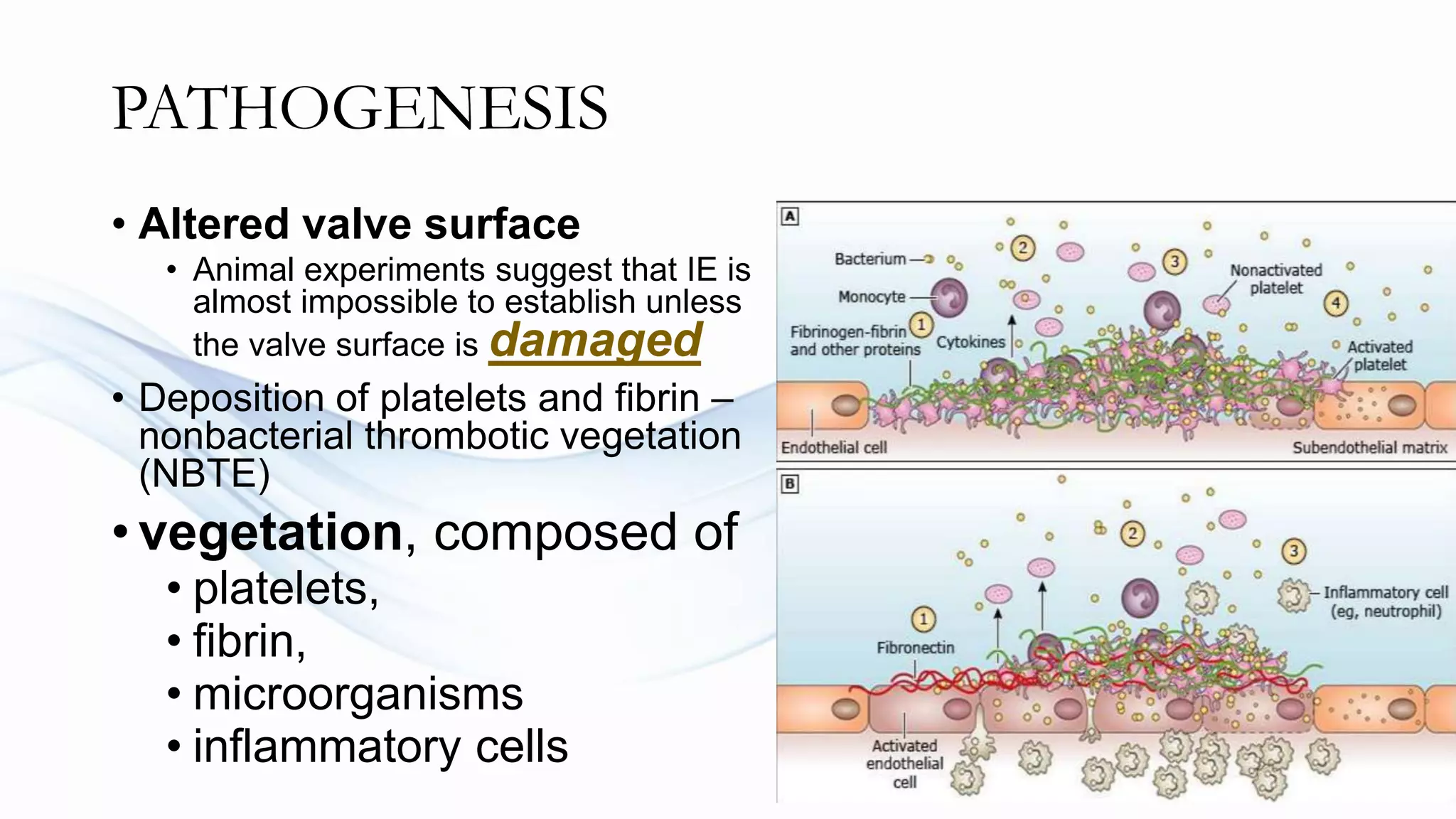
PATHOGENESIS
• Altered valve surface
• Animal experiments suggest that IE is
almost impossible to establish unless
the valve surface is damaged
• Deposition of platelets and fibrin –
nonbacterial thrombotic vegetation
(NBTE)
• vegetation, composed of
• platelets,
• fibrin,
• microorganisms
• inflammatory cells
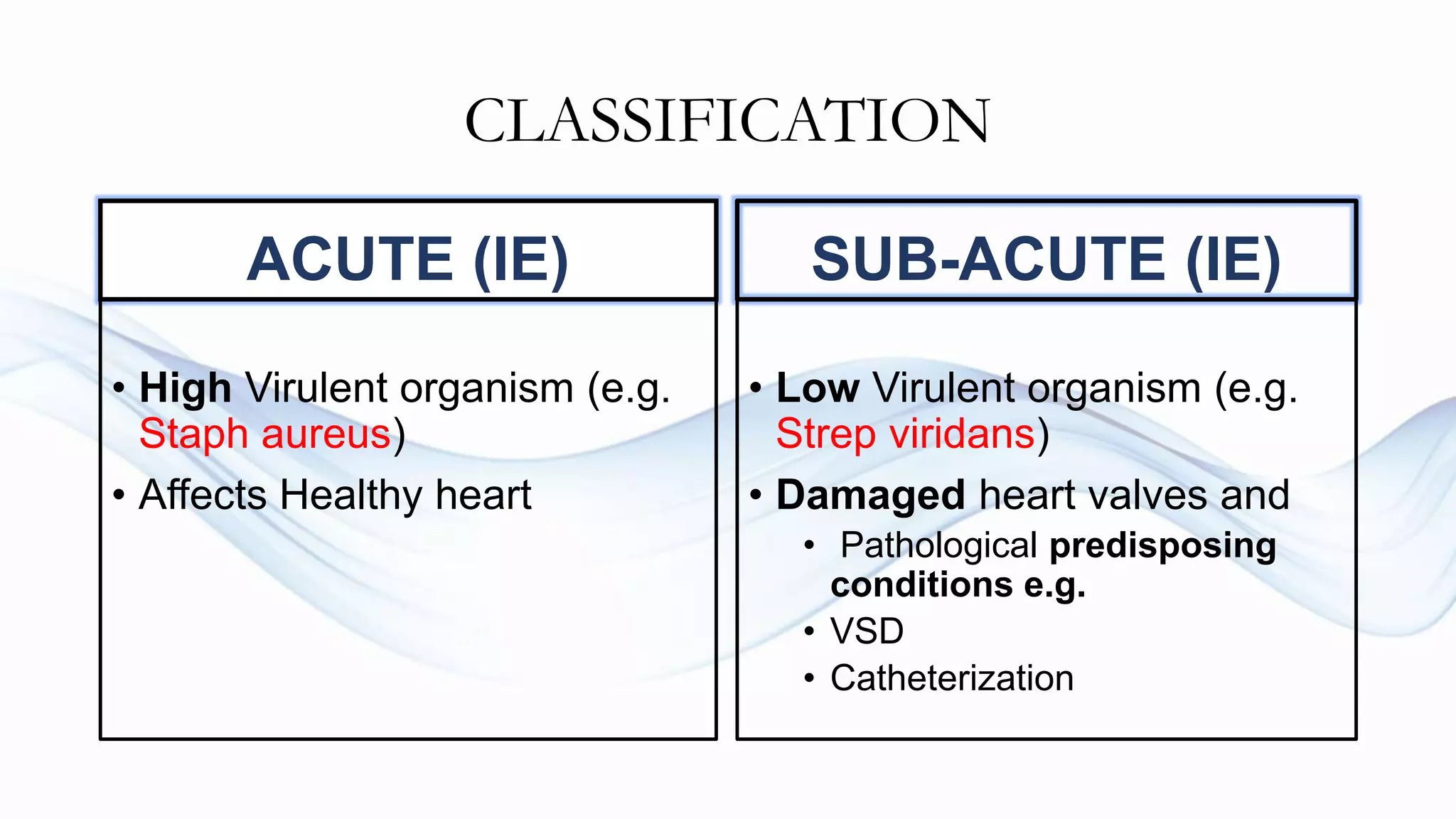
CLASSIFICATION
ACUTE (IE)
• High Virulent organism (e.g.
Staph aureus)
• Affects Healthy heart
SUB-ACUTE (IE)
• Low Virulent organism (e.g.
Strep viridans)
• Damaged heart valves and
• Pathological predisposing
conditions e.g.
• VSD
• Catheterization
PATHOGENESIS
Bacteraemia
• Transient bacteraemia occurs when a heavily
colonised mucosal surface is traumatised
• Dental extraction
• Periodontal surgery
• Tooth brushing
• Tonsillectomy
• Operations involving the respiratory, GI or GU
tract mucosa
• Oesophageal dilatation
• Biliary tract surgery
• Prophylaxis is required (antibiotic treatment)
Predisposing Factors
1. Catheterization
2. Abnormal blood flow
• RHD – Mitral, aortic and tricuspid
lesions
• Mitral Valve Prolapse
• Bicuspid Aortic Valve
• Calcific Aortic Valve
• Tetralogy of Fallot
• PDA
3. Regurgitation > Stenosis
(Lesions)
Predisposing Factors
Bacterial colonization ->
lesions with high degrees of
turbulence
• e.g. small VSD, valvular
stenosis
Prosthetic Valves
• 7-25% cases of IE
• staphylococcus epidermidis
Nosocomial Infective Endocarditis
• 7-29% of all cases seen in hospitals
• Hospital acquired infections
• At least half linked to intravascular
devices
• Other sources GU and GIT
procedures or surgical-wound
infection
Etiological Agents
Streptococci
• Viridans streptococci / α-haemolytic streptococci
• SUB-ACUTE IE
• S. mitis, S. sanguis, S. oralis
• S. bovis
• Associated with colonic carcinoma
Enterococci
• E. faecalis, E. faecium
• Associated with GU/GI tract procedures
• Approx. 10% of patients with enterococcal bacteremia develop
endocarditis
Etiological Agents
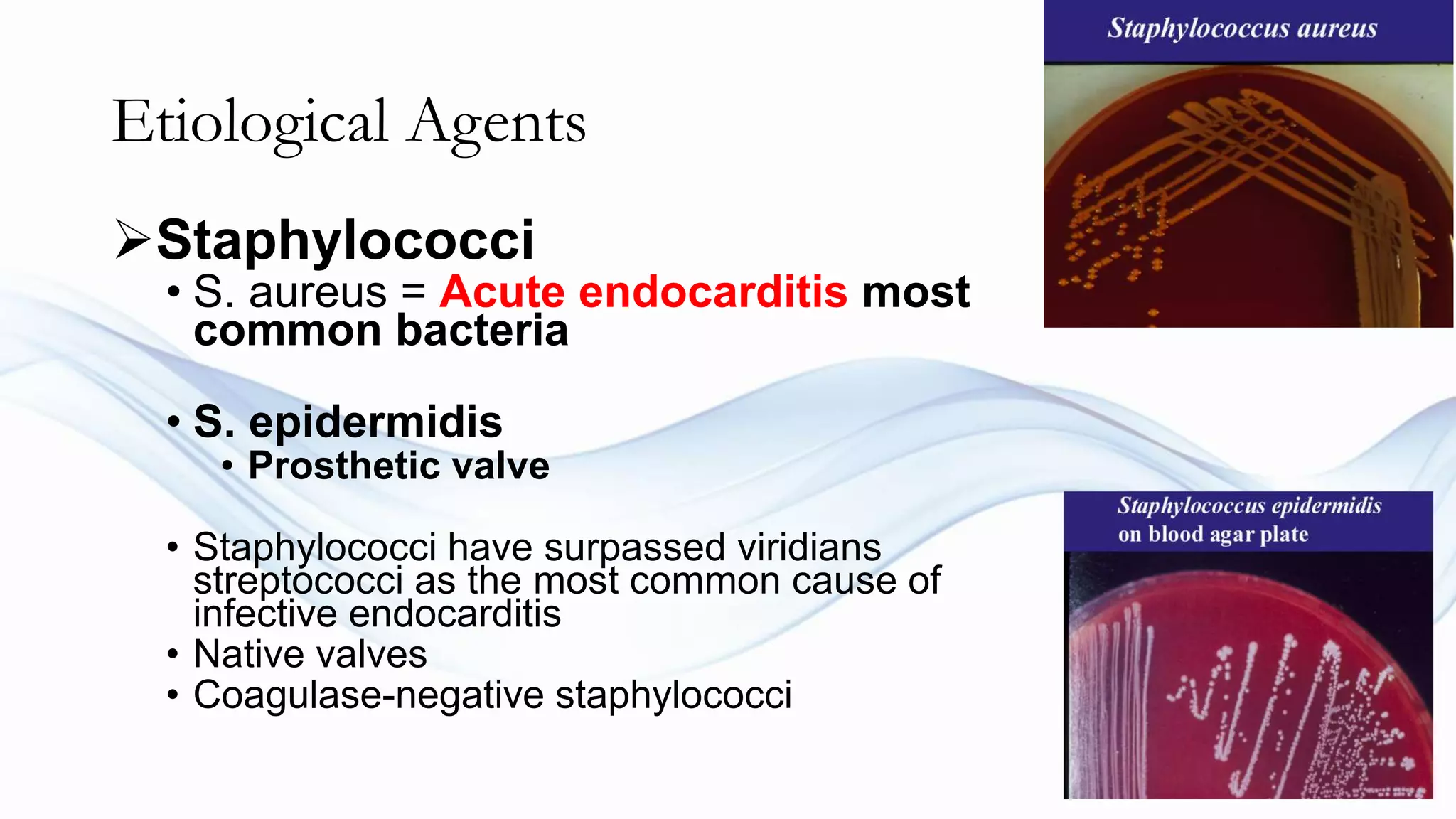
Staphylococci
• S. aureus = Acute endocarditis most
common bacteria
• S. epidermidis
• Prosthetic valve
• Staphylococci have surpassed viridians
streptococci as the most common cause of
infective endocarditis
• Native valves
• Coagulase-negative staphylococci
Etiological Agents
Gram-negative rods
• HACEK group
• Fastidious oropharyngeal GNBs
• E. coli, Klebsiella etc
• Uncommon
• Pseudomonas aeruginosa
• IVDA
• Neisseria gonorrhoea
• Rare since introduction of penicillin
Etiological Agents
Fungi
• Candida species, Aspergillus species
• Very dangerous type of IE
• Requires URGENT surgery
• LARGE vegetations
• Anti-fungal drugs doesn’t work
HOST FACTORS
High risk for IE (Acute or sub-acute)
WEAK immune System
• Neutropenia or Immuno-deficiency syndrome e.g. AIDS
• Malignancy syndrome
• Therapeutic immunosuppression e.g. Steroids, Anti-cancer drugs
DM
Chronic alcoholism
IVDA = tricuspid valve more commonly involved (RH)
• IE from polymicrobial activity
 Vascular Catheter
ACUTE (IE)
• High Virulent organism (e.g. Staph aureus)
• Affects Healthy heart
• Onset = very fast
• High grade FEVER
• Rapid Destruction
• Cardiac complication e.g. Leukocytosis
• Sudden myalgia
• Fatal within days to weeks
SUB-ACUTE (IE)
• Low Virulent organism (e.g. Strep viridans)
• Damaged heart valves
• Onset = insidious
• Low grade FEVER
• Slow destruction of tissues (healing &
fibrosis present)
• Anemia of chronic disease (cytokines
depresses bone marrow) e.g.
Leukopenia
• Non-specific features of systemic
infections
• Fatigue
• Weight loss
• Anorexia
• Malaise
• Fatal by a year
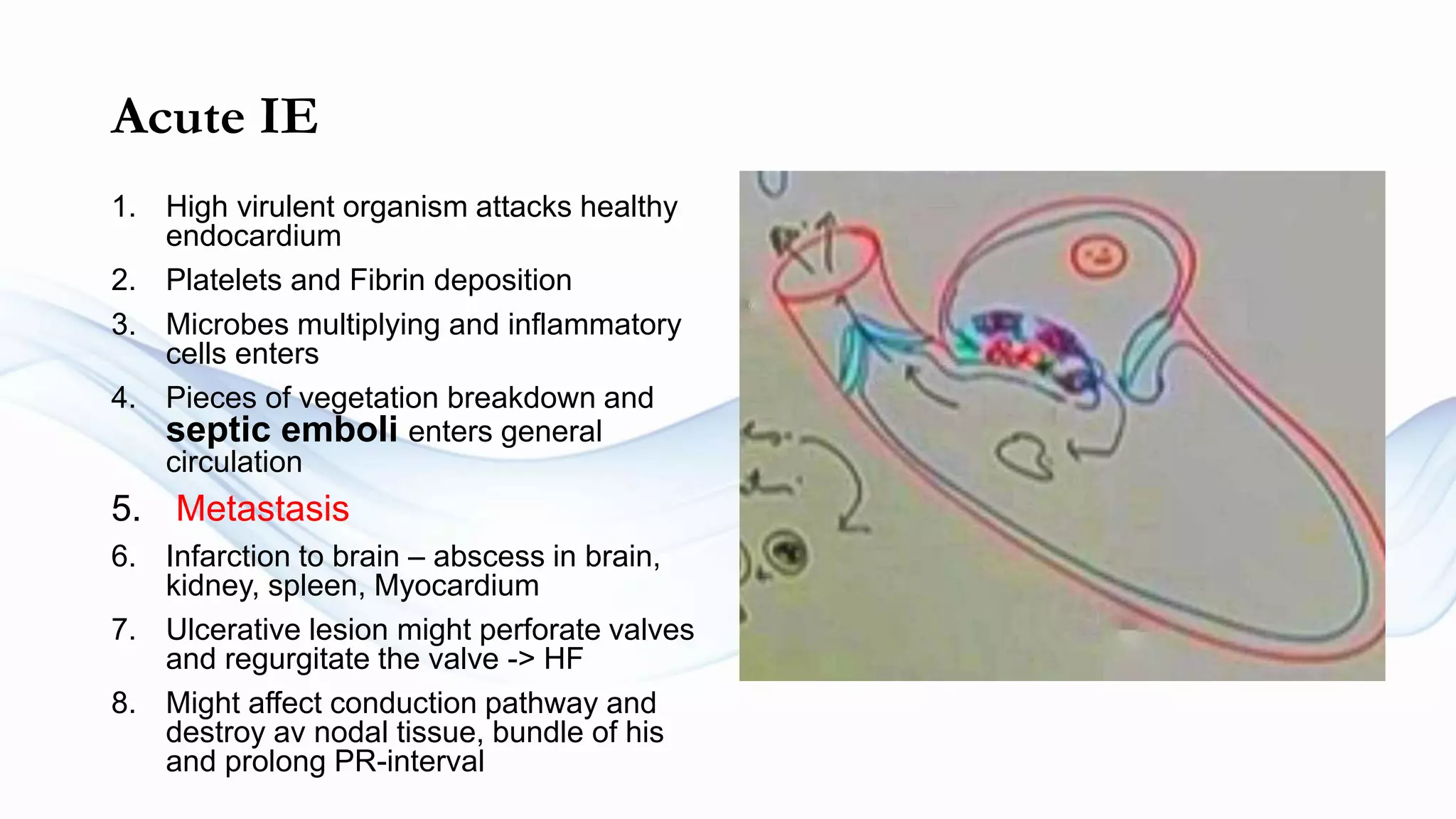
Acute IE
1. High virulent organism attacks healthy
endocardium
2. Platelets and Fibrin deposition
3. Microbes multiplying and inflammatory
cells enters
4. Pieces of vegetation breakdown and
septic emboli enters general
circulation
5. Metastasis
6. Infarction to brain – abscess in brain,
kidney, spleen, Myocardium
7. Ulcerative lesion might perforate valves
and regurgitate the valve -> HF
8. Might affect conduction pathway and
destroy av nodal tissue, bundle of his
and prolong PR-interval
Clinical features
• Ring abscess = Vegetation growing
and moving around the valve ring
• Can affect conduction pathway
• In case of prosthetic valve -> valve gets
dislodged
• May invade into myocardium and lead to
myocardium abscess
• Further can lead to suppurative
pericarditis
Sub-Acute IE
Low Virulence bacteria
Vegetation developing on already damaged
endocardium
Slowly growing
 LESS Neutrophils and
 MORE macrophages and Lymphocytes
Chronic inflammation, vegetation adhere
tightly to surface
Less chances of perforation, ring
abscess, metastasis, suppurative
pericarditis
Sub-Acute IE
Untreated or partially treated for weeks and
months
Bacteria -> Releases antigen for prolong time
= chronic antigenemia
Antigen-antibody complexes are formed
While Circulating gets deposited in the
microcirculation
Complements are activated and damages local
tissues [type 3 hypersensitivity]
Vasculitic lesion are formed
Clinical Manifestations
Some complexes go to subungual
capillaries underneath nails, where
complement damages tissues and
hemorrhagic lesions are formed,
Splinter hemorrhage
Complexes stuck in the capillaries
and inflammatory lesions, Osler’s
Nodes
Clinical Manifestations
• Nontender erythematous,
hemorrhagic, or pustular lesions
often on palms or soles, Janeway
lesions (Painful)
• petechial hemorrhage, on the skin
• Hemorrhagic lesions in the eyes, Roth
spots
• Splenomegaly
• Diffuse G.N.
• Proteinuria, hematuria, RF
Diagnosis: Duke Criteria
• In 1994 a group at Duke University standardized criteria
for assessing patients with suspected endocarditis
Include
• -Predisposing Factors
• -Blood culture isolates or persistence of bacteremia
• -Echocardiogram findings with other clinical,
laboratory findings
Investigations
1. Blood culture
2. Echo
1. TTE
2. TOE
3. FBC/ESR/CRP
4. Rheumatoid Factor
5. MSU
• Trans Thoracic
Echocardiography (TTE)
• rapid, non-invasive – excellent
specificity (98%) but poor sensitivity
• Transoesophageal Echo (TOE)
• more invasive, sensitivity up to 95%,
useful for prosthetic valves and to
evaluate myocardial invasion
• TOE more cost effective in those with
S. aureus catheter-associated
bacteraemia and bacteraemia/fever
and recent IVDA
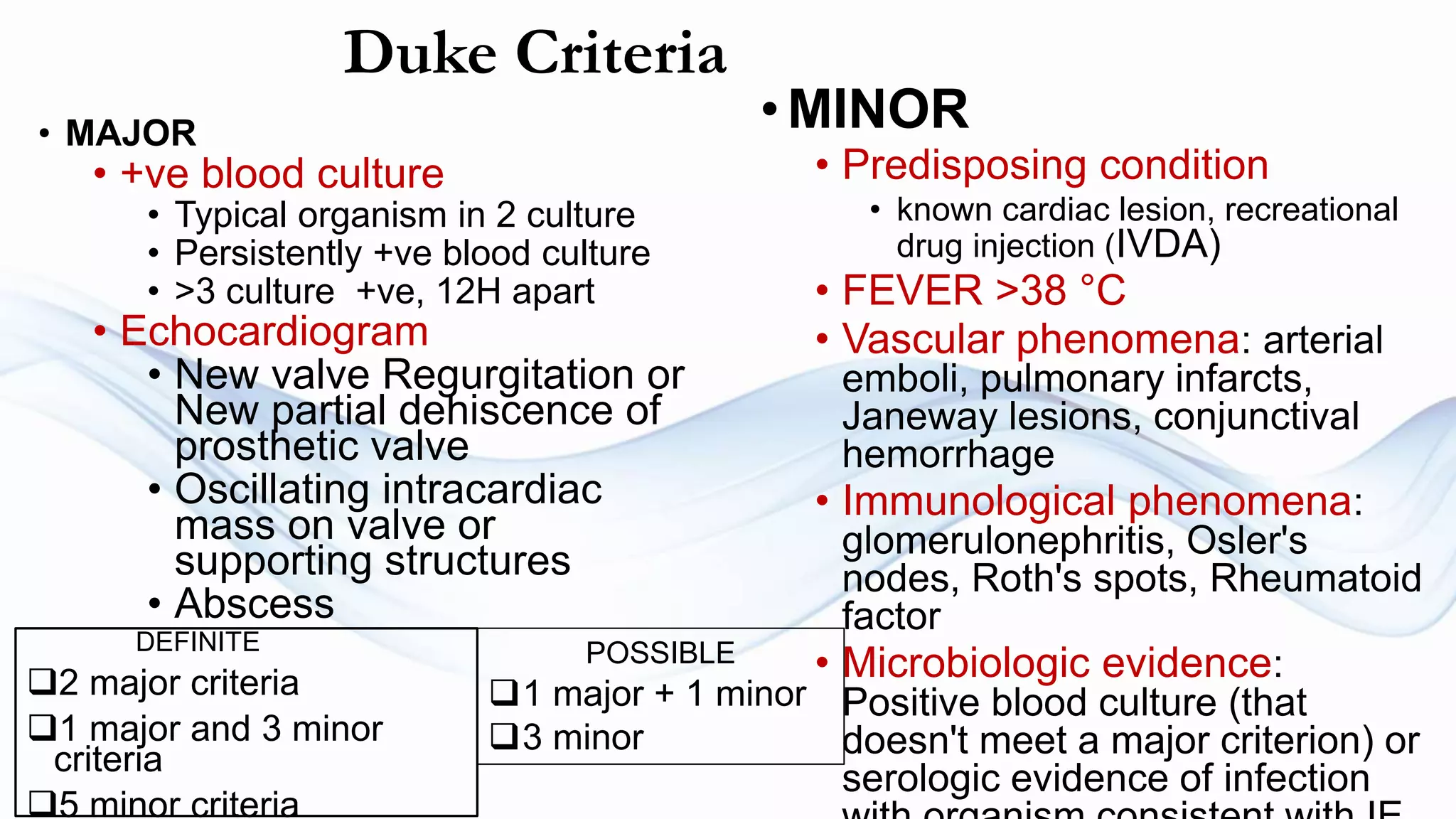
Duke Criteria
• MAJOR
• +ve blood culture
• Typical organism in 2 culture
• Persistently +ve blood culture
• >3 culture +ve, 12H apart
• Echocardiogram
• New valve Regurgitation or
New partial dehiscence of
prosthetic valve
• Oscillating intracardiac
mass on valve or
supporting structures
• Abscess
DEFINITE
2 major criteria
1 major and 3 minor
criteria
5 minor criteria
•MINOR
• Predisposing condition
• known cardiac lesion, recreational
drug injection (IVDA)
• FEVER >38 °C
• Vascular phenomena: arterial
emboli, pulmonary infarcts,
Janeway lesions, conjunctival
hemorrhage
• Immunological phenomena:
glomerulonephritis, Osler's
nodes, Roth's spots, Rheumatoid
factor
• Microbiologic evidence:
Positive blood culture (that
doesn't meet a major criterion) or
serologic evidence of infection
POSSIBLE
1 major + 1 minor
3 minor
Antibiotic Therapy
• Streptococci/Enterococci
• Determine MIC of Penicillin
• Penicillin +/- aminoglycoside
• Ceftriaxone alone
• Vancomycin +/- aminoglycoside
• HACEK group
• Cefotaxime/ceftriaxone
• Staphylococci
• Native valve
• Flucloxacillin +/- aminoglycoside
• Vancomycin +/- aminoglycoside/
rifampicin
• Prosthetic valve
• Flucloxacillin + aminoglycoside +
rifampicin
• Vancomycin + aminoglycoside +
rifampicin
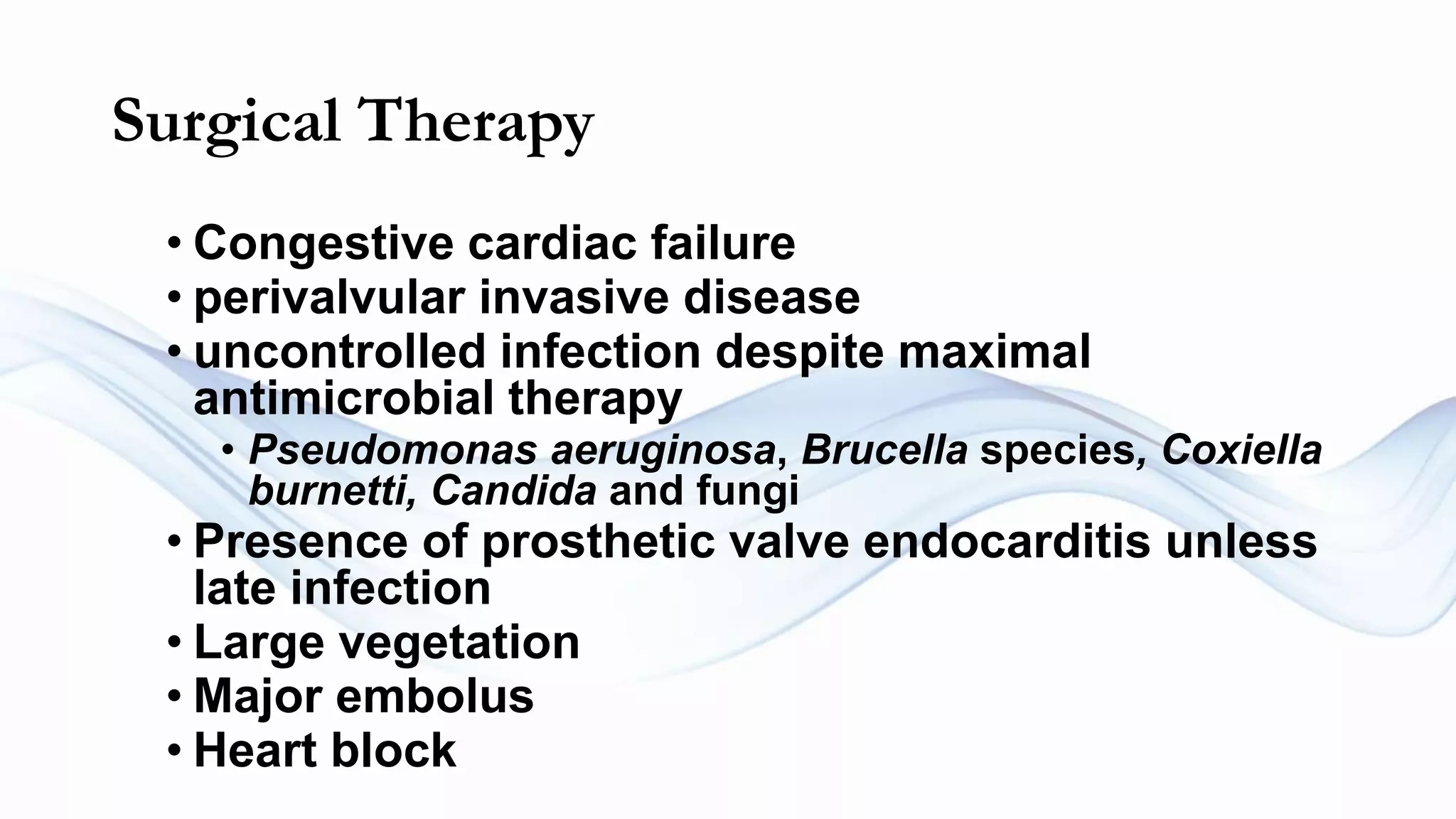
Surgical Therapy
• Congestive cardiac failure
• perivalvular invasive disease
• uncontrolled infection despite maximal
antimicrobial therapy
• Pseudomonas aeruginosa, Brucella species, Coxiella
burnetti, Candida and fungi
• Presence of prosthetic valve endocarditis unless
late infection
• Large vegetation
• Major embolus
• Heart block
MORTALITY
• Depends on ORGANISM
• Presence of complications
• Pre-existing conditions
• Development of perivalvular or myocardial abscess
• Use of combined antimicrobial and surgical therapy
• Globally, IE remains a highly lethal disease, with the overall
mortality remaining at ~25%
MORTALITY
• Viridans Streptococci and S. bovis : 4-16%
• Enterococci:15-25%
• S. aureus: 25-47%
• Q fever: 5-37% (17% in Ireland)
• P. aeruginosa, fungi, Enterobacteriaceae > 50%
• Overall mortality 20-25% and for right-sided endocarditis in
IVDA is 10%
Prevention
• Antimicrobial prophylaxis is given to at risk patients when
bacteremia-inducing procedures are performed
CASE STUDY
Key points
• Infective endocarditis is inflammation of the endocardium secondary
to an infection
• Worldwide mortality rate is around 25%
• Consider endocarditis in anyone with pyrexia of unknown origin +/-
new murmur
• First-line investigations are blood cultures (3 sets taken 30 minutes
apart from 3 separate sites) and transthoracic echocardiogram
• Diagnosis is made using the Duke criteria. For a definite diagnosis,
there must be direct evidence of endocarditis on histology or culture or
fulfilment of TWO major criteria, or ONE major and THREE minor
criteria, or FIVE minor criteria.
• Treatment is with prolonged courses of antibiotics +/- surgery
THANK YOU

infectious endocarditis.pptx

  • 1.
  • 2.
    DEFINITION •Infective Endocarditis: a microbialinfection of the endocardial surface of the heart • Classification: • acute or subacute-chronic on temporal basis, severity of presentation and progression • By organism • Native valve or prosthetic valve
  • 3.
    Common SITE • Heartvalve, • Most common mitral and aortic valve • Chordae tendinea, • Wall of ventricle with VSD or • in the mural endocardium
  • 4.
    EPIDEMIOLOGY • Incidence difficultto ascertain and varies according to location • Much more common in males than in females • May occur in persons of any age and increasingly common in elderly (large number of risk factors) • Mortality ranges from 20-30%
  • 6.
    PATHOGENESIS • Altered valvesurface • Animal experiments suggest that IE is almost impossible to establish unless the valve surface is damaged • Deposition of platelets and fibrin – nonbacterial thrombotic vegetation (NBTE) • vegetation, composed of • platelets, • fibrin, • microorganisms • inflammatory cells
  • 7.
    CLASSIFICATION ACUTE (IE) • HighVirulent organism (e.g. Staph aureus) • Affects Healthy heart SUB-ACUTE (IE) • Low Virulent organism (e.g. Strep viridans) • Damaged heart valves and • Pathological predisposing conditions e.g. • VSD • Catheterization
  • 8.
    PATHOGENESIS Bacteraemia • Transient bacteraemiaoccurs when a heavily colonised mucosal surface is traumatised • Dental extraction • Periodontal surgery • Tooth brushing • Tonsillectomy • Operations involving the respiratory, GI or GU tract mucosa • Oesophageal dilatation • Biliary tract surgery • Prophylaxis is required (antibiotic treatment)
  • 9.
    Predisposing Factors 1. Catheterization 2.Abnormal blood flow • RHD – Mitral, aortic and tricuspid lesions • Mitral Valve Prolapse • Bicuspid Aortic Valve • Calcific Aortic Valve • Tetralogy of Fallot • PDA 3. Regurgitation > Stenosis (Lesions)
  • 10.
    Predisposing Factors Bacterial colonization-> lesions with high degrees of turbulence • e.g. small VSD, valvular stenosis Prosthetic Valves • 7-25% cases of IE • staphylococcus epidermidis
  • 11.
    Nosocomial Infective Endocarditis •7-29% of all cases seen in hospitals • Hospital acquired infections • At least half linked to intravascular devices • Other sources GU and GIT procedures or surgical-wound infection
  • 12.
    Etiological Agents Streptococci • Viridansstreptococci / α-haemolytic streptococci • SUB-ACUTE IE • S. mitis, S. sanguis, S. oralis • S. bovis • Associated with colonic carcinoma Enterococci • E. faecalis, E. faecium • Associated with GU/GI tract procedures • Approx. 10% of patients with enterococcal bacteremia develop endocarditis
  • 13.
    Etiological Agents Staphylococci • S.aureus = Acute endocarditis most common bacteria • S. epidermidis • Prosthetic valve • Staphylococci have surpassed viridians streptococci as the most common cause of infective endocarditis • Native valves • Coagulase-negative staphylococci
  • 14.
    Etiological Agents Gram-negative rods •HACEK group • Fastidious oropharyngeal GNBs • E. coli, Klebsiella etc • Uncommon • Pseudomonas aeruginosa • IVDA • Neisseria gonorrhoea • Rare since introduction of penicillin
  • 15.
    Etiological Agents Fungi • Candidaspecies, Aspergillus species • Very dangerous type of IE • Requires URGENT surgery • LARGE vegetations • Anti-fungal drugs doesn’t work
  • 16.
    HOST FACTORS High riskfor IE (Acute or sub-acute) WEAK immune System • Neutropenia or Immuno-deficiency syndrome e.g. AIDS • Malignancy syndrome • Therapeutic immunosuppression e.g. Steroids, Anti-cancer drugs DM Chronic alcoholism IVDA = tricuspid valve more commonly involved (RH) • IE from polymicrobial activity  Vascular Catheter
  • 17.
    ACUTE (IE) • HighVirulent organism (e.g. Staph aureus) • Affects Healthy heart • Onset = very fast • High grade FEVER • Rapid Destruction • Cardiac complication e.g. Leukocytosis • Sudden myalgia • Fatal within days to weeks SUB-ACUTE (IE) • Low Virulent organism (e.g. Strep viridans) • Damaged heart valves • Onset = insidious • Low grade FEVER • Slow destruction of tissues (healing & fibrosis present) • Anemia of chronic disease (cytokines depresses bone marrow) e.g. Leukopenia • Non-specific features of systemic infections • Fatigue • Weight loss • Anorexia • Malaise • Fatal by a year
  • 18.
    Acute IE 1. Highvirulent organism attacks healthy endocardium 2. Platelets and Fibrin deposition 3. Microbes multiplying and inflammatory cells enters 4. Pieces of vegetation breakdown and septic emboli enters general circulation 5. Metastasis 6. Infarction to brain – abscess in brain, kidney, spleen, Myocardium 7. Ulcerative lesion might perforate valves and regurgitate the valve -> HF 8. Might affect conduction pathway and destroy av nodal tissue, bundle of his and prolong PR-interval
  • 19.
    Clinical features • Ringabscess = Vegetation growing and moving around the valve ring • Can affect conduction pathway • In case of prosthetic valve -> valve gets dislodged • May invade into myocardium and lead to myocardium abscess • Further can lead to suppurative pericarditis
  • 20.
    Sub-Acute IE Low Virulencebacteria Vegetation developing on already damaged endocardium Slowly growing  LESS Neutrophils and  MORE macrophages and Lymphocytes Chronic inflammation, vegetation adhere tightly to surface Less chances of perforation, ring abscess, metastasis, suppurative pericarditis
  • 21.
    Sub-Acute IE Untreated orpartially treated for weeks and months Bacteria -> Releases antigen for prolong time = chronic antigenemia Antigen-antibody complexes are formed While Circulating gets deposited in the microcirculation Complements are activated and damages local tissues [type 3 hypersensitivity] Vasculitic lesion are formed
  • 22.
    Clinical Manifestations Some complexesgo to subungual capillaries underneath nails, where complement damages tissues and hemorrhagic lesions are formed, Splinter hemorrhage Complexes stuck in the capillaries and inflammatory lesions, Osler’s Nodes
  • 23.
    Clinical Manifestations • Nontendererythematous, hemorrhagic, or pustular lesions often on palms or soles, Janeway lesions (Painful) • petechial hemorrhage, on the skin • Hemorrhagic lesions in the eyes, Roth spots • Splenomegaly • Diffuse G.N. • Proteinuria, hematuria, RF
  • 24.
    Diagnosis: Duke Criteria •In 1994 a group at Duke University standardized criteria for assessing patients with suspected endocarditis Include • -Predisposing Factors • -Blood culture isolates or persistence of bacteremia • -Echocardiogram findings with other clinical, laboratory findings
  • 25.
    Investigations 1. Blood culture 2.Echo 1. TTE 2. TOE 3. FBC/ESR/CRP 4. Rheumatoid Factor 5. MSU • Trans Thoracic Echocardiography (TTE) • rapid, non-invasive – excellent specificity (98%) but poor sensitivity • Transoesophageal Echo (TOE) • more invasive, sensitivity up to 95%, useful for prosthetic valves and to evaluate myocardial invasion • TOE more cost effective in those with S. aureus catheter-associated bacteraemia and bacteraemia/fever and recent IVDA
  • 26.
    Duke Criteria • MAJOR •+ve blood culture • Typical organism in 2 culture • Persistently +ve blood culture • >3 culture +ve, 12H apart • Echocardiogram • New valve Regurgitation or New partial dehiscence of prosthetic valve • Oscillating intracardiac mass on valve or supporting structures • Abscess DEFINITE 2 major criteria 1 major and 3 minor criteria 5 minor criteria •MINOR • Predisposing condition • known cardiac lesion, recreational drug injection (IVDA) • FEVER >38 °C • Vascular phenomena: arterial emboli, pulmonary infarcts, Janeway lesions, conjunctival hemorrhage • Immunological phenomena: glomerulonephritis, Osler's nodes, Roth's spots, Rheumatoid factor • Microbiologic evidence: Positive blood culture (that doesn't meet a major criterion) or serologic evidence of infection POSSIBLE 1 major + 1 minor 3 minor
  • 27.
    Antibiotic Therapy • Streptococci/Enterococci •Determine MIC of Penicillin • Penicillin +/- aminoglycoside • Ceftriaxone alone • Vancomycin +/- aminoglycoside • HACEK group • Cefotaxime/ceftriaxone • Staphylococci • Native valve • Flucloxacillin +/- aminoglycoside • Vancomycin +/- aminoglycoside/ rifampicin • Prosthetic valve • Flucloxacillin + aminoglycoside + rifampicin • Vancomycin + aminoglycoside + rifampicin
  • 28.
    Surgical Therapy • Congestivecardiac failure • perivalvular invasive disease • uncontrolled infection despite maximal antimicrobial therapy • Pseudomonas aeruginosa, Brucella species, Coxiella burnetti, Candida and fungi • Presence of prosthetic valve endocarditis unless late infection • Large vegetation • Major embolus • Heart block
  • 30.
    MORTALITY • Depends onORGANISM • Presence of complications • Pre-existing conditions • Development of perivalvular or myocardial abscess • Use of combined antimicrobial and surgical therapy • Globally, IE remains a highly lethal disease, with the overall mortality remaining at ~25%
  • 31.
    MORTALITY • Viridans Streptococciand S. bovis : 4-16% • Enterococci:15-25% • S. aureus: 25-47% • Q fever: 5-37% (17% in Ireland) • P. aeruginosa, fungi, Enterobacteriaceae > 50% • Overall mortality 20-25% and for right-sided endocarditis in IVDA is 10%
  • 32.
    Prevention • Antimicrobial prophylaxisis given to at risk patients when bacteremia-inducing procedures are performed
  • 34.
  • 42.
    Key points • Infectiveendocarditis is inflammation of the endocardium secondary to an infection • Worldwide mortality rate is around 25% • Consider endocarditis in anyone with pyrexia of unknown origin +/- new murmur • First-line investigations are blood cultures (3 sets taken 30 minutes apart from 3 separate sites) and transthoracic echocardiogram • Diagnosis is made using the Duke criteria. For a definite diagnosis, there must be direct evidence of endocarditis on histology or culture or fulfilment of TWO major criteria, or ONE major and THREE minor criteria, or FIVE minor criteria. • Treatment is with prolonged courses of antibiotics +/- surgery
  • 43.