The
Nitrogen Cycle
1. What is nitrogen?
1. Nitrogen is a non-metal, gaseous element.
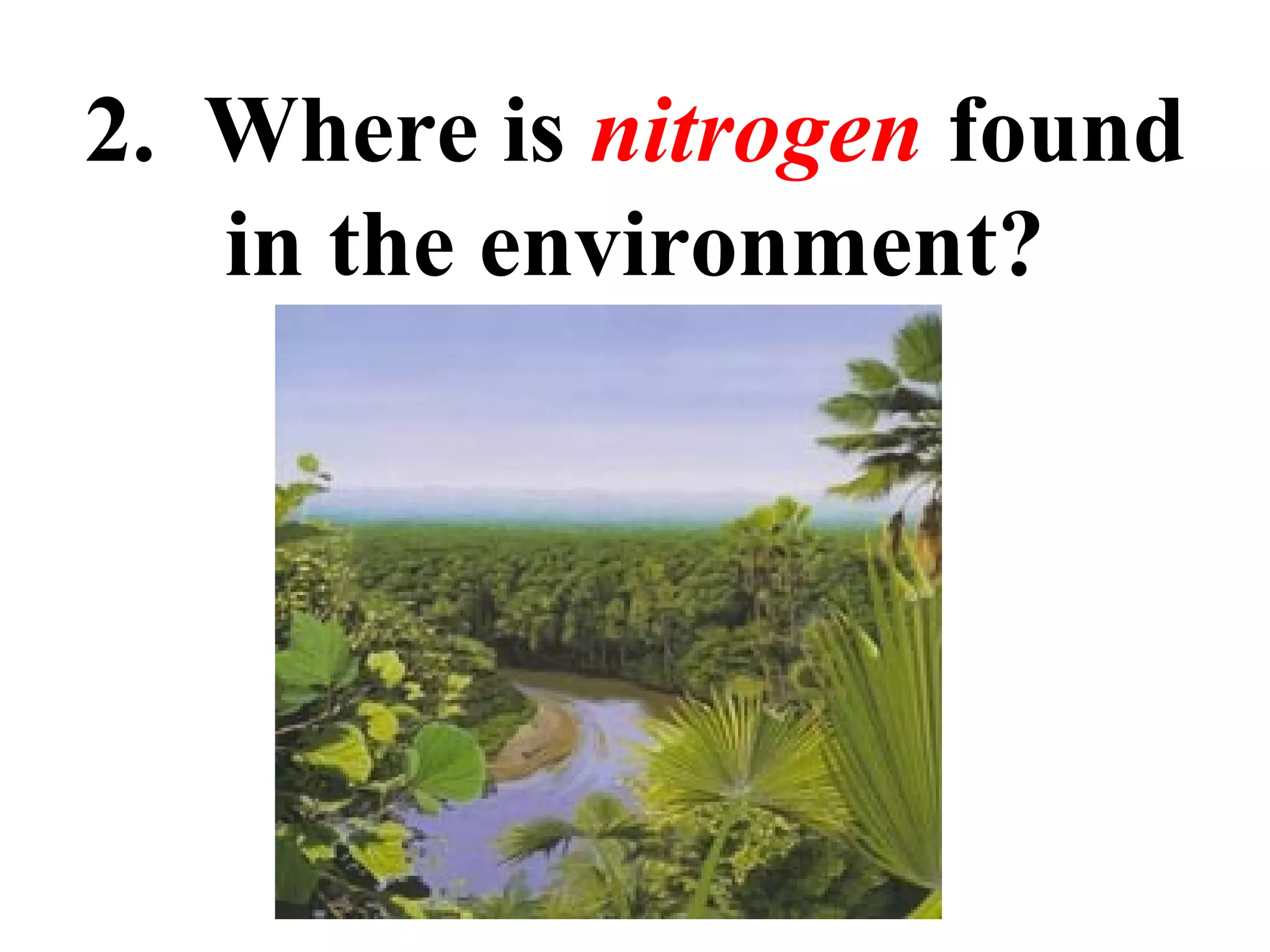
2. Where is nitrogen found
in the environment?
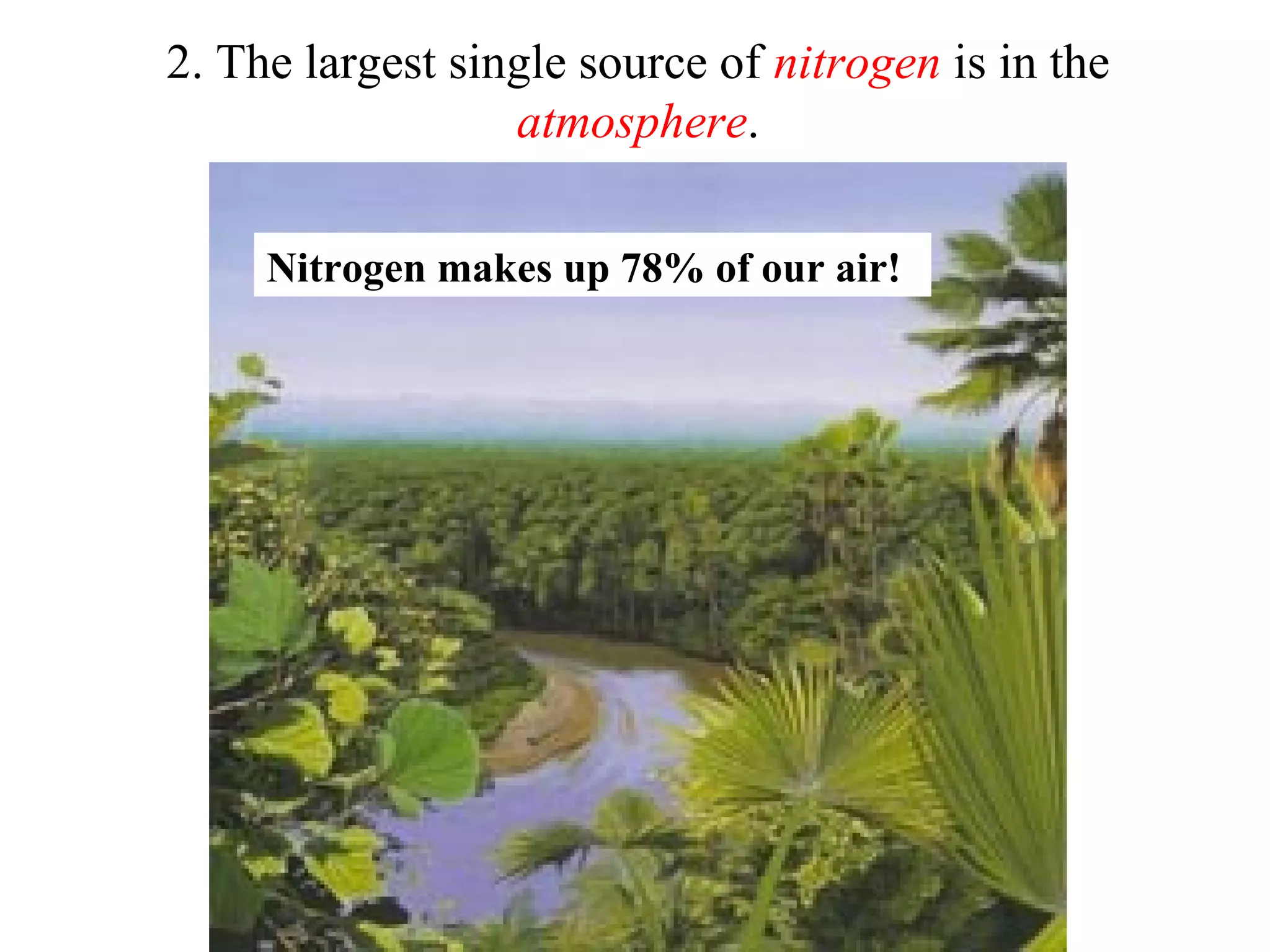
2. The largest single source of nitrogen is in the
atmosphere.
Nitrogen makes up 78% of our air!
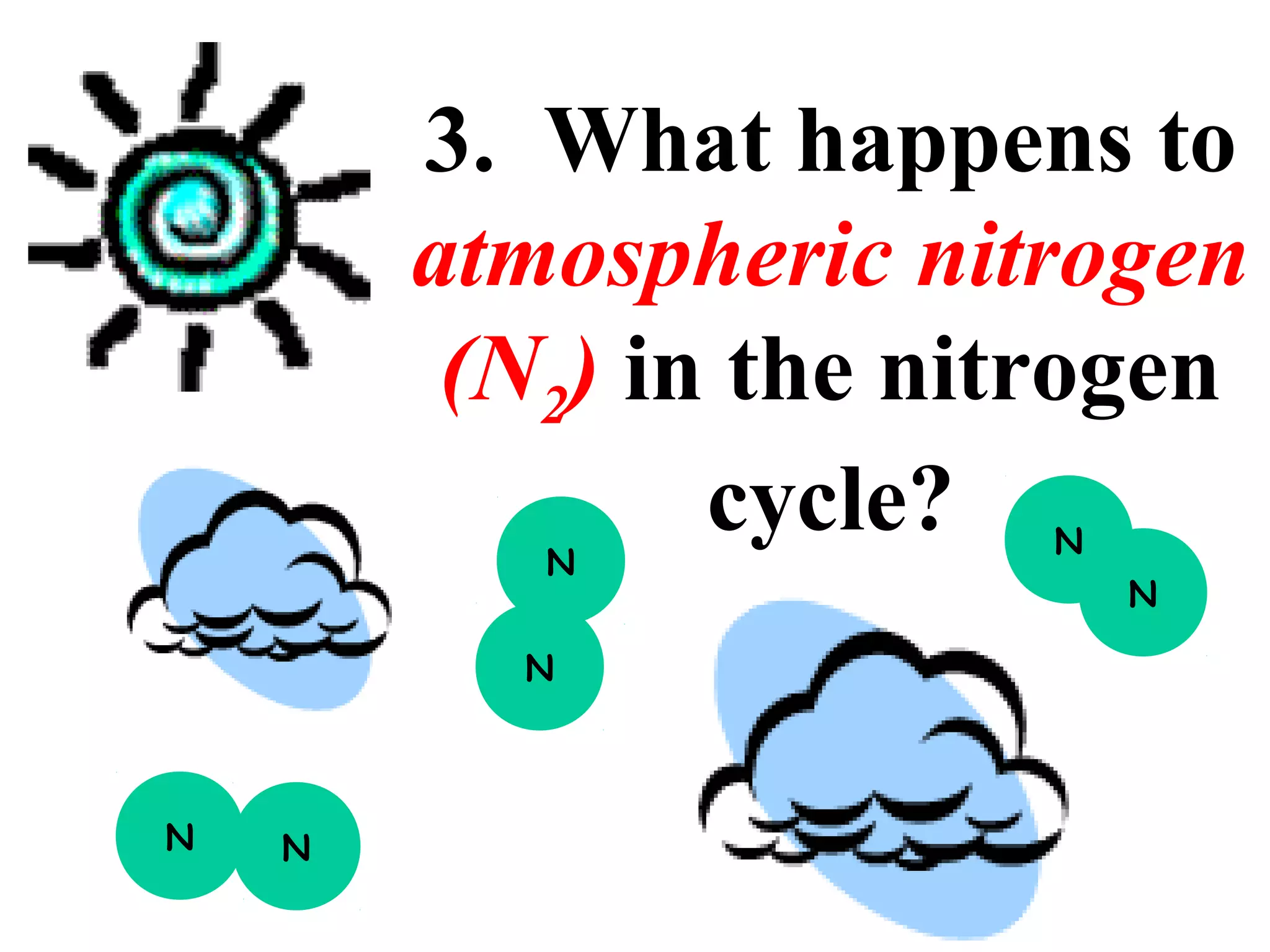
3. What happens to
atmospheric nitrogen
(N2) in the nitrogen
cycle?
N

N

N

N

N

N
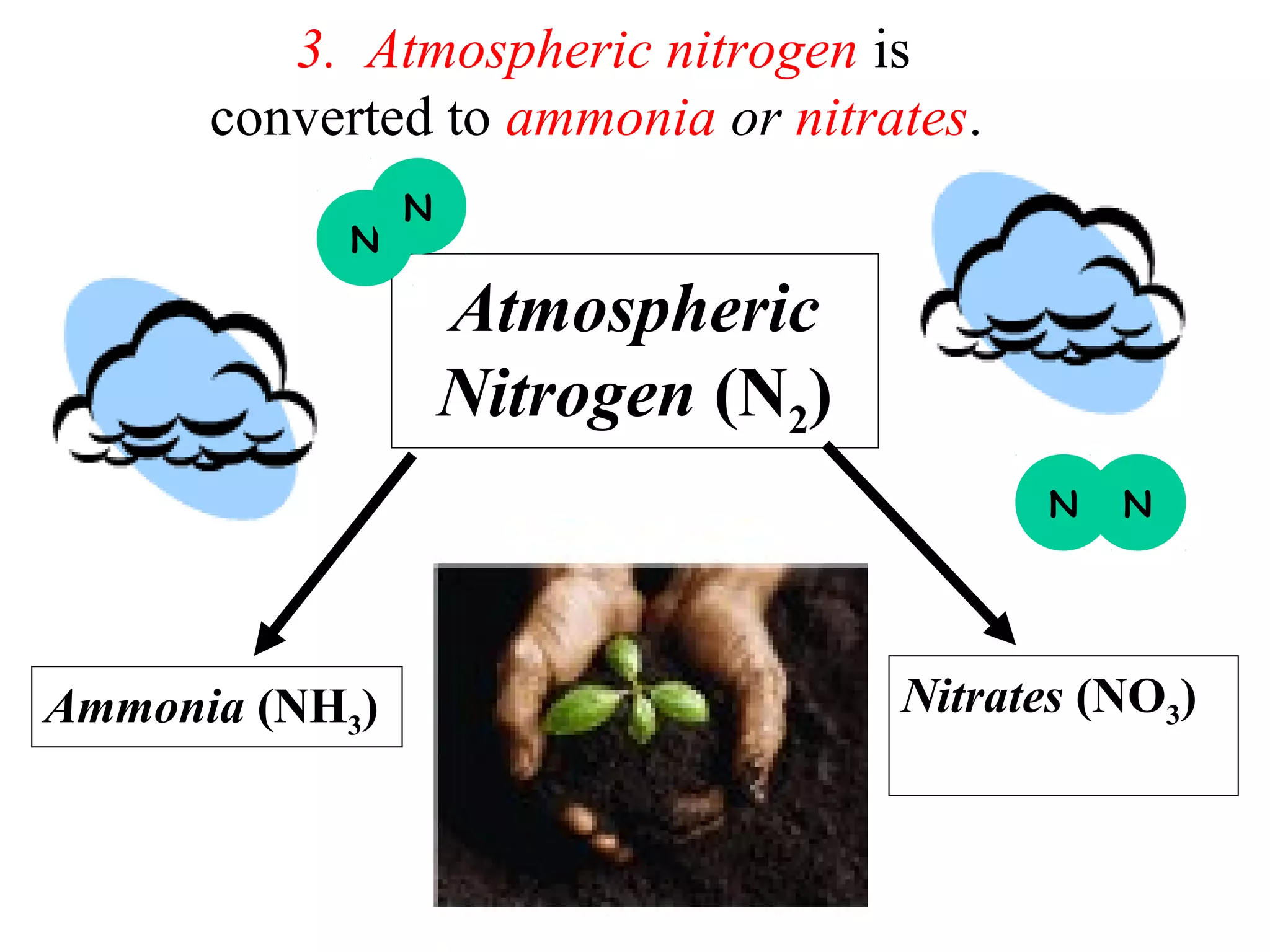
3. Atmospheric nitrogen is
converted to ammonia or nitrates.
N

N

Atmospheric
Nitrogen (N2)
N

Ammonia (NH3)

N

Nitrates (NO3)
N
N

4. Why does
atmospheric nitrogen
need to be
converted?
N

N

N
N
5. Nitrogen is an essential
component of DNA, RNA,
and proteins—the building
blocks of life.
Although the majority of the
air we breathe is nitrogen,
most living organisms are
unable to use nitrogen as it
exists in the atmosphere!
6. How does
atmospheric
nitrogen get
changed into a
form that can be
used by most
living organisms?

N
N
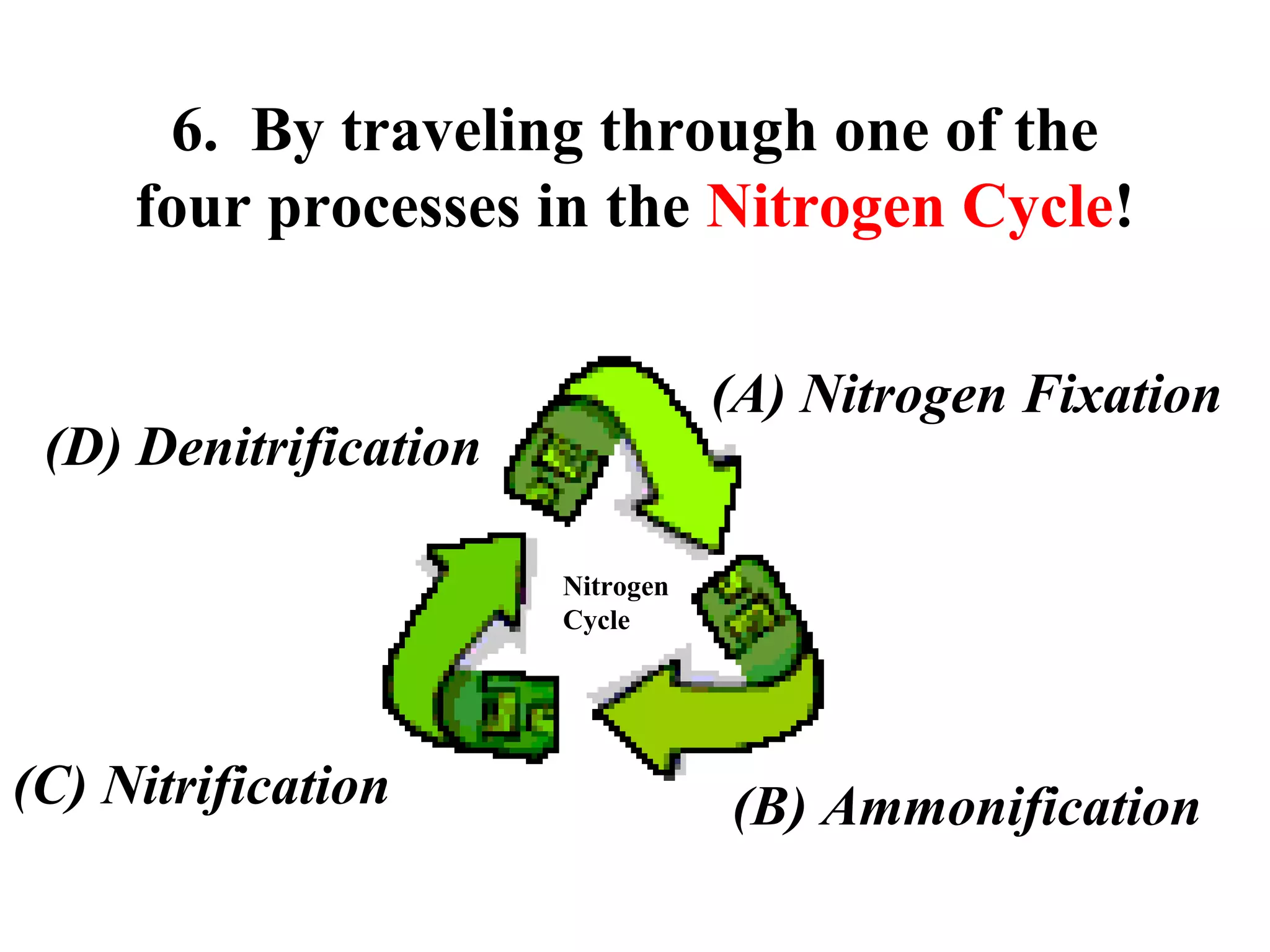
6. By traveling through one of the
four processes in the Nitrogen Cycle!
(A) Nitrogen Fixation

(D) Denitrification
Nitrogen
Cycle

(C) Nitrification

(B) Ammonification
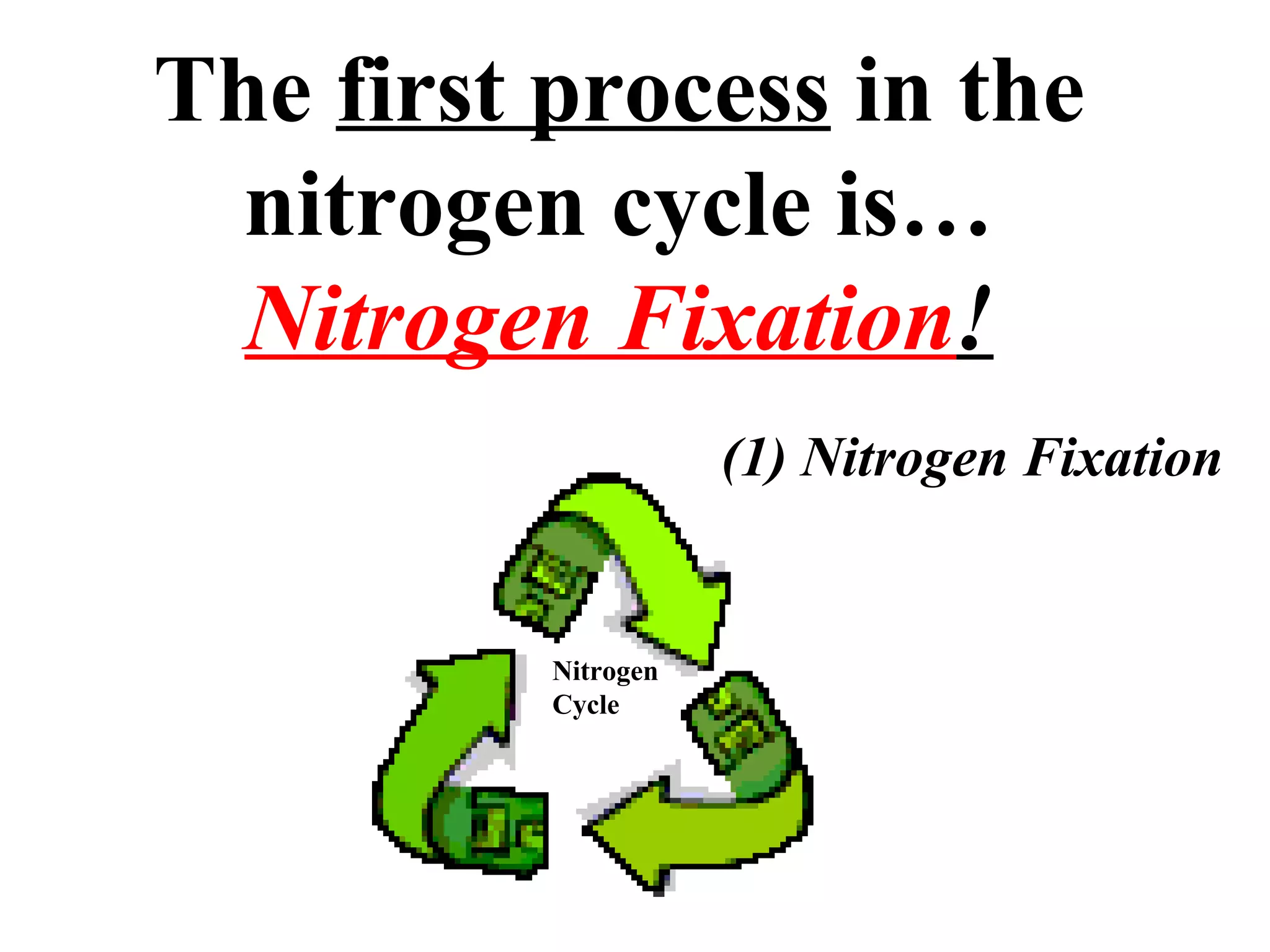
The first process in the
nitrogen cycle is…
Nitrogen Fixation!
(1) Nitrogen Fixation

Nitrogen
Cycle
7. What is
“nitrogen fixation”
and
what does it mean
to say
nitrogen gets
“fixed”?

N
N
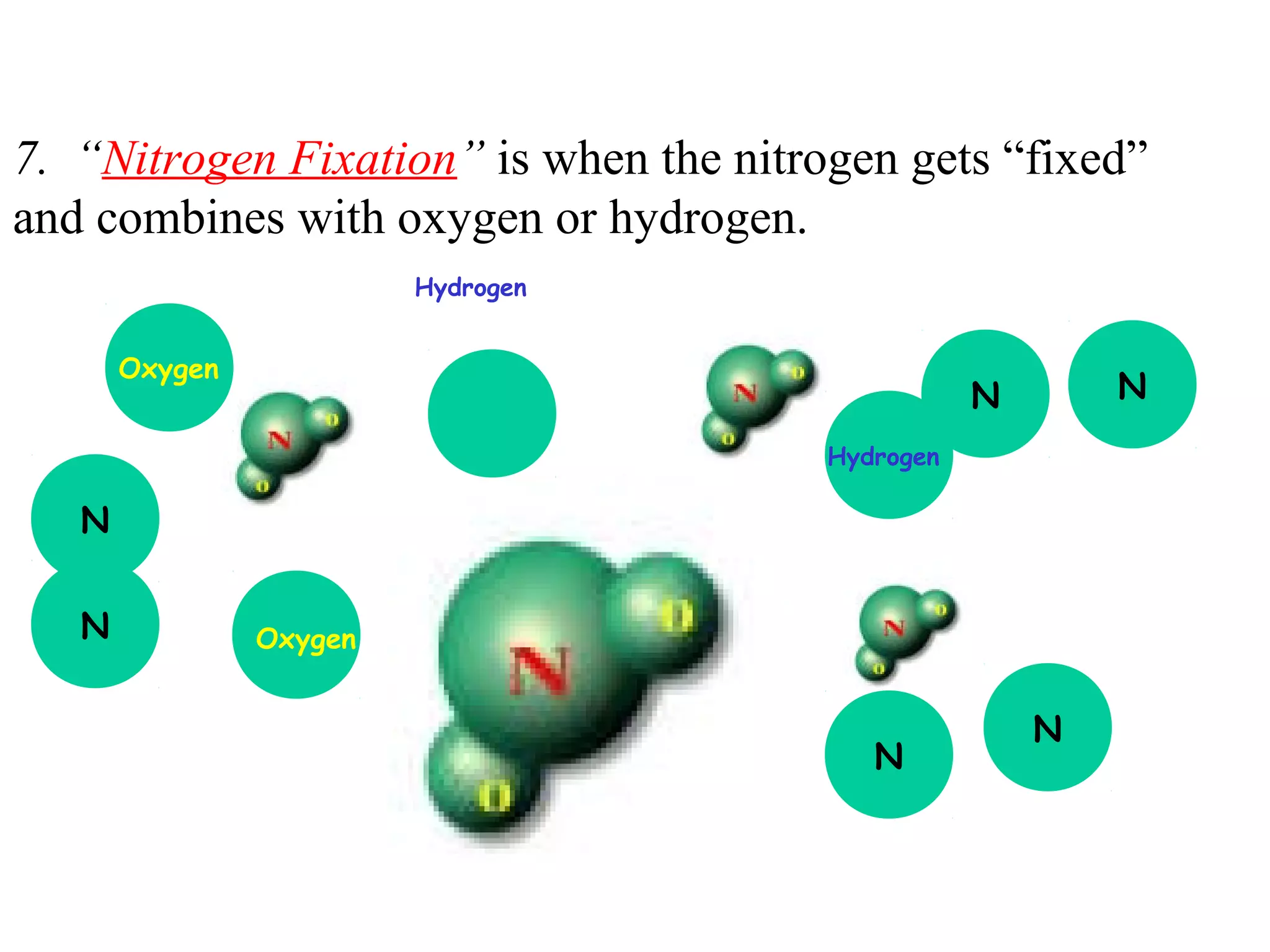
7. “Nitrogen Fixation” is when the nitrogen gets “fixed”
and combines with oxygen or hydrogen.
Hydrogen

Oxygen

N

N
Hydrogen

N
N

Oxygen

N

N
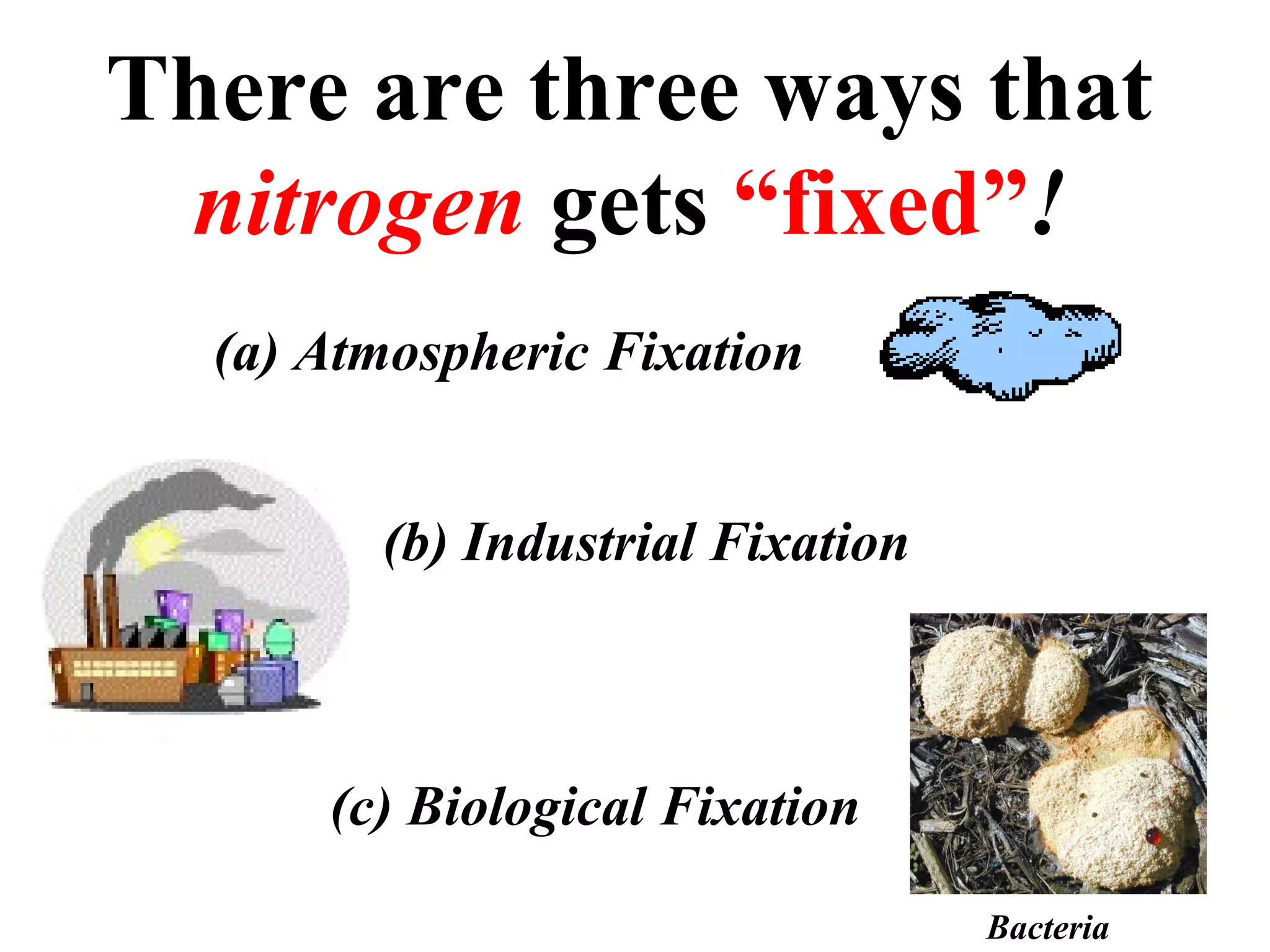
There are three ways that
nitrogen gets “fixed”!
(a) Atmospheric Fixation
(b) Industrial Fixation

(c) Biological Fixation
Bacteria
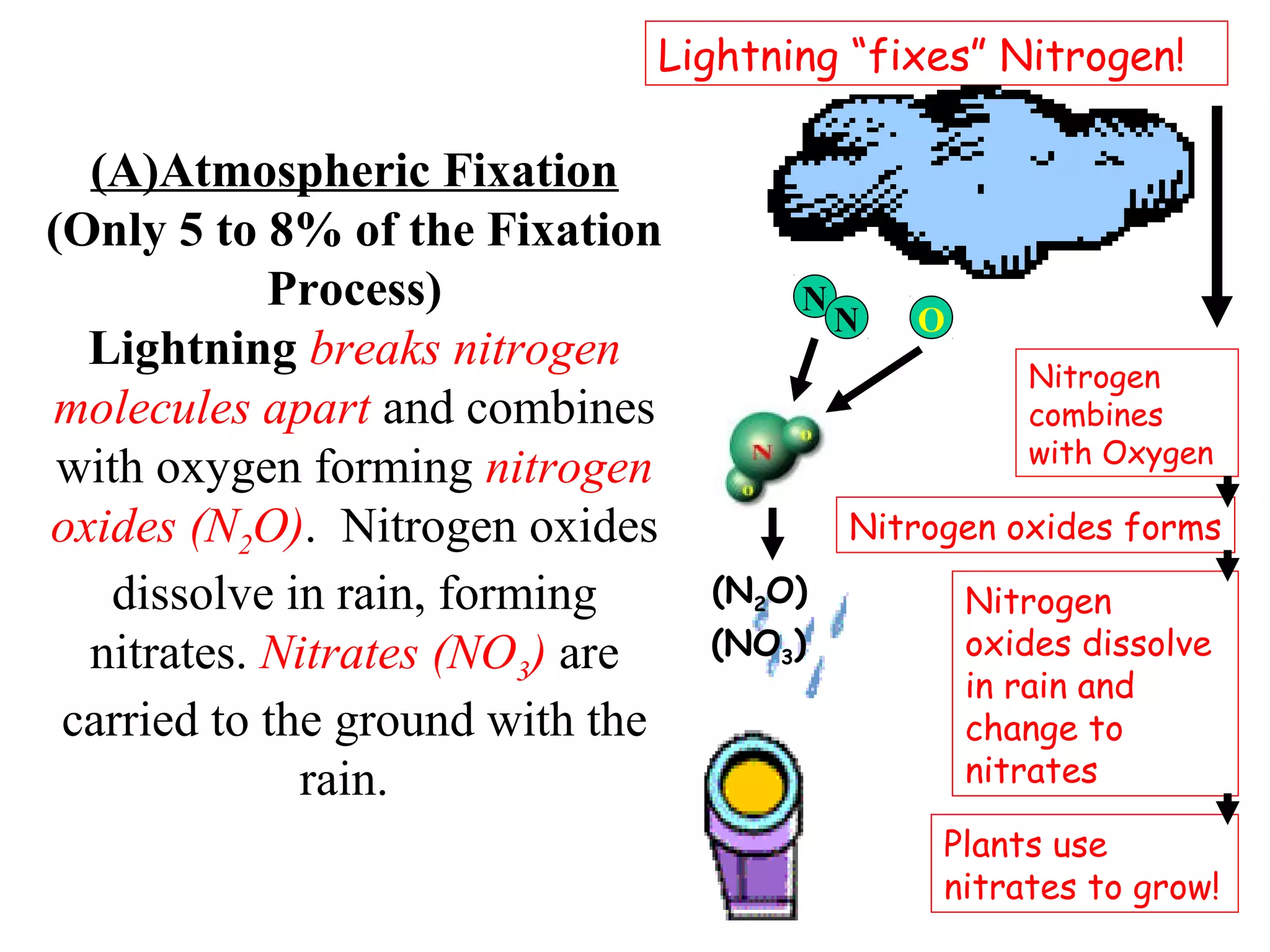
Lightning “fixes” Nitrogen!

(A)Atmospheric Fixation
(Only 5 to 8% of the Fixation
Process)
Lightning breaks nitrogen
molecules apart and combines
with oxygen forming nitrogen
oxides (N2O). Nitrogen oxides
dissolve in rain, forming
nitrates. Nitrates (NO3) are
carried to the ground with the
rain.

N

N

O
Nitrogen
combines
with Oxygen

Nitrogen oxides forms
(N2O)
(NO3)

Nitrogen
oxides dissolve
in rain and
change to
nitrates
Plants use
nitrates to grow!
NN

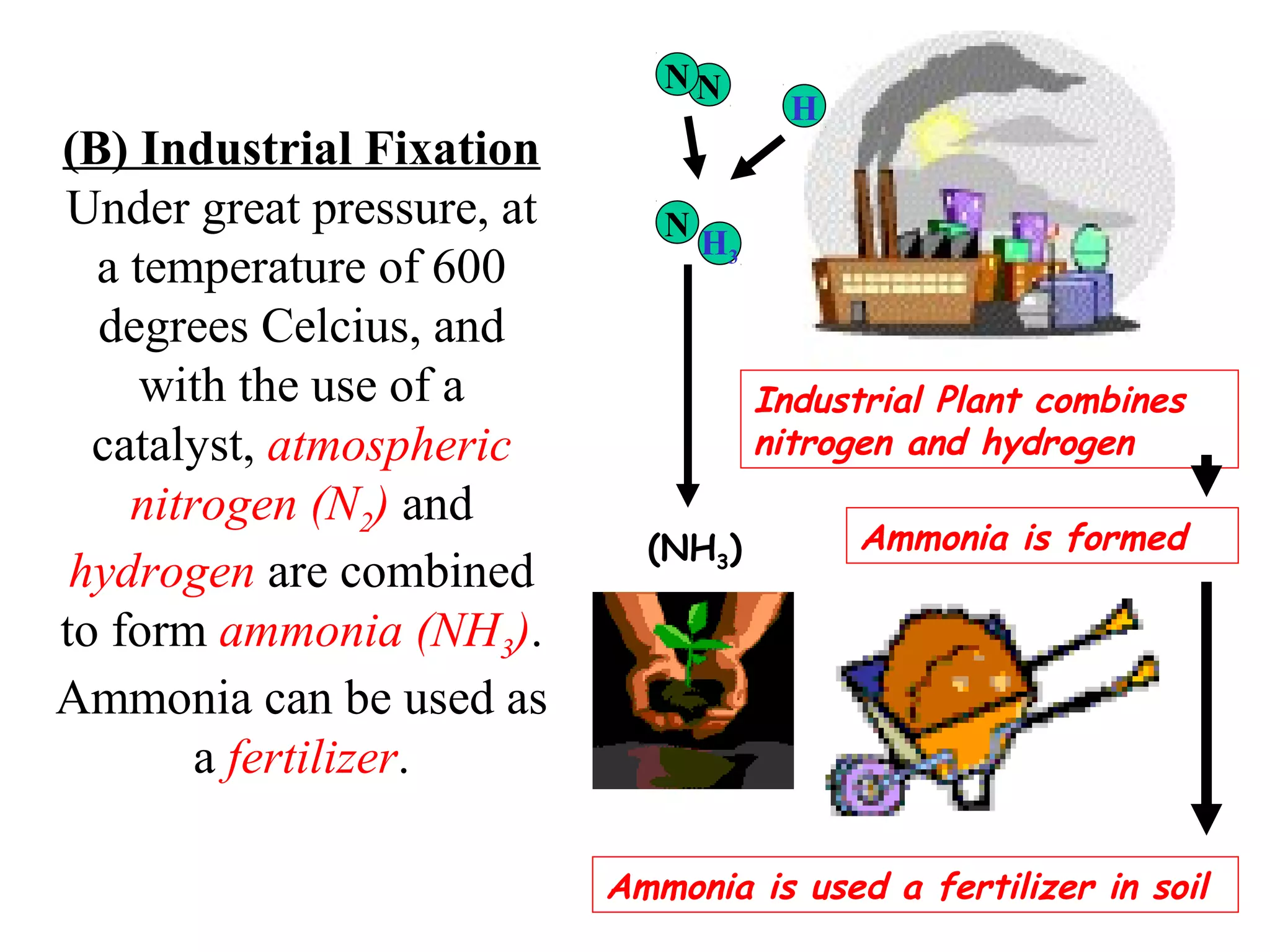
(B) Industrial Fixation
Under great pressure, at
a temperature of 600
degrees Celcius, and
with the use of a
catalyst, atmospheric
nitrogen (N2) and
hydrogen are combined
to form ammonia (NH3).
Ammonia can be used as
a fertilizer.

N

H

H3

Industrial Plant combines
nitrogen and hydrogen
(NH3)

Ammonia is formed

Ammonia is used a fertilizer in soil
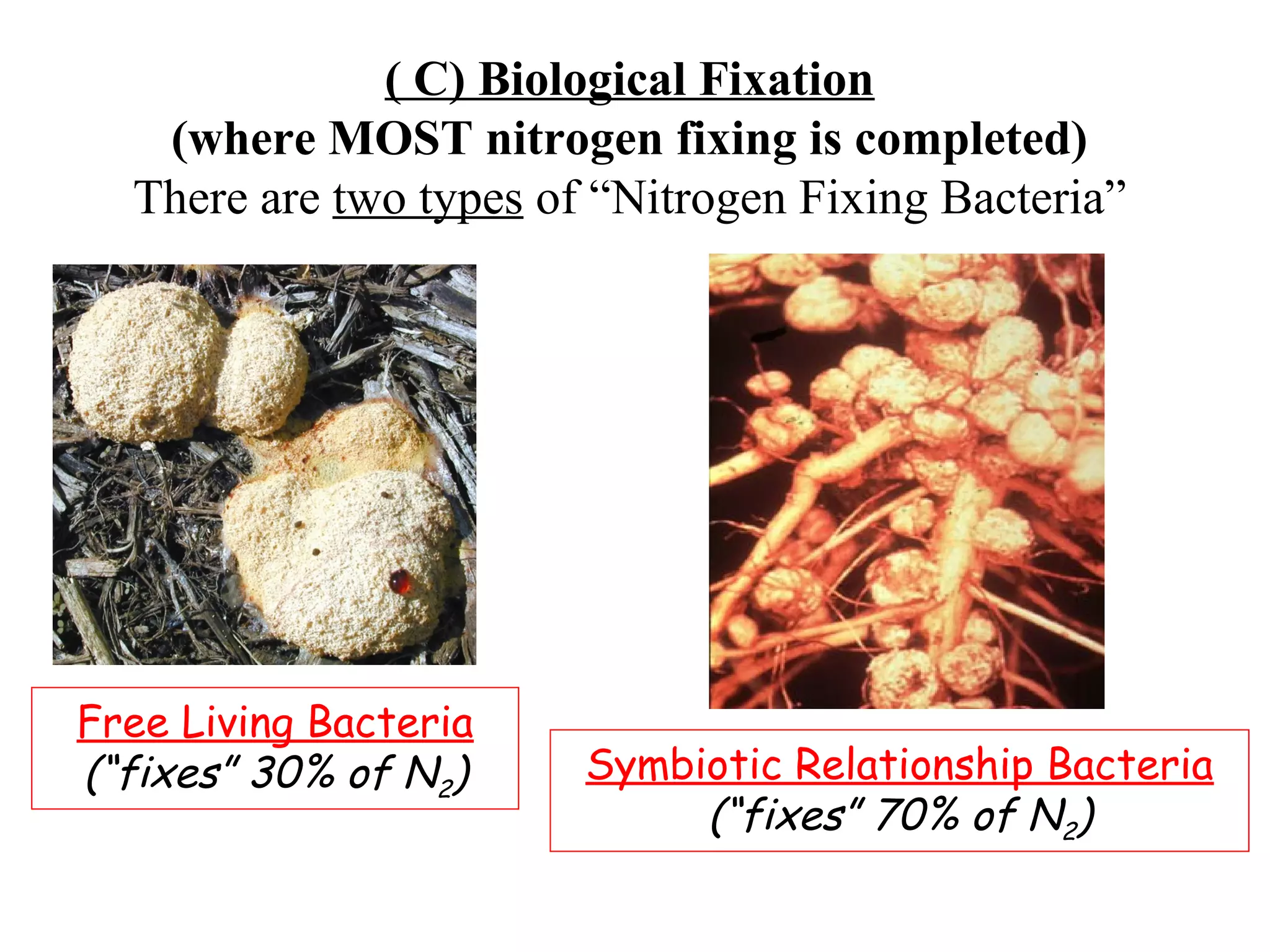
( C) Biological Fixation
(where MOST nitrogen fixing is completed)
There are two types of “Nitrogen Fixing Bacteria”

Free Living Bacteria
(“fixes” 30% of N2)

Symbiotic Relationship Bacteria
(“fixes” 70% of N2)
Most atmospheric nitrogen
(N2) is “fixed” and changed to
ammonia (NH3). Ammonia is
highly toxic to many
organisms.

Can plants use
ammonia?
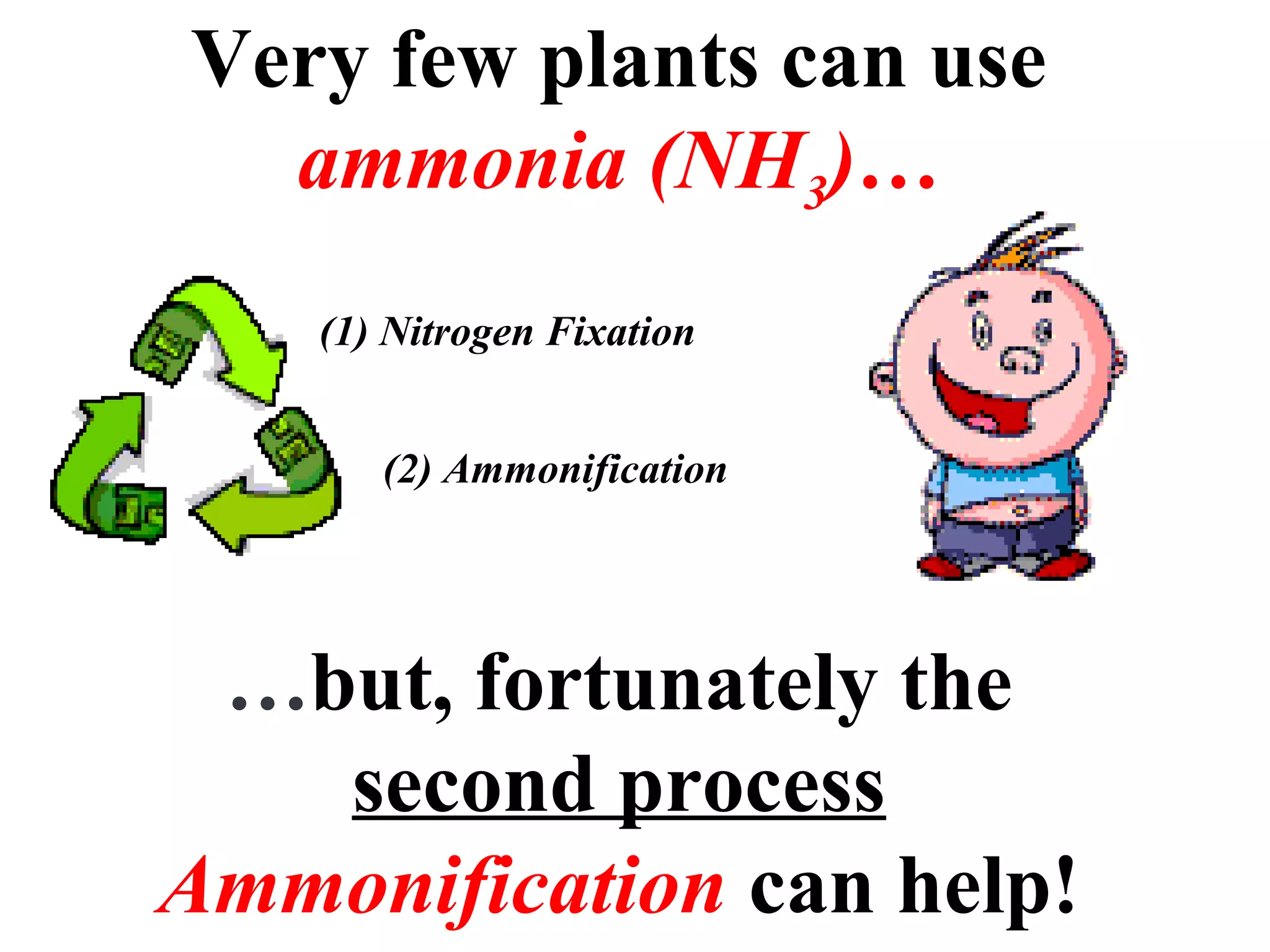
Very few plants can use
ammonia (NH3)…
(1) Nitrogen Fixation
(2) Ammonification

…but, fortunately the
second process
Ammonification can help!
8. What is
ammonification?
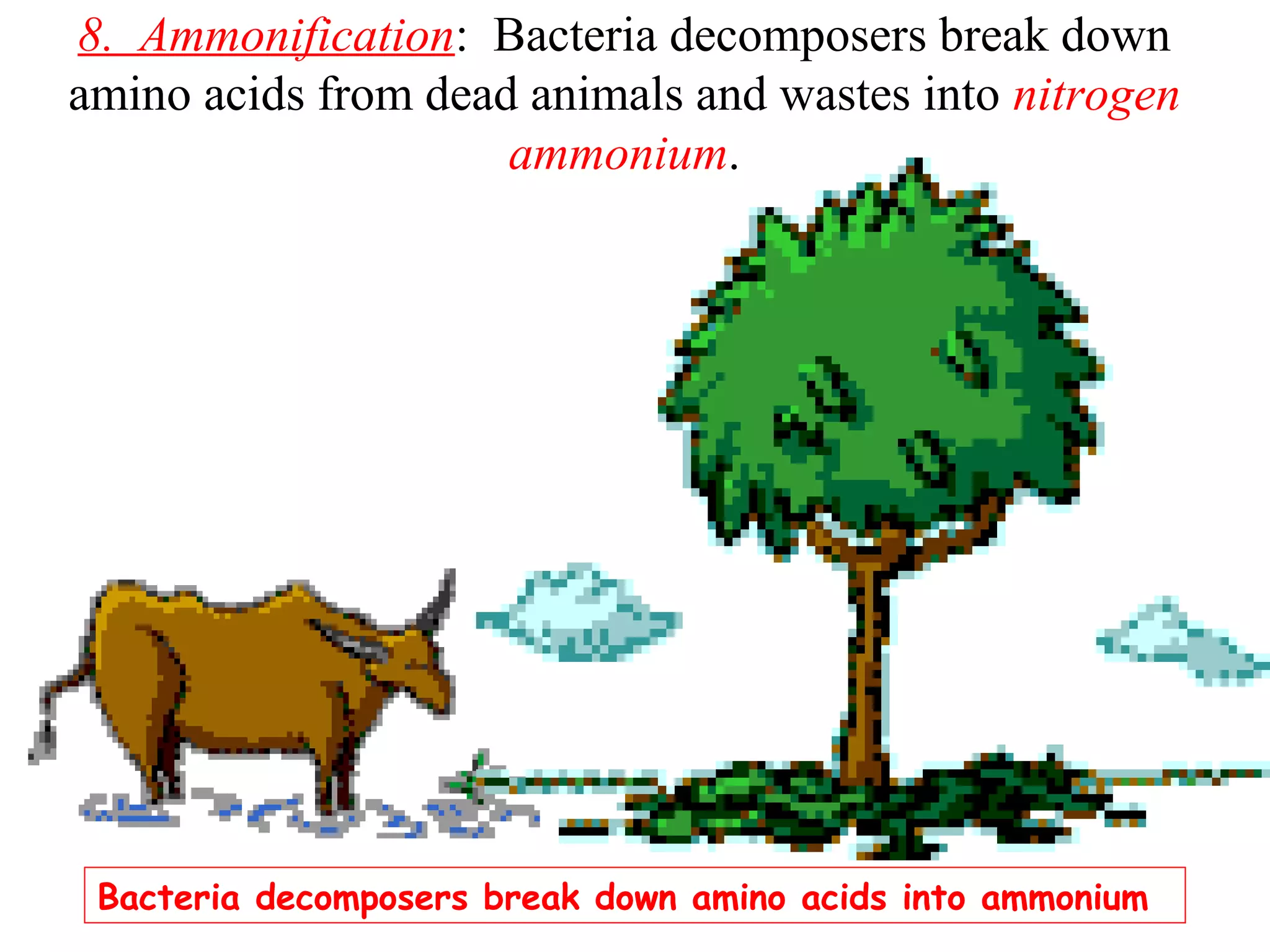
8. Ammonification: Bacteria decomposers break down
amino acids from dead animals and wastes into nitrogen
ammonium.

Bacteria decomposers break down amino acids into ammonium
9. Why is
ammonification
necessary?
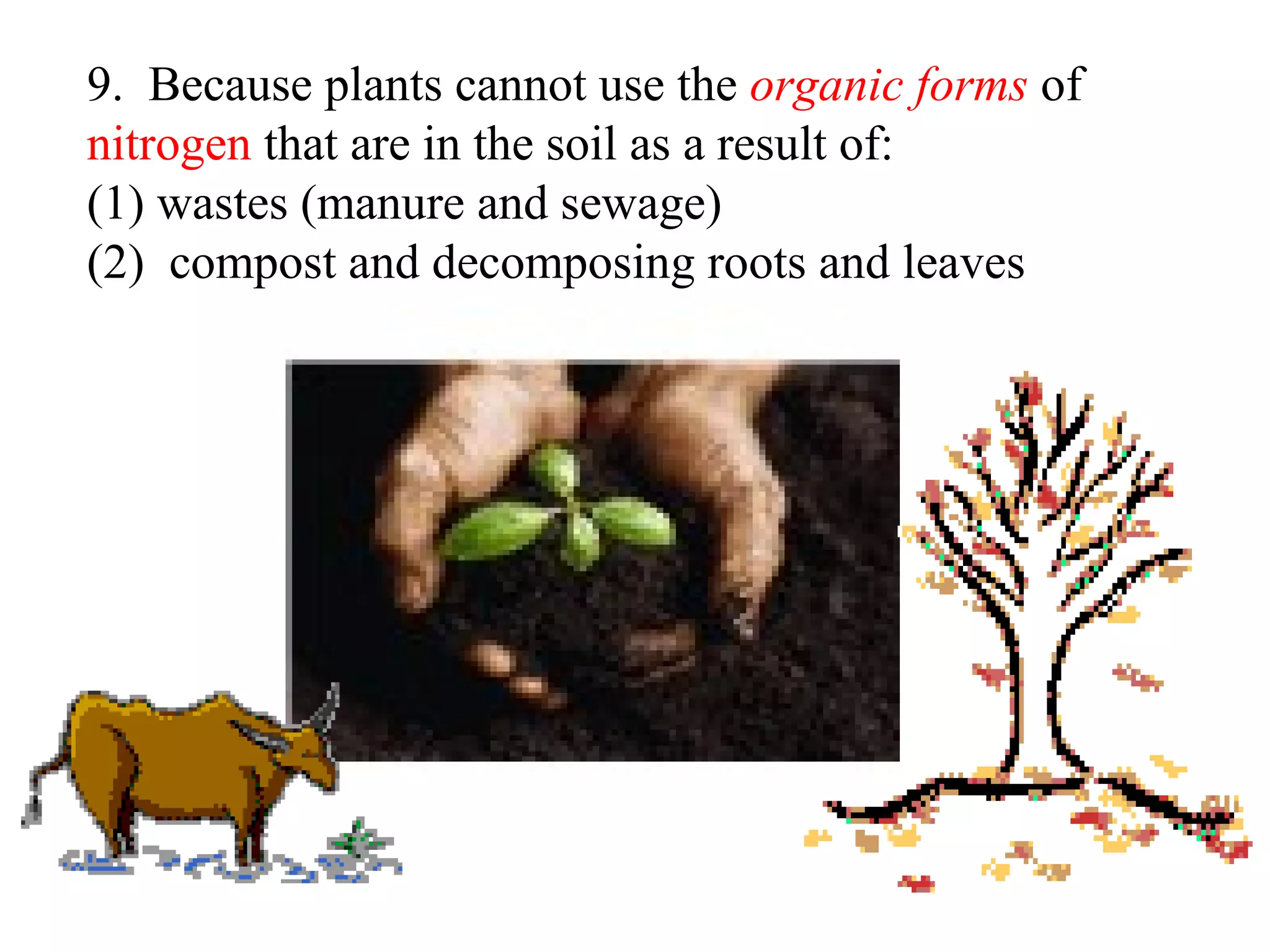
9. Because plants cannot use the organic forms of
nitrogen that are in the soil as a result of:
(1) wastes (manure and sewage)
(2) compost and decomposing roots and leaves
10. How does
ammonification
occur?
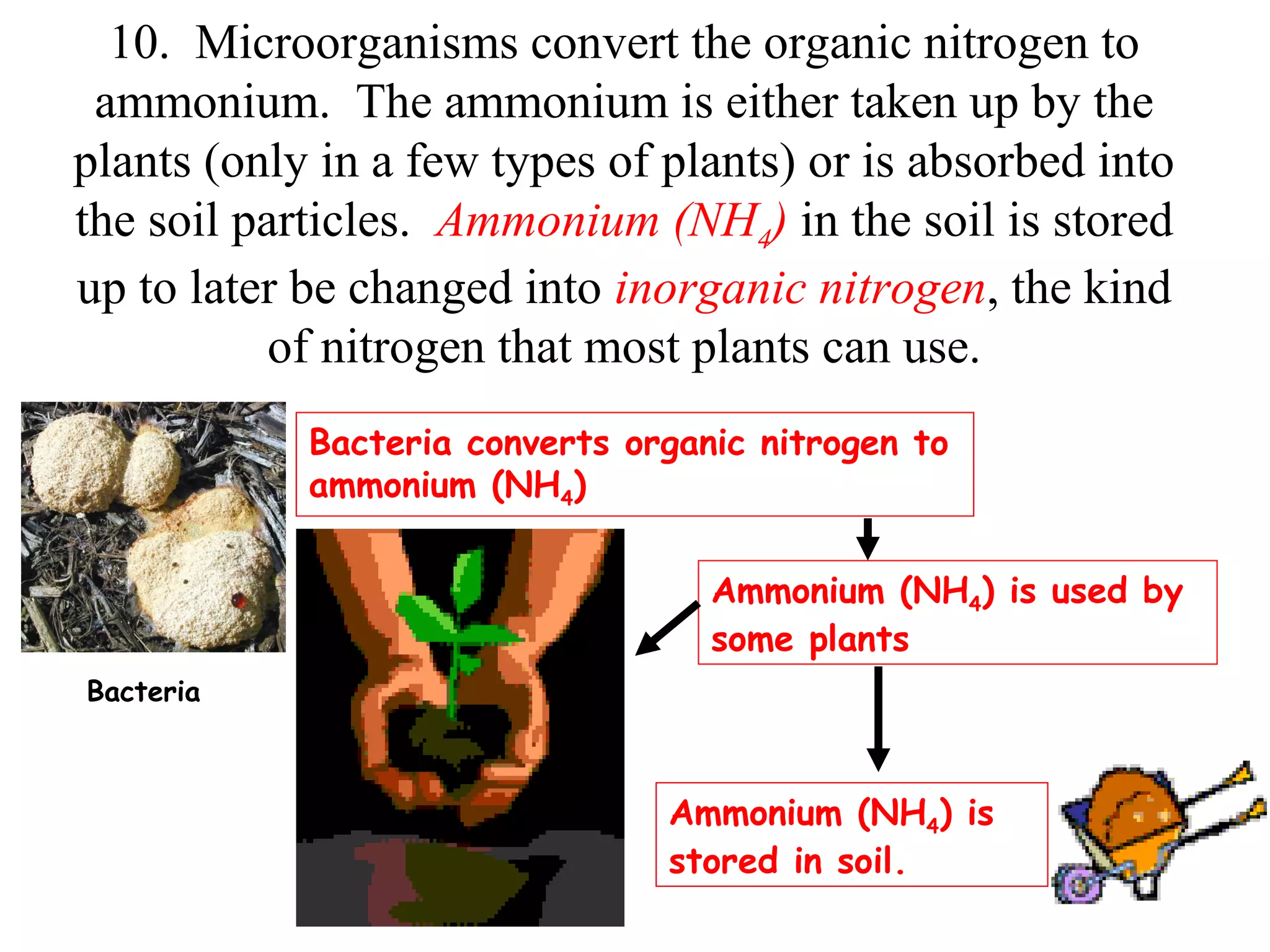
10. Microorganisms convert the organic nitrogen to
ammonium. The ammonium is either taken up by the
plants (only in a few types of plants) or is absorbed into
the soil particles. Ammonium (NH4) in the soil is stored
up to later be changed into inorganic nitrogen, the kind
of nitrogen that most plants can use.
Bacteria converts organic nitrogen to
ammonium (NH4)
Ammonium (NH4) is used by
some plants
Bacteria

Ammonium (NH4) is
stored in soil.
What happens to
ammonium (NH4) stored
in the soil?
11. It travels through the
third process
of the nitrogen cycle called
Nitrification!
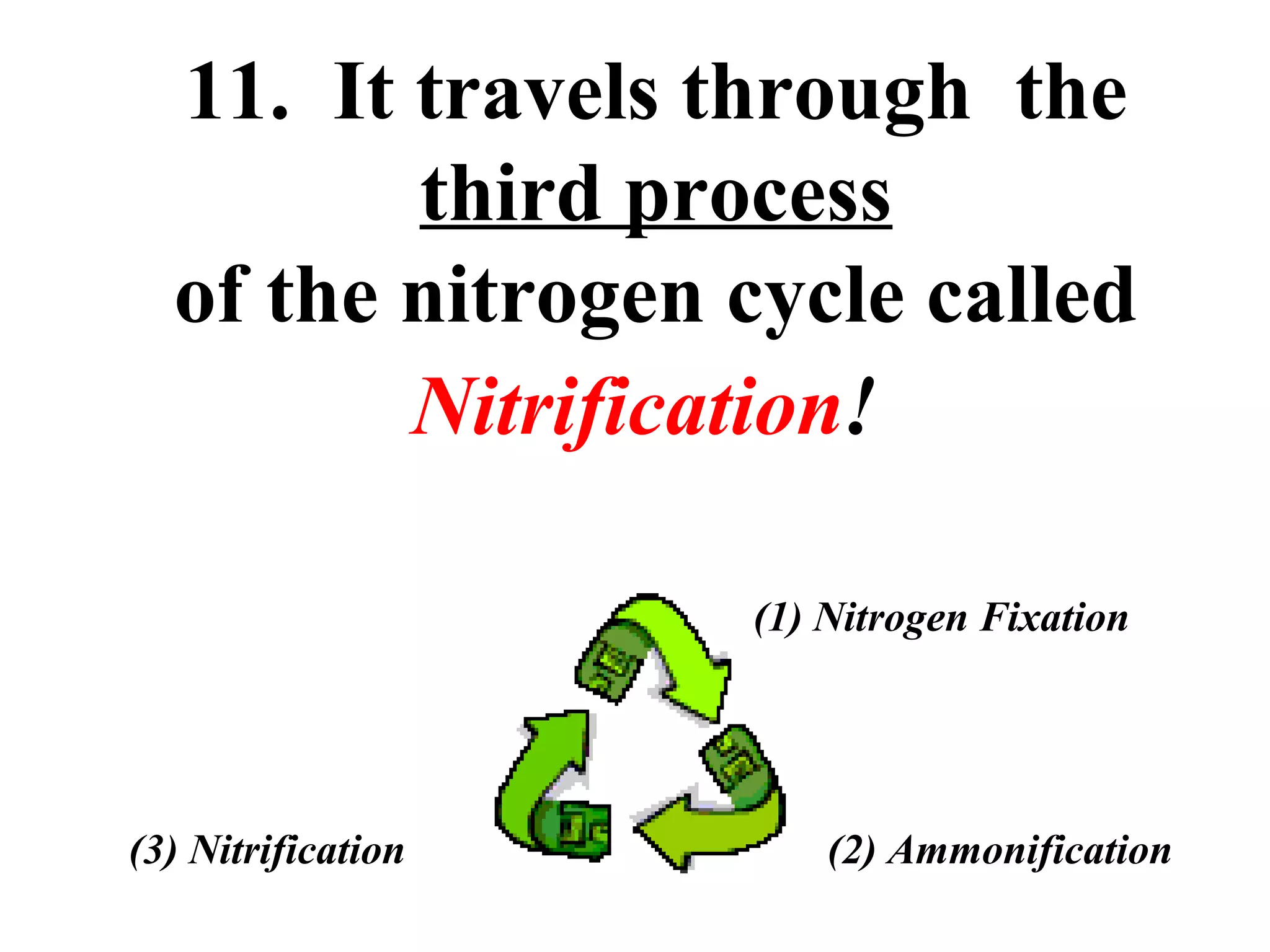
(1) Nitrogen Fixation

(3) Nitrification

(2) Ammonification
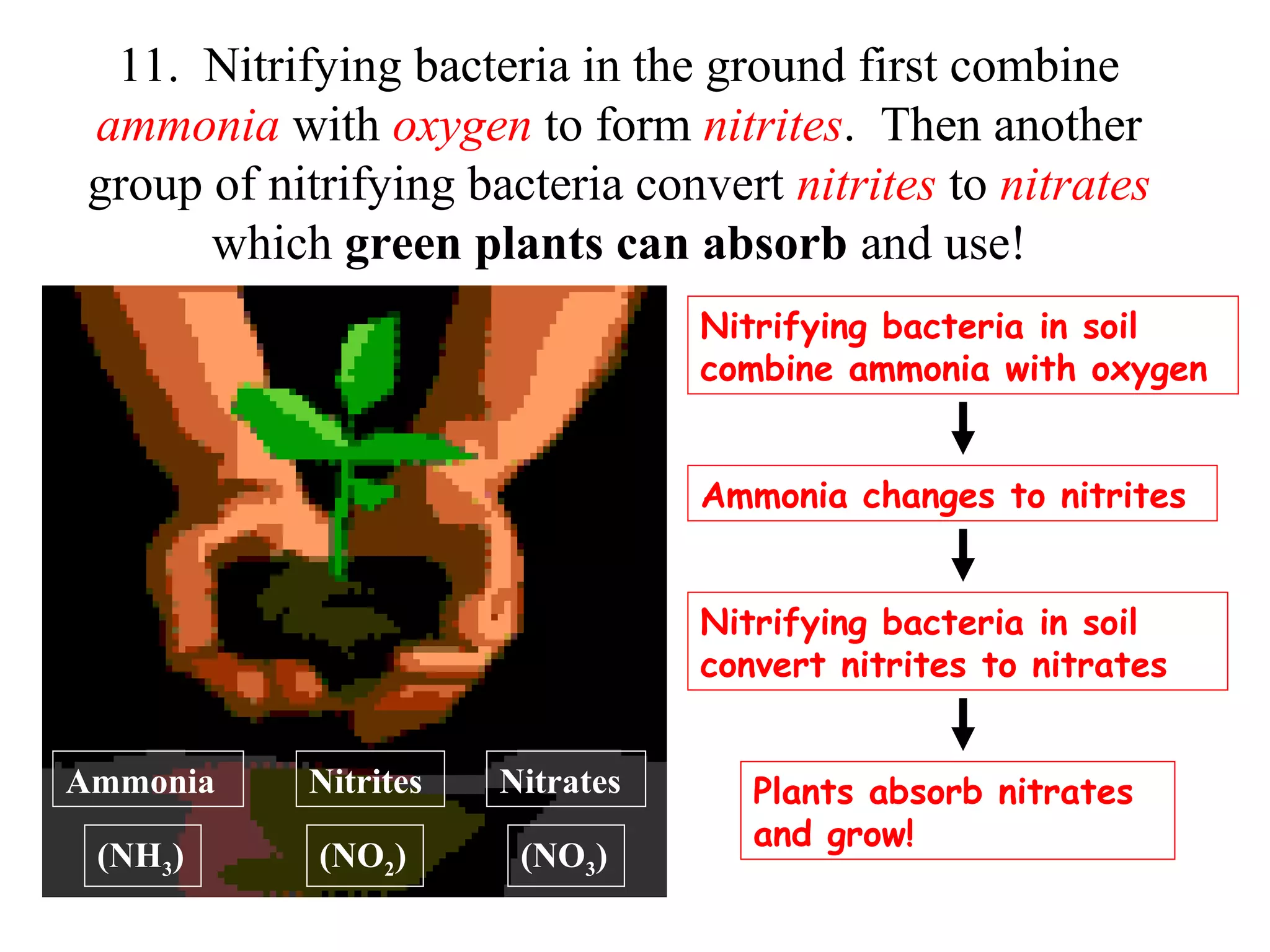
11. Nitrifying bacteria in the ground first combine
ammonia with oxygen to form nitrites. Then another
group of nitrifying bacteria convert nitrites to nitrates
which green plants can absorb and use!
Nitrifying bacteria in soil
combine ammonia with oxygen
Ammonia changes to nitrites
Nitrifying bacteria in soil
convert nitrites to nitrates
Ammonia

Nitrites

Nitrates

(NH3)

(NO2)

(NO3)

Plants absorb nitrates
and grow!
12. How
does nitrogen
reenter the
atmosphere
in the
nitrogen
cycle?
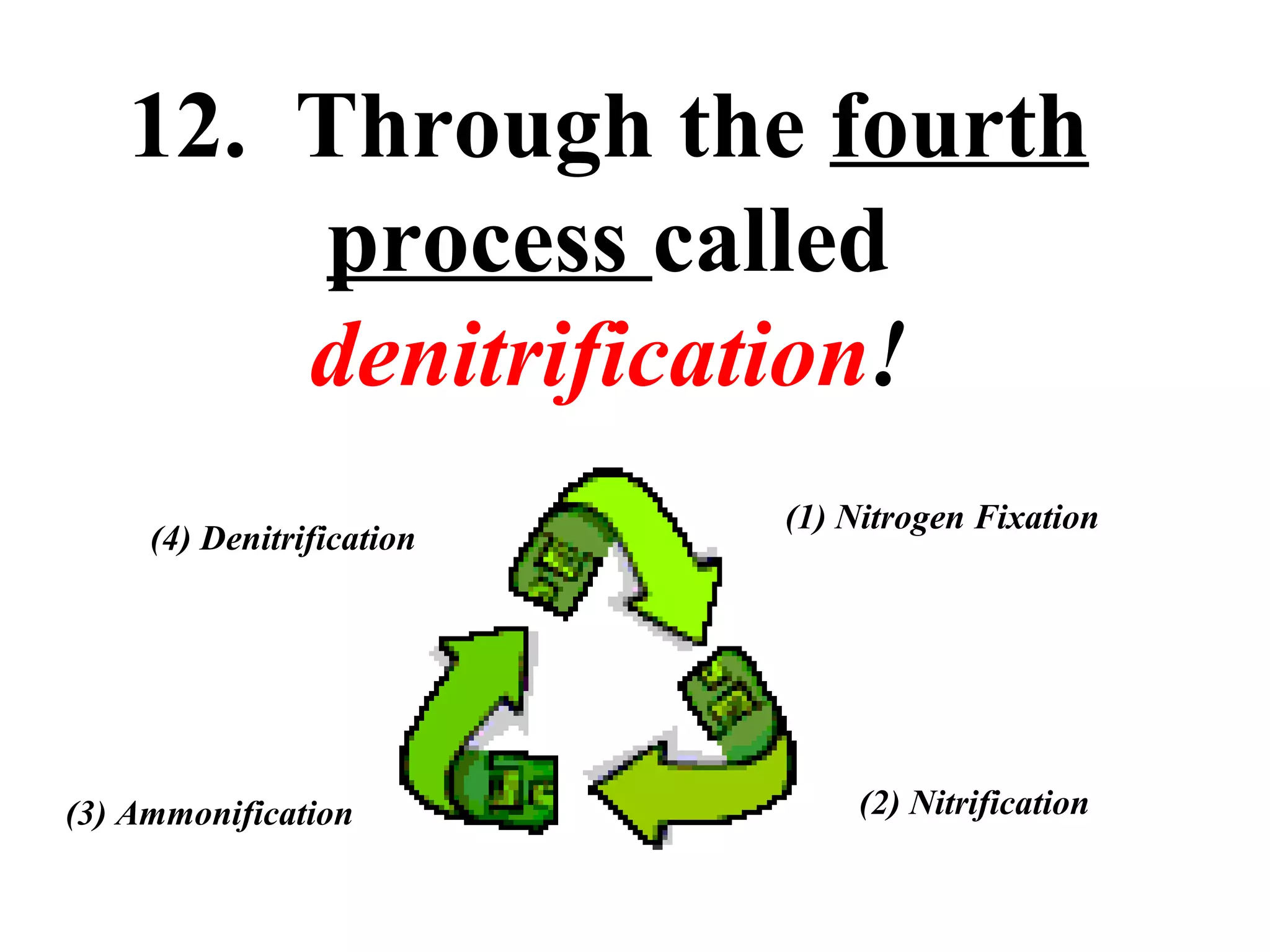
12. Through the fourth
process called
denitrification!
(4) Denitrification

(3) Ammonification

(1) Nitrogen Fixation

(2) Nitrification
13. What does
denitrification
do?
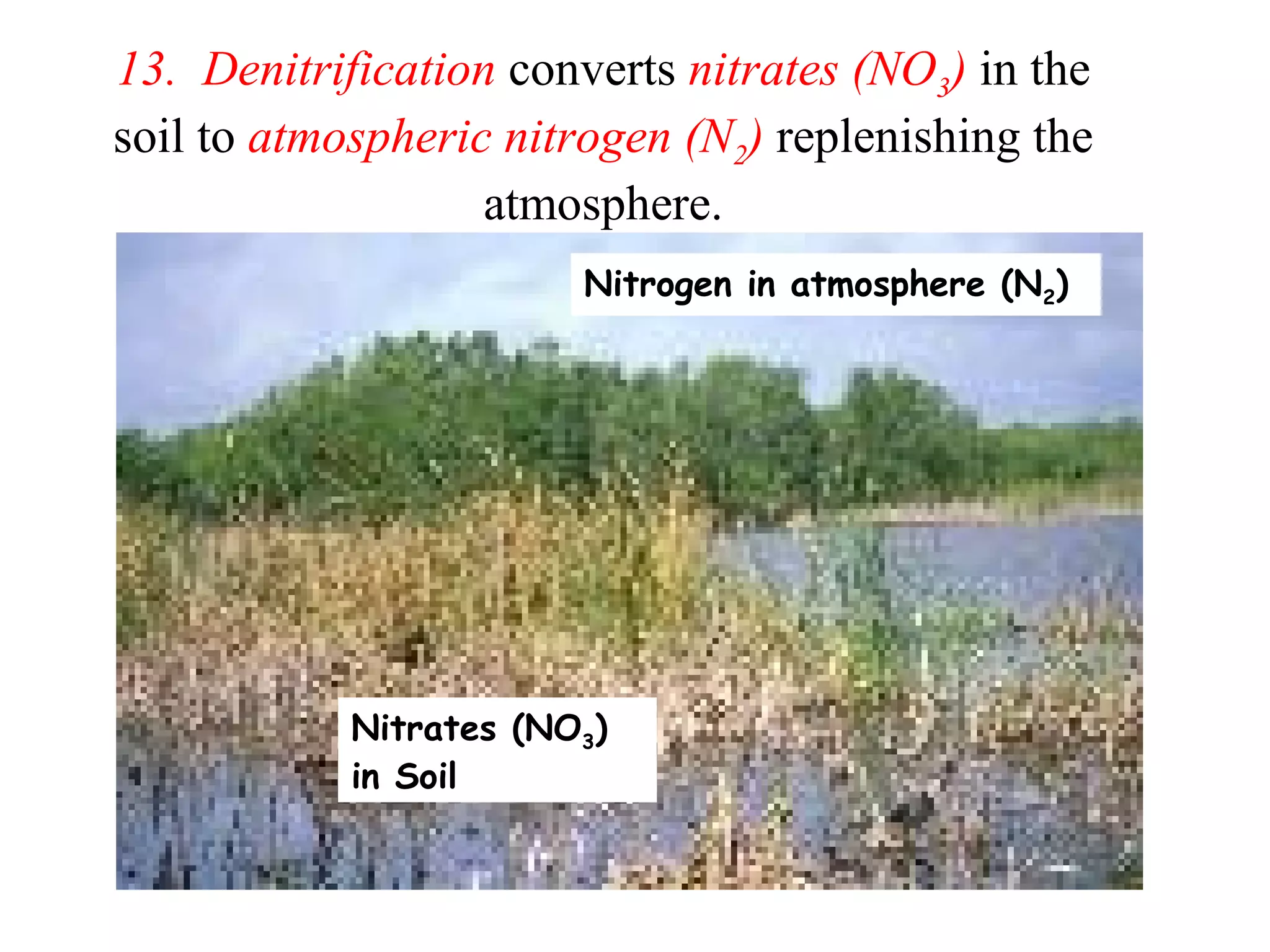
13. Denitrification converts nitrates (NO3) in the
soil to atmospheric nitrogen (N2) replenishing the
atmosphere.
Nitrogen in atmosphere (N2)

Nitrates (NO3)
in Soil
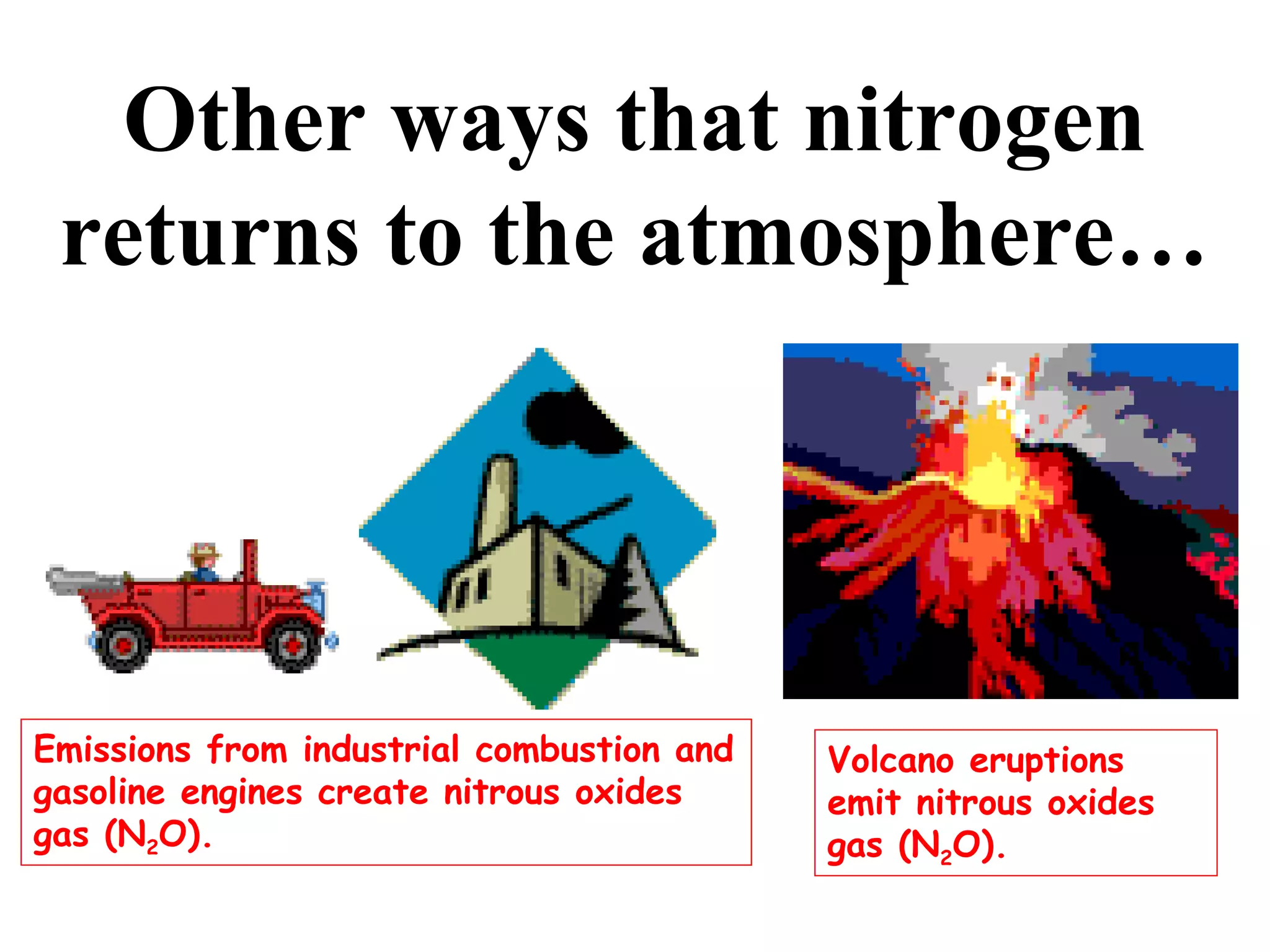
Other ways that nitrogen
returns to the atmosphere…

Emissions from industrial combustion and
gasoline engines create nitrous oxides
gas (N2O).

Volcano eruptions
emit nitrous oxides
gas (N2O).
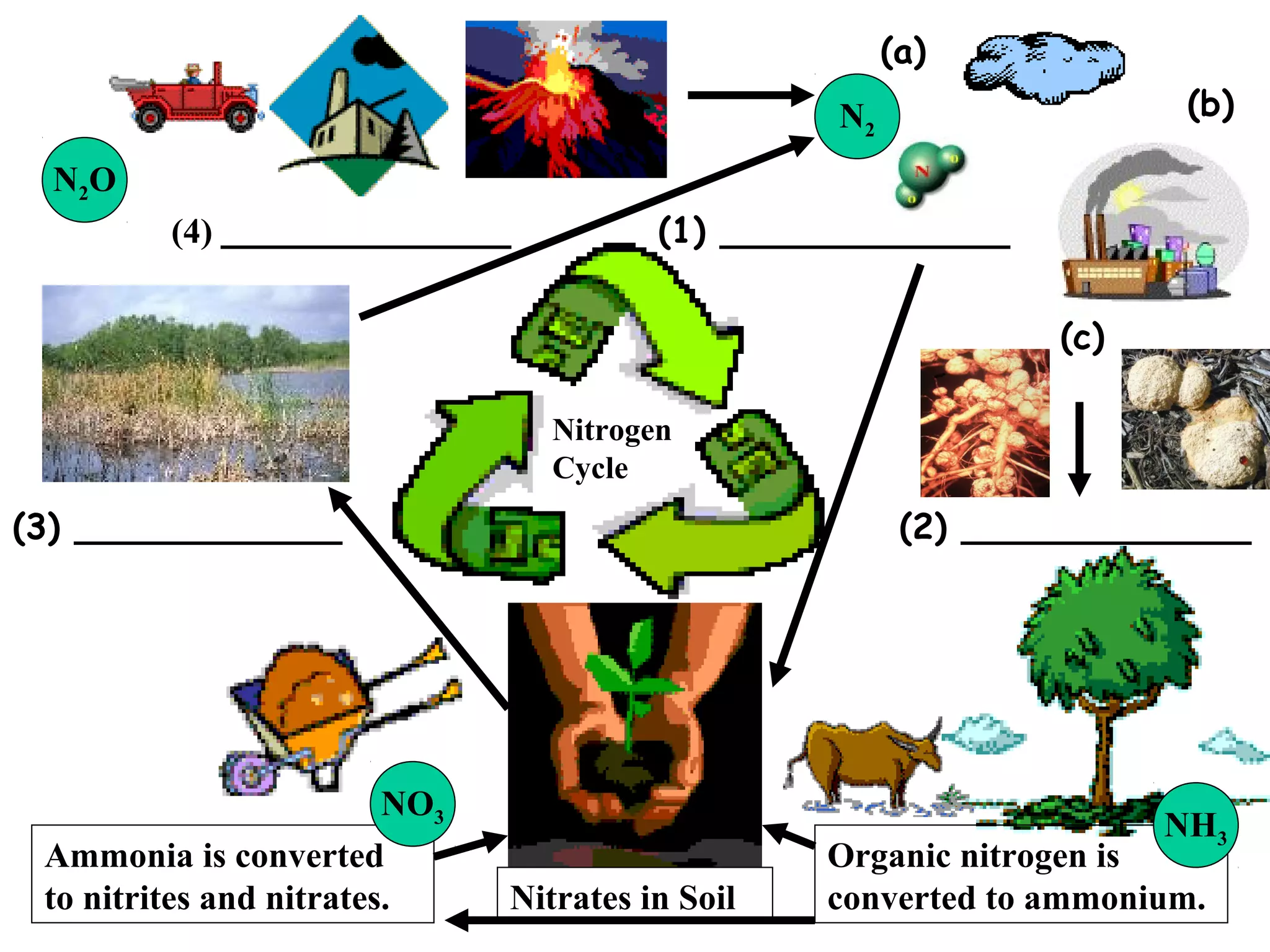
Can you fill in the following diagram
with the parts of the nitrogen cycle?
Word bank:
denitrification,
nitrification,
nitrogen fixation,
ammonification
(a)
(b)

N2
N2 O

(4) _____________

(1) _____________
(c)
Nitrogen
Cycle

(3) ____________

NO3
Ammonia is converted
to nitrites and nitrates.

(2) _____________

NH3

Nitrates in Soil

Organic nitrogen is
converted to ammonium.
(a)
(b)

N2
N2 O

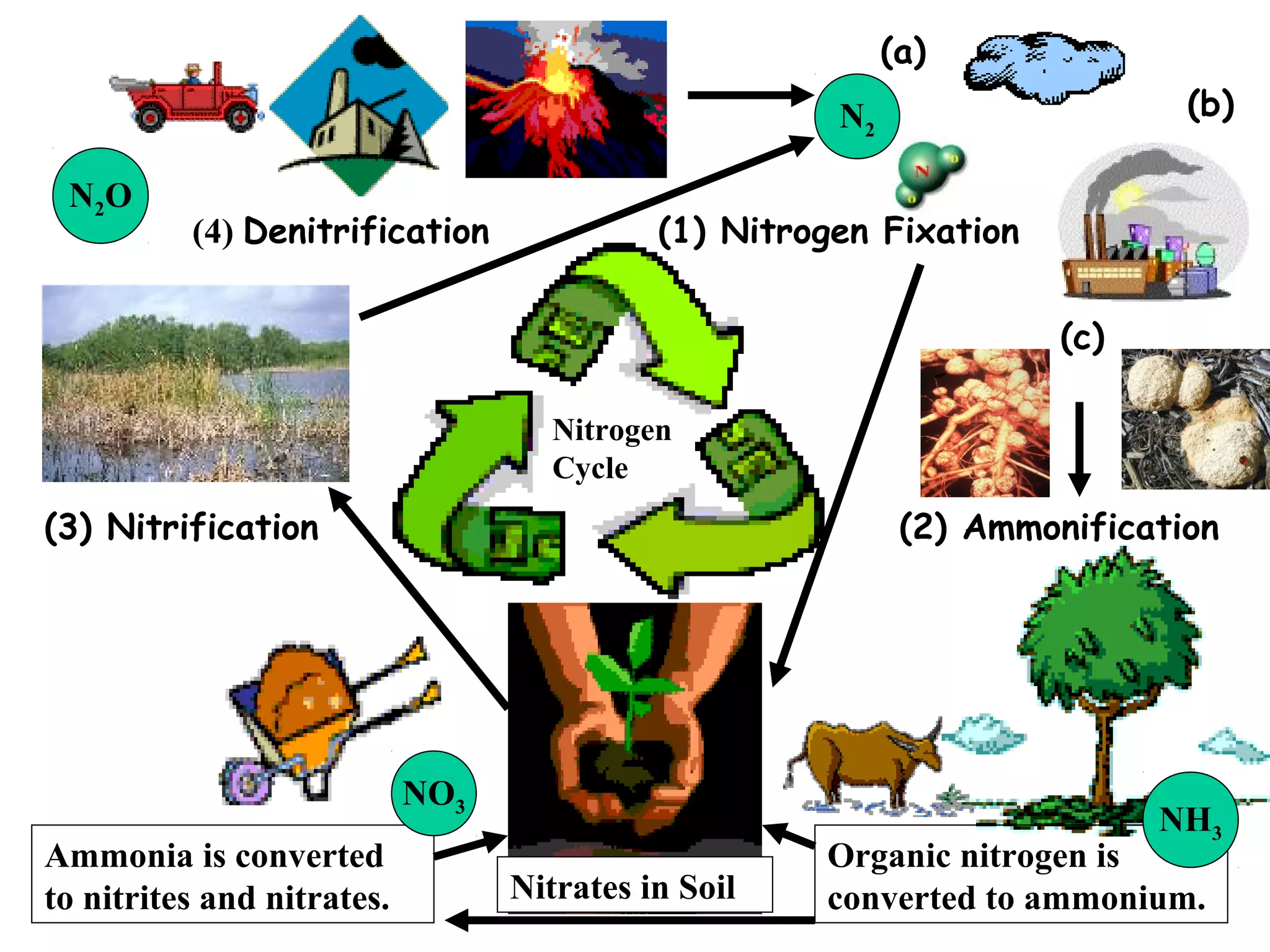
(4) Denitrification

(1) Nitrogen Fixation
(c)
Nitrogen
Cycle

(3) Nitrification

(2) Ammonification

NO3
Ammonia is converted
to nitrites and nitrates.

NH3

Nitrates in Soil

Organic nitrogen is
converted to ammonium.

Nitrogen cycle - Honors only 2.04

  • 1.
  • 2.
    1. What isnitrogen?
  • 3.
    1. Nitrogen isa non-metal, gaseous element.
  • 4.
    2. Where isnitrogen found in the environment?
  • 5.
    2. The largestsingle source of nitrogen is in the atmosphere. Nitrogen makes up 78% of our air!
  • 6.
    3. What happensto atmospheric nitrogen (N2) in the nitrogen cycle? N N N N N N
  • 7.
    3. Atmospheric nitrogenis converted to ammonia or nitrates. N N Atmospheric Nitrogen (N2) N Ammonia (NH3) N Nitrates (NO3)
  • 8.
    N N 4. Why does atmosphericnitrogen need to be converted? N N N N
  • 9.
    5. Nitrogen isan essential component of DNA, RNA, and proteins—the building blocks of life. Although the majority of the air we breathe is nitrogen, most living organisms are unable to use nitrogen as it exists in the atmosphere!
  • 10.
    6. How does atmospheric nitrogenget changed into a form that can be used by most living organisms? N N
  • 11.
    6. By travelingthrough one of the four processes in the Nitrogen Cycle! (A) Nitrogen Fixation (D) Denitrification Nitrogen Cycle (C) Nitrification (B) Ammonification
  • 12.
    The first processin the nitrogen cycle is… Nitrogen Fixation! (1) Nitrogen Fixation Nitrogen Cycle
  • 13.
    7. What is “nitrogenfixation” and what does it mean to say nitrogen gets “fixed”? N N
  • 14.
    7. “Nitrogen Fixation”is when the nitrogen gets “fixed” and combines with oxygen or hydrogen. Hydrogen Oxygen N N Hydrogen N N Oxygen N N
  • 15.
    There are threeways that nitrogen gets “fixed”! (a) Atmospheric Fixation (b) Industrial Fixation (c) Biological Fixation Bacteria
  • 16.
    Lightning “fixes” Nitrogen! (A)AtmosphericFixation (Only 5 to 8% of the Fixation Process) Lightning breaks nitrogen molecules apart and combines with oxygen forming nitrogen oxides (N2O). Nitrogen oxides dissolve in rain, forming nitrates. Nitrates (NO3) are carried to the ground with the rain. N N O Nitrogen combines with Oxygen Nitrogen oxides forms (N2O) (NO3) Nitrogen oxides dissolve in rain and change to nitrates Plants use nitrates to grow!
  • 17.
    NN (B) Industrial Fixation Undergreat pressure, at a temperature of 600 degrees Celcius, and with the use of a catalyst, atmospheric nitrogen (N2) and hydrogen are combined to form ammonia (NH3). Ammonia can be used as a fertilizer. N H H3 Industrial Plant combines nitrogen and hydrogen (NH3) Ammonia is formed Ammonia is used a fertilizer in soil
  • 18.
    ( C) BiologicalFixation (where MOST nitrogen fixing is completed) There are two types of “Nitrogen Fixing Bacteria” Free Living Bacteria (“fixes” 30% of N2) Symbiotic Relationship Bacteria (“fixes” 70% of N2)
  • 19.
    Most atmospheric nitrogen (N2)is “fixed” and changed to ammonia (NH3). Ammonia is highly toxic to many organisms. Can plants use ammonia?
  • 20.
    Very few plantscan use ammonia (NH3)… (1) Nitrogen Fixation (2) Ammonification …but, fortunately the second process Ammonification can help!
  • 21.
  • 22.
    8. Ammonification: Bacteriadecomposers break down amino acids from dead animals and wastes into nitrogen ammonium. Bacteria decomposers break down amino acids into ammonium
  • 23.
  • 24.
    9. Because plantscannot use the organic forms of nitrogen that are in the soil as a result of: (1) wastes (manure and sewage) (2) compost and decomposing roots and leaves
  • 25.
  • 26.
    10. Microorganisms convertthe organic nitrogen to ammonium. The ammonium is either taken up by the plants (only in a few types of plants) or is absorbed into the soil particles. Ammonium (NH4) in the soil is stored up to later be changed into inorganic nitrogen, the kind of nitrogen that most plants can use. Bacteria converts organic nitrogen to ammonium (NH4) Ammonium (NH4) is used by some plants Bacteria Ammonium (NH4) is stored in soil.
  • 27.
    What happens to ammonium(NH4) stored in the soil?
  • 28.
    11. It travelsthrough the third process of the nitrogen cycle called Nitrification! (1) Nitrogen Fixation (3) Nitrification (2) Ammonification
  • 29.
    11. Nitrifying bacteriain the ground first combine ammonia with oxygen to form nitrites. Then another group of nitrifying bacteria convert nitrites to nitrates which green plants can absorb and use! Nitrifying bacteria in soil combine ammonia with oxygen Ammonia changes to nitrites Nitrifying bacteria in soil convert nitrites to nitrates Ammonia Nitrites Nitrates (NH3) (NO2) (NO3) Plants absorb nitrates and grow!
  • 30.
    12. How does nitrogen reenterthe atmosphere in the nitrogen cycle?
  • 31.
    12. Through thefourth process called denitrification! (4) Denitrification (3) Ammonification (1) Nitrogen Fixation (2) Nitrification
  • 32.
  • 33.
    13. Denitrification convertsnitrates (NO3) in the soil to atmospheric nitrogen (N2) replenishing the atmosphere. Nitrogen in atmosphere (N2) Nitrates (NO3) in Soil
  • 34.
    Other ways thatnitrogen returns to the atmosphere… Emissions from industrial combustion and gasoline engines create nitrous oxides gas (N2O). Volcano eruptions emit nitrous oxides gas (N2O).
  • 35.
    Can you fillin the following diagram with the parts of the nitrogen cycle? Word bank: denitrification, nitrification, nitrogen fixation, ammonification
  • 36.
    (a) (b) N2 N2 O (4) _____________ (1)_____________ (c) Nitrogen Cycle (3) ____________ NO3 Ammonia is converted to nitrites and nitrates. (2) _____________ NH3 Nitrates in Soil Organic nitrogen is converted to ammonium.
  • 37.
    (a) (b) N2 N2 O (4) Denitrification (1)Nitrogen Fixation (c) Nitrogen Cycle (3) Nitrification (2) Ammonification NO3 Ammonia is converted to nitrites and nitrates. NH3 Nitrates in Soil Organic nitrogen is converted to ammonium.