The Carbon Cycle


By Moira Whitehouse
PhD
•Carbon is an element found throughout the
universe.


• It is found in all living things and without
carbon there would be no life on Earth.
 • The characteristics of the remarkable
 carbon atom make possible the compounds
 that are necessary for life on Earth.
• Carbon is also part of nonliving things
such the oceans, rocks ,animal shells,
and the atmosphere.
• Carbon doesn’t just stay in one place
however. It’s always on the move.
• Carbon atoms continually move
through living things, the oceans, the
atmosphere and the crust of the
Earth.
• This movement is known as the
carbon cycle
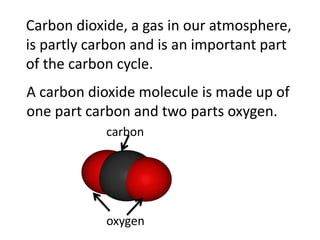
Carbon dioxide, a gas in our atmosphere,
is partly carbon and is an important part
of the carbon cycle.
A carbon dioxide molecule is made up of
one part carbon and two parts oxygen.
            carbon


            oxygen
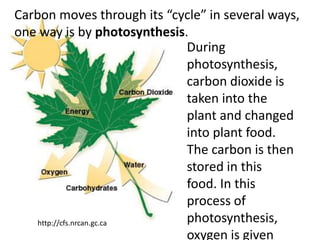
Carbon moves through its “cycle” in several ways,
one way is by photosynthesis.
                             During
                             photosynthesis,
                             carbon dioxide is
                             taken into the
                             plant and changed
                             into plant food.
                             The carbon is then
                             stored in this
                             food. In this
                             process of
    http://cfs.nrcan.gc.ca   photosynthesis,
                             oxygen is given
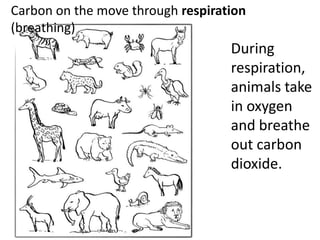
Carbon on the move through respiration
(breathing)
                                   During
                                   respiration,
                                   animals take
                                   in oxygen
                                   and breathe
                                   out carbon
                                   dioxide.
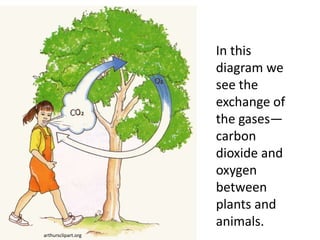
In this
                     diagram we
                     see the
                     exchange of
                     the gases—
                     carbon
                     dioxide and
                     oxygen
                     between
                     plants and
                     animals.
arthursclipart.org
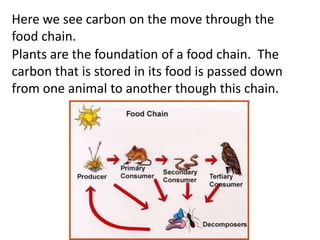
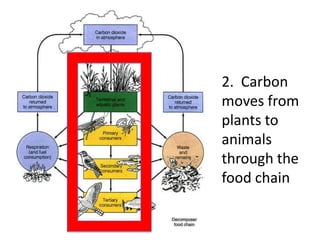
Here we see carbon on the move through the
food chain.
Plants are the foundation of a food chain. The
carbon that is stored in its food is passed down
from one animal to another though this chain.
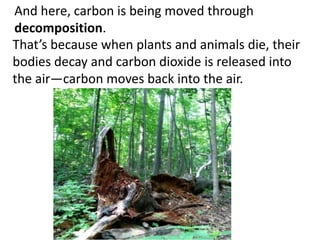
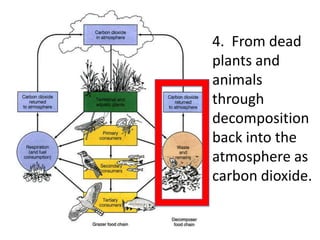
And here, carbon is being moved through
decomposition.
That’s because when plants and animals die, their
bodies decay and carbon dioxide is released into
the air—carbon moves back into the air.
Let’s review what we have studied so far.
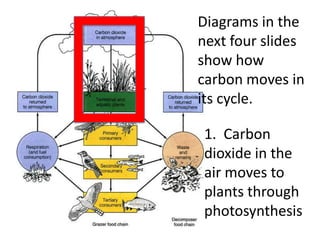
Diagrams in the
next four slides
show how
carbon moves in
its cycle.

1. Carbon
dioxide in the
air moves to
plants through
photosynthesis
2. Carbon
moves from
plants to
animals
through the
food chain
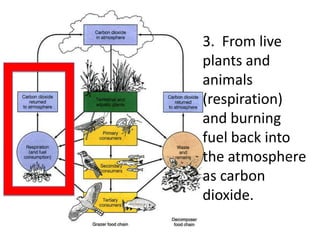
3. From live
plants and
animals
(respiration)
and burning
fuel back into
the atmosphere
as carbon
dioxide.
4. From dead
plants and
animals
through
decomposition
back into the
atmosphere as
carbon dioxide.
Here is a website with three
choices which show the movement
of carbon through the carbon
cycle. Simply choose download
and then select the process you
wish to study.
     http://www.kscience.co.uk/animations/carbon
     _cycle.htm
Now let’s look at how fossil fuels fit
into the carbon cycle.

Remember fossil fuels are our main
source of energy.


We use fossil fuels to:
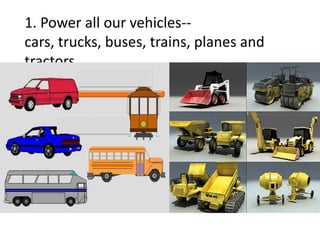
1. Power all our vehicles--
cars, trucks, buses, trains, planes and
tractors.
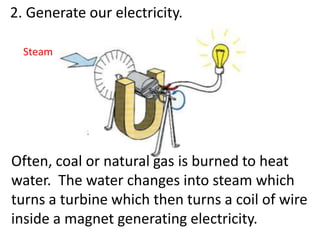
2. Generate our electricity.

  Steam


Often, coal or natural gas is burned to heat
water. The water changes into steam which
turns a turbine which then turns a coil of wire
inside a magnet generating electricity.
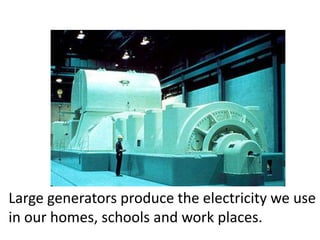
Large generators produce the electricity we use
in our homes, schools and work places.
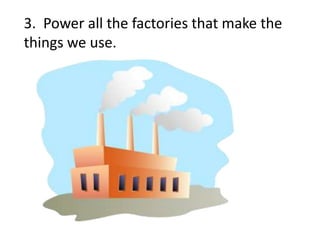
3. Power all the factories that make the
things we use.
Do you remember how fossil fuels—crude
oil, coal and natural gas—are formed?

Yes, they are formed from the remains of
plants and animals.


The carbon from the dead plants and
animals is stored in fossil fuel.
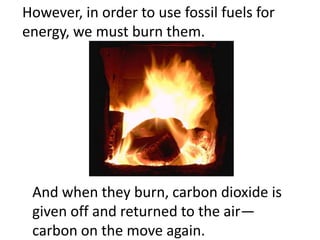
However, in order to use fossil fuels for
energy, we must burn them.


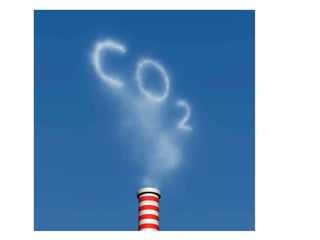
 And when they burn, carbon dioxide is
 given off and returned to the air—
 carbon on the move again.
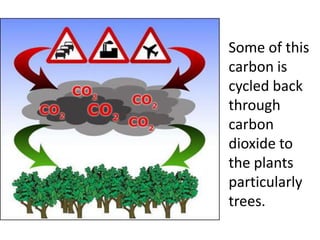
Some of this
carbon is
cycled back
through
carbon
dioxide to
the plants
particularly
trees.
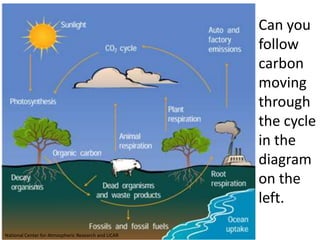
Can you
                                                    follow
                                                    carbon
                                                    moving
                                                    through
                                                    the cycle
                                                    in the
                                                    diagram
                                                    on the
                                                    left.

National Center for Atmospheric Research and UCAR
The Carbon Cycle

CARBON CYCLE (teach)

  • 1.
    The Carbon Cycle ByMoira Whitehouse PhD
  • 2.
    •Carbon is anelement found throughout the universe. • It is found in all living things and without carbon there would be no life on Earth. • The characteristics of the remarkable carbon atom make possible the compounds that are necessary for life on Earth.
  • 3.
    • Carbon isalso part of nonliving things such the oceans, rocks ,animal shells, and the atmosphere. • Carbon doesn’t just stay in one place however. It’s always on the move. • Carbon atoms continually move through living things, the oceans, the atmosphere and the crust of the Earth. • This movement is known as the carbon cycle
  • 4.
    Carbon dioxide, agas in our atmosphere, is partly carbon and is an important part of the carbon cycle. A carbon dioxide molecule is made up of one part carbon and two parts oxygen. carbon oxygen
  • 5.
    Carbon moves throughits “cycle” in several ways, one way is by photosynthesis. During photosynthesis, carbon dioxide is taken into the plant and changed into plant food. The carbon is then stored in this food. In this process of http://cfs.nrcan.gc.ca photosynthesis, oxygen is given
  • 6.
    Carbon on themove through respiration (breathing) During respiration, animals take in oxygen and breathe out carbon dioxide.
  • 7.
    In this diagram we see the exchange of the gases— carbon dioxide and oxygen between plants and animals. arthursclipart.org
  • 8.
    Here we seecarbon on the move through the food chain. Plants are the foundation of a food chain. The carbon that is stored in its food is passed down from one animal to another though this chain.
  • 9.
    And here, carbonis being moved through decomposition. That’s because when plants and animals die, their bodies decay and carbon dioxide is released into the air—carbon moves back into the air.
  • 10.
    Let’s review whatwe have studied so far.
  • 11.
    Diagrams in the nextfour slides show how carbon moves in its cycle. 1. Carbon dioxide in the air moves to plants through photosynthesis
  • 12.
    2. Carbon moves from plantsto animals through the food chain
  • 13.
    3. From live plantsand animals (respiration) and burning fuel back into the atmosphere as carbon dioxide.
  • 14.
    4. From dead plantsand animals through decomposition back into the atmosphere as carbon dioxide.
  • 15.
    Here is awebsite with three choices which show the movement of carbon through the carbon cycle. Simply choose download and then select the process you wish to study. http://www.kscience.co.uk/animations/carbon _cycle.htm
  • 16.
    Now let’s lookat how fossil fuels fit into the carbon cycle. Remember fossil fuels are our main source of energy. We use fossil fuels to:
  • 17.
    1. Power allour vehicles-- cars, trucks, buses, trains, planes and tractors.
  • 18.
    2. Generate ourelectricity. Steam Often, coal or natural gas is burned to heat water. The water changes into steam which turns a turbine which then turns a coil of wire inside a magnet generating electricity.
  • 19.
    Large generators producethe electricity we use in our homes, schools and work places.
  • 20.
    3. Power allthe factories that make the things we use.
  • 21.
    Do you rememberhow fossil fuels—crude oil, coal and natural gas—are formed? Yes, they are formed from the remains of plants and animals. The carbon from the dead plants and animals is stored in fossil fuel.
  • 22.
    However, in orderto use fossil fuels for energy, we must burn them. And when they burn, carbon dioxide is given off and returned to the air— carbon on the move again.
  • 24.
    Some of this carbonis cycled back through carbon dioxide to the plants particularly trees.
  • 25.
    Can you follow carbon moving through the cycle in the diagram on the left. National Center for Atmospheric Research and UCAR
  • 26.