
Topic 4
Cycles of Life
4.1 – The Carbon/Oxygen Cycle
4.2 – The Nitrogen Cycle
4.3 – Phosphorus and ___ Cycle
Cycles of Life
All life requires nutrients and nutrients are
continually recycled … if they were not, they
would become used up and life on Earth
would cease to exist.
4.1 – The Carbon/Oxygen Cycle
The Carbon/Oxygen Cycle is interconnected
and involves three major processes and one
minor process:
1. Photosynthesis
2. Respiration
3. Combustion
4. Decomposition
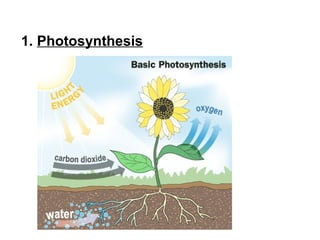
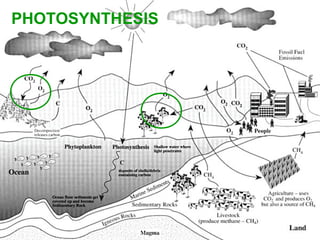
1. Photosynthesis
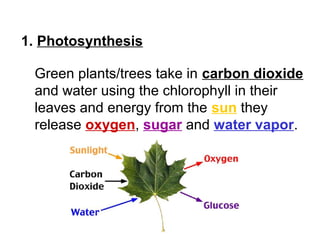
Green plants/trees take in carbon dioxide
and water using the chlorophyll in their
leaves and energy from the sun they
release oxygen, sugar and water vapor.
1. Photosynthesis
1. Photosynthesis
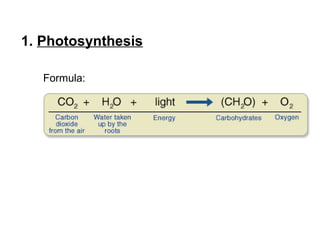
Formula:
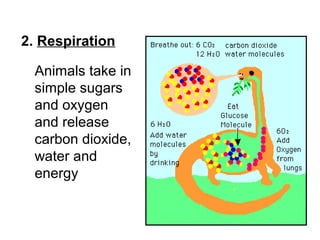
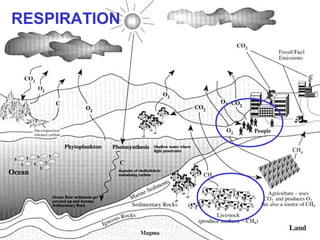
2. Respiration
Animals take in
simple sugars
and oxygen
and release
carbon dioxide,
water and
energy
2. Respiration
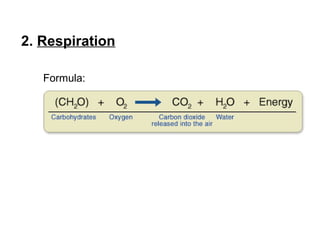
Formula:
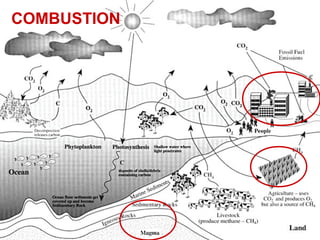
3. Combustion
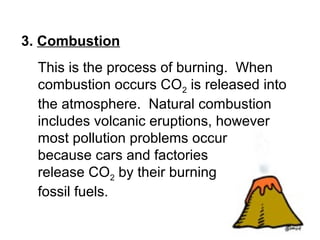
This is the process of burning. When
combustion occurs CO2 is released into
the atmosphere. Natural combustion
includes volcanic eruptions, however
most pollution problems occur
because cars and factories
release CO2 by their burning
fossil fuels.
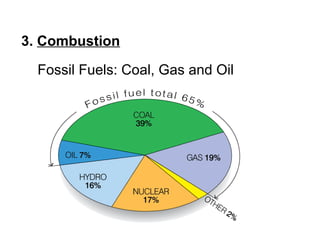
3. Combustion
Fossil Fuels: Coal, Gas and Oil
3. Combustion
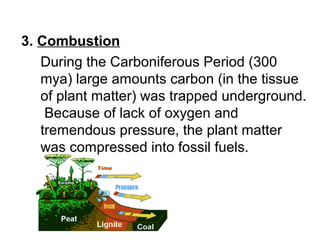
During the Carboniferous Period (300
mya) large amounts carbon (in the tissue
of plant matter) was trapped underground.
Because of lack of oxygen and
tremendous pressure, the plant matter
was compressed into fossil fuels.
3. Combustion
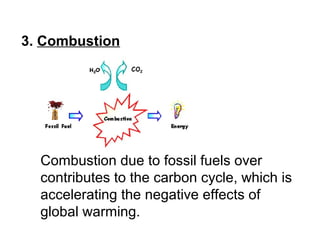
Combustion due to fossil fuels over
contributes to the carbon cycle, which is
accelerating the negative effects of
global warming.
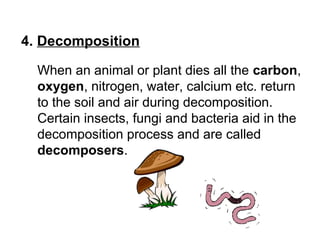
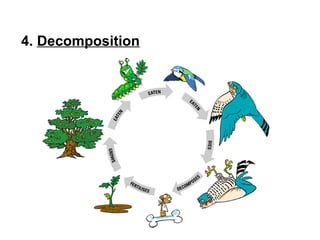
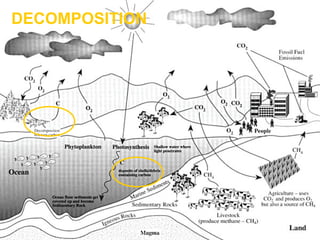
4. Decomposition
When an animal or plant dies all the carbon,
oxygen, nitrogen, water, calcium etc. return
to the soil and air during decomposition.
Certain insects, fungi and bacteria aid in the
decomposition process and are called
decomposers.
4. Decomposition
Putting It All Together …
PHOTOSYNTHESIS
RESPIRATION
COMBUSTION
DECOMPOSITION
Topic 4.1 Assignment
1. Carbon/Oxygen Cycle Notes
2. Read page 1-4.
3. Complete Questions #

Carbon-Oxygen Cycle

  • 1.
  • 2.
    4.1 – TheCarbon/Oxygen Cycle 4.2 – The Nitrogen Cycle 4.3 – Phosphorus and ___ Cycle Cycles of Life All life requires nutrients and nutrients are continually recycled … if they were not, they would become used up and life on Earth would cease to exist.
  • 3.
    4.1 – TheCarbon/Oxygen Cycle The Carbon/Oxygen Cycle is interconnected and involves three major processes and one minor process: 1. Photosynthesis 2. Respiration 3. Combustion 4. Decomposition
  • 4.
    1. Photosynthesis Green plants/treestake in carbon dioxide and water using the chlorophyll in their leaves and energy from the sun they release oxygen, sugar and water vapor.
  • 5.
  • 6.
  • 7.
    2. Respiration Animals takein simple sugars and oxygen and release carbon dioxide, water and energy
  • 8.
  • 9.
    3. Combustion This isthe process of burning. When combustion occurs CO2 is released into the atmosphere. Natural combustion includes volcanic eruptions, however most pollution problems occur because cars and factories release CO2 by their burning fossil fuels.
  • 10.
    3. Combustion Fossil Fuels:Coal, Gas and Oil
  • 11.
    3. Combustion During theCarboniferous Period (300 mya) large amounts carbon (in the tissue of plant matter) was trapped underground. Because of lack of oxygen and tremendous pressure, the plant matter was compressed into fossil fuels.
  • 12.
    3. Combustion Combustion dueto fossil fuels over contributes to the carbon cycle, which is accelerating the negative effects of global warming.
  • 13.
    4. Decomposition When ananimal or plant dies all the carbon, oxygen, nitrogen, water, calcium etc. return to the soil and air during decomposition. Certain insects, fungi and bacteria aid in the decomposition process and are called decomposers.
  • 14.
  • 15.
    Putting It AllTogether …
  • 16.
  • 17.
  • 18.
  • 19.
  • 20.
    Topic 4.1 Assignment 1.Carbon/Oxygen Cycle Notes 2. Read page 1-4. 3. Complete Questions #