Presented by :
Parmar suraj
Paper-303
Botany
Nitrogen
Cycle
INTRODUCTION
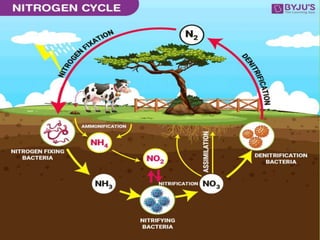
• Nitrogen Cycle is a biogeochemical process which
transforms the inert nitrogen present in the
atmosphere to a more usable form for living
organisms.
• Nitrogen is a key element for plants.
• All organisms required nitrogen to live and grow.
• But atmospheric nitrogen cannot be used directly by
plants or animals.
• The main aviability of nitrogen in atmosphere
is about to 78%.
•In 1897 m.w bejerink discover symbiosis
nitrogen Fixer.
•Nitrogen are in two forms:
* Organic
* Inorganic
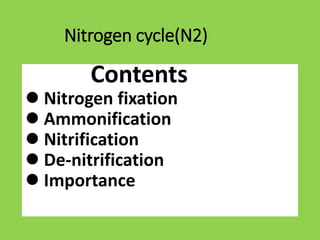
Contents
 Nitrogen fixation
 Ammonification
 Nitrification
 De-nitrification
 Importance
Nitrogen cycle(N2)
Nitrogen fixation
NitrogenFixation
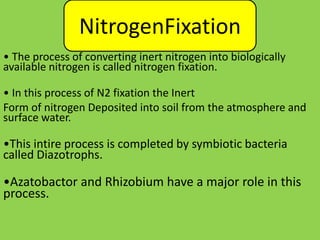
• The process of converting inert nitrogen into biologically
available nitrogen is called nitrogen fixation.
• In this process of N2 fixation the Inert
Form of nitrogen Deposited into soil from the atmosphere and
surface water.
•This intire process is completed by symbiotic bacteria
called Diazotrophs.
•Azatobactor and Rhizobium have a major role in this
process.
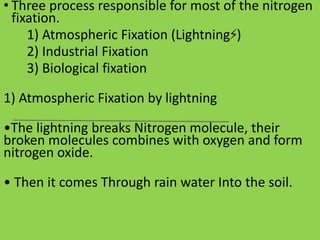
• Three process responsible for most of the nitrogen
fixation.
1) Atmospheric Fixation (Lightning⚡)
2) Industrial Fixation
3) Biological fixation
1) Atmospheric Fixation by lightning
•The lightning breaks Nitrogen molecule, their
broken molecules combines with oxygen and form
nitrogen oxide.
• Then it comes Through rain water Into the soil.
2) Industrial Fixation
• It is a man-mad alternative.
• Under the great pressure about 600°c
Nitrogen and hydrogen combines and forms
ammonia.
• Later, it is converted into various fertilsers
such as urea.
3) Biological Fixation
•Maximum nitrogen fixation process done
by biological fixation.
•Nitrogen Is not used directly from the air
by the plants and animals.
•Bacteria like rhizobium and blue green
algae transforms the unusable form of
nitrogen into other compounds that are
more usable.
•These nitrogen compound get fixed in the
soil by these microbes.
N2 No2 and No3
•Ammonification is the process in which
ammonia releases through the
decomposition of dead bodies and waste of
living Organisms.
•Various fungi and prokaryotes Decompose
the tissue containing organic nitrogen and
release inorganic nitrogen back into the
ecosystem as ammonia(NH3) or
Ammonium ion.
Ammonification
Nitrification
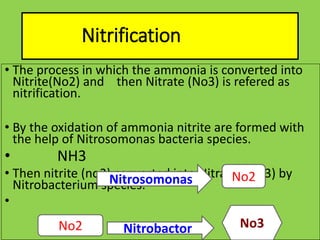
• The process in which the ammonia is converted into
Nitrite(No2) and then Nitrate (No3) is refered as
nitrification.
• By the oxidation of ammonia nitrite are formed with
the help of Nitrosomonas bacteria species.
• NH3
• Then nitrite (no2) converted into Nitrates (no3) by
Nitrobacterium species.
•
Nitrosomonas No2
No2 Nitrobactor No3
De-Nitrification
• De-nitrification is the process in which the nitrogen
compond makes it's way back into the atmospheres by
converting Nitrates into gaseous form of nitrogen.
• This process is carried out by the de-nitrifying
bacterium species.
• Ex: Clostridium and Pseudomonas
• This is the Final stage occurs in the absence of oxyge.
Importance of Nitrogen Cycle
1) It helps plants to synthesise chlorophyll from the
nitrogen compounds.
2) Helps in converting nitrogen gas into a usable form
for the plants through biochemical process.
3) The cycle indirectly helps to clean-up the
environment.
4) N2 cycle helps in enriching the soil with nessesary
nutrients required for cultivation.

Nitrogen Cycle(N2).ppt

  • 1.
    Presented by : Parmarsuraj Paper-303 Botany
  • 2.
  • 3.
    INTRODUCTION • Nitrogen Cycleis a biogeochemical process which transforms the inert nitrogen present in the atmosphere to a more usable form for living organisms. • Nitrogen is a key element for plants. • All organisms required nitrogen to live and grow. • But atmospheric nitrogen cannot be used directly by plants or animals.
  • 4.
    • The mainaviability of nitrogen in atmosphere is about to 78%. •In 1897 m.w bejerink discover symbiosis nitrogen Fixer. •Nitrogen are in two forms: * Organic * Inorganic
  • 6.
    Contents  Nitrogen fixation Ammonification  Nitrification  De-nitrification  Importance Nitrogen cycle(N2)
  • 7.
    Nitrogen fixation NitrogenFixation • Theprocess of converting inert nitrogen into biologically available nitrogen is called nitrogen fixation. • In this process of N2 fixation the Inert Form of nitrogen Deposited into soil from the atmosphere and surface water. •This intire process is completed by symbiotic bacteria called Diazotrophs. •Azatobactor and Rhizobium have a major role in this process.
  • 8.
    • Three processresponsible for most of the nitrogen fixation. 1) Atmospheric Fixation (Lightning⚡) 2) Industrial Fixation 3) Biological fixation 1) Atmospheric Fixation by lightning •The lightning breaks Nitrogen molecule, their broken molecules combines with oxygen and form nitrogen oxide. • Then it comes Through rain water Into the soil.
  • 9.
    2) Industrial Fixation •It is a man-mad alternative. • Under the great pressure about 600°c Nitrogen and hydrogen combines and forms ammonia. • Later, it is converted into various fertilsers such as urea. 3) Biological Fixation •Maximum nitrogen fixation process done by biological fixation.
  • 10.
    •Nitrogen Is notused directly from the air by the plants and animals. •Bacteria like rhizobium and blue green algae transforms the unusable form of nitrogen into other compounds that are more usable. •These nitrogen compound get fixed in the soil by these microbes. N2 No2 and No3
  • 11.
    •Ammonification is theprocess in which ammonia releases through the decomposition of dead bodies and waste of living Organisms. •Various fungi and prokaryotes Decompose the tissue containing organic nitrogen and release inorganic nitrogen back into the ecosystem as ammonia(NH3) or Ammonium ion. Ammonification
  • 12.
    Nitrification • The processin which the ammonia is converted into Nitrite(No2) and then Nitrate (No3) is refered as nitrification. • By the oxidation of ammonia nitrite are formed with the help of Nitrosomonas bacteria species. • NH3 • Then nitrite (no2) converted into Nitrates (no3) by Nitrobacterium species. • Nitrosomonas No2 No2 Nitrobactor No3
  • 13.
    De-Nitrification • De-nitrification isthe process in which the nitrogen compond makes it's way back into the atmospheres by converting Nitrates into gaseous form of nitrogen. • This process is carried out by the de-nitrifying bacterium species. • Ex: Clostridium and Pseudomonas • This is the Final stage occurs in the absence of oxyge.
  • 14.
    Importance of NitrogenCycle 1) It helps plants to synthesise chlorophyll from the nitrogen compounds. 2) Helps in converting nitrogen gas into a usable form for the plants through biochemical process. 3) The cycle indirectly helps to clean-up the environment. 4) N2 cycle helps in enriching the soil with nessesary nutrients required for cultivation.