By
SHILANJALI. B
Research scholar
Gulbarga University
Kalaburagi
MICROBES AND BIOGEOCHEMICAL CYCLES
MICROBES AND BIOGEOCHEMICAL
CYCLES
•Microbes form the backbone of every
ecological system by controlling global
biogeochemical cycling of elements
essential for life.
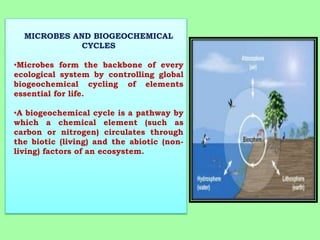
•A biogeochemical cycle is a pathway by
which a chemical element (such as
carbon or nitrogen) circulates through
the biotic (living) and the abiotic (non-
living) factors of an ecosystem.
NITROGEN CYCLE
INTRODUCTION
•Nitrogen is essential for all forms of life because it is required for
synthesis of the basic building blocks of life (e.g., DNA, RNA, and
amino acids).
•The Earth’s atmosphere is primarily composed of nitrogen, but
atmospheric nitrogen (N2) is relatively unusable for biological
organisms. Consequently, chemical processing of nitrogen (or
nitrogen fixation) is necessary to convert gaseous nitrogen into
forms that living organisms can use.
•Almost all of the nitrogen fixation that occurs on the planet is
carried out by bacteria that have the enzyme nitrogenase, which
combines N2 with hydrogen to produce a useful form of nitrogen
(such as ammonia).
•Besides this the leaching effect of rain and denitrifying action of
some bacteria lower the nitrogen content of the soil.
•This loss is compensated by the processes of lightning and nitrogen
fixation
•N2 is supplied in the form of fertilizers to agricultural crops.
•The crop rotation with cereals and legumes has been practiced for a
long time to increase the N2 content of the soil.
•This is done because legumes fix the atmospheric N2 in the soil.
FORMS OF NITROGEN
a) ORGANIC NITROGEN
• Ammonium(NH4+),
• Nitrite(NO2-),
• Nitrate(NO3-),
• Nitrousoxide(N2O)
• Nitricoxide(NO)
b) INORGANIC NITROGEN
Nitrogen gas (N2).
Nitrogen Cycle consists of the following steps
1. Nitrogen Fixation
2. Nitrogen assimilation
3. Ammonification
4. Nitrification and
5. Denitrification
6. Sedimentation
Nitrogen gas is composed of two atoms of nitrogen linked by a very
strong triple bond. This makes it chemically unreactive and large
amounts of energy are required to break the bond.
ATMOSPHERIC FIXATION : This occurs spontaneously by lightning;
only a small amount (5–8%) is fixed this way. Lightning allows
nitrogen and oxygen to combine to produce various oxides of
nitrogen. These are carried by the rain into the soil where they can
be used by plants.
INDUSTRIAL FIXATION : The Haber–Bosch process is used to make
nitrogen-containing fertilizers. This is a very energy-inefficient
process.
BIOLOGICAL FIXATION : Nitrogen-fixing bacteria fix 60% of nitrogen
gas in the atmosphere.
NITROGEN GAS CAN BE FIXED IN THREE WAYS.
1. NITROGEN FIXATION
BIOLOGICAL FIXATION
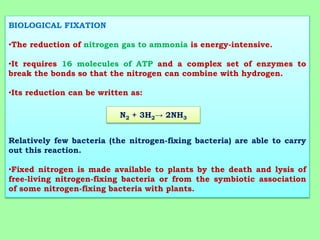
•The reduction of nitrogen gas to ammonia is energy-intensive.
•It requires 16 molecules of ATP and a complex set of enzymes to
break the bonds so that the nitrogen can combine with hydrogen.
•Its reduction can be written as:
Relatively few bacteria (the nitrogen-fixing bacteria) are able to carry
out this reaction.
•Fixed nitrogen is made available to plants by the death and lysis of
free-living nitrogen-fixing bacteria or from the symbiotic association
of some nitrogen-fixing bacteria with plants.
N2 + 3H2→ 2NH3
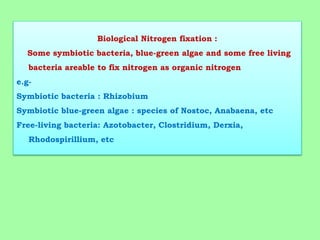
Biological Nitrogen fixation :
Some symbiotic bacteria, blue-green algae and some free living
bacteria areable to fix nitrogen as organic nitrogen
e.g-
Symbiotic bacteria : Rhizobium
Symbiotic blue-green algae : species of Nostoc, Anabaena, etc
Free-living bacteria: Azotobacter, Clostridium, Derxia,
Rhodospirillium, etc
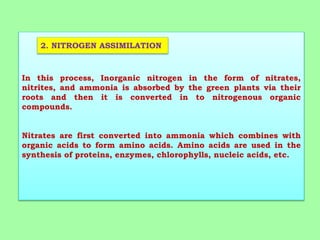
In this process, Inorganic nitrogen in the form of nitrates,
nitrites, and ammonia is absorbed by the green plants via their
roots and then it is converted in to nitrogenous organic
compounds.
Nitrates are first converted into ammonia which combines with
organic acids to form amino acids. Amino acids are used in the
synthesis of proteins, enzymes, chlorophylls, nucleic acids, etc.
2. NITROGEN ASSIMILATION
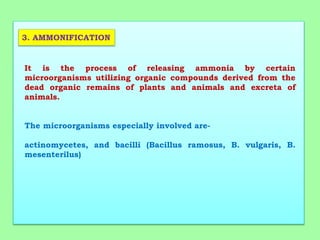
3. AMMONIFICATION
It is the process of releasing ammonia by certain
microorganisms utilizing organic compounds derived from the
dead organic remains of plants and animals and excreta of
animals.
The microorganisms especially involved are-
actinomycetes, and bacilli (Bacillus ramosus, B. vulgaris, B.
mesenterilus)
4. NITRIFICATION
Nitrification is a process of enzymatic oxidation of ammonia to
nitrate by certain microorganisms in soil and ocean.
Nitrosomonas ammonia to nitrites (NO2-Nitrobacteroxidation
of the nitrites into nitrates (NO3-).
Nitrifying bacteria:
e.g. Nitrosomonas, Nitrobacter Aerobic
5. DENITRIFICATION
Denitrification is the reduction of nitrates back into the
largely inert nitrogen gas (N2).
Some denitrifying bacteria are-
Thiobacillus denitrificants
Micrococcus denitrificants
Pseudomonas aeruginosa
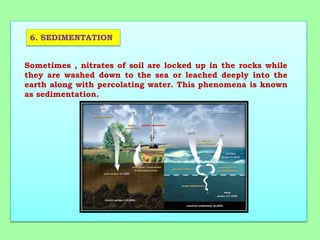
6. SEDIMENTATION
Sometimes , nitrates of soil are locked up in the rocks while
they are washed down to the sea or leached deeply into the
earth along with percolating water. This phenomena is known
as sedimentation.
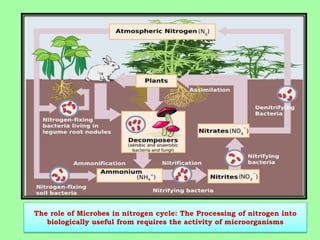
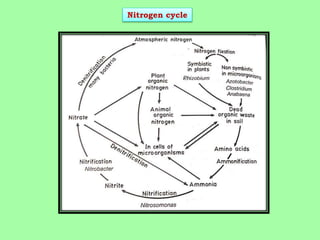
The role of Microbes in nitrogen cycle: The Processing of nitrogen into
biologically useful from requires the activity of microorganisms
Nitrogen cycle
D O U B T S

Agri micro

  • 1.
    By SHILANJALI. B Research scholar GulbargaUniversity Kalaburagi MICROBES AND BIOGEOCHEMICAL CYCLES
  • 2.
    MICROBES AND BIOGEOCHEMICAL CYCLES •Microbesform the backbone of every ecological system by controlling global biogeochemical cycling of elements essential for life. •A biogeochemical cycle is a pathway by which a chemical element (such as carbon or nitrogen) circulates through the biotic (living) and the abiotic (non- living) factors of an ecosystem.
  • 3.
    NITROGEN CYCLE INTRODUCTION •Nitrogen isessential for all forms of life because it is required for synthesis of the basic building blocks of life (e.g., DNA, RNA, and amino acids). •The Earth’s atmosphere is primarily composed of nitrogen, but atmospheric nitrogen (N2) is relatively unusable for biological organisms. Consequently, chemical processing of nitrogen (or nitrogen fixation) is necessary to convert gaseous nitrogen into forms that living organisms can use. •Almost all of the nitrogen fixation that occurs on the planet is carried out by bacteria that have the enzyme nitrogenase, which combines N2 with hydrogen to produce a useful form of nitrogen (such as ammonia).
  • 4.
    •Besides this theleaching effect of rain and denitrifying action of some bacteria lower the nitrogen content of the soil. •This loss is compensated by the processes of lightning and nitrogen fixation •N2 is supplied in the form of fertilizers to agricultural crops. •The crop rotation with cereals and legumes has been practiced for a long time to increase the N2 content of the soil. •This is done because legumes fix the atmospheric N2 in the soil.
  • 5.
    FORMS OF NITROGEN a)ORGANIC NITROGEN • Ammonium(NH4+), • Nitrite(NO2-), • Nitrate(NO3-), • Nitrousoxide(N2O) • Nitricoxide(NO) b) INORGANIC NITROGEN Nitrogen gas (N2).
  • 6.
    Nitrogen Cycle consistsof the following steps 1. Nitrogen Fixation 2. Nitrogen assimilation 3. Ammonification 4. Nitrification and 5. Denitrification 6. Sedimentation
  • 7.
    Nitrogen gas iscomposed of two atoms of nitrogen linked by a very strong triple bond. This makes it chemically unreactive and large amounts of energy are required to break the bond. ATMOSPHERIC FIXATION : This occurs spontaneously by lightning; only a small amount (5–8%) is fixed this way. Lightning allows nitrogen and oxygen to combine to produce various oxides of nitrogen. These are carried by the rain into the soil where they can be used by plants. INDUSTRIAL FIXATION : The Haber–Bosch process is used to make nitrogen-containing fertilizers. This is a very energy-inefficient process. BIOLOGICAL FIXATION : Nitrogen-fixing bacteria fix 60% of nitrogen gas in the atmosphere. NITROGEN GAS CAN BE FIXED IN THREE WAYS. 1. NITROGEN FIXATION
  • 8.
    BIOLOGICAL FIXATION •The reductionof nitrogen gas to ammonia is energy-intensive. •It requires 16 molecules of ATP and a complex set of enzymes to break the bonds so that the nitrogen can combine with hydrogen. •Its reduction can be written as: Relatively few bacteria (the nitrogen-fixing bacteria) are able to carry out this reaction. •Fixed nitrogen is made available to plants by the death and lysis of free-living nitrogen-fixing bacteria or from the symbiotic association of some nitrogen-fixing bacteria with plants. N2 + 3H2→ 2NH3
  • 9.
    Biological Nitrogen fixation: Some symbiotic bacteria, blue-green algae and some free living bacteria areable to fix nitrogen as organic nitrogen e.g- Symbiotic bacteria : Rhizobium Symbiotic blue-green algae : species of Nostoc, Anabaena, etc Free-living bacteria: Azotobacter, Clostridium, Derxia, Rhodospirillium, etc
  • 10.
    In this process,Inorganic nitrogen in the form of nitrates, nitrites, and ammonia is absorbed by the green plants via their roots and then it is converted in to nitrogenous organic compounds. Nitrates are first converted into ammonia which combines with organic acids to form amino acids. Amino acids are used in the synthesis of proteins, enzymes, chlorophylls, nucleic acids, etc. 2. NITROGEN ASSIMILATION
  • 11.
    3. AMMONIFICATION It isthe process of releasing ammonia by certain microorganisms utilizing organic compounds derived from the dead organic remains of plants and animals and excreta of animals. The microorganisms especially involved are- actinomycetes, and bacilli (Bacillus ramosus, B. vulgaris, B. mesenterilus)
  • 12.
    4. NITRIFICATION Nitrification isa process of enzymatic oxidation of ammonia to nitrate by certain microorganisms in soil and ocean. Nitrosomonas ammonia to nitrites (NO2-Nitrobacteroxidation of the nitrites into nitrates (NO3-). Nitrifying bacteria: e.g. Nitrosomonas, Nitrobacter Aerobic
  • 13.
    5. DENITRIFICATION Denitrification isthe reduction of nitrates back into the largely inert nitrogen gas (N2). Some denitrifying bacteria are- Thiobacillus denitrificants Micrococcus denitrificants Pseudomonas aeruginosa
  • 14.
    6. SEDIMENTATION Sometimes ,nitrates of soil are locked up in the rocks while they are washed down to the sea or leached deeply into the earth along with percolating water. This phenomena is known as sedimentation.
  • 15.
    The role ofMicrobes in nitrogen cycle: The Processing of nitrogen into biologically useful from requires the activity of microorganisms
  • 16.
  • 17.
    D O UB T S