December 13, 2010 - Take out agendas and science folders.
Do Now:

1. To ____________ means to organize things into
groups based on similarities. (taxonomy or classify)
2.The science of classifying living things is called
____________. (taxonomy or classification)
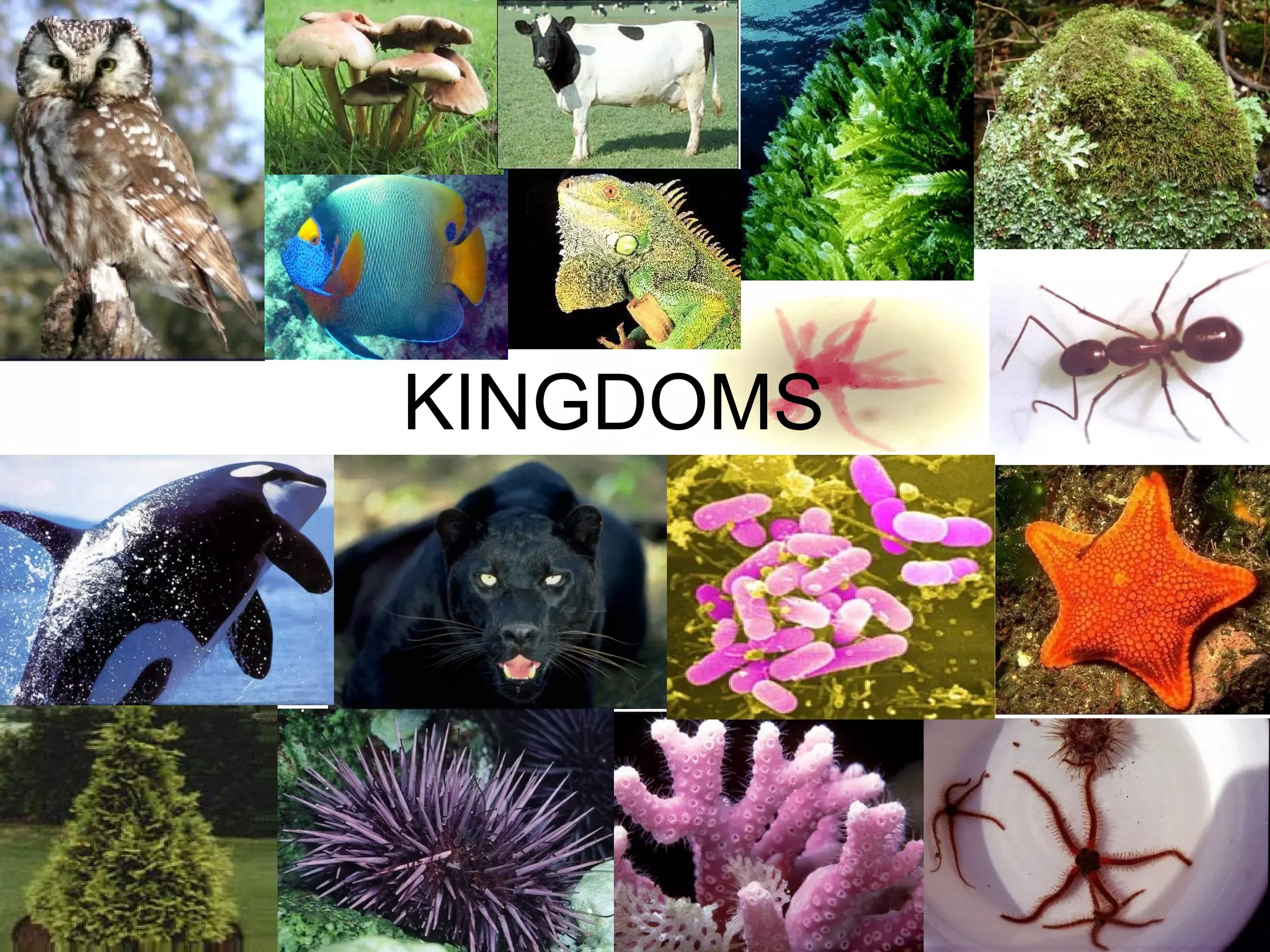
KINGDOMS
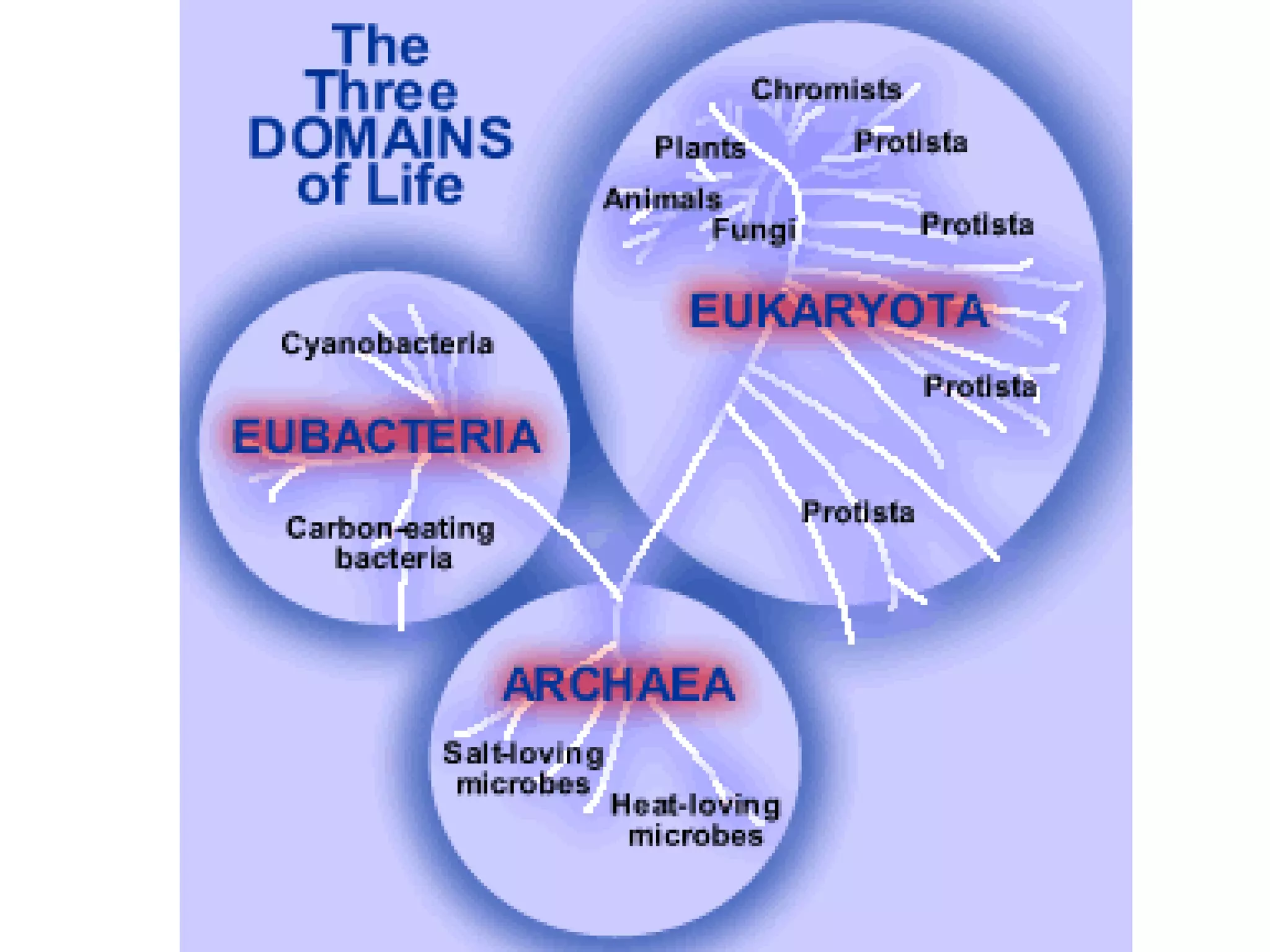
Domains
1. The Archaea (archaebacteria)
- prokaryotic, very ancient life forms

1. The Bacteria (eubacteria)
- prokaryotic, more advanced

1. The Eukarya (eukaryotes)
-

All eukaryotic
Broken down into kingdoms
Protista kingdom, Fungus kingdom, Plant
kingdom, and Animal kingdom
Kingdoms
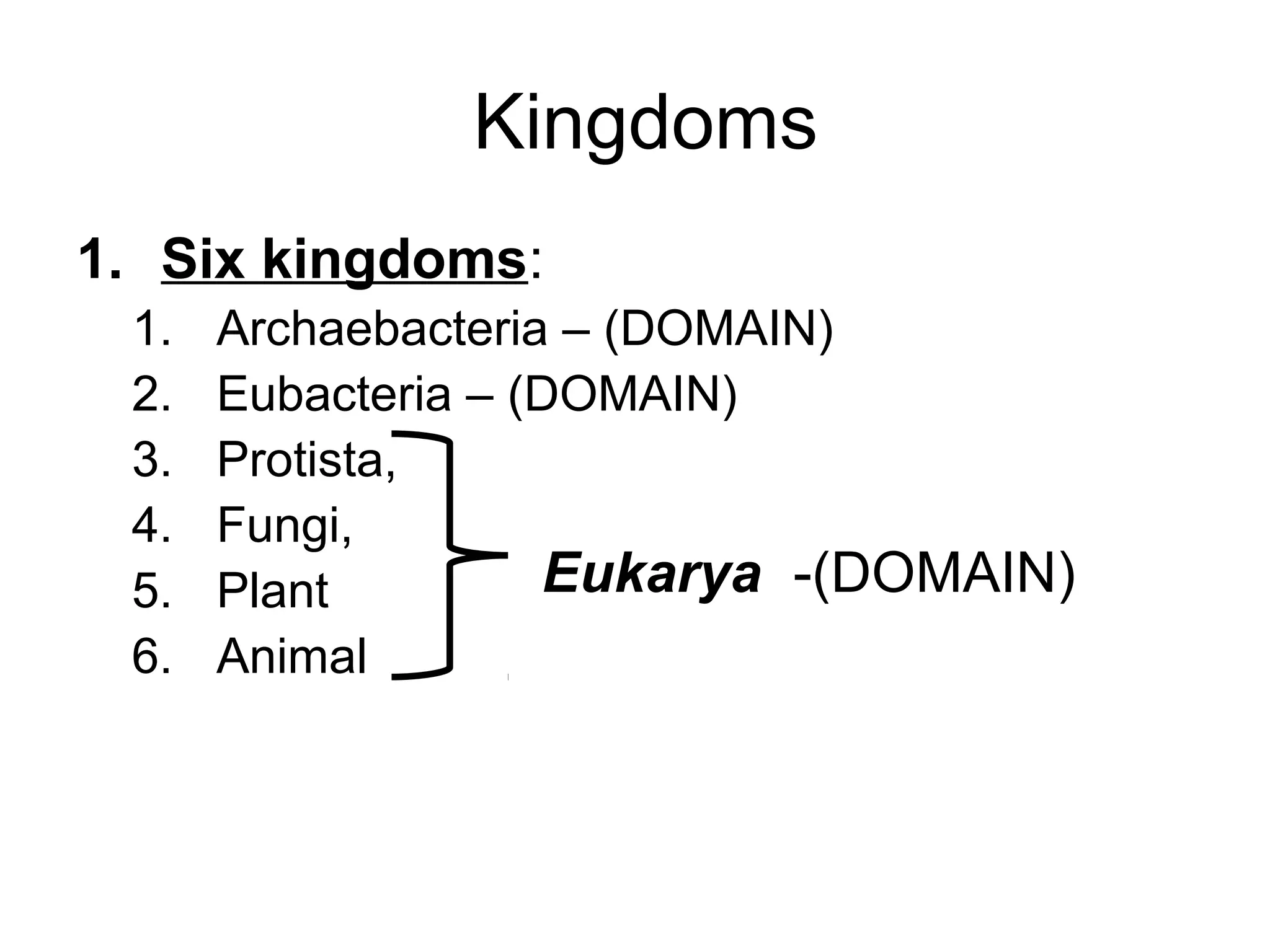
1. Six kingdoms:
1.
2.
3.
4.
5.
6.

Archaebacteria – (DOMAIN)
Eubacteria – (DOMAIN)
Protista,
Fungi,
Eukarya -(DOMAIN)
Plant
Animal
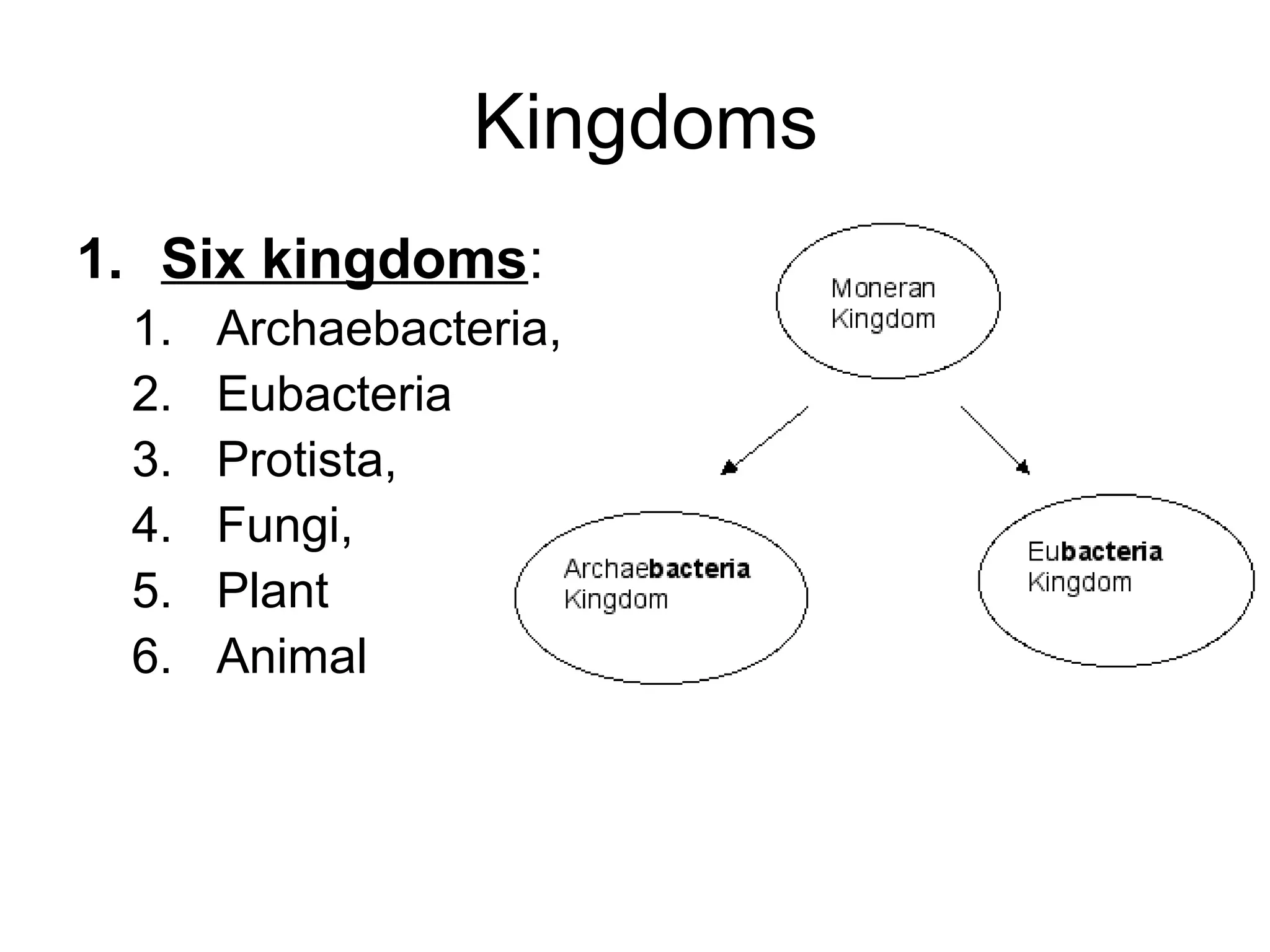
Kingdoms
1. Six kingdoms:
1.
2.
3.
4.
5.
6.

Archaebacteria,
Eubacteria
Protista,
Fungi,
Plant
Animal
1st Kingdom
Archaebacteria – “ancient” bacteria
a.
b.
c.
d.

Prokaryotic – no nucleus
Single-celled (unicellular)
Some move by themselves
Producers – use chemicals (salt, sulfur,
methane)
e. Found in extreme environments
a. Asexual reproduction – binary fission
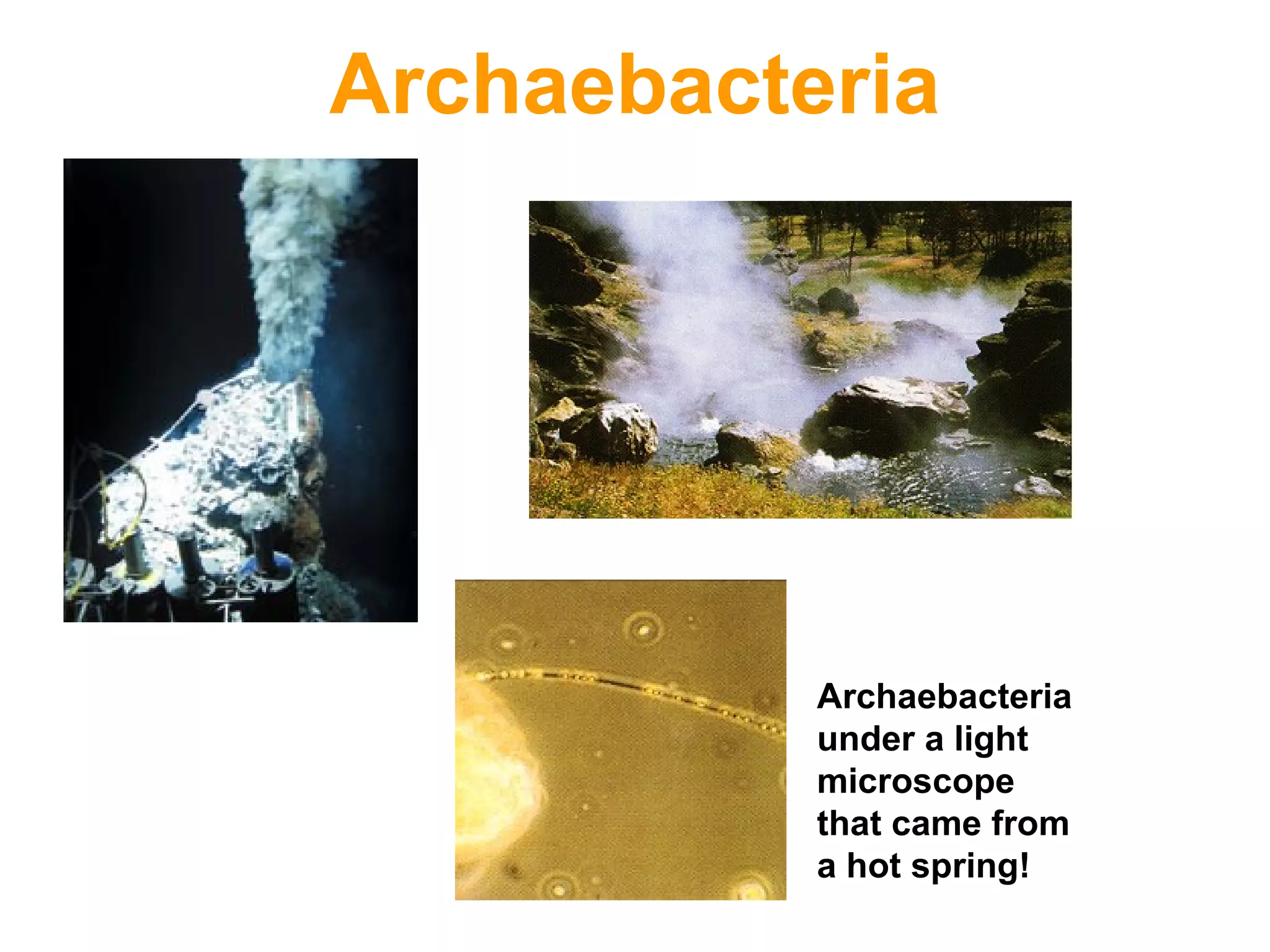
Archaebacteria

Archaebacteria
under a light
microscope
that came from
a hot spring!
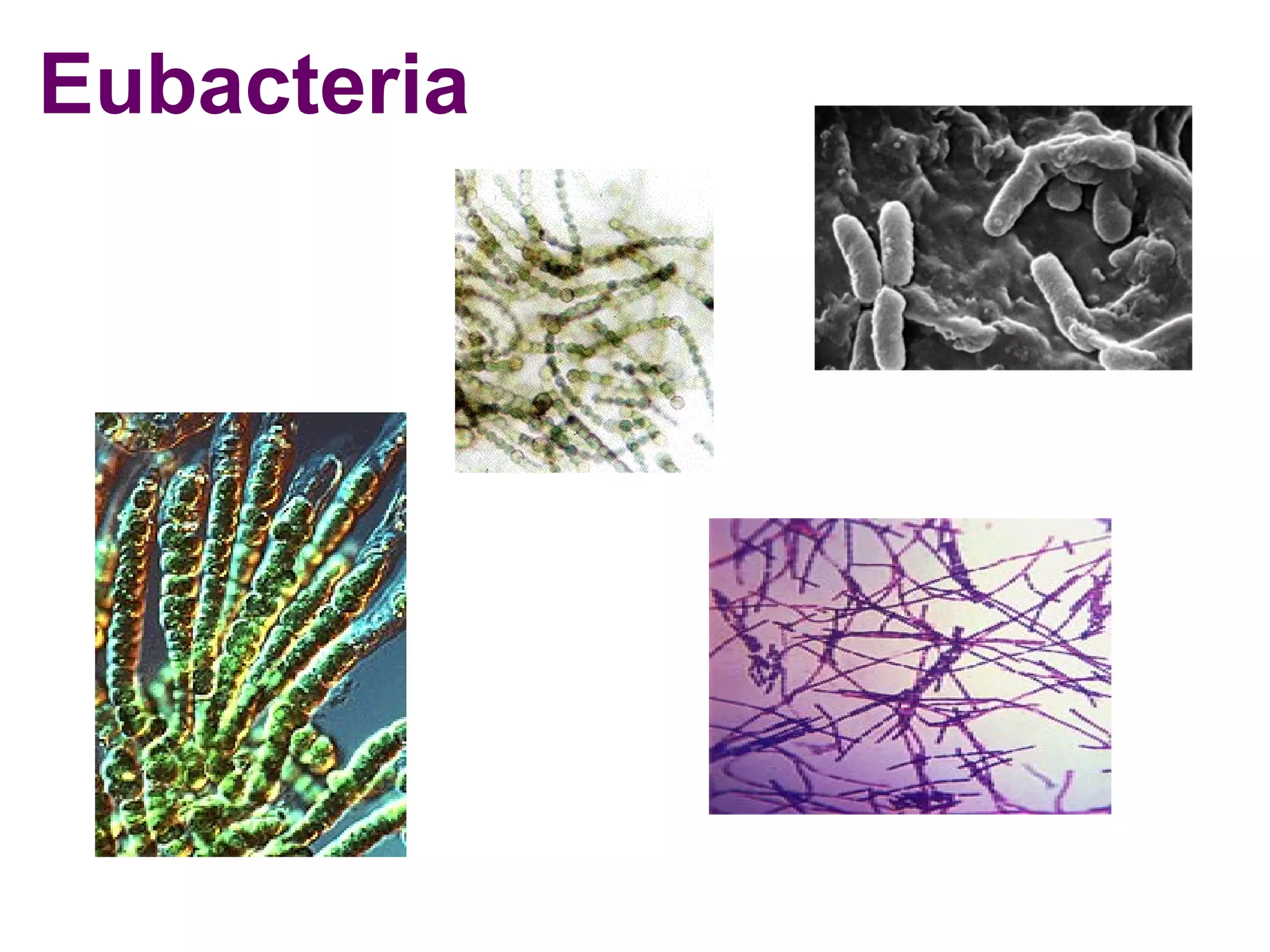
2nd Kingdom: Eubacteria – “modern” bacteria
a. Prokaryotic – no nucleus
b. single celled – but some live in colonies
with other cells
c. Some move
d. Some consumers – mostly
decomposers
e. Some producers – act like plants and
do photosynthesis
f. Asexual reproduction – binary fission
Eubacteria
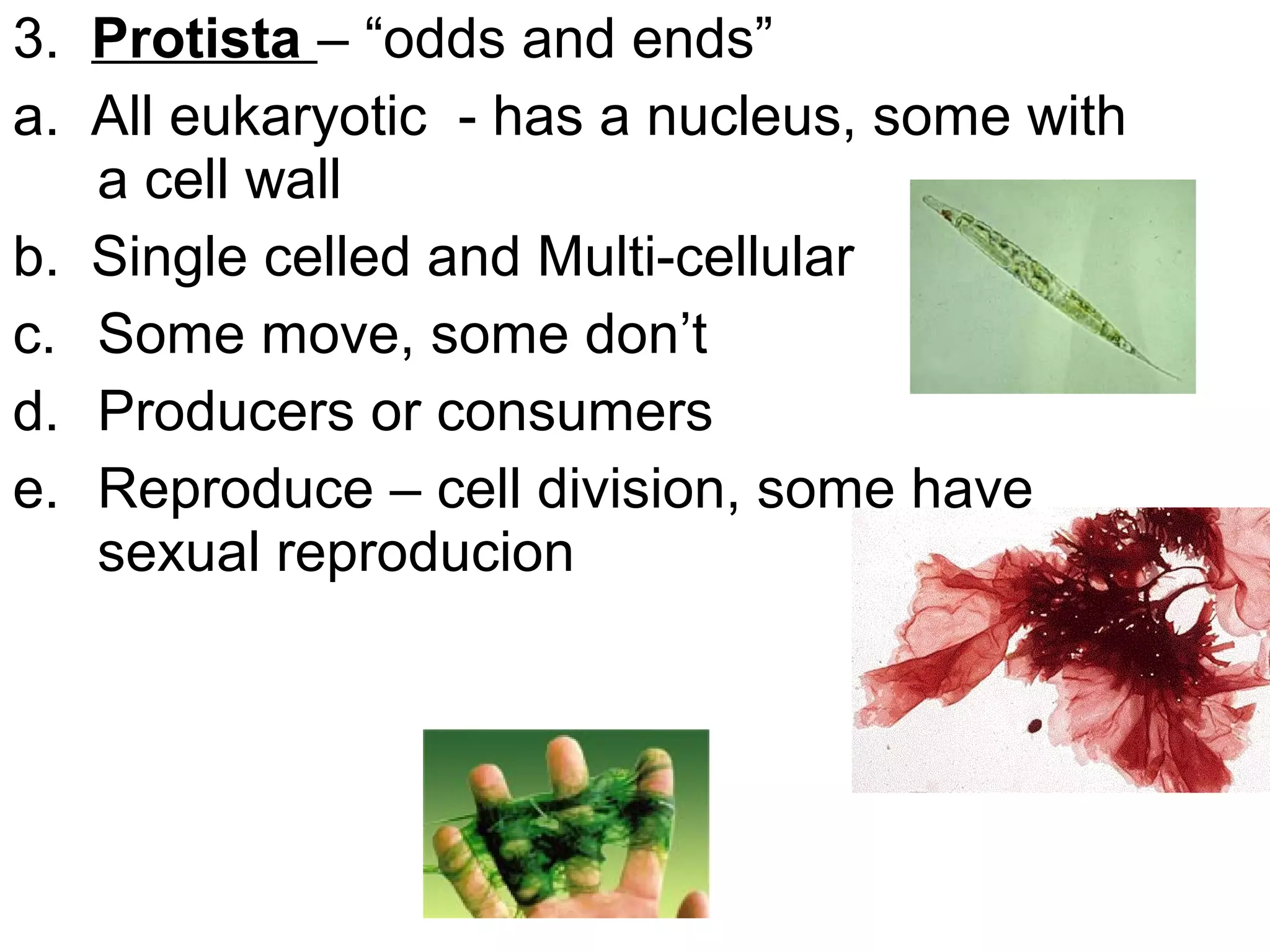
3. Protista – “odds and ends”
a. All eukaryotic - has a nucleus, some with
a cell wall
b. Single celled and Multi-cellular
c. Some move, some don’t
d. Producers or consumers
e. Reproduce – cell division, some have
sexual reproducion
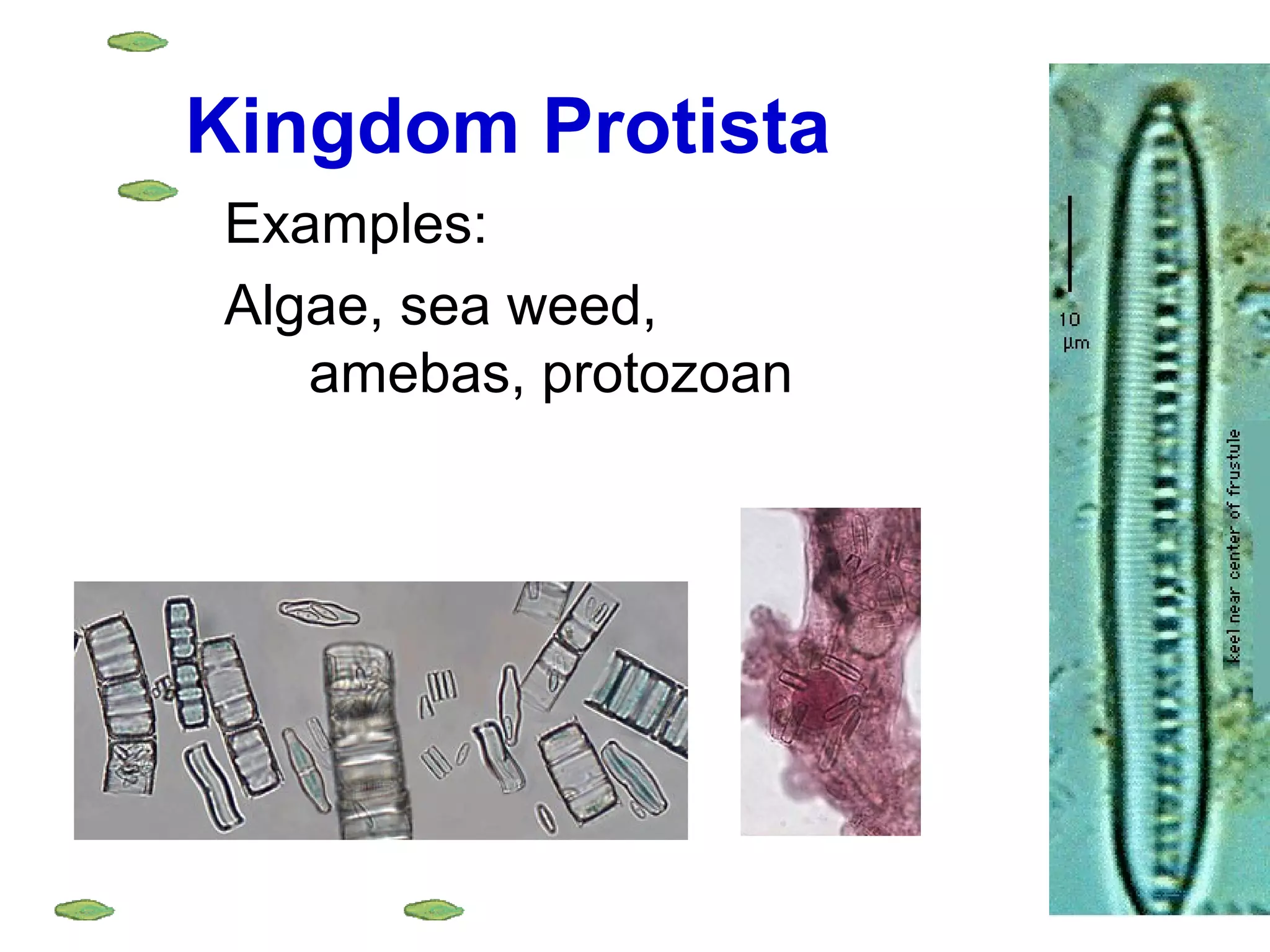
Kingdom Protista
Examples:
Algae, sea weed,
amebas, protozoan
4.
a.
b.
c.
d.
e.

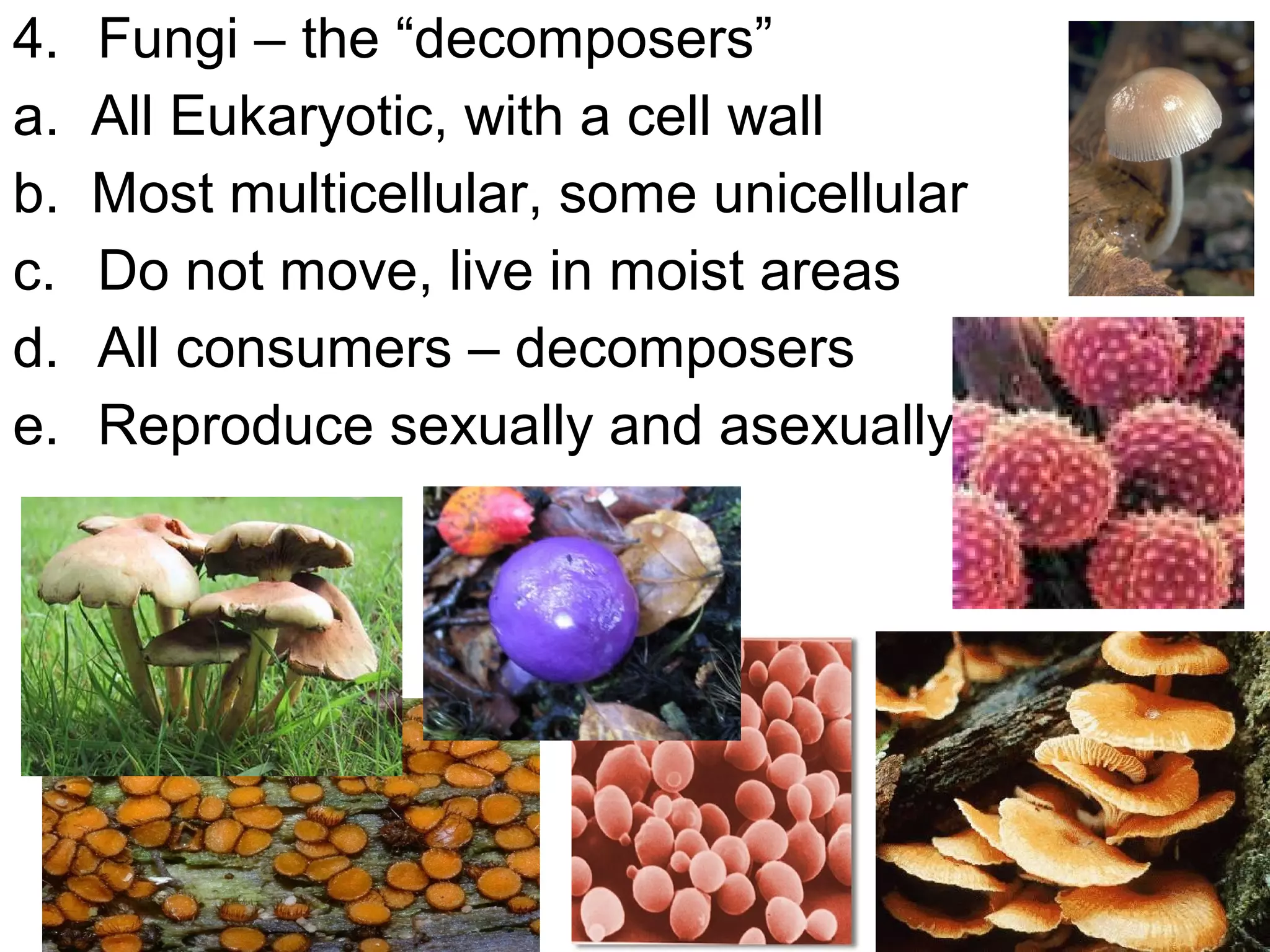
Fungi – the “decomposers”
All Eukaryotic, with a cell wall
Most multicellular, some unicellular
Do not move, live in moist areas
All consumers – decomposers
Reproduce sexually and asexually
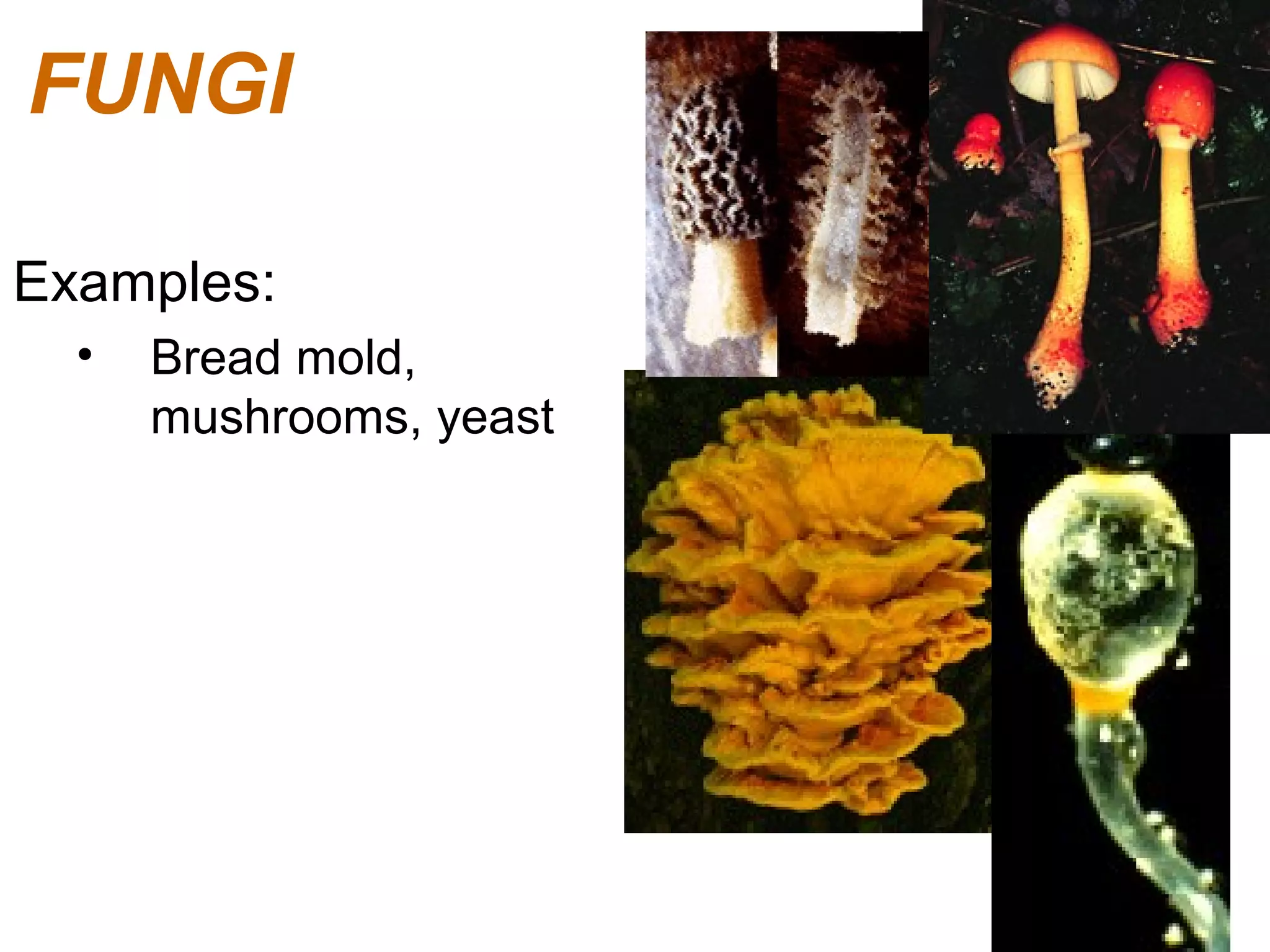
FUNGI
Examples:
•

Bread mold,
mushrooms, yeast
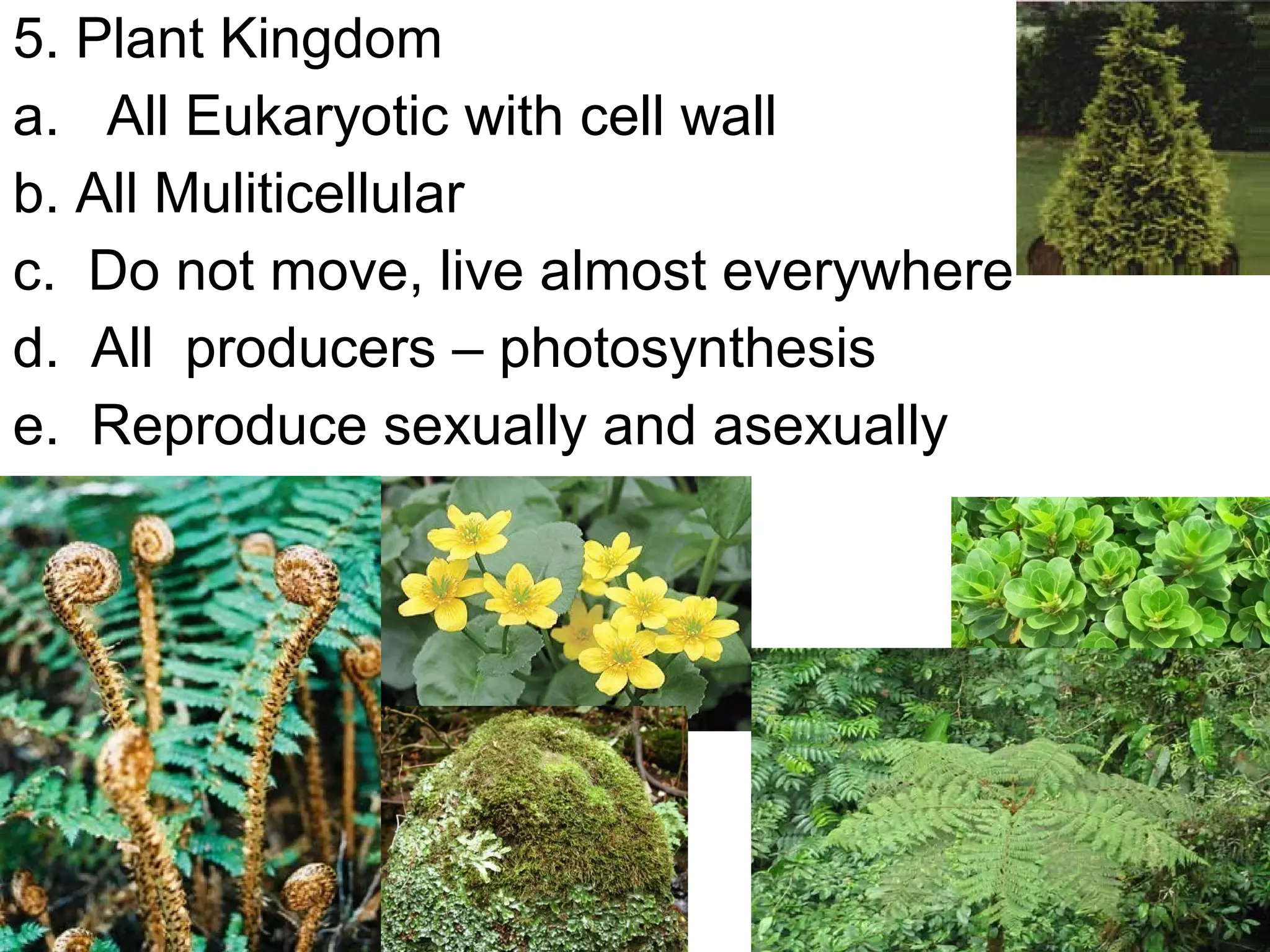
5. Plant Kingdom
a. All Eukaryotic with cell wall
b. All Muliticellular
c. Do not move, live almost everywhere
d. All producers – photosynthesis
e. Reproduce sexually and asexually
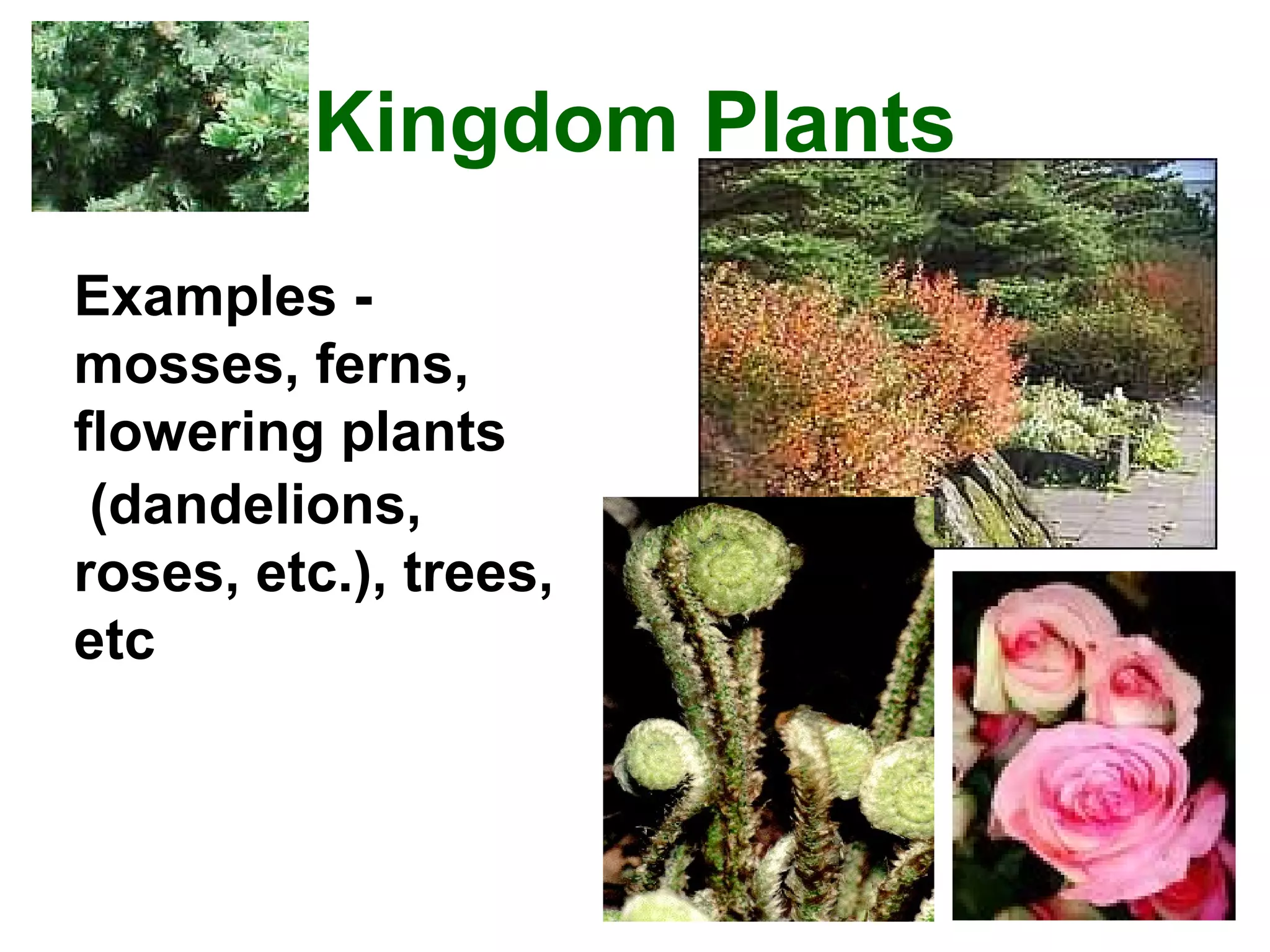
Kingdom Plants
Examples mosses, ferns,
flowering plants
(dandelions,
roses, etc.), trees,
etc
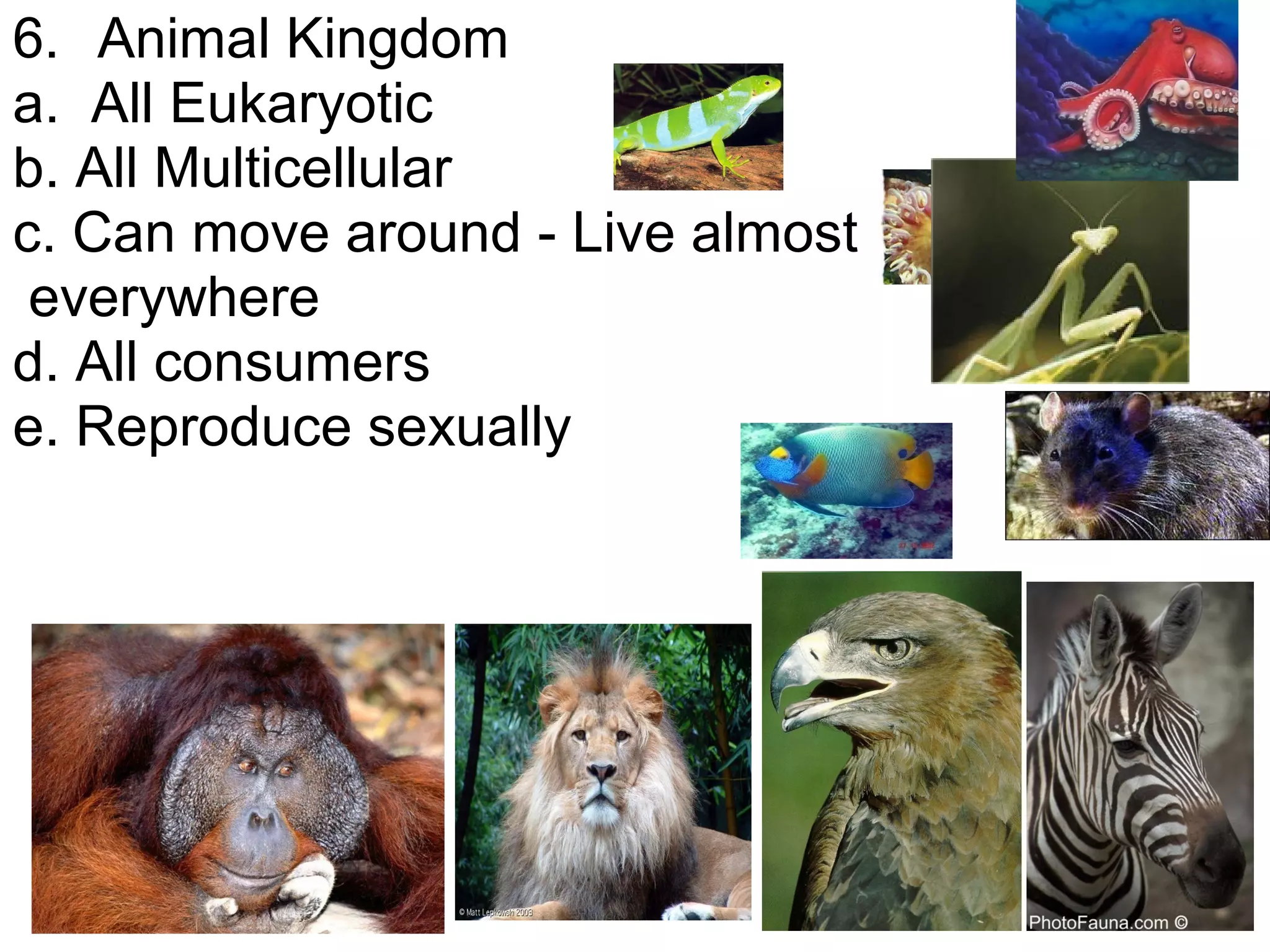
6. Animal Kingdom
a. All Eukaryotic
b. All Multicellular
c. Can move around - Live almost
everywhere
d. All consumers
e. Reproduce sexually
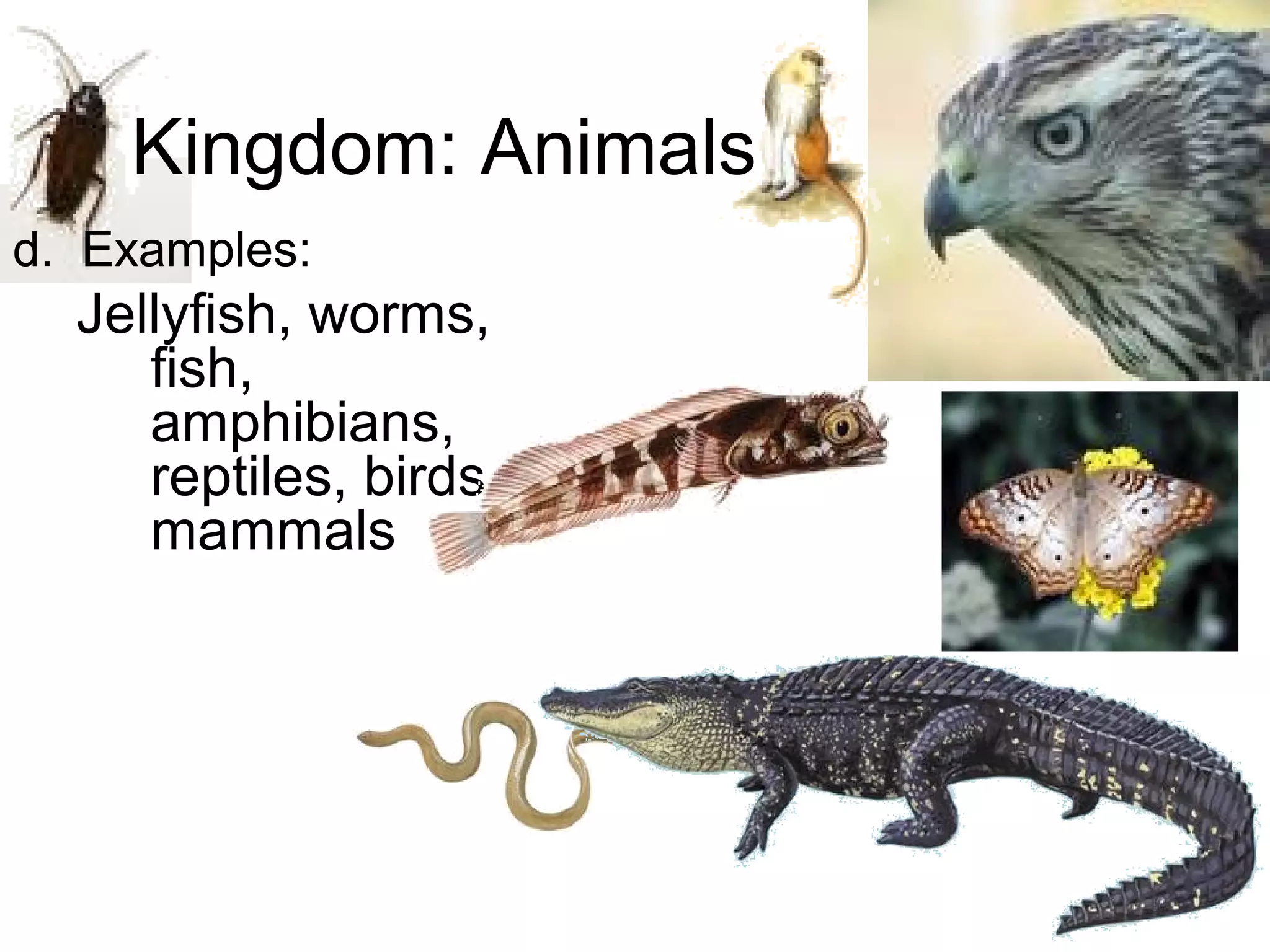
Kingdom: Animals
d. Examples:

Jellyfish, worms,
fish,
amphibians,
reptiles, birds,
mammals
Questions
1. The classification system most commonly used today
separates organisms into six major groups called
__________________.
2. Because bacteria don’t have an organized nucleus or
organelles, they are called _____________.
3. __________________ are organisms with a nucleus
and organelles surrounded by membranes.
4. Name and give an example member of each kingdom.
___________________________________________
___________________________________________
___________________________________________

5.07 classification kingdoms

  • 1.
    December 13, 2010- Take out agendas and science folders. Do Now: 1. To ____________ means to organize things into groups based on similarities. (taxonomy or classify) 2.The science of classifying living things is called ____________. (taxonomy or classification)
  • 2.
  • 3.
    Domains 1. The Archaea(archaebacteria) - prokaryotic, very ancient life forms 1. The Bacteria (eubacteria) - prokaryotic, more advanced 1. The Eukarya (eukaryotes) - All eukaryotic Broken down into kingdoms Protista kingdom, Fungus kingdom, Plant kingdom, and Animal kingdom
  • 5.
    Kingdoms 1. Six kingdoms: 1. 2. 3. 4. 5. 6. Archaebacteria– (DOMAIN) Eubacteria – (DOMAIN) Protista, Fungi, Eukarya -(DOMAIN) Plant Animal
  • 6.
  • 7.
    1st Kingdom Archaebacteria –“ancient” bacteria a. b. c. d. Prokaryotic – no nucleus Single-celled (unicellular) Some move by themselves Producers – use chemicals (salt, sulfur, methane) e. Found in extreme environments a. Asexual reproduction – binary fission
  • 8.
  • 9.
    2nd Kingdom: Eubacteria– “modern” bacteria a. Prokaryotic – no nucleus b. single celled – but some live in colonies with other cells c. Some move d. Some consumers – mostly decomposers e. Some producers – act like plants and do photosynthesis f. Asexual reproduction – binary fission
  • 10.
  • 11.
    3. Protista –“odds and ends” a. All eukaryotic - has a nucleus, some with a cell wall b. Single celled and Multi-cellular c. Some move, some don’t d. Producers or consumers e. Reproduce – cell division, some have sexual reproducion
  • 12.
  • 13.
    4. a. b. c. d. e. Fungi – the“decomposers” All Eukaryotic, with a cell wall Most multicellular, some unicellular Do not move, live in moist areas All consumers – decomposers Reproduce sexually and asexually
  • 14.
  • 15.
    5. Plant Kingdom a.All Eukaryotic with cell wall b. All Muliticellular c. Do not move, live almost everywhere d. All producers – photosynthesis e. Reproduce sexually and asexually
  • 16.
    Kingdom Plants Examples mosses,ferns, flowering plants (dandelions, roses, etc.), trees, etc
  • 17.
    6. Animal Kingdom a.All Eukaryotic b. All Multicellular c. Can move around - Live almost everywhere d. All consumers e. Reproduce sexually
  • 18.
    Kingdom: Animals d. Examples: Jellyfish,worms, fish, amphibians, reptiles, birds, mammals
  • 19.
    Questions 1. The classificationsystem most commonly used today separates organisms into six major groups called __________________. 2. Because bacteria don’t have an organized nucleus or organelles, they are called _____________. 3. __________________ are organisms with a nucleus and organelles surrounded by membranes. 4. Name and give an example member of each kingdom. ___________________________________________ ___________________________________________ ___________________________________________