Nitrogen Cycle
Presented by:
Rysul Hasan Hredoy
Roll: 18531041
Department of
Environmental Science (2018)
Bangladesh University of Professionals (BUP)
Course Name: Introduction to Environmental Science (1101)
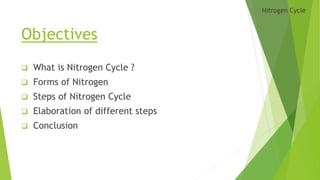
Objectives
 What is Nitrogen Cycle ?
 Forms of Nitrogen
 Steps of Nitrogen Cycle
 Elaboration of different steps
 Conclusion
Nitrogen Cycle
What is Nitrogen Cycle ?
The series of processes by which nitrogen and its
compounds are interconverted in the environment.
The nitrogen cycle is the process by which nitrogen
is converted between its various chemical forms.
This transformation can be carried out through both
biological and physical processes.
Nitrogen Cycle
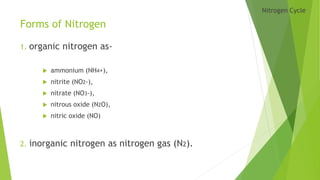
Forms of Nitrogen
1. organic nitrogen as-
 ammonium (NH4+),
 nitrite (NO2-),
 nitrate (NO3-),
 nitrous oxide (N2O),
 nitric oxide (NO)
2. inorganic nitrogen as nitrogen gas (N2).
Nitrogen Cycle
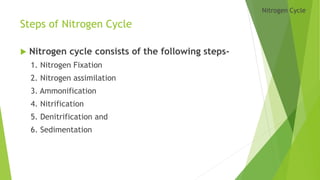
Steps of Nitrogen Cycle
 Nitrogen cycle consists of the following steps-
1. Nitrogen Fixation
2. Nitrogen assimilation
3. Ammonification
4. Nitrification
5. Denitrification and
6. Sedimentation
Nitrogen Cycle
Elaboration of different steps
1. Nitrogen Fixation
The conversion of free nitrogen of atmosphere into the biologically
acceptable form or nitrogenous compounds.
N2 + 8 H+ + 8 e− → 2 NH3 + H2
There are following ways to convert N2 into more chemically reactive
forms:
a) Biological Nitrogen fixation
b) Physicochemical nitrogen fixation
c) Industrial nitrogen fixation
Nitrogen Cycle
a) Biological Nitrogen fixation
some symbiotic bacteria , blue-
green algae and some free-living
bacteria are able to fix nitrogen as
organic nitrogen.
Example:
symbiotic bacteria: Rhizobium
b) Physicochemical nitrogen fixation
In this process, atmospheric nitrogen
combines with oxygen (as ozone) during
lightning or electrical discharges in the
clouds and produces different nitrogen
oxides:
N2 + 2(O) = 2NO
2NO + 2(O) = 2NO2
2NO2 + O = N2O5
c) Industrial nitrogen fixation
Under great pressure, at a temperature of 600 C and with the use
of an iron catalyst, hydrogen and atmospheric nitrogen can be
combined to form ammonia (NH3) in the Haber-Bosch process.
Nitrogen Cycle
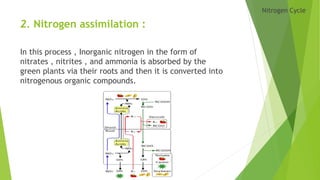
2. Nitrogen assimilation :
In this process , Inorganic nitrogen in the form of
nitrates , nitrites , and ammonia is absorbed by the
green plants via their roots and then it is converted into
nitrogenous organic compounds.
Nitrogen Cycle
3. Ammonification
It is the process of releasing ammonia by certain microorganisms
utilizing organic compounds derived from the dead organic
remains of plants and animals and excreta of animals.
The microorganisms especially involved are actinomycetes and
bacilli.
( Bacillus ramosus , B. vulgaris, B. mesenterilus )
Nitrogen Cycle
4. Nitrification
Nitrification is a process of biological oxidation of ammonia to
nitrate by certain microorganisms in soil and ocean.
• Nitrosomonas ammonia to nitrites (NO2-)
• Nitrobacter oxidation of the nitrites into nitrates (NO3-).
Nitrogen Cycle
5. Denitrification
Denitrification is the reduction of nitrates back into the largely
inert nitrogen gas (N2).
Some denitrifying bacteria are-
• Thiobacillus denitrificants
• Micrococcus denitrificants
• Pseudomonas aeruginosa
2NO3- > 2NO2- > 2NO > N2O > N2
Nitrogen Cycle
6. Sedimentation
Sometimes , nitrates of soil are locked up in the rocks while they
are washed down to the sea or leached deeply into the earth
along with percolating water.
This phenomena is known as sedimentation.
Nitrogen Cycle
Conclusion
Nitrogen is the most abundant element in our
planet’s atmosphere. Approximately 78% of the atmosphere is
made up of nitrogen gas (N2).
Nitrogen is a crucially important component for all life. It is an
important part of many cells and processes such as amino acids,
proteins and even our DNA. It is also needed to
make chlorophyll in plants, which is used in photosynthesis to
make their food.
Nitrogen Cycle

Nitrogen cycle(presentation) by Rysul

  • 1.
    Nitrogen Cycle Presented by: RysulHasan Hredoy Roll: 18531041 Department of Environmental Science (2018) Bangladesh University of Professionals (BUP) Course Name: Introduction to Environmental Science (1101)
  • 2.
    Objectives  What isNitrogen Cycle ?  Forms of Nitrogen  Steps of Nitrogen Cycle  Elaboration of different steps  Conclusion Nitrogen Cycle
  • 3.
    What is NitrogenCycle ? The series of processes by which nitrogen and its compounds are interconverted in the environment. The nitrogen cycle is the process by which nitrogen is converted between its various chemical forms. This transformation can be carried out through both biological and physical processes. Nitrogen Cycle
  • 4.
    Forms of Nitrogen 1.organic nitrogen as-  ammonium (NH4+),  nitrite (NO2-),  nitrate (NO3-),  nitrous oxide (N2O),  nitric oxide (NO) 2. inorganic nitrogen as nitrogen gas (N2). Nitrogen Cycle
  • 5.
    Steps of NitrogenCycle  Nitrogen cycle consists of the following steps- 1. Nitrogen Fixation 2. Nitrogen assimilation 3. Ammonification 4. Nitrification 5. Denitrification and 6. Sedimentation Nitrogen Cycle
  • 6.
    Elaboration of differentsteps 1. Nitrogen Fixation The conversion of free nitrogen of atmosphere into the biologically acceptable form or nitrogenous compounds. N2 + 8 H+ + 8 e− → 2 NH3 + H2 There are following ways to convert N2 into more chemically reactive forms: a) Biological Nitrogen fixation b) Physicochemical nitrogen fixation c) Industrial nitrogen fixation Nitrogen Cycle
  • 7.
    a) Biological Nitrogenfixation some symbiotic bacteria , blue- green algae and some free-living bacteria are able to fix nitrogen as organic nitrogen. Example: symbiotic bacteria: Rhizobium b) Physicochemical nitrogen fixation In this process, atmospheric nitrogen combines with oxygen (as ozone) during lightning or electrical discharges in the clouds and produces different nitrogen oxides: N2 + 2(O) = 2NO 2NO + 2(O) = 2NO2 2NO2 + O = N2O5 c) Industrial nitrogen fixation Under great pressure, at a temperature of 600 C and with the use of an iron catalyst, hydrogen and atmospheric nitrogen can be combined to form ammonia (NH3) in the Haber-Bosch process. Nitrogen Cycle
  • 8.
    2. Nitrogen assimilation: In this process , Inorganic nitrogen in the form of nitrates , nitrites , and ammonia is absorbed by the green plants via their roots and then it is converted into nitrogenous organic compounds. Nitrogen Cycle
  • 9.
    3. Ammonification It isthe process of releasing ammonia by certain microorganisms utilizing organic compounds derived from the dead organic remains of plants and animals and excreta of animals. The microorganisms especially involved are actinomycetes and bacilli. ( Bacillus ramosus , B. vulgaris, B. mesenterilus ) Nitrogen Cycle
  • 10.
    4. Nitrification Nitrification isa process of biological oxidation of ammonia to nitrate by certain microorganisms in soil and ocean. • Nitrosomonas ammonia to nitrites (NO2-) • Nitrobacter oxidation of the nitrites into nitrates (NO3-). Nitrogen Cycle
  • 11.
    5. Denitrification Denitrification isthe reduction of nitrates back into the largely inert nitrogen gas (N2). Some denitrifying bacteria are- • Thiobacillus denitrificants • Micrococcus denitrificants • Pseudomonas aeruginosa 2NO3- > 2NO2- > 2NO > N2O > N2 Nitrogen Cycle
  • 12.
    6. Sedimentation Sometimes ,nitrates of soil are locked up in the rocks while they are washed down to the sea or leached deeply into the earth along with percolating water. This phenomena is known as sedimentation. Nitrogen Cycle
  • 14.
    Conclusion Nitrogen is themost abundant element in our planet’s atmosphere. Approximately 78% of the atmosphere is made up of nitrogen gas (N2). Nitrogen is a crucially important component for all life. It is an important part of many cells and processes such as amino acids, proteins and even our DNA. It is also needed to make chlorophyll in plants, which is used in photosynthesis to make their food. Nitrogen Cycle