Nitrogen Cycle
Dr. S. Sivasankara Narayani., M.Sc.,M.Phil.,Ph.D., MRSB (UK)
Intro
• Nitrogen is key nutrient for plants.
• The abundant nitrogen in the atmosphere cannot be used directly by plants or animals.
• Nitrogen cycle is a biogeochemical process through which nitrogen is converted into many
forms, consecutively passing from the atmosphere to the soil to organism and back into the
atmosphere.
• Definition: “Nitrogen cycle is a biogeochemical process which transfoms the inert nitrogen
present in the atmosphere to a more usable forrm for living organism
Nitrogen Gas types
• Organic
• It exist in living organism.
• They get passed through food
chain by the consumption of other
living organisms
• Inorganic
• Abundant in atmosphere
• Nitrogen is made available to plants
by symbiotic bacteria which convert
the inert nitrogen into a usable
form such as nitrites and nitrates
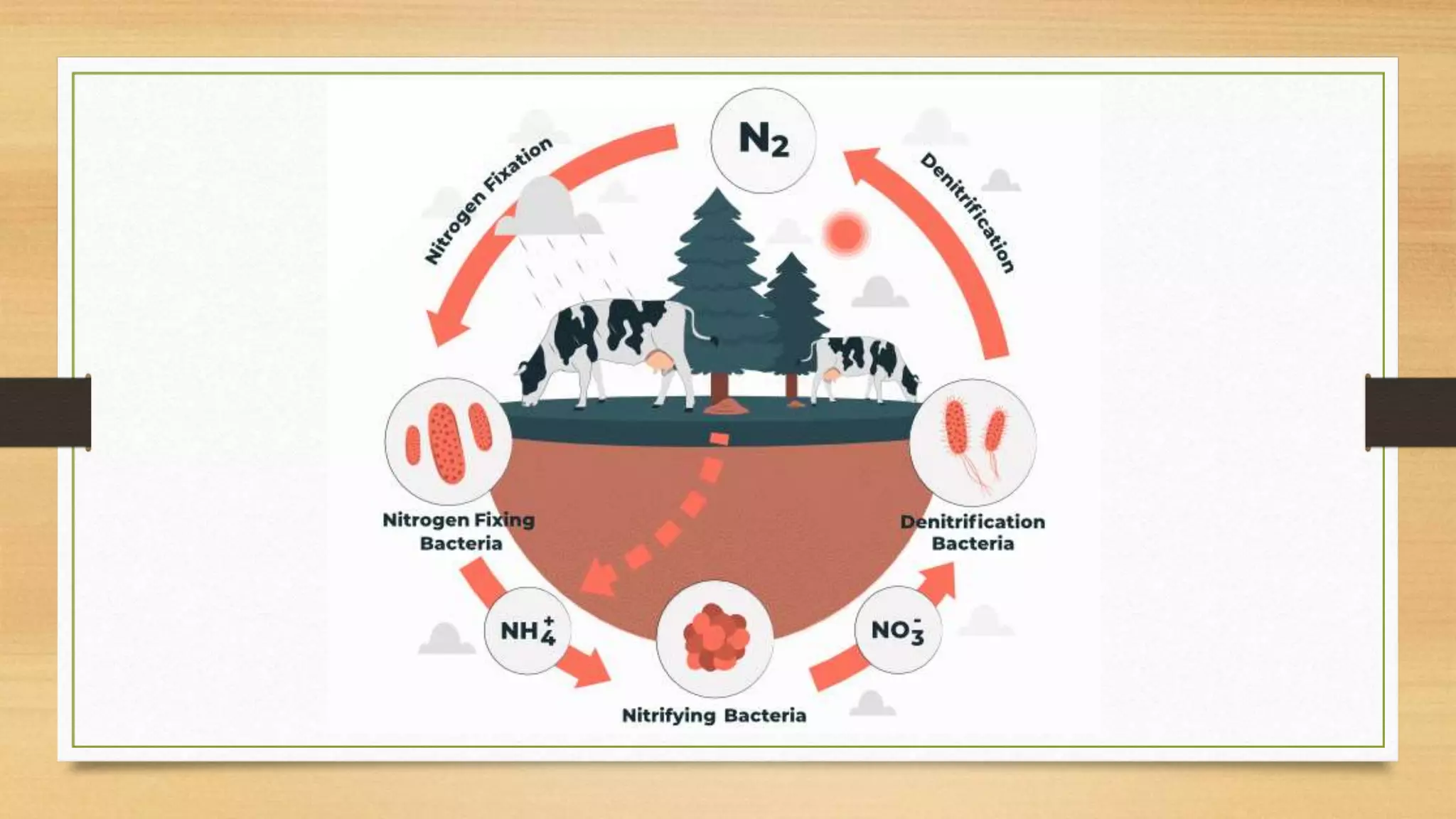
Stages
• Nitrogen fixation
• Nitrification
• Assimilation
• Ammonification
• Denitrification
Nitrogen Fixation
• Initial step
• N2 ------- NH3
• Inert form is deposited into soils from the atmosphere and surface waters, through
precipitation.
• Two nitrogen atoms get separated and combines with hydrogen to form ammonia (NH4+).
Cont…
• Entire process of nitrogen fixation is completely by symbiotic bacteria which
are known as Diazotrophs.
• Ex: Azotobacter , Rhizobium
• Nitrogenase enzyme – N + H = Ammonia
Types
• Atmospheric Fixation
• Lightning breaks nitrogen into nitrogen oxides – used by plants
• Industrial mode
• Direct combination of nitrogen and hydrogen to produce ammonia
• Converted into various fertilisers such as Urea.
• Biological
• Rhizobium and Blue green algae
Nitrification
• Ammonia is converted into nitrate
• Nitrites are formed by oxidation of ammonia by Nitrosomonas
• Nitrites are converted into nitrates by Nitrobacter
2NH4
+ + 3NO2 2NO2
- + 4H+ + 2H2O
2NO2
- + O2 2NO3
-
Assimilation
• Plants - ammonia, nitrite ions, nitrate ions or ammonium ions
• Used in the formation of plant and animal proteins
• Enters the food web
Ammonification
• Plant or animal die – released into soil
• decomposers – bacteria and fungi - convert organic matter back into
ammonium.
• Used for the biological process
Denitrification
• Conversion of nitrate into gaseous nitrogen.
• Occurs in the absence of oxygen
• Done by Denitrifying bacterial species – Clostridium and Pseudomonas
• Organism will process nitrate to gain oxygen and gives out free nitrogen gas as
byproduct.
Importance
• Synthesis Chlorophyll
• Decomposition
• Enriching the soil – with esseential nutrients required for cultivation.
12-07-2023
Dr.SS

Nitrogen cycle.ppt

  • 1.
    Nitrogen Cycle Dr. S.Sivasankara Narayani., M.Sc.,M.Phil.,Ph.D., MRSB (UK)
  • 2.
    Intro • Nitrogen iskey nutrient for plants. • The abundant nitrogen in the atmosphere cannot be used directly by plants or animals. • Nitrogen cycle is a biogeochemical process through which nitrogen is converted into many forms, consecutively passing from the atmosphere to the soil to organism and back into the atmosphere. • Definition: “Nitrogen cycle is a biogeochemical process which transfoms the inert nitrogen present in the atmosphere to a more usable forrm for living organism
  • 3.
    Nitrogen Gas types •Organic • It exist in living organism. • They get passed through food chain by the consumption of other living organisms • Inorganic • Abundant in atmosphere • Nitrogen is made available to plants by symbiotic bacteria which convert the inert nitrogen into a usable form such as nitrites and nitrates
  • 4.
    Stages • Nitrogen fixation •Nitrification • Assimilation • Ammonification • Denitrification
  • 6.
    Nitrogen Fixation • Initialstep • N2 ------- NH3 • Inert form is deposited into soils from the atmosphere and surface waters, through precipitation. • Two nitrogen atoms get separated and combines with hydrogen to form ammonia (NH4+).
  • 7.
    Cont… • Entire processof nitrogen fixation is completely by symbiotic bacteria which are known as Diazotrophs. • Ex: Azotobacter , Rhizobium • Nitrogenase enzyme – N + H = Ammonia
  • 8.
    Types • Atmospheric Fixation •Lightning breaks nitrogen into nitrogen oxides – used by plants • Industrial mode • Direct combination of nitrogen and hydrogen to produce ammonia • Converted into various fertilisers such as Urea. • Biological • Rhizobium and Blue green algae
  • 9.
    Nitrification • Ammonia isconverted into nitrate • Nitrites are formed by oxidation of ammonia by Nitrosomonas • Nitrites are converted into nitrates by Nitrobacter 2NH4 + + 3NO2 2NO2 - + 4H+ + 2H2O 2NO2 - + O2 2NO3 -
  • 10.
    Assimilation • Plants -ammonia, nitrite ions, nitrate ions or ammonium ions • Used in the formation of plant and animal proteins • Enters the food web
  • 11.
    Ammonification • Plant oranimal die – released into soil • decomposers – bacteria and fungi - convert organic matter back into ammonium. • Used for the biological process
  • 12.
    Denitrification • Conversion ofnitrate into gaseous nitrogen. • Occurs in the absence of oxygen • Done by Denitrifying bacterial species – Clostridium and Pseudomonas • Organism will process nitrate to gain oxygen and gives out free nitrogen gas as byproduct.
  • 13.
    Importance • Synthesis Chlorophyll •Decomposition • Enriching the soil – with esseential nutrients required for cultivation.
  • 14.