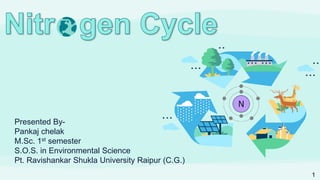
Presented By-
Pankaj chelak
M.Sc. 1st semester
S.O.S. in Environmental Science
Pt. Ravishankar Shukla University Raipur (C.G.)
1
Table of Contents
Introduction
03
01 02
04
05
Nitrogen
Impact of Covid-19
Environmental Impact of
Nitrogen Cycles
2
Effect of Human Activities
Introduction
01o The nitrogen cycle refers to the movement
of nitrogen within and between the
atmosphere, biosphere, hydrosphere and
atmosphere.
o The nitrogen cycle matters because nitrogen
is an essential nutrient for sustaining life on
Earth.
3
02
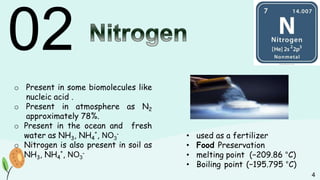
o Present in some biomolecules like
nucleic acid .
o Present in atmosphere as N2
approximately 78%.
o Present in the ocean and fresh
water as NH3, NH4
+
, NO3
-
o Nitrogen is also present in soil as
NH3, NH4
+
, NO3
-
• used as a fertilizer
• Food Preservation
• melting point (−209.86 °C)
• Boiling point (−195.795 °C)
4
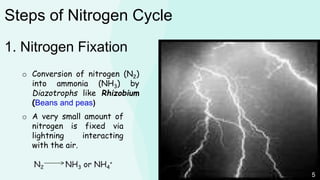
o A very small amount of
nitrogen is fixed via
lightning interacting
with the air.
N2 NH3 or NH4
+
1. Nitrogen Fixation
Steps of Nitrogen Cycle
o Conversion of nitrogen (N2)
into ammonia (NH3) by
Diazotrophs like Rhizobium
(Beans and peas)
5
Nitrifying bacteria add oxygen
to nitrogen in two steps:
STEP1:
Bacteria take in NH3 or NH4
+ & make
NO2
-Nitrite
Step2:
Bacteria take in NO2
- and make NO3
-
Nitrate
By – Nitrobactor like Nitrosomonas
2. Nitrification
6
3. Assimilation
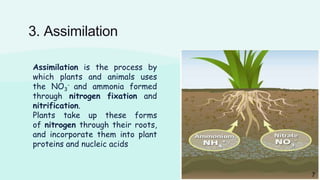
Assimilation is the process by
which plants and animals uses
the NO3
- and ammonia formed
through nitrogen fixation and
nitrification.
Plants take up these forms
of nitrogen through their roots,
and incorporate them into plant
proteins and nucleic acids
7
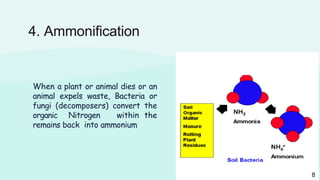
4. Ammonification
When a plant or animal dies or an
animal expels waste, Bacteria or
fungi (decomposers) convert the
organic Nitrogen within the
remains back into ammonium
8
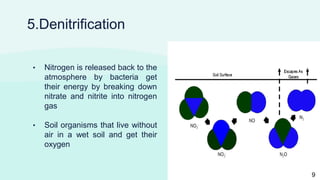
5.Denitrification
• Nitrogen is released back to the
atmosphere by bacteria get
their energy by breaking down
nitrate and nitrite into nitrogen
gas
• Soil organisms that live without
air in a wet soil and get their
oxygen
9
10
Marine Nitrogen cycle
N2 from the atmosphere.
Nitrogen cannot be utilized by
phytoplankton as N2 so it must
undergo nitrogen fixation which
is performed by cyanobacteria
11
Effect of Human Activities
12
03
• Deforestation
• Uses of fertilizer
• Industrial activities
Environmental Impact of
Nitrogen Cycles
04
Plants need nitrogen to synthesize
chlorophyll and so the nitrogen cycle is
absolutely essential for them
As plants use nitrogen for their
biochemical processes, animals obtain
the nitrogen and nitrogen compounds
from plants. Nitrogen is needed as is an
integral part of the cell composition. It is
due to the nitrogen cycle that animals
are also able to utilize the nitrogen
present in the air.
Disturbance in Nitrogen cycles always cause negative
impact in environment
Acid rain
Global Warming
Pollution
17
Dwindling air pollution
The vegetation is
growing better
14
05 Impact of Covid-19
References
● Respected Sagar Kumar Rajak Sir
● https://en.wikipedia.org/w/index.php?title=Spe
cial:Search&search=bio+geo+chemical+cycle
&fulltext=1&profile=default&ns0=1
● Slide Go & slide share
● https://www.sciencelearn.org.nz/
● https://ugc.berkeley.edu/background-
content/nitrogen/
15
Thanks you
DO YOU HAVE ANY
QUESTIONS?
16

Nitrogen cycle

  • 1.
    Presented By- Pankaj chelak M.Sc.1st semester S.O.S. in Environmental Science Pt. Ravishankar Shukla University Raipur (C.G.) 1
  • 2.
    Table of Contents Introduction 03 0102 04 05 Nitrogen Impact of Covid-19 Environmental Impact of Nitrogen Cycles 2 Effect of Human Activities
  • 3.
    Introduction 01o The nitrogencycle refers to the movement of nitrogen within and between the atmosphere, biosphere, hydrosphere and atmosphere. o The nitrogen cycle matters because nitrogen is an essential nutrient for sustaining life on Earth. 3
  • 4.
    02 o Present insome biomolecules like nucleic acid . o Present in atmosphere as N2 approximately 78%. o Present in the ocean and fresh water as NH3, NH4 + , NO3 - o Nitrogen is also present in soil as NH3, NH4 + , NO3 - • used as a fertilizer • Food Preservation • melting point (−209.86 °C) • Boiling point (−195.795 °C) 4
  • 5.
    o A verysmall amount of nitrogen is fixed via lightning interacting with the air. N2 NH3 or NH4 + 1. Nitrogen Fixation Steps of Nitrogen Cycle o Conversion of nitrogen (N2) into ammonia (NH3) by Diazotrophs like Rhizobium (Beans and peas) 5
  • 6.
    Nitrifying bacteria addoxygen to nitrogen in two steps: STEP1: Bacteria take in NH3 or NH4 + & make NO2 -Nitrite Step2: Bacteria take in NO2 - and make NO3 - Nitrate By – Nitrobactor like Nitrosomonas 2. Nitrification 6
  • 7.
    3. Assimilation Assimilation isthe process by which plants and animals uses the NO3 - and ammonia formed through nitrogen fixation and nitrification. Plants take up these forms of nitrogen through their roots, and incorporate them into plant proteins and nucleic acids 7
  • 8.
    4. Ammonification When aplant or animal dies or an animal expels waste, Bacteria or fungi (decomposers) convert the organic Nitrogen within the remains back into ammonium 8
  • 9.
    5.Denitrification • Nitrogen isreleased back to the atmosphere by bacteria get their energy by breaking down nitrate and nitrite into nitrogen gas • Soil organisms that live without air in a wet soil and get their oxygen 9
  • 10.
  • 11.
    Marine Nitrogen cycle N2from the atmosphere. Nitrogen cannot be utilized by phytoplankton as N2 so it must undergo nitrogen fixation which is performed by cyanobacteria 11
  • 12.
    Effect of HumanActivities 12 03 • Deforestation • Uses of fertilizer • Industrial activities
  • 13.
    Environmental Impact of NitrogenCycles 04 Plants need nitrogen to synthesize chlorophyll and so the nitrogen cycle is absolutely essential for them As plants use nitrogen for their biochemical processes, animals obtain the nitrogen and nitrogen compounds from plants. Nitrogen is needed as is an integral part of the cell composition. It is due to the nitrogen cycle that animals are also able to utilize the nitrogen present in the air. Disturbance in Nitrogen cycles always cause negative impact in environment Acid rain Global Warming Pollution
  • 14.
    17 Dwindling air pollution Thevegetation is growing better 14 05 Impact of Covid-19
  • 15.
    References ● Respected SagarKumar Rajak Sir ● https://en.wikipedia.org/w/index.php?title=Spe cial:Search&search=bio+geo+chemical+cycle &fulltext=1&profile=default&ns0=1 ● Slide Go & slide share ● https://www.sciencelearn.org.nz/ ● https://ugc.berkeley.edu/background- content/nitrogen/ 15
  • 16.
    Thanks you DO YOUHAVE ANY QUESTIONS? 16