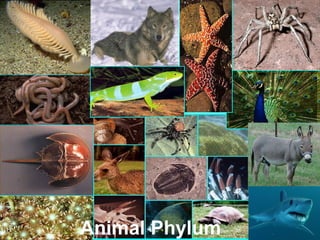
Animal Phylum
Animals
What are ANIMALS?
1. Many celled organisms that must get
energy by eating other organisms.
a. Herbivores – animals that eat only plants
a. Carnivores – animals that eat other animals
b. Omnivores – animals that eat both plants
and animals
Animals
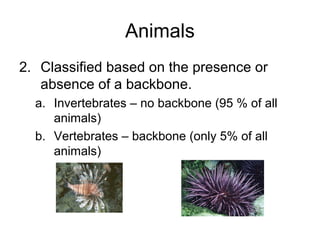
2. Classified based on the presence or
absence of a backbone.
a. Invertebrates – no backbone (95 % of all
animals)
b. Vertebrates – backbone (only 5% of all
animals)
Phylum Cnidaria – “Stinging Cells”
1.
2.
3.
4.

Invertebrates
All have Stinging cells – nematocysts
All marine
Simple organisms – just tissue, no
organs
5. Examples:
“Cnidarians”
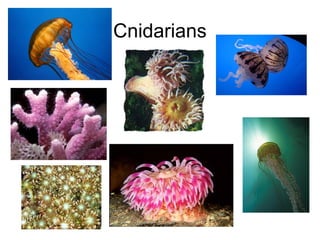
a. Jelly fish
b. Coral and Anemones
Cnidarians
Phylum Annelida – Segmented
Worms
1.
2.
3.
4.

Invertebrates with segmented body parts
Bristles (hairs) on body
Land and marine
Examples:
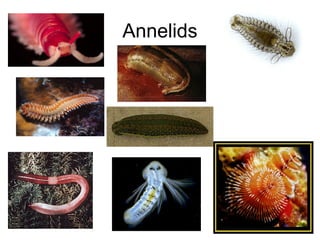
a. Earthworms
b. leeches

“Annelids”
Annelids
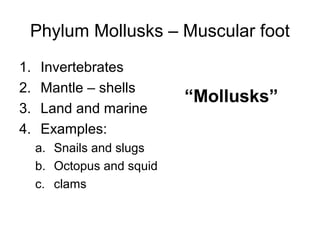
Phylum Mollusks – Muscular foot
1.
2.
3.
4.

Invertebrates
Mantle – shells
Land and marine
Examples:
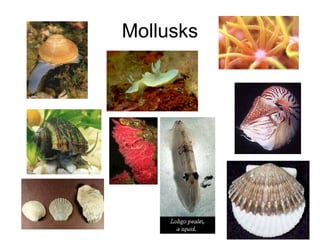
a. Snails and slugs
b. Octopus and squid
c. clams

“Mollusks”
Mollusks
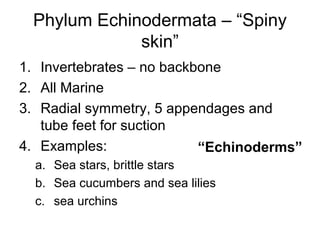
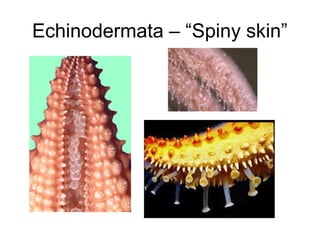
Phylum Echinodermata – “Spiny
skin”
1. Invertebrates – no backbone
2. All Marine
3. Radial symmetry, 5 appendages and
tube feet for suction
4. Examples:
“Echinoderms”
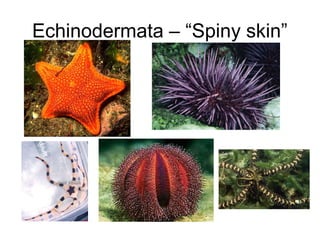
a. Sea stars, brittle stars
b. Sea cucumbers and sea lilies
c. sea urchins
Echinodermata – “Spiny skin”
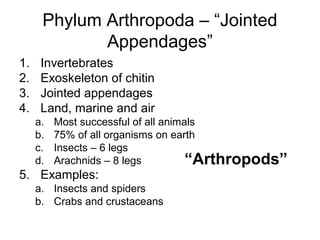
Phylum Arthropoda – “Jointed
Appendages”
1.
2.
3.
4.

Invertebrates
Exoskeleton of chitin
Jointed appendages
Land, marine and air
a.
b.
c.
d.

Most successful of all animals
75% of all organisms on earth
Insects – 6 legs
Arachnids – 8 legs
“Arthropods”

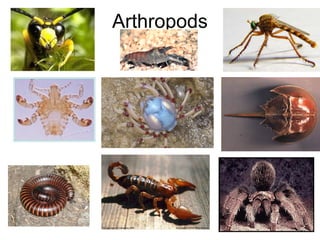
5. Examples:

a. Insects and spiders
b. Crabs and crustaceans
Arthropods
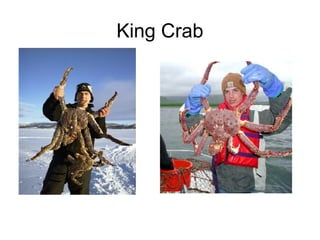
King Crab
Phylum Chordata – Backboned
animals
1.
2.
3.
4.
5.

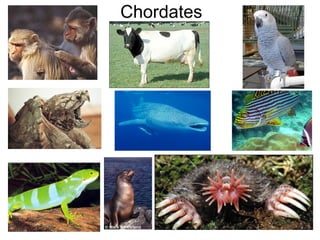
Vertebrates
Endo skeleton – inside of body
Land, marine and air
Most diverse phylum, many different types
Examples:
a.
b.
c.
d.

Amphibians
Fish
Reptiles and birds
Mammals (humans)

“Chordates”
Chordates
Questions
1. What phylum of organisms is the
largest?
2. What phylum has radial symmetry and
tube feet?
3. Arthropods have an exoskeleton made
up of ?
4. Which phylums are vertebrates and
which ones are invertebrates?

5.00 Animal phylum

  • 1.
  • 3.
    Animals What are ANIMALS? 1.Many celled organisms that must get energy by eating other organisms. a. Herbivores – animals that eat only plants a. Carnivores – animals that eat other animals b. Omnivores – animals that eat both plants and animals
  • 4.
    Animals 2. Classified basedon the presence or absence of a backbone. a. Invertebrates – no backbone (95 % of all animals) b. Vertebrates – backbone (only 5% of all animals)
  • 5.
    Phylum Cnidaria –“Stinging Cells” 1. 2. 3. 4. Invertebrates All have Stinging cells – nematocysts All marine Simple organisms – just tissue, no organs 5. Examples: “Cnidarians” a. Jelly fish b. Coral and Anemones
  • 6.
  • 7.
    Phylum Annelida –Segmented Worms 1. 2. 3. 4. Invertebrates with segmented body parts Bristles (hairs) on body Land and marine Examples: a. Earthworms b. leeches “Annelids”
  • 8.
  • 9.
    Phylum Mollusks –Muscular foot 1. 2. 3. 4. Invertebrates Mantle – shells Land and marine Examples: a. Snails and slugs b. Octopus and squid c. clams “Mollusks”
  • 10.
  • 11.
    Phylum Echinodermata –“Spiny skin” 1. Invertebrates – no backbone 2. All Marine 3. Radial symmetry, 5 appendages and tube feet for suction 4. Examples: “Echinoderms” a. Sea stars, brittle stars b. Sea cucumbers and sea lilies c. sea urchins
  • 12.
  • 13.
  • 14.
    Phylum Arthropoda –“Jointed Appendages” 1. 2. 3. 4. Invertebrates Exoskeleton of chitin Jointed appendages Land, marine and air a. b. c. d. Most successful of all animals 75% of all organisms on earth Insects – 6 legs Arachnids – 8 legs “Arthropods” 5. Examples: a. Insects and spiders b. Crabs and crustaceans
  • 15.
  • 16.
  • 17.
    Phylum Chordata –Backboned animals 1. 2. 3. 4. 5. Vertebrates Endo skeleton – inside of body Land, marine and air Most diverse phylum, many different types Examples: a. b. c. d. Amphibians Fish Reptiles and birds Mammals (humans) “Chordates”
  • 18.
  • 19.
    Questions 1. What phylumof organisms is the largest? 2. What phylum has radial symmetry and tube feet? 3. Arthropods have an exoskeleton made up of ? 4. Which phylums are vertebrates and which ones are invertebrates?