NEOPLASIA
- Ladi Anudeep
ISM-IUK
DEFINITION
• Neoplasia means “new growth”
• But every new growth is not neoplasia
• So, normal cells are transforming into neoplastic cells
• The study of neoplasms or tumors is called as ONCOLOGY
• All tumors have two basic components: 1) tumor parenchyma
• 2) reactive stroma
• Tumor parenchyma constitutes neoplastic cells
• Reactive stroma made up of connective tissue, blood vessels, and
cells of innate and adaptive immunity
• Tumor parenchyma play important role in nomenclature of tumors
and biological behavior of tumor
• Tumor will be benign or malignant depending on parenchymal cells
• Parenchymal cells produce growth factors that leads to production of
excess collagen and is called as DESMOPLASIA
• The tumors with high parenchymal content and lo stromal content
are SOFT and FLESHY
• In some tumors, severe desmoplasia is seen and is called as
SCIRRHOUS TUMORS which are stony hard ( e.g. female breast)
• Neoplastic tissue has some special growth characteristics:
• 1) excessive manner
• 2) unco-ordinated growth
• 3) persistent and progressive
• 4) autonomous growth
• Factors for normal cells transforming into neoplastic cells:
• 1) DNA damage
• 2) radiation
• 3) chemical carcinogens
• 4) genetic defect
Genetic Make-Up
• There are certain genes in cells, if stimulated starts proliferation of
cells and are called as PROTO-ONCO GENES
• Another type of genes, whose products stops proliferation of cells
and are called as TUMOR SUPPRESOR GENES
• Group of genes, whose products determine survival of cells and are
called as ANTI-APOPTOTIC GENES
• Another group of genes, whose products leads to apoptosis of cells
and are called as PRO-APOPTOTIC GENES
• Any abnormality or damage that stimulates proto-oncogenes, causes
NEOPLASIA
• If any damage to proto-oncogenes and anti-apoptotic genes, cells
over proliferates and over survive that automatically leads to
neoplasia
• Actually to develop neoplasia, several series of mutations must be
given and these mutations are called as SECONDARY MUTATIONS
• Neoplastic growth is does not perform any beneficial function to the
body and called as PURPOSELESS GROWTH
Classification of tumors
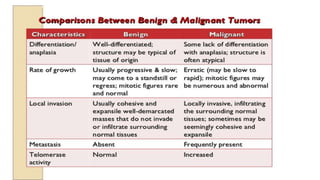
• BENIGN: tumor is said to be benign when the tumor is localized and show
no metastasis
• This type of tumors can be surgically removed
• Nomenclature of benign tumors is by attaching suffix-oma to name of cell
type from which tumor originates
• MALIGNANT: tumor is said to be malignant if the neoplastic cells can
invade other tissues and destroy adjacent structures and show metastasis
• These type are collectively referred as CANCERS
• Nomenclature of malignant tumors follows the same schema used for
benign conditions
BENIGN TUMORS
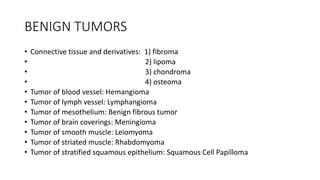
• Connective tissue and derivatives: 1) fibroma
• 2) lipoma
• 3) chondroma
• 4) osteoma
• Tumor of blood vessel: Hemangioma
• Tumor of lymph vessel: Lymphangioma
• Tumor of mesothelium: Benign fibrous tumor
• Tumor of brain coverings: Meningioma
• Tumor of smooth muscle: Leiomyoma
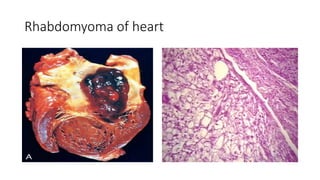
• Tumor of striated muscle: Rhabdomyoma
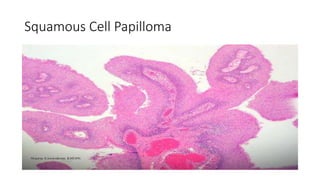
• Tumor of stratified squamous epithelium: Squamous Cell Papilloma
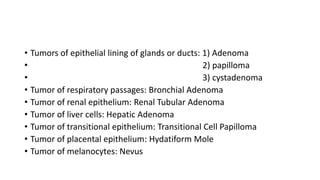
• Tumors of epithelial lining of glands or ducts: 1) Adenoma
• 2) papilloma
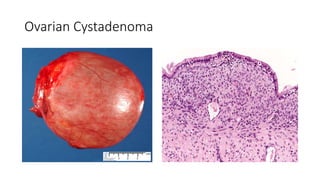
• 3) cystadenoma
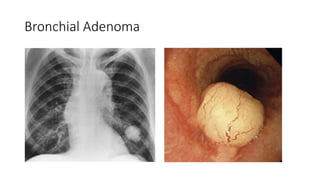
• Tumor of respiratory passages: Bronchial Adenoma
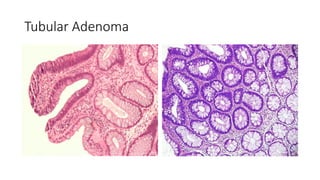
• Tumor of renal epithelium: Renal Tubular Adenoma
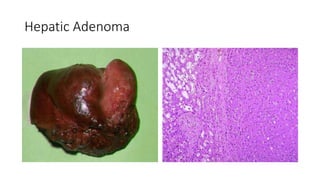
• Tumor of liver cells: Hepatic Adenoma
• Tumor of transitional epithelium: Transitional Cell Papilloma
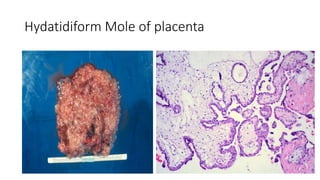
• Tumor of placental epithelium: Hydatiform Mole
• Tumor of melanocytes: Nevus
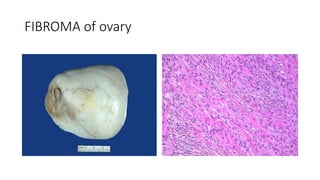
FIBROMA of ovary
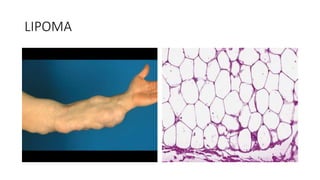
LIPOMA
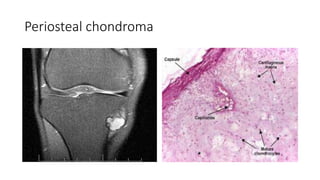
Periosteal chondroma
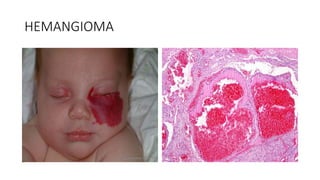
HEMANGIOMA
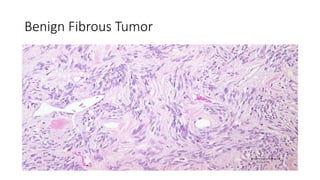
Benign Fibrous Tumor
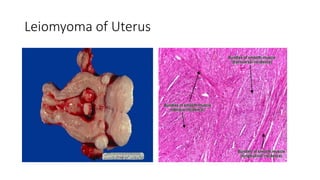
Leiomyoma of Uterus
Rhabdomyoma of heart
Squamous Cell Papilloma
Tubular Adenoma
Ovarian Cystadenoma
Bronchial Adenoma
Hepatic Adenoma
Hydatidiform Mole of placenta
Malignant Tumors
• Tumor of connective tissue and derivatives: 1) Fibro Sarcoma
• 2) liposarcoma
• 3) chondrosarcoma
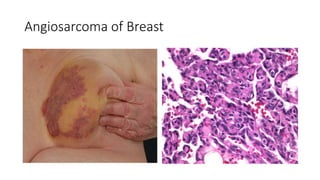
• Tumor of blood vessels: Angiosarcoma
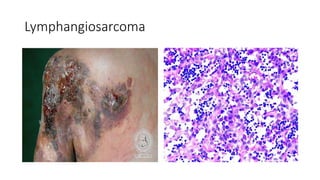
• Tumor of lymph vessels: lymphangiosarcoma
• Tumor of mesothelium: meningioma
• Tumor of hematopoietic cells: Leukemia
• Tumor of lymphoid tissue: Lymphoma
• Tumor of smooth muscle: Leiomyosarcoma
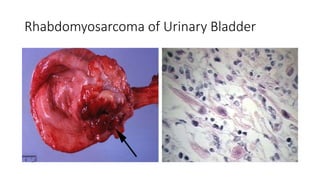
• Tumor of striated muscle: Rhabdomyosarcoma
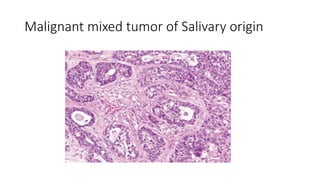
• Tumor of stratified squamous epithelium: Squamous Cell Carcinoma
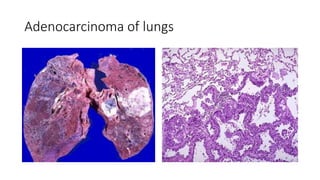
• Tumor of epithelial lining of glands: 1) adenocarcinoma
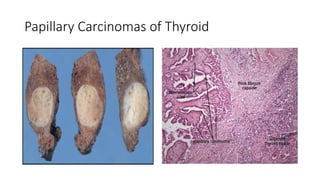
• 2) papillary carcinoma
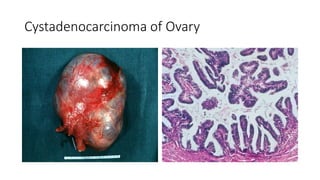
• 3) cystadenocarcinoma
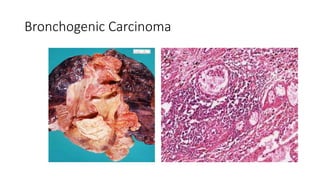
• Tumor of respiratory passages: Bronchogenic carcinoma
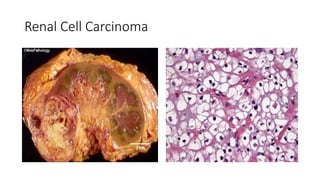
• Tumor of renal epithelium: Renal cell carcinoma
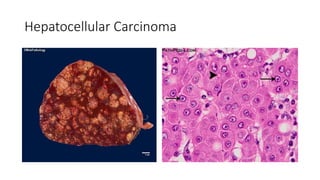
• Tumor of liver cells: Hepatocellular carcinoma
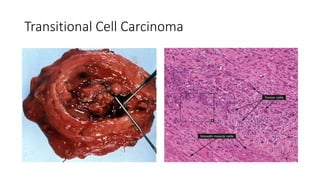
• Tumor of urinary tract epithelium: transitional cell carcinoma
• Tumor of placental epithelium: choriocarcinoma
• Tumor of melanocytes: malignant melanoma
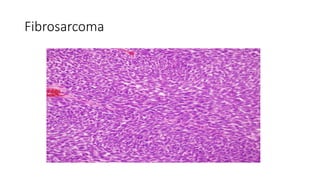
Fibrosarcoma
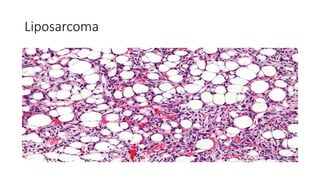
Liposarcoma
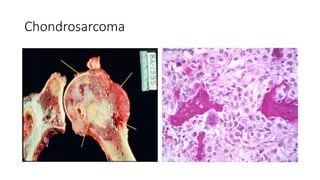
Chondrosarcoma
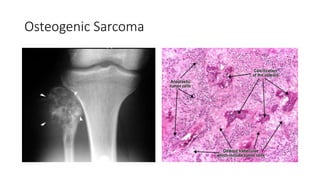
Osteogenic Sarcoma
Angiosarcoma of Breast
Lymphangiosarcoma
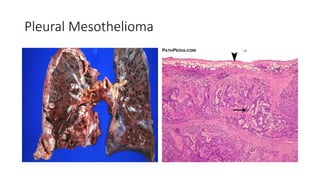
Pleural Mesothelioma
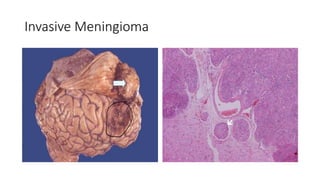
Invasive Meningioma
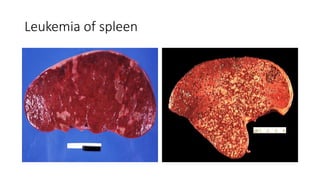
Leukemia of spleen
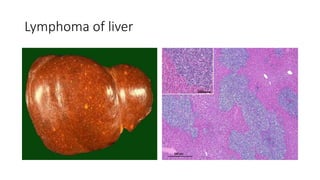
Lymphoma of liver
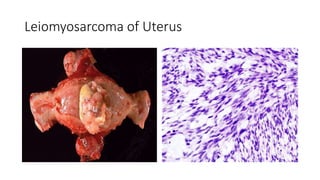
Leiomyosarcoma of Uterus
Rhabdomyosarcoma of Urinary Bladder
Squamous Cell Carcinoma
Adenocarcinoma of lungs
Papillary Carcinomas of Thyroid
Cystadenocarcinoma of Ovary
Bronchogenic Carcinoma
Renal Cell Carcinoma
Hepatocellular Carcinoma
Transitional Cell Carcinoma
Mixed Tumors
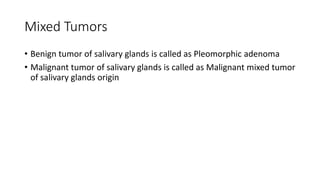
• Benign tumor of salivary glands is called as Pleomorphic adenoma
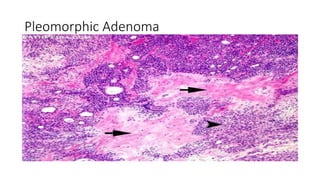
• Malignant tumor of salivary glands is called as Malignant mixed tumor
of salivary glands origin
Pleomorphic Adenoma
Malignant mixed tumor of Salivary origin

Neoplasia

  • 1.
  • 2.
    DEFINITION • Neoplasia means“new growth” • But every new growth is not neoplasia • So, normal cells are transforming into neoplastic cells • The study of neoplasms or tumors is called as ONCOLOGY • All tumors have two basic components: 1) tumor parenchyma • 2) reactive stroma • Tumor parenchyma constitutes neoplastic cells • Reactive stroma made up of connective tissue, blood vessels, and cells of innate and adaptive immunity
  • 3.
    • Tumor parenchymaplay important role in nomenclature of tumors and biological behavior of tumor • Tumor will be benign or malignant depending on parenchymal cells • Parenchymal cells produce growth factors that leads to production of excess collagen and is called as DESMOPLASIA • The tumors with high parenchymal content and lo stromal content are SOFT and FLESHY • In some tumors, severe desmoplasia is seen and is called as SCIRRHOUS TUMORS which are stony hard ( e.g. female breast)
  • 4.
    • Neoplastic tissuehas some special growth characteristics: • 1) excessive manner • 2) unco-ordinated growth • 3) persistent and progressive • 4) autonomous growth • Factors for normal cells transforming into neoplastic cells: • 1) DNA damage • 2) radiation • 3) chemical carcinogens • 4) genetic defect
  • 5.
    Genetic Make-Up • Thereare certain genes in cells, if stimulated starts proliferation of cells and are called as PROTO-ONCO GENES • Another type of genes, whose products stops proliferation of cells and are called as TUMOR SUPPRESOR GENES • Group of genes, whose products determine survival of cells and are called as ANTI-APOPTOTIC GENES • Another group of genes, whose products leads to apoptosis of cells and are called as PRO-APOPTOTIC GENES
  • 6.
    • Any abnormalityor damage that stimulates proto-oncogenes, causes NEOPLASIA • If any damage to proto-oncogenes and anti-apoptotic genes, cells over proliferates and over survive that automatically leads to neoplasia • Actually to develop neoplasia, several series of mutations must be given and these mutations are called as SECONDARY MUTATIONS • Neoplastic growth is does not perform any beneficial function to the body and called as PURPOSELESS GROWTH
  • 7.
    Classification of tumors •BENIGN: tumor is said to be benign when the tumor is localized and show no metastasis • This type of tumors can be surgically removed • Nomenclature of benign tumors is by attaching suffix-oma to name of cell type from which tumor originates • MALIGNANT: tumor is said to be malignant if the neoplastic cells can invade other tissues and destroy adjacent structures and show metastasis • These type are collectively referred as CANCERS • Nomenclature of malignant tumors follows the same schema used for benign conditions
  • 9.
    BENIGN TUMORS • Connectivetissue and derivatives: 1) fibroma • 2) lipoma • 3) chondroma • 4) osteoma • Tumor of blood vessel: Hemangioma • Tumor of lymph vessel: Lymphangioma • Tumor of mesothelium: Benign fibrous tumor • Tumor of brain coverings: Meningioma • Tumor of smooth muscle: Leiomyoma • Tumor of striated muscle: Rhabdomyoma • Tumor of stratified squamous epithelium: Squamous Cell Papilloma
  • 10.
    • Tumors ofepithelial lining of glands or ducts: 1) Adenoma • 2) papilloma • 3) cystadenoma • Tumor of respiratory passages: Bronchial Adenoma • Tumor of renal epithelium: Renal Tubular Adenoma • Tumor of liver cells: Hepatic Adenoma • Tumor of transitional epithelium: Transitional Cell Papilloma • Tumor of placental epithelium: Hydatiform Mole • Tumor of melanocytes: Nevus
  • 11.
  • 12.
  • 13.
  • 14.
  • 15.
  • 16.
  • 17.
  • 18.
  • 19.
  • 20.
  • 21.
  • 22.
  • 23.
  • 24.
    Malignant Tumors • Tumorof connective tissue and derivatives: 1) Fibro Sarcoma • 2) liposarcoma • 3) chondrosarcoma • Tumor of blood vessels: Angiosarcoma • Tumor of lymph vessels: lymphangiosarcoma • Tumor of mesothelium: meningioma • Tumor of hematopoietic cells: Leukemia • Tumor of lymphoid tissue: Lymphoma • Tumor of smooth muscle: Leiomyosarcoma • Tumor of striated muscle: Rhabdomyosarcoma • Tumor of stratified squamous epithelium: Squamous Cell Carcinoma
  • 25.
    • Tumor ofepithelial lining of glands: 1) adenocarcinoma • 2) papillary carcinoma • 3) cystadenocarcinoma • Tumor of respiratory passages: Bronchogenic carcinoma • Tumor of renal epithelium: Renal cell carcinoma • Tumor of liver cells: Hepatocellular carcinoma • Tumor of urinary tract epithelium: transitional cell carcinoma • Tumor of placental epithelium: choriocarcinoma • Tumor of melanocytes: malignant melanoma
  • 26.
  • 27.
  • 28.
  • 29.
  • 30.
  • 31.
  • 32.
  • 33.
  • 34.
  • 35.
  • 36.
  • 37.
  • 38.
  • 39.
  • 40.
  • 41.
  • 42.
  • 43.
  • 44.
  • 45.
  • 46.
    Mixed Tumors • Benigntumor of salivary glands is called as Pleomorphic adenoma • Malignant tumor of salivary glands is called as Malignant mixed tumor of salivary glands origin
  • 47.
  • 48.
    Malignant mixed tumorof Salivary origin