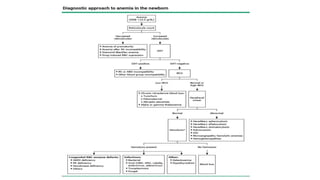
Anemia In Childhood
-Ladi Anudeep
ISM-IUK
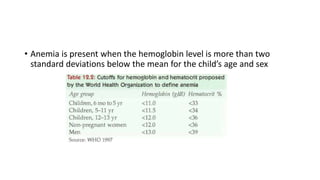
• Anemia is present when the hemoglobin level is more than two
standard deviations below the mean for the child’s age and sex
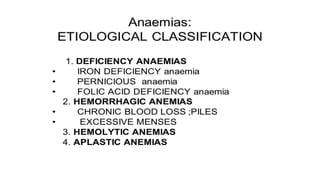
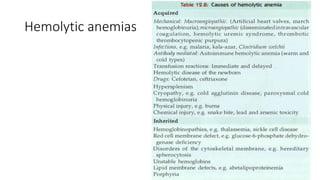
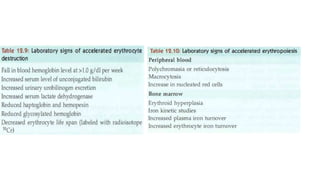
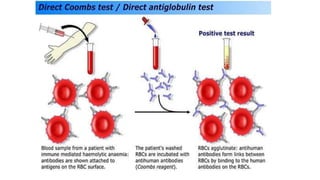
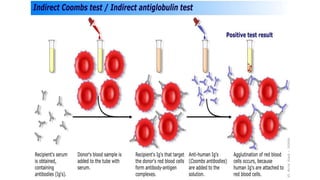
Hemolytic anemias
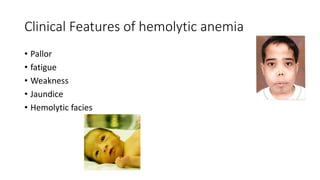
Clinical Features of hemolytic anemia
• Pallor
• fatigue
• Weakness
• Jaundice
• Hemolytic facies
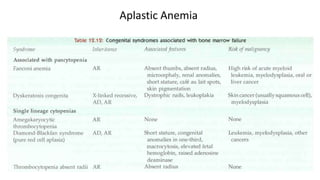
Aplastic Anemia
Hemoglobinopathies
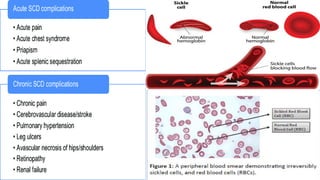
Sickle cell Disease
• Sickle cell anemia is an autosomal recessive disease that results from the
substitution of valine for glutamic acid at position 6 of the beta-globin
gene.
• Patients who are homozygous for the HbS gene have sickle cell disease.
Patients who are heterozygous for the HbS gene have sickle trait
• Crisis in sickle cell disease:
1. Vaso-occlusive crisis
2. Acute Chest Syndrome
3. Sequestration crisis
4. Aplastic Crisis
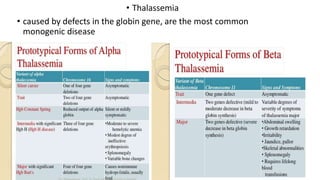
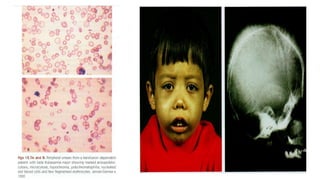
• Thalassemia
• caused by defects in the globin gene, are the most common
monogenic disease
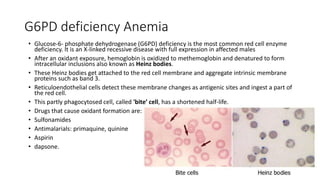
G6PD deficiency Anemia
• Glucose-6- phosphate dehydrogenase (G6PD) deficiency is the most common red cell enzyme
deficiency. It is an X-linked recessive disease with full expression in affected males
• After an oxidant exposure, hemoglobin is oxidized to methemoglobin and denatured to form
intracellular inclusions also known as Heinz bodies.
• These Heinz bodies get attached to the red cell membrane and aggregate intrinsic membrane
proteins such as band 3.
• Reticuloendothelial cells detect these membrane changes as antigenic sites and ingest a part of
the red cell.
• This partly phagocytosed cell, called 'bite’ cell, has a shortened half-life.
• Drugs that cause oxidant formation are:
• Sulfonamides
• Antimalarials: primaquine, quinine
• Aspirin
• dapsone.

Anemia In Childhood

  • 1.
  • 6.
    • Anemia ispresent when the hemoglobin level is more than two standard deviations below the mean for the child’s age and sex
  • 9.
  • 10.
    Clinical Features ofhemolytic anemia • Pallor • fatigue • Weakness • Jaundice • Hemolytic facies
  • 15.
  • 16.
    Hemoglobinopathies Sickle cell Disease •Sickle cell anemia is an autosomal recessive disease that results from the substitution of valine for glutamic acid at position 6 of the beta-globin gene. • Patients who are homozygous for the HbS gene have sickle cell disease. Patients who are heterozygous for the HbS gene have sickle trait • Crisis in sickle cell disease: 1. Vaso-occlusive crisis 2. Acute Chest Syndrome 3. Sequestration crisis 4. Aplastic Crisis
  • 18.
    • Thalassemia • causedby defects in the globin gene, are the most common monogenic disease
  • 20.
    G6PD deficiency Anemia •Glucose-6- phosphate dehydrogenase (G6PD) deficiency is the most common red cell enzyme deficiency. It is an X-linked recessive disease with full expression in affected males • After an oxidant exposure, hemoglobin is oxidized to methemoglobin and denatured to form intracellular inclusions also known as Heinz bodies. • These Heinz bodies get attached to the red cell membrane and aggregate intrinsic membrane proteins such as band 3. • Reticuloendothelial cells detect these membrane changes as antigenic sites and ingest a part of the red cell. • This partly phagocytosed cell, called 'bite’ cell, has a shortened half-life. • Drugs that cause oxidant formation are: • Sulfonamides • Antimalarials: primaquine, quinine • Aspirin • dapsone.