CELL INJURY AND
HYPERTROPHY
Presented By
Maryam Manzoor
Lecturer Pharmacology
Rashid Latif College of Pharmacy
CELL INJURY/ ADAPTION AND CELL
DEATH
 Cells are structural and functional unit of body which
constantly keep on adjusting their structure and
function to accommodate changing demands and
extracellular stresses in order to maintain
homeostasis.
CELL INJURY/ ADAPTION AND CELL
DEATH
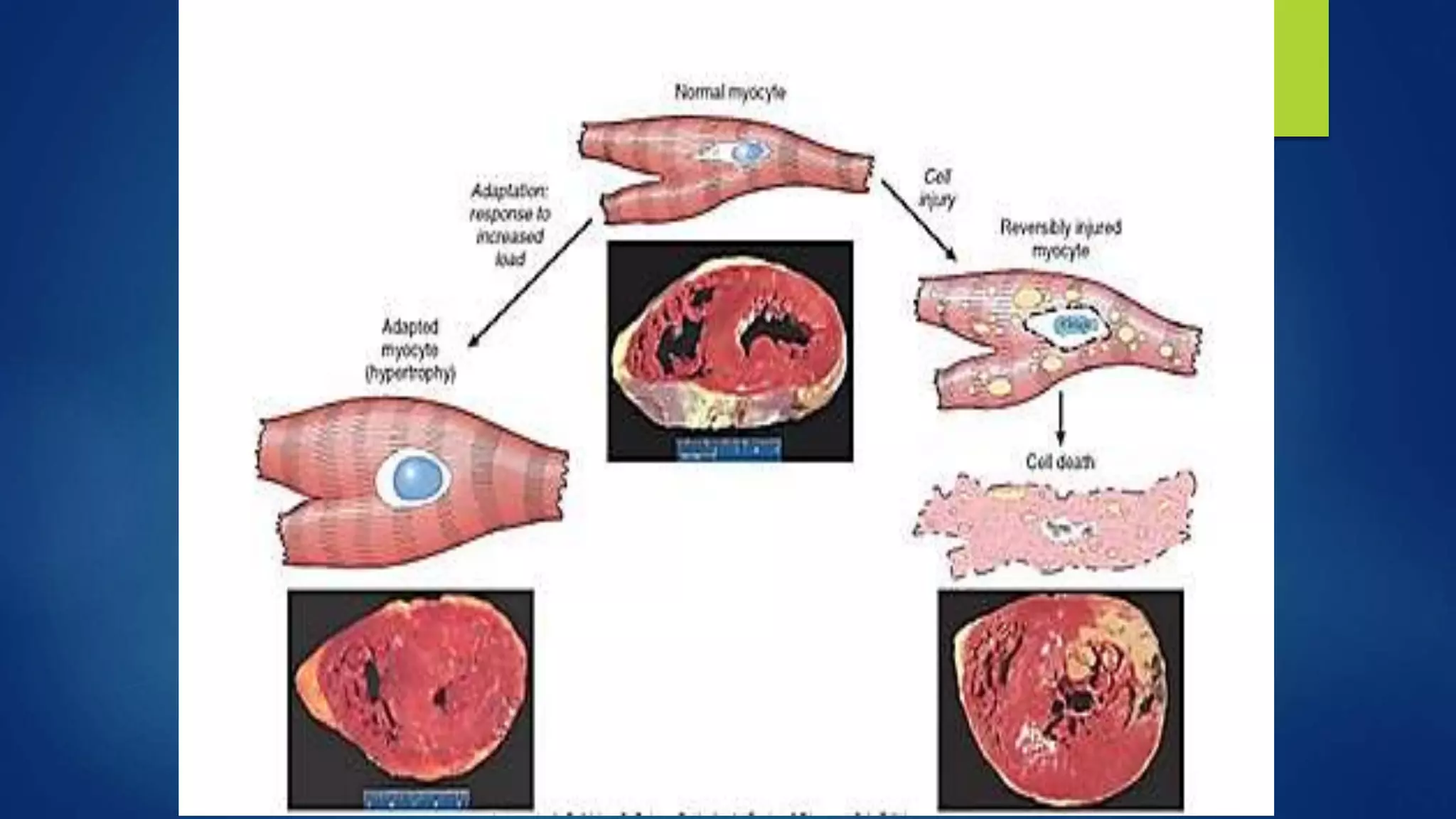
 As cells encounter physiologic stresses or pathologic
stimuli, they can undergo adaptation, achieving a
new state and preserving its function.
 If the adaptive capability is exceeded or if the
external stress is inherently harmful, cell injury
develops.
CELL INJURY/ ADAPTION AND CELL
DEATH
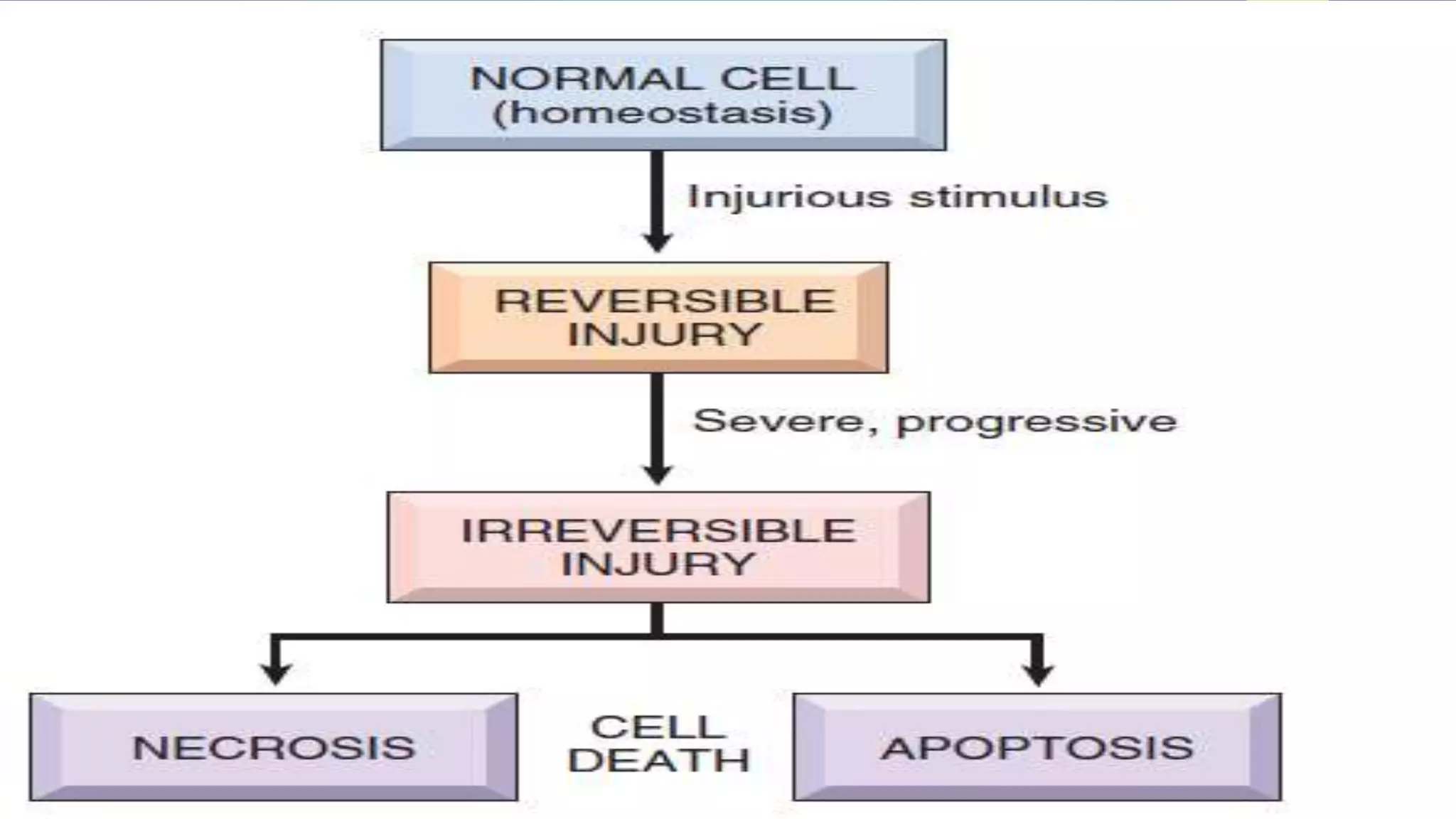
 Within certain limits injury is reversible, and cells
return to a stable baseline; however, severe or
persistent stress results in irreversible injury and
death of the affected cells.
MECHANISMS OF CELL INJURY
CELLULAR ADAPTATION
 Adaptations are reversible changes in the number, size,
metabolic activity, or functions of cells in response to
changes in their environment.
 Physiologic adaptations usually represent responses of
cells to normal stimulation by hormones or endogenous
chemical mediators (e.g., the hormone-induced
enlargement of the breast and uterus during
pregnancy).
 Pathologic adaptations are responses to stress that allow
cells to modulate their structure and function and thus
escape injury.
 Pathologic adaptations can be either hypertrophy,
hyperplasia, atrophy, metaplasia.
1- HYPERTROPHY
 Hypertrophy is an increase in the size of cells
resulting in increase in the size of the organ.
 In hypertrophy there are no new cells, just bigger
cells containing increased amounts of structural
proteins and organelles.
 Hypertrophy occurs when cells have a limited
capacity to divide.
 Hypertrophy can be physiologic or pathologic.
PHYSIOLOGICAL HYPERTROPHY
 Occurs in response to normal physiological
requirement.
EXAMPLES
 Uterus enlargement in pregnancy due to increased
estrogen stimulated smooth muscles hypertrophy.
 Increased skeletal muscles due increased workload.
PATHOLOGIC HYPERTROPHY
 Occurs in response to any pathological condition.
EXAMPLES
 Cardiac enlargement that occurs with hypertension.
 Smooth muscles hypertrophy in pyloric stenosis
MECHANISMS INVOLVING CARDIAL
HYPERTROPHY
 Mechanical Triggers (stretch)
 Trophic Triggers (activation of Alpha
adrenergic receptors)
 Stimulation of signal transduction-----
synthesis of genes that form proteins like
myofilaments----- increased force and
contraction---------- increased work
demand--- cell size increased.
 An adaptation to stress such as hypertrophy can
progress to functionally significant cell injury if the
stress is not relieved.

Cell injury and hypertrophy

  • 1.
    CELL INJURY AND HYPERTROPHY PresentedBy Maryam Manzoor Lecturer Pharmacology Rashid Latif College of Pharmacy
  • 2.
    CELL INJURY/ ADAPTIONAND CELL DEATH  Cells are structural and functional unit of body which constantly keep on adjusting their structure and function to accommodate changing demands and extracellular stresses in order to maintain homeostasis.
  • 3.
    CELL INJURY/ ADAPTIONAND CELL DEATH  As cells encounter physiologic stresses or pathologic stimuli, they can undergo adaptation, achieving a new state and preserving its function.  If the adaptive capability is exceeded or if the external stress is inherently harmful, cell injury develops.
  • 4.
    CELL INJURY/ ADAPTIONAND CELL DEATH  Within certain limits injury is reversible, and cells return to a stable baseline; however, severe or persistent stress results in irreversible injury and death of the affected cells.
  • 7.
  • 8.
    CELLULAR ADAPTATION  Adaptationsare reversible changes in the number, size, metabolic activity, or functions of cells in response to changes in their environment.  Physiologic adaptations usually represent responses of cells to normal stimulation by hormones or endogenous chemical mediators (e.g., the hormone-induced enlargement of the breast and uterus during pregnancy).  Pathologic adaptations are responses to stress that allow cells to modulate their structure and function and thus escape injury.  Pathologic adaptations can be either hypertrophy, hyperplasia, atrophy, metaplasia.
  • 9.
    1- HYPERTROPHY  Hypertrophyis an increase in the size of cells resulting in increase in the size of the organ.
  • 10.
     In hypertrophythere are no new cells, just bigger cells containing increased amounts of structural proteins and organelles.  Hypertrophy occurs when cells have a limited capacity to divide.  Hypertrophy can be physiologic or pathologic.
  • 11.
    PHYSIOLOGICAL HYPERTROPHY  Occursin response to normal physiological requirement. EXAMPLES  Uterus enlargement in pregnancy due to increased estrogen stimulated smooth muscles hypertrophy.  Increased skeletal muscles due increased workload.
  • 13.
    PATHOLOGIC HYPERTROPHY  Occursin response to any pathological condition. EXAMPLES  Cardiac enlargement that occurs with hypertension.  Smooth muscles hypertrophy in pyloric stenosis
  • 15.
    MECHANISMS INVOLVING CARDIAL HYPERTROPHY Mechanical Triggers (stretch)  Trophic Triggers (activation of Alpha adrenergic receptors)  Stimulation of signal transduction----- synthesis of genes that form proteins like myofilaments----- increased force and contraction---------- increased work demand--- cell size increased.
  • 16.
     An adaptationto stress such as hypertrophy can progress to functionally significant cell injury if the stress is not relieved.