Mercury in Human Body
- Ladi Anudeep
ISM-IUK
Key Facts
• Mercury is a naturally occurring element that is found in air, water and soil.
• Exposure to mercury – even small amounts – may cause serious health
problems, and is a threat to the development of the child in utero and early
in life.
• Mercury may have toxic effects on the nervous, digestive and immune
systems, and on lungs, kidneys, skin and eyes.
• Mercury is considered by WHO as one of the top ten chemicals or groups
of chemicals of major public health concern.
• People are mainly exposed to methylmercury, an organic compound, when
they eat fish and shellfish that contain the compound.
• Methylmercury is very different to ethyl mercury. Ethyl mercury is used as a
preservative in some vaccines and does not pose a health risk.
• Mercury occurs naturally in the earth's crust.
• It is released into the environment from volcanic activity, weathering
of rocks and as a result of human activity.
• Human activity is the main cause of mercury releases, particularly
coal-fired power stations, residential coal burning for heating and
cooking, industrial processes, waste incinerators and as a result of
mining for mercury, gold and other metals.
• mercury can be transformed by bacteria into methylmercury.
Methylmercury then bioaccumulates (bioaccumulation occurs when
an organism contains higher concentrations of the substance than do
the surroundings) in fish and shellfish
Factors that determine whether health effects
occur and their severity include:
• the type of mercury concerned;
• the dose;
• the age or developmental stage of the person exposed (the foetus is
most susceptible);
• the duration of exposure;
• the route of exposure (inhalation, ingestion or dermal contact).
Limits for mercury concentration
• Normal whole blood mercury is usually <10 ng/mL.
• Normal urine mercury is usually <20 ng/mL
• Maximum contaminant level for mercury in drinking water is 0.002
mg/L or 2 ppb.
• Normal soil mercury levels range from 20 to 625 parts of mercury per
billion parts of soil.
Health effects of mercury exposure
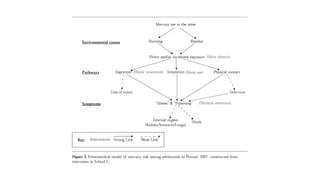
• Elemental and methylmercury are toxic to the central and peripheral
nervous systems.
• The inhalation of mercury vapour can produce harmful effects on the
nervous, digestive and immune systems, lungs and kidneys, and may
be fatal.
• The inorganic salts of mercury are corrosive to the skin, eyes and
gastrointestinal tract, and may induce kidney toxicity if ingested.
• Neurological and behavioural disorders may be observed after
inhalation, ingestion or dermal exposure of different mercury
compounds.
• Symptoms include tremors, insomnia, memory loss, neuromuscular
effects, headaches and cognitive and motor dysfunction.
• Kidney effects have been reported, ranging from increased protein in
the urine to kidney failure.
• Mild, subclinical signs of central nervous system toxicity can be seen
in workers exposed to an elemental mercury level in the air of 20
μg/m3 or more for several years.
Preventive measures
• There are several ways to prevent adverse health effects:
• Promote the use of clean energy sources that do not burn coal:
• Burning coal for power and heat is a major source of mercury. Coal
contains mercury and other hazardous air pollutants that are emitted
when the coal is burned incoal-fired power plants, industrial boilers
and household stoves.
• Eliminate mercury mining, and use of mercury in gold extraction and
other industrial processes:
• Mercury is an element that cannot be destroyed; therefore, mercury
already in use can be recycled for other essential uses, with no
further need for mercury mining.
• Non-mercury (non-cyanide) gold-extraction techniques need to be
promoted and implemented, and where mercury is still used safer
work practices need to be employed to prevent exposure
• Phase out use of non-essential mercury-containing products and
implement safe handling, use and disposal of remaining mercury-
containing products.
• Mercury is contained in many products, including:
• batteries
• measuring devices, such as thermometers and barometers
• electric switches and relays in equipment
• lamps (including some types of light bulbs)
• dental amalgam (for dental fillings)
• skin-lightening products and other cosmetics
• pharmaceuticals.

Mercury in human body

  • 1.
    Mercury in HumanBody - Ladi Anudeep ISM-IUK
  • 2.
    Key Facts • Mercuryis a naturally occurring element that is found in air, water and soil. • Exposure to mercury – even small amounts – may cause serious health problems, and is a threat to the development of the child in utero and early in life. • Mercury may have toxic effects on the nervous, digestive and immune systems, and on lungs, kidneys, skin and eyes. • Mercury is considered by WHO as one of the top ten chemicals or groups of chemicals of major public health concern. • People are mainly exposed to methylmercury, an organic compound, when they eat fish and shellfish that contain the compound. • Methylmercury is very different to ethyl mercury. Ethyl mercury is used as a preservative in some vaccines and does not pose a health risk.
  • 3.
    • Mercury occursnaturally in the earth's crust. • It is released into the environment from volcanic activity, weathering of rocks and as a result of human activity. • Human activity is the main cause of mercury releases, particularly coal-fired power stations, residential coal burning for heating and cooking, industrial processes, waste incinerators and as a result of mining for mercury, gold and other metals. • mercury can be transformed by bacteria into methylmercury. Methylmercury then bioaccumulates (bioaccumulation occurs when an organism contains higher concentrations of the substance than do the surroundings) in fish and shellfish
  • 5.
    Factors that determinewhether health effects occur and their severity include: • the type of mercury concerned; • the dose; • the age or developmental stage of the person exposed (the foetus is most susceptible); • the duration of exposure; • the route of exposure (inhalation, ingestion or dermal contact).
  • 6.
    Limits for mercuryconcentration • Normal whole blood mercury is usually <10 ng/mL. • Normal urine mercury is usually <20 ng/mL • Maximum contaminant level for mercury in drinking water is 0.002 mg/L or 2 ppb. • Normal soil mercury levels range from 20 to 625 parts of mercury per billion parts of soil.
  • 7.
    Health effects ofmercury exposure • Elemental and methylmercury are toxic to the central and peripheral nervous systems. • The inhalation of mercury vapour can produce harmful effects on the nervous, digestive and immune systems, lungs and kidneys, and may be fatal. • The inorganic salts of mercury are corrosive to the skin, eyes and gastrointestinal tract, and may induce kidney toxicity if ingested. • Neurological and behavioural disorders may be observed after inhalation, ingestion or dermal exposure of different mercury compounds.
  • 8.
    • Symptoms includetremors, insomnia, memory loss, neuromuscular effects, headaches and cognitive and motor dysfunction. • Kidney effects have been reported, ranging from increased protein in the urine to kidney failure. • Mild, subclinical signs of central nervous system toxicity can be seen in workers exposed to an elemental mercury level in the air of 20 μg/m3 or more for several years.
  • 9.
    Preventive measures • Thereare several ways to prevent adverse health effects: • Promote the use of clean energy sources that do not burn coal: • Burning coal for power and heat is a major source of mercury. Coal contains mercury and other hazardous air pollutants that are emitted when the coal is burned incoal-fired power plants, industrial boilers and household stoves.
  • 10.
    • Eliminate mercurymining, and use of mercury in gold extraction and other industrial processes: • Mercury is an element that cannot be destroyed; therefore, mercury already in use can be recycled for other essential uses, with no further need for mercury mining. • Non-mercury (non-cyanide) gold-extraction techniques need to be promoted and implemented, and where mercury is still used safer work practices need to be employed to prevent exposure
  • 11.
    • Phase outuse of non-essential mercury-containing products and implement safe handling, use and disposal of remaining mercury- containing products. • Mercury is contained in many products, including: • batteries • measuring devices, such as thermometers and barometers • electric switches and relays in equipment • lamps (including some types of light bulbs) • dental amalgam (for dental fillings) • skin-lightening products and other cosmetics • pharmaceuticals.