Pre by lect : MR ZAHID REHMAN
IPMS(KMU)
The formation of a localizad area of ischemic
necrosis within a tissue or organ due to impaired
arterial supply or the venous drainage
The necrosis area is called “infarct”.
An extremely important cause of clinical illness:
…myocardiac infarction
…cerebral infarction
Ischemia necrosis of the extremities
(gangrene) is a serous problum in the
diabetec population.
Causes
 Occlusion of arterial supply or venous drainage
Thrombosis, embolism, athermanous
plaques, external compression
 Functional spasm of arteriole
 Traumatic rupture of the artery
Types
 White infarcts (anemic infarcts)
 Red infarcts (hemorrhagic infarcts)
 Septic infarcts
White infarction
 Arterial occlusion
 Solid, compact organs
 Few collateral circulation
 (spleen, kidney, heart, brain, etc.)
Morphology
Gross
• Dull pale, dry, wedge-shaped necrotic lesion
• A hemorrhagic zone surrounding
Spleen infarction
Brain infarction (liquefied necrosis)
Red infarction
♦ Arterial occlusion
♦ Venous occlusion
♦ Loose tissue
♦ Dual circulations: lung , small intestine
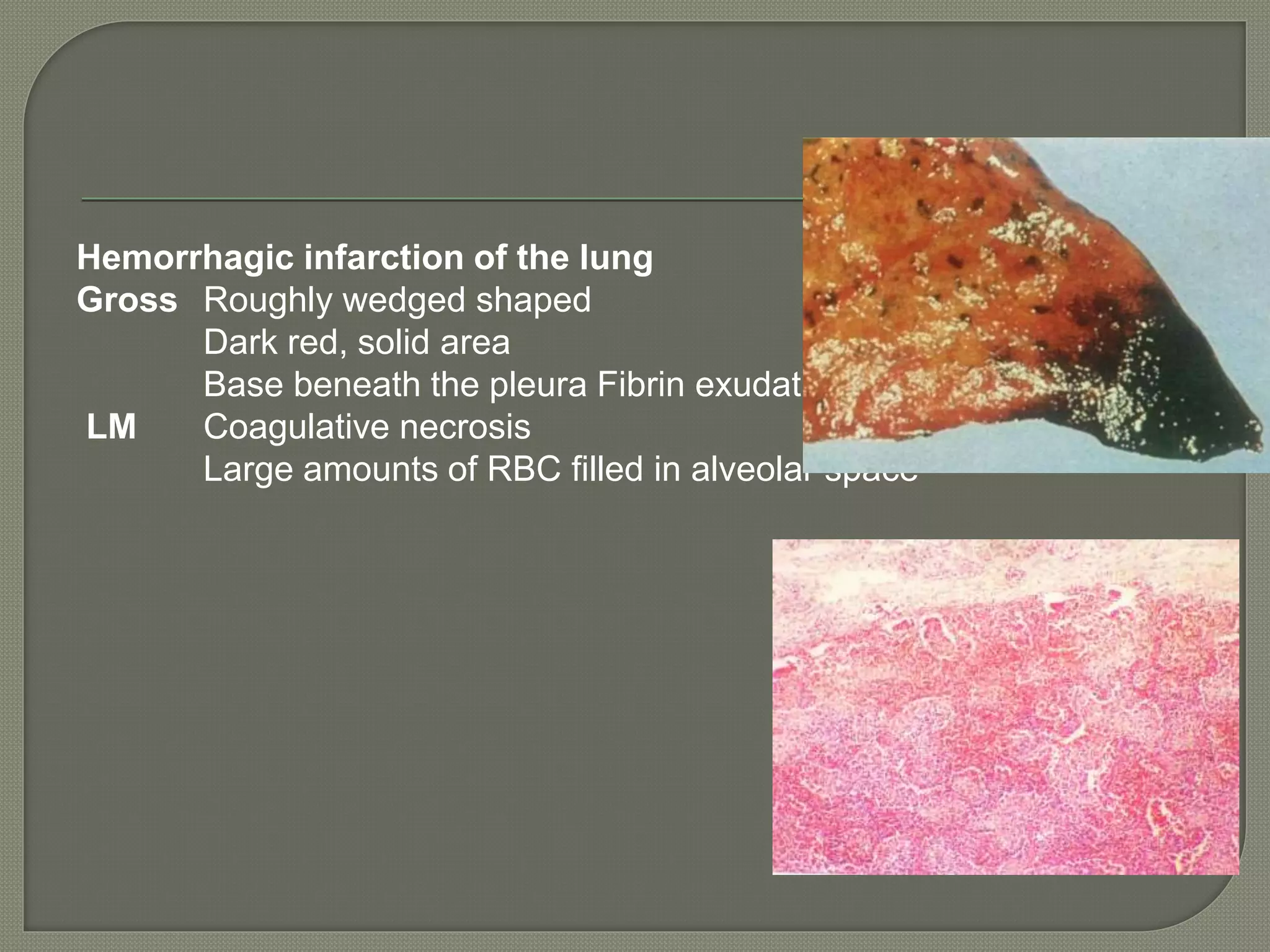
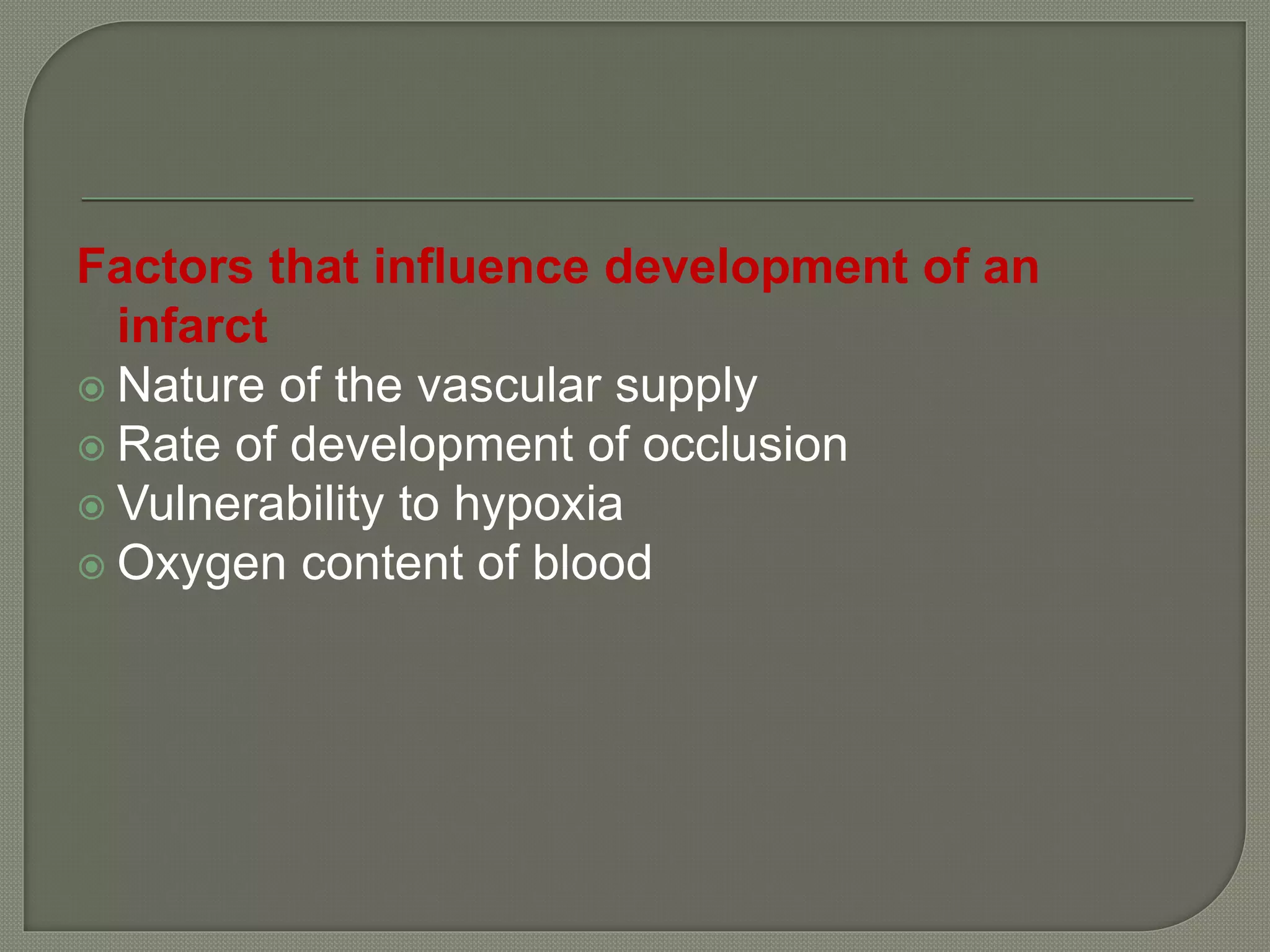
Hemorrhagic infarction of the lung
Gross Roughly wedged shaped
Dark red, solid area
Base beneath the pleura Fibrin exudation
LM Coagulative necrosis
Large amounts of RBC filled in alveolar space
Hemorrhagic infarction of the intestine
Septic Infarction
 Bacteria containing emboli
 May form abscess and pus
Factors that influence development of an
infarct
 Nature of the vascular supply
 Rate of development of occlusion
 Vulnerability to hypoxia
 Oxygen content of blood
THANK YOU

Infarction

  • 1.
    Pre by lect: MR ZAHID REHMAN IPMS(KMU)
  • 2.
    The formation ofa localizad area of ischemic necrosis within a tissue or organ due to impaired arterial supply or the venous drainage The necrosis area is called “infarct”. An extremely important cause of clinical illness: …myocardiac infarction …cerebral infarction
  • 3.
    Ischemia necrosis ofthe extremities (gangrene) is a serous problum in the diabetec population. Causes  Occlusion of arterial supply or venous drainage Thrombosis, embolism, athermanous plaques, external compression  Functional spasm of arteriole  Traumatic rupture of the artery
  • 4.
    Types  White infarcts(anemic infarcts)  Red infarcts (hemorrhagic infarcts)  Septic infarcts
  • 5.
    White infarction  Arterialocclusion  Solid, compact organs  Few collateral circulation  (spleen, kidney, heart, brain, etc.) Morphology Gross • Dull pale, dry, wedge-shaped necrotic lesion • A hemorrhagic zone surrounding
  • 6.
  • 7.
  • 8.
    Red infarction ♦ Arterialocclusion ♦ Venous occlusion ♦ Loose tissue ♦ Dual circulations: lung , small intestine
  • 9.
    Hemorrhagic infarction ofthe lung Gross Roughly wedged shaped Dark red, solid area Base beneath the pleura Fibrin exudation LM Coagulative necrosis Large amounts of RBC filled in alveolar space
  • 10.
  • 11.
    Septic Infarction  Bacteriacontaining emboli  May form abscess and pus
  • 12.
    Factors that influencedevelopment of an infarct  Nature of the vascular supply  Rate of development of occlusion  Vulnerability to hypoxia  Oxygen content of blood
  • 13.