N-Well Process
Step1: Substrate
Primarily, start the process with a P-substrate.
Step2: Oxidation
The oxidation process is done by using high-purity oxygen and hydrogen, which are exposed
in an oxidation furnace approximately at 1000 degree centigrade.
Step3: Photoresist
A light-sensitive polymer that softens whenever exposed to light is called as Photoresist layer.
It is formed.
Step4: Masking
The photoresist is exposed to UV rays through the N-well mask
N-Well Process
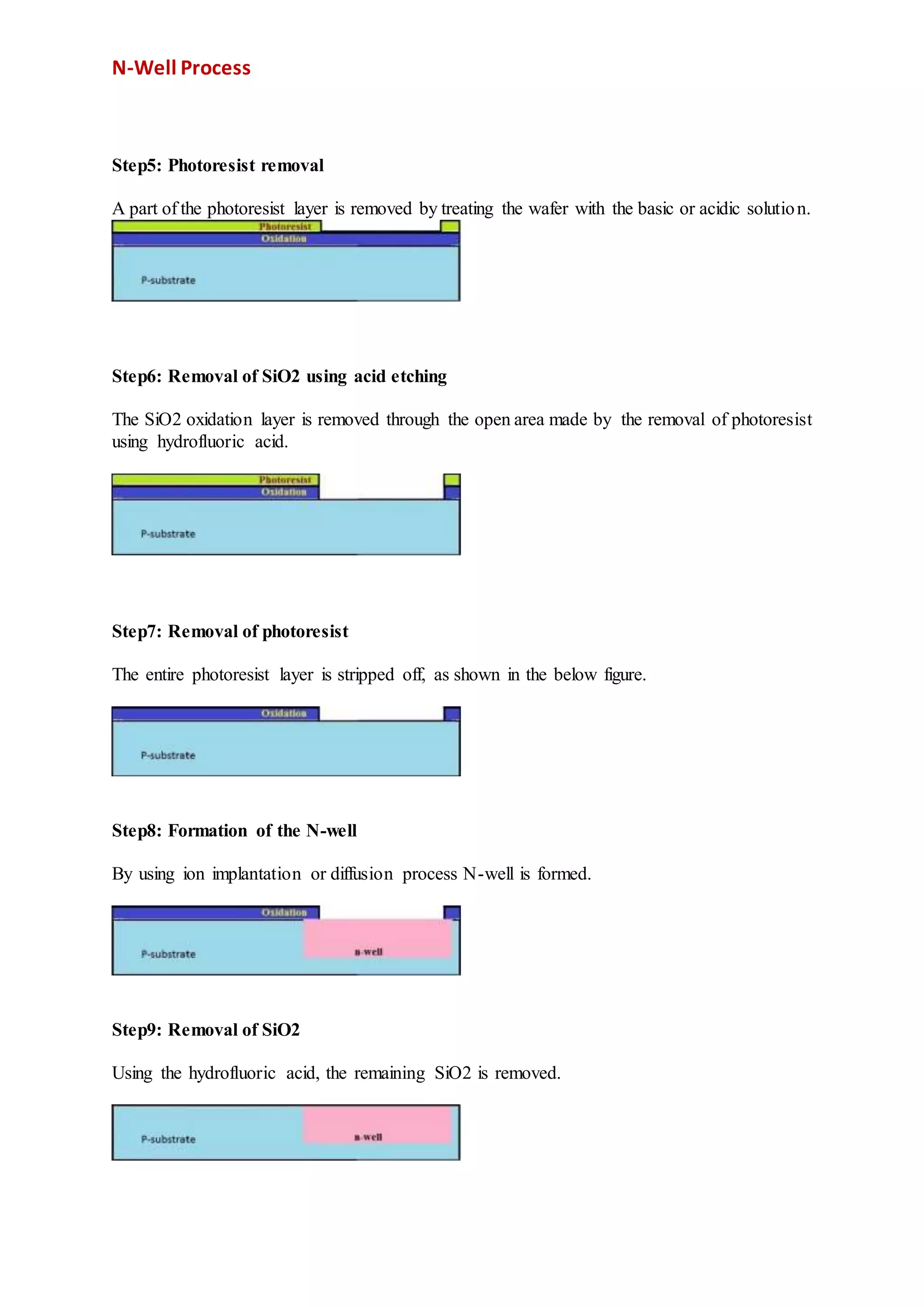
Step5: Photoresist removal
A part of the photoresist layer is removed by treating the wafer with the basic or acidic solution.
Step6: Removal of SiO2 using acid etching
The SiO2 oxidation layer is removed through the open area made by the removal of photoresist
using hydrofluoric acid.
Step7: Removal of photoresist
The entire photoresist layer is stripped off, as shown in the below figure.
Step8: Formation of the N-well
By using ion implantation or diffusion process N-well is formed.
Step9: Removal of SiO2
Using the hydrofluoric acid, the remaining SiO2 is removed.
N-Well Process
Step10: Deposition of polysilicon
Chemical Vapor Deposition (CVD) process is used to deposit a very thin layer of gate oxide.
Step11: Removing the layer barring a small area for the Gates
Except the two small regions required for forming the Gates of NMOS and PMOS, the
remaining layer is stripped off.
Step12: Oxidation process
Next, an oxidation layer is formed on this layer with two small regions for the formation of the
gate terminals of NMOS and PMOS.
Step13: Masking and N-diffusion
By using the masking process small gaps are made for the purpose of N-diffusion.
The n-type (n+) dopants are diffused or ion implanted, and the three n+ are formed for the
formation of the terminals of NMOS.
N-Well Process
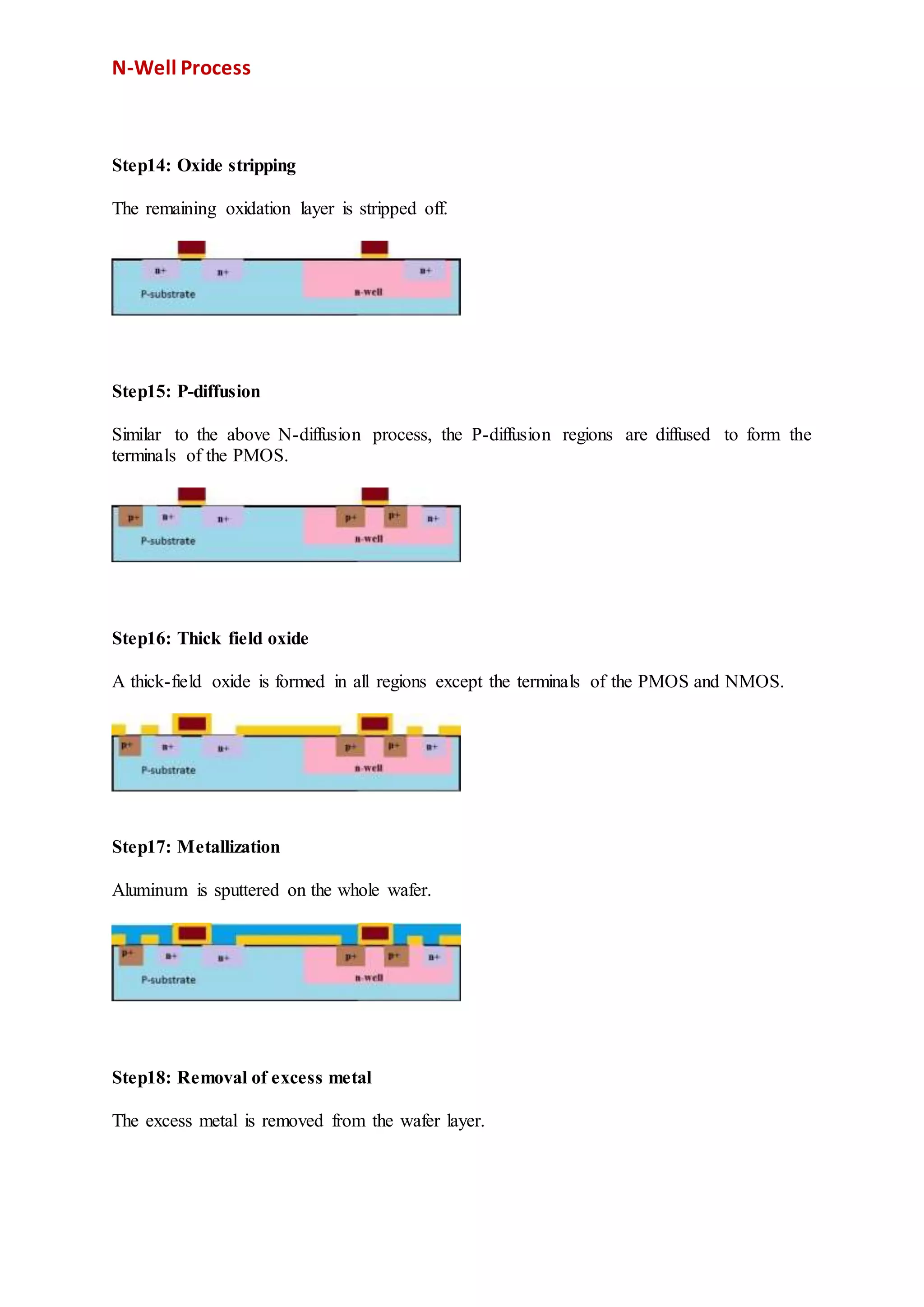
Step14: Oxide stripping
The remaining oxidation layer is stripped off.
Step15: P-diffusion
Similar to the above N-diffusion process, the P-diffusion regions are diffused to form the
terminals of the PMOS.
Step16: Thick field oxide
A thick-field oxide is formed in all regions except the terminals of the PMOS and NMOS.
Step17: Metallization
Aluminum is sputtered on the whole wafer.
Step18: Removal of excess metal
The excess metal is removed from the wafer layer.
N-Well Process
Step19: Terminals
The terminals of the PMOS and NMOS are made from respective gaps.
Step20: Assigning the names of the terminals of the NMOS and PMOS
Fabrication of CMOS using P-well process
P-well process is almost similar to the N-well. But the only difference in p-well process is that
it consists of a main N-substrate and, thus, P-wells itself acts as substrate for the N-devices.
Twin tub-CMOS Fabrication Process
In this process, separate optimization of the n-type and p-type transistors will be provided.
The independent optimization of Vt, body effect and gain of the P-devices, N-devices can be
made possible with this process.

N well

  • 1.
    N-Well Process Step1: Substrate Primarily,start the process with a P-substrate. Step2: Oxidation The oxidation process is done by using high-purity oxygen and hydrogen, which are exposed in an oxidation furnace approximately at 1000 degree centigrade. Step3: Photoresist A light-sensitive polymer that softens whenever exposed to light is called as Photoresist layer. It is formed. Step4: Masking The photoresist is exposed to UV rays through the N-well mask
  • 2.
    N-Well Process Step5: Photoresistremoval A part of the photoresist layer is removed by treating the wafer with the basic or acidic solution. Step6: Removal of SiO2 using acid etching The SiO2 oxidation layer is removed through the open area made by the removal of photoresist using hydrofluoric acid. Step7: Removal of photoresist The entire photoresist layer is stripped off, as shown in the below figure. Step8: Formation of the N-well By using ion implantation or diffusion process N-well is formed. Step9: Removal of SiO2 Using the hydrofluoric acid, the remaining SiO2 is removed.
  • 3.
    N-Well Process Step10: Depositionof polysilicon Chemical Vapor Deposition (CVD) process is used to deposit a very thin layer of gate oxide. Step11: Removing the layer barring a small area for the Gates Except the two small regions required for forming the Gates of NMOS and PMOS, the remaining layer is stripped off. Step12: Oxidation process Next, an oxidation layer is formed on this layer with two small regions for the formation of the gate terminals of NMOS and PMOS. Step13: Masking and N-diffusion By using the masking process small gaps are made for the purpose of N-diffusion. The n-type (n+) dopants are diffused or ion implanted, and the three n+ are formed for the formation of the terminals of NMOS.
  • 4.
    N-Well Process Step14: Oxidestripping The remaining oxidation layer is stripped off. Step15: P-diffusion Similar to the above N-diffusion process, the P-diffusion regions are diffused to form the terminals of the PMOS. Step16: Thick field oxide A thick-field oxide is formed in all regions except the terminals of the PMOS and NMOS. Step17: Metallization Aluminum is sputtered on the whole wafer. Step18: Removal of excess metal The excess metal is removed from the wafer layer.
  • 5.
    N-Well Process Step19: Terminals Theterminals of the PMOS and NMOS are made from respective gaps. Step20: Assigning the names of the terminals of the NMOS and PMOS Fabrication of CMOS using P-well process P-well process is almost similar to the N-well. But the only difference in p-well process is that it consists of a main N-substrate and, thus, P-wells itself acts as substrate for the N-devices. Twin tub-CMOS Fabrication Process In this process, separate optimization of the n-type and p-type transistors will be provided. The independent optimization of Vt, body effect and gain of the P-devices, N-devices can be made possible with this process.