Interconnects in
Reconfigurable
Architectures
By: Sudhanshu Janwadkar
Introduction
Chips are mostly made of wires called
interconnects, which form the physical
connection between two transistors.
Interconnects are basically metal layers that
are fabricated along with transistors, and it
depends on the technology and foundry the
number and characteristics of the layers.
Introduction
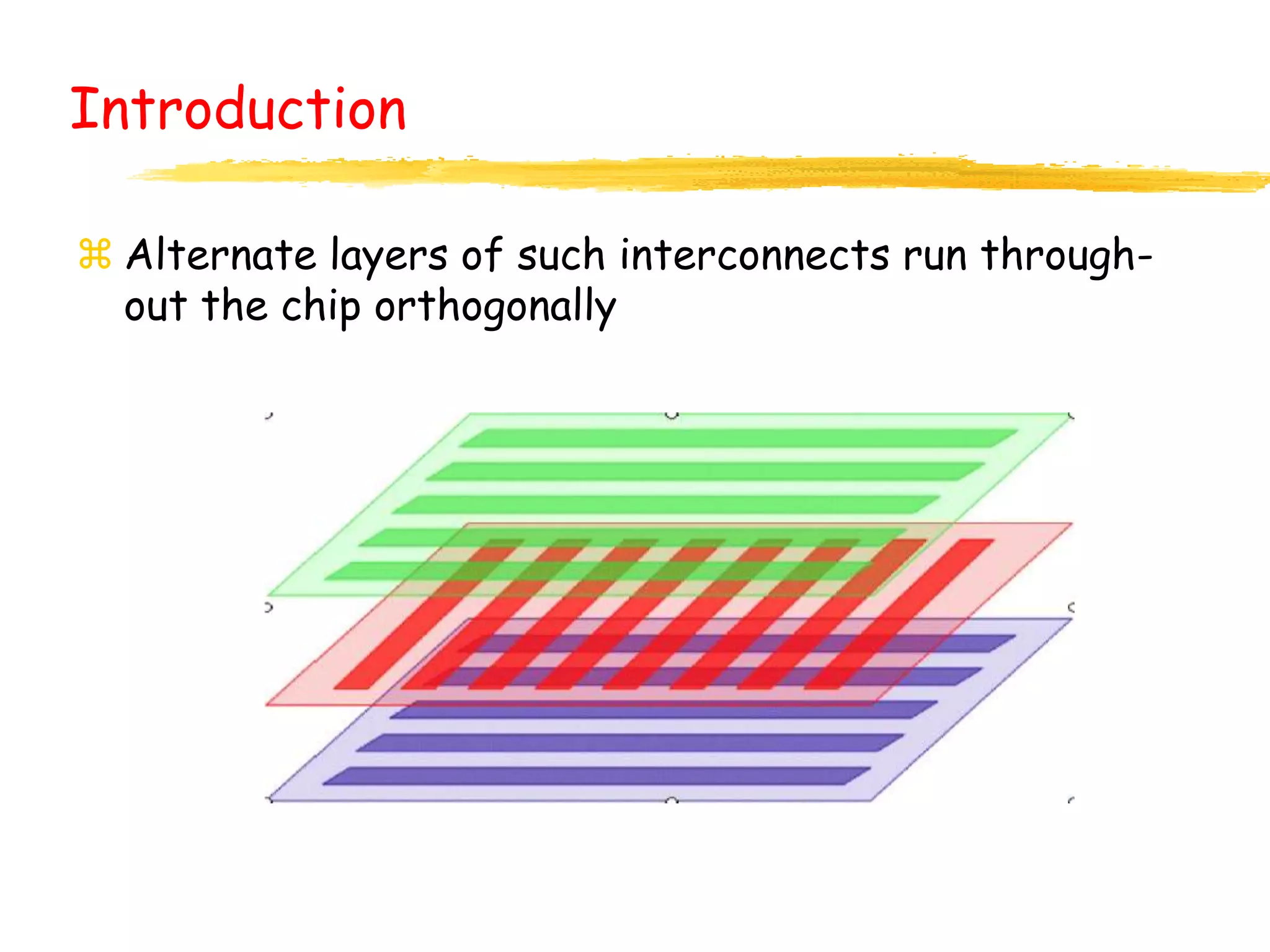
 Alternate layers of such interconnects run through-
out the chip orthogonally
Introduction
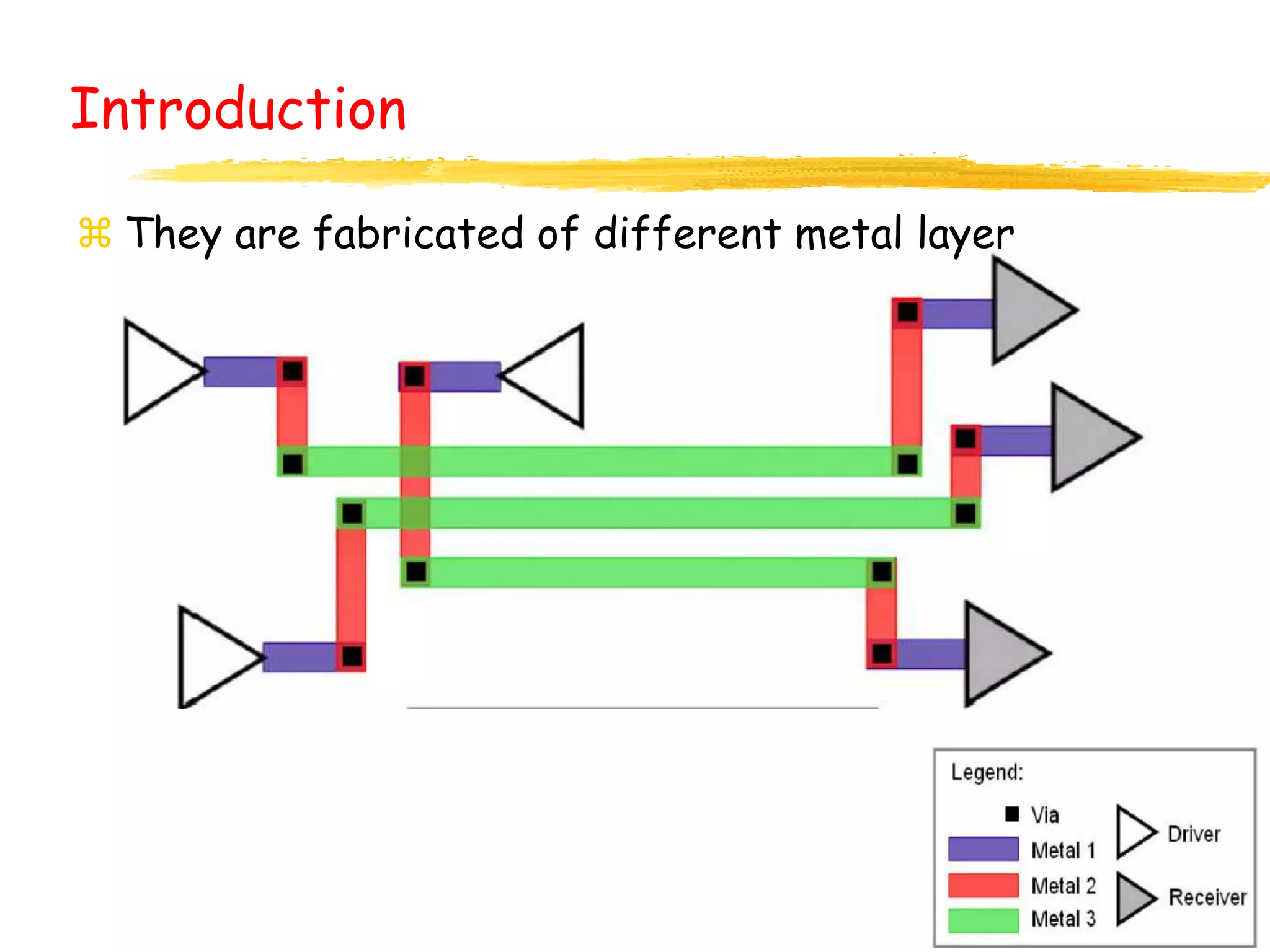
 They are fabricated of different metal layer
Introduction
Dominant contributor to die area & cycle time
Support large functional density
Parallel data routing
FPGA’s place most of the area into
interconnect
Affecting factors
 Affecting parameters in interconnects
 Speed
 Power
 Noise
The Area considerations
 4-LUT is roughly 600Kl2 . The flip-flop and 16:1 LUT
multiplexor make up very little of this area, easily
less than 20Kl2 . estimates the area of the 4-LUT
multiplexor with flip-flop as 13K l2
 The majority of the area associated with each 4-LUT
(97%), goes into programmable interconnect and its
configuration memory
 The area required for the full LUT, including its
configuration memory, is less than 10% of the area of
the 4-LUT cell
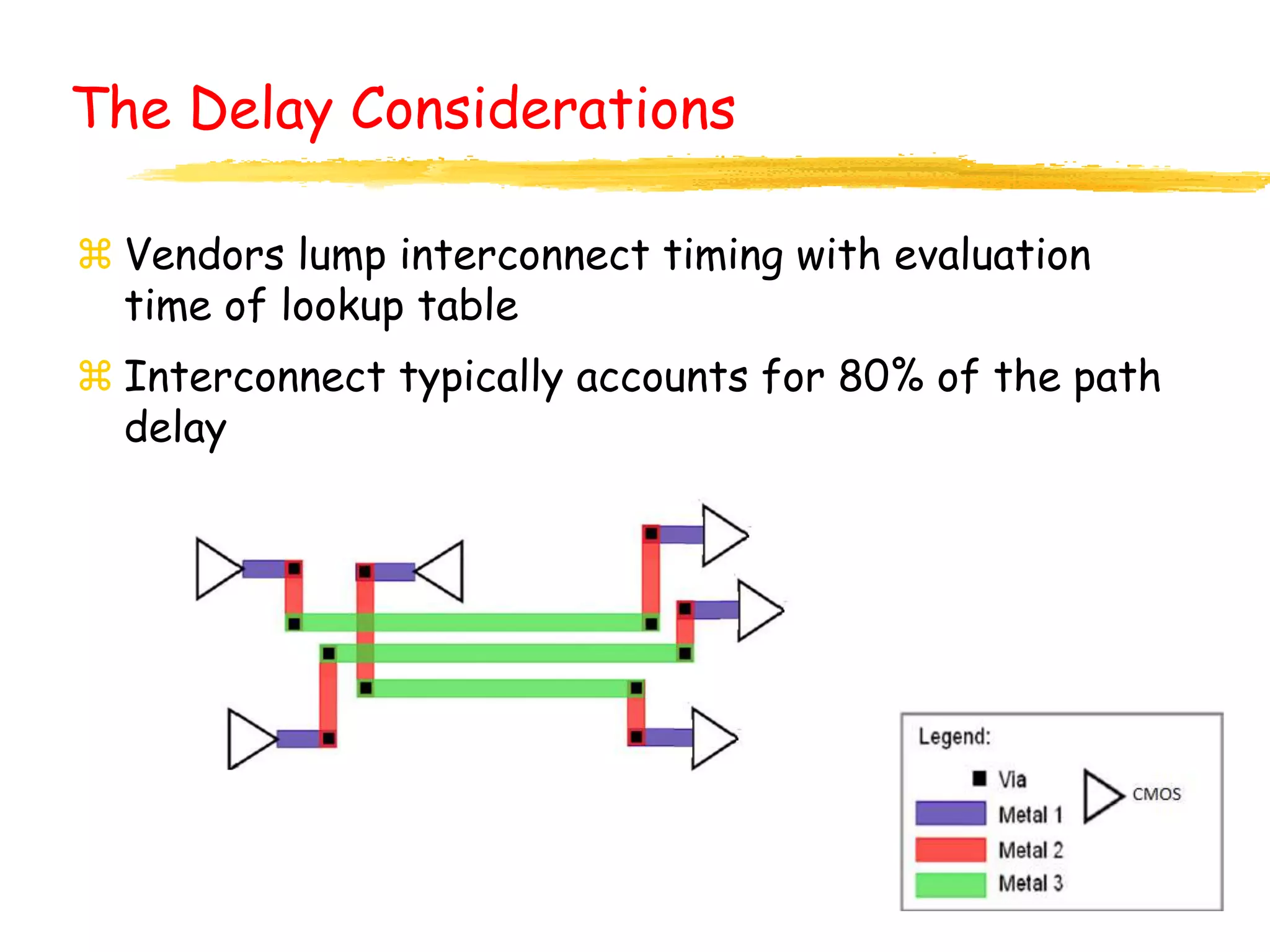
The Delay Considerations
 Vendors lump interconnect timing with evaluation
time of lookup table
 Interconnect typically accounts for 80% of the path
delay
The Noise Considerations - Crosstalk
 A capacitor does not like to change its voltage
instantaneously
 A wire has high capacitance to its neighbor.
When the neighbor switches from 1→ 0 or 0→ 1, the wire
tends to switch too.
Called capacitive coupling or crosstalk
 Crosstalk effects
Noise on non switching wires
Increased delay on switching wires
Crosstalk causes noise on non switching wires
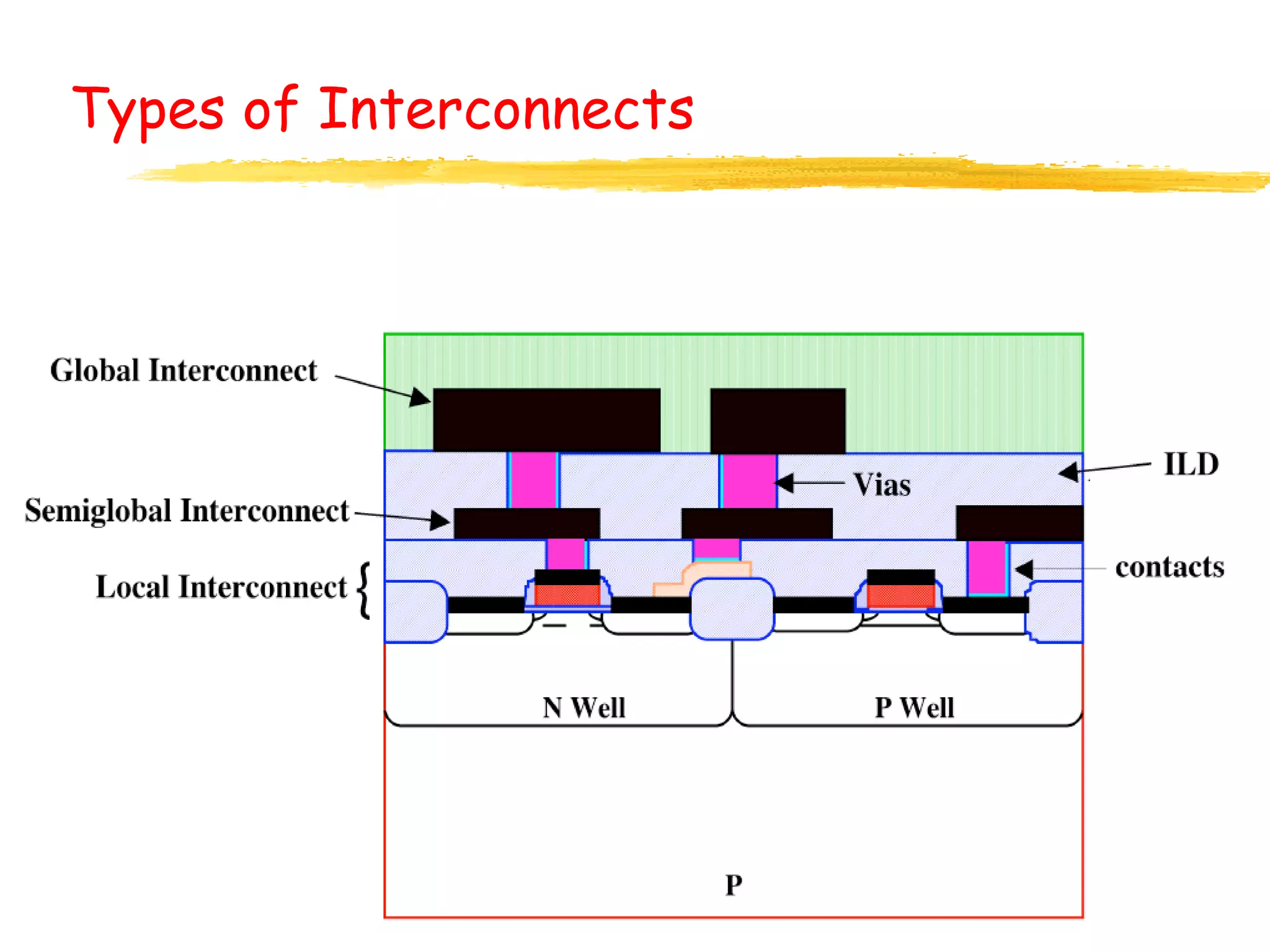
Types of Interconnects
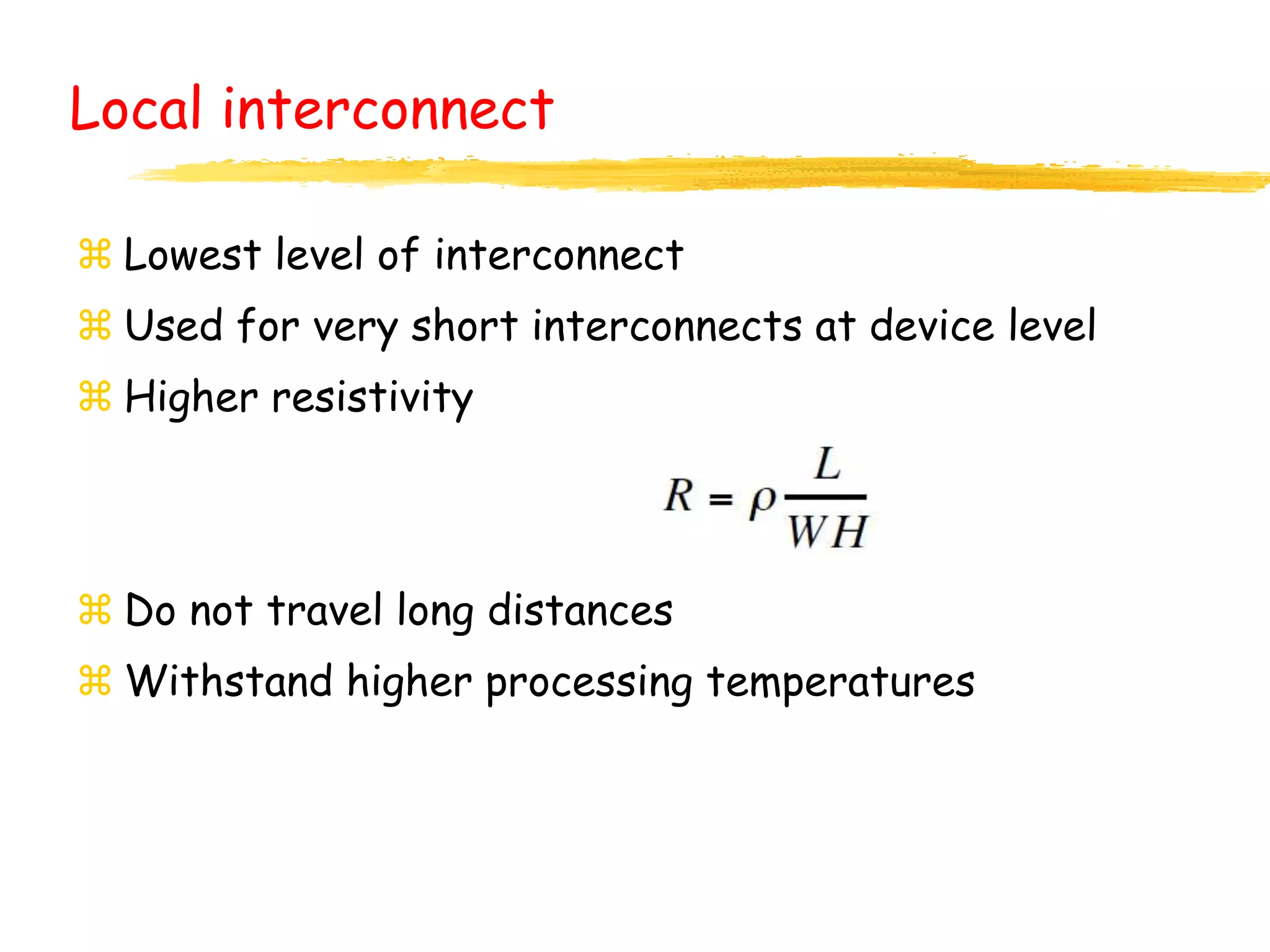
Local interconnect
 Lowest level of interconnect
 Used for very short interconnects at device level
 Higher resistivity
 Do not travel long distances
 Withstand higher processing temperatures
Semi Global interconnect
Used to connect devices within the block
Mid length wires for communication within a
block is placed in this category
Used because complexity of interconnects is
increasing
Global Interconnect
 Upper level of interconnects
Mostly made up of aluminum
Used to connect long interconnects between
the blocks, including power, ground & clocks
Low resistivity
Length increases as transistors per chip
increases
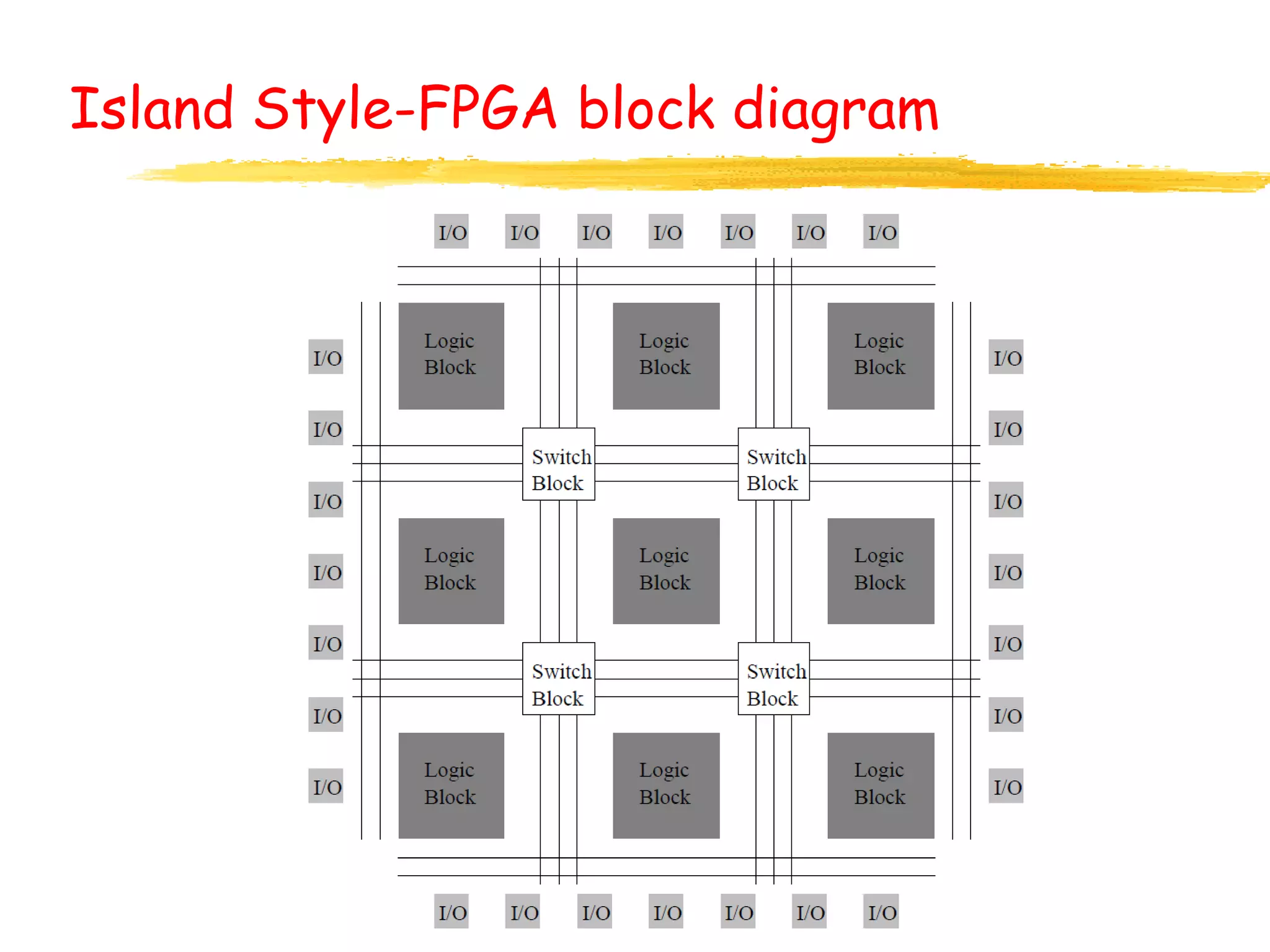
Island Style-FPGA block diagram
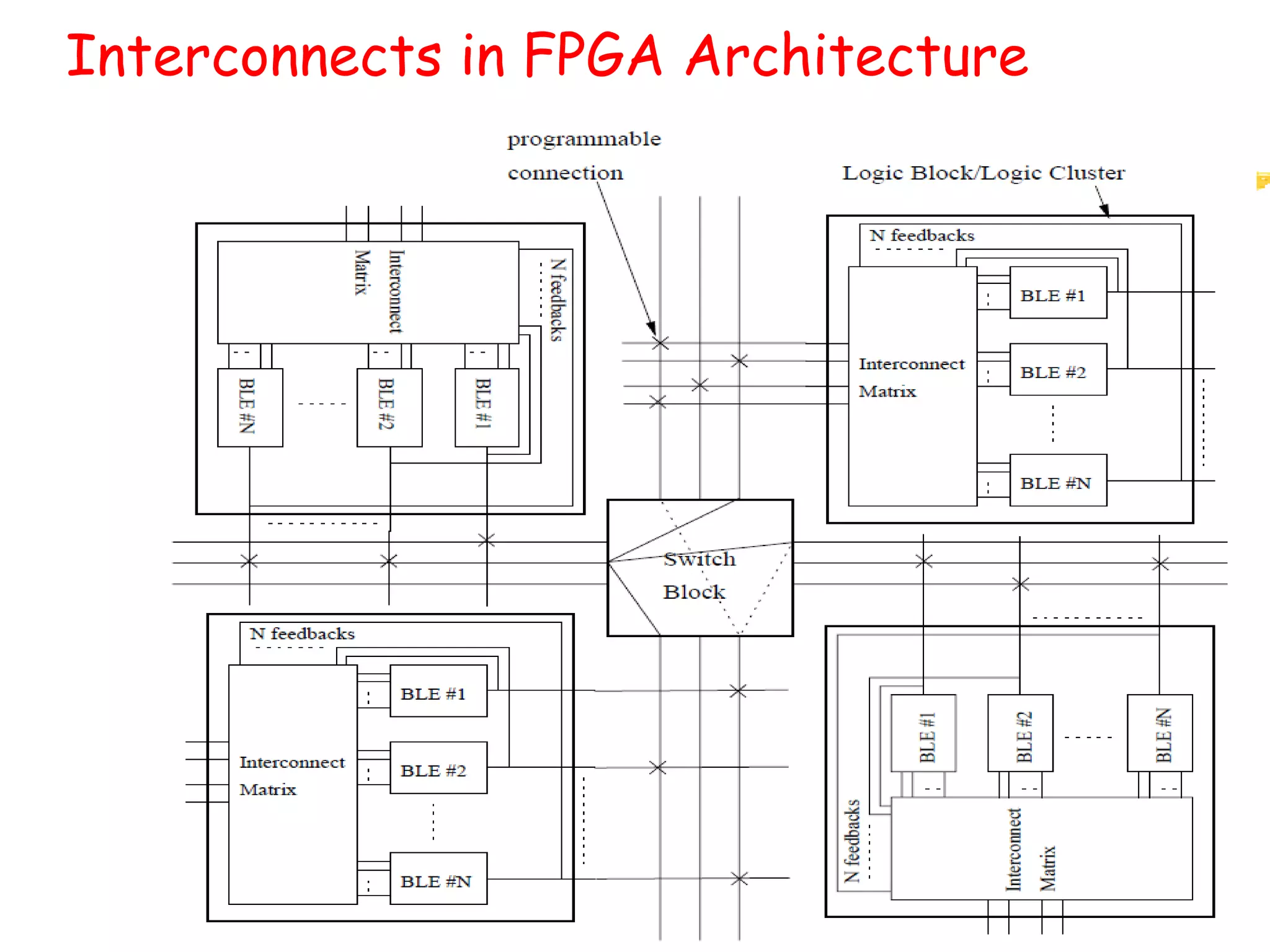
Interconnects in FPGA Architecture
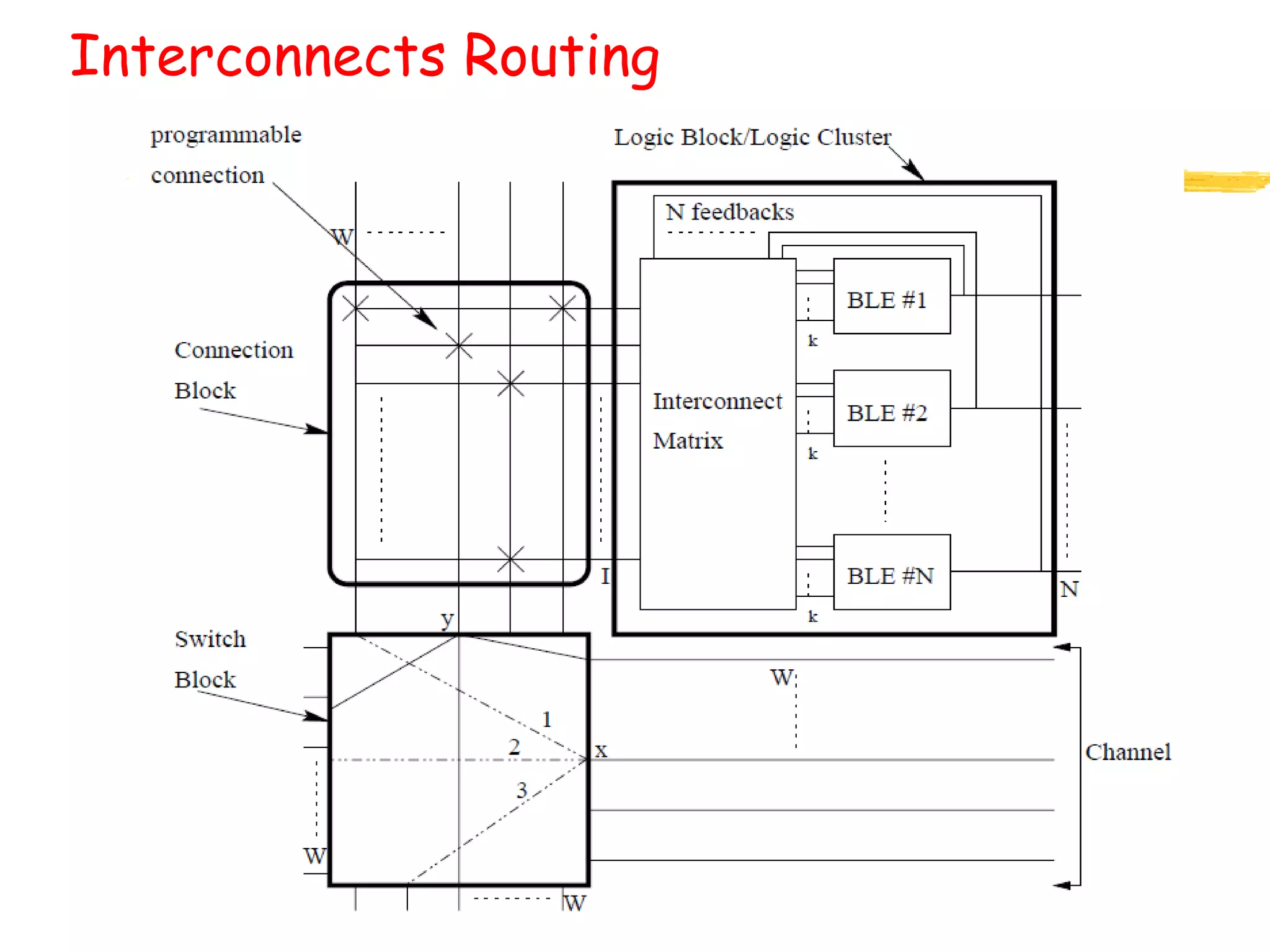
Interconnects Routing
 The programmable routing between the Logic Blocks
consists of fixed metal tracks
 Fixed metal tracks run horizontally and vertically,
and are organized in channels
 Each channel contains the same number of tracks
 Switch Block defines all possible connections
between channels
 Flexibility of each Switch Block is a key to the
overall flexibility and the routability
Interconnects Routing
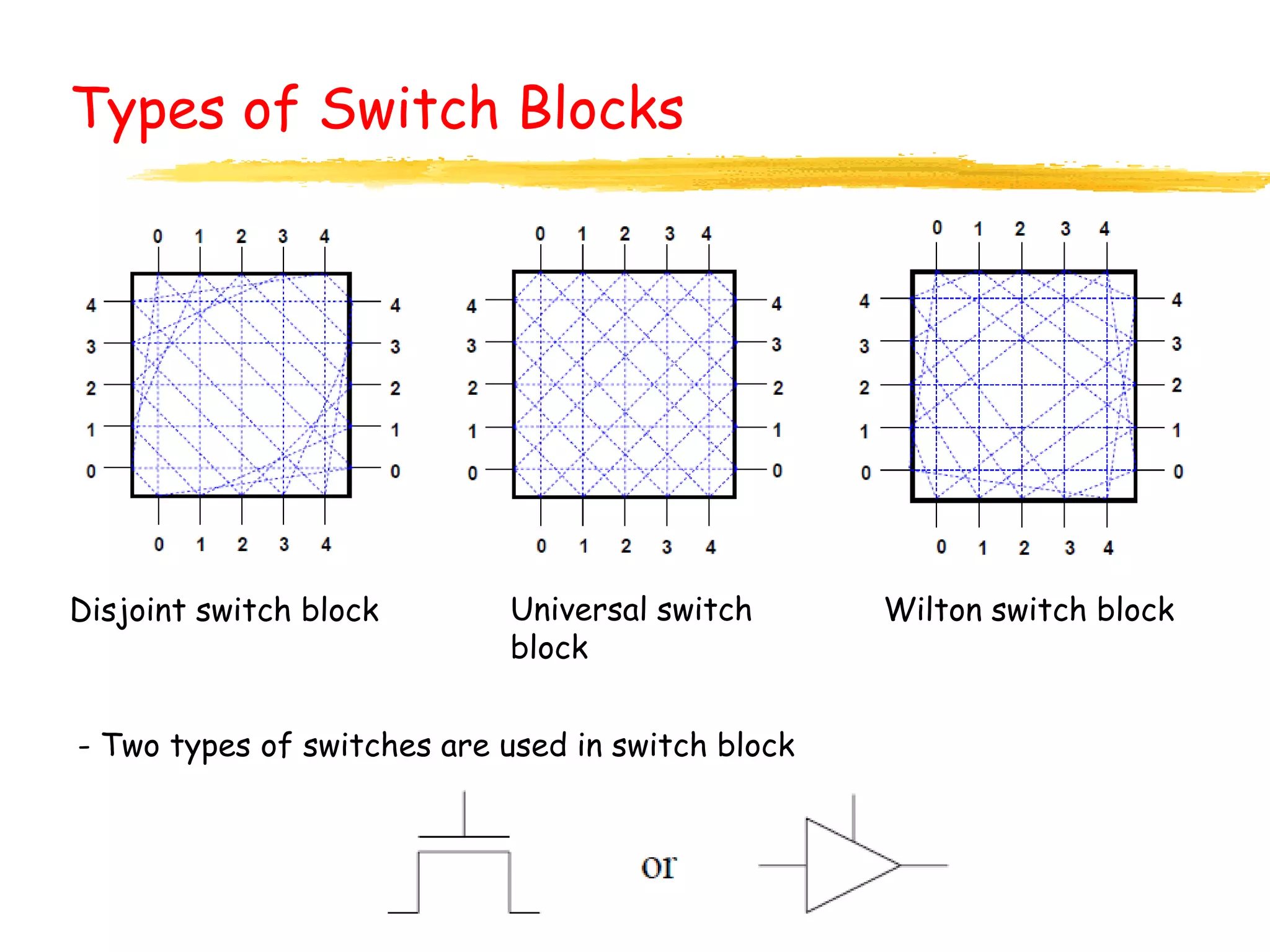
Types of Switch Blocks
Disjoint switch block Universal switch
block
Wilton switch block
- Two types of switches are used in switch block
 The Connection Block defines all the possible
connections from a horizontal or vertical channel to a
neighboring logic block
 The connections in the switch blocks and connection
blocks are made by programmable switches
 A programmable switch consists of a pass transistor
controlled by
-a static random access memory cell (SRAM-
based FPGA)
-an anti-fuse (anti-fuse FPGAs)
-a non-volatile memory cell (floating gate
devices)
Interconnects Routing
 SRAM cells based FPGAs - can be reprogrammed by
the end user as many times as required and are
volatile
 Anti-fuse based FPGAs - can only be programmed
once and are non-volatile
 NVRAM based FPGAs- floating gate technology - can
be reprogrammed and are non-volatile
Types of FPGAs based on Interconnects
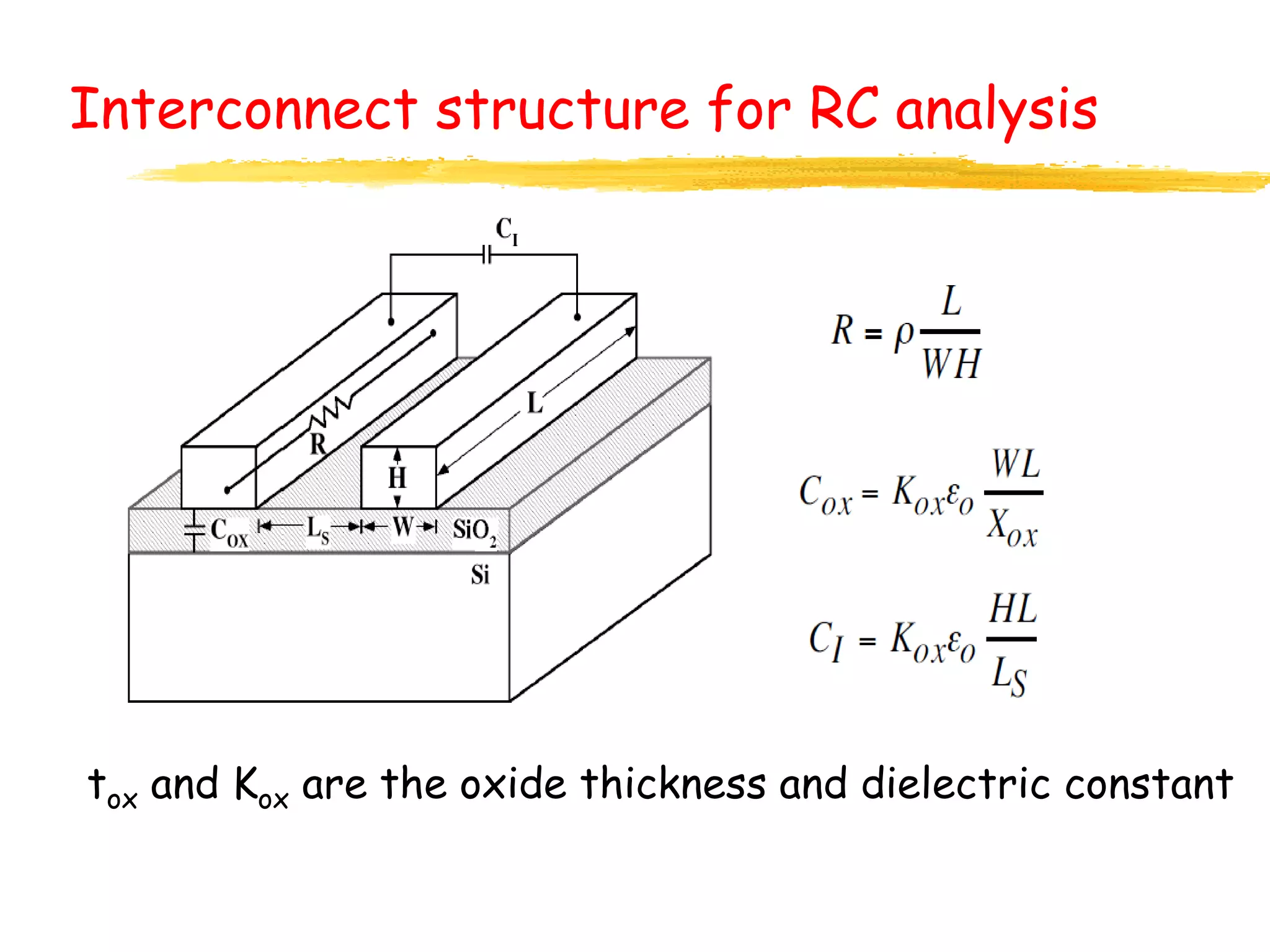
Interconnect structure for RC analysis
tox and Kox are the oxide thickness and dielectric constant
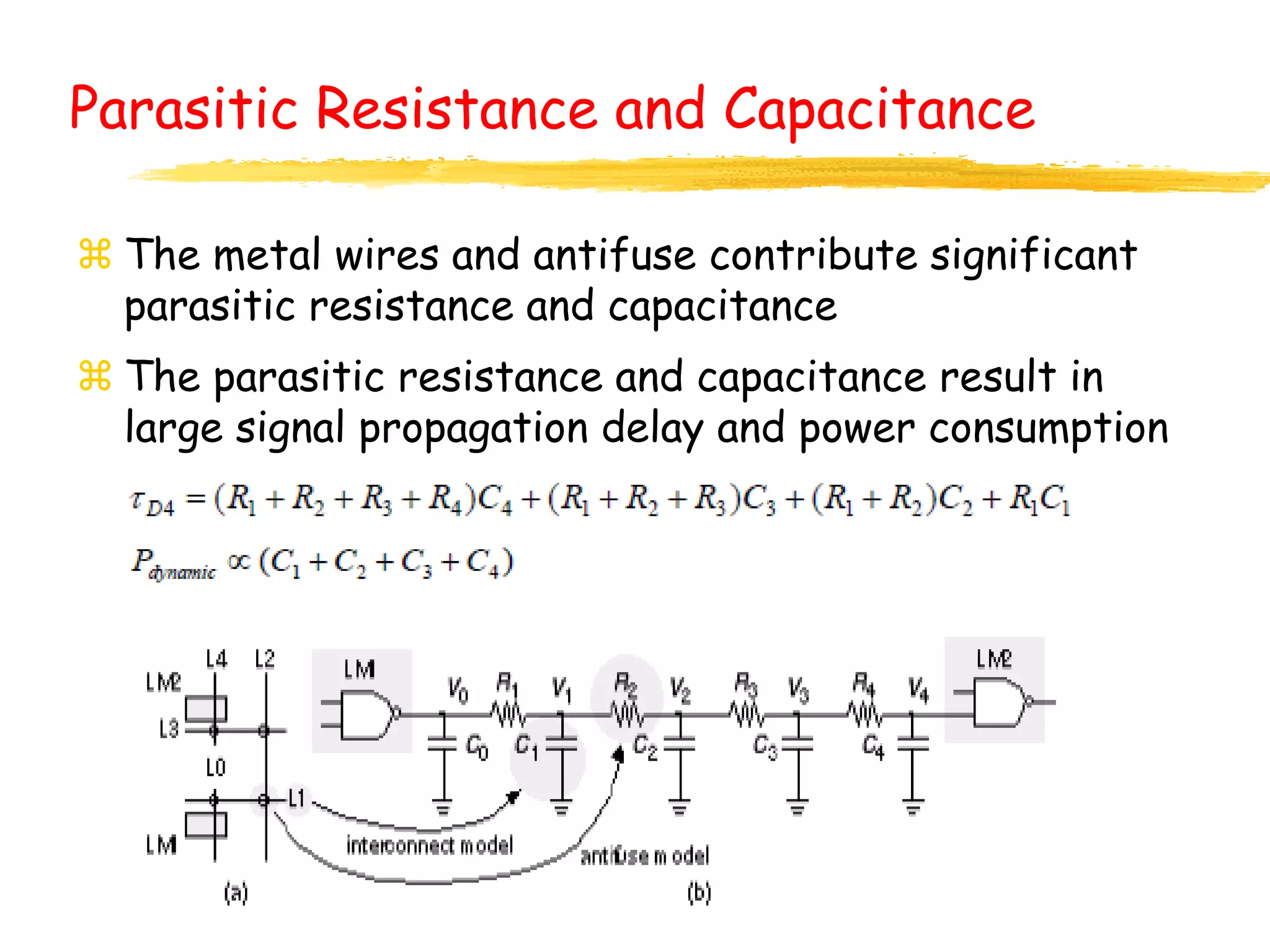
Parasitic Resistance and Capacitance
 The metal wires and antifuse contribute significant
parasitic resistance and capacitance
 The parasitic resistance and capacitance result in
large signal propagation delay and power consumption
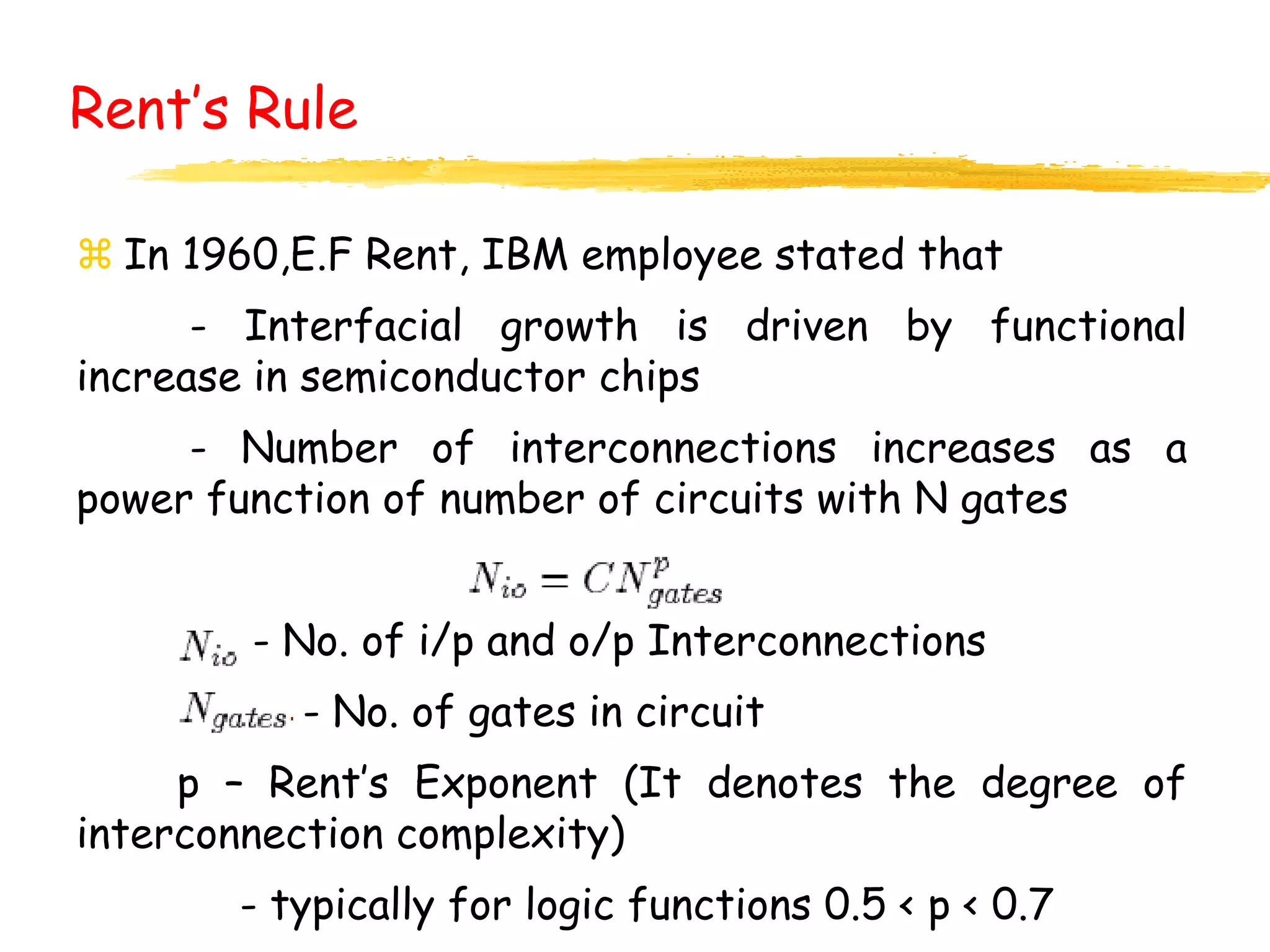
Rent’s Rule
 In 1960,E.F Rent, IBM employee stated that
- Interfacial growth is driven by functional
increase in semiconductor chips
- Number of interconnections increases as a
power function of number of circuits with N gates
- No. of i/p and o/p Interconnections
- No. of gates in circuit
p – Rent’s Exponent (It denotes the degree of
interconnection complexity)
- typically for logic functions 0.5 < p < 0.7
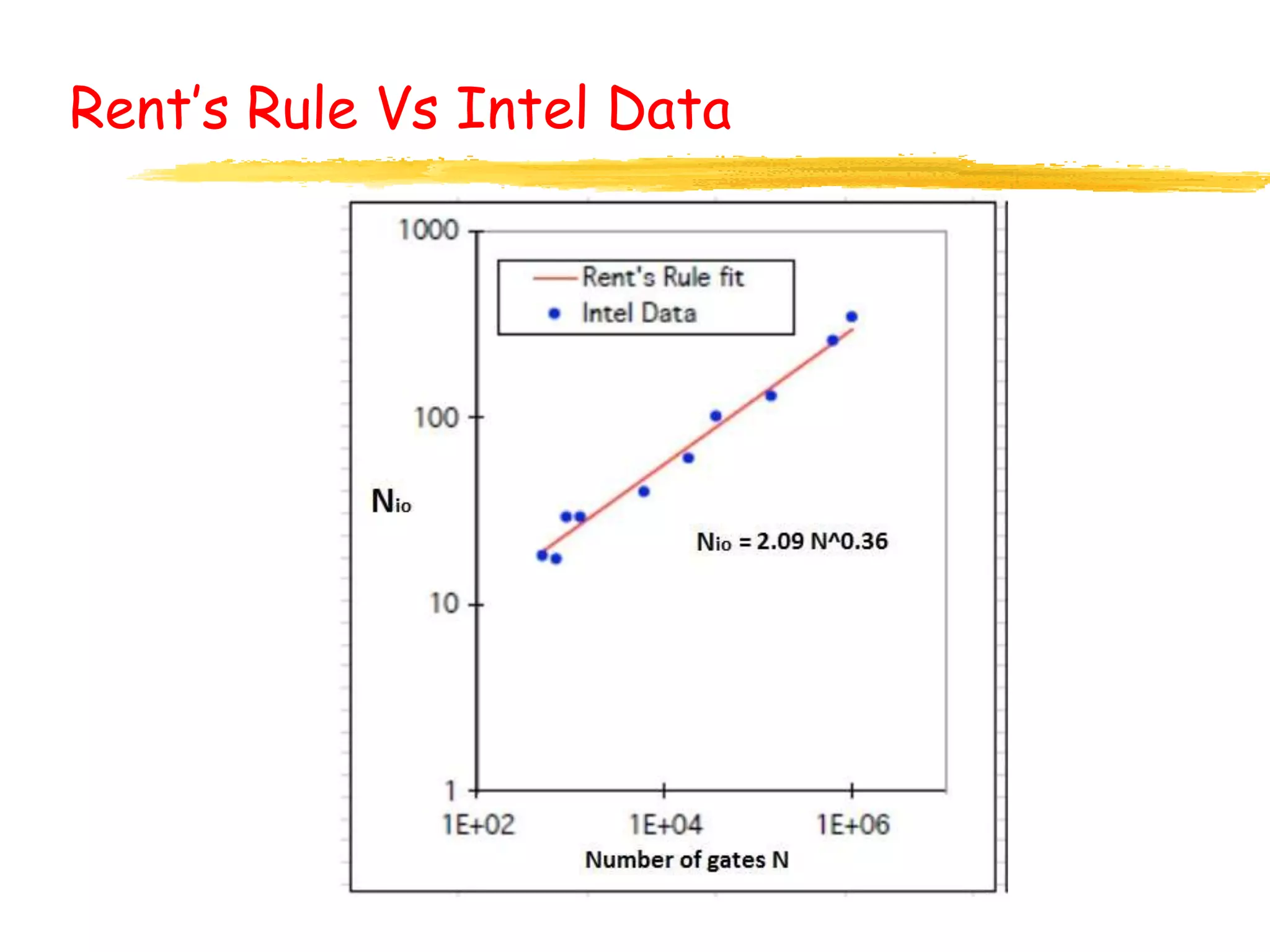
Rent’s Rule Vs Intel Data
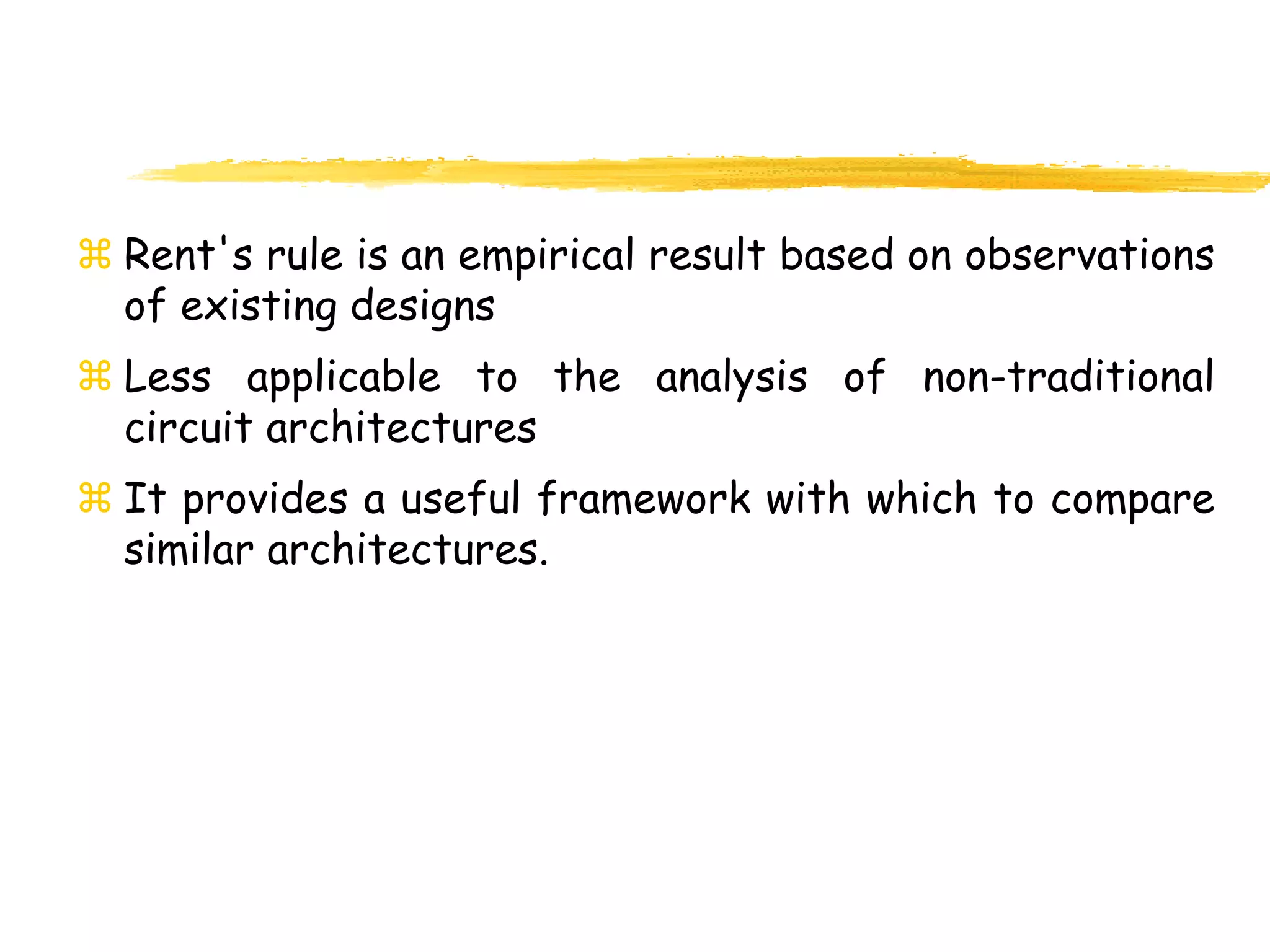
 Rent's rule is an empirical result based on observations
of existing designs
 Less applicable to the analysis of non-traditional
circuit architectures
 It provides a useful framework with which to compare
similar architectures.
Test yourself
 What are the different types of Interconnects in RC
architectures?
 What is Rent’s rule? How do you correlate it with
Moore’s law?

Interconnects in Reconfigurable Architectures

  • 1.
  • 2.
    Introduction Chips are mostlymade of wires called interconnects, which form the physical connection between two transistors. Interconnects are basically metal layers that are fabricated along with transistors, and it depends on the technology and foundry the number and characteristics of the layers.
  • 3.
    Introduction  Alternate layersof such interconnects run through- out the chip orthogonally
  • 4.
    Introduction  They arefabricated of different metal layer
  • 5.
    Introduction Dominant contributor todie area & cycle time Support large functional density Parallel data routing FPGA’s place most of the area into interconnect
  • 6.
    Affecting factors  Affectingparameters in interconnects  Speed  Power  Noise
  • 7.
    The Area considerations 4-LUT is roughly 600Kl2 . The flip-flop and 16:1 LUT multiplexor make up very little of this area, easily less than 20Kl2 . estimates the area of the 4-LUT multiplexor with flip-flop as 13K l2  The majority of the area associated with each 4-LUT (97%), goes into programmable interconnect and its configuration memory  The area required for the full LUT, including its configuration memory, is less than 10% of the area of the 4-LUT cell
  • 8.
    The Delay Considerations Vendors lump interconnect timing with evaluation time of lookup table  Interconnect typically accounts for 80% of the path delay
  • 9.
    The Noise Considerations- Crosstalk  A capacitor does not like to change its voltage instantaneously  A wire has high capacitance to its neighbor. When the neighbor switches from 1→ 0 or 0→ 1, the wire tends to switch too. Called capacitive coupling or crosstalk  Crosstalk effects Noise on non switching wires Increased delay on switching wires Crosstalk causes noise on non switching wires
  • 10.
  • 11.
    Local interconnect  Lowestlevel of interconnect  Used for very short interconnects at device level  Higher resistivity  Do not travel long distances  Withstand higher processing temperatures
  • 12.
    Semi Global interconnect Usedto connect devices within the block Mid length wires for communication within a block is placed in this category Used because complexity of interconnects is increasing
  • 13.
    Global Interconnect  Upperlevel of interconnects Mostly made up of aluminum Used to connect long interconnects between the blocks, including power, ground & clocks Low resistivity Length increases as transistors per chip increases
  • 14.
  • 15.
  • 16.
  • 17.
     The programmablerouting between the Logic Blocks consists of fixed metal tracks  Fixed metal tracks run horizontally and vertically, and are organized in channels  Each channel contains the same number of tracks  Switch Block defines all possible connections between channels  Flexibility of each Switch Block is a key to the overall flexibility and the routability Interconnects Routing
  • 18.
    Types of SwitchBlocks Disjoint switch block Universal switch block Wilton switch block - Two types of switches are used in switch block
  • 19.
     The ConnectionBlock defines all the possible connections from a horizontal or vertical channel to a neighboring logic block  The connections in the switch blocks and connection blocks are made by programmable switches  A programmable switch consists of a pass transistor controlled by -a static random access memory cell (SRAM- based FPGA) -an anti-fuse (anti-fuse FPGAs) -a non-volatile memory cell (floating gate devices) Interconnects Routing
  • 20.
     SRAM cellsbased FPGAs - can be reprogrammed by the end user as many times as required and are volatile  Anti-fuse based FPGAs - can only be programmed once and are non-volatile  NVRAM based FPGAs- floating gate technology - can be reprogrammed and are non-volatile Types of FPGAs based on Interconnects
  • 21.
    Interconnect structure forRC analysis tox and Kox are the oxide thickness and dielectric constant
  • 22.
    Parasitic Resistance andCapacitance  The metal wires and antifuse contribute significant parasitic resistance and capacitance  The parasitic resistance and capacitance result in large signal propagation delay and power consumption
  • 23.
    Rent’s Rule  In1960,E.F Rent, IBM employee stated that - Interfacial growth is driven by functional increase in semiconductor chips - Number of interconnections increases as a power function of number of circuits with N gates - No. of i/p and o/p Interconnections - No. of gates in circuit p – Rent’s Exponent (It denotes the degree of interconnection complexity) - typically for logic functions 0.5 < p < 0.7
  • 24.
    Rent’s Rule VsIntel Data
  • 25.
     Rent's ruleis an empirical result based on observations of existing designs  Less applicable to the analysis of non-traditional circuit architectures  It provides a useful framework with which to compare similar architectures.
  • 26.
    Test yourself  Whatare the different types of Interconnects in RC architectures?  What is Rent’s rule? How do you correlate it with Moore’s law?