LAYOUT DESIGN RULES &
GATE LAYOUT
By
S.VARUN
M.Tech [EST]
What is a LAYOUT DESIGN?
 Layout Design is a schematic of the
Integrated Circuit(IC) which describes
the exact placement of the
components for fabrication.
 Layout Design rules describe how
small features can be & how closely
they can be packed in a manufacturing
process
Why do we need Layout Design Rules?
 Industrial Design rules are generally
specified in microns.
 This makes migrating from one
process to more advanced process
difficult because not all rules scale in
the same way.
 In order to bring uniformity,Mead &
Conway popularized lambda-based
design rules based on single
parameter.
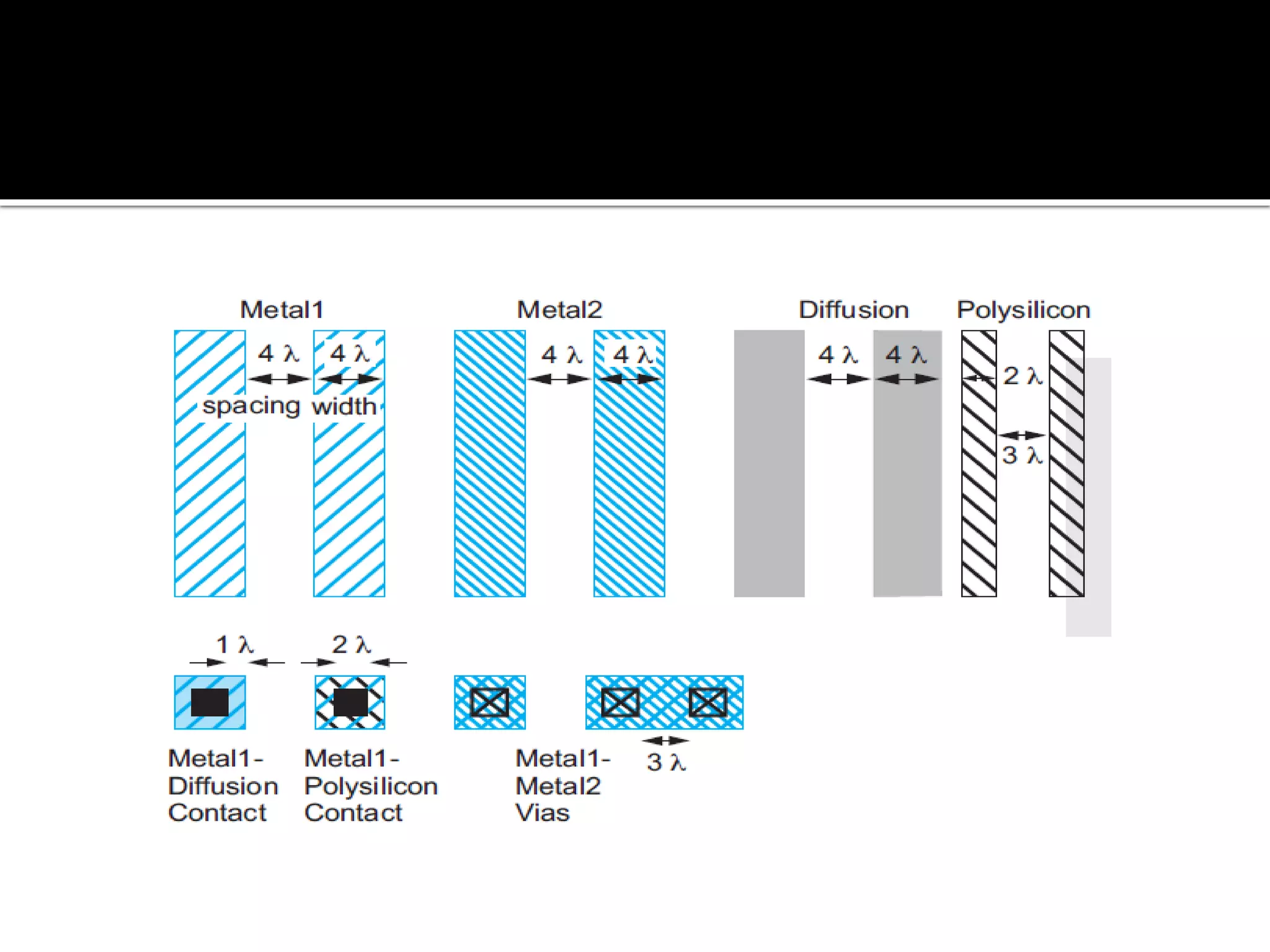
 Lambda,characterizes the resolution of
the process & is generally the half of
the minimum drawn transistor channel
length.
 The channel length is the distance
between drain & the source which is
set by a minimum width of a
polysilicon wire.
 Ex:-A 180 nm process has a minimum
polysilicon width of 0.18microns and
uses design rules with lambda=0.09.
 However the designers make the
scaling layout trivial.
 The same layout can be moved to a
new process simply by specifying the
Lambda value.
 The potential density advantage of
micron rules is sacrificed for
simplicity and easy scalability of
lambda rules.
 Designers often describe a process by
its feature size.
 Feature Size refers to the minimum
transistor length,So lambda is half the
feature size.
 Transistor dimensions are always
specified by Width/Length ratio.
 Ex-In 0.6 um technology, width
corresponds to 1.2um & length to
0.6um.
 In digital systems, the transistors are
chosen to have minimum possible
length because short channel
transistors are faster, smaller &
consume less power.
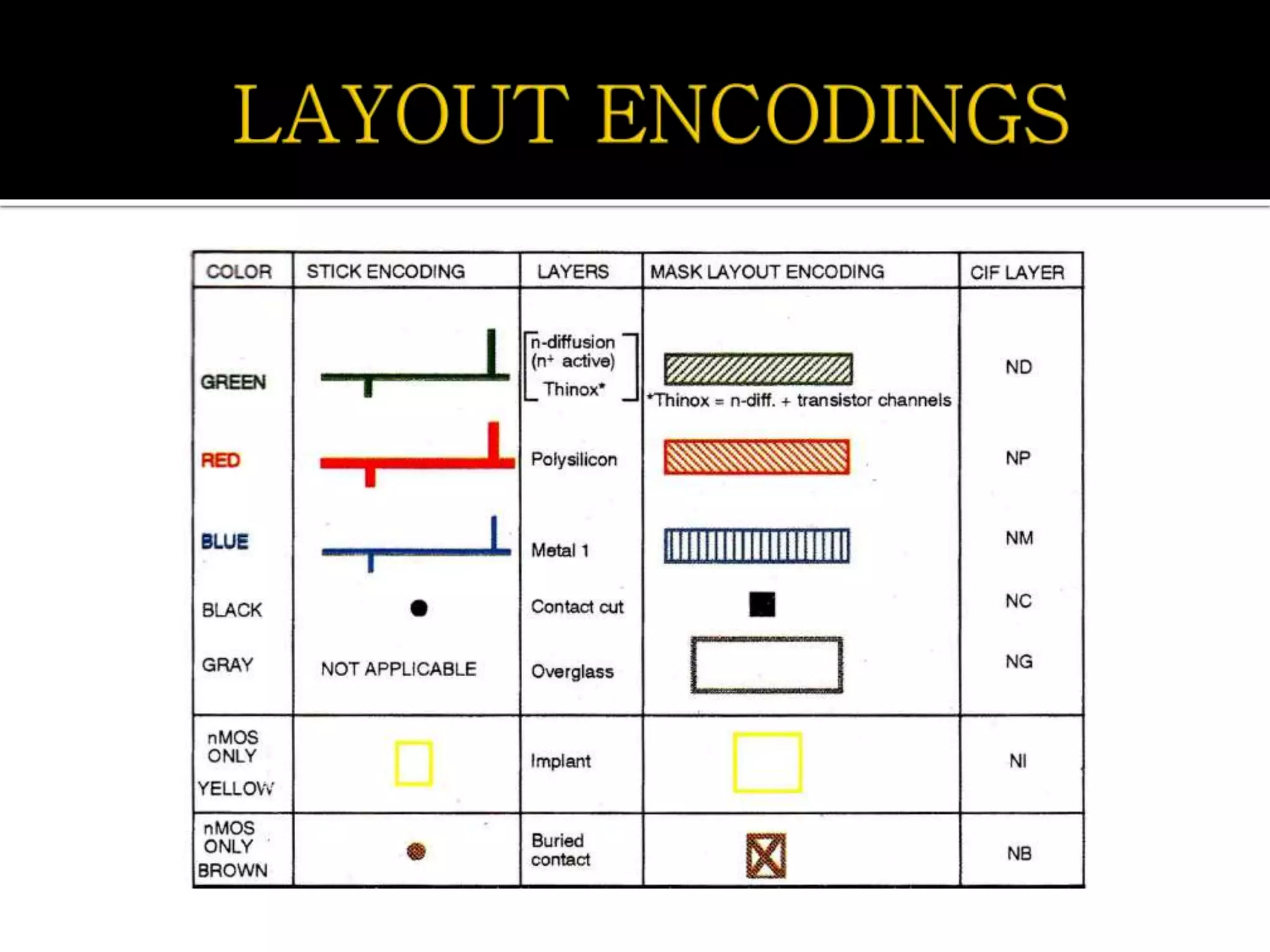
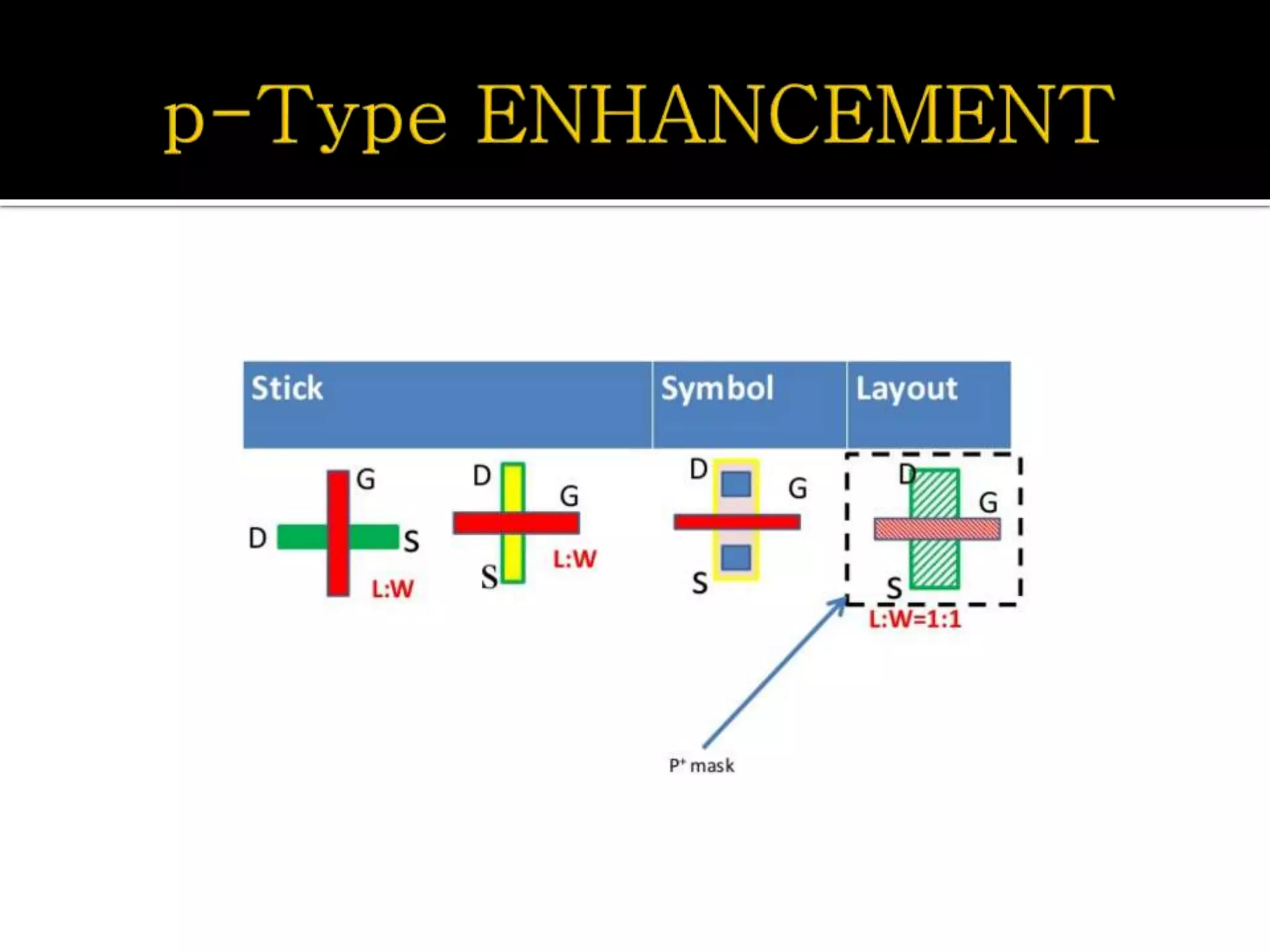
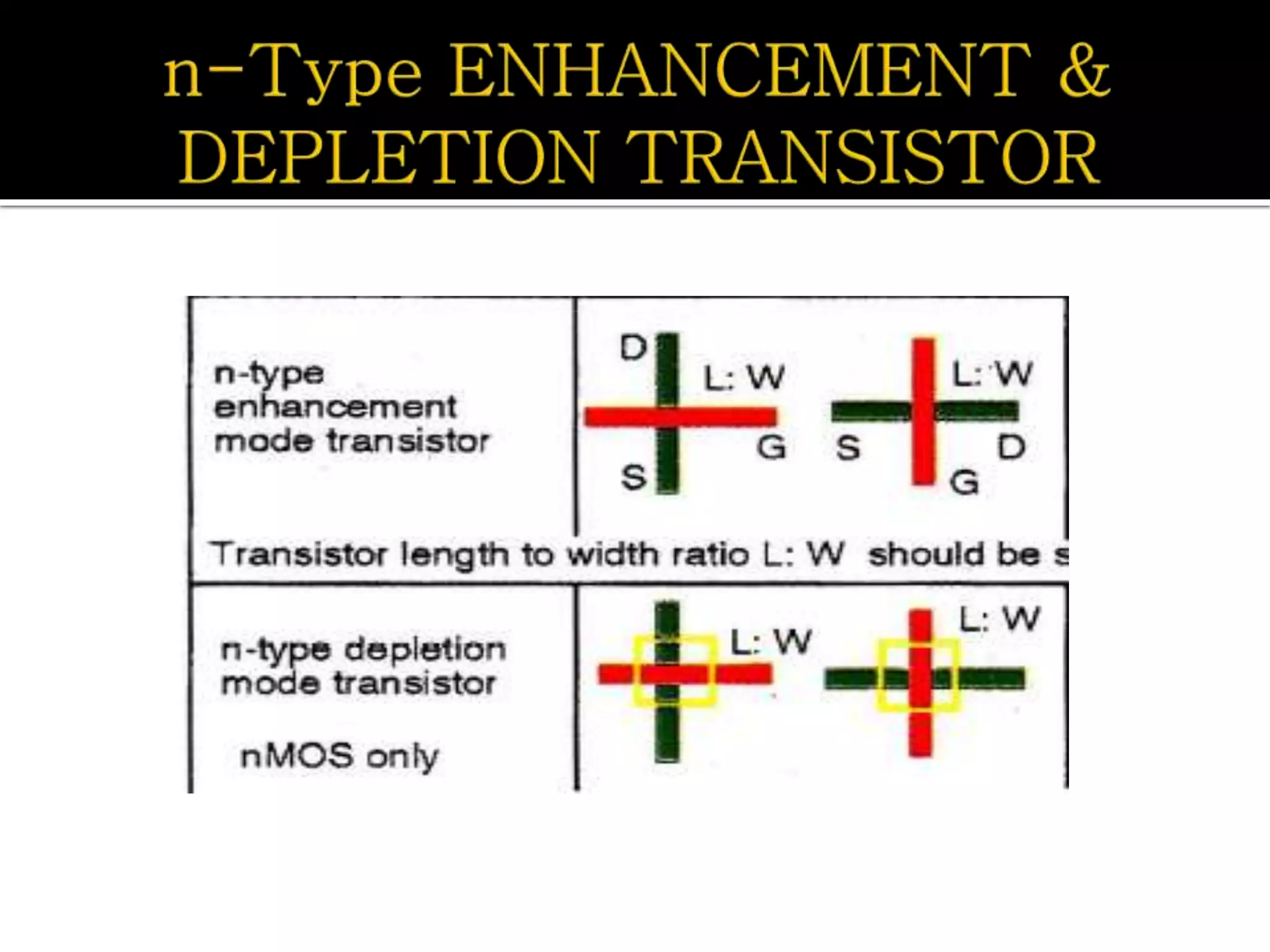
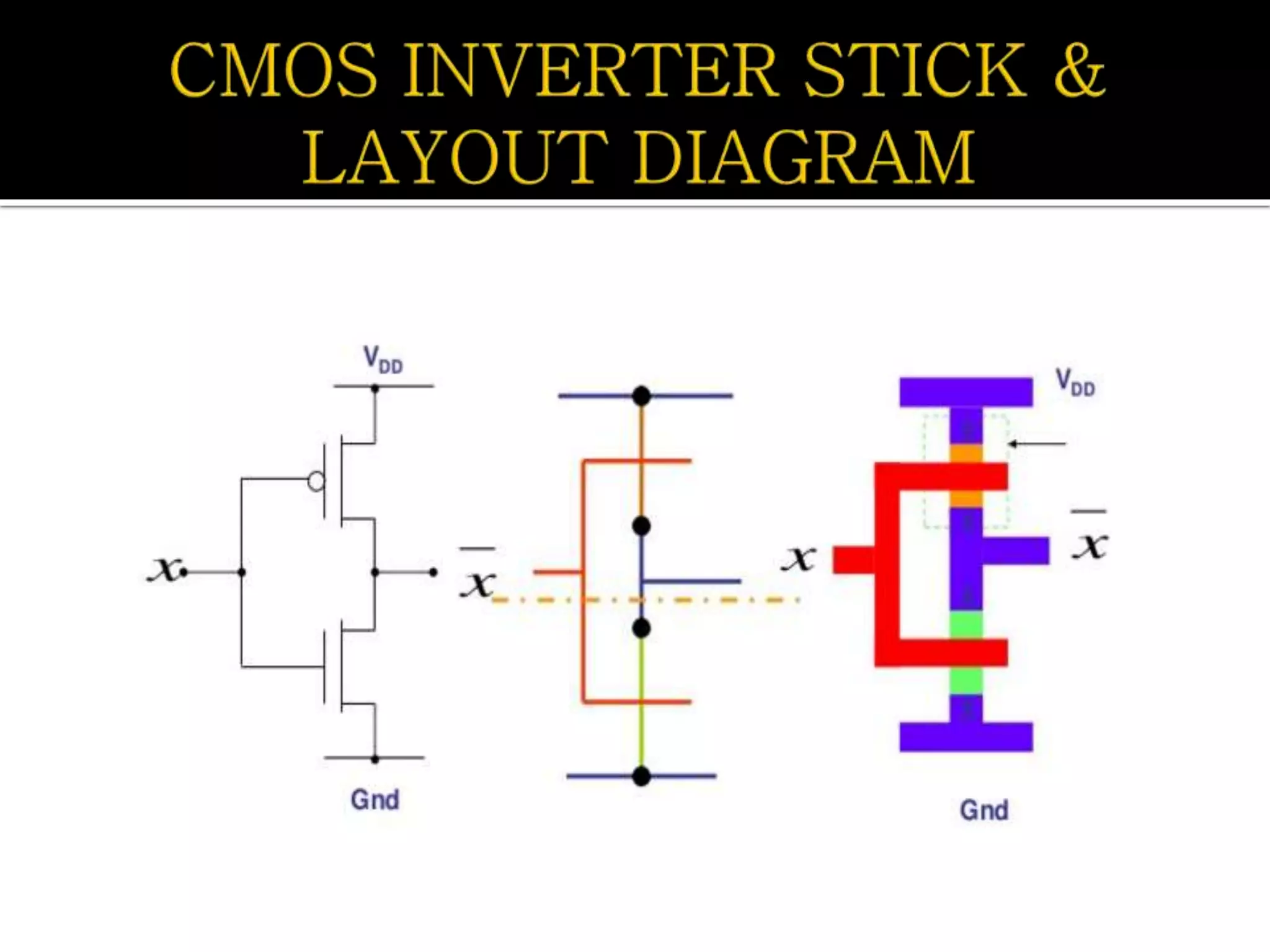
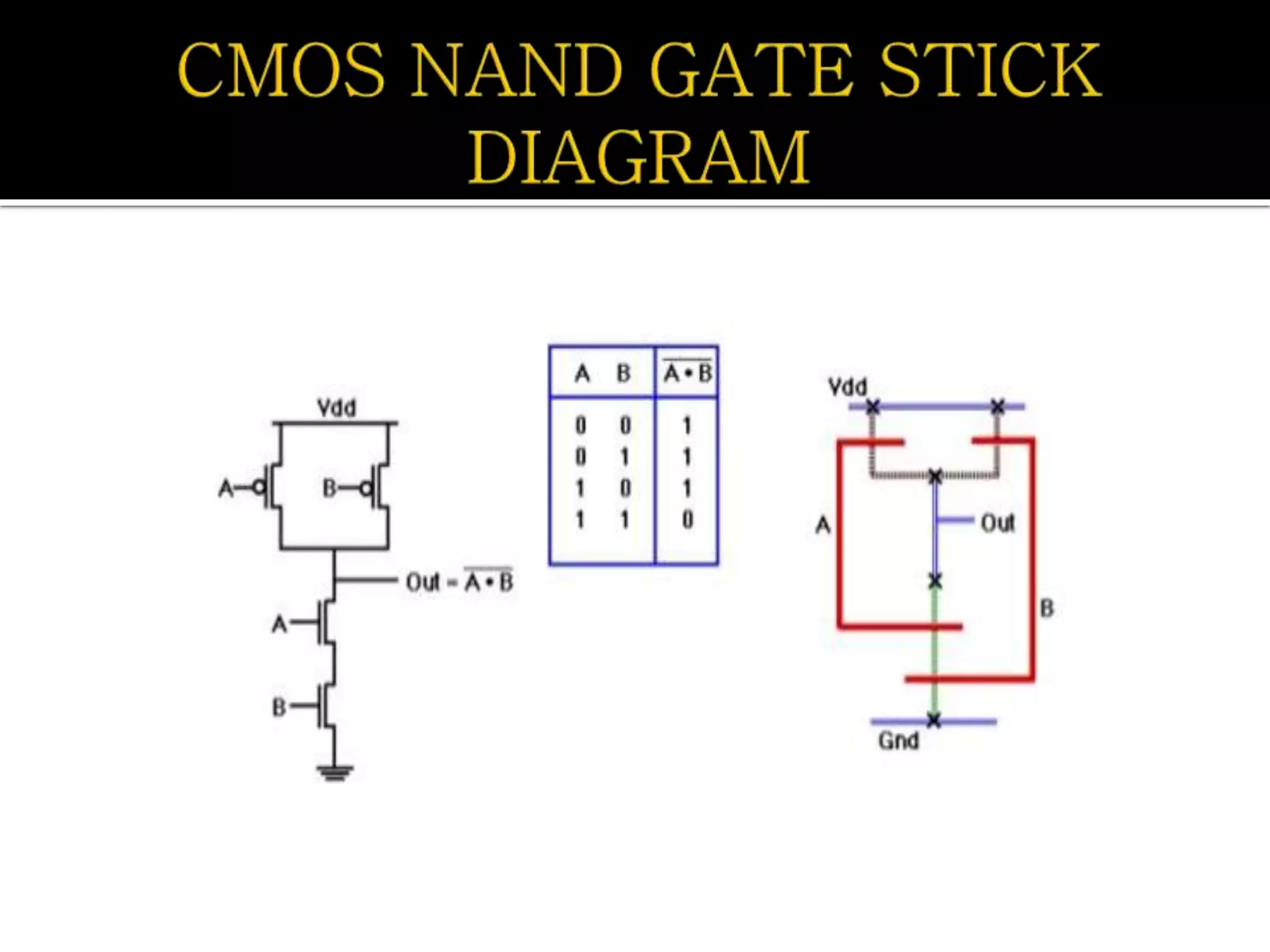
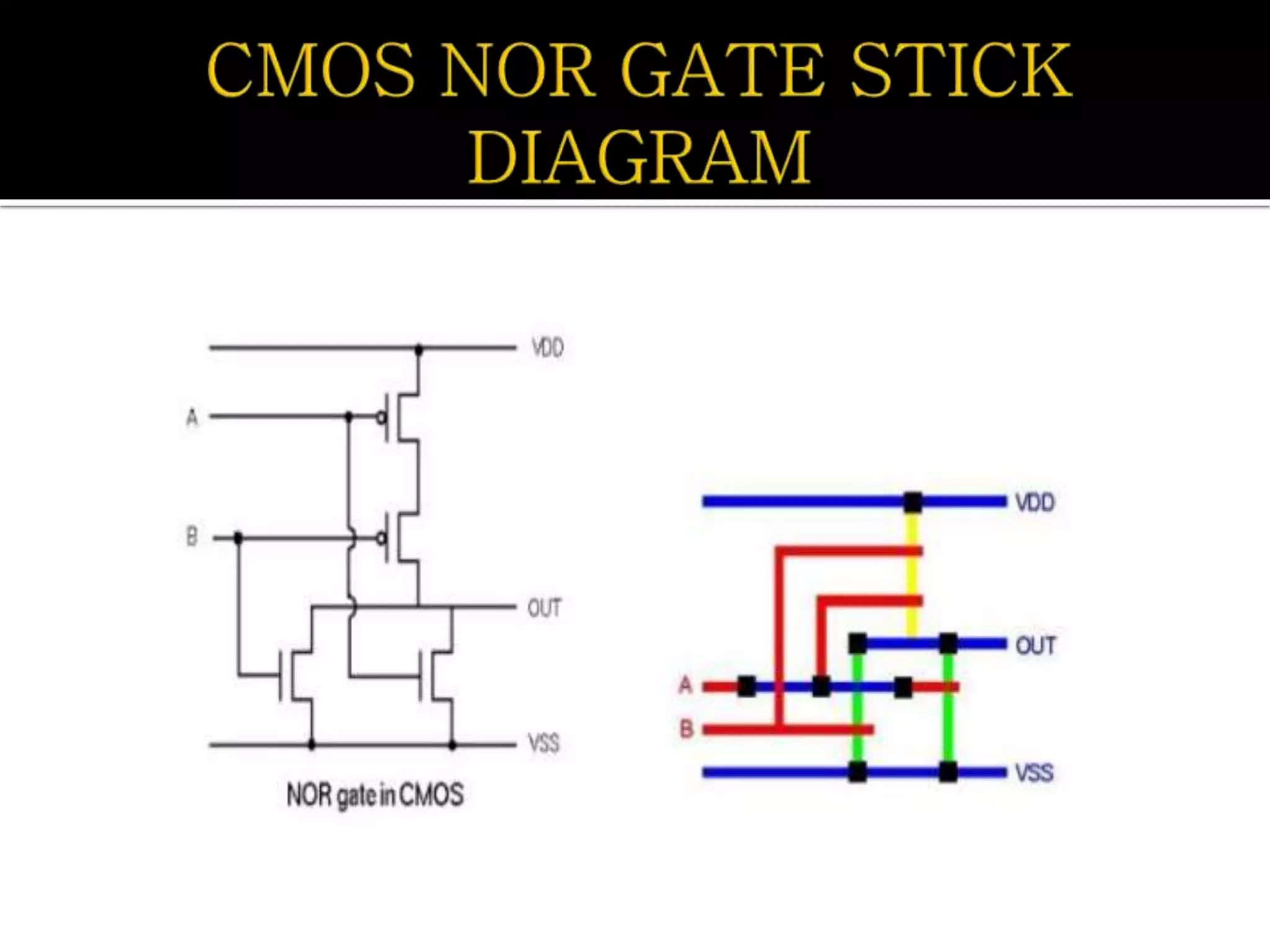
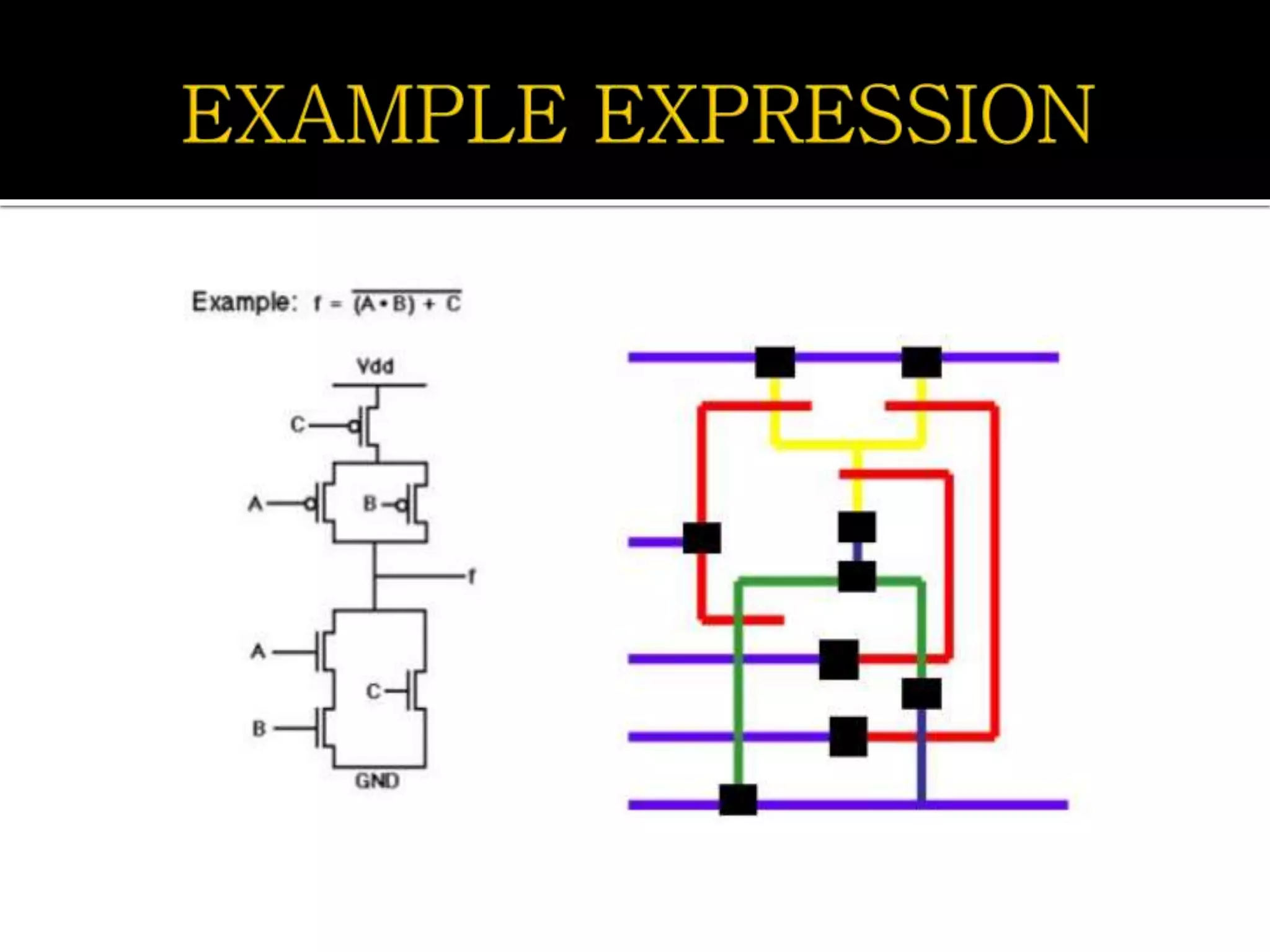
 Stick diagrams may be used to convey
layer information through the use of a
color code
 Ex-In the case of nMOS design, green
for n-diffusion, red for polysilicon,
blue for metal,and black for contact
areas.
 A stick diagram is stick figure view of
a layout.
 It is useful for
a)Planning Layout
b)Relative Placement of transistors
c)Assignment of signals to layers
d)Connections between cells
e)Cell hierarchy
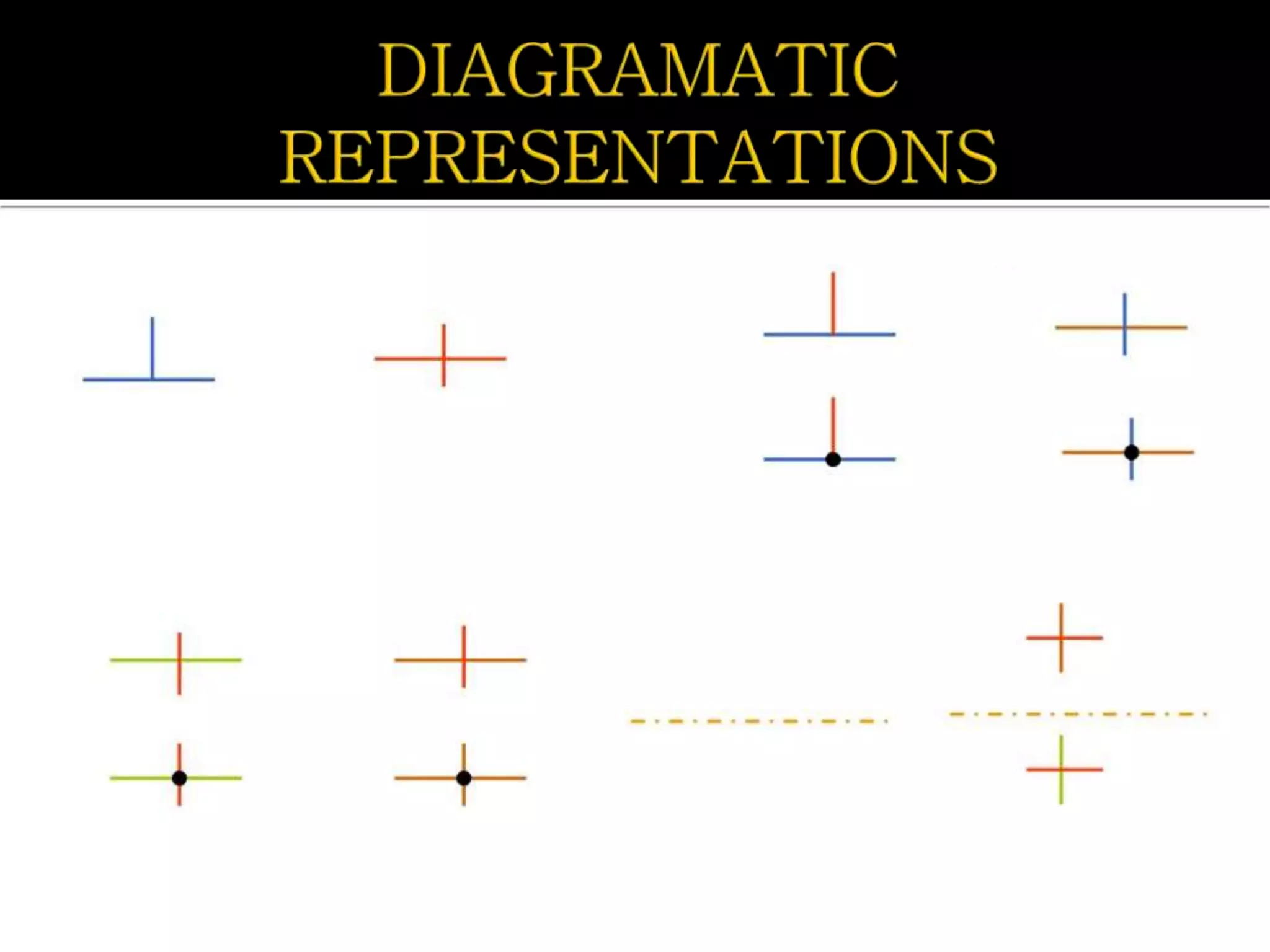
1)When two or more ‘sticks’ of the same
type cross or touch each other which
represents electrical contact.
2)When two or more ‘sticks’ of different
type cross or touch each other which
represents no electrical contact.
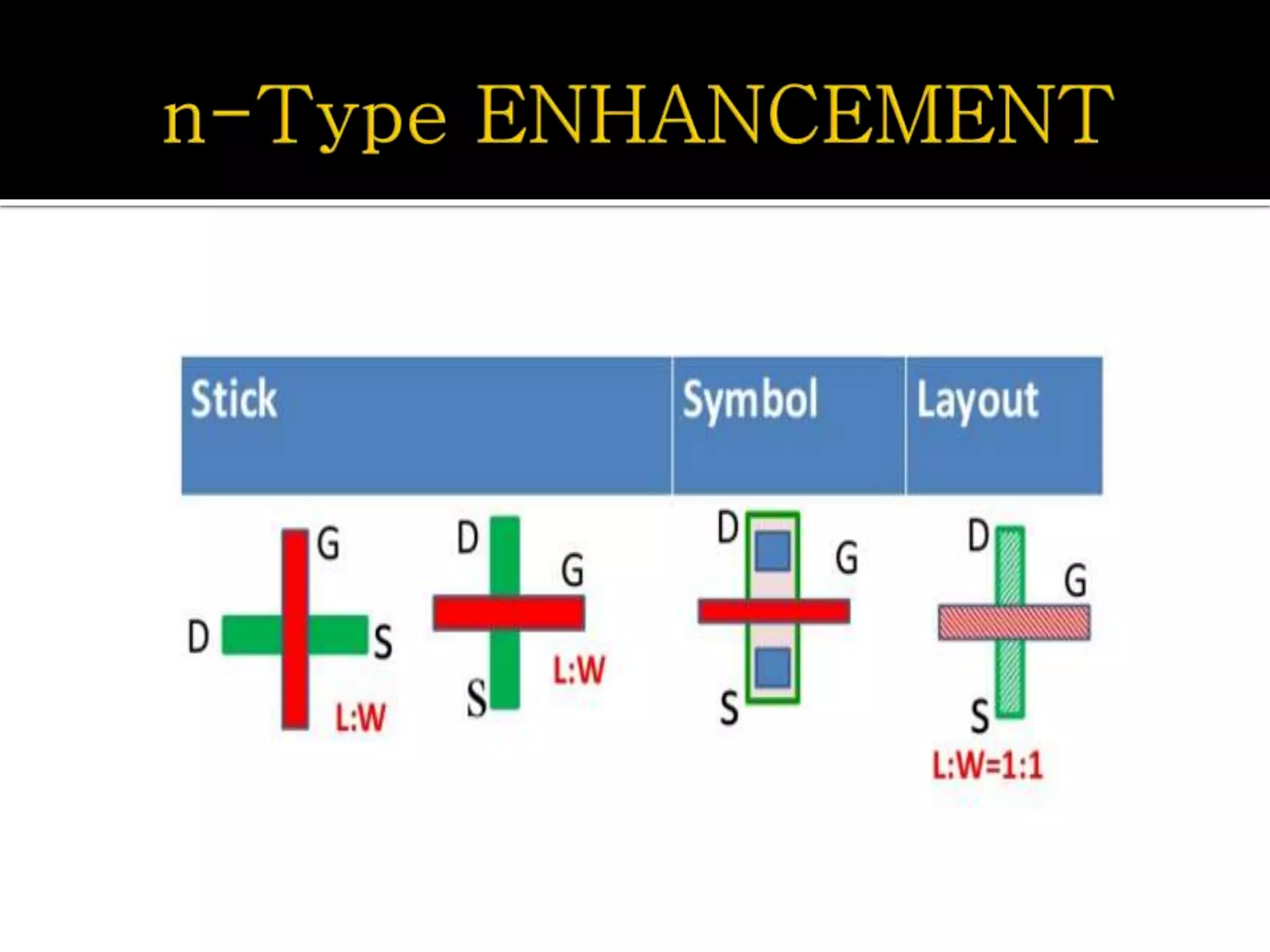
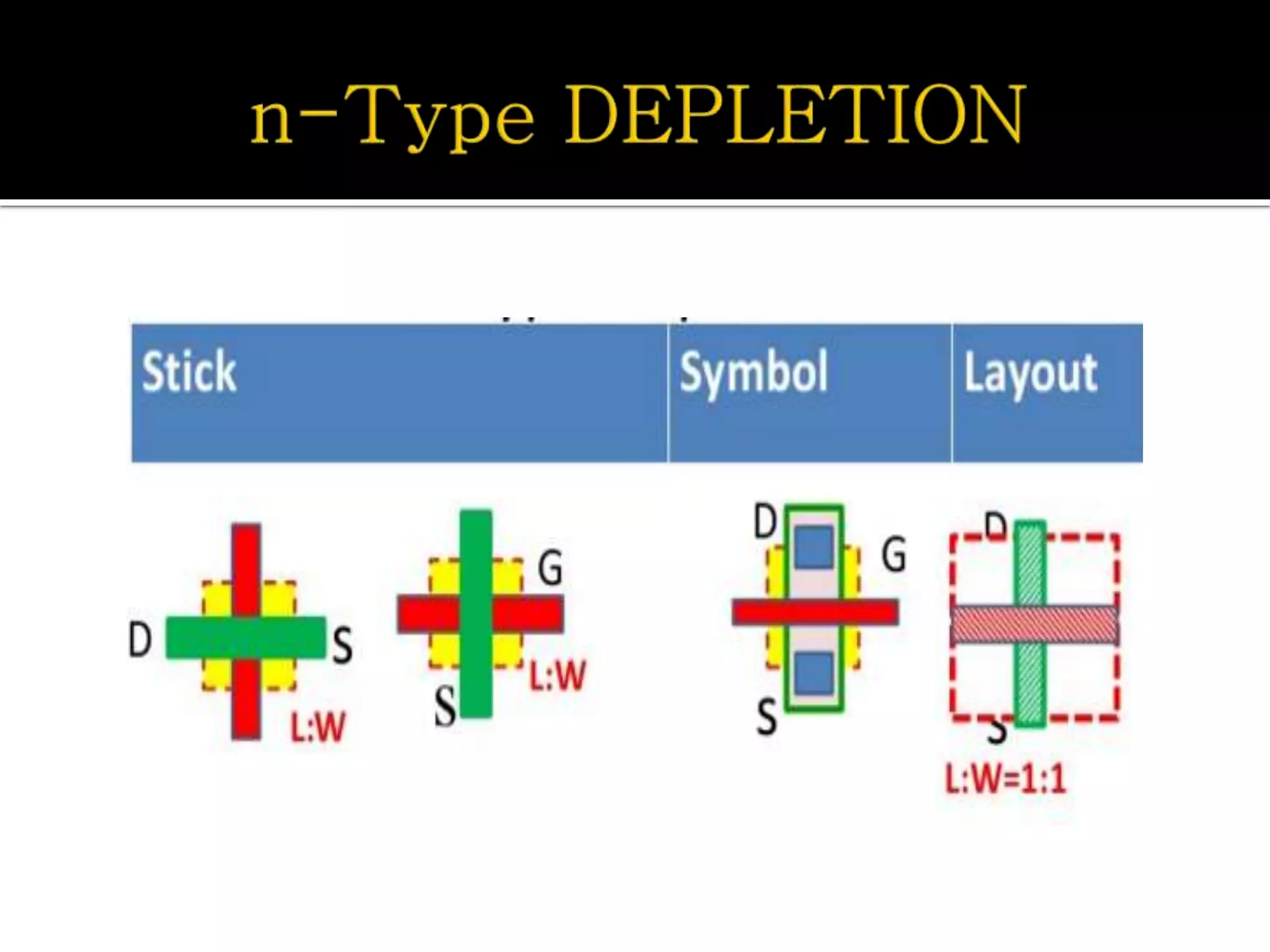
3)When poly crosses diffusion, it
represents a transistor.
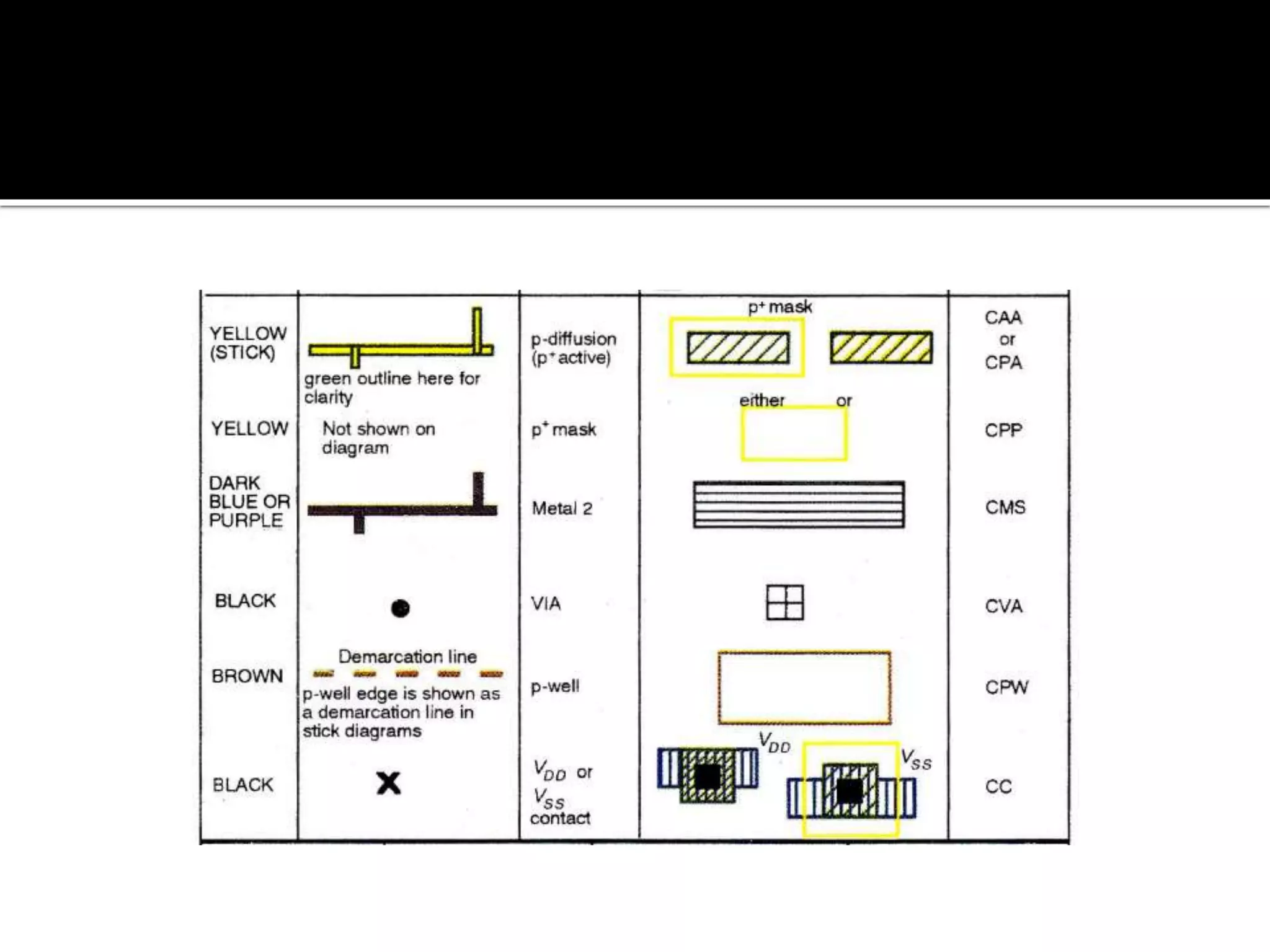
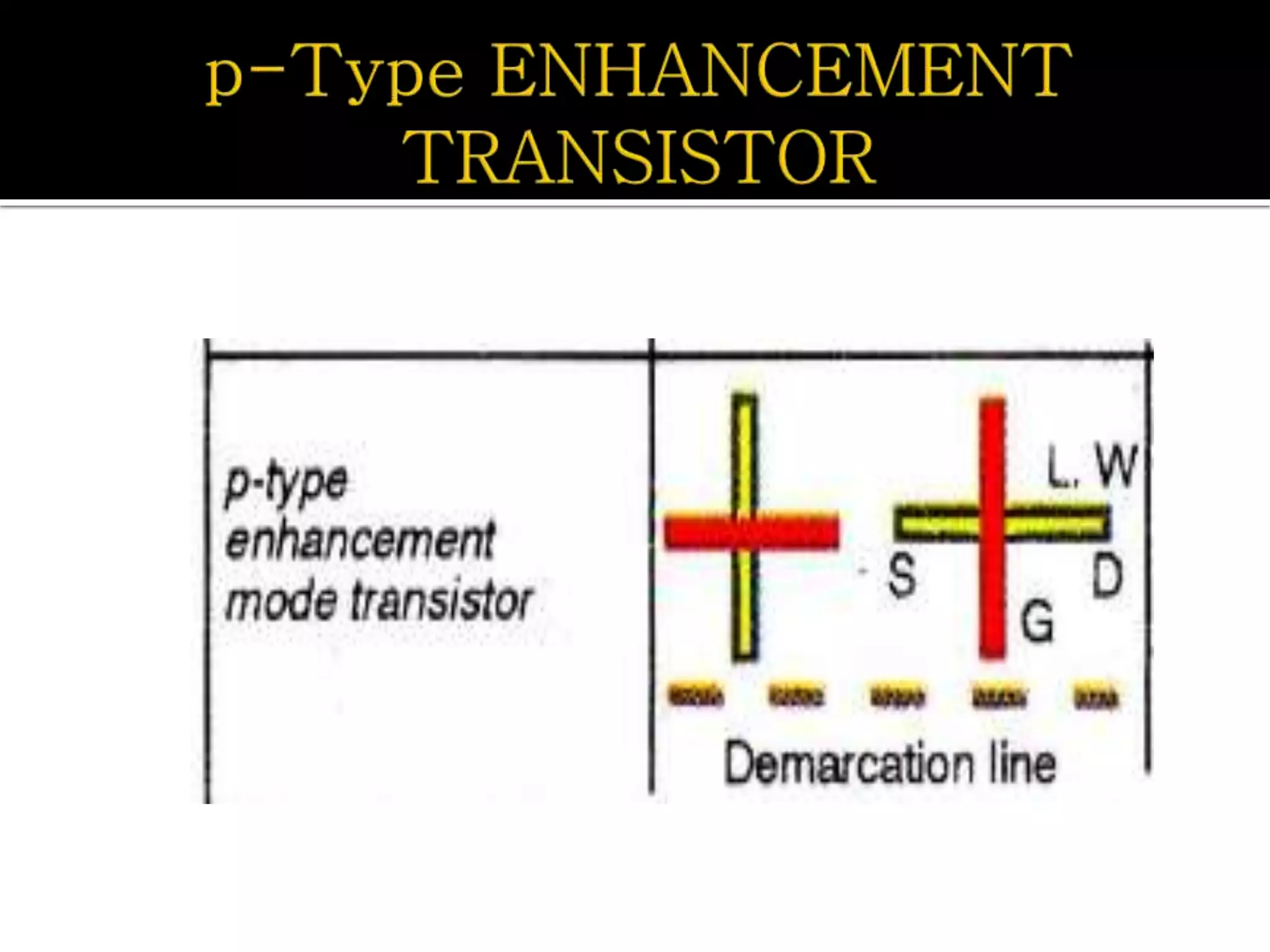
4)In CMOS, a demarcation line is drawn
to avoid touching of p-diffusion & n-
diffusion. All p-MOS should lie on one
side of the line & all n-MOS should be
on the other side of the line.
S.VARUN

Layout & Stick Diagram Design Rules

  • 1.
    LAYOUT DESIGN RULES& GATE LAYOUT By S.VARUN M.Tech [EST]
  • 2.
    What is aLAYOUT DESIGN?
  • 3.
     Layout Designis a schematic of the Integrated Circuit(IC) which describes the exact placement of the components for fabrication.  Layout Design rules describe how small features can be & how closely they can be packed in a manufacturing process
  • 4.
    Why do weneed Layout Design Rules?
  • 5.
     Industrial Designrules are generally specified in microns.  This makes migrating from one process to more advanced process difficult because not all rules scale in the same way.
  • 6.
     In orderto bring uniformity,Mead & Conway popularized lambda-based design rules based on single parameter.  Lambda,characterizes the resolution of the process & is generally the half of the minimum drawn transistor channel length.
  • 7.
     The channellength is the distance between drain & the source which is set by a minimum width of a polysilicon wire.  Ex:-A 180 nm process has a minimum polysilicon width of 0.18microns and uses design rules with lambda=0.09.
  • 8.
     However thedesigners make the scaling layout trivial.  The same layout can be moved to a new process simply by specifying the Lambda value.  The potential density advantage of micron rules is sacrificed for simplicity and easy scalability of lambda rules.
  • 9.
     Designers oftendescribe a process by its feature size.  Feature Size refers to the minimum transistor length,So lambda is half the feature size.  Transistor dimensions are always specified by Width/Length ratio.
  • 10.
     Ex-In 0.6um technology, width corresponds to 1.2um & length to 0.6um.  In digital systems, the transistors are chosen to have minimum possible length because short channel transistors are faster, smaller & consume less power.
  • 12.
     Stick diagramsmay be used to convey layer information through the use of a color code  Ex-In the case of nMOS design, green for n-diffusion, red for polysilicon, blue for metal,and black for contact areas.
  • 13.
     A stickdiagram is stick figure view of a layout.  It is useful for a)Planning Layout b)Relative Placement of transistors c)Assignment of signals to layers d)Connections between cells e)Cell hierarchy
  • 19.
    1)When two ormore ‘sticks’ of the same type cross or touch each other which represents electrical contact. 2)When two or more ‘sticks’ of different type cross or touch each other which represents no electrical contact.
  • 20.
    3)When poly crossesdiffusion, it represents a transistor. 4)In CMOS, a demarcation line is drawn to avoid touching of p-diffusion & n- diffusion. All p-MOS should lie on one side of the line & all n-MOS should be on the other side of the line.
  • 28.